You have just arrived the long way, and that is the point: Hampi has no airport and no station in the village, so the journey ends with a dawn train into Hosapete and a 13 km auto ride through banana groves and boulder hills to the ruins of Vijayanagara. This guide covers the last leg and its fares, the ₹600 monument ticket that has to be spent in a day, where to sleep from a Kamalapur palace to a bazaar guesthouse rooftop, the thali to eat first, and the Badami day that completes the story.
By Paul GreenUpdated Oct 202612 min readPrices checked Oct 2026
You just landed in Hampi. The ruins begin 13 km past Hosapete Junction — an auto covers the last leg in about 25 minutes for ₹300, with an Airalo eSIM live for maps, the ₹600 ASI ticket spent across Vittala and the Royal Centre in one day, and the car tours that fill first booked ahead through GetYourGuide.
Quick facts
Airport
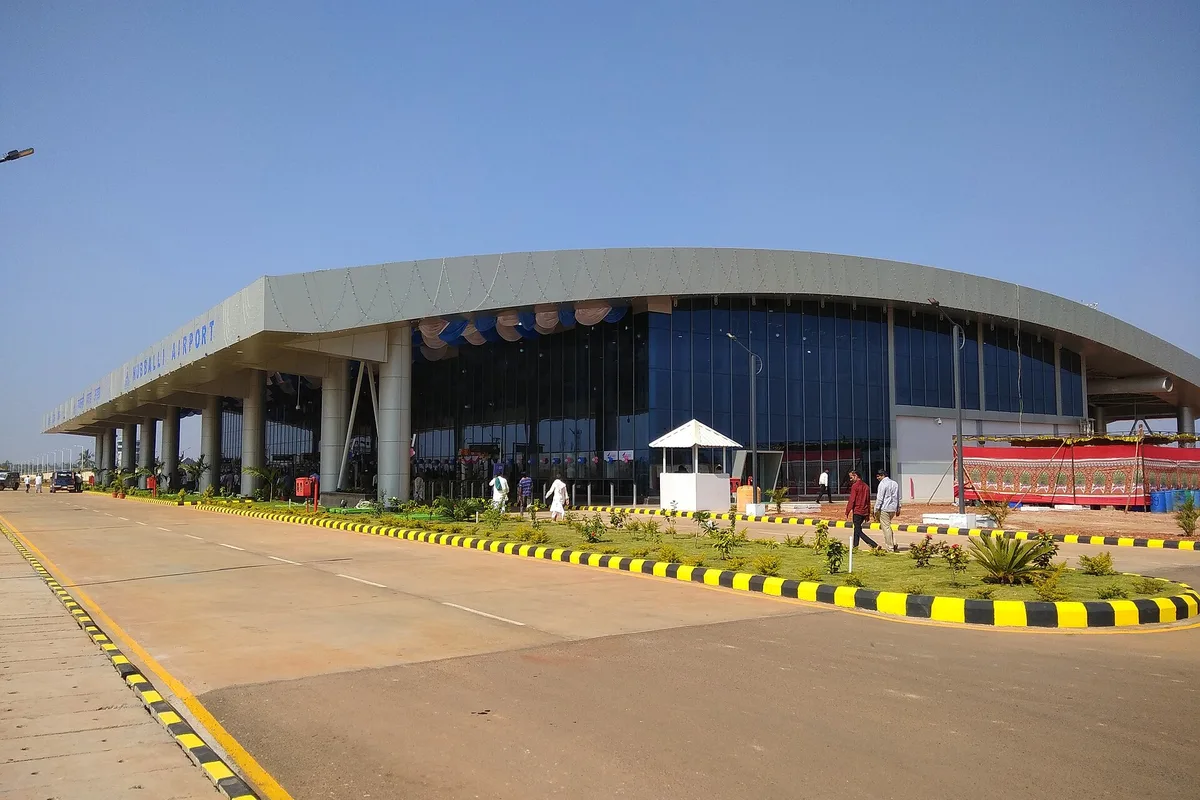
Hubballi (HBX) is the working airport, about 160 km away Hubballi, also spelled Hubli, runs daily flights to Bengaluru, Mumbai, Hyderabad and Chennai; the drive on takes about 3.5 to 4 hours. Tiny Vidyanagar (VDY), about 35 km away, has only a handful of flights, so never rely on it without checking the schedule.
Getting in
Hosapete Junction (HPT), then 13 km by auto or bus Almost everyone arrives by train at Hosapete, the same town older signs call Hospet. Autos cover the last 13 km to Hampi village in about 25 minutes for about ₹300; local buses run the same road for about ₹30.
Currency
Indian rupee (INR, ₹) Cards work at resorts and bigger restaurants, but autos, guides and village cafés run on cash. Carry small notes, and draw rupees at ATMs in Hosapete rather than exchanging at the airport.
Languages
Kannada first, Hindi and English widely used Kannada is the everyday language of Hampi and Hosapete. English is spoken at hotels and by guides and most auto drivers, Hindi almost everywhere, and a few Kannada phrases earn real warmth.
Time zone
IST (UTC+5:30), no daylight saving India keeps one time zone and never moves the clocks. Sunrise runs from about 6:45 AM in midwinter to before 6 AM in summer, which sets your start time for the ruins.
Emergency
112 for police, fire and ambulance 112 is India's single emergency number and works from any mobile. For anything smaller, your hotel desk is the fastest route to a doctor, a driver or the tourist police in Kamalapur.
Plugs
Types C, D and M, 230 V Expect two and three round-pin sockets, sometimes both in one room. Bring a universal adapter; resorts lend them, guesthouses less reliably, and USB points are common in newer rooms.
Tap water
Do not drink it Drink bottled or filtered water only, and check the seal on bottles. Hotels supply filtered water in the room; refill from those filters rather than buying plastic at every temple.
Tourist tax
No city tax; hotel GST of 5% or 18% Hampi charges no per-night tourist tax. What lands on the bill is GST: 5% on rooms at ₹7,500 a night or less, 18% above that, since India's September 2025 GST reform. The monument ticket is separate, covered below.
Best months
October to March Cool, dry days make winter the season for dawn starts and long walks. April and May are fiercely hot on open granite, and the monsoon from June turns boulders slippery and can stop the river boats.
Map
Find your arrival stop, hotel, and first meal. Stays, sights, and landmarks in Hampi — live hotel prices plus the key places from this guide.
Hampi is a place you arrive at in stages, and the last stage decides the trip. Most travellers sleep on the overnight train, step down at Hosapete Junction in the early light and ride the 13 km past banana groves into the village. Sort that leg before you travel, agree the auto fare on the platform, and the first hour takes care of itself.
Choose your bank of the river before you book. Hampi village, on the south bank beside Virupaksha Temple, is the walk-everywhere base. Kamalapur, a few kilometres south, sits by the Royal Centre and holds the bigger resorts. Hosapete suits a late train arrival, with real hotels by the station and a ride in each morning. The old backpacker bank, Virupapur Gaddi, lost its guesthouses to demolition in 2020; the north bank now means Sanapur and Anegundi, reached by road or by the daylight boat.
Data makes the arrival calm. Set up an eSIM before you leave so maps, train status and driver messages work from the platform: Airalo, Saily and Yesim all sell India plans. If the long-haul leg arrives badly delayed and wrecks the onward train, compensation may be due; AirHelp checks eligibility and runs the claim.
Getting around
Journey times are approximate and refer to the listed stop — not necessarily your hotel. Allow extra time for waiting, walking, and connections.
Local bus from Hosapete
Buses run through the day, roughly every half hour, from Hosapete bus stand and the station road via Kamalapur to Hampi village; no booking, pay the conductor, and keep small notes ready
Priceabout ₹30Journey~30 min
Auto rickshaw from Hosapete station
Autos wait outside Hosapete Junction (HPT) and run straight to your Hampi village or Kamalapur door; the fare is agreed before you ride, and the same drivers sell half and full-day ruin circuits
Priceabout ₹300Journey~25 min
Taxi from Hosapete station
The rank outside the station runs the same 13 km with room for luggage and groups; agree whether the price is per car, not per person, before you set off
Priceabout ₹600Journey~25 min
Pre-booked car from Hubballi Airport (HBX)
About 160 km from HBX arrivals via Hosapete to your Hampi hotel door; the driver waits with a name board, which is the no-thinking option after a flight, and KSRTC buses cover Hosapete far more cheaply
Priceabout ₹3,700Journey~3.5 to 4 hrs
Two arrivals matter: the train to Hosapete, which is how Hampi is really reached, and the flight to Hubballi, which only starts the journey. The table prices the realistic first moves, from the last 13 km to the full Hubballi airport run.
The classic rail arrival is the Hampi Express (train 16592), leaving Bengaluru at night and reaching Hosapete at about 7 AM; book on IRCTC early in season, because AC classes sell out. Prefer to be met? Kiwitaxi and Welcome Pickups both quote the Hosapete and Hubballi runs at a fixed price.
Inside Hampi the sights spread over several kilometres of granite, so wheels matter. Autos sell half and full-day circuits at agreed fares; bicycles and mopeds rent around the bazaar and Kamalapur; and a battery cart covers the final approach to Vittala Temple, where private vehicles stop short. The sacred centre is best on foot.
In the city
Enter Virupaksha Temple first, while it is still a temple and not yet a crowd.
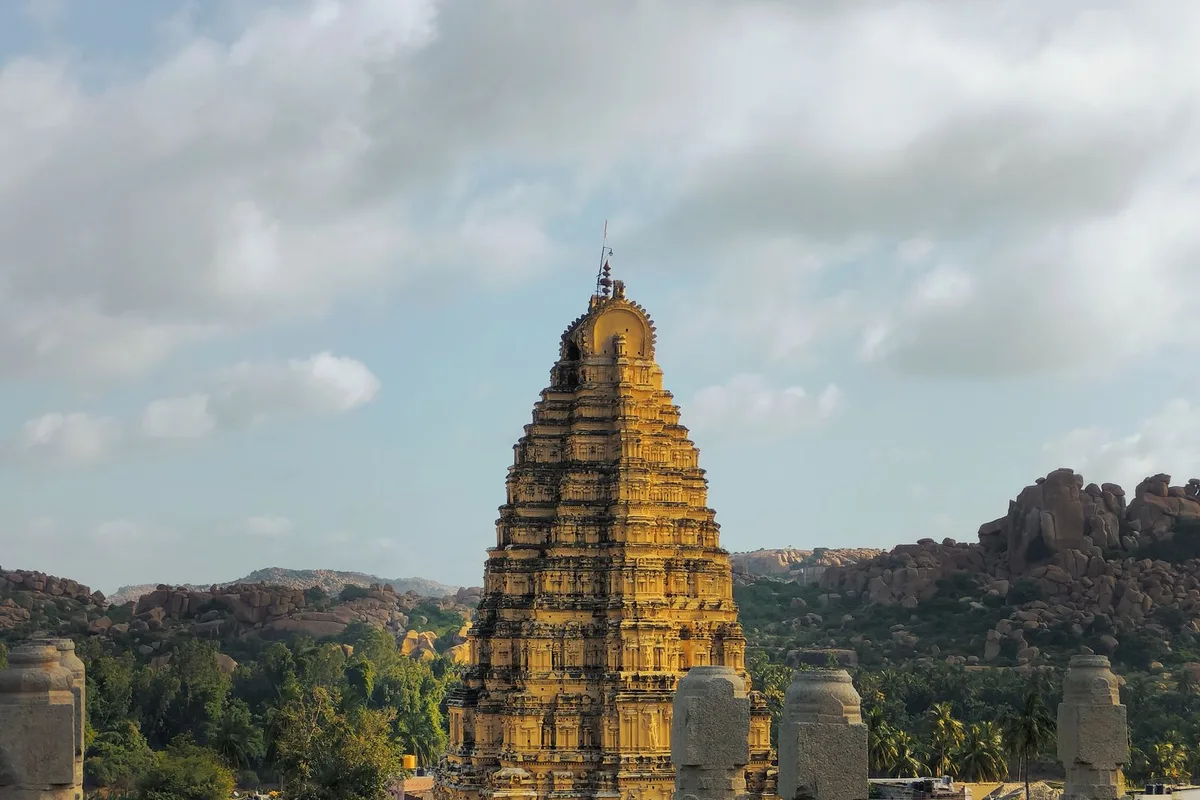
Hampi's living heart: a Shiva temple in worship for centuries, its tower rising about 50 metres over the bazaar street. Entry is free, cameras carry a small fee, shoes come off and shoulders and knees stay covered. Go early, for the morning rituals.
Spend one ticket day on Vittala Temple and the Royal Centre together.
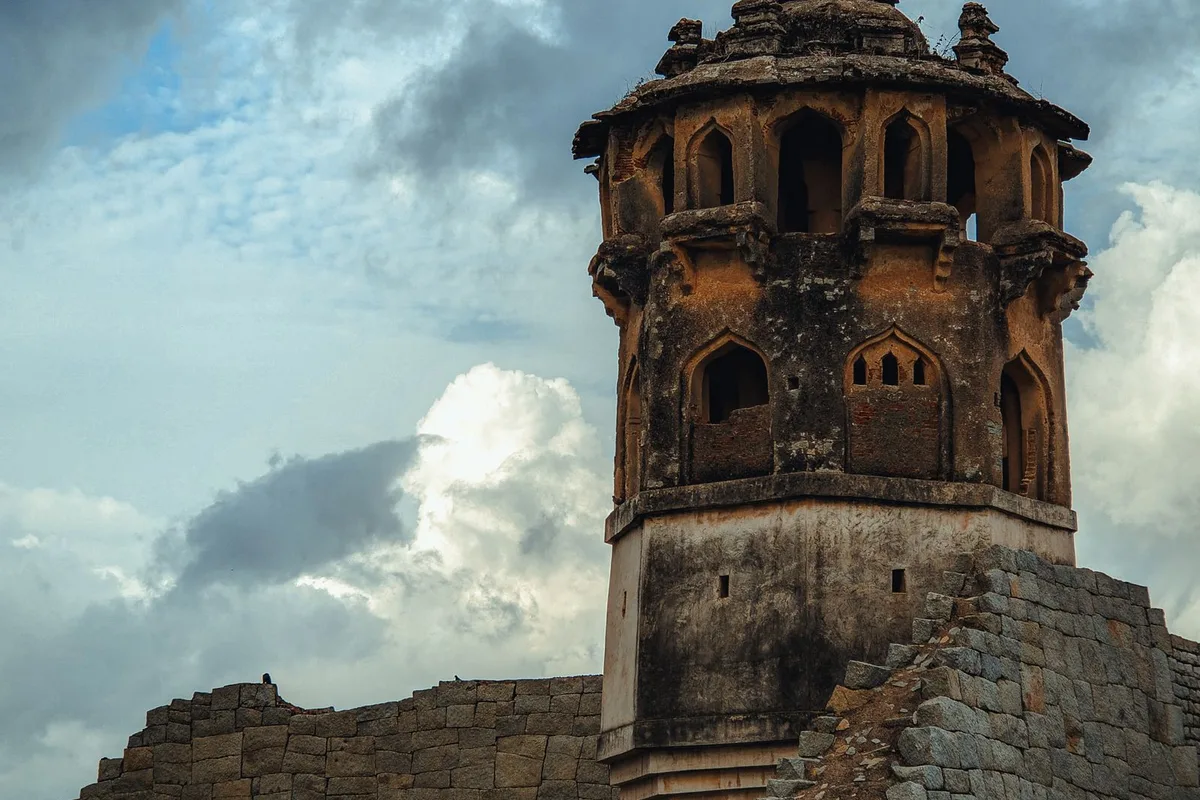
Foreign visitors pay ₹600 for the Archaeological Survey of India ticket (₹40 for Indian visitors, children under 15 free), and the same ticket, on the same day, covers Vittala Temple, the Zenana Enclosure with the Lotus Mahal, and the Elephant Stables. At Vittala, ride the battery cart in, stand before the stone chariot, and look at the musical pillars without tapping them; handling is banned to protect the stone.
Climb Hemakuta Hill for the first panorama.
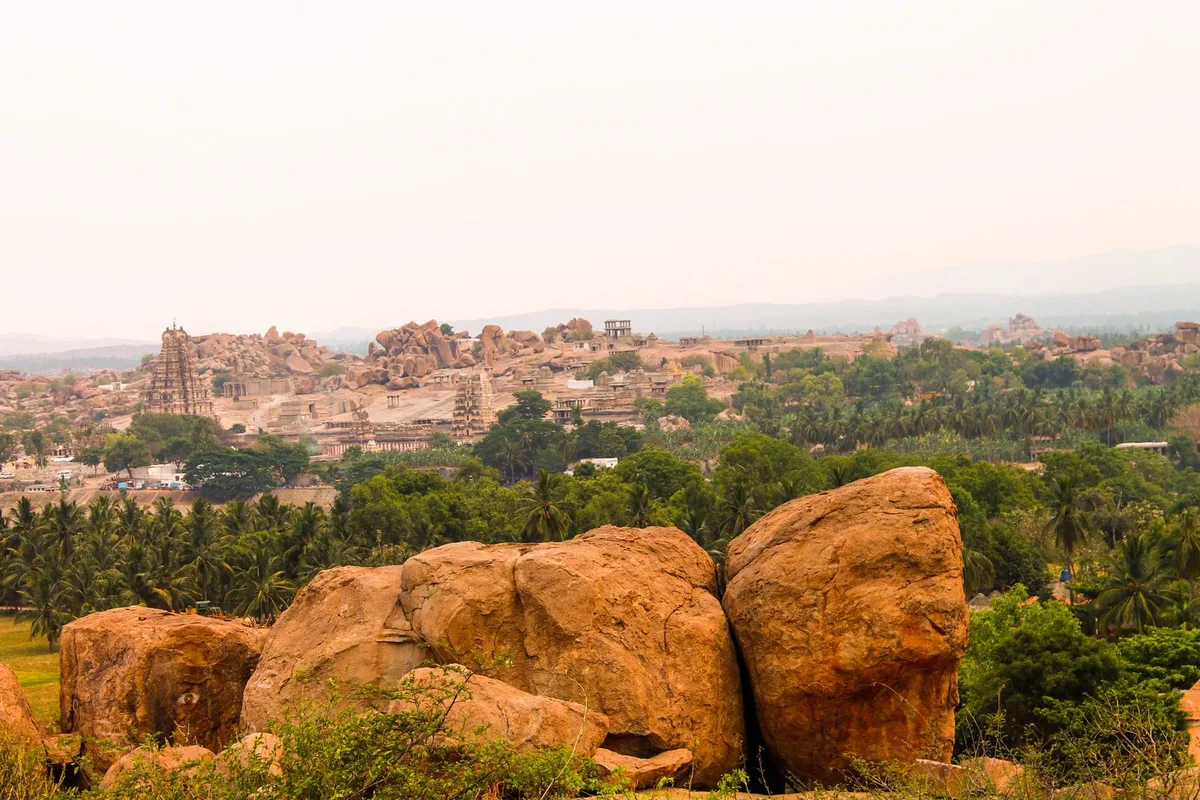
The low granite hill above the bazaar is scattered with small early temples and gives the orientation view: Virupaksha's tower, the river bending north, boulder country in every direction. A short climb, best in the first or last hour of light.
Cross the Tungabhadra by boat in daylight, and plan around it.
Coracles and a small motor boat link Hampi village with the north bank near Virupapur Gaddi for a few rupees a head, in daylight only, stopping altogether when the monsoon raises the river. The north bank holds Anegundi and the climb to Anjanadri Hill; by road the same trip is a detour of about 35 km, so never leave dinner hostage to the last boat.
For guided time among the ruins, Tiqets sells monument entry, Klook lists Hampi experiences, and GetYourGuide carries the widest range of car tours and walks. A licensed guide at Vittala is worth it once; the pillars come with stories no signboard tells.
After you land in Hampi: Bookable experiences
Where to stay your first nights
Splurge
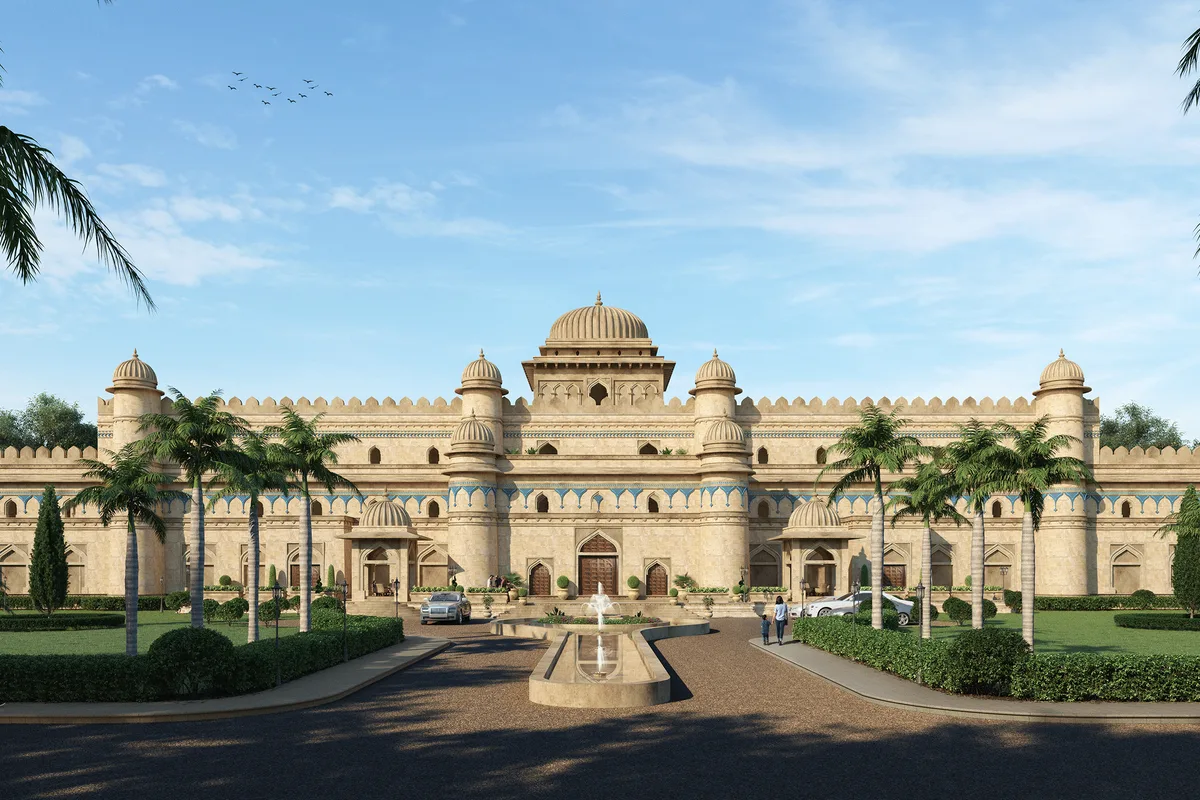
Evolve Back, Hampi.
Best for the palace splurge at Kamalapur — Vijayanagara-style suites, private-pool villas and guided heritage trails
The palace splurge at Kamalapur: a Vijayanagara-style resort of stone boulevards and arched halls, with palace suites and private-pool villas, an infinity pool, a spa and two restaurants. Its own guides run heritage trails into the ruins, minutes away. Book the pool villas early in season.
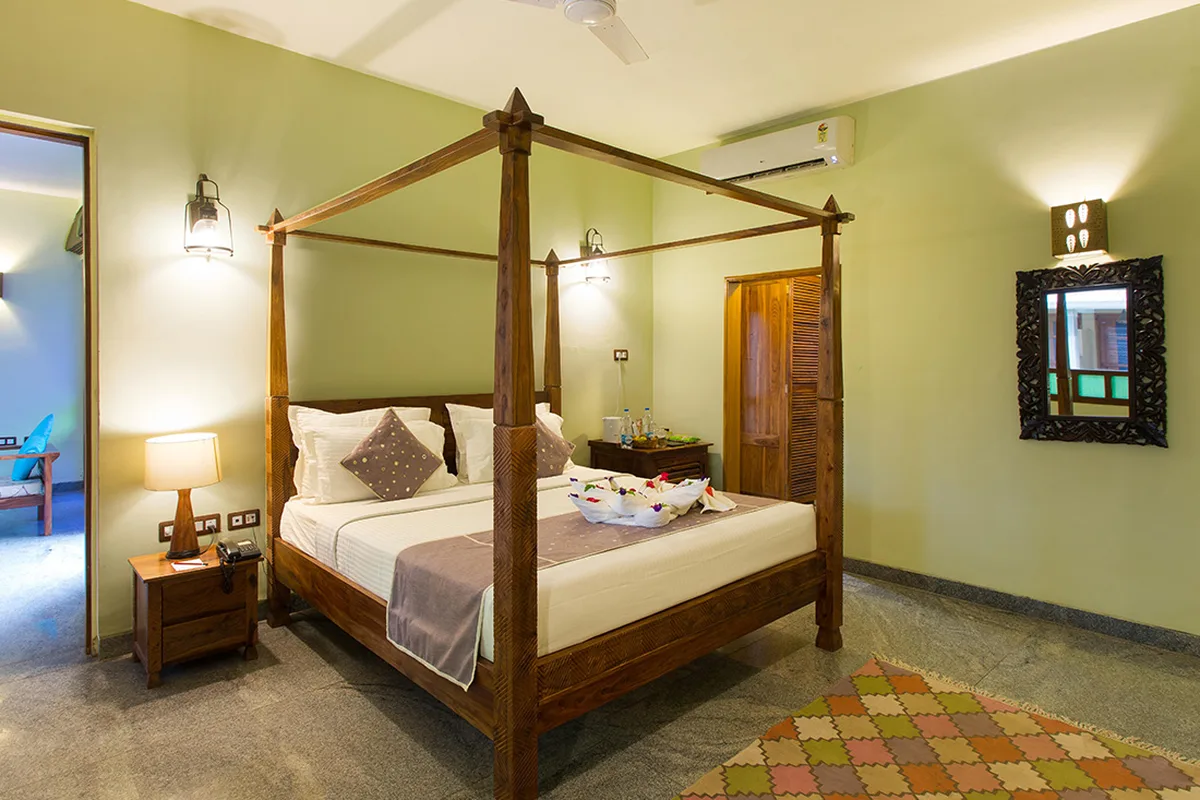
Best for a calm villa base on the Hosapete road — nine acres of plantation, a pool and breakfast included
A calm villa resort in nine acres of plantation on the Hosapete road, close to Kamalapur: cottages and villas, a pool, two restaurants and breakfast included. Near enough to the Royal Centre for early starts, far enough from the bazaar for quiet nights, with staff who arrange autos and guides without drama.
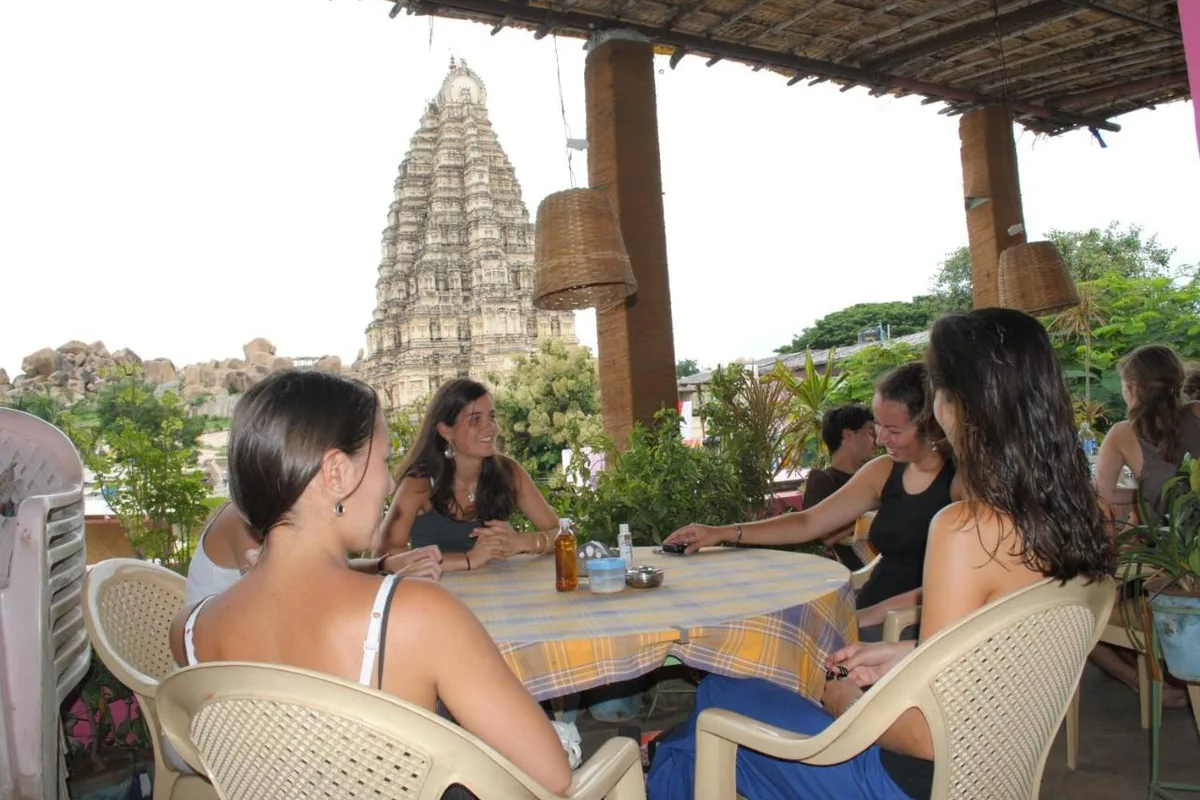
Best for budget beds in Hampi village — simple rooms and a rooftop restaurant facing the Virupaksha tower
The village institution at Janatha Plot, five minutes from Virupaksha Temple: simple rooms with attached bathrooms in the bazaar lanes, run by a family who will sort bicycles, guides and onward tickets. The rooftop restaurant, facing the temple tower, is why half the village ends its day here.
Sleep south of the river for a first visit: Hampi village for walking, Kamalapur for the Royal Centre and the resorts, Hosapete only if trains rule your timings.
Where to eat first
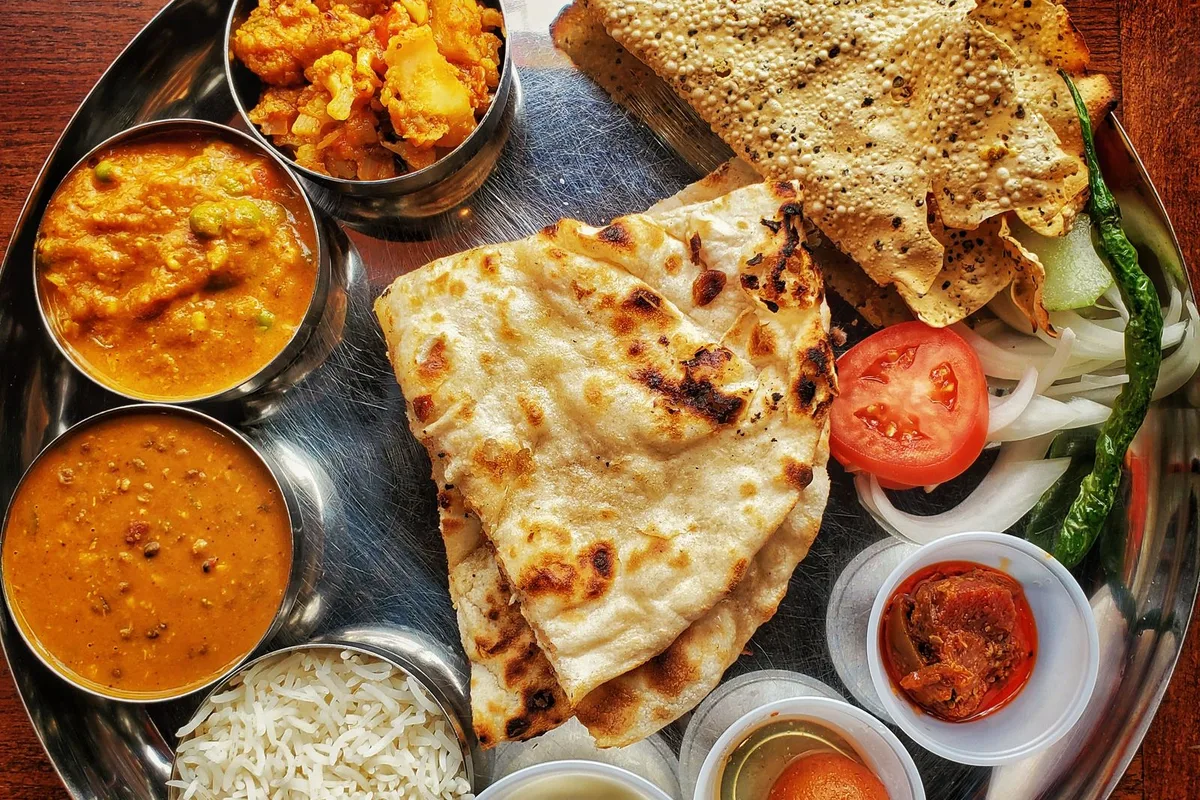
Eat a banana-leaf thali first: rice, dals, vegetable curries, chutneys and a papad, all-you-can-eat on a leaf at the bazaar's rooftop restaurants. It is the working lunch of Hampi, vegetarian by local custom around the temple. Breakfast means masala dosa and filter coffee; dinner means the same rooftops under the lit tower.
Two names anchor the bazaar: the Mango Tree, the long-running travellers' restaurant near the river, and the rooftop at Gopi Guest House for dinner facing the Virupaksha tower. If you would rather graze with a local, GetYourGuide lists heritage walks that finish among the bazaar food stalls.
Day trips and more
Hampi in a day by private car, with lunch
This full-day private tour works through the greatest hits in the right order: the stone chariot and musical pillars at Vittala, Virupaksha Temple and the bazaar, then the Queen's Bath, Lotus Mahal and Elephant Stables, with a traditional lunch between. Pickup is from Hampi or Hosapete; take the early start. Check availability →
Badami, Aihole and Pattadakal in a day
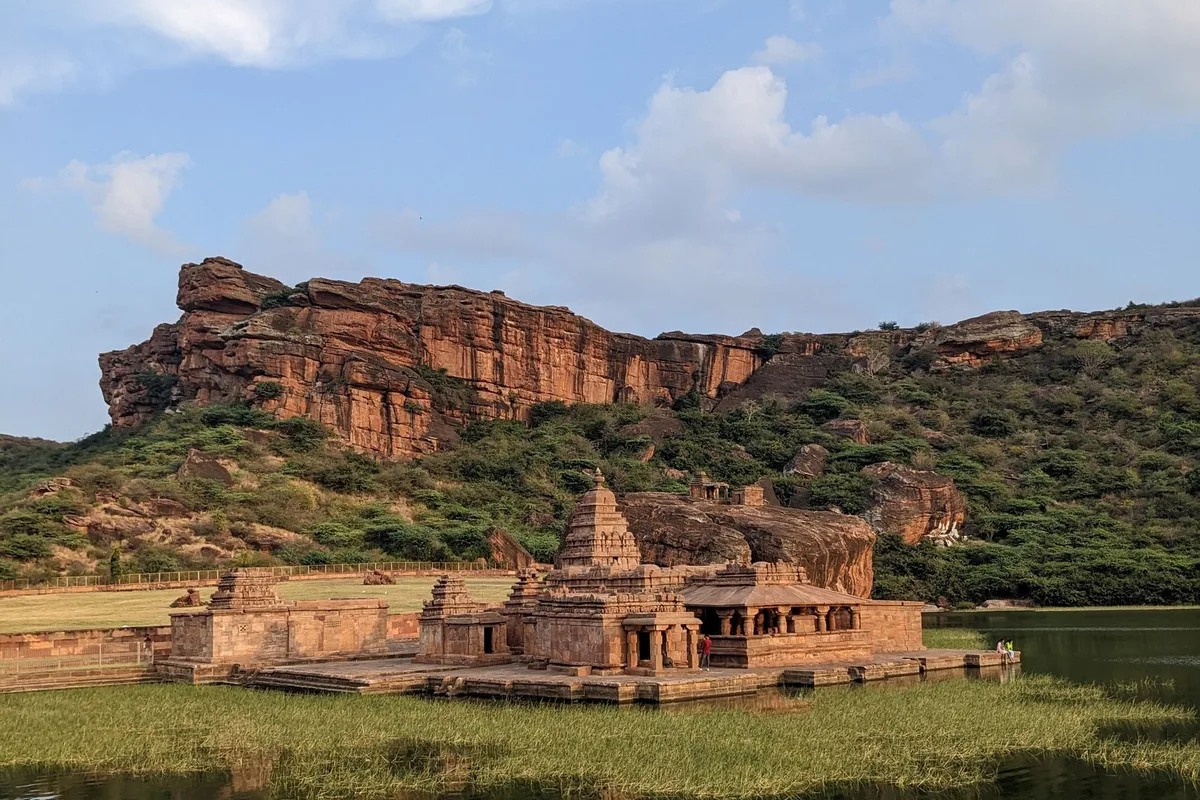
A long, rewarding day by car: the 6th-century rock-cut cave temples of Badami above Agastya Lake, the coronation temples of Pattadakal, a UNESCO site in its own right, and Aihole, where temple architecture was invented across a hundred shrines. Entry and a heritage guide are included, with hotel pickup in Hampi. Allow the full 11.5 hours. Check availability →
Hampi Royale, the one-day luxury circuit by AC car
This small luxury tour strings together the royal half of the site: the Queen's Bath, the Lotus Mahal and Elephant Stables, the monolithic Sasivekalu Ganesha and Virupaksha Temple, a traditional lunch, a bazaar stroll and a coracle ride on the Tungabhadra, finishing at the stone chariot. Drop-off is at your hotel or Hosapete station. Check availability →
When to go and what it costs
JanFebMarAprMayJunJulAugSepOctNovDec
October to March is the honest season, November to February its best weeks: dry days in the twenties, cool dawns, evenings that ask for one warm layer. April and May push past 40°C by midday; the ruins become dawn-and-dusk only. The monsoon, roughly June to September, greens the valley and empties the site, but boulders turn treacherous and the boats stop when the river runs high.
The money day is simple. The ASI ticket is ₹600 for foreign visitors and ₹40 for Indian visitors, sold per day and covering Vittala Temple, the Zenana Enclosure and the Elephant Stables; children under 15 enter free, and Virupaksha Temple charges nothing. Add the station auto at about ₹300 and buses at about ₹30, and Hampi stays a great-value World Heritage site.
What to pack
Tap items to check them off — your list is saved on this device.
Beyond the basics: pack a hat with a brim, because shade is the scarcest thing among the ruins, and something modest covering shoulders and knees for Virupaksha Temple. A warm layer earns its space from November to February, when the Hosapete platform and the dawn climb up Hemakuta are properly cold. Shoes need grip; wet boulders are unforgiving.
Language, visa and entry
! Check visa requirements before you fly
Kannada runs Hampi, and four phrases will carry most days:
Namaskarahello, and the respectful all-purpose greetingDhanyavadathank youEshtu?how much is it? — ask before any rideHampi ge hogito Hampi — say it to the auto driver at Hosapete
Most visitors enter India on the e-Tourist Visa, applied for online before travel. Apply only at indianvisaonline.gov.in, at least four days before you go, and print the approval. For US citizens the 30-day visa, which allows double entry, costs US$25 from July to March and US$10 from April to June; one-year and five-year versions cost US$40 and US$80. Your passport needs six months of validity and two blank pages.
Fly into Hubballi or Bengaluru on the e-Visa; both are designated e-Visa airports with dedicated desks. Keep your Hampi hotel address on paper for the arrival form. There is no visa on arrival for ordinary US tourist passports, whatever a third-party site promises.
Safety and health
Heat and sun on open granite — the site's real hazard
Hampi's ruins sit in a bowl of rock with almost no shade, and even winter middays are hot. Sightsee at dawn and late afternoon, rest through the middle of the day, carry water on every walk and treat a hat as equipment. In April and May, plan as if the midday site were closed.
The river decides the crossing, not you
The Tungabhadra runs fast over hidden rock, and swimming in it is genuinely dangerous. Boats cross in daylight only, stop at sunset and stop altogether when the monsoon raises the water; if you sleep on the north bank, the way back after dark is the long road around, about 35 km.
Monkeys, boulders and polished stone
Macaques around the temples snatch food, bottles and anything shiny from open bags, so keep snacks zipped away and never feed them. Boulder scrambling is Hampi's sport and its accident list: wear grippy shoes, keep off wet rock, and come down from Matanga or Hemakuta before dark.
Agree every fare, and hire guides at the gate
Autos are unmetered and every fare is a negotiation settled before the wheels move. Buy monument tickets at the window or online, use licensed guides from the Vittala and museum gates, and let a polite no end any pitch for closed rooms or queue-jumping nobody can deliver.
The things travellers ask in the first 48 hours: the last 13 km, the one-day ticket and the island that is no longer there.
Facts verified October 2026
Autos wait outside Hosapete Junction (HPT) and cover the 13 km to Hampi village in about 25 minutes for about ₹300; agree the fare before you ride. Buses run the same road for about ₹30, and taxis charge about ₹600.
Hubballi (HBX), about 160 km away, has daily flights from Bengaluru, Mumbai, Hyderabad and Chennai, then a 3.5 to 4 hour drive. Vidyanagar (VDY) is 35 km away but has very few flights. Many visitors instead fly to Bengaluru and take the overnight train.
One Archaeological Survey of India ticket: ₹600 for foreign visitors, ₹40 for Indian visitors, children under 15 free. It covers, on the same day, Vittala Temple, the Zenana Enclosure with the Lotus Mahal, and the Elephant Stables. Virupaksha Temple, a living temple, is free.
Yes, arranged before you travel. Most visitors use the e-Tourist Visa from indianvisaonline.gov.in, applied for at least four days ahead with the approval printed. For US citizens the 30-day visa costs US$25 from July to March and US$10 from April to June; the one-year costs US$40, the five-year US$80.
No. The guesthouses at Virupapur Gaddi, across the river, were demolished in 2020 and have not returned. Sleep in Hampi village or Kamalapur on the south bank, or in Sanapur and Anegundi on the north, and cross by the daylight boat, which stops at sunset and in high monsoon water.
October to March, with November to February the best weeks: dry days, cool dawns and evenings made for the viewpoints. April and May run past 40°C on open granite, and the monsoon from June turns boulders slippery and can stop the crossings.
Fares and fees change — the ASI, Indian Railways and e-Visa portal pages always win.
Hampi, saved for arrival
Landing soon? Get the printable PDF — the essentials from this guide, formatted for your phone:
The airport transport cheat sheet, with ticket links
Our 3 restaurant picks, with maps
The packing checklist
One email with your Hampi PDF (guide version: Oct 2026). Fare changes and new guides after that. No spam, unsubscribe anytime.
Sources and last verified
Monument fees and the same-day composite ticket from the Archaeological Survey of India and current Hampi listings; the foreign ticket is ₹600 in current listings, superseding the ₹500 in older guides. The Virupapur Gaddi demolitions and crossing pattern from Karnataka reporting and hampi.in. E-Visa fees from the Embassy of India in Washington and indianvisaonline.gov.in; hotel GST from India's September 2025 GST reform. Hubballi's distance is printed between 140 and 175 km across sources; plan on the road time, 3.5 to 4 hours. Last verified October 2026.
Affiliate disclosure: hotel names, transfers, experiences, and products linked in this guide may earn After You Land a commission at no extra cost to you. Prices and times were checked in Oct 2026 and change often — confirm before you book.