After You Land · The master arrival guide
Every landing,
the same order.
Signs change language, queues change length. The order almost never changes, and knowing it is most of the battle.
True at any airport: what each stage checks, the mistakes that cost an hour, and when to switch to your city guide.
In this guide
First night
First night, sorted
The three bookings that sort your first night.
A bed for tonight
Type any destination and see the places to stay there.
Find a hotelGet online
An eSIM installed before you fly, live the moment you touch down.
Get an eSIMRide into town
A fixed-price driver waiting at arrivals, name board in the hall — no curb negotiation.
Book a transferAfter You Land may earn a commission from bookings made through links on this page, at no extra cost to you.
Before you fly
Before the wheels touch down
Build your landing pouch before you need it.
Passport, boarding pass for the next leg, your first night's address, entry forms — one pocket or one phone folder, reachable without unpacking. Documents in three bags means rummaging at the queue.
Save the first night offline.
Hotel name and address in the local language, the airport-to-base route downloaded, the booking confirmation screenshotted. Wi-Fi is not guaranteed and roaming is not instant — a driver cannot read an address off a phone that will not load.
Install your eSIM in the departure lounge, not the arrivals hall.
An eSIM installed at home switches on as you land — data for maps, rideshares and messages from the runway. Install on Wi-Fi before you fly; keep your home SIM in for bank codes.
Know your answers before the officer asks.
Where are you staying, how long, when do you leave — three short answers matching your booking are the whole interview at most borders. Children or a one-way ticket? Expect one extra question; have the onward booking ready to show.
The six steps
Six steps, every airport on Earth
 01.
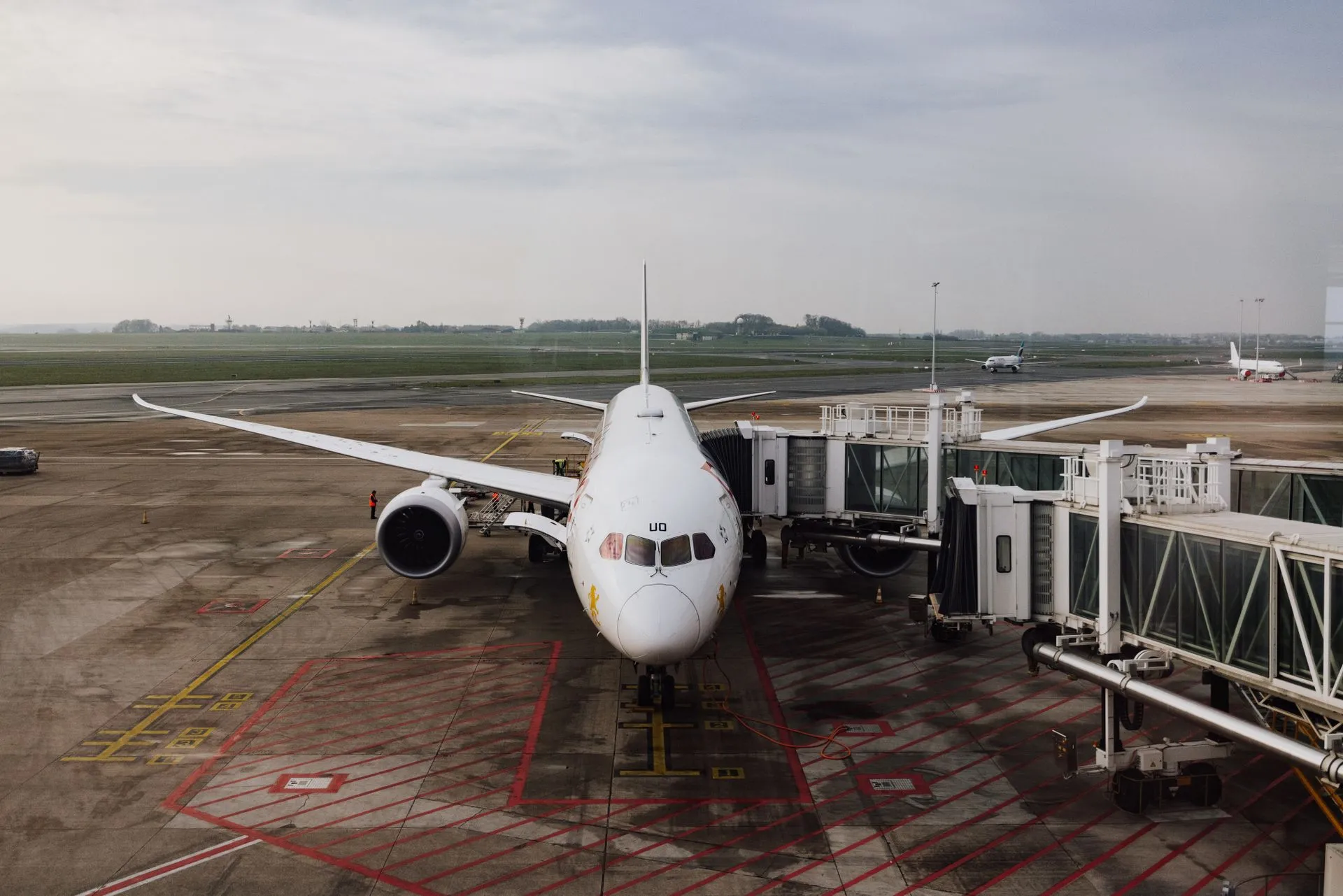
Leaving the plane
Off the plane and into the right stream.
Wait for the seatbelt sign, then check your seat like you mean it.
Seat pocket, floor, overhead bin. Passports, phones and headphones are left behind every hour — claim yours at the desk immediately, before the plane turns around.
Gate-checked items come back in two different places.
A gate-checked stroller or wheelchair usually returns at the jet bridge; a gate-checked bag may go to the carousel. Ask the crew before you leave the aircraft which yours is.
Follow the arrivals signs, not the crowd from your flight.
Airports split passengers early: arrivals one way, connections another. Entering the country? Take arrivals and border control even if your bag is tagged onward. Connecting? Read your airport guide first.
 02.
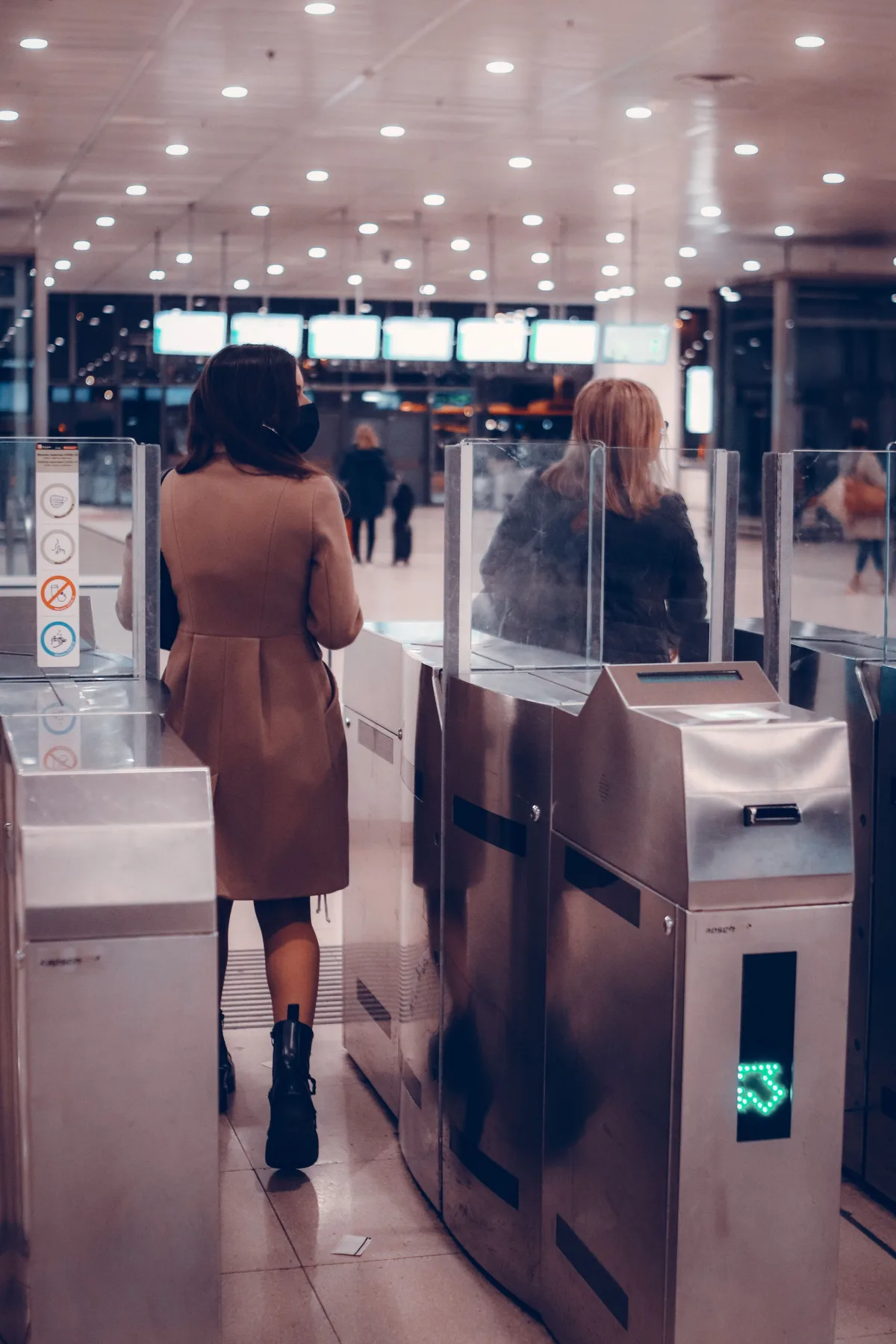
Immigration and passport control
The queue you pick, the stamp you check.
Pick the right queue before you join one.
Lanes are divided by passport type — citizens, residents, visa-exempt visitors, all other passports, families, crew — and the wrong one costs a second queue. E-gates are fastest where your passport qualifies; children under a set age cannot use them, so families use staffed lanes.
The stamp or the scan is your legal record of entry.
Where passports are stamped, check the date and any handwritten days before you walk away — the written number is the stay you actually have. Digital entry? Photograph the confirmation or save the record the same hour.
Keep the paperwork until you leave the country.
Arrival cards, entry slips and tourist cards are often collected again at departure; losing one means a fee, a form or a queue. Everything border-issued goes in the landing pouch.
Answer briefly and honestly.
Tourism, your first night's address, the length of stay, your flight home — short answers that match your bookings are the fastest way through.
 03.
Baggage claim
Find your belt, guard your tag stubs, file the report before you leave.
Find your flight number on the board, not the biggest crowd.
Carousels serve several flights in sequence; the board, not the crowd, says which belt is yours. Check the tag on any bag that looks like yours — identical black suitcases are the oldest mix-up.
A bag that does not come is reported inside the hall, before customs.
Go straight to your airline's baggage desk in the reclaim area and file the report: you get a reference number (a PIR), and the airline's duty to deliver the bag to your hotel starts there. Photograph your tag stubs before you travel.
Essentials are why the carry-on exists.
Medication, a change of clothes, chargers and documents ride in the cabin for exactly this scenario — a delayed bag holding your only medication is a crisis. Keep receipts for essentials; airlines reimburse reasonable costs.
Leave the hall without filing and the same bag becomes much harder to recover.
 04.
Customs
Immigration judged you. Customs judges what is in your bags.
Customs is about goods, not people.
Immigration decided whether you may enter; customs decides what may enter with you. Green channel: nothing to declare. Red: goods to declare. Walking the green channel is itself a declaration — random checks are normal.
Declare the borderline things.
Cash above the reporting threshold (often the equivalent of 10,000 in major currencies), commercial quantities, and anything you plan to leave behind can all be declarable without being taxable. Declaring costs a conversation; not declaring can cost the goods and a fine.
Food, plants and animal products are the classic seizure.
Many countries ban fresh fruit, meat and dairy outright, and sniffer dogs at the carousel hunt exactly that — eat the plane snacks on the plane. Medication travels in original packaging with the prescription; check controlled-medication rules before you fly. Drones are banned or permit-only in many countries and are confiscated here.
Green channel
Nothing to declare
Red channel
Goods to declare
Cash reporting threshold
≈ 10,000
Declarable, not taxable.
Duty-free caps
Alcohol, tobacco, gifts
Over the per-person cap, duty is due.

Halfway there
Land with both.
 05.
Connectivity and cash
Data and cash, sorted inside the terminal — everything after runs on one or the other.
Switch the eSIM on as you taxi in.
Installed an eSIM before the flight? Switch it on as you taxi in — data on, home SIM live for texts, maps working before the terminal. If not, join the airport Wi-Fi whose exact name is printed on terminal signage; lookalike hotspots asking for card details are scams.
One eSIM for the whole trip.
One plan for every landing on the route: Airalo's global eSIM and Saily's global eSIM both cover most countries on a single plan — check the country list against your route before you buy.
Cash comes from a bank ATM, in small notes.
Exchange booths are the most expensive money in the country. A bank-owned ATM in arrivals gives the real rate — decline its offer to convert into your home currency, and break a large note early.
Cards are the backup, not the plan.
In most cities your card works from the first hour — but the first ride, the first coffee and the first tip are the three transactions most likely to need cash. Land with both.
ATM conversion markup
5–10%
Decline it — pay in local currency.
Small notes
Break one early
Break a large note at an airport café.
Get online before you leave the airport
An eSIM installed now is live before you reach the terminal — maps, rideshares and bank codes from the runway, on the same plan at every landing.
Get an eSIMAiralo · the eSIM named in this step. Check your phone supports eSIM before you buy.
 06.
Ground transportation
One decision left inside the airport: how you get into town.
Use the official channel for your airport, whatever it is.
Every airport has one sanctioned way out — the official taxi rank (fare board or meter), the licensed bus or train from the terminal, the rideshare pickup zone in the app. Your city guide names yours.
Nobody legitimate offers you a ride inside the terminal.
A driver inside the terminal offering you a ride is, in almost every country, unlicensed: uninsured, unmetered, priced for tourists. Decline and keep walking — to the official rank, the booth, or your pre-booked driver with a name board.
Pre-booked pickup is the calm option.
After an overnight flight, with children, with heavy bags, or where rideshares cannot collect at the airport, a driver booked before you fly removes the whole negotiation: Welcome Pickups and Kiwitaxi both meet you in arrivals at a price fixed when you book.
Agree the drop-off point, not just the address.
Old towns, pedestrian centers and gated compounds stop cars short of the door. Confirm where the ride actually ends, keep the hotel's number reachable, and have small notes ready — the fare conversation happens at the curb.
A driver waiting at arrivals
A price fixed when you book, a driver with a name board in arrivals, no negotiation at the curb after a long flight.
Book a transferKiwitaxi · the transfer named in this step, alongside Welcome Pickups.
The last mile
Arriving at your base
Check in with your border record handy.
Hotels in many countries must register foreign guests — the entry stamp, entry number or digital record from Step 2 is what the desk asks for. It lives in the landing pouch.
Do the ten-minute orientation before anything else.
Bags down, water, a walk around the block: the nearest shop, the nearest transport stop, the way back to your door. The first hour sets the mental map for the whole stay.
Find a bed tonight
Type any destination and see the places to stay there.
If you book through the map, we may earn a commission. Your price stays the same.
Then switch to the guide for where you actually are.
This page ends where the city guides begin — first meal, first sights, local scams, local shortcuts.
Your airport
Your airport, step by step
The master sequence, applied — three of the busiest arrivals halls on Earth, gate by gate.
 Airport guide
Landing at JFK
Terminals, immigration lanes and every way into Manhattan.
Airport guideLanding at CDG
Terminals, border control and the rides into the city.
Airport guideLanding at CUN
Immigration, bags and the ride to the Hotel Zone — without the timeshare gauntlet.
If it goes wrong
When the landing goes wrong
Compensation trigger
3+ hours
Arriving three or more hours late on a qualifying flight.
The rulebooks
EU261 · UK261
Separate from rebooking — nobody offers it unprompted.
A delayed or cancelled flight is the airline's problem first.
On one booking, a missed connection is rebooked free — check the app, then the transfer desk. Keep every boarding pass and rebooking notice: claims settle against documents, not memories.
Compensation is separate from rebooking, and nobody offers it unprompted.
Arriving three or more hours late on a qualifying flight can carry fixed compensation under EU261, UK261 and similar rules, on top of the new seat. AirHelp checks eligibility and files the claim on a no-win, no-fee basis.
Separate tickets are the one risk to plan around.
Two independent bookings means the second airline owes you nothing when the first runs late. The buffer is the insurance: hours between the flights, not minutes — and treat the onward ticket as one you might have to replace.
Still planning? Compare flights for your next landing
Search opens on flights.afteryouland.com, our own flight search. Customize your flight options →
Better landings, in your inbox
First-hour guides for new cities, arrival tips, fare finds worth acting on. Short, only when worth your time.
No spam, unsubscribe anytime.
Affiliate disclosure: hotel names, transfers, and experiences linked in this guide may earn After You Land a commission at no extra cost to you. Prices and times were checked in Oct 2026 and change often, confirm before you book.