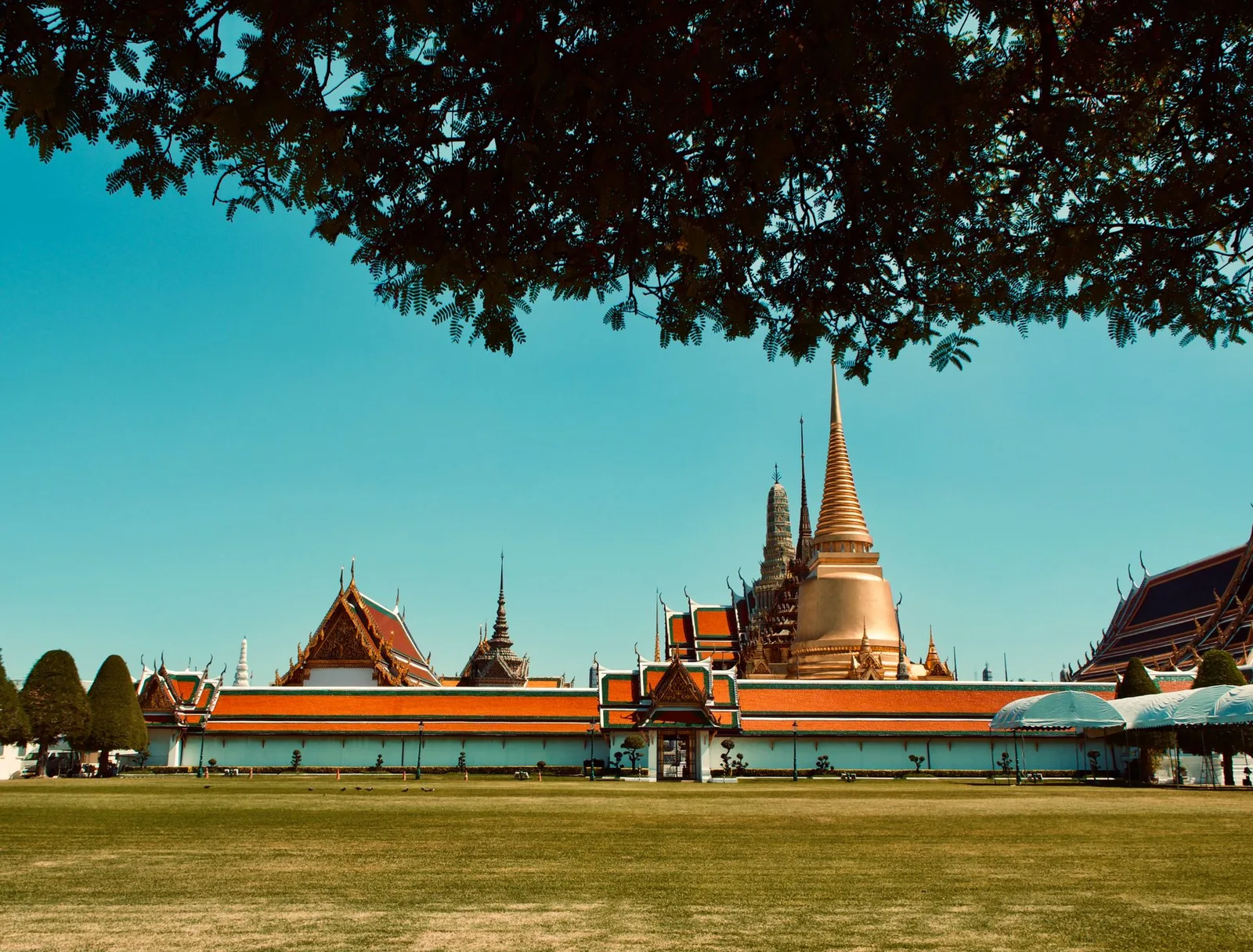
Bangkok: your first hour after landing
You have just landed in one of the world’s great sensory cities — temple gold and neon, boat noodles and night markets, traffic that melts away once you hop on a river ferry. Bangkok is easy once you know the moves: the airport rail link that skips the gridlock, the neighbourhoods that suit first-timers, and the scams to wave off. The landing first, then Grand Palace mornings, Chinatown nights and day trips to Ayutthaya and the floating markets.
In this guide
You just landed in Bangkok. Suvarnabhumi (BKK) is 30 km east: the Airport Rail Link reaches Phaya Thai in about 30 minutes for ฿45. Sort your Airalo eSIM before you land, and book the Grand Palace and temple tour for your first morning — go at opening time to beat the heat and the crowds.
Quick facts
Airport
Getting in
Currency
Languages
Time zone
Emergency
Plugs
Tap water
Tourist tax
Best months
Map
Stays, sights, and landmarks in Bangkok — live hotel prices plus the key places from this guide.
Settle in
1. Get connected — and do it before you land
Grab an Airalo eSIM before you fly — Saily is a solid alternative — because you need data from minute one: the arrival-card QR code, Grab rides, rail maps and translation. Airport SIM counters work too, but an eSIM has you online before the plane door opens.
2. Sort the arrival card and your cash
Complete the free Thailand Digital Arrival Card online in the three days before you arrive — see Language, visa and entry below — and screenshot the QR code. Then withdraw a decent stack of baht in one go — foreign cards pay a flat ฿220 per withdrawal. Skip the arrivals-hall booths; the basement ones by the Airport Rail Link station offer some of the city’s best rates.
3. Eat
Your first meal should be pad thai or a tom yum — see Where to eat first — or, if you land late and wired, a mango sticky rice from the nearest market stall: sweet coconut rice, ripe mango, zero decisions.
4. Walk
Head to the Chao Phraya river for sunset: from Tha Tien pier, the view across to Wat Arun, express boats chugging past, the old town cooling down — the first-hour reset.
Getting around
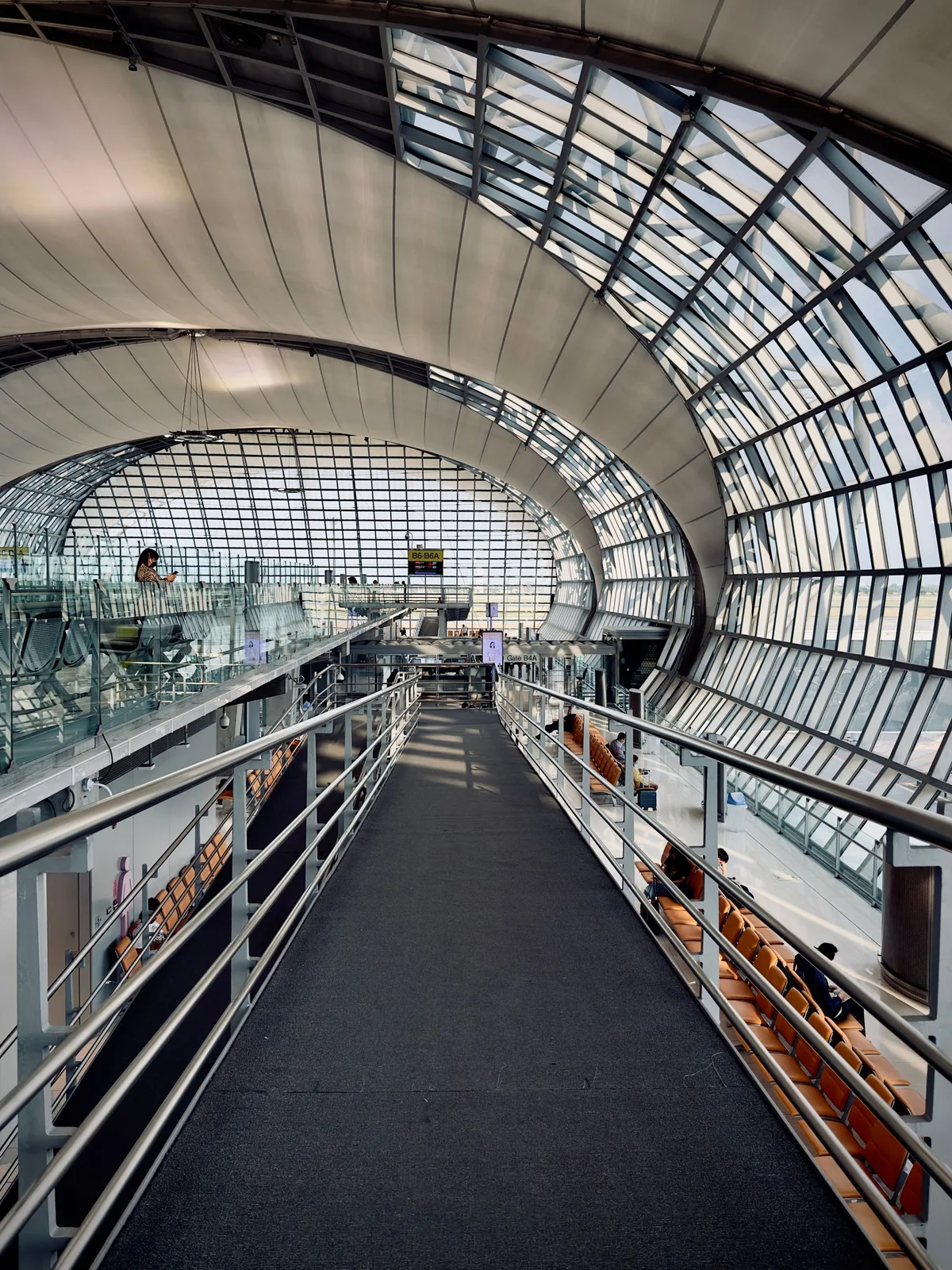
Times are airport to city centre.
Airport Rail Link (BKK)
Basement level at BKK to Phaya Thai; change to the BTS there. Runs ~05:30–24:00 and now takes contactless bank cards.
Dark Red Line train (DMK)
DMK station to Krung Thep Aphiwat Central Terminal; change to the MRT Blue Line for the centre.
Metered taxi (BKK)
Official kiosk on Level 1 prints your driver’s details. Add the flat ฿50 airport surcharge and about ฿75 of expressway tolls.
A1 bus (DMK)
To Mo Chit BTS and Chatuchak; the A2 runs to Victory Monument for the same fare. Traffic decides everything.
Two airports, two plans: BKK 30 km east of the centre, DMK 25 km north. Pick your route by airport:
Inside the city, let the trains do the work: BTS fares run ฿17–65, the MRT Blue Line ฿17–44, both by distance. The systems sell separate tickets — a Rabbit stored-value card covers the BTS; MRT gates take contactless bank cards directly. Grab is the ride-hailing app to have, with Bolt as a cheaper backup, and the orange-flag Chao Phraya express boats are the cheat code for the old town without the traffic.
Connecting between airports? A free shuttle bus links BKK and DMK for passengers with an onward flight from the other — allow at least an hour for the drive, plus buffer. For zero-decision late-night arrivals, a Welcome Pickups driver meets you in arrivals with a fixed price agreed up front.
In the city
Do the Grand Palace first, and go early.
The palace complex and Wat Phra Kaew, home of the Emerald Buddha, open at 8:30am — arrive at opening to beat the heat and the tour groups. Entry is ฿500, the ticket office closes at 3:30pm, and the dress code is strictly enforced: shoulders and knees covered, no exceptions, no leggings. Book Grand Palace and temple tickets on Tiqets to sort the paperwork before you go.
Cross the river between the two great wats.
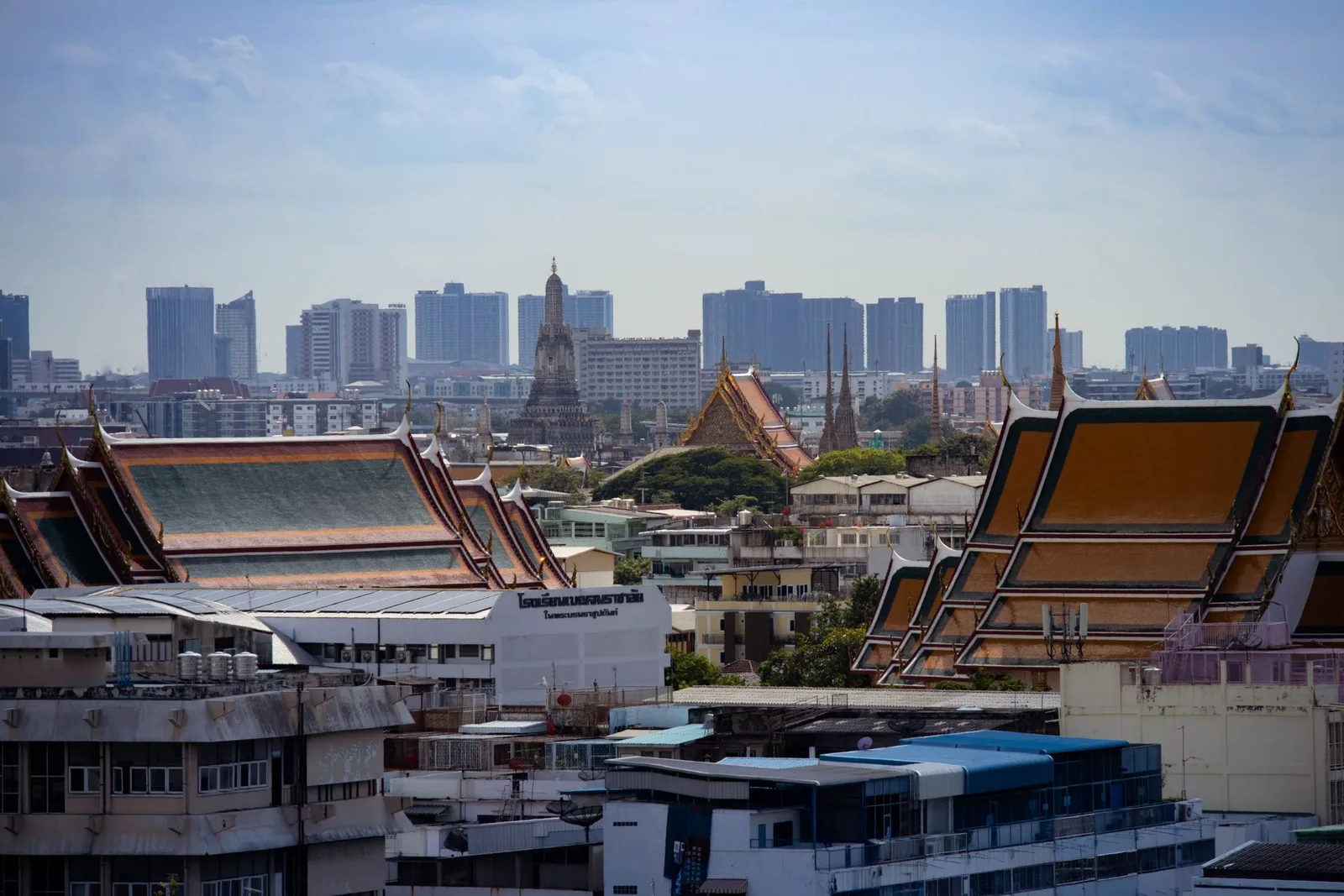
Wat Pho, a short walk south of the palace, holds the 46-metre Reclining Buddha and Thailand’s most famous traditional massage school — entry ฿300, open 8:00am–6:30pm. From Tha Tien pier, the cross-river ferry costs a few baht to Wat Arun, the Temple of Dawn, its porcelain-clad prang climbing from the riverbank — entry ฿200, open 8:30am–6:00pm. Both temples are cash only — keep small notes handy.
Take to the canals and the weekend market.
Old Bangkok was built on khlongs; the Thonburi canals on the west bank still run longtail boats past stilt houses and orchards. Rent a bike through BikesBooking and ride the quiet lanes of Banglamphu and the riverside. Save Saturday or Sunday morning for Chatuchak Weekend Market — thousands of stalls, free to wander, the best place in Thailand to fill a suitcase.
Eat your way down Yaowarat at night.
Bangkok’s Chinatown turns into the city’s greatest open-air dining room after dark: wok smoke, neon signs, bird’s nest soup and grilled seafood. The Jim Thompson House (฿250, open 9:00am–6:00pm) makes a calmer daytime contrast. If you want the highlights stitched together, a Klook Bangkok city tour covers temples and canals in a day — or book an Ayutthaya day trip for the ruined old capital, the one sight worth leaving the city for.
After you land in Bangkok: Bookable experiences
Where to stay your first nights
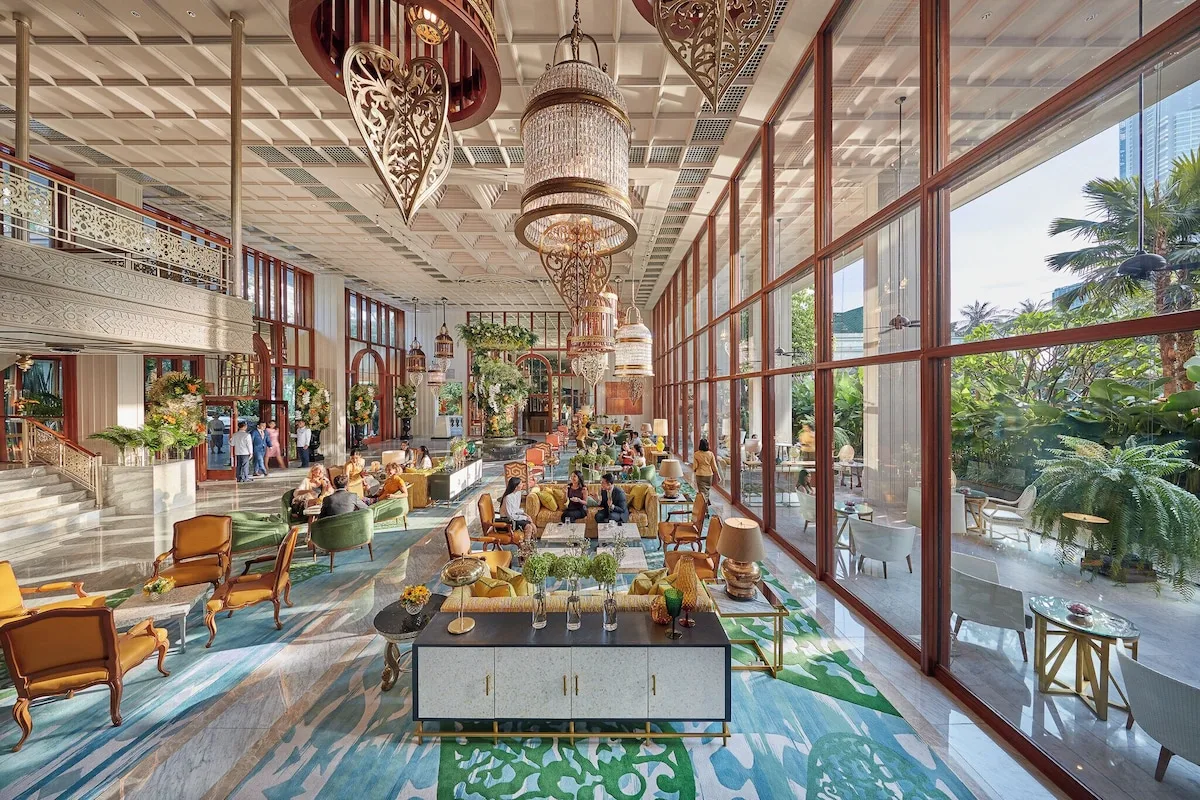
Mandarin Oriental Bangkok.
Best for a special occasion48 Oriental Avenue, Charoen Krung Road, Bang Rak. Opened in 1876 as The Oriental, the grand dame of Asian hotels: 150 years of writers, royalty and Chao Phraya river views. Afternoon tea in the Authors’ Lounge, jazz in the Bamboo Bar, and complimentary shuttle boats to the Skytrain and ICONSIAM.
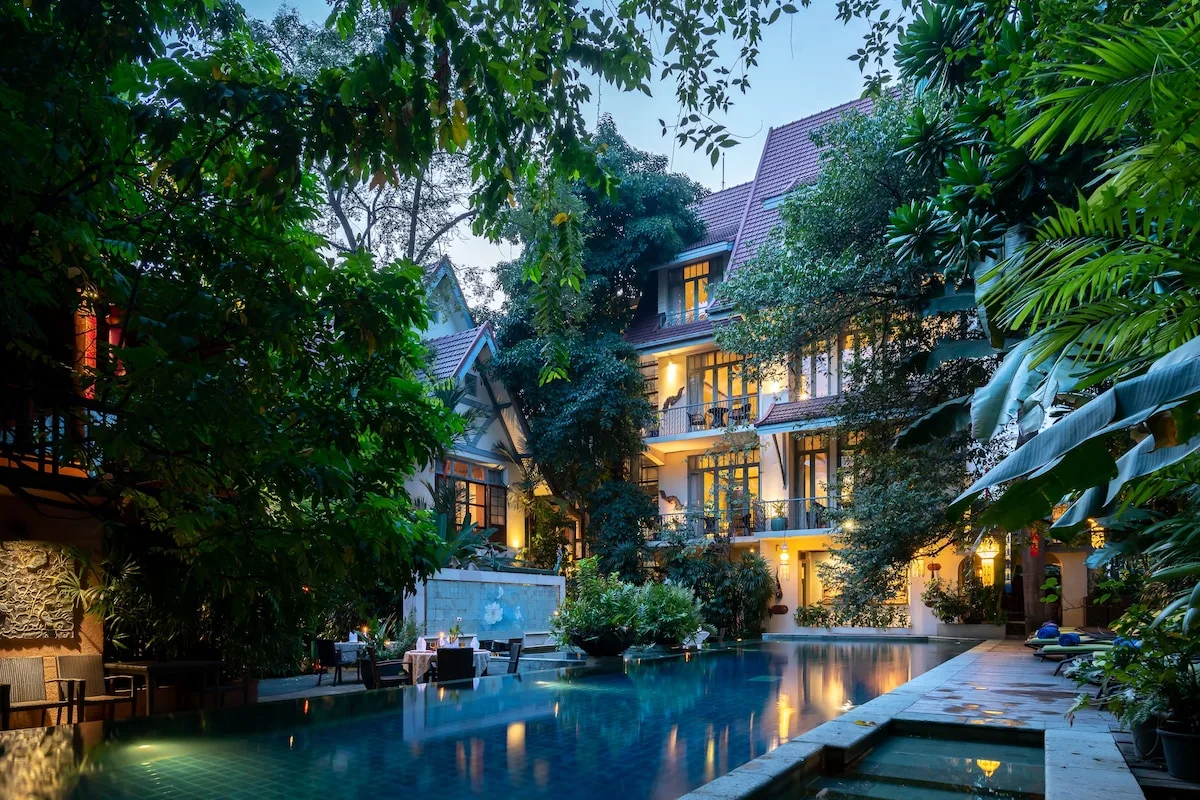
AriyasomVilla.
Best for a quiet garden stay65 Sukhumvit Soi 1, Khlong Toei Nuea, Watthana. A 1942 family villa turned 24-room boutique, hidden in frangipani gardens down a quiet soi — pool, spa and one of the city’s best vegetarian restaurants, with Ploen Chit BTS eight minutes’ walk away. The calmest sleep in downtown Bangkok.
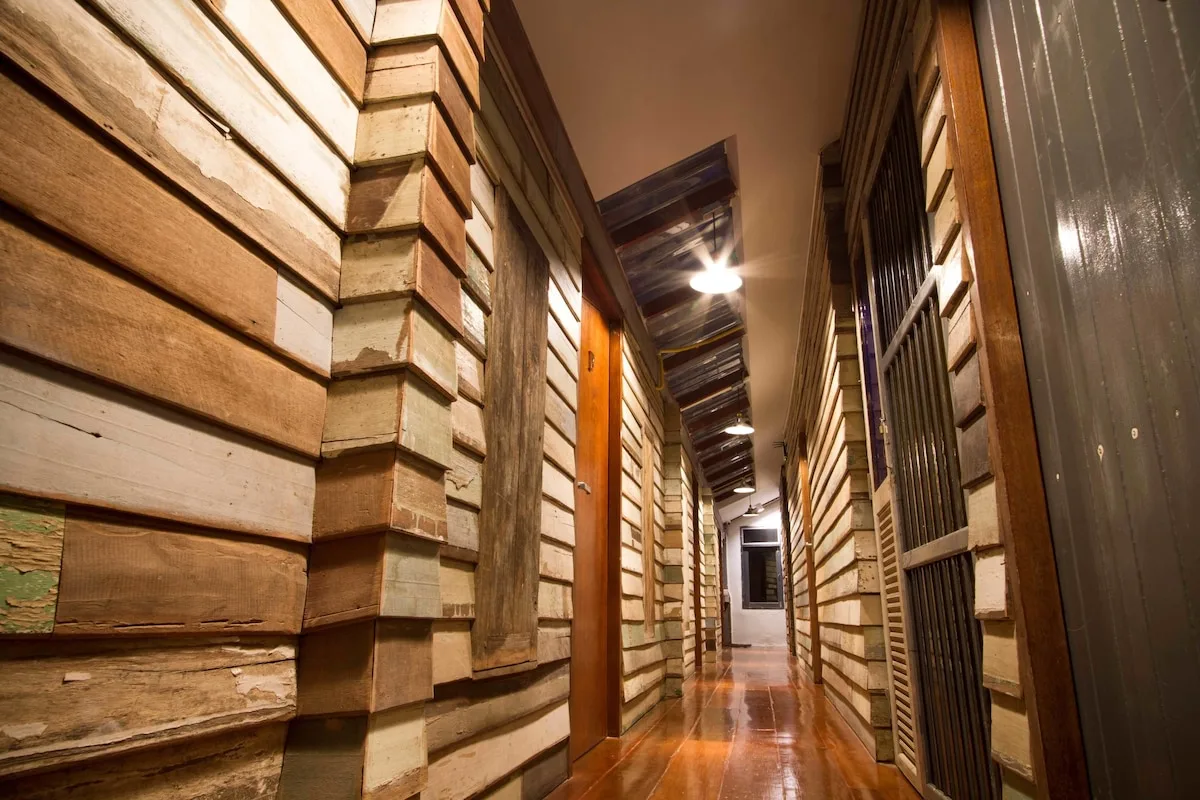
Here Hostel Bangkok.
Best for the old town on a budget196/3-8 Ratchadamnoen Klang Road, Bowon Niwet, Phra Nakhon. One of Bangkok’s top-rated hostels: curtained dorm bunks, private rooms, a pool, a garden bar and a famous indoor slide. Ten minutes’ walk from Khao San Road, an easy stroll to the Grand Palace — social without being rowdy.
Where to eat first
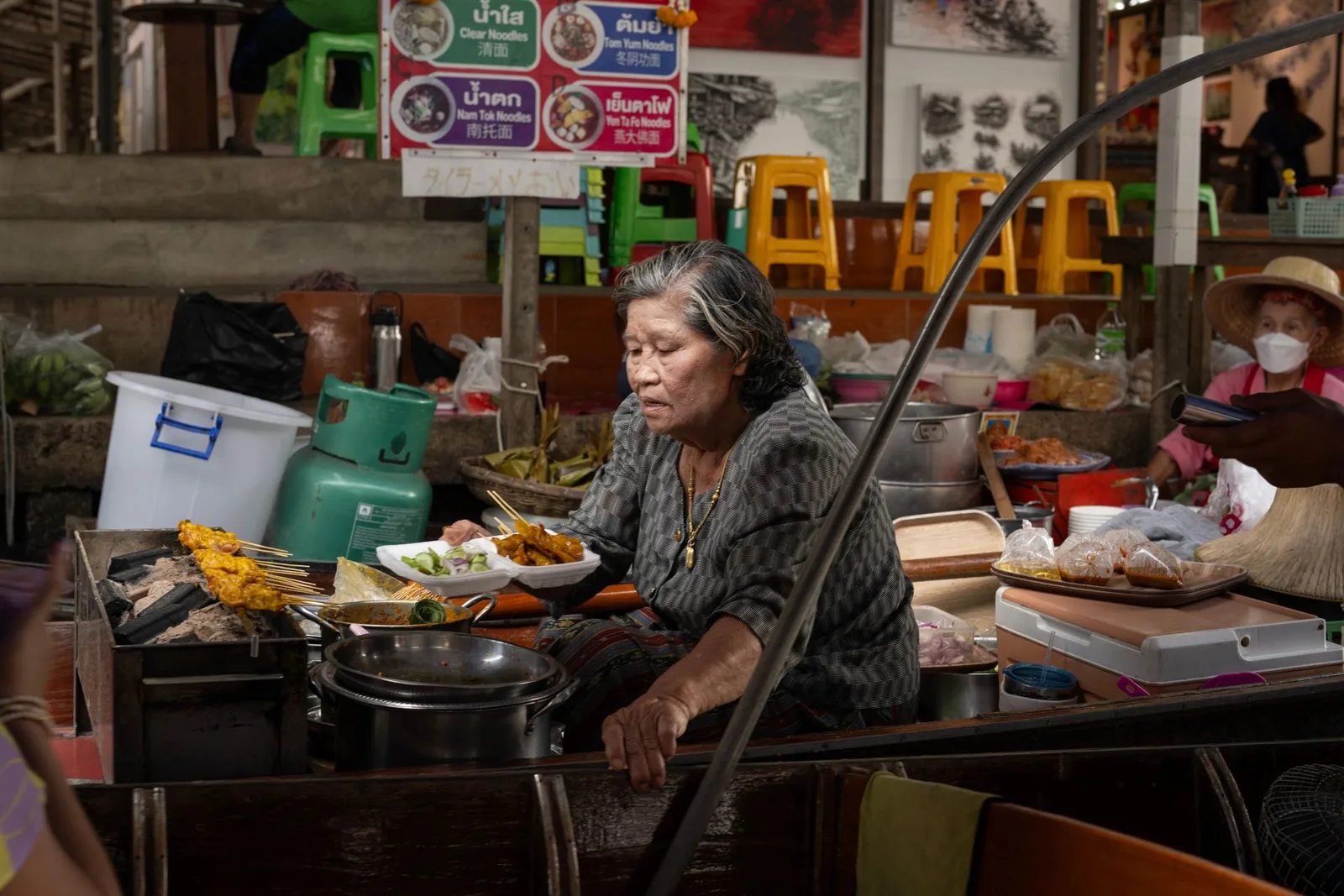
Jay Fai — the Michelin-starred wok legend.
Map → 327 Maha Chai Road, Samran Rat, Phra Nakhon. One woman, one charcoal wok, a pair of ski goggles: Jay Fai cooks every dish herself, and the crab omelette — around ฿1,500 and worth it — is Bangkok’s most famous plate. Open Wednesday to Saturday only, 9:00am–7:30pm; reserve ahead or queue early.
Thipsamai — the pad thai institution.
Map → 313–315 Maha Chai Road, Samran Rat, Phra Nakhon. A few doors from Jay Fai and cooking since 1966: pad thai wrapped in a lacy egg crepe, charcoal-fired woks, fresh-squeezed orange juice by the bottle. Doors open at 5:00pm; the queue forms before that.
Jeh O Chula — the late-night tom yum.
Map → 113 Charat Mueang Road, Pathum Wan, off Banthat Thong Road. A Michelin Bib Gourmand shophouse whose signature is a steaming pot of Tom Yum Mama — instant noodles elevated with pork balls, seafood and raw egg yolks you stir in yourself. Open 4:30pm to midnight; arrive at opening or take a queue number.
Order — mango sticky rice.
Sweet coconut glutinous rice with ripe mango and a sesame sprinkle — on every market street from April mango season onward; the correct Bangkok dessert.
Order — som tam.
Green papaya salad pounded to order with lime, chilli, peanuts and dried shrimp. State your chilli count clearly — Thai hot is not a figure of speech.
Skip — the Khao San Road gimmicks.
Buckets of spirits, scorpions on sticks and picture-menu pad thai at triple prices. Walk ten minutes toward the river and eat where the taxi drivers eat.
Day trips and more
Three classic days out cover old Siam, river life and the palace circuit. Temple and attraction tickets on Tiqets cover the city sights if you prefer everything booked ahead.
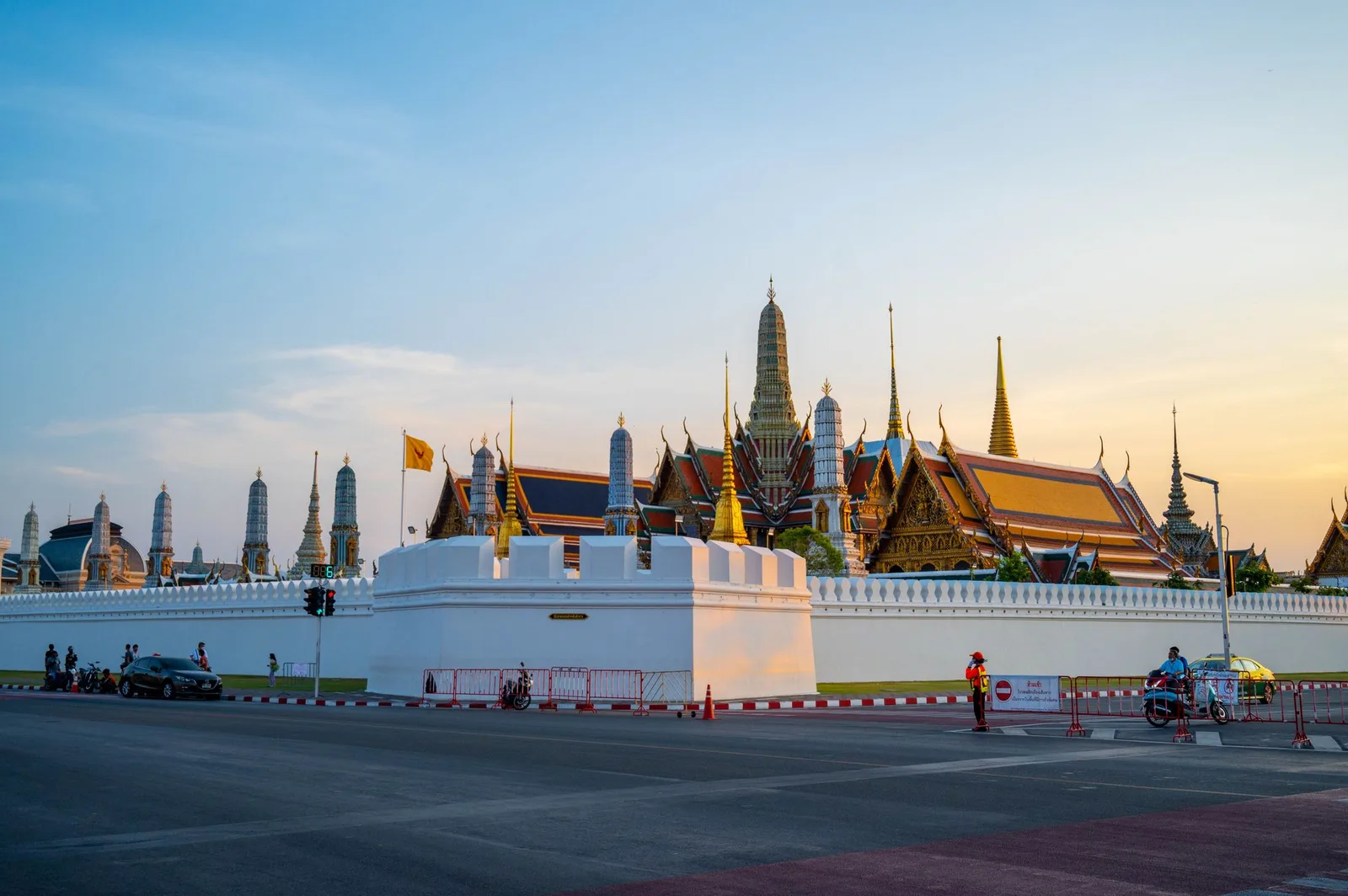
Grand Palace and Wat Pho
The essential old-town circuit: the Grand Palace and the Emerald Buddha for ฿500, then the Reclining Buddha at Wat Pho for ฿300. Arrive at the 8:30am opening and dress for the strict code — shoulders and knees covered.
Check availability →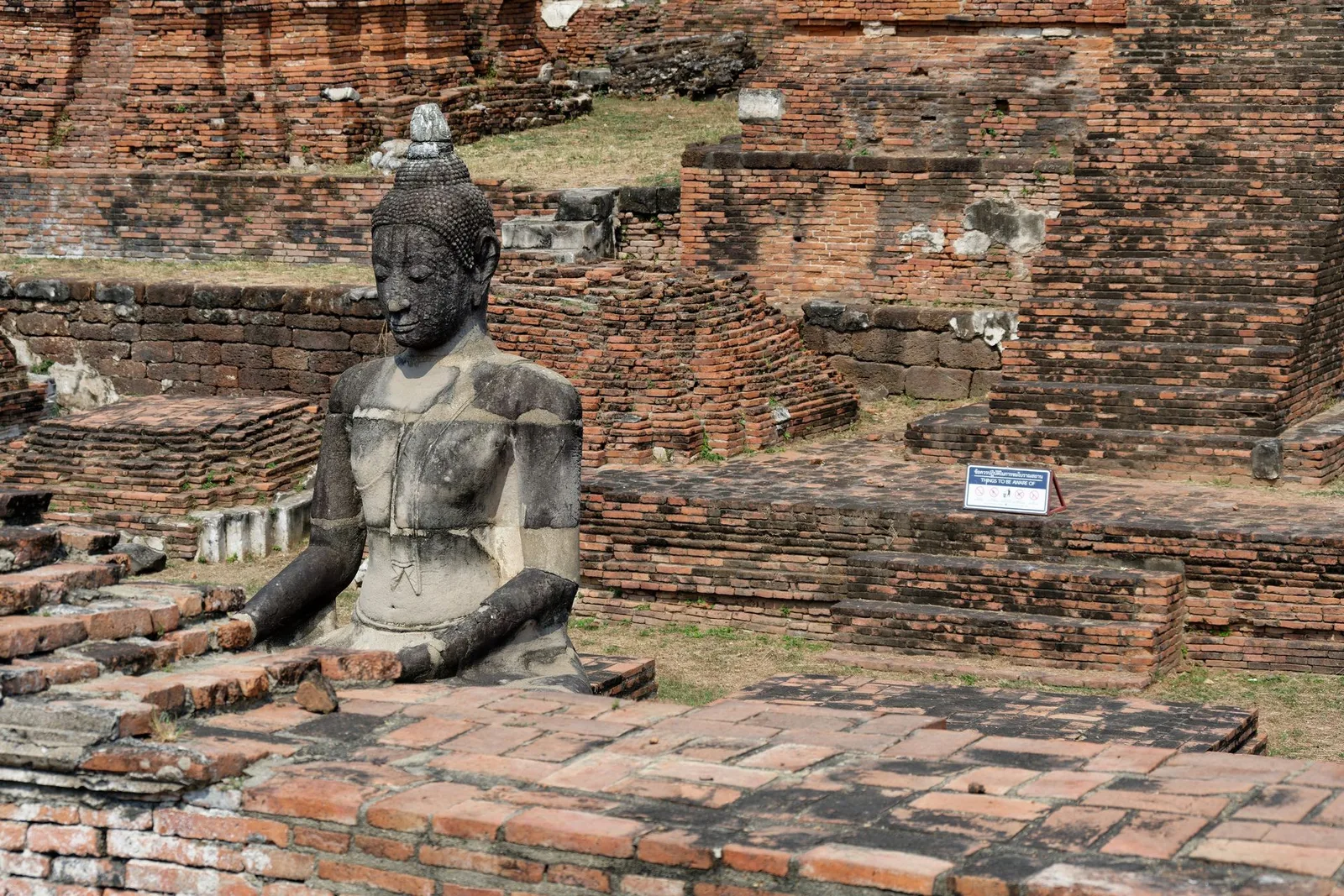
Ayutthaya temples
The capital of Siam from 1351 to 1767, now a UNESCO-listed island of ruined prangs and headless Buddhas — including the famous Buddha head cradled in banyan roots at Wat Mahathat. Temples charge ฿50–80 each; trains from Krung Thep Aphiwat take about 1.5 hours, and bicycles rent at the station.
Check availability →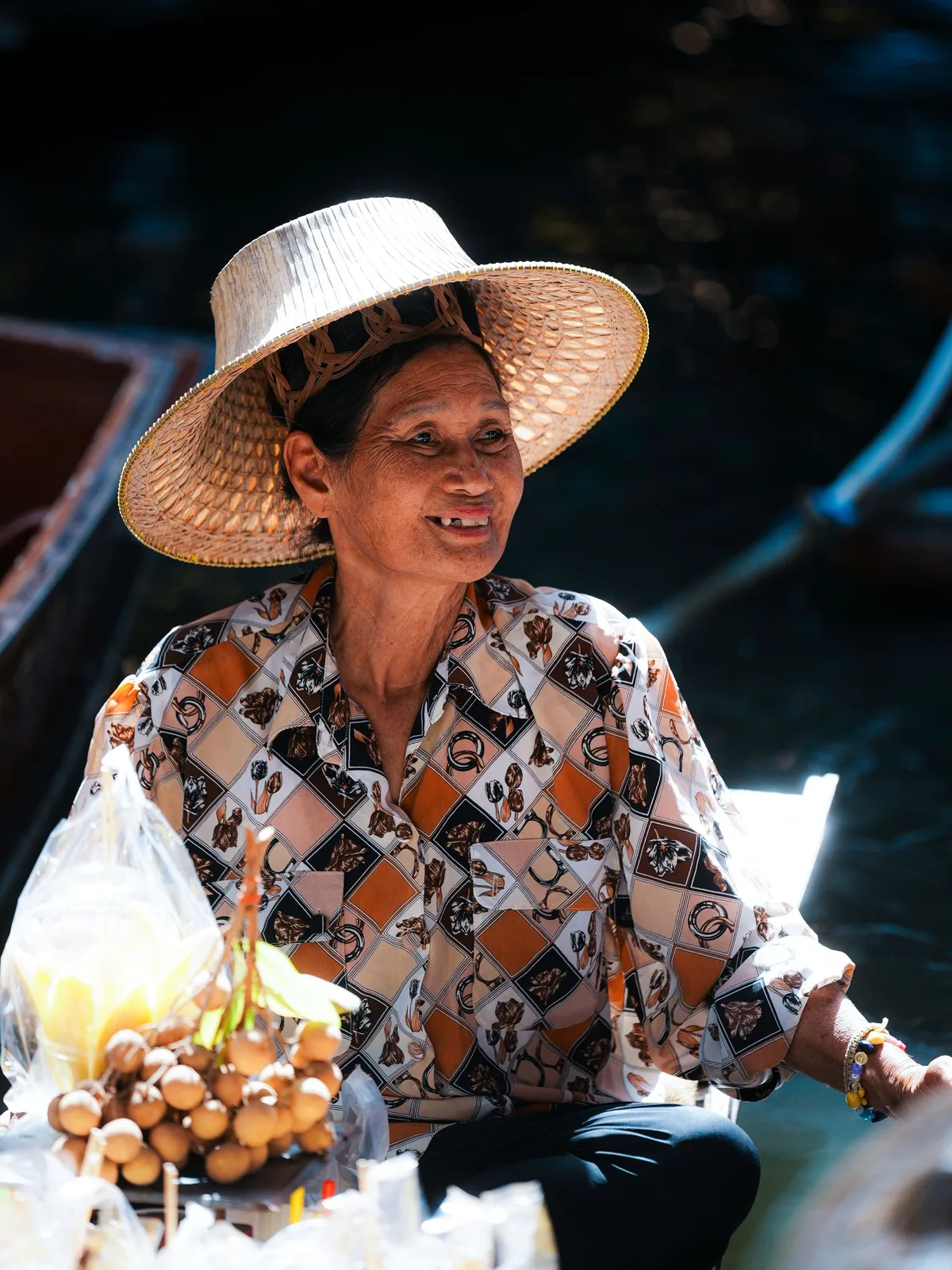
Damnoen Saduak floating market
Thailand’s most photographed market, about 100 km southwest of the city: paddle boats piled with mangoes, noodle soup and coconut pancakes on a canal dug by order of Rama IV. Go at dawn before the crowds, agree the boat price before you climb in, and pair it with the Maeklong Railway Market nearby.
Check availability →Staying longer? Kanchanaburi, about 2.5 hours west, pairs the River Kwai bridge with the Erawan Falls’ emerald pools. Amphawa’s floating market runs Friday to Sunday evenings and feels far more local; Hua Hin puts a proper beach three hours away by train.
When to go and what it costs
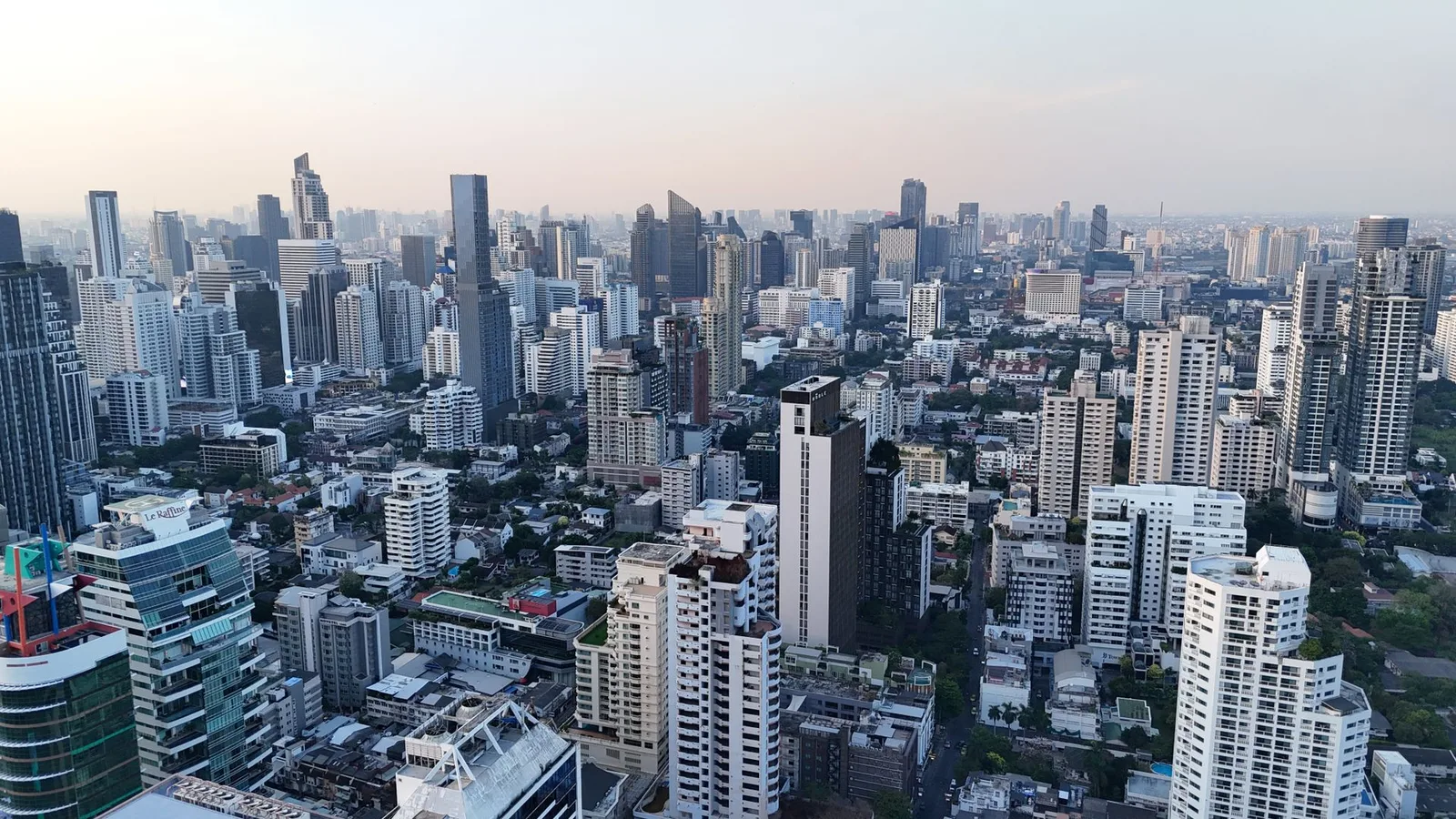
November to February is the window everyone wants: dry days, cooler evenings, temperatures a good ten degrees below the April peak. March to May is the hot season — 35°C and rising, with the Songkran water festival on 13–15 April as the glorious exception. June to October brings the monsoon: dramatic afternoon downpours, occasional flooded streets and the year’s lowest hotel rates, though storm-disrupted flights do happen — AirHelp can claim compensation if yours is cancelled or seriously delayed.
Daily budgets, as rough bands: budget ฿1,200–2,000 covers hostels, street food, rail fares and a temple or two; mid-range ฿3,500–6,000, boutique hotels, proper restaurants and a day trip; splurge ฿12,000+, the riverside grande dames, private guides and Jay Fai without blinking. Hotels swing hardest: December and January book out early; monsoon rates can drop by a third.
What to pack
Tap items to check them off — your list is saved on this device.
Pack for heat, downpours and temple dress codes.
- Comfortable walking shoes Shop walking shoes on Amazon →
- Sunscreen Shop sunscreen on Amazon →
- Reusable water bottle Shop water bottle on Amazon →
- Phone charger and power bank Shop power bank on Amazon →
- Daypack Shop daypack on Amazon →
- Sunglasses Shop sunglasses on Amazon →
- Light rain jacket Shop rain jacket on Amazon →
As an Amazon Associate I earn from qualifying purchases.
Language, visa and entry
✓ Visa-free entry
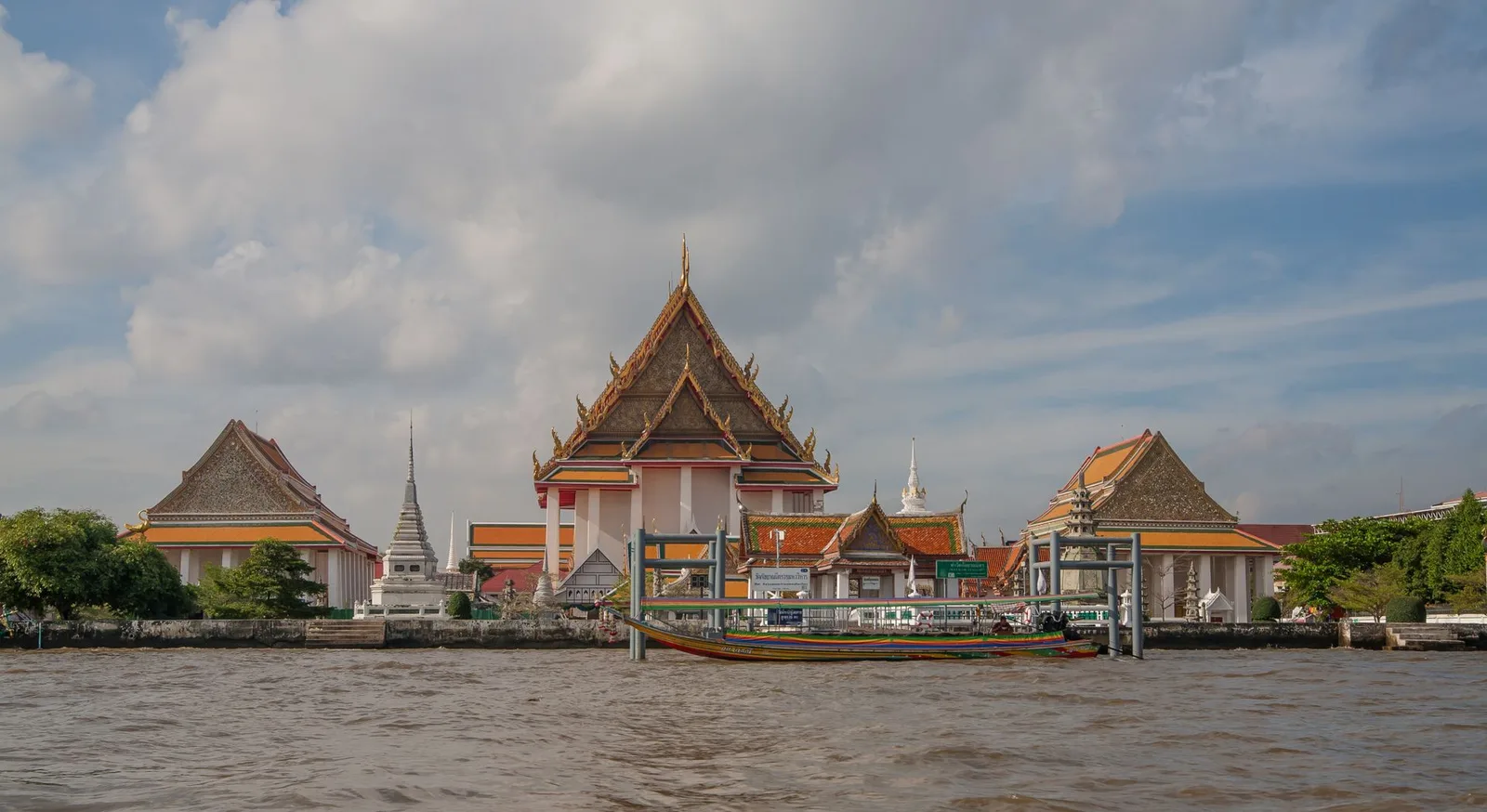
Thai is a tonal language: the same syllable can carry five meanings on five pitches. English is widely understood in hotels, malls and tourist districts, patchier in markets and side streets — speak slowly, smile, let a translation app carry the rest. The standard greeting is the wai: palms pressed together, a small bow, and the word sawasdee. Men end polite sentences with the particle khrap, women with kha, so sawasdee khrap or sawasdee kha earns warmth.
Every foreign visitor must file the Thailand Digital Arrival Card before landing. It replaced the old paper form on 1 May 2025, it is completely free on the official immigration portal at tdac.immigration.go.th, and you submit it within the three days before your arrival date, then keep the QR code it emails you. Beware lookalike websites that charge a fee for the same form — the real one never asks for money. The card is an arrival registration, not a visa, and a fresh one is needed for every entry.
On visas, the rules tightened recently: since 15 September 2026, visa-free entry gives 30 days to citizens of 60 countries and territories, including the United States, the United Kingdom, Canada, Australia, Japan, Singapore and the European Union states — down from the 60 days that applied before. One extension of up to 30 more days is available at a Thai immigration office for ฿1,900, and some nationalities hold longer or shorter stays under bilateral agreements, so check your own passport’s category before you book. Visa-exempt entries by land are capped at two per calendar year, and officers can ask to see an onward ticket and proof of funds. One hard rule to know before you pack: e-cigarettes and vapes are banned outright in Thailand, for import, sale and possession alike — leave them at home.
Safety and health
Gem and tailor scams
A friendly stranger says the Grand Palace is closed today, then steers you to a tuk-tuk tour ending at a gem shop or tailor with a one-day-only sale. The palace is open every day, the gems are worth a fraction of the price, and there is no resale fortune back home. Smile, walk away, go to the palace.
Tuk-tuk fares
Tuk-tuks have no meters — agree the price before you climb in, and expect to haggle; the first quote is rarely the real one. Check the same ride in Grab first to know what fair looks like. In metered taxis, insist the meter is on, or get out and flag the next one.
Heat and hydration
Bangkok heat ambushes: 35°C with heavy humidity drains you faster than you notice. Carry water, duck into air conditioning often, and do your temple walking before 11am. Bottled water is the rule, restaurant ice is factory-made and safe, and a 7-Eleven is never more than a few minutes away.
Traffic
Thailand drives on the left, so look right first — then look again. Motorbikes use pavements, run red lights and appear from every blind spot, and crossing wide Bangkok roads on foot is the riskiest thing most visitors do. Use footbridges, Skytrain stairs and marked crossings.
Related destinations
If you liked Bangkok, try these next:
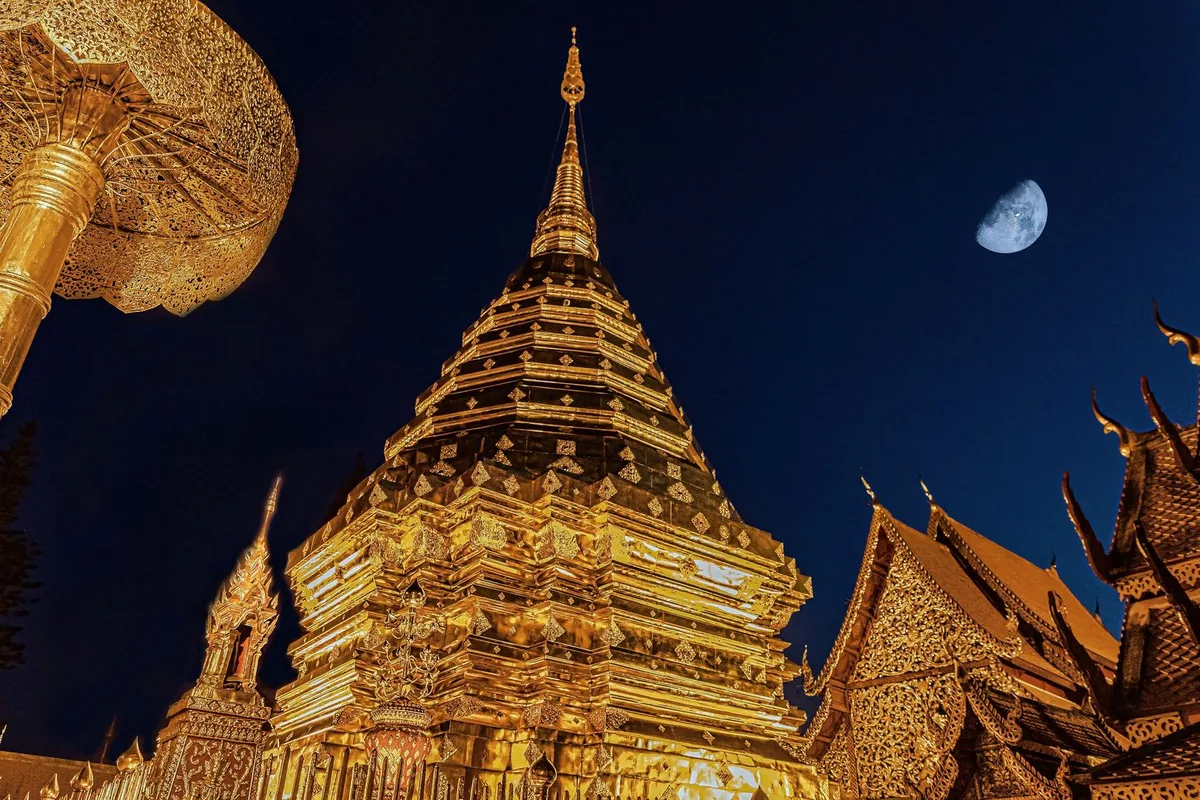 Asia & Pacific
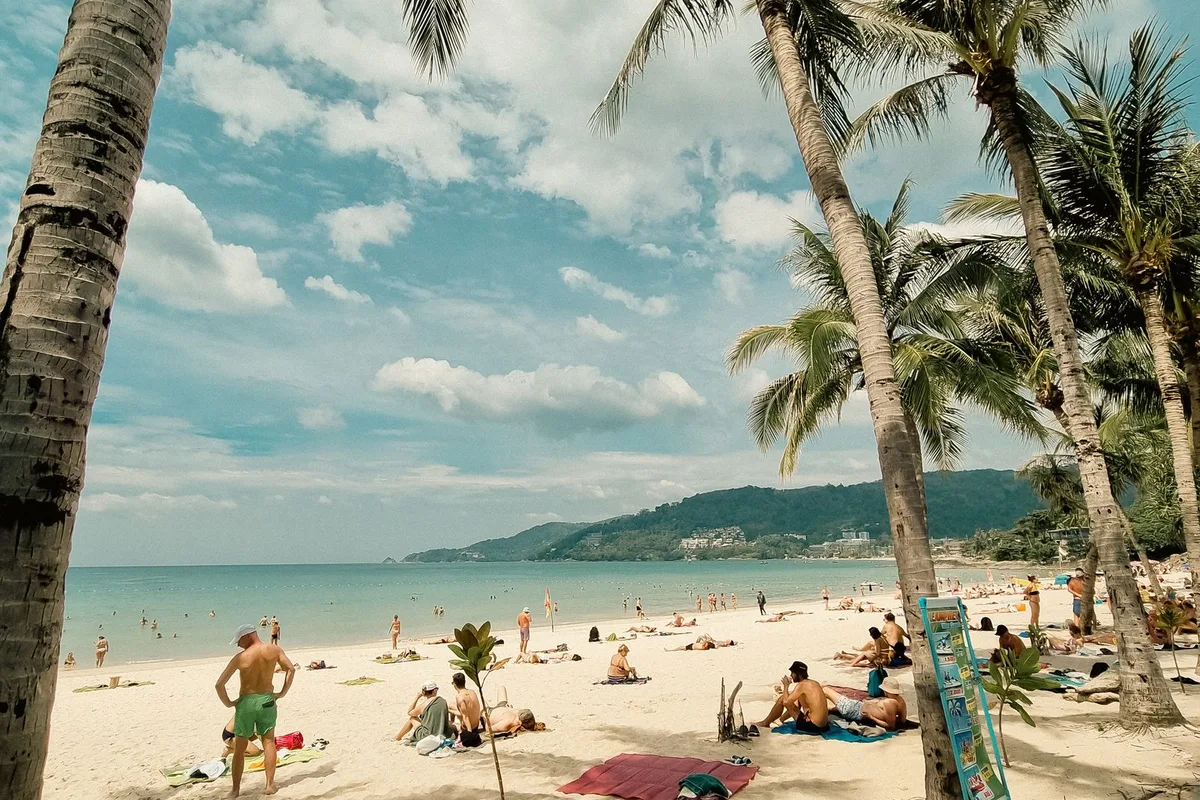 Asia & Pacific
 Asia & Pacific
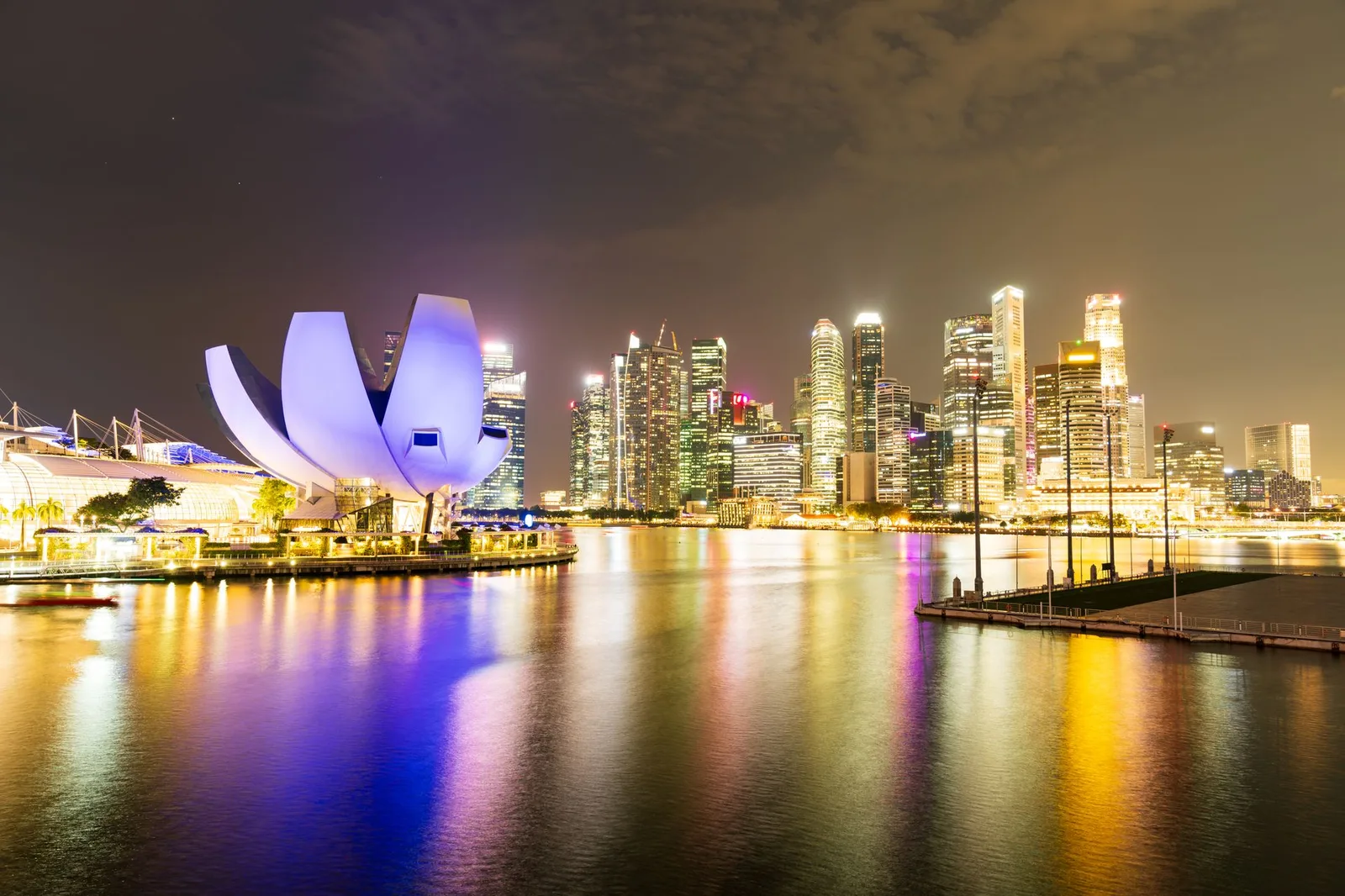 Asia & Pacific
 Asia & Pacific
 Asia & Pacific
 Asia & Pacific
 Asia & Pacific
 Asia & Pacific
 Asia & Pacific
Frequently asked questions
The facts that matter after you land in Bangkok.
Verified against Bangkok transit, temple and Thai immigration sources, October 2026.
The Airport Rail Link runs to Phaya Thai in about 30 minutes for a flat ฿45 - the fastest way past Bangkok traffic.
A metered taxi costs about ฿300-400 plus the ฿50 airport surcharge and expressway tolls.
The Thailand Digital Arrival Card is mandatory since May 2025 - fill it in free at the official tdac.immigration.go.th within 3 days before you arrive.
You get a QR code by email; beware lookalike sites that charge for the free form.
Since 15 September 2026 the visa exemption is 30 days for 60 countries and territories, including the US, UK, Canada, Australia and the EU - it was 60 days before that change.
One 30-day extension is available at immigration offices for ฿1,900.
No. Drink bottled or filtered water - it is cheap everywhere.
Ice from commercial factories (the tubular kind) is made from purified water and is fine.
Thailand uses Type A, B, C and O sockets at 220 volts - most sockets accept both flat and round pins.
A universal adapter covers everything; US plugs fit many sockets but check voltage on older devices.
November to February is cooler and drier - still warm, but the most comfortable months.
March to May is very hot and June to October is the rainy season, though showers are usually short and sharp.
Airport Rail Link ฿45; Grand Palace ฿500; Wat Pho ฿300; visa exemption 30 days since September 2026; TDAC form required; tap water not safe; Type A/B/C/O sockets at 220V.
Bangkok, in your pocket
Landing soon? Get the printable PDF — ticket links, the airport transport cheat sheet, our 3 restaurant picks with maps, and the packing checklist. Everything above, formatted for your phone.
One email with your Bangkok PDF. Fare changes and new guides after that. No spam, unsubscribe anytime.
Sources and last verified
Fares and rules verified October 2026 against the Thailand Immigration Bureau’s TDAC portal (tdac.immigration.go.th), the Royal Gazette visa-exemption changes of September 2026 as reported by the Ministry of Foreign Affairs and the Tourism Authority of Thailand, 2026 Bangkok airport and rail fare guides (Airport Rail Link ฿45, BTS ฿17–65, MRT Blue Line ฿17–44), the 2026 Bangkok temple fee list at yourthaiguide.com, mandarinoriental.com, Hostelworld and Tripadvisor (hotel and restaurant addresses), and Michelin Guide listings for Jay Fai and Jeh O Chula. Found something out of date? Tell us and we will fix it.
Affiliate disclosure: hotel names, transfers, experiences, and products linked in this guide may earn After You Land a commission at no extra cost to you. Prices and times were checked in Oct 2026 and change often — confirm before you book.