You have just landed in Hanoi — a thousand-year-old capital of lake temples, guild streets and phở steam. Start with a slow lap of Hoan Kiem Lake and a hot bowl. It covers Noi Bai arrivals, temples and museums, street-food corners, Ninh Binh’s karsts, Ha Long Bay in a day, and Sapa when you have the nights.
By Paul GreenUpdated Oct 202614 min readPrices checked Oct 2026
You just landed in Hanoi. Noi Bai sits about 27 km north of the Old Quarter: the orange Bus 86 runs in for 45,000₫ in about an hour, and a Grab car fixes its fare in the app before you move. Sort your Airalo eSIM before you land, and start with a dawn lap of Hoan Kiem Lake — tai chi at the water's edge, then the Old Quarter's phở stalls for breakfast.
Quick facts
Airport
Noi Bai (HAN), about 27 km north of the Old Quarter Terminal 2 international, Terminal 1 domestic, free shuttle between them; no airport train.
Getting in
Bus 86 45,000₫, about an hour to the Old Quarter and Hanoi Station — Grab car about 250,000₫ to 400,000₫, fare fixed in the app; late or loaded, a Kiwitaxi transfer is the fixed-price fallback.
Currency
The dong (VND, ₫) about 26,000₫ to US$1, and cash is king at street level — Anchor: 500,000₫ is about $19, 100,000₫ about $4; stalls and markets take cash, hotels and bigger restaurants cards.
Languages
Vietnamese English in hotels and tourism, thin at the stalls — Vietnamese is tonal; at a stall, pointing, pictures and the four phrases below carry you.
Time zone
ICT (UTC+7), all year Summer sunrises come before 05:30; winter evenings close in by 17:30.
Emergency
113 police, 114 fire, 115 ambulance English is not guaranteed — let your hotel or a bystander call if you can.
Plugs
Two-pin Type A and C fit most sockets, 220 volts Most sockets are combination fittings; British three-pin needs an adapter. A few older buildings hold the odd Type D or G.
Tap water
Not for drinking bottled or filtered only — Hotels provide sealed bottles or a filtered station in every room.
Tourist tax
None Vietnam charges no tourist tax, city levy or per-night visitor fee. — Rates are usually quoted with taxes inside; added lines are VAT and service.
Best months
October and November, then March and April Late autumn: dry and golden, low to mid-20s.
Map
Find your arrival stop, hotel, and first meal. Stays, sights, and landmarks in Hanoi — live hotel prices plus the key places from this guide.
Arrivals has SIM counters and free Wi-Fi; an Airalo or Saily eSIM lands you connected — Grab live from the first kerb.
Carry a first float of cash
T2 ATMs work for a first withdrawal; Ha Trung Street’s gold shops change dollars near interbank rate.
Choose the airport ride by the clock
After about 22:00 the choice narrows: Grab, a metered Mai Linh or G7 taxi, or a pre-booked transfer. Never accept a ride offered inside the terminal.
Learn to cross one road before your first meal
Walk slowly, steadily, predictably, in a straight line; let the bikes stream around you.
Base yourself by the lake
Old Quarter for the doorstep version; French Quarter for boulevards and grand hotels.
Set up Grab before you need it
Register on your home number, add a card: GrabBike for one, GrabCar for a door. Xanh SM’s green electric fleet is the alternative.
Eat a first proper meal, early
Hanoi eats phở for breakfast, bún chả for lunch; the kitchens below keep local hours.
Hoan Kiem Lake is the compass: the Old Quarter’s 36 guild streets north and west, the French Quarter’s boulevards and grand hotels south and east. Base in the Old Quarter and almost everything is a walk.
Getting around
Journey times are approximate and refer to the listed stop — not necessarily your hotel. Allow extra time for waiting, walking, and connections.
Bus 86 express
The travellers' bus: stops at both terminals, air-conditioned with a luggage rack, then runs via Long Bien and the lake's east side to Hanoi Station; every 20-30 minutes, but finished by about 22:00 — pay the conductor in cash
Price45,000₫Journeyabout 50-70 min
Airline shuttle bus
Vietnam Airlines and VietJet run shuttle buses from outside the terminals to their city offices near the lake and the French Quarter — cheap and simple if your hotel is near the drop point, daytime hours only
Priceabout 40,000-50,000₫Journeyabout 45-60 min
Grab car
The fare is quoted in the app before you ride and cannot grow at the kerb; follow the app to the marked pick-up point outside T2
Priceabout 250,000-400,000₫Journeyabout 40-60 min
Metered taxi
Use the official rank outside arrivals and the liveries you can trust — Mai Linh green or G7 — and insist the meter runs
Priceabout 300,000-450,000₫ on the meterJourneyabout 40-60 min
The tourist core is compact — lake to Temple of Literature, about two kilometres — but pavements double as motorbike parking. The airport rides:
GrabBike hops the Old Quarter for 15,000₫ to 40,000₫, GrabCar roughly double; fares quoted before you confirm. Helmet provided on every bike ride — wearing it is the law.
City buses: 7,000₫ to 9,000₫ a ride, cash to the conductor. Metro: Line 2A elevated, Cat Linh to Ha Dong; Line 3’s elevated section Nhon to Cau Giay, tunnel to Hanoi Station still being built. Fares 9,000₫ to 19,000₫.
Cyclos, the slow option for a lake circuit: agree the total price — the trip, not per person — before sitting down. Day-trip cars come with drivers; almost nobody self-drives. Welcome Pickups puts a driver in arrivals, price fixed at booking.
In the city
Pagodas and the lake are free.
Hoan Kiem Lake and Ngoc Son Temple — 50,000₫ via the red Huc Bridge to the island. Circuit at dawn with the tai chi classes; weekend evenings, lakeside streets close to traffic (Friday 19:00 to Sunday night).
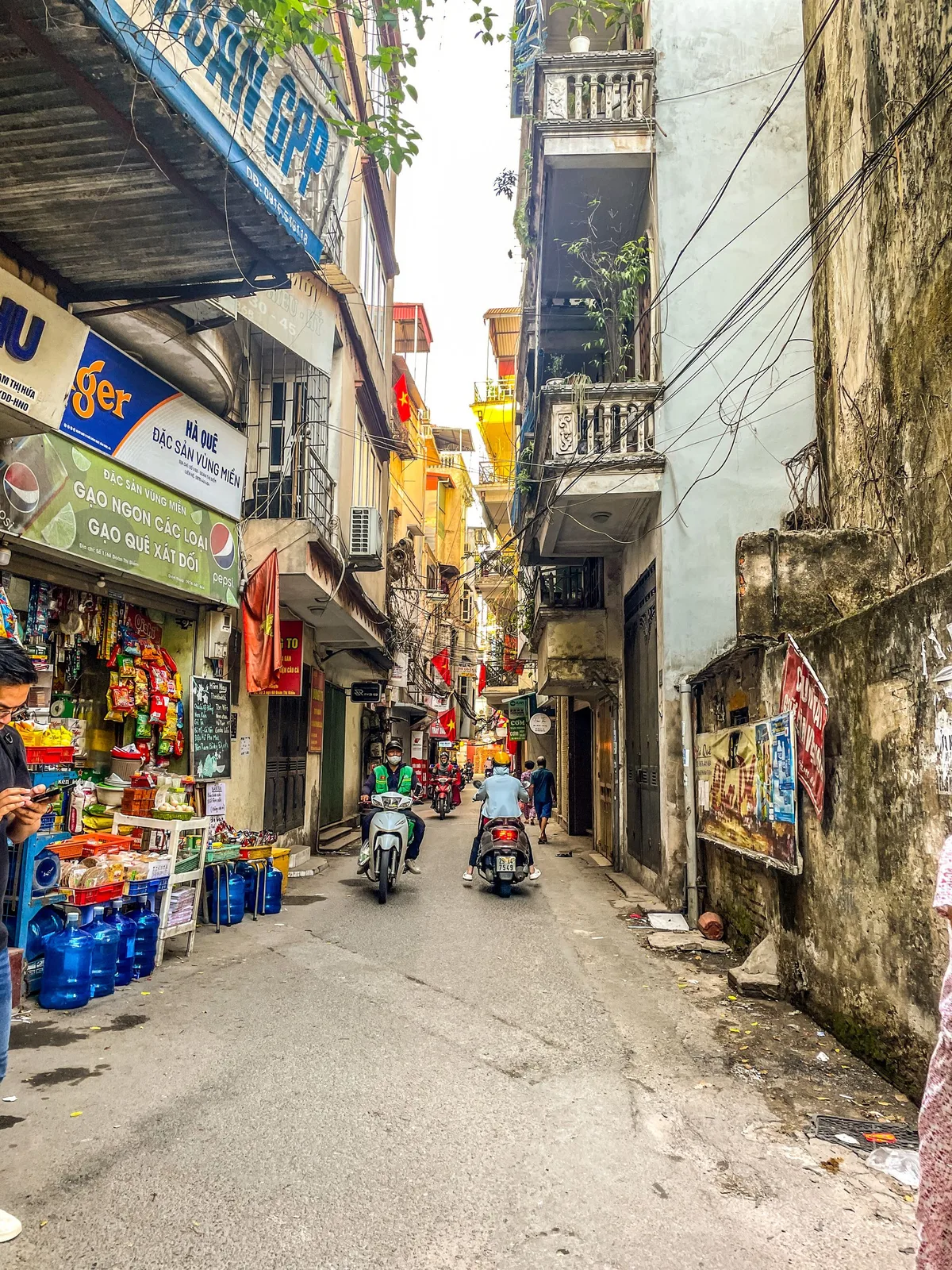
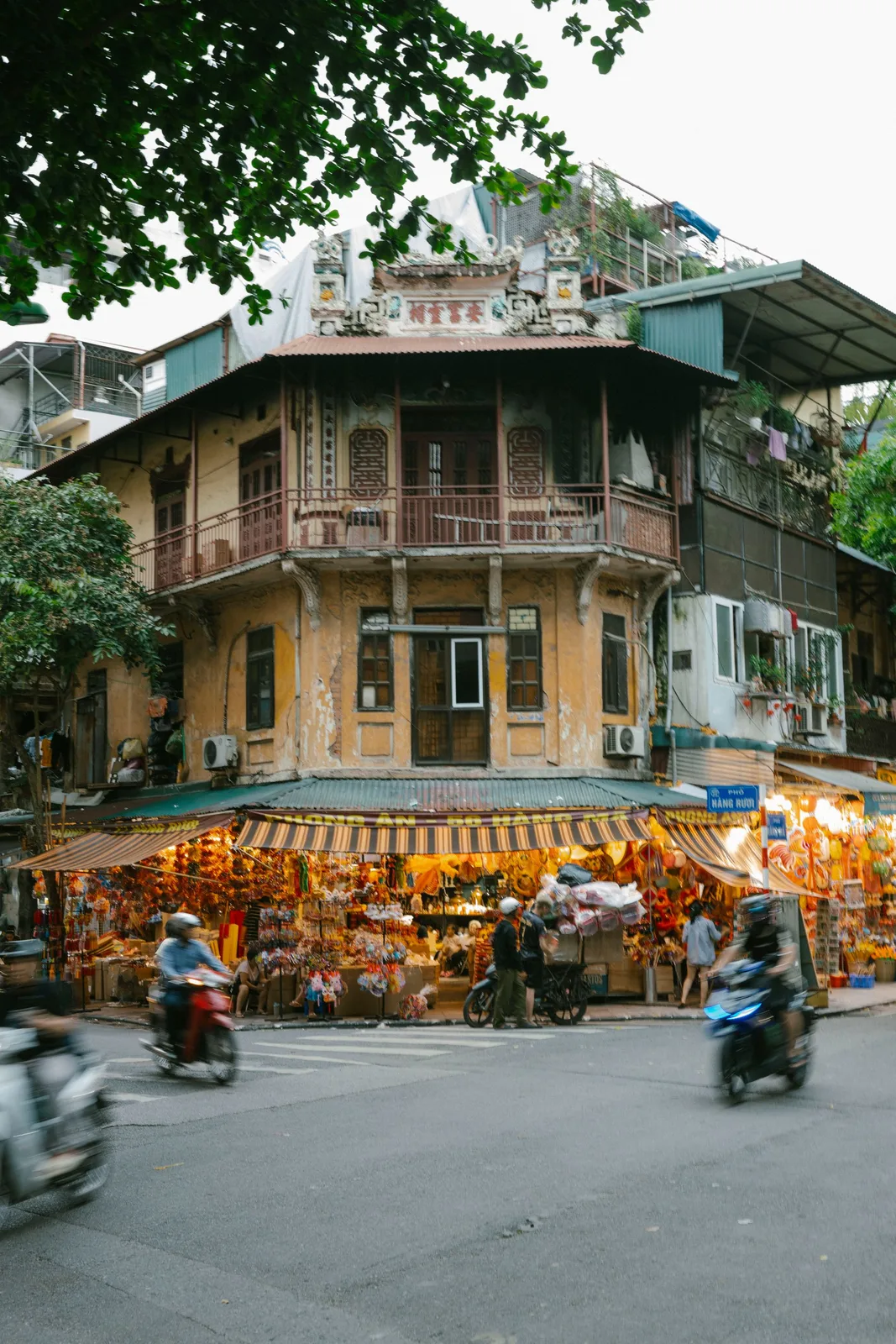
The Old Quarter and Dong Xuan Market — 36 tube-house streets named for old trades: Hang Bac silver, Hang Gai silk, Hang Ma paper offerings. Dong Xuan free to wander; weekend night market down Hang Dao, Fri–Sun evenings.
Temple of Literature — Vietnam’s first university, founded 1076; steles of 82 laureates on tortoises’ backs. 70,000₫, daily; come at opening, shoulders and knees covered.
The Ho Chi Minh Mausoleum and Ba Dinh Square — Free, mornings only: Tue–Thu and weekends, about 7:30–10:30 in warm months, 8:00–11:00 from November; never Mon or Fri. In 2026, closed for maintenance 4 September–2 November. Dress covered; bags and cameras deposited; silence; no photography inside. Beside it: free One Pillar Pagoda; Ho Chi Minh Museum 40,000₫.
Hoa Lo Prison Museum — French-built Maison Centrale, the American POWs’ Hanoi Hilton. 50,000₫; gatehouse, cells, guillotine.
Imperial Citadel of Thang Long — UNESCO-listed seat of power for 13 centuries: palace foundations, Doan Mon gate, D67 bunker complex. 100,000₫.
Vietnam Museum of Ethnology — All 54 ethnic groups in one collection, plus full-size traditional houses in the garden, built by the communities themselves. 40,000₫; 7 km west in Cau Giay; closed Mondays and over Tet. Combined tours with the mausoleum quarter and Temple of Literature daily on GetYourGuide.
Thang Long Water Puppet Theatre — Lacquered puppets on a waist-deep pool, hidden puppeteers, live orchestra. On the lake’s north-east corner; seats 100,000₫–200,000₫ by row; ~50-minute shows; good seats go days ahead.
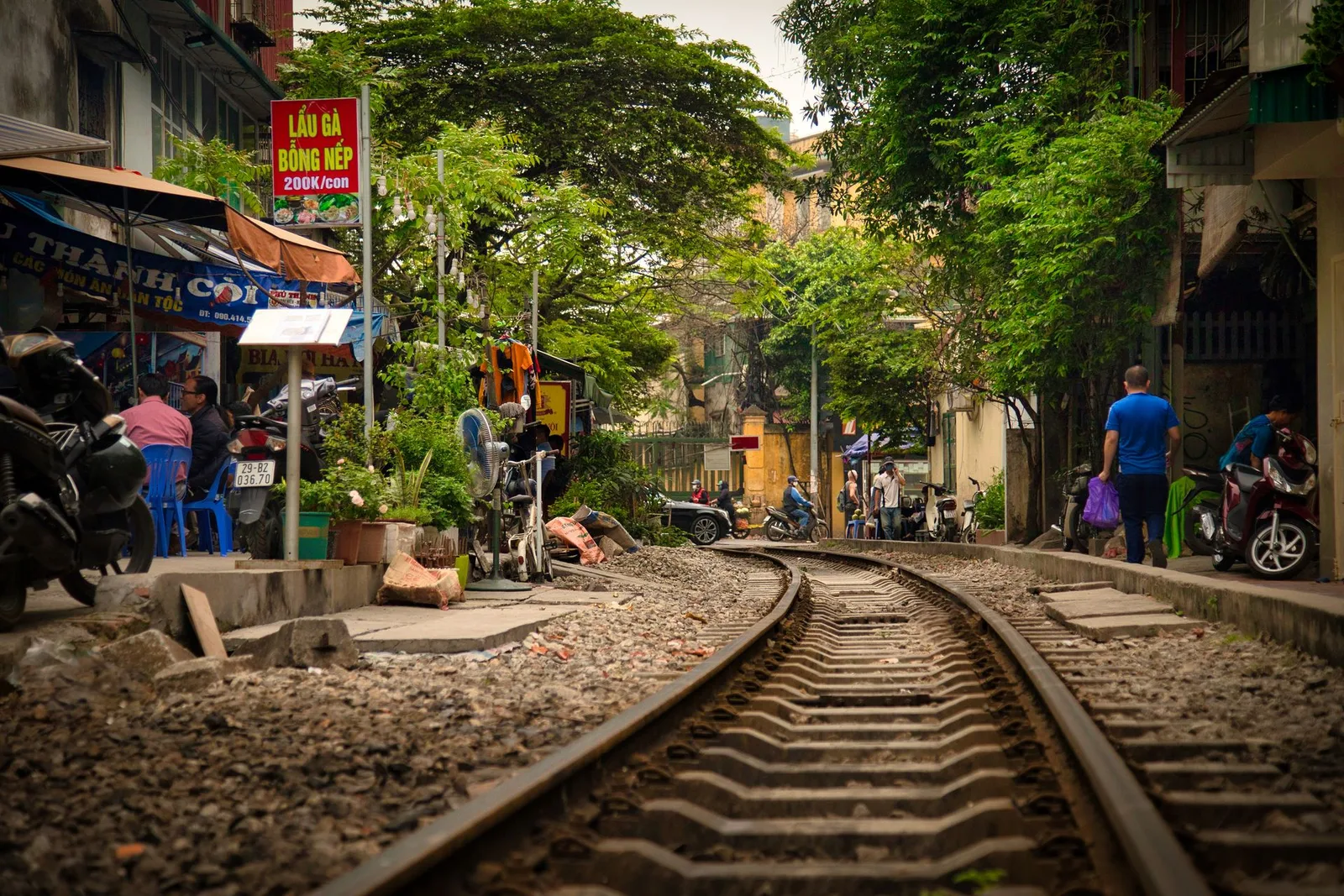
Train Street — Railway threaded between houses near Phung Hung and Tran Phu. Restricted in 2026: agencies asked to stop tours, police periodically close cafés, access via a café seating you behind the barrier. Never on the tracks; if shut, Long Bien Bridge at dawn.
West Lake and Tran Quoc Pagoda — The big lake, ringed by temples and cafés. Tran Quoc, on its islet off Thanh Nien Road, is Hanoi’s oldest pagoda and free — come late afternoon. St Joseph’s Cathedral free outside Mass.
Hanoi’s signature splurge: four hours by bike with a driver-guide, food stops built in. BikesBooking lists tours and rentals.
Compare bundles on Klook against gate prices — a pass earns its keep on puppet seats, the ethnology day, day trips.
After you land in Hanoi: Bookable experiences
Where to stay your first nights
Splurge
Sofitel Legend Metropole Hanoi.
Best for colonial grandeur
The grand dame of 1901 at 15 Ngo Quyen Street, by the Opera House and the lake: white façade, green shutters, a wartime bunker under the garden shown on house tours, and a courtyard pool in the calmest acre in the city.
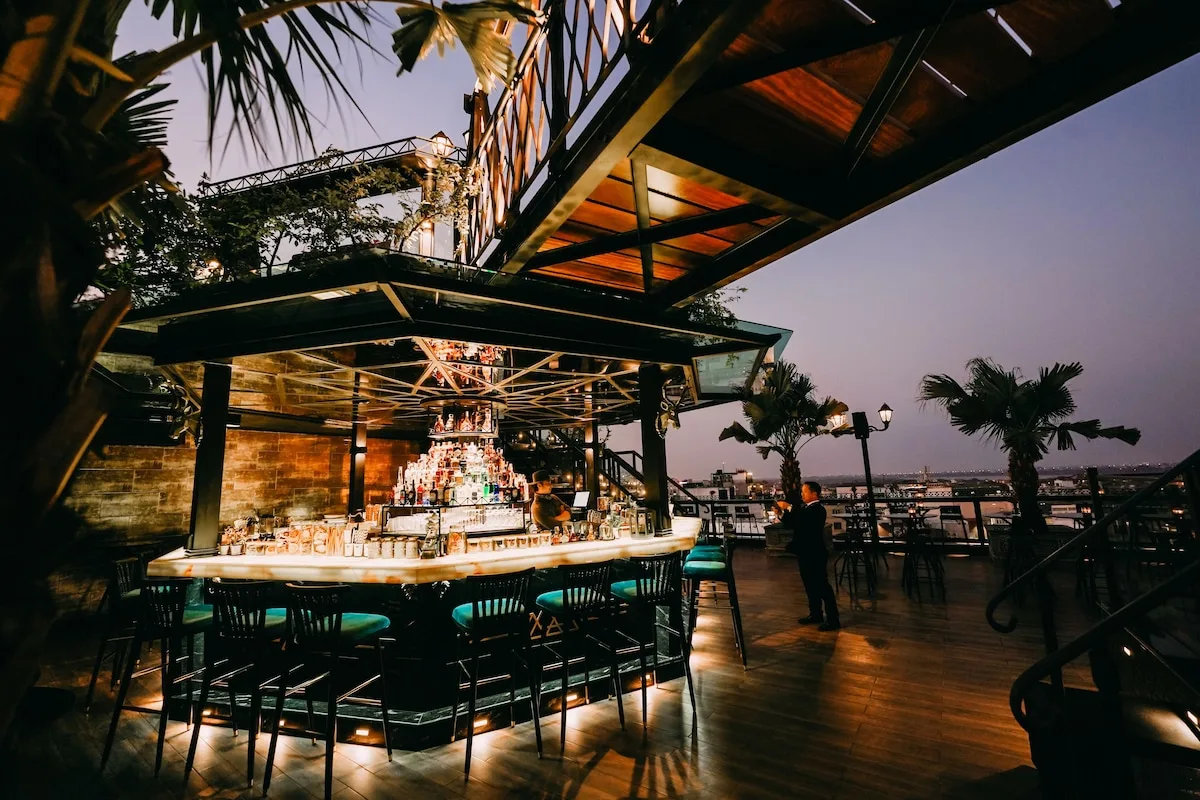
Bill Bensley’s opera-house reverie at 11 Le Phung Hieu Street: 47 suites dressed as 1920s backstage life and a speakeasy in the basement, at rates a step below the grandest landmarks.
The traveller favourite at 94 Ma May Street, deep in the Old Quarter: a boutique hotel on a backpacker street, with a spa and a rooftop bar, at budget prices by this list’s standards.
Three bases. Old Quarter, the first-timer’s answer: lake, food streets, night market at your feet. French Quarter: grand hotels, Opera House, calmer nights, ten minutes from the lake. Ba Dinh and West Lake suit return visitors — a Grab ride to dinner.
In the Old Quarter, ask for a room away from the street side — lanes start early. Rates peak October to April; summer softens them.
Where to eat first
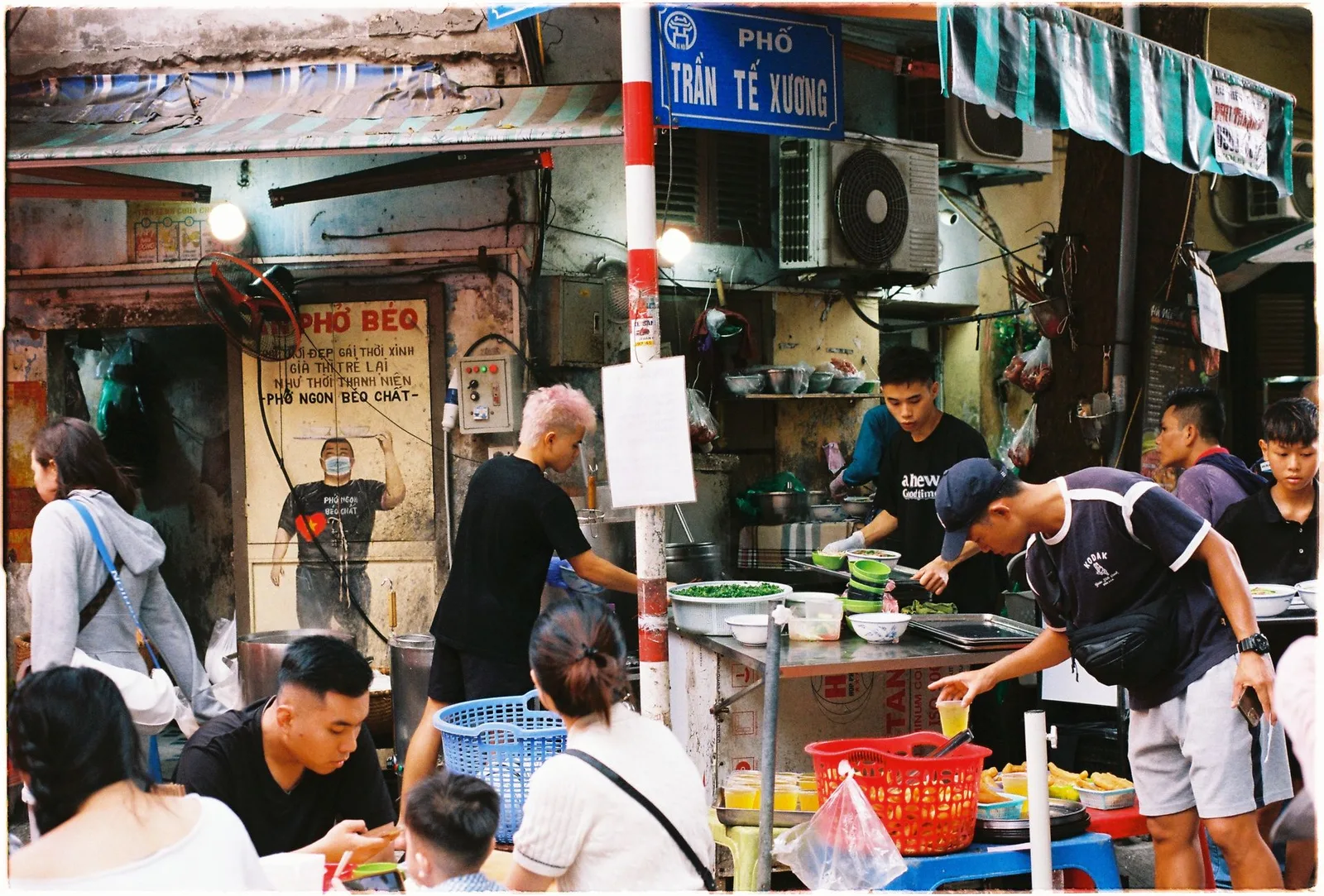
Hanoi’s signature meals run on a timetable: phở breakfast, bún chả late morning and lunch, chả cá evening. All three kitchens below are one-dish specialists, cash only.
Phở Gia Truyền Bát Đàn — the breakfast phở.
Map → 49 Bat Dan Street, on the Old Quarter’s western edge. The city’s most famous beef phở, a Michelin Bib Gourmand: queue, order — tái rare beef, chín well-done — pay, carry your bowl to a shared table. Services roughly 06:00–10:00 and 18:00–20:30; when the pot is empty, the shutters come down.
Bún Chả Hương Liên — the Obama lunch.
Map → 24 Le Van Huu Street, south of the lake. A bún chả house until May 2016, when Obama ate here with Anthony Bourdain — their set survives as the Obama combo: bún chả, seafood spring rolls, a cold Hanoi beer. Open roughly 08:00–20:30; lunch is the main event.
Chả Cá Thăng Long — the turmeric fish production.
Map → 6B Duong Thanh Street, Cua Dong. Chả cá is Hanoi’s own invention — fish in turmeric and galangal, grilled, then sizzling at your table under dill and spring onions, over vermicelli with peanuts. A Michelin Bib Gourmand house: order the classic, ask for mắm tôm shrimp paste for full strength; let staff run the pan first time.
Day trips and more
Ha Long Bay: a long day or gentle overnight. Ninh Binh: the easy rural escape. Sapa: an overnight journey each way. All organised tours from Old Quarter pick-ups; compare options on Tiqets before you book.
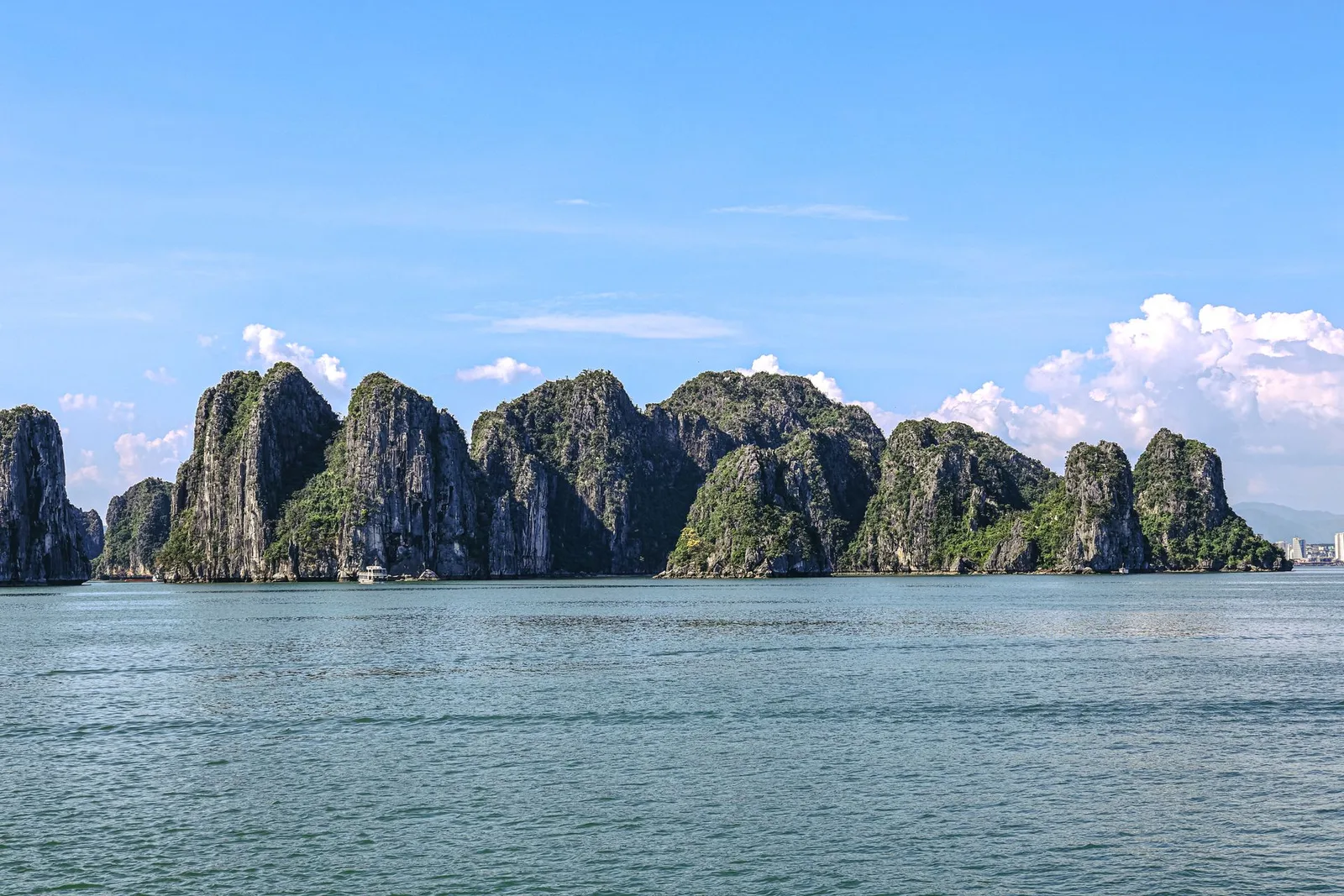
Ha Long Bay
1,600 limestone islands in emerald water, ~2.5 hours by expressway to the Tuan Chau and Ha Long City ports. Day cruises: five or six hours on the water — Surprise Cave, kayak or bamboo boat through Luon Cave, Titop Island climb; overnight boats sleep among the karsts. Bay ticket and port fee normally bundled. June–September, typhoons can suspend departures at a day’s notice; refunds per operator’s terms.
About 2.5 hours each way · Day cruise or overnight
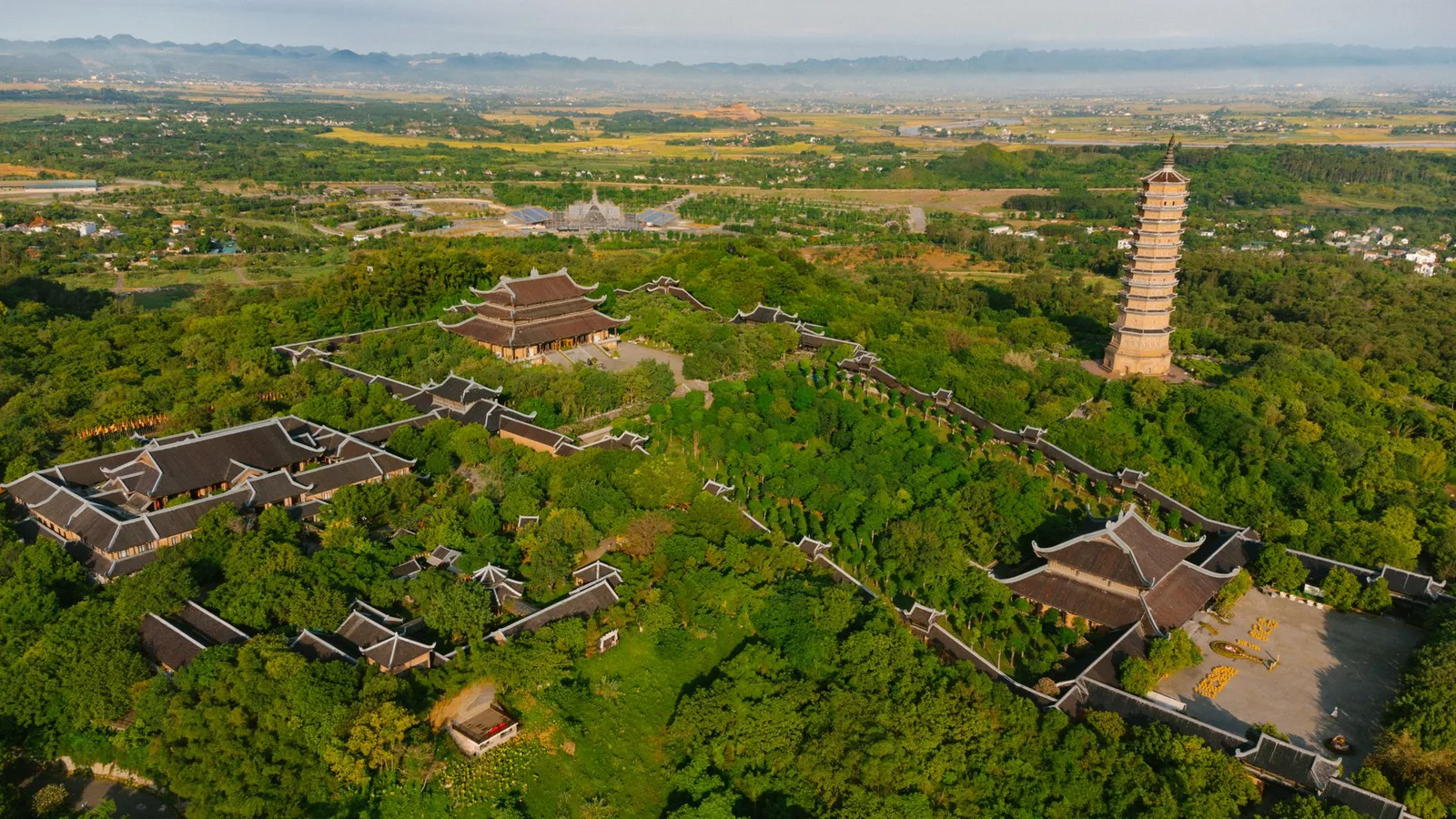
Ha Long’s scenery inland: limestone towers, rivers, rice fields, ~2 hours south. Centrepiece Trang An: a three-hour rowed-boat circuit through nine caves — 300,000₫, boats of four or five; smaller Tam Coc the classic alternative. Mua Cave: roughly 500 steps, 100,000₫, for the river view. Bai Dinh, Vietnam’s largest pagoda complex, is free — electric car ~100,000₫ return. Hoa Lu is the tenth-century capital.
About 2 hours south · Trang An boat · Mua Cave viewpoint
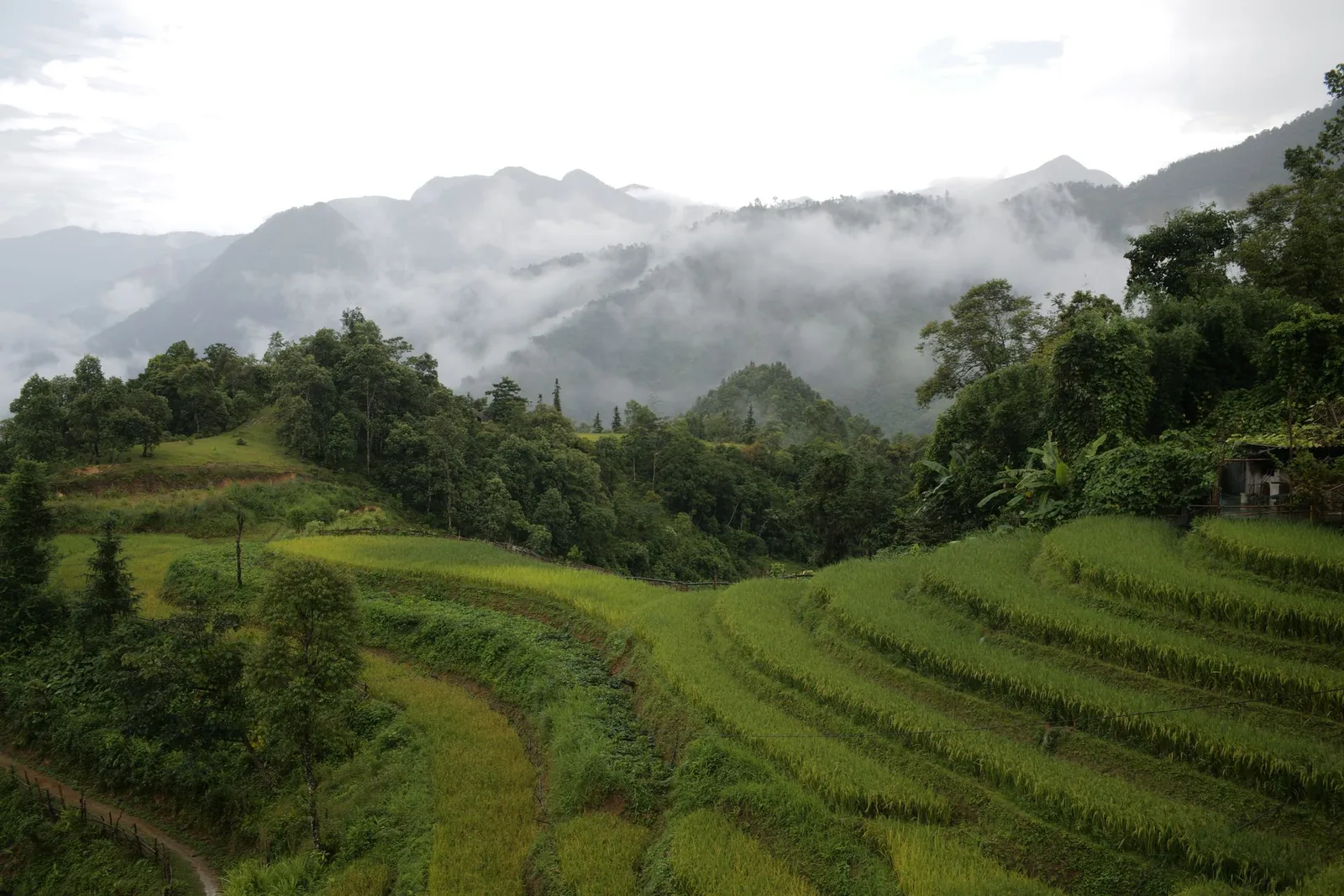
Mountain town at 1,600 metres near the Chinese border, ringed by Muong Hoa valley terraces and Hmong, Dao and Giay villages. Overnight train to Lao Cai plus an hour’s mountain road, or a limousine bus of 5.5–6 hours. Fansipan (3,143 m) tops it: cable car up in ~15 minutes, 850,000₫ return, then funicular or ~600 steps. Terraces: flooded mirrors in April and May, gold at the late September harvest, bare and frosty from December to February.
An overnight away · Fansipan cable car 850,000₫ return · Terraces at their best April to May, August and late September
OctoberThe month Hanoians praise: monsoon spent, dry golden air, low to mid-20s. Book earlypeak season.
November to FebruaryNovember and early December dry and pleasant; then grey skies, drizzle, damp cold, the year’s worst air pollution. Tet falls here: city empties, some sights close for days, prices spike.
March and AprilHumid spring: misty mornings, warmth building, village festivals; by April the drizzle fades. Second-best window, shoulder prices.
May to August30–38°C with matching humidity; July–August typhoons can flood streets, close Train Street, suspend Ha Long Bay departures. Dengue rides the rains.
SeptemberThe hinge month: early September, rains and National Day crowds (the 2nd); by the last week, Sapa’s terraces turn gold.
Hanoi is barely priced for tourists: a plastic-stool bowl 40,000₫ to 70,000₫, egg coffee 35,000₫ to 60,000₫, bia hơi 10,000₫ to 20,000₫ a glass, the great sights 40,000₫ to 100,000₫ each. Mid-range doubles run 800,000₫ to 2,000,000₫ a night in season; dorm beds 150,000₫ to 300,000₫.
Delayed or cancelled flight? AirHelp and Compensair work compensation claims for a cut of winnings — check before writing the fare off.
What to pack
Tap items to check them off — your list is saved on this device.
Pack for broken pavements and four seasons: winter needs a real jacket, summer clothing that survives a sauna.
Comfortable walking shoes — Pavements are parked on and slick; grip and closed toes beat sandals. Shop walking shoes on Amazon →
Light rain jacket — Downpours arrive inside ten minutes, May to October; it covers the Fansipan summit chill. Shop rain jacket on Amazon →
As an Amazon Associate I earn from qualifying purchases.
Language, visa and entry
! Check visa requirements before you fly
Vietnamese is tonal — six tones — but written in a Latin-based alphabet with tone marks, so signs and menus are letter-legible from day one; a translation app camera does the rest. Download the Vietnamese pack offline.
Four phrases cover most of a first trip — greeting, thanks, price question, and the compliment that makes a cook’s day. Bargaining is expected at market stalls — never at street-food stands.
The e-visa is the default for non-exempt travellers; get it only at the official portal, evisa.gov.vn — lookalikes charge triple. Open to every nationality: up to 90 days, US$25 single-entry, US$50 multiple-entry. Allow about three working days; check every character of your name and passport number before submitting. Print the issued visa — airlines check it before boarding — and enter and exit through the borders it names.
The United Kingdom, France, Germany, Italy, Spain, Denmark, Finland, Sweden, Norway, Russia, Japan and South Korea get 45 days on arrival, until March 2028. A second list — Belgium, Bulgaria, Croatia, Czechia, Hungary, Luxembourg, the Netherlands, Poland, Romania, Slovakia, Slovenia and Switzerland — gets 45 days until August 2028. South-East Asian neighbours: 14 to 30 days. Everyone else, including the United States, Canada, Australia, New Zealand and Ireland, needs the e-visa. Confirm your status on the official portal before booking.
Passport: six months’ validity beyond arrival, blank pages for stamps. Overstay fines grow with the overstay, settled before you can leave.
Safety and health
The risks are kinetic and commercial — traffic, winter air, well-rehearsed scams; violent crime is low. Arrive briefed.
Traffic is the main hazard
Cross the local way — slowly, predictably, straight line; let the bikes flow around you. Stopping dead, running or stepping back is what is dangerous. On a GrabBike, wear the helmet provided, every time.
The named scams
Arrivals touts: two to three times the real fare. The shoe-shine grab starts polishing before you agree. The coconut seller charges for the photo’s props. The cyclo’s agreed price becomes per person at journey’s end. The friendly stranger’s beer ends in a bar bill with extra zeroes. Agree every total first.
Air, heat and bites
December–February: AQI in the unhealthy range — check each morning, mask on bad days, museum days when it spikes. Summer: heat and humidity — water, shade, indoor middays. Dengue rides the rains: repellent; a sudden high fever in the wet season means a doctor.
Your bag and your phone
Snatch theft from passing motorbikes targets visitors at a kerb, phone over the road. Bag across your body, building side; phone off café tables. Passport and spare cards in the hotel safe; photos of every document on your phone.
Big public hospitals: Bach Mai and Viet Duc. English-speaking care at international prices: Family Medical Practice and Vinmec. Pharmacity is the recognisable pharmacy chain. Bring travel insurance — read its motorbike line; some policies exclude pillion riding.
Trust factory tube ice (hole through it); leave hand-cut block ice. Fast-turnover street food troubles fewer stomachs than the hotel buffet.
Verified against the Vietnam e-visa portal, Noi Bai and Bus 86 information and the sights' official price lists, October 2026.
There is no airport train. The orange Bus 86 express serves both terminals and runs to the Old Quarter and Hanoi Station for 45,000₫ in about an hour, every 20 to 30 minutes until roughly 22:00.
A Grab car to an Old Quarter door runs about 250,000₫ to 400,000₫ with the fare fixed in the app before you move — the safest answer to the taxi rank, where unmetered quotes are a Hanoi rite of passage.
Most travellers who are not visa-exempt use the e-visa, and the only safe place to get one is the official portal, evisa.gov.vn — lookalike agency sites charge triple for the same stamp.
It is open to every nationality, runs up to 90 days, and costs US$25 for a single entry or US$50 for multiple entries. Apply before you fly and allow about three working days for it to be issued.
Mornings only, Tuesday to Thursday and at weekends; it is closed on Mondays and Fridays, and entry is free. Dress strictly — no shorts or sleeveless tops — and expect no photos, no bags and silence inside.
It closes entirely for annual maintenance from 4 September to 2 November 2026. Outside those dates, arrive early: the queue forms before the doors open and moves fast once it starts.
The Temple of Literature is 70,000₫, the Imperial Citadel 100,000₫, and Ngoc Son Temple on Hoan Kiem Lake and the Hoa Lo Prison museum are 50,000₫ each.
Almost everything else in the centre costs the same or less, and the lake, the Old Quarter streets and the cathedral are free. Carry small cash — card machines at ticket windows are the exception, not the rule.
Ninh Binh is the easier day: about two hours each way, and at Trang An the boat and entry together run 300,000₫ from January 2026. Ha Long Bay is a longer day by expressway for the karsts — pick it if the bay itself is the dream.
Sapa is not a day trip: it needs a night, reached by overnight train or sleeper bus, and the Fansipan cable car costs 850,000₫ when the cloud lets you see anything from the top.
Dong, in cash, for street food, markets and small shops — a bowl of phở is still a cash transaction. ATMs are everywhere; choose to be charged in dong, never in your home currency.
Cards work in hotels and bigger restaurants, and the Grab app takes a card for rides, which also solves the change problem. Keep small notes on you: large bills at a dawn food stall help nobody.
No tourist tax in Hanoi; tap water is not drinkable — use bottled or filtered; plugs are Type A, C and F at 220V; police 113, fire 114, ambulance 115.
Hanoi, Saved for After You Land
Landing soon? Get the printable PDF — the essentials from this guide, formatted for your phone:
The airport transport cheat sheet, with ticket links
Our 3 restaurant picks, with maps
The packing checklist
One email with your Hanoi PDF (guide version: Oct 2026). Fare changes and new guides after that. No spam, unsubscribe anytime.
Sources and last verified
Checked against: Noi Bai International Airport’s transport pages and Bus 86 operator information (fares and practical details); the official e-visa portal, evisa.gov.vn, and Resolutions 44/NQ-CP and 229/NQ-CP (visa rules, exemption lists); Hanoi Metro’s tables (metro status and fares); the Mausoleum Management Board’s announcements (mausoleum hours, 2026 maintenance closure); Temple of Literature, Hoa Lo Prison and Museum of Ethnology visitor pages (sight prices); Trang An’s site management (Trang An prices); Sun World Fansipan Legend (Fansipan prices); the day’s mid-market rate (exchange rates); Accor, Capella and La Siesta’s own pages (hotel details); the Michelin Guide’s Hanoi listings (restaurant details). Last verified October 2026.
Affiliate disclosure: hotel names, transfers, experiences, and products linked in this guide may earn After You Land a commission at no extra cost to you. Prices and times were checked in Oct 2026 and change often — confirm before you book.