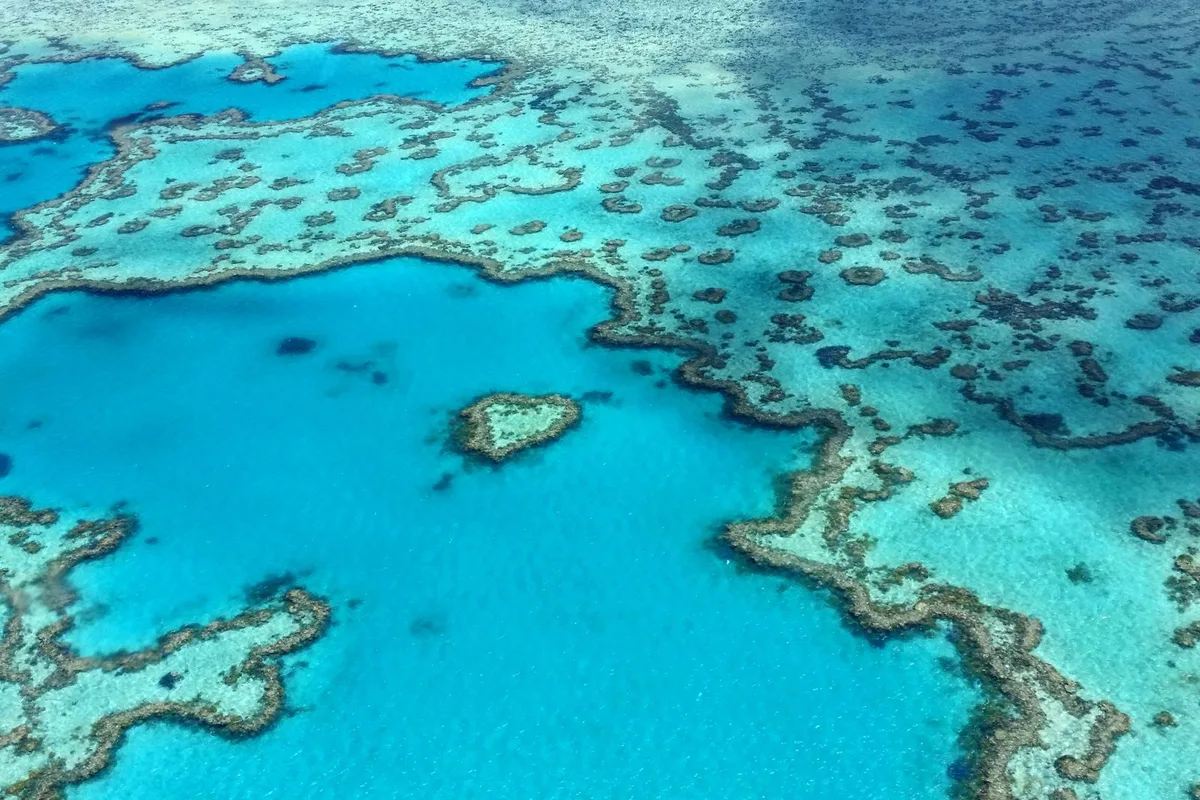
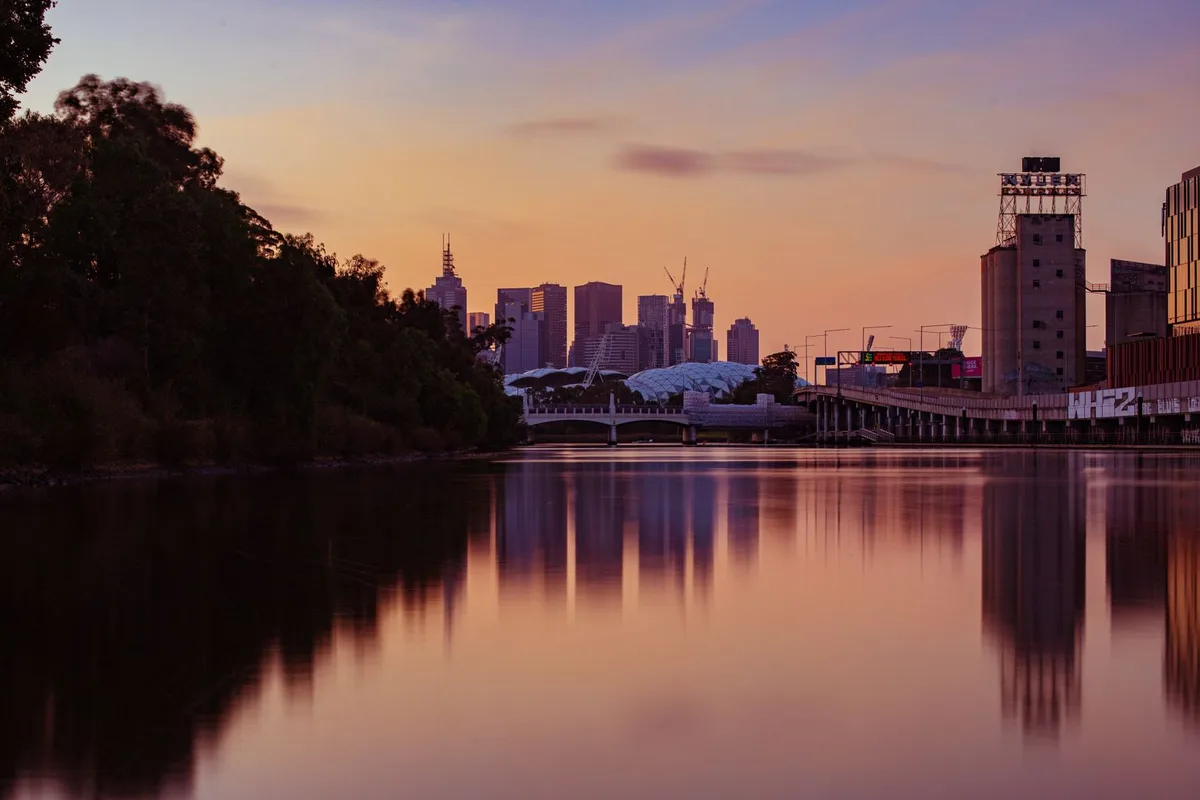
You just landed in Cairns — a small tropical city pinned between the Great Barrier Reef and the rainforest ranges, where the airport run takes 15 minutes and the real decisions start at the marina. Most arrivals are domestic, the two terminals sit side by side, and by the time your bag lands you can already feel the humidity that rules the place.
By Paul GreenUpdated Oct 202612 min readPrices checked Oct 2026
You just landed in Cairns. The city is 15 minutes from the airport and the reef boats leave early — sort data before you fly with an Airalo eSIM, then book the outer-reef day first — in the dry season the best catamarans sell out days ahead.
Quick facts
Airport
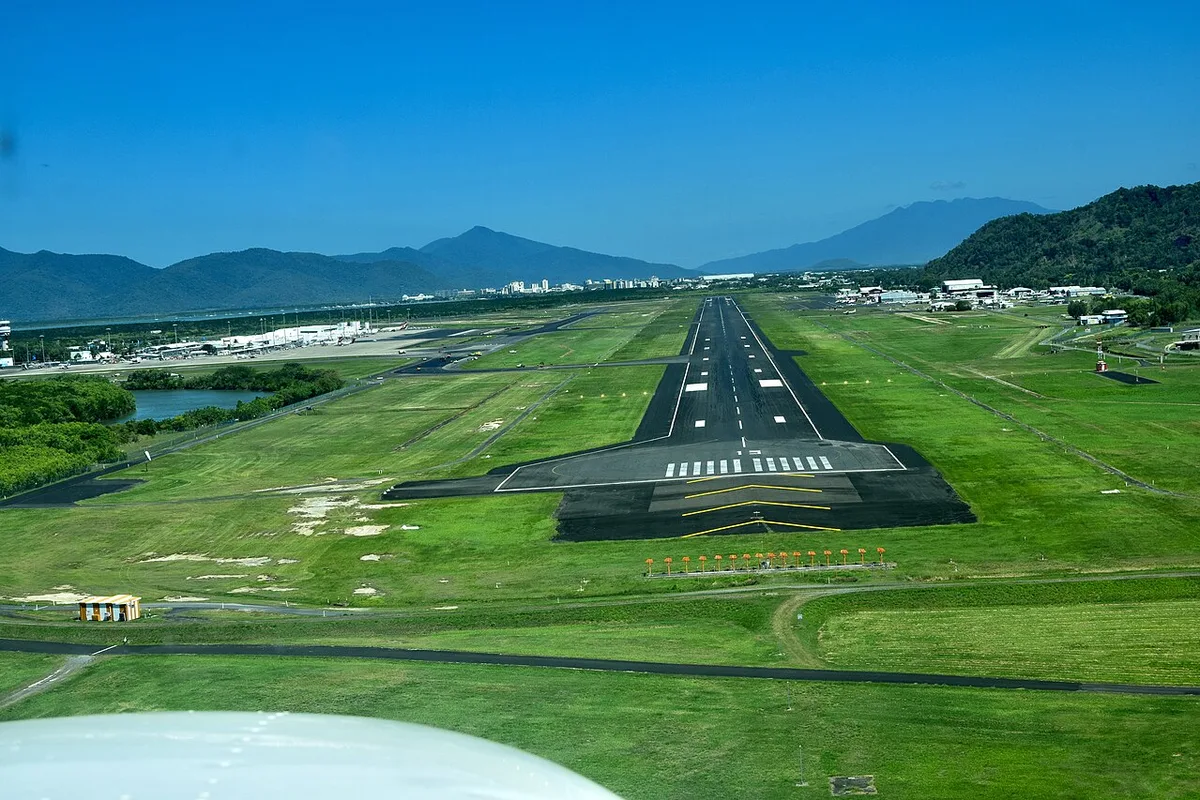
Cairns Airport (CNS), about 7 km north of the city centre Mostly domestic flights, plus international arrivals from New Zealand, Japan, Singapore, Bali and Papua New Guinea; T1 and T2 sit a short walk apart.
Getting in
About 10 to 15 minutes by taxi or rideshare the city is closer than the fare suggests — Shared shuttles run to hotel doors; from 23 November 2026 the Translink route 100 bus links airport and city every 30 minutes for 50 cents.
Currency
The Australian dollar (A$) cards and tap-to-pay work almost everywhere — Carry some cash: market stalls and small operators still run on notes and coins.
Languages
English Cairns is the traditional land of the Gimuy Walubara Yidinji and Yirrganydji peoples — Aboriginal languages are heard across the region; Japanese and Mandarin are common in the tourism trade.
Time zone
Australian Eastern Standard Time (UTC+10) all year Queensland never changes its clocks — That puts Cairns an hour behind Sydney and Melbourne in summer, and level with them in winter.
Emergency
000 (Triple Zero) for police, fire and ambulance anywhere in Australia Cairns Hospital sits on the Esplanade north of the centre; pharmacies line Lake and Grafton streets.
Plugs
Type I sockets, 230 volts the angled three-pin Australian plug — Most visitors need an adapter; USB charging is common in hotels and the airport.
Tap water
Safe to drink Cairns water comes from Lake Morris behind the ranges — Refill freely; you will sweat more than you expect in the tropical humidity.
Tourist tax
None Australia has no tourist tax; the Passenger Movement Charge is a departure charge, not a stay tax — The charge (about A$70, for passengers 12 and over) is already inside your fare out of Australia. A rise to A$80 is proposed and before Parliament.
Best months
May to October for the dry season; June to October for the clearest reef water November to April is the hot, wet season — also stinger season — with cyclones possible and rainforest at its greenest.
Map
Find your arrival stop, hotel, and first meal. Stays, sights, and landmarks in Cairns — live hotel prices plus the key places from this guide.
The heat meets you at the door — Cairns starts tropical and stays that way.
Set up data before you fly — an Airalo eSIM loads in minutes, so maps, bookings and reef check-ins work from the arrivals hall. On a longer trip, compare Saily and Yesim for bigger data allowances.
Run the arrival checklist in this order:
Book the reef day before you arrive in dry season — the best boats sell out days ahead
Pre-book the airport shuttle, or walk to the taxi rank outside arrivals
Drop your bags and walk the Esplanade to the Lagoon for your bearings before dinner
Reef boats leave early — check in at the Reef Fleet Terminal around 7:30 — so an afternoon arrival is a planning evening, not a lost one.
If a delayed or cancelled flight wrecked the arrival, AirHelp checks whether the airline owes compensation — worth five minutes.
Getting around
Journey times are approximate and refer to the listed stop — not necessarily your hotel. Allow extra time for waiting, walking, and connections.
Taxi
Metered fares run about A$25 to 35 depending on traffic and time of day, with a fixed airport access charge added — A$4 for pickups at T2 Domestic and A$5 at T1 International. The rank sits outside both terminals.
Priceabout A$30Journey10–15 min
Rideshare
Uber and DiDi pick up at the eastern end of T1 and the northern end of T2. Prices surge when several flights land together; a taxi can be cheaper at peak arrival banks.
Priceabout A$25–35Journey10–15 min
Shared shuttle
Operators including Con-X-ion run roughly hourly through the day with hotel drop-offs. The per-person fare only beats a taxi when you travel solo; book ahead in the June to October peak.
Priceabout A$25 per personJourney20–40 min
Translink bus 100
Starts Monday 23 November 2026 — every 30 minutes from 4:00 to 22:30 at Queensland's permanent flat 50-cent fare, per Translink. Until it starts there is no public bus at the terminals.
PriceA$0.50Journeyabout 20 min
The city is a walker's grid — flat, compact blocks between the Esplanade and Cairns Central station, with the marina and Reef Fleet Terminal at the eastern end. Almost every hotel and tour desk sits inside a 15-minute walk. The rides in from the airport:
Choose the taxi or rideshare for a late or tired arrival — the run is short, the meter kind. Choose the shuttle when you land solo in daylight, hotel on its route.
Or pre-book — a Kiwitaxi transfer or Welcome Pickups puts a driver in arrivals at a fixed price. Driving to the Daintree or the Tablelands, price the pickup on AutoEurope: a car earns its keep outside the city, not inside it.
In the city
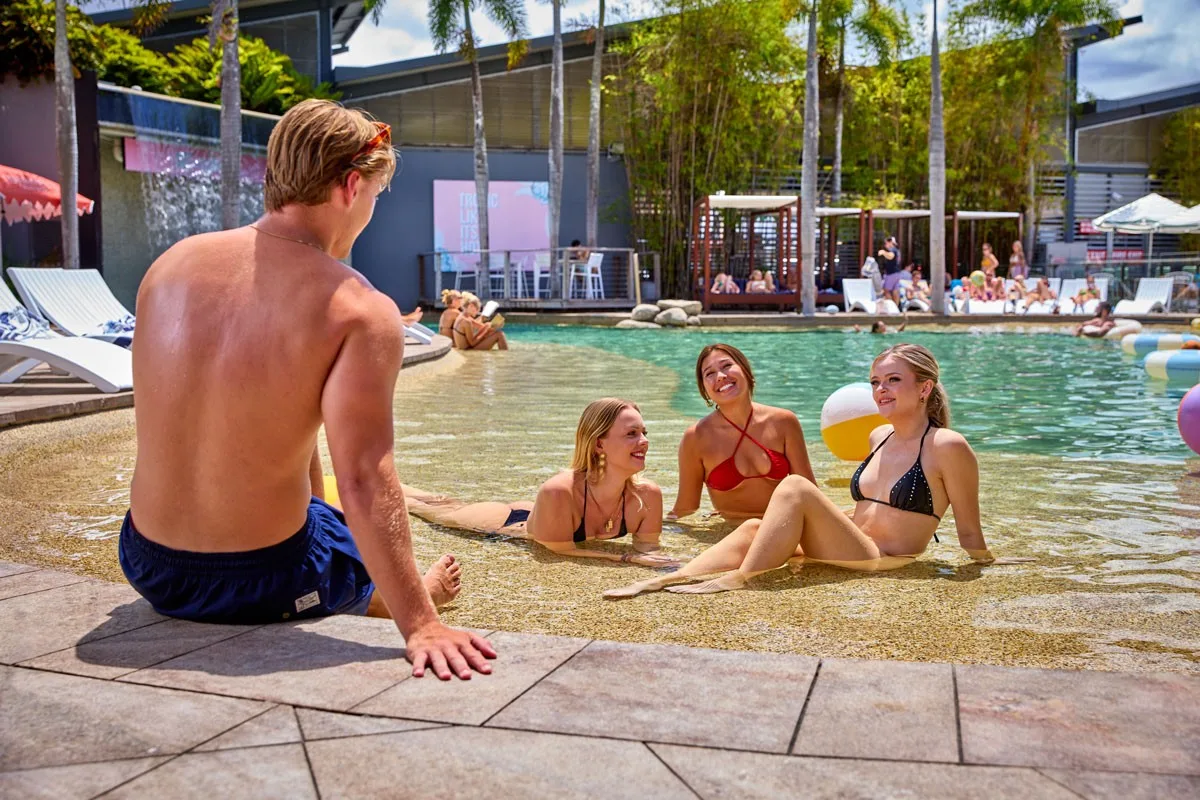
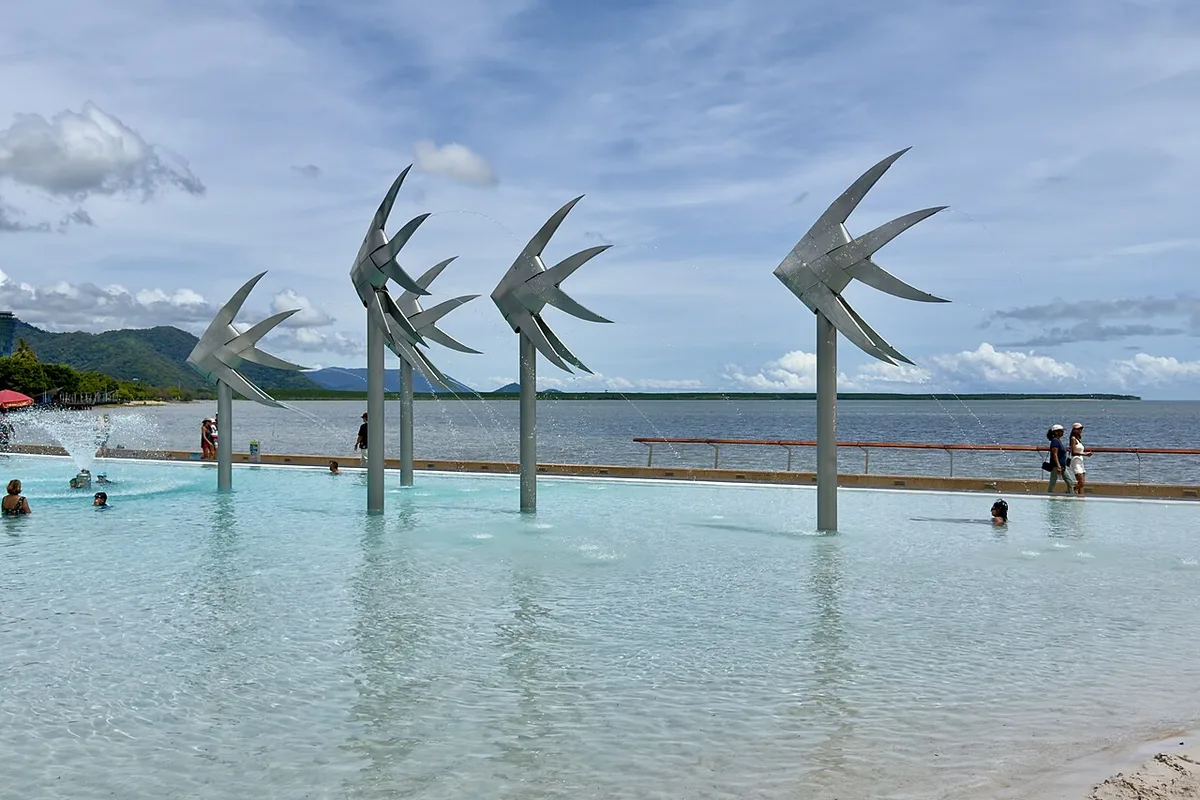
Start at the Esplanade Lagoon, the city's free saltwater swimming lagoon — 4,800 square metres of stinger-free water, lifeguards on duty, open daily 6:00 to 21:00. Cairns has no swimmable city beach; the boardwalk lawns around it are the city's living room.
Walk the boardwalk south past Muddy's Playground to the marina, where the reef fleet ties up. Everything leaves from the Reef Fleet Terminal at 1 Spence Street: outer-reef pontoons, island ferries and dive boats, checking in from 7:30.
Graze Rusty's Markets if your days line up — 180-plus stalls of tropical fruit, food and flowers on Grafton Street, Friday to Sunday from 5:00. The Cairns Night Markets run every evening on the Esplanade for souvenirs and a cheap massage.
Cool off at the Flecker Botanic Gardens, 4 km north — free entry, rainforest boardwalks, and the Tanks Arts Centre in old fuel tanks next door. Browse Cairns listings on GetYourGuide for aquarium tickets and harbour cruises, compare Klook when stacking activities.
After you land in Cairns: Bookable experiences
Where to stay your first nights
Splurge
Shangri-La The Marina, Cairns.
Best for the marina-view splurge — balconies over the reef fleet, with the Reef Fleet Terminal across the road
On Pier Point Road, between Marlin Marina and the Reef Fleet Terminal — marina-view rooms with balconies, a pool deck and The Backyard restaurant downstairs. Book it for the view and the shortest walk to the reef boats.
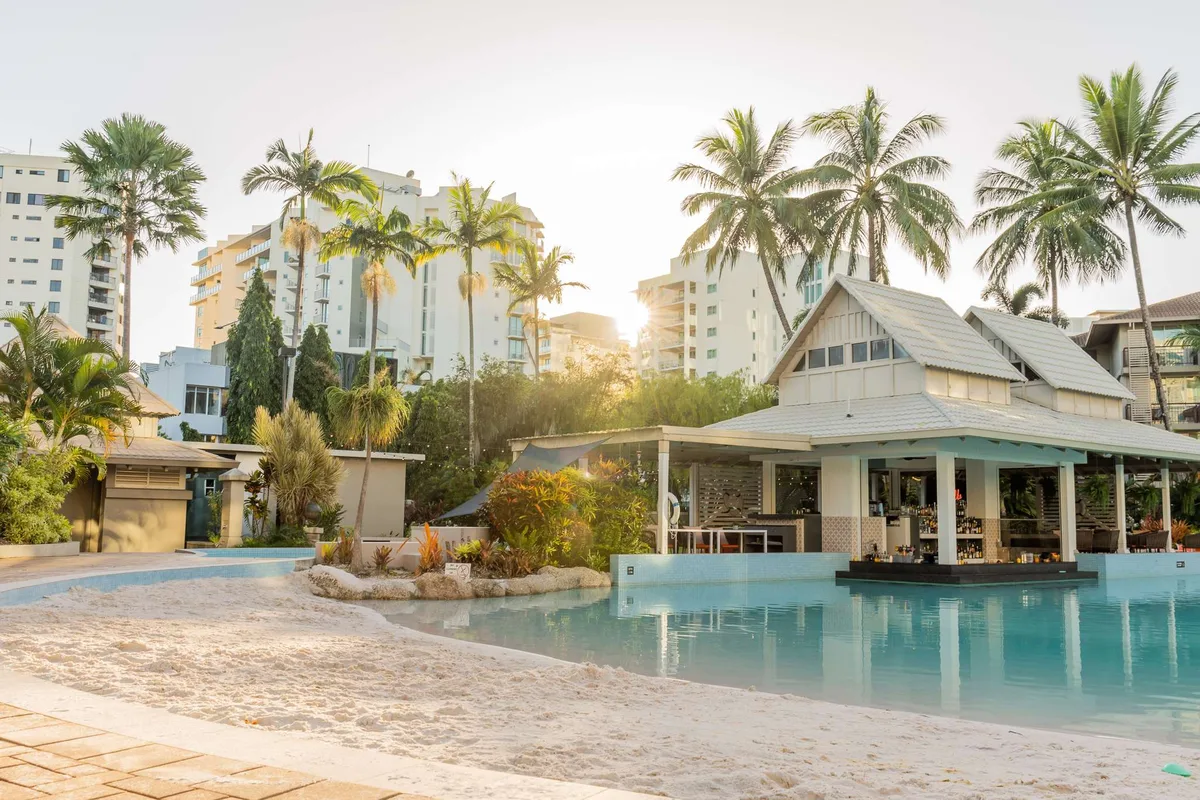
Best for families — the city's biggest lagoon pool with a white-sand beach and swim-up bar, a block from the Esplanade
At 122 Lake Street, a block from the Esplanade — 314 rooms around the city's biggest lagoon pool, with a white-sand beach, a swim-up bar and the Moku restaurant. Book it for families and pool-first afternoons.
Best for the social budget stay — dorms and hotel rooms around a pool deck in the middle of town, 18-plus only
Bed down at 57-89 Grafton Street in the city's backpacker institution — dorms and hotel-style rooms around a pool deck, bar and nightclub attached. Guests are 18 and over only; book it for the social scene, not for quiet.
Stay in the city grid on a first visit — every pick is a short walk from the Reef Fleet Terminal, which matters at 7:30. The Esplanade strip runs quieter and prettier; a block back runs cheaper.
Book any of the three well ahead for June to October, and check if your rate is room-only — breakfast is rarely bundled in Cairns.
Where to eat first
Eat close on day one — the waterfront and streets behind it cover most of what Cairns cooking does best. Three first stops:
Caffiend, 5/85 Grafton Street.
Start at the city's favourite breakfast table — strong coffee, a chilli crab and chive omelette people cross town for, a laneway feel. It fills fast on weekends; go early or expect a wait.
Dundee's on the Waterfront, 1 Marlin Parade.
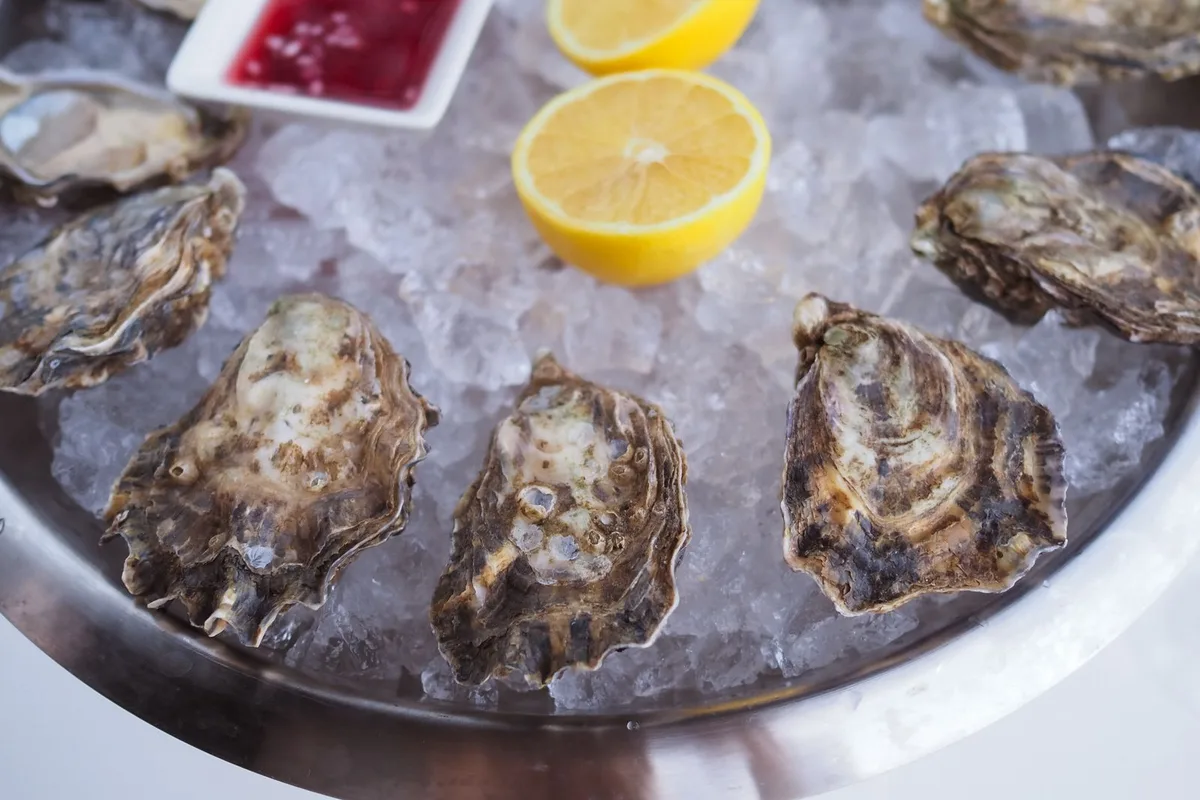
Eat on the boardwalk at Harbour Lights, over the marina — barramundi, mud crab and a seafood tower for sharing, plus kangaroo and crocodile for the curious. Book for sunset; the view is half the menu.
Order modern Australian cooking built on native ingredients — emu, wattleseed, lemon myrtle and reef fish in a quieter dining room a few doors from Dundee's. The tasting plates are the trip's splurge dinner.
Save an appetite for Rusty's Markets, where breakfast is a tropical fruit smoothie and a pastry eaten standing up. Browse Cairns listings on GetYourGuide and book ahead in high season.
Day trips and more
Three escapes cover the essentials: the outer reef, the rainforest by train and gondola, and the Daintree where the rainforest meets the sea. Carry water, a hat and a swimsuit — every one involves getting wet or wishing you had.
The outer reef by premium catamaran
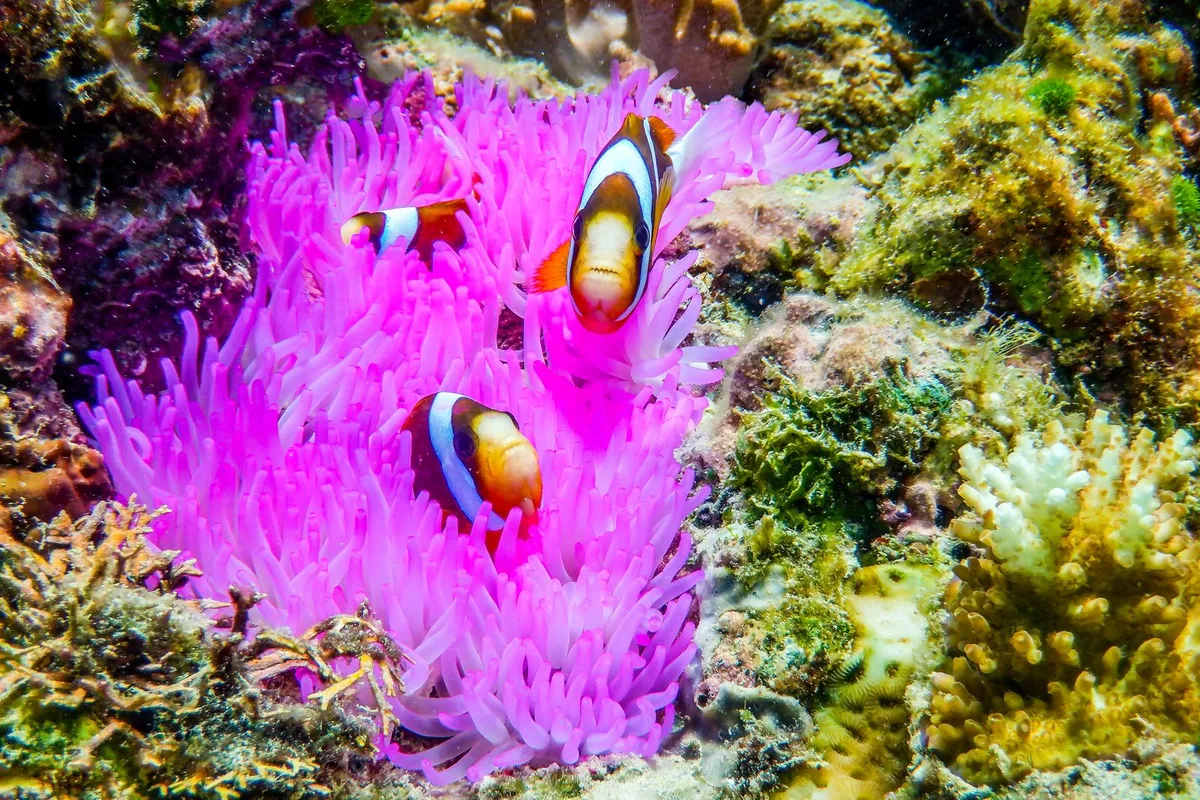
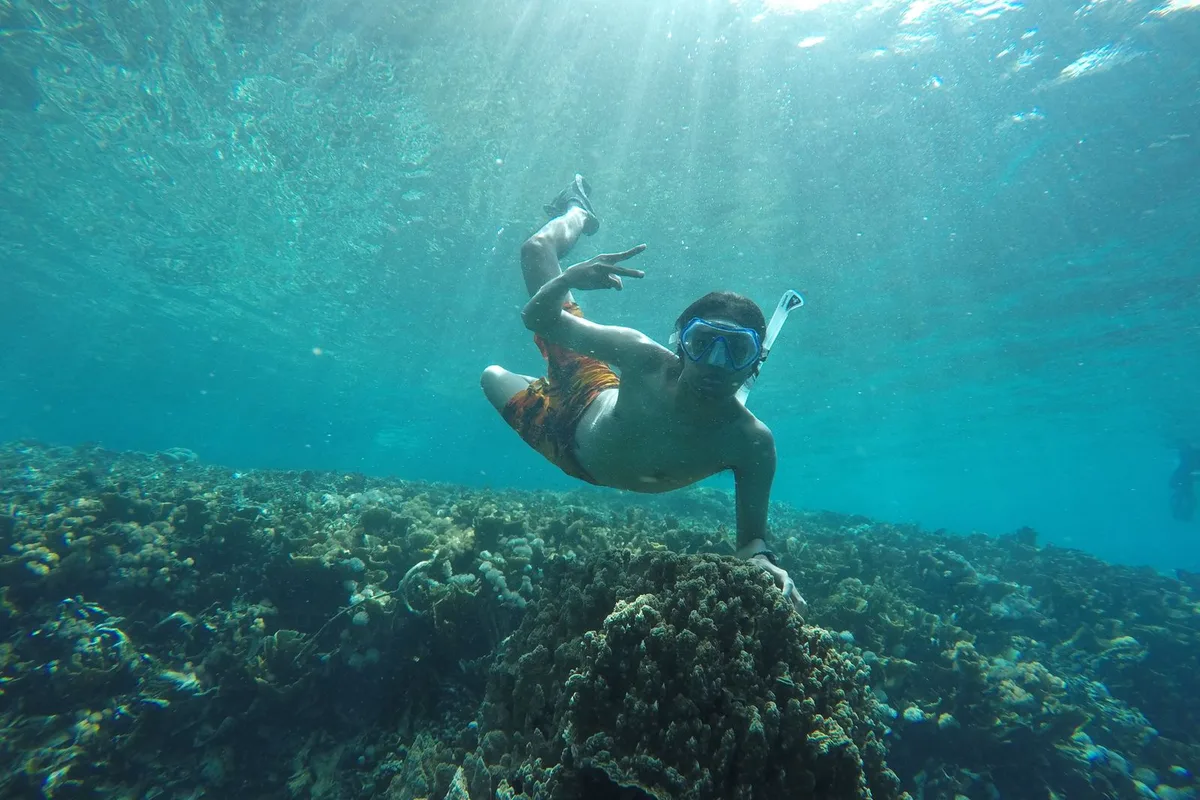
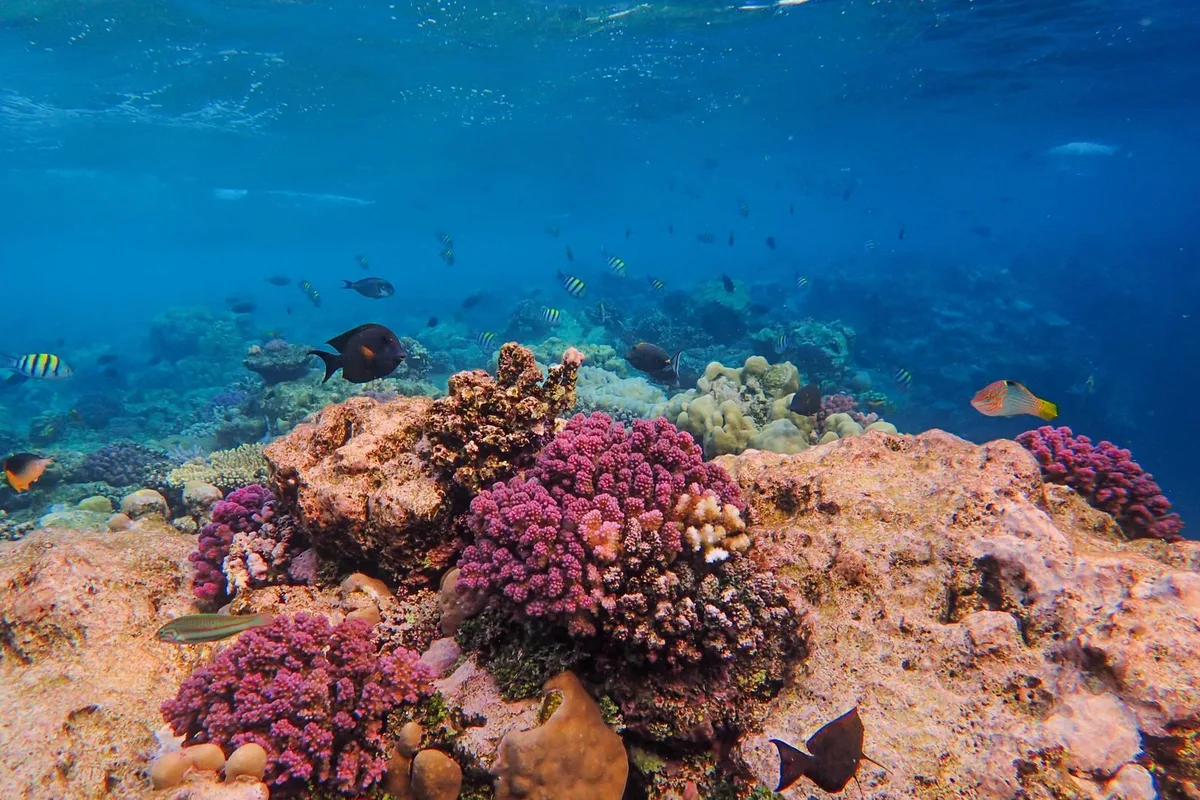
Sail from the Reef Fleet Terminal to two outer-reef sites chosen on the day from Flynn, Milln, Norman and Hastings reefs: snorkel off the boat with the eco-certified crew, try an introductory dive, eat a chef-prepared buffet between swims. The full day runs about eight hours from about A$275, rating 4.8 out of 5 from 3,900-plus reviews. Check availability →
Kuranda
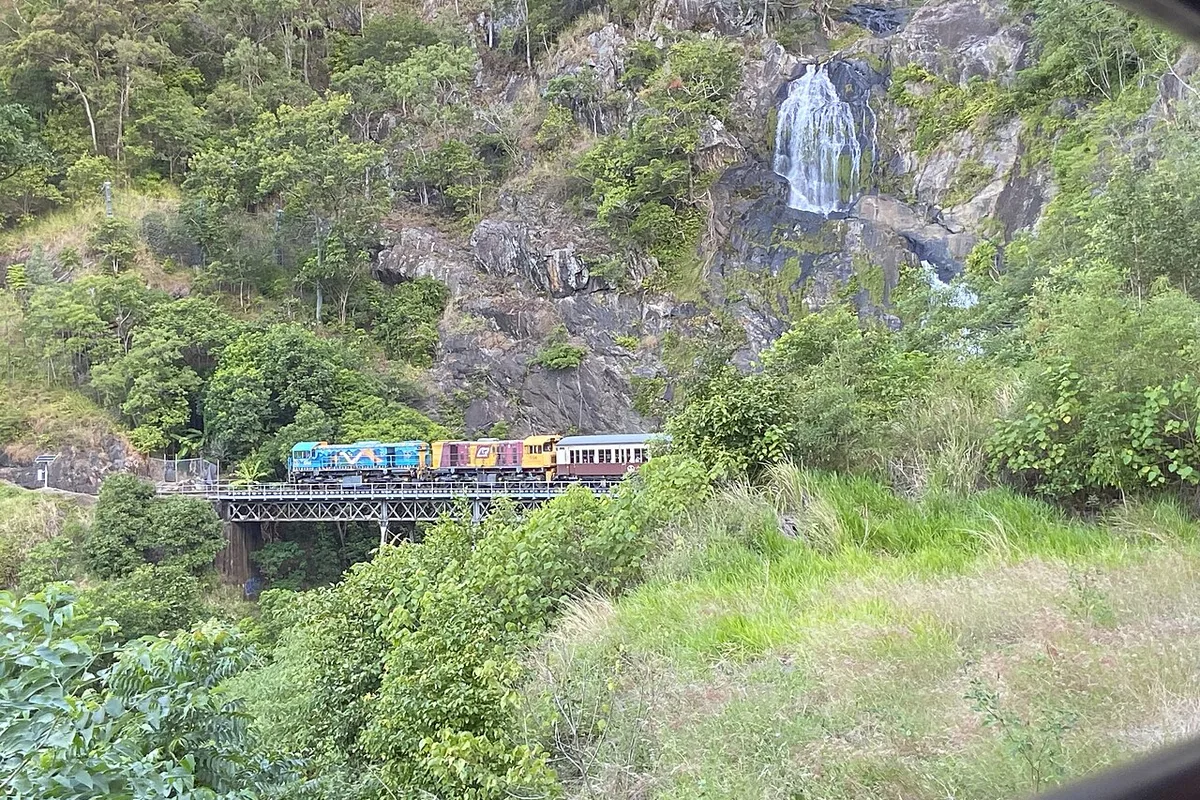
Ride the Kuranda Scenic Railway up the range through hand-cut tunnels, wander the village markets and rainforest walks, then glide down over the canopy on the 7.5 km Skyrail Rainforest Cableway, stopping at Barron Falls. The self-guided day includes hotel pickup, about seven hours from about A$190. Check availability →
Daintree and Cape Tribulation
Drive the coastal road north in a small group: a swim at Mossman Gorge, a crocodile-spotting cruise on the Daintree River, the cable ferry across, and Cape Tribulation beach, between two World Heritage areas. The day runs about 11 hours from about A$285 with lunch included. Check availability →
Leave a spare day for the islands: Green Island and Fitzroy Island both run ferries from the Reef Fleet Terminal for reef-and-beach days at a gentler pace.
When to go and what it costs
Come May to October for the dry season — warm days, low humidity, the reef at its calmest and the town at its busiest.
Come in the shoulder weeks of April and November for lower rates and greener country — accepting afternoon storms and, from November, the first stingers.
From December to March the wet season rules: heavy rain, possible cyclones, flooded roads north and stinger suits on every swim. The trade: waterfalls at full roar, rooms at their cheapest.
Budget by the fixed costs, not the headline. The airport taxi is about A$30, city buses are a flat 50 cents across Queensland, and every reef trip carries a reef charge of about A$8.50 a day inside its price — the variables are the room and big day trips.
What to pack
Tap items to check them off — your list is saved on this device.
Pack for water, humidity and serious sun — days split between reef boats, rainforest paths and the Lagoon. This is the full list:
Add reef-safe sunscreen and a long-sleeved rash shirt — boats hand out stinger suits in season — plus a dry bag for boat days and a layer for the air-conditioned Kuranda train.
Language, visa and entry
! Check visa requirements before you fly
English runs Cairns, with local slang and a heat-slowed pace. The city stands on the traditional lands of the Gimuy Walubara Yidinji people, with Yirrganydji country along the coast north — both groups run cultural tours from the city.
Six phrases do most of the work:
G'dayhelloNo worriesyou are welcome, it is fineTathanksThis arvothis afternoonHow much is that?asking the priceWhere is the Reef Fleet Terminal?finding the reef boats
Sort the visa before booking anything non-refundable. Most visitors need an ETA (subclass 601), applied for via the official ETA app for an A$20 service fee, or a free eVisitor (subclass 651) on an eligible European passport. Apply before you fly, using only the official app or the Home Affairs website — copycat sites charge far more.
Australia bans or restricts most fresh food, plant material and wooden goods on arrival. Declare anything edible on the arrival card — sniffer dogs check, fines are steep.
For the way home: the Passenger Movement Charge (about A$70) is already inside your fare out — there is no tourist tax to pay at the hotel or airport.
Safety and health
Marine stingers run from November to May
Box jellyfish and Irukandji haunt the coastal water in warm months. Swim inside netted enclosures at patrolled beaches, wear the stinger suit the reef boats hand out — the outer reef is not exempt — and treat any tropical sting with vinegar and urgent advice: Irukandji symptoms can build over 30 minutes. Outside the season, suits still earn their place as sun protection.
Crocodiles live in these waterways
Saltwater crocodiles inhabit rivers, estuaries and sometimes the sea around Cairns, and no natural waterway here is crocodile-free. Never swim outside patrolled beaches, nets and the Lagoon; stay at least five metres from the water's edge at creeks and boat ramps, taking extra care at dawn, dusk and after heavy rain, when crocodiles move.
The wet season brings cyclones and flooding
From November to April, watch Bureau of Meteorology forecasts and do what the warnings say: reef trips cancel, the road north floods, and plans need slack. Never drive or walk through floodwater — it is the wet season's biggest killer and hides crocodiles and washed-out road.
Reef sun is the everyday risk
The ultraviolet index sits at extreme for much of the year: hat, shirt, reef-safe sunscreen reapplied after every swim, and water all day. For anything serious, dial 000 — Cairns Hospital is minutes from the centre, and reef boats carry oxygen and radios.
The airport hop, the visa app and the stingers, in short.
Facts checked October 2026.
A taxi or rideshare takes 10 to 15 minutes for about A$30 — rank and app pickup zones sit outside both terminals. Shared shuttles run to hotel doors, about A$25 a person, and from 23 November 2026 the Translink route 100 bus runs every 30 minutes for 50 cents.
Most visitors need an ETA (subclass 601) via the official ETA app — an A$20 service fee — or a free eVisitor (subclass 651) on an eligible European passport. Apply before you fly, using only the official app or the Home Affairs website — copycat sites charge far more.
Not off the waterfront — Cairns has no swimmable city beach, so the Esplanade Lagoon is the swim. At the northern beaches, swim between the flags inside the stinger nets in season (November to May) and wear the stinger suit reef boats provide. Never swim in creeks or estuaries: crocodiles live in them.
May to October for the dry season; June to October gives the clearest reef water and calmest seas. November to April is the wet season — hotter, humid, stinger season, cyclones possible — but rainforest and waterfalls are at their best and prices drop.
Full-day outer-reef trips run about A$200 to A$300 a person depending on the boat and inclusions; this guide's premium sailing catamaran is about A$275. Every fare includes the reef Environmental Management Charge, about A$8.50 a day.
No — Australia has no tourist tax or hotel levy. The one charge visitors notice is the Passenger Movement Charge, about A$70, already built into your airfare out of Australia rather than collected in Cairns. A rise to A$80 is proposed and before Parliament.
Prices are typical 2026 rates in Australian dollars (A$). Transfers, reef charges and the route 100 start date verified October 2026.
Cairns, saved for arrival
Landing soon? Get the printable PDF — the essentials from this guide, formatted for your phone:
The airport transport cheat sheet, with ticket links
Our 3 restaurant picks, with maps
The packing checklist
One email with your Cairns PDF (guide version: Oct 2026). Fare changes and new guides after that. No spam, unsubscribe anytime.
Sources and last verified
Transfers against Translink (route 100 starts Monday 23 November 2026, every 30 minutes, 4:00 to 22:30, 50-cent fare), Cairns Airport's ground-transport pages and 2026 fare reporting (taxi about A$25 to 35 plus the airport access charge, A$4 at T2, A$5 at T1; shared shuttle listed at US$16.50 a person, about A$25). Entry against the Department of Home Affairs (ETA subclass 601 via the official app, A$20 service fee; eVisitor 651 free for eligible passports). Passenger Movement Charge against 2026 federal budget reporting: A$70 in force, A$80 proposed and before Parliament — the guide prints the current figure. Reef charges against the Great Barrier Reef Marine Park Authority's published schedule: the Environmental Management Charge is A$8.00 a full day on the schedule, A$8.50 in current operator pricing — the guide prints about A$8.50. Stinger, crocodile and cyclone guidance against Surf Life Saving Queensland, Queensland's Be Crocwise program and the Bureau of Meteorology. Hotels against the properties' own sites and opened expedia.com pages: Novotel Cairns Oasis Resort, Gilligan's Backpackers Hotel & Resort and Shangri-La The Marina, Cairns. GetYourGuide products read: the premium catamaran reef cruise, the self-guided Kuranda train and Skyrail trip, and the Cape Tribulation, Mossman Gorge and Daintree day tour. Photo credits: Esplanade Lagoon, Kuranda Scenic Railway, Mossman Gorge and Cairns Airport via Wikimedia Commons; hotel photographs via the properties' websites; the rest via Pexels. Last verified October 2026.
Affiliate disclosure: hotel names, transfers, experiences, and products linked in this guide may earn After You Land a commission at no extra cost to you. Prices and times were checked in Oct 2026 and change often — confirm before you book.