Hobart: your first hour after landing
You have just landed at Hobart Airport, 17 km east of the smallest capital in Australia — a working harbour city under kunanyi, Mount Wellington, where sandstone warehouses hold the Saturday market and the MONA ferry leaves from the docks. This guide covers the SkyBus ride in, where to sleep, the free city buses, the first oysters and whisky, and the convict and island day trips that fill day two.
In this guide
You just landed in Hobart. The airport sits 17 km east at Cambridge — the move is the SkyBus, A$24 to six city stops, with an Airalo eSIM live for maps, no tourist tax to add, city buses currently free, and the days that sell out first — MONA, Port Arthur, Bruny Island — worth booking ahead through GetYourGuide.
Quick facts
Airport
Getting in
Currency
Languages
Time zone
Emergency
Plugs
Tap water
Tourist tax
Best months
Map
Stays, sights, and landmarks in Hobart — live hotel prices plus the key places from this guide.
Settle in
Touch down at Hobart Airport and the trip in is short: 17 km of Tasman Highway over the Tasman Bridge to the waterfront. There is no train or public bus at the terminal — the SkyBus, a taxi or a rideshare is the ride in.
Set up data before you leave home — an Airalo eSIM loads in minutes, so maps and ride apps work on arrival. For a longer Australia trip, compare Saily and Yesim.
The arrival checklist, in order:
- Ride the SkyBus to one of its six city stops, or take a taxi or Uber door to door — never a ride offered by a tout in the hall
- Check which side of the city your bed is on: waterfront and Salamanca suit first-timers, Battery Point a quieter stay
- Note the day of the week: Salamanca Market runs on Saturdays, and MONA closes on Tuesdays and Wednesdays
If a delayed or cancelled flight wrecked the arrival, AirHelp checks whether the airline owes you compensation — worth five minutes.
Getting around
Times are airport to city centre.
SkyBus Hobart City Express
Departs kerbside outside the terminal, timed to flight arrivals, with free Wi-Fi and no excess luggage fees; six city stops — Brooke Street Pier, the visitor centre, Collins Street, the RACV and Old Woolstore hotels, ending at the Hotel Grand Chancellor
Taxi
The rank sits outside arrivals and runs on the meter; the fare swings with traffic on the Tasman Bridge — allow longer at peak hour and on cruise-ship days
Rideshare (Uber)
Uber's own airport page averages A$43 for the 19 km ride; the price is quoted in the app before you ride and surges when several flights land together; meet at the designated pick-up area
Private transfer
A pre-booked car met in arrivals at a fixed price set when you book — the range covers standard sedans to larger vehicles; worth it for late arrivals, big luggage or a Battery Point address up the hill

Hobart is a walking city: the waterfront, Salamanca and the centre sit inside a flat half-hour, and Battery Point climbs gently behind. The airport run has one budget anchor — the SkyBus Hobart City Express, timed to flights. The rides in from HBA:
Choose the SkyBus solo with light bags; a taxi or Uber for two or more, when the per-person maths flips. No Metro bus serves the terminal.
Prefer to be met? A Kiwitaxi transfer or a Welcome Pickups driver puts a name board in arrivals at a fixed price. Driving yourself, price the airport pickup on AutoEurope first — a car earns its keep on day trips, not in the centre.
In town, Metro buses fan out from the Elizabeth Street mall — under the state scheme running to June 2027, bus travel in Tasmania is currently free: just board, no Greencard tap needed. The Derwent River ferry to Bellerive is covered too.
In the city
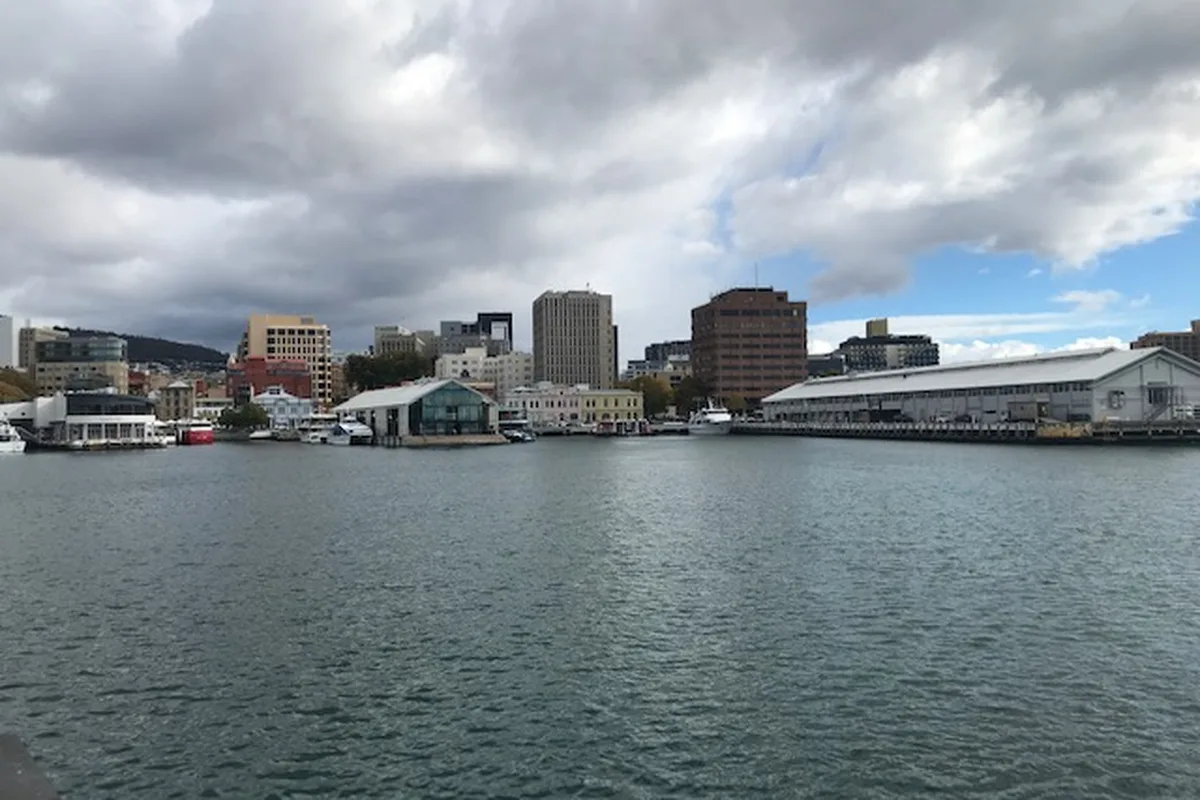
Start on the waterfront at Sullivans Cove, where Hobart began in 1804. Walk the docks past the fishing fleet and the Antarctic supply ships, then cross to Salamanca Place, a row of 1830s sandstone warehouses holding galleries, cafés and bars. On Saturdays the Salamanca Market fills the street with 300 stalls — produce, timber craft, distillers and buskers.
Climb into Battery Point behind Salamanca: Arthur Circus cottages, ship captains' houses and narrow lanes that end at the river. Return for the Tasmanian Museum and Art Gallery by the docks, free to enter, for the island's natural history and the Tasmanian Aboriginal gallery.
Give MONA a half day. The Museum of Old and New Art sits upriver at Berriedale, carved into a sandstone headland — ride the camouflage catamaran from Brooke Street Pier, about 25 minutes each way, and check the day: the museum closes on Tuesdays and Wednesdays.
Browse GetYourGuide for city walks and the big day trips, and compare Klook when stacking activities.
After you land in Hobart: Bookable experiences
Where to stay your first nights

MACq 01 Hotel.
Best for the waterfront splurge — a storytelling hotel on Macquarie Wharf, every room named for a Tasmanian characterSleep at 18 Hunter Street, on Macquarie Wharf itself — a 114-room storytelling hotel built like a great timber shed over the water, every room named for a Tasmanian character, with the Old Wharf Restaurant and Evolve Spirits Bar downstairs. Book it for the fullest version of waterfront Hobart.

Hotel Grand Chancellor Hobart.
Best for a full-service harbour base — the SkyBus terminus outside, Salamanca five minutes on footStay at 1 Davey Street, facing the harbour — 244 rooms, an indoor heated pool, gym and sauna, the SkyBus terminus outside the door and Salamanca five minutes on foot. Book it for a calm, full-service base that every transfer already knows.

YHA Hobart Central.
Best for budget beds in the centre — dorms and privates a block from the waterfront, kitchen and loungeBed down at 9 Argyle Street, a block from the waterfront — dorms and private rooms in the city centre, with a shared kitchen, lounge and laundry, and the bus mall two streets away. Book it for the social, self-catering version of budget Hobart.
Base on the waterfront or in Salamanca first time — the SkyBus stops, the market, the MONA ferry and most restaurants sit within a few flat streets. Battery Point, one hill behind, trades a short climb for quiet lanes and heritage cottages. The centre suits business; Sandy Bay and North Hobart suit a return visit with a car.
Book ahead for January, the Sydney to Hobart yacht race finish in late December, and Dark Mofo in June, when the city fills. The quoted rate is the rate — GST is inside it, with no tourist tax to add.
Where to eat first

Eat from the water first. Hobart lands Australia's best cold-water seafood — Bruny Island oysters, scallops in season, blue-eye trevalla and Huon salmon — and its distillers make Tasmanian whisky and gin a second draw. Three first stops:
The fish punts at Constitution Dock.
Eat where the boats tie up — floating takeaway punts serving fish and chips, scallop pies and oysters at dockside tables, seagulls management included. Arrive at lunch, order what came off the boats, eat facing the harbour.
Salamanca Place and the waterfront strip.
Graze the sandstone row — bakery breakfasts, pub lunches and the city's densest line of dinner tables, with Lark Distillery's cellar door pouring Tasmanian single malt at the row's end. Saturday market days run busiest; book dinner ahead.
North Hobart, along Elizabeth Street.
Ride or walk up to the city's restaurant strip — a kilometre of cafés, wine bars and small kitchens where locals eat. Start early evening and work downhill to your bed.
For food tours, market walks and distillery days, browse the Hobart listings on GetYourGuide and book a slot for your first free evening.
Day trips and more
Three escapes cover Tasmania's south: the mountain and the museum in one day, Tasman Peninsula convict ruins, and the island off the island. Carry a warm layer on all three.

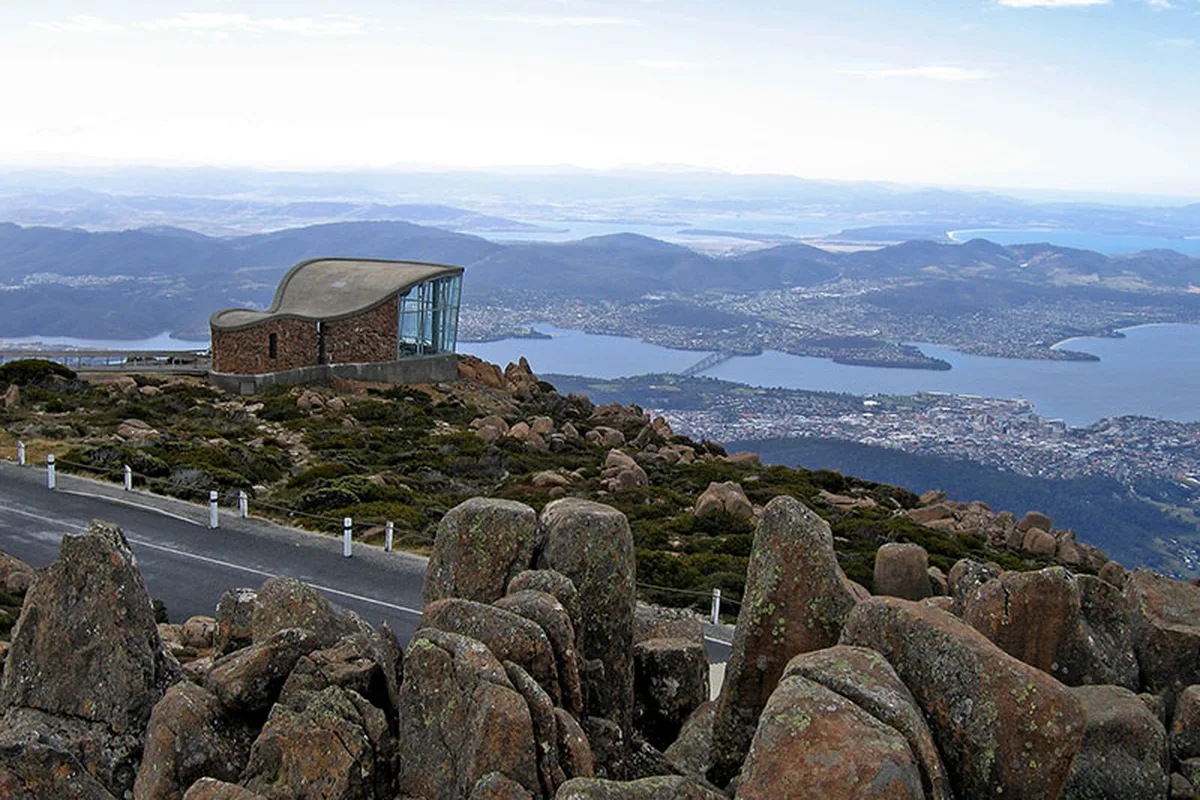
Mount Wellington and MONA with ferry ride
About 7.5 hours: a guided coach up kunanyi, Mount Wellington, past the Organ Pipes dolerite columns to the summit lookout over the city and the Derwent, then down through the Cascade Gardens and past the Female Factory before the ferry from Sullivans Cove cruises upriver to MONA, with entry and a touchscreen guide included, and a return cruise to Brooke Street Pier. Rated 4.6 from recent reviews. Check availability →

Port Arthur, Tassie devils, Richmond and Tasman National Park
About 10 hours, all-inclusive: the Waterfall Bay clifftop walk above the sea cliffs, a Tasmanian devil feeding at the Unzoo, then the Port Arthur Historic Site with a harbour cruise around the Isle of the Dead, home via Georgian Richmond and Australia's oldest bridge still in use. Rated 4.8 from recent reviews. Check availability →

Bruny Island full-day tour
About 10 hours with pickup: the ferry to Bruny, rainforest and beach walks, the climb to the Neck lookout, a pub lunch at the Bruny Hotel, then tastings working back — oysters, honey, chocolate and cheese as the day allows — with guides who know where the white wallabies hide. Rated 4.7 from recent reviews. Check availability →
Leave a day for Richmond, Bonorong Wildlife Sanctuary, or the Huon Valley cider run south.
When to go and what it costs

November to April is the season: long evenings, the driest months and the harbour at its best, peaking with the Sydney to Hobart fleet arriving in late December and January and February festivals. Autumn brings calm, clear days. Winter is the trade — cold, short days, snow possible on kunanyi, Dark Mofo in June, and the year's lowest room rates.
Budget in Australian dollars. The SkyBus is A$24; a taxi across town A$15 to A$25; a pub dinner with a Tasmanian pinot A$45 to A$70 a person; a market breakfast under A$20.
A backpacker in a dorm, on market food and the free city buses: A$70 to A$100 a day. Mid-range — a four-star waterfront room, seafood dinners, one guided day trip: A$250 to A$400 a day. A splurge day with the wharf hotel and a tasting-menu dinner passes A$700.
What to pack
Tap items to check them off — your list is saved on this device.
Pack for four seasons in a day — Hobart can deliver all of them before dinner, and kunanyi's summit runs 10 degrees colder than the waterfront. Full list:
- Comfortable walking shoes Shop walking shoes on Amazon →
- Sunscreen Shop sunscreen on Amazon →
- Reusable water bottle Shop water bottle on Amazon →
- Phone charger and power bank Shop power bank on Amazon →
- Daypack Shop daypack on Amazon →
- Sunglasses Shop sunglasses on Amazon →
- Light rain jacket Shop rain jacket on Amazon →
Add the Hobart extras: a genuinely warm layer and a windproof shell for the mountain and the MONA ferry deck, a Type I adapter, and swim kit for Bruny Island and east-coast days in summer. Tasmania's UV is fierce even when the air feels cold — the sunscreen on the list is not optional.
Language, visa and entry
✓ Visa-free entry

English runs everything, with a Tasmanian habit of shortening it. This is lutruwita, the palawa kani name for Tasmania, and you will meet dual names across the island: kunanyi for Mount Wellington, nipaluna for Hobart. Locals say Tassie for the state, and a scallop pie — curried, in a pastry case — is a point of pride, not a curiosity.
Four phrases do most of the work:
Sort your entry paperwork before you book anything non-refundable. Australia has no visa-free entry: US and Canadian passport holders need an Electronic Travel Authority (ETA, subclass 601) before travel, applied for through the official Australian ETA app for A$20 — valid 12 months, multiple entries, stays of up to three months a visit. UK and most European passport holders apply instead for the free eVisitor (subclass 651), with the same stay limits.
Apply days ahead, not at the check-in desk: most ETAs are granted quickly, but some are referred for manual processing, and airlines will not board you without one. Everyone completes an incoming passenger card on arrival, and Australia's biosecurity rules are strict — declare food, plant material and hiking boots with soil on them.
Safety and health
Watch the weather, not the streets
Hobart is one of Australia's safest capitals, and the real hazard is exposure: wind and cold arrive fast on kunanyi, on the MONA ferry deck and on coastal walks. Carry the warm layer even on a clear morning, and turn back when the mountain disappears into cloud.
Take the sun seriously
Tasmania sits under some of the strongest UV in the world in summer, and the cool breeze hides the burn until evening. Sunscreen, a hat and water on every day trip.
Give wildlife the road
Driving at dawn, dusk and night outside the city means wallabies, pademelons and wombats on the road — slow down, and never swerve into the other lane for an animal. On foot, snakes are shy and protected; step back and walk around. In the water, swim at patrolled beaches in season.
Know the two numbers
Dial 000 for police, ambulance and fire, free from any phone; 131 444 reaches police for non-urgent help. Visitors pay for ambulance and hospital care, so travel insurance with medical cover is essential in Australia, not a formality. Hobart's Royal Hobart Hospital sits in the centre on Liverpool Street.
Related destinations
If you liked Hobart, try these next:
 Asia & Pacific
 Asia & Pacific
 Asia & Pacific
 Asia & Pacific
 Asia & Pacific
 Asia & Pacific
 Asia & Pacific
 Asia & Pacific
 Asia & Pacific
 Asia & Pacific
Frequently asked questions
The SkyBus, the ETA and the tax that is not there, in short.
Facts verified October 2026
Ride the SkyBus Hobart City Express: A$24 one-way, about 30 minutes, timed to flights, six city stops. Taxis run A$45 to A$65 metered; Uber averages A$43 — both about 20 minutes by road.
Yes — Australia has no visa-free entry. US and Canadian passport holders apply for an ETA (subclass 601) in the official Australian ETA app for A$20, valid 12 months, stays up to three months. UK and most European passport holders use the free eVisitor (subclass 651).
No. Tasmania charges no visitor levy and Hobart adds no city tax — the 10% GST is already inside the quoted rate. A proposed 5% short-stay levy was voted down in 2026, so nothing is added per night.
November to April: long, dry evenings, peaking in January and February. October and May are cooler and quieter. Winter is cold and dark early, but brings Dark Mofo and the lowest rates.
Take the MONA ferry from Brooke Street Pier — about 25 minutes up the Derwent, and the ride is half the experience. Book ahead in summer, and plan around the closed days: Tuesdays and Wednesdays.
Yes — it is one of Australia's safest capitals, and the centre and waterfront are walked late. The real risks are outdoors: fierce UV, fast-changing mountain weather, and wildlife on rural roads after dark. Dial 000 in an emergency.
Fares change — SkyBus, Hobart Airport and your ride app always win.
Hobart, in your pocket
Landing soon? Get the printable PDF — ticket links, the airport transport cheat sheet, our 3 restaurant picks with maps, and the packing checklist. Everything above, formatted for your phone.
One email with your Hobart PDF. Fare changes and new guides after that. No spam, unsubscribe anytime.
Sources and last verified
Airport transfers against Hobart Airport and SkyBus listings and October 2026 traveller reports: the SkyBus at A$24 one-way to six city stops (older listings showing A$19.50 are superseded); Uber's own airport page averages A$43; taxis A$45 to A$65 against 2026 fare trackers. Free buses against Tasmanian Government reporting: general bus services and the Derwent ferry are fare-free under the state scheme running to 30 June 2027; no bus serves the airport terminal. Entry against the Department of Home Affairs: ETA (subclass 601) A$20 via the official app for US and Canadian passports, eVisitor (subclass 651) free for UK and most European passports. Tourist tax: none — GST is inside quoted rates, and the proposed 5% short-stay levy was voted down in the Legislative Council in 2026. GetYourGuide products opened and read: Mount Wellington and MONA ferry day trip, Port Arthur with Tassie devils and Richmond, Bruny Island full-day tour. Expedia returned rate limits during this build, so hotel URLs are empty pending the confirmation pass. Photo credits as in the guide data. Last verified October 2026.
Affiliate disclosure: hotel names, transfers, experiences, and products linked in this guide may earn After You Land a commission at no extra cost to you. Prices and times were checked in Oct 2026 and change often — confirm before you book.