
Honolulu: your first hour after landing
You have just landed in Honolulu — in through HNL, and one bus ride later Waikiki unrolls along the water under Diamond Head. This guide runs the first hour and everything after it: the W Line in, the HOLO card maths, the reservations to grab before someone else does, and the memorial, the crater and the big north shore that ask for a day each.
In this guide
You just landed in Honolulu. The W Line bus reaches Waikiki in about 35 minutes for $3 on a HOLO card, an eSIM keeps you connected from the stop, and the trip is won or lost on two reservations — the USS Arizona Memorial and Diamond Head — so book those first and let Klook carry the days you want organised.
Quick facts
Airport
Getting in
Currency
Languages
Time zone
Emergency
Plugs
Tap water
Tourist tax
Best months
Map
Stays, sights, and landmarks in Honolulu — live hotel prices plus the key places from this guide.
Settle in
Land at HNL and decide before you leave the terminal: bus, rideshare or taxi. For the bus, cross to the ground-level stop on Ala Onaona Street, across from the Lelepaua Skyline station — the old second-level stops are closed — and load a HOLO card at the station machines. Rideshare pickup is signed outside baggage claim; taxis wait at the rank.
Sort your connection first. Compare Airalo, Saily and Yesim before you fly: all three cover Hawaii and beat roaming charges, and an eSIM live when the plane door opens removes the airport scramble.
Drop your bags as soon as the hotel allows — check-in is 3 p.m., and most properties hold luggage free. Base yourself in Waikiki for a first trip: Kalakaua Avenue is the beachfront row, Kuhio Avenue one block inland is cheaper with more local eating, and the Diamond Head end by Kapiolani Park is quietest.
Getting around

Times are airport to city centre.
TheBus W Line
Ground level by Lelepaua station, via downtown and Ala Moana
Rideshare
Signed pickup areas at HNL, to your hotel door
Taxi
Metered, from the rank outside baggage claim
Skyline rail plus bus
Lelepaua to Kahauiki (Middle Street), then a connecting bus

TheBus and Skyline rail share one fare system: the HOLO card. The card costs $2; a 2-hour pass costs $3; fares cap at $7.50 a day and $90 a month; passes run $20 for 3 days, $45 for 7 days. Cash is $3.25 a boarding — exact fare only, no transfers. Buy cards at ABC Stores, 7-Eleven, Skyline station machines and holocard.net. The airport rides are these:
Segment 2 opened on 16 October 2025 and the line does reach the airport at Lelepaua, but trains end east at Kahauiki (Middle Street–Kalihi), still a bus ride short of Waikiki. Segment 3 to Civic Center is not due until 2031, and the Ala Moana extension is deferred.
Work Waikiki on foot first: the strip is two flat, lit miles. Beyond walking range, the Waikiki Trolley runs four hop-on hop-off lines (Pink, Blue, Red, Green) linking Waikiki, Ala Moana, downtown and Diamond Head, with all-line day passes around $45 to $60.
Choose a taxi or transfer when the group maths demands it: $40 to $50 split four ways competes with four bus fares. For a fixed price agreed before you fly, compare a Kiwitaxi transfer or Welcome Pickups — a driver in arrivals suits children, surfboards and midnight landings.
Late at night: the W Line runs about 4:15 a.m. to 12:30 a.m., and after Skyline closes at 10:30 p.m. the Route 42 bus covers the airport link overnight.
In the city
Start at the Duke Kahanamoku statue at Kuhio Beach: the walled ponds beside it give Waikiki's calmest swimming, and the Canoes break offshore gathers the surf lessons.
Reserve Diamond Head before anything else: non-residents enter Diamond Head State Monument only by advance reservation on the official state parks site, up to 30 days ahead (residents with state ID enter free). Entry is $5 per person, parking $10 per vehicle, card only; slots run 6 a.m. to 4 p.m., gates close at 6 p.m. The 1.6-mile round-trip trail climbs about 560 feet and takes 90 minutes to two hours — take the first slot, for sunrise and thinner crowds.
Do Pearl Harbor's booking maths on day one. The Arizona Memorial programme is free, but tickets are reserved through recreation.gov for a $1 non-refundable fee each, releasing eight weeks ahead and again the day before, both at 3 p.m. Hawaii time. Pack for the bag policy: no concealment bags larger than a small wallet (clear bags fine; paid storage by the entrance).
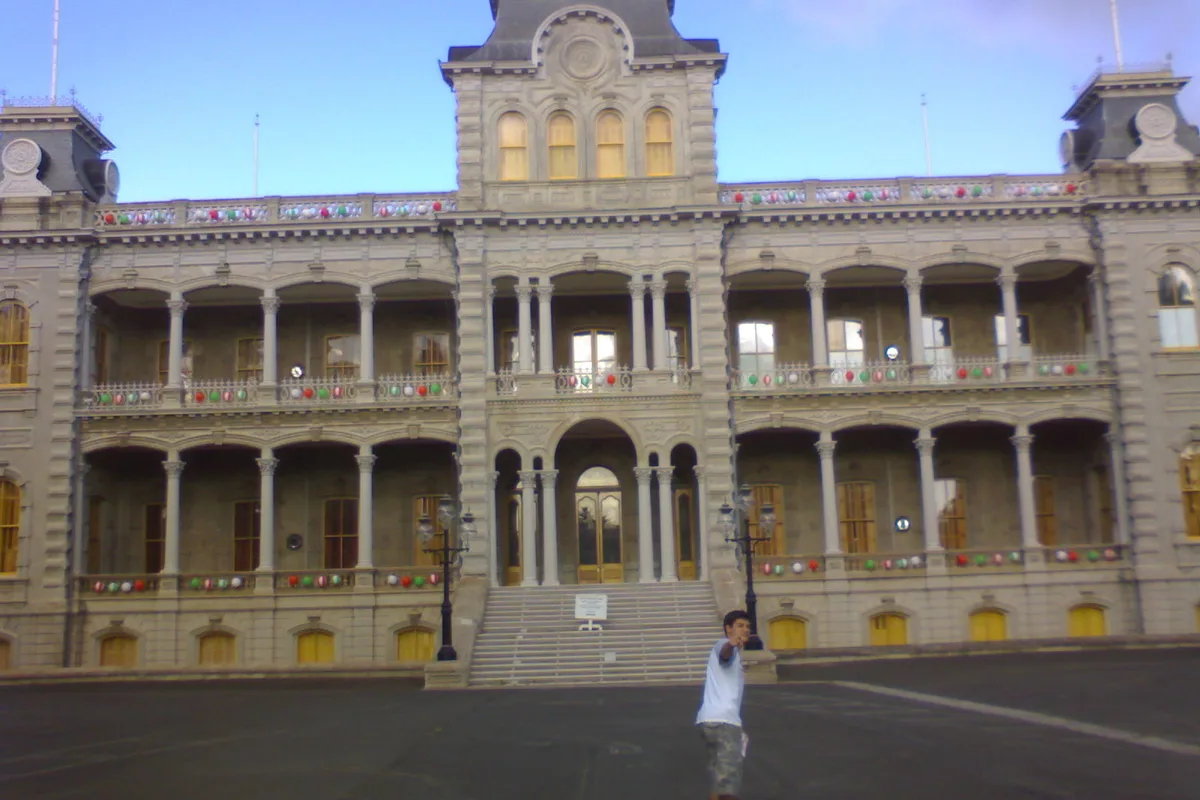
Spend one morning in historic downtown. Iolani Palace at 364 South King Street, the only royal palace on US soil, opens Tuesday to Saturday, 9 a.m. to 4 p.m., closed Sundays and Mondays, and same-day reservations are generally not offered — book ahead through the palace site or Tiqets. The audio tour costs $28; docent-led tours on Wednesday and Thursday mornings cost $34.
Book one paid anchor per day and let the rest stay loose — Tiqets covers most ticketed anchors in one basket. Book the sunset catamaran sail early; the Friday-night sail adds the Hilton Hawaiian Village fireworks (check the current schedule).
After you land in Honolulu: Bookable experiences
Where to stay your first nights

Halekulani.
Best for the grand Waikiki splurge on the sandStay at Waikiki's grand address, 2199 Kalia Road, on five oceanfront acres. Expect a calm, hushed resort: a mosaic orchid pool, sunset cocktails and Hawaiian music at House Without A Key, plus complimentary admission to Iolani Palace and the Bishop Museum. Book early — the best rooms go first.

Waikiki Beach Marriott Resort and Spa.
Best for full-resort scale at the quiet end of the beachSleep across Kalakaua Avenue from Kuhio Beach at 2552 Kalakaua Avenue. Expect a full-service two-tower resort — family and adults-only pools, a spa, an on-site luau — with the zoo and aquarium a short walk away. Price the extras: the resort fee runs about $55 a day plus tax, and self-parking about $65 a day.

Vive Hotel Waikiki.
Best for boutique value two blocks from the beachBed down at 2426 Kuhio Avenue, two short blocks from the sand. Expect a smart boutique hotel: complimentary continental breakfast, free Wi-Fi, and free loans of beach towels, chairs, umbrellas and boogie boards. There is no pool and no gym, and rooms run compact; check-in is 3 p.m., check-out 11 a.m.
Stay in Waikiki for a first visit: beach, buses and trolleys sit within one flat, lit, walkable two miles. Kalakaua Avenue fronts the sand with the big resorts; Kuhio Avenue, one block inland, holds the value; the Ala Moana end suits shoppers and conventions. Downtown suits business, not beaches.
Where to eat first

Eat locally on day one. Kapahulu Avenue, running inland from Waikiki's Diamond Head end, covers the essentials in three stops:
Ono Seafood, Kapahulu Avenue.
Order poke — ahi by the weight or over rice, shoyu or spicy. Expect the freshest raw fish of your trip at takeaway prices.
Rainbow Drive-In, Kapahulu Avenue.
Order the plate lunch — a mixed plate with rice and macaroni salad, gravy over everything — at the drive-in feeding Honolulu since 1961. Expect big portions at counter prices.
Leonard's Bakery, Kapahulu Avenue.
Order malasadas — Portuguese fried dough, rolled in sugar, served hot in the pink box — and eat the first one in the car park while it is still warm. Expect a breakfast queue.
Save the planning energy for one proper sit-down meal later — the scene runs from Helena's in Kalihi to Waikiki's hotel dining rooms. The Saturday farmers market at Kapiolani Community College is the island's best grazing ground: go early and bring cash alongside your card.
Tip around 18 to 20 percent in sit-down restaurants, a dollar or two at counters and bars. For tours that fold the eating into the sightseeing, see GetYourGuide’s Honolulu page.
Day trips and more

Pearl Harbor and the USS Arizona Memorial
Ride west to the visitor center — open daily 7 a.m. to 5 p.m., closed Thanksgiving, Christmas Day and New Year's Day. A Navy boat takes you out to the white memorial spanning the sunken Arizona, where more than a thousand sailors remain entombed. Add the two free shore museums, plus paid sister sites — Battleship Missouri, the Aviation Museum, USS Bowfin — or the combined Passport. Parking is $7; allow half a day. Check availability →

Circle Island and the North Shore
Book a full-day tour, or drive the roughly 120-mile loop: along the south shore past Hanauma Bay and the Halona Blowhole, up the windward coast under the Koolau cliffs, past the Dole Plantation, then the North Shore — Haleiwa, Waimea Bay, Banzai Pipeline and Sunset Beach. In winter (November to March) the surf is giant and swimming becomes watching from the sand; in summer the same water turns calm enough to snorkel. Leave by 7 a.m. and swim only where lifeguards post no warnings. Check availability →
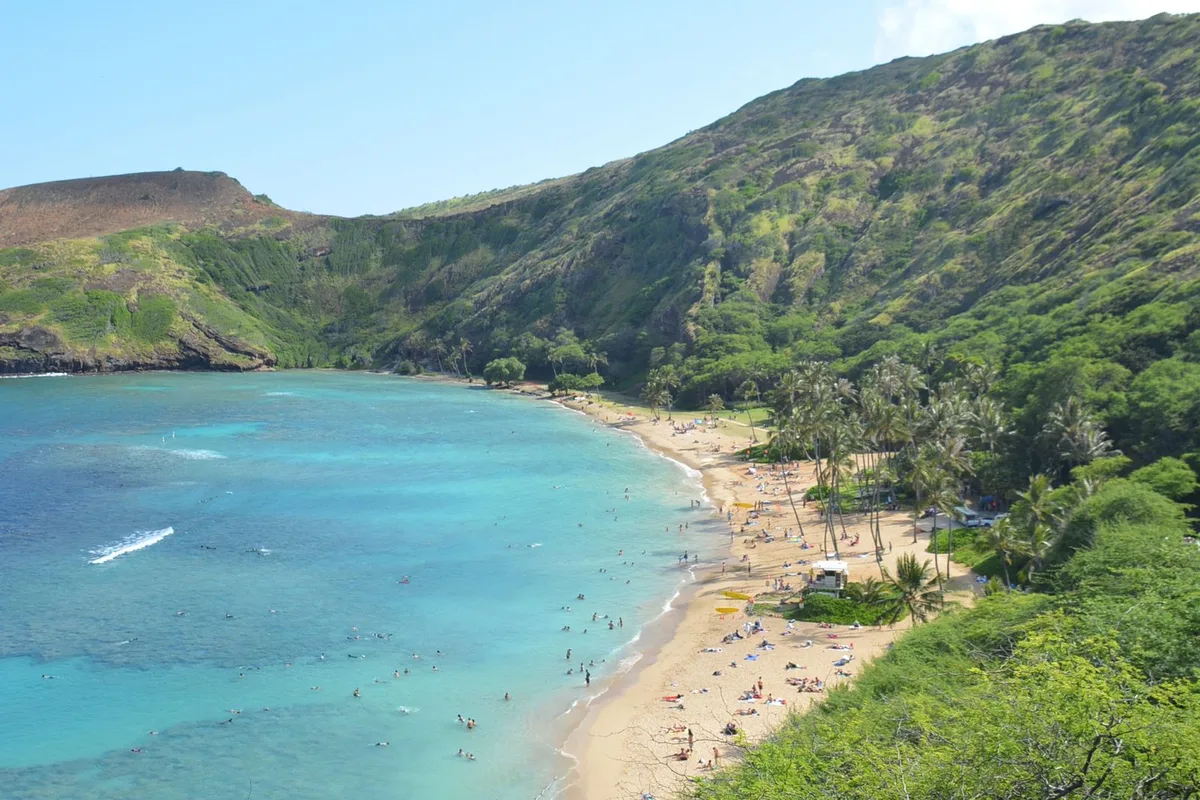
Hanauma Bay
Book exactly two days ahead when reservations open at 7 a.m. Hawaii time — slots sell out fast. The bay is open Wednesday to Sunday only, closed Mondays, Tuesdays, Christmas Day and New Year's Day, with entry from 6:45 a.m. to 1:30 p.m. and all out by 4 p.m. Non-residents 13 and over pay $25; children 12 and under and residents with ID enter free; parking $3. Watch the mandatory video first, take the earliest slot, and wear mineral sunscreen. TheBus 22 stops above the bay. Check availability →
When to go and what it costs

Come mid-April to early June or in September and October for the classic mix: trade winds, days in the low to mid 80s Fahrenheit, an ocean warm enough to stay in.
Come November to March for humpback whales and the North Shore surf at its biggest — and the wet season, though Waikiki's dry lee keeps rain to passing showers. Prices peak hard over Christmas and New Year. Central Pacific hurricane season runs 1 June to 30 November; direct strikes are rare.
Budget by the day. A dorm bed or Kuhio Avenue budget room, a capped HOLO card and counter eating keep a careful day near $130 to $170; a mid-range Kalakaua hotel, one paid attraction and a sit-down dinner push it towards $300 to $400 per person sharing a room. Waikiki hotel parking runs $40 to $70 a day — most first trips do not need the car.
Count the fixed costs: W Line $3 on HOLO, fares capped at $7.50 a day, Diamond Head $5, the Arizona Memorial programme free plus its $1 reservation fee, Hanauma Bay $25 for non-residents. Price bundles on Klook and the Go City Oahu pass against single tickets first.
Watch the calendar for spikes — Christmas and New Year, summer holidays, Japan's Golden Week, the Honolulu Marathon weekend in December and convention weeks — and book rooms first then.
What to pack
Tap items to check them off — your list is saved on this device.
Pack for warm days year-round, strong equatorial sun and passing trade-wind showers. This is the full list:
- Comfortable walking shoes Shop walking shoes on Amazon →
- Sunscreen Shop sunscreen on Amazon →
- Reusable water bottle Shop water bottle on Amazon →
- Phone charger and power bank Shop power bank on Amazon →
- Daypack Shop daypack on Amazon →
- Sunglasses Shop sunglasses on Amazon →
- Light rain jacket Shop rain jacket on Amazon →
Buy the sunscreen with the law in mind: since 1 January 2021, Hawaii's Act 104 has banned the sale in the state of sunscreens containing oxybenzone or octinoxate, tied to coral damage. Shops on Oahu cannot sell them, but your home pharmacy can — check the ingredients on what you pack and default to mineral zinc oxide or titanium dioxide.
Language, visa and entry
! Check visa requirements before you fly
English runs the city, with a local accent. Place names carry the okina, the glottal stop written as a reversed apostrophe, and the kahako, the macron over long vowels — Waikiki is properly Waikīkī. One usage note matters: "Hawaiian" refers to Native Hawaiians and their culture — everyone living in the state is a Hawaii resident or a local.
Learn the four chips below.
Honolulu follows US entry rules. US citizens arriving from the mainland need only standard ID. Visa-exempt nationalities — the UK, most of the EU, Japan, Australia, New Zealand and other Visa Waiver Program countries — travel on an ESTA: apply through the official CBP site at least 72 hours before departure, and budget the current fee of $40.62, in force since 16 October 2026; older guides quoting $21 are out of date. An approved ESTA generally covers two years of visits of up to 90 days. Nationalities outside the waiver programme need a B1 or B2 visitor visa, and every international arrival needs a passport valid for the trip.
Declare Hawaii's agriculture form honestly on the way in: every arriving passenger completes one, and fresh fruit, plants and some foods are restricted or inspected. Agricultural inspection applies on interisland departures too — do not carry fruit or plants between islands. Hotels need no registration beyond check-in ID, and there is no city tourist registration.
Safety and health
Respect the ocean — it is the main risk here
Swim at lifeguard-towered beaches, in the marked pockets near them, and heed warning flags that change with the swell. Never turn your back on surf at rocky shorelines or swim the North Shore in winter surf.
Call 911 for any emergency, anywhere on the island
Waikiki walk-in clinics handle smaller troubles — reef cuts, ear infections, sunburn gone wrong. Save 911 on day one, plus your insurer's assistance line and hotel address.
Drink the water and take the sun seriously
Fill your bottle from any tap and reapply mineral sunscreen after every swim — at latitude 21 degrees the sun burns fast, and dehydration quietly ruins first days. Dizziness or stopped sweating means shade and fluids fast.
Watch your things at the beach and in rental cars
Never leave valuables unattended on the sand — take turns in the water or use a waterproof pouch for phone and keys. At trailheads and beach lots, leave nothing visible in a rental car; passports go in the hotel safe.
Related destinations
If you liked Honolulu, try these next:
 The Americas
 The Americas
 The Americas
 The Americas
 The Americas
 The Americas
 The Americas
 Asia & Pacific
 Asia & Pacific
 Asia & Pacific
Frequently asked questions
Take the W Line bus from Lelepaua station's ground-level stop: every 10 minutes, 35 minutes to Waikiki, $3 on HOLO. It replaced Route 20 in October 2025. Rideshares run $25 to $45, taxis $40 to $50. Skyline rail stops at Middle Street, short of Waikiki.
Yes — most non-US visitors need an ESTA under the Visa Waiver Program or a visa, arranged before departure. The ESTA costs $40.62 from October 2026 (older guides still print $21); apply only through the official CBP site or app, never a lookalike charging more.
Reserve through recreation.gov — the programme is free, with a $1 non-refundable fee per ticket. Tickets release eight weeks ahead and again the day before, both at 3 p.m. Hawaii time; morning boats go fast. A free same-day standby line exists but is a gamble.
Three days in Waikiki cover the beach, Diamond Head and one big sight. Four buys Pearl Harbor its proper half day, and five lets you add the Circle Island day or Hanauma Bay without turning the trip into a checklist.
Book a timed slot on the official state reservation site up to 30 days ahead: $5 entry per non-resident, $10 parking per vehicle, card only, no walk-up entry. Hawaii residents with state ID enter free, no reservation needed.
Yes — Honolulu's tap water is safe and good straight from the tap. Refill your bottle everywhere; the island's water comes from mountain aquifers and is chlorinated and filtered before it reaches Waikiki.
Honolulu, in your pocket
Landing soon? Get the printable PDF — ticket links, the airport transport cheat sheet, our 3 restaurant picks with maps, and the packing checklist. Everything above, formatted for your phone.
One email with your Honolulu PDF. Fare changes and new guides after that. No spam, unsubscribe anytime.
Sources and last verified
Transit fares, HOLO and the W Line against Honolulu DTS pages and its 16 October 2025 route-change release confirming the W Line replaced Route 20. Skyline Segment 2, Lelepaua station and the Kahauiki terminus against City of Honolulu reporting; Segment 3 due 2031. Lodging taxes against Hawaii Department of Taxation: TAT 11% from 1 January 2026 under Act 96, county surcharge 3%, GET to 4.712%. Pearl Harbor rules and the $1 recreation.gov fee against the National Park Service; Diamond Head and Hanauma Bay rules, prices and hours against Hawaii State Parks and City and County pages; palace prices against its official site; the ESTA fee against the CBP Federal Register notice: $40.62 from 16 October 2026. Sunscreen rules from Hawaii Act 104; hurricane season from NOAA. Skyline train photograph by Musashi1600, CC BY 4.0; Iolani Palace photograph by Paul Kao, CC BY-SA 3.0; USS Arizona Memorial photograph US Navy, public domain — all via Wikimedia Commons. Last verified October 2026.
Affiliate disclosure: hotel names, transfers, experiences, and products linked in this guide may earn After You Land a commission at no extra cost to you. Prices and times were checked in Oct 2026 and change often — confirm before you book.