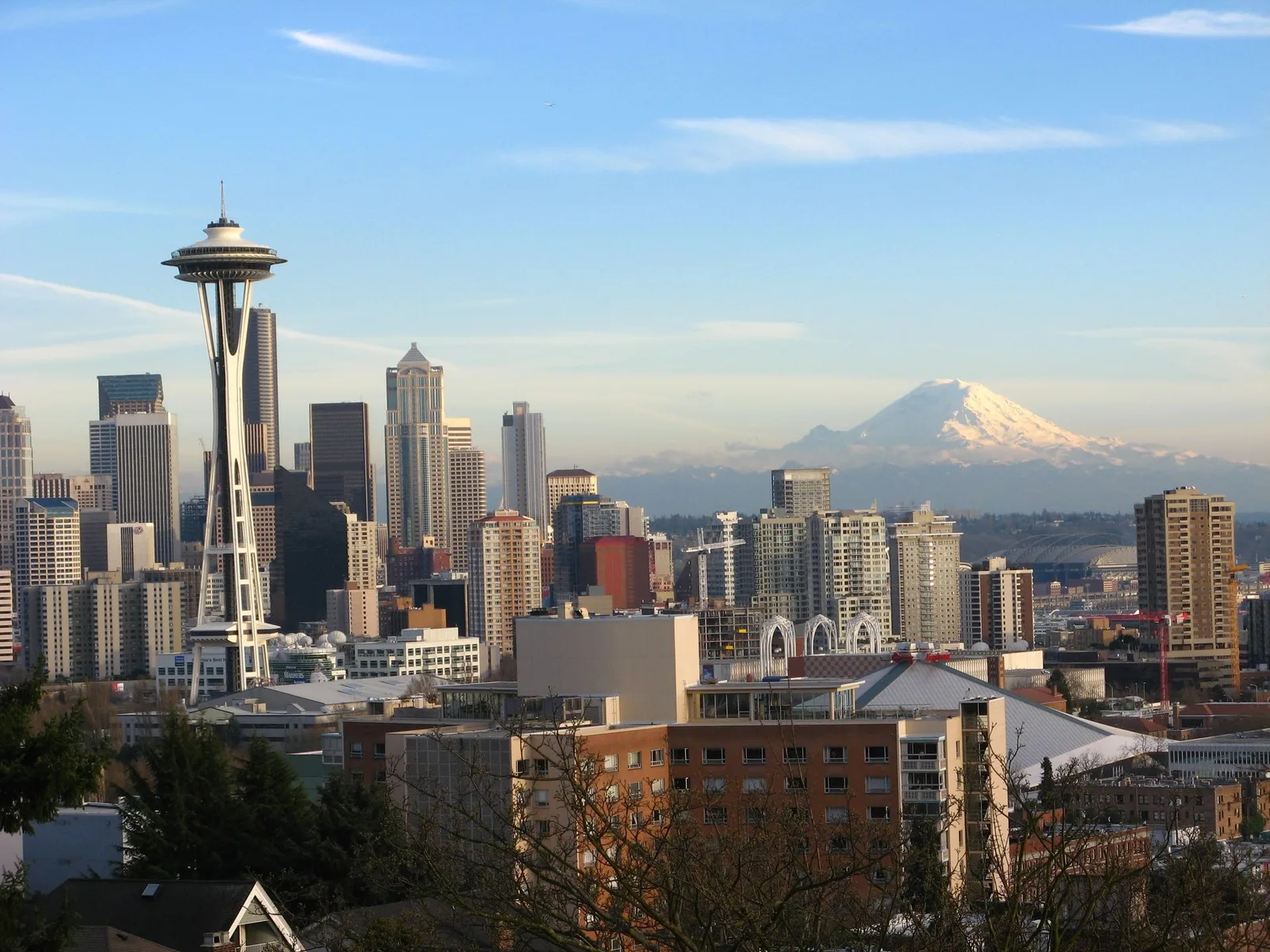
Seattle: your first hour after landing
You have just landed in the Emerald City — ferries on the Sound, coffee on every corner and a volcano playing hide and seek behind the skyline. This guide covers the Link train in from Sea-Tac, Pike Place before the crowds, the Space Needle and Chihuly, a ferry to Bainbridge, and how to dress for rain that is usually drizzle, not storm.
In this guide
You just landed in Seattle. Link light rail runs from Sea-Tac to downtown in about 40 minutes for a flat $3 — the easiest airport ride on the West Coast. Sort your Airalo eSIM before you land, and book the Space Needle and Chihuly combo — timed Needle slots go first on clear days, when the Mountain is out.
Quick facts
Airport
Getting in
Currency
Languages
Time zone
Emergency
Plugs
Tap water
Tourist tax
Best months
Map
Stays, sights, and landmarks in Seattle — live hotel prices plus the key places from this guide.
Settle in
From baggage claim, follow the signs up to the fourth floor of the parking garage and across the covered walkway to SeaTac/Airport Station — about a ten-minute walk, indoors or under cover. Heavy bags or limited mobility: a free airport shuttle runs between the terminal and the station. Trains leave every 8 to 15 minutes, and the downtown stops put you within a short walk of most hotels.
If you would rather be met and driven straight to the door, a pre-booked Kiwitaxi transfer fixes the price before you land, and Welcome Pickups pairs you with a driver who tracks your flight and waits at arrivals. A heavily delayed or cancelled flight in? Check whether you are owed compensation through AirHelp before the claim window closes.
Do the Seattle thing before you even check in: get a proper coffee. Skip the queue at the original Starbucks at Pike Place for now — a photo stop, not a coffee strategy — and head instead to the Starbucks Reserve Roastery at 1124 Pike Street on Capitol Hill — a working roastery and tasting bar, a winery for coffee. Land early with a room not ready, and it is the best reset for your body clock.
Getting around
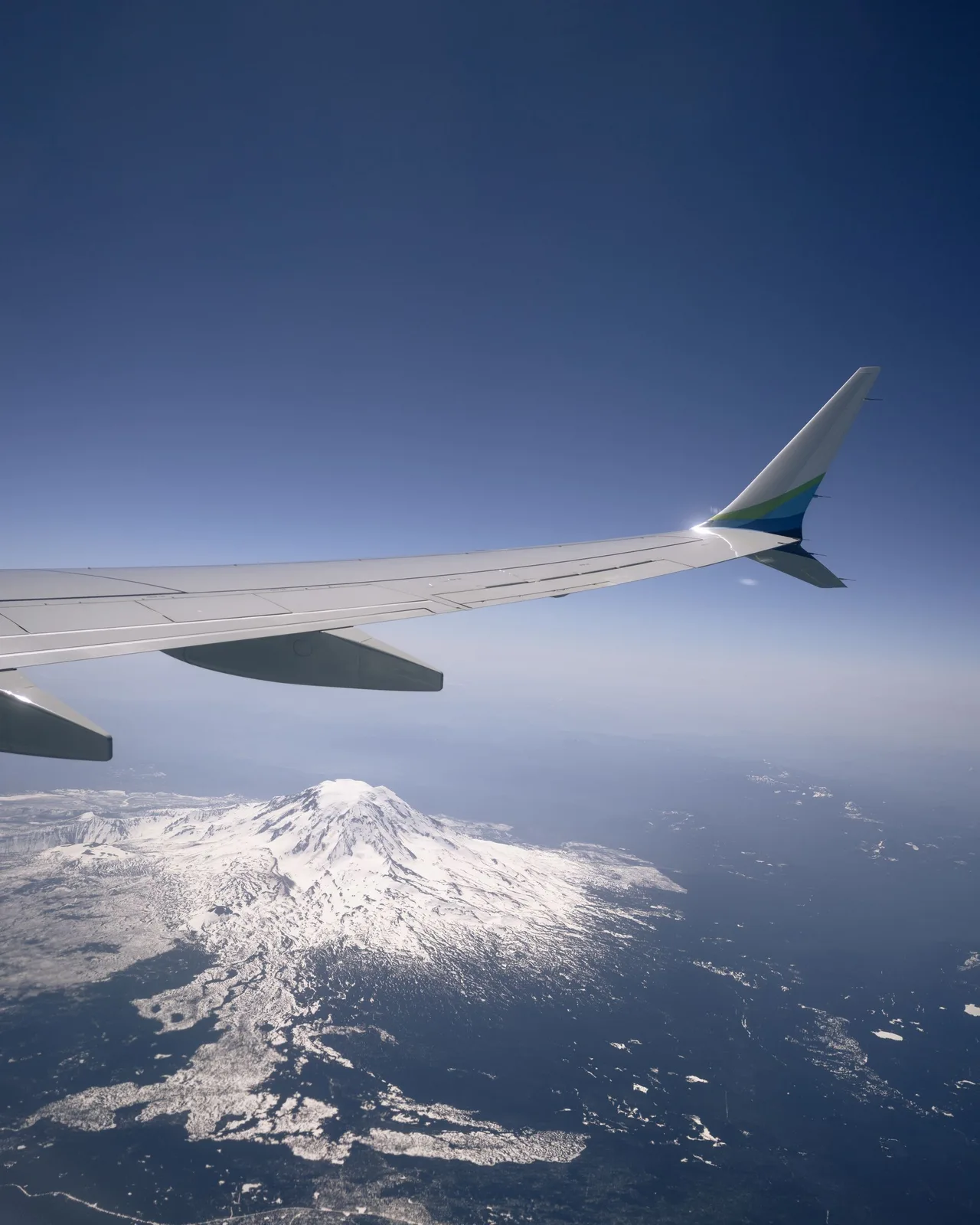
Times are airport to city centre.
Link 1 Line light rail
Tap an ORCA card or buy a ticket before boarding — proof-of-payment checks happen on board
Taxi
Metered cabs on the third floor of the parking garage; price swings with I-5 traffic
Rideshare (Uber, Lyft)
Pickups in the ground transportation area, third floor of the parking garage; surge pricing at peak arrival banks
Shared airport shuttle
Door-to-door to downtown hotels, with other passengers' stops first; book ahead in peak season
Downtown Seattle is compact, hilly and very walkable; transit fills the gaps. One card runs almost everything: the ORCA card works on Link light rail, King County Metro buses, the Seattle Center Monorail, the streetcars and Washington State Ferries. Buy one at the airport station machines (the card costs $3) or use the myORCA app; tap on and off as you go.
Link light rail. The 1 Line is the spine: airport to downtown in 35 to 40 minutes for a flat $3, from early morning to past midnight; a second line crosses Lake Washington to Bellevue and Redmond. There are no fare gates — buy or tap before boarding; fare ambassadors check.
Buses. King County Metro: a flat $2.75 adult fare, free transfers on ORCA within two hours. The RapidRide lines are the fast, frequent ones; buses reach the neighbourhoods the train misses — Ballard, Fremont, West Seattle.
Seattle Center Monorail. The 1962 World's Fair monorail runs Westlake Center to Seattle Center, at the foot of the Space Needle, in about two minutes: $4 one way for adults, takes ORCA, worth it once for the retro joy.
On two wheels. Seattle is laced with bike lanes; the Burke-Gilman Trail runs from the waterfront around Lake Union to the university. BikesBooking lists rental shops across the city. Wear a helmet and respect the hills — the grid ignores the contours, some blocks steep enough to walk.
Driving. Rent a car only for day trips: downtown parking is expensive, I-5 traffic reliably bad, everything in the core reachable without one.
In the city
Start where Seattle starts: Pike Place Market, working since 1907, still a real food market under the tourist gloss. Go early: the fishmongers at Pike Place Fish Market throwing salmon over the counter, a graze down the arcade, the Gum Wall in Post Alley and the first ever Starbucks at 1912 Pike Place — a tiny store, a long line; take the photo, then drink your coffee somewhere better.
From the market, a short walk or one monorail stop reaches Seattle Center, the 1962 World's Fair grounds. The Space Needle still delivers the definitive view — city, Elliott Bay, the Olympics one side, Rainier the other when it is out. Entry is timed and prices dynamic, starting from $49 for adults, so book the slot. At its base, Chihuly Garden and Glass fills galleries and a glasshouse with Dale Chihuly's blown glass, around $35 to $45 depending on the day. The two are sold as a combo: Tiqets sells same-day mobile tickets for both, and you can book a Space Needle and Chihuly combo ticket. Doing several paid sights? Price out the Seattle CityPASS, which bundles the Needle with four more attractions including the aquarium and a harbour cruise, and compare Klook's Seattle passes and attraction bundles before you commit.
On the rebuilt waterfront, the Seattle Aquarium and the Seattle Great Wheel sit on the piers; the new overlook walk connects the waterfront back up to Pike Place. The Seattle Art Museum downtown is free on the first Thursday of the month, and its Olympic Sculpture Park a mile north puts big pieces against the bay, free every day. Finish a clear day at Kerry Park on Queen Anne for the postcard shot: Needle in front, skyline behind, the Mountain on the horizon if you are lucky.
After you land in Seattle: Bookable experiences
Where to stay your first nights

Four Seasons Hotel Seattle.
Best for waterfront luxuryThe city's benchmark luxury stay, a block from Pike Place: bay-view rooms and a rooftop pool deck facing Elliott Bay. 99 Union Street.
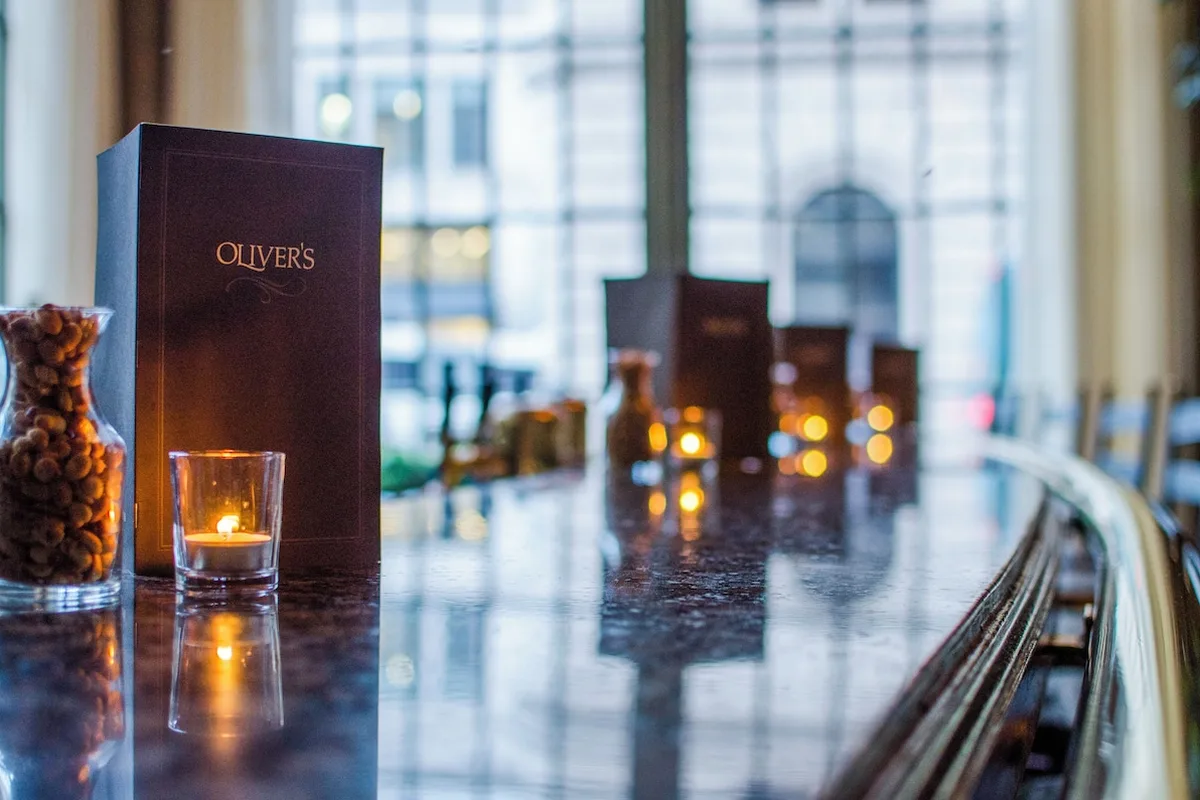
Mayflower Park Hotel.
Best for classic downtown charmA handsome 1927 hotel attached to Westlake Center — the monorail and the Link quite literally downstairs; classic rooms, an old-school bar, the best-connected lobby in town. 405 Olive Way.
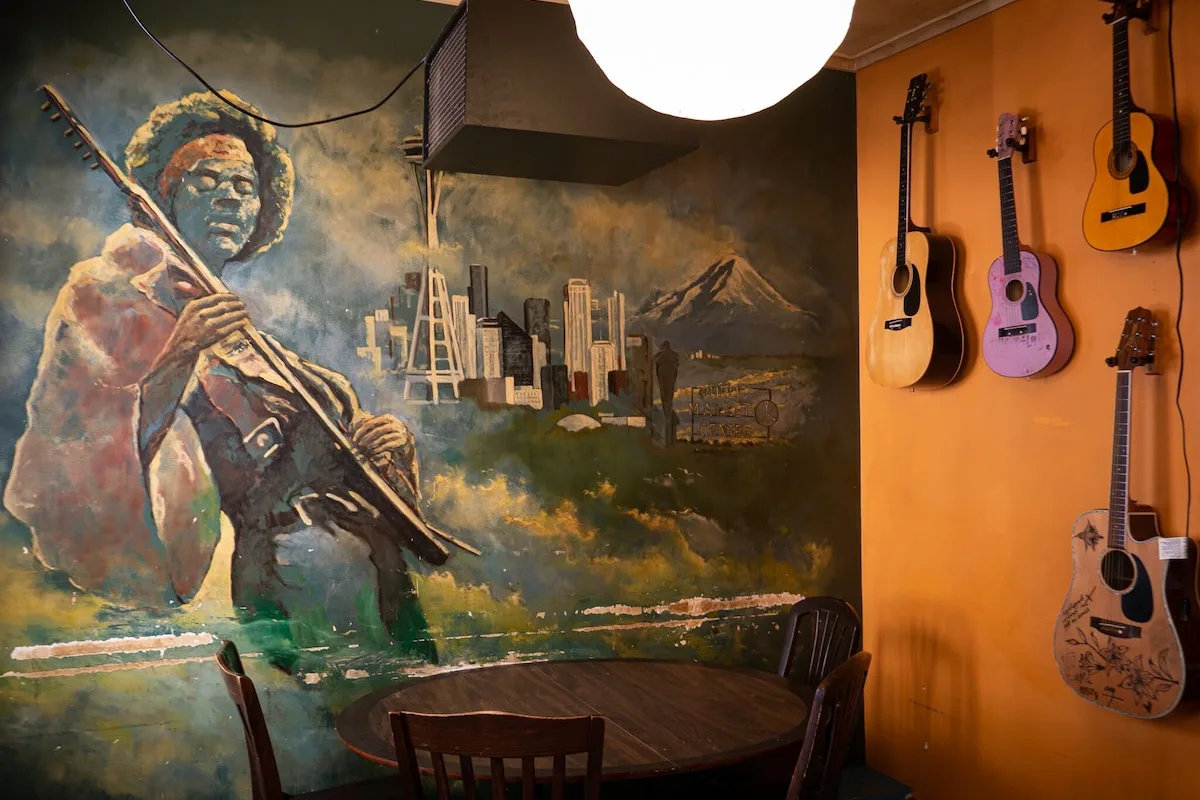
Green Tortoise Hostel.
Best for Pike Place on a budgetSeattle's social hostel institution, directly across from Pike Place Market in the old Elliott Hotel building: dorms with privacy curtains, a big kitchen, free breakfast and nightly events — no elevator, so pack light for the stairs. 105 Pike Street.
Stay downtown or in Belltown for a first trip: the market, the waterfront and the monorail are walkable. Capitol Hill is the pick for nightlife and coffee culture, one Link stop east; Queen Anne suits a quieter stay under the Needle. Remember the tax stack in the Quick facts: the rate you see is not the rate you pay.
Where to eat first

Your first meal should be at the market, your first splurge the old guard. These three cover both, plus the room everyone photographs.
Canlis — the splurge institution.
Map → 2576 Aurora Avenue N. Seattle's defining special-occasion restaurant since 1950, perched above Lake Union. Jackets for men, reservations weeks ahead, and the Canlis salad is non-negotiable.
Pike Place Chowder — the market classic.
Map → 1530 Post Alley. Award-hoarding clam chowder in a bread bowl from a tiny Post Alley counter. The line moves faster than it looks; go before noon or after two.
The Pink Door — the beloved Italian.
Map → 1919 Post Alley. Handmade pasta, a burlesque-and-live-music streak, and a terrace over the bay. Look for the pink door with no sign; that is the sign.
Day trips and more
Three escapes cover Seattle's range: a volcano, an island and the icon itself. Book landmark tickets as in the city; Tiqets covers the Space Needle side of the third card; Rainier and the ferry are pay-on-the-day.

Mount Rainier and the Paradise trails
The Mountain fills the windscreen the whole drive south. Paradise, on the south side, is the classic first visit: wildflower meadows in summer, the Skyline Trail to glacier views, waterfalls right off the road. Entry is $30 per vehicle for a seven-day pass; the 2024 and 2025 timed-entry reservations are gone for 2026, so it is first come, first served — parking is the whole game on summer weekends: arrive before 9 am, or go on a weekday.
Check availability →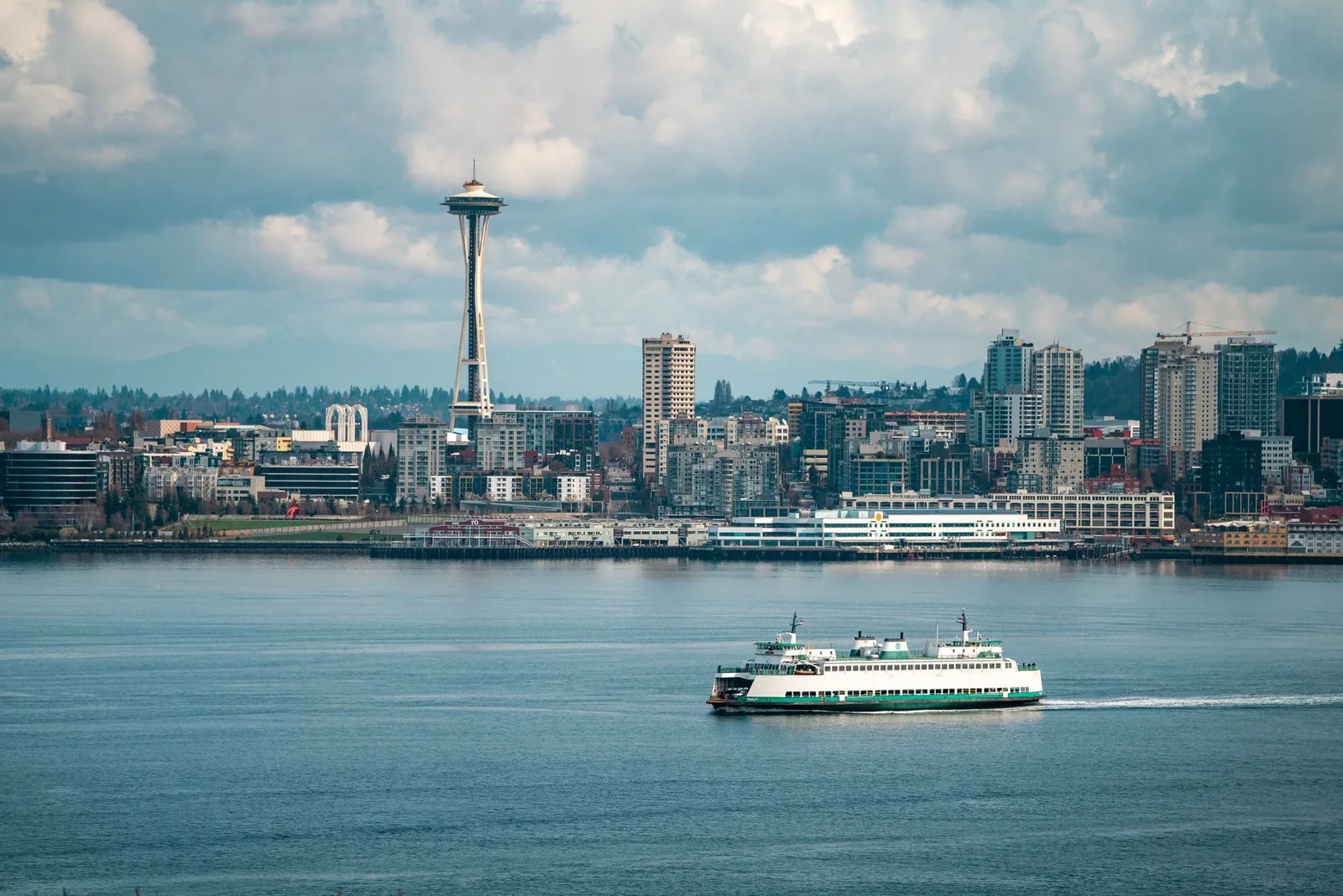
Bainbridge Island by ferry
The cheapest harbour cruise in America is a commuter boat. Walk onto the Bainbridge ferry at Colman Dock for the skyline, the bay and, on the return leg, the full postcard panorama. Bainbridge is a gentle half day of cafés, bookshops and a main street for wandering. Walk-on fares are collected in Seattle only: $11.35 for adults, and the ride back is free.
Check availability →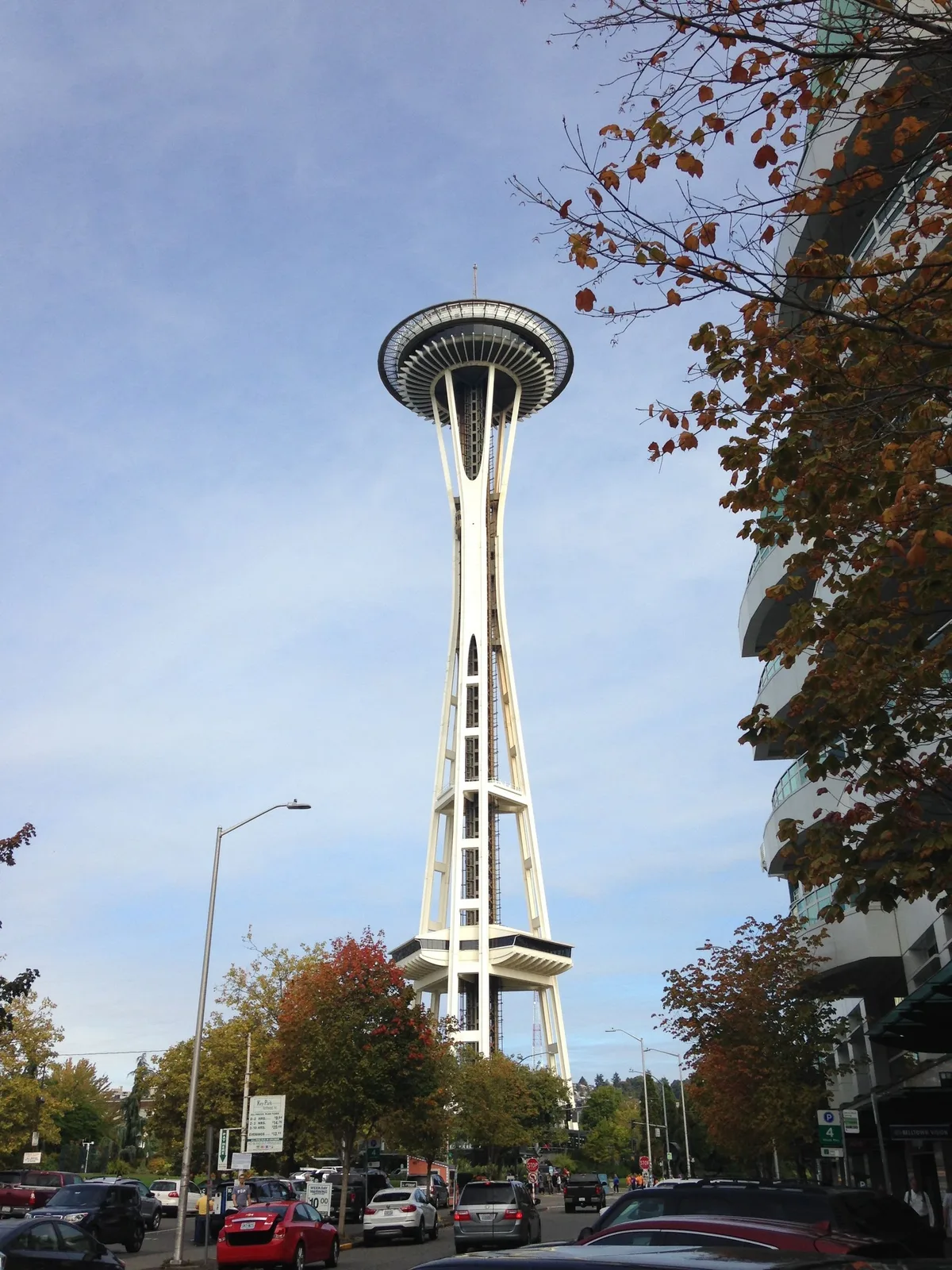
The Space Needle and Chihuly Garden and Glass
An honest half-day, not a day trip: the landmark pair at Seattle Center deserves its own block. Ride the monorail in, take the Needle's glass floor and open-air deck while the light is good, then slow down in Chihuly's galleries and glasshouse garden. Add MoPOP next door if pop culture is your thing, and be back downtown for dinner.
Check availability →When to go and what it costs
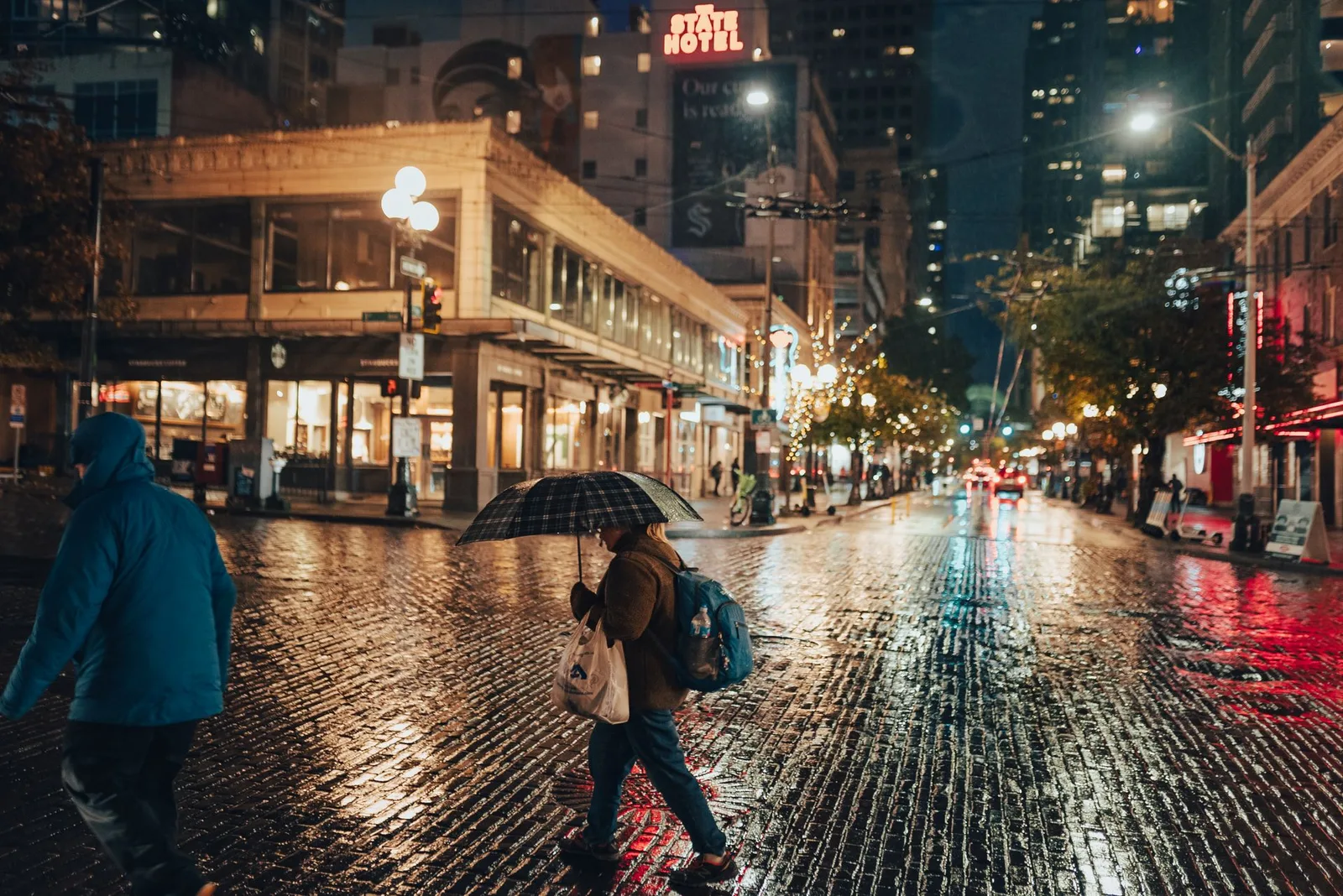
July to September is the reliable window: long evenings, highs in the mid-20s Celsius, trails open at Rainier and the Mountain out more days than not. May and June are lovely but can still turn grey for a week. October slides into the rainy season; November to February means rain gear, 4:30 pm sunsets and the city's cosiest bars earning their keep. Prices follow the sun: summer hotel rates are the year's peak, winter rates can drop by a third, and cruise season, May to September, fills downtown on sailing days.
Once the flight is paid, Seattle is mid-priced for a big US city. A hostel bed at the Green Tortoise runs from around $45; mid-range downtown rooms sit around $180 to $280 a night in summer before the tax stack. The coffee habit is the stealth budget line: two good coffees a day is $12 to $15 without trying. The big paid sights run $35 to $50 each, and the best things in the city — the market, the sculpture park, the ferry-deck view, Kerry Park at dusk — cost little or nothing.
What to pack
Tap items to check them off — your list is saved on this device.

Pack for hills, drizzle and days that run from grey and 12 degrees to clear and 24: layers are the system, a hooded light rain jacket the whole rain strategy.
- Comfortable walking shoes Shop walking shoes on Amazon →
- Sunscreen Shop sunscreen on Amazon →
- Reusable water bottle Shop water bottle on Amazon →
- Phone charger and power bank Shop power bank on Amazon →
- Daypack Shop daypack on Amazon →
- Sunglasses Shop sunglasses on Amazon →
- Light rain jacket Shop rain jacket on Amazon →
As an Amazon Associate I earn from qualifying purchases.
Language, visa and entry
! Check visa requirements before you fly

English gets you everything in Seattle; the local shorthand below makes signs and directions click faster.
For entry: most visitors from Visa Waiver countries — the UK, most of the EU, Australia, New Zealand, Japan — enter the US with an ESTA, which costs $40; apply at least 72 hours before departure through the official US government site only, as third-party sites charge more for the same form. Canadians generally need only a passport for short visits; everyone else should check whether they need a B1/B2 visa well ahead. Passports are checked on arrival at SEA's international arrivals facility, and US customs rules apply as at any US gateway, including the ban on most fresh fruit, vegetables and meat products.
For data, an eSIM is the painless route: Airalo sells US data plans to install before you fly, and Saily is the other solid option; both beat airport SIM counters and roaming bills.
Safety and health
Street awareness downtown
Central Seattle is busy and generally safe, but visible homelessness and open drug use concentrate on a few downtown blocks — stretches of 3rd Avenue, parts of Pioneer Square after dark — more confronting than dangerous for most visitors. Stick to lit main streets, keep city awareness up, and take a rideshare late rather than walking empty blocks.
Hills, wet leaves and early darkness
Seattle's hills get slick: wet leaves on steep sidewalks in autumn and winter are a genuine fall hazard, and from November to January it is dark before 5 pm. Wear shoes with grip, use handrails on the steepest blocks, and plan sightseeing around the short days.
Car break-ins at trailheads and viewpoints
Smash-and-grab theft targets rental cars at trailheads, scenic overlooks and even hotel garages across the region. Leave nothing visible in the car, ever — not a cable, not a jacket — and put bags in the trunk before you arrive, not after.
Mountain weather turns fast
Rainier and the Cascades make their own weather: a clear morning at Paradise can be freezing fog and sideways rain by afternoon, even in July, and trails hold snow well into summer. Check the park's conditions page before you drive, carry a warm layer and water, and turn back when the weather says so.
Healthcare in the US is excellent and expensive: travel insurance with real medical cover is not optional for a US trip, and a single ER visit can run into thousands of dollars. Pharmacies are everywhere, and 911 reaches all emergency services.
Related destinations
If you liked Seattle, try these next:
 The Americas
 The Americas
 The Americas
 The Americas
 The Americas
 The Americas
 The Americas
 The Americas
 The Americas
 The Americas
Frequently asked questions
The facts that matter after you land in Seattle.
Verified against Sound Transit, Washington State Ferries and Visit Seattle sources, October 2026.
The Link 1 Line light rail runs from the airport station to downtown in about 35-40 minutes for a flat $3.
It beats traffic on I-5 at almost any hour - the free station shuttle covers the walk from the terminal.
From $49 for adults with timed entry - clear days sell out first.
The combo with Chihuly Garden and Glass next door runs about $78 and is the better buy.
About 15.6% in lodging taxes.
Larger downtown hotels also add the Seattle Tourism Improvement Area assessment - 2.3% of the room rate since 2024.
$11.35 for an adult walk-on, collected on the Seattle side only - the ride back to Seattle is free for foot passengers.
The crossing takes 35 minutes and the skyline view is the best cheap thrill in the city.
Yes - it comes from the protected Cedar River watershed and is famously good.
Refill freely; coffee shops will top up a bottle without blinking.
July to September is the dry, clear stretch - when Mount Rainier is out and the ferries shine.
Mount Rainier National Park needs no timed entry reservation in 2026, but Paradise parking fills by 9 am on summer weekends.
Link light rail flat $3 from Sea-Tac; hotel taxes about 15.6% plus a 2.3% tourism assessment downtown; tap water safe; Type A/B sockets at 120V; ESTA $40 for Visa Waiver visitors.
Seattle, in your pocket
Landing soon? Get the printable PDF — ticket links, the airport transport cheat sheet, our 3 restaurant picks with maps, and the packing checklist. Everything above, formatted for your phone.
One email with your Seattle PDF. Fare changes and new guides after that. No spam, unsubscribe anytime.
Sources and last verified
Fares and prices checked October 2026 against Sound Transit (Link fare and airport station details), the Port of Seattle (SEA ground transport), King County Metro, Seattle Center Monorail, Washington State Ferries fare tables (Seattle to Bainbridge walk-on fare, October 2025 increase), Visit Seattle and the Seattle Tourism Improvement Area (lodging tax stack and the 2.3% assessment), the Washington State Department of Revenue lodging rates, the National Park Service Mount Rainier pages (entrance pass and 2026 timed-entry policy), and the official Space Needle and Chihuly Garden and Glass ticket pages. Attraction prices are dynamic; treat every price here as a checked starting point, not a promise. Last verified: 20 October 2026.
Affiliate disclosure: hotel names, transfers, experiences, and products linked in this guide may earn After You Land a commission at no extra cost to you. Prices and times were checked in Oct 2026 and change often — confirm before you book.