You have just landed in one of the largest cities on Earth — 2,240 metres up, built on an Aztec capital, and far friendlier than its size suggests. This guide gets you from the airport into the good neighbourhoods fast: the Metrobús and authorised taxis that won’t rip you off, the hotel pockets that actually work, the first tacos to order, and the pyramid day trip everyone should take.
By Paul GreenUpdated Oct 202613 min readPrices checked Oct 2026
MEX, about 13 km east of the Zócalo Benito Juárez International, two terminals (T1 and T2) linked by a free shuttle and the Aerotrén. Check your ticket twice: Felipe Ángeles (NLU) is a different airport 50 km north, and none of the transfer times in this guide apply to it.
Getting in
Metrobús $30, taxi $250–400 Metrobús Line 4 runs from both terminals to the Centro Histórico. Authorized airport taxis charge roughly $250–400 MXN to Centro or Roma; Uber and DiDi run $180–320 MXN — or book a Kiwitaxi pickup for a fixed fare locked in before you land.
Currency
Mexican peso (MXN, $) Prices are in pesos, written with the same $ sign as dollars — a $200 taco bill is pesos, not dollars. Cards work in most Centro and Roma restaurants and hotels; markets, street stalls and many taquerías are cash only — carry small bills.
Languages
Spanish; English in hotels and sights Hotel staff, museum guides and Roma and Condesa restaurant staff usually speak some English; a few phrases — and a translation app for menus — go a long way.
Time zone
CST, UTC-6, no daylight saving The city stays on Central Standard Time all year — Mexico abolished daylight saving in 2022 — so in summer it runs an hour behind US Central Daylight Time. Double-check meeting times with home.
Emergency
911 911 works nationwide for police, ambulance and fire. Tourist police patrol the Centro Histórico and Paseo de la Reforma; the free tourist assistance line is 55 5207 4155.
Plugs
Type A and B, 127V The same flat-pin sockets as the US and Canada, at 127 volts. US and Canadian chargers plug straight in; Europe and elsewhere need an adapter.
Tap water
Not safe to drink Do not drink it. Hotels provide bottled or purified water, restaurants serve purified water and ice, and corner stores sell refillable garrafones. Brush with bottled water for the first days if your stomach is sensitive.
Tourist tax
None in Mexico City No city tourist tax, and the national immigration fee is already bundled into your airfare — nothing extra to pay on arrival. Ignore any website offering to pre-sell you an entry permit for a fee.
Best months
March to May, October and November March to May is warm and dry before the rains; October and November bring clear skies and mild days after the wet season. June to September means heavy afternoon downpours; December to February nights can be genuinely cold at this altitude.
Map
Find your arrival stop, hotel, and first meal. Stays, sights, and landmarks in Mexico City — live hotel prices plus the key places from this guide.
Sort data before you leave the terminal — rideshare pickups, maps and translation all depend on it. An eSIM is the fastest route: install an Airalo eSIM for Mexico before you fly and land already online, or compare a Saily eSIM if you travel on. Prefer a local SIM? Telcel has the widest coverage, and the airport OXXO stores sell starter packs.
Step 2: Sort money
Use an ATM inside the terminal for your first pesos — arrivals-hall machines give the real exchange rate, unlike the change booths. Take out enough for taxis, markets and tips, decline the ATM's conversion offer, and keep small bills separate for street food and metro cards.
Step 3: Eat
You are in one of the world's great food cities, so do not waste the first meal. Drop your bags and find tacos — Where to eat first below has a classic Centro breakfast room, a Roma seafood institution and a legendary taco stand, all within easy reach of the main hotel zones.
Step 4: Walk
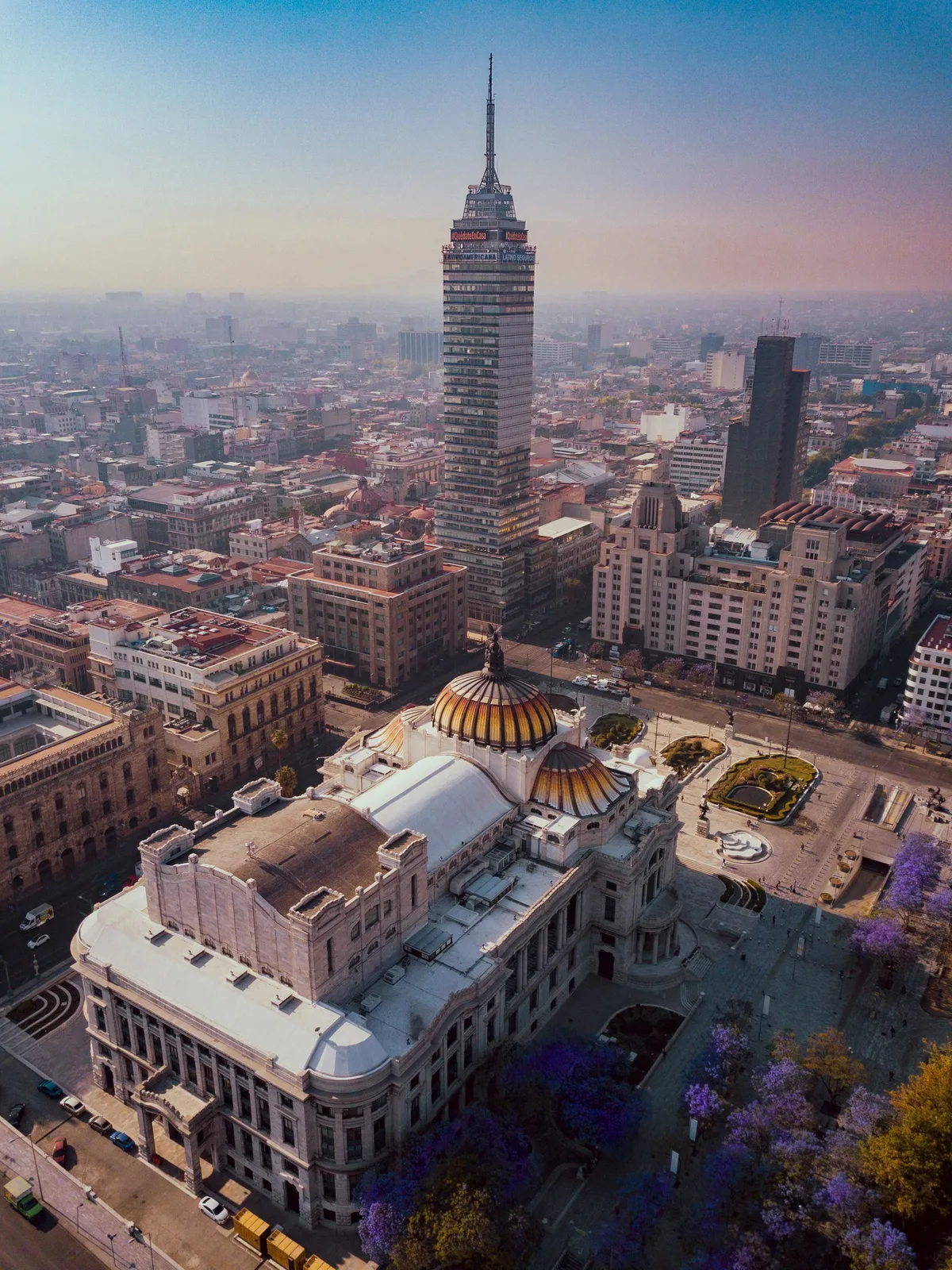
The city sits at 2,240 metres, so let your first outing be a gentle one. Walk the Zócalo and Calle Madero to the Palacio de Bellas Artes as the light fades, and save the big museum days for once you have slept at altitude.
Getting around
Journey times are approximate and refer to the listed stop — not necessarily your hotel. Allow extra time for waiting, walking, and connections.
Metrobús Line 4
Direct from both terminals to Centro and Buenavista; room for luggage; runs about 04:30–00:00
Price$30 MXN + $15 cardJourney45–60 min
Authorized airport taxi
Fixed zone fare; buy the ticket at the booth inside arrivals, never from a tout
Price$250–400 MXNJourney25–60 min
Uber / DiDi
Meet the driver at the designated pickup zone; DiDi is often a little cheaper
Price$180–320 MXNJourney25–60 min
Metro Line 5
Terminal Aérea station by T1; needs a transfer into Centro; tough with big luggage
Price$5 MXNJourney60–90 min
Mexico City is vast, but visitors mostly move between Centro, Roma, Condesa, Polanco, Chapultepec and Coyoacán — and Metro, Metrobús and rideshare apps cover them well. From the airport, four real options:
Metrobús Line 4. The value pick. Buy a Tarjeta de Movilidad Integrada at the station machines and ride in dedicated lanes to stops around the Centro Histórico and Buenavista. Buses take luggage and run every few minutes, early morning to midnight.
Authorized airport taxi. Fares are fixed by zone and printed at the booth: roughly $250–330 MXN to Centro and $290–400 MXN to Roma, Condesa or Polanco. Pay at the counter inside arrivals, take the printed ticket, and ignore anyone offering a ride in the corridor. Late at night or with a group, a pre-booked pickup is easier still — Welcome Pickups runs fixed-fare Mexico City transfers for about the price of the taxi queue.
Uber and DiDi. Usually the cheapest door-to-door option, price locked in the app. Pickups use designated zones a short walk from the terminal doors — follow the in-app directions, and if drivers are scarce, the taxi booth is your fallback.
Metro. At $5 MXN flat, the Metro is the city's cheapest ride — and, once settled, the fastest way across town at rush hour. The same mobility card works on Metro, Metrobús and Cablebús. Avoid the busiest lines at peak hours with luggage; keep your phone in a front pocket on crowded trains.
In the city
Centro Histórico.
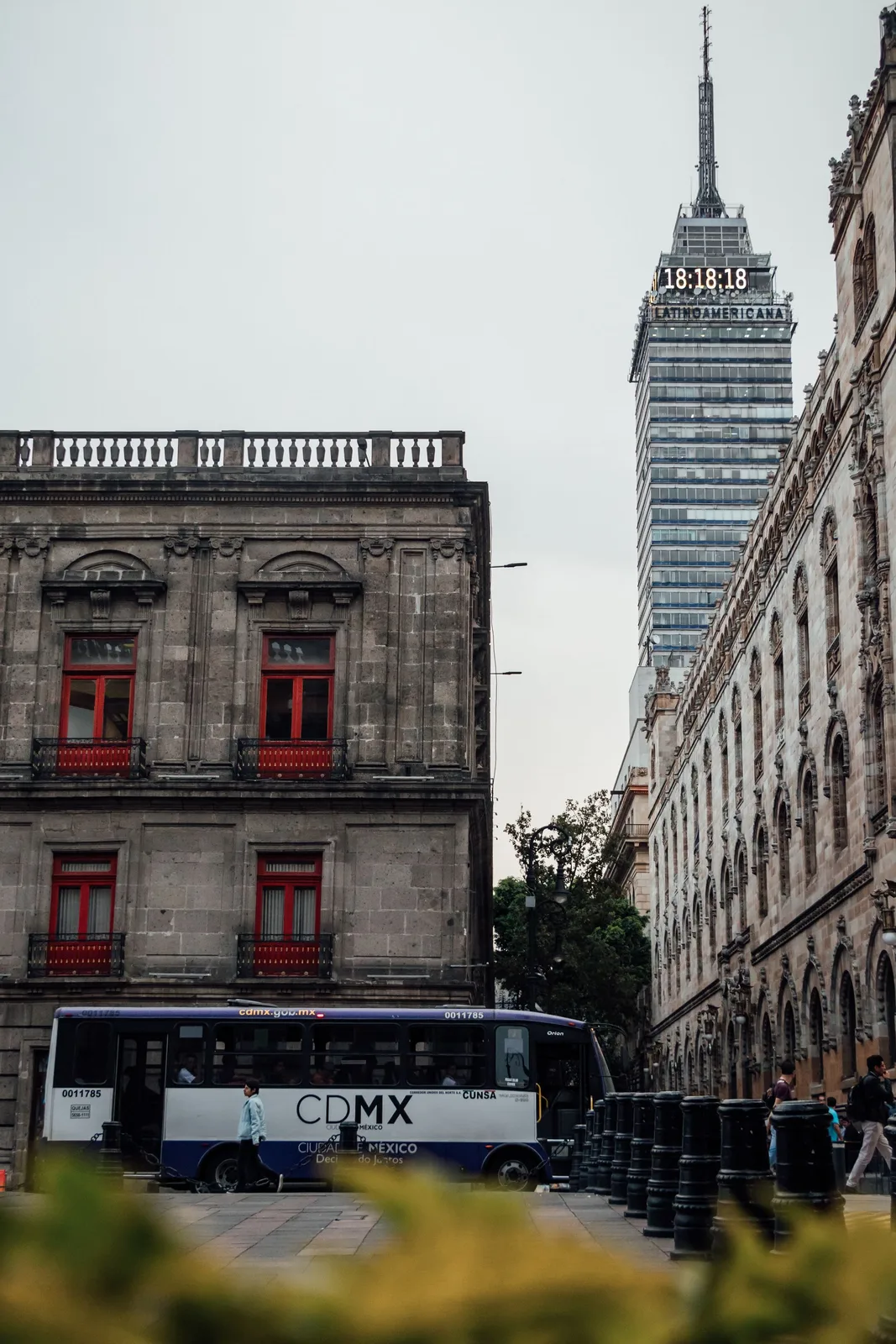
Start where the city started: the Zócalo, one of the largest squares in the world, flanked by the Metropolitan Cathedral and the National Palace with its Diego Rivera murals. A block away, the Templo Mayor museum shows the Aztec great temple beneath the colonial streets. Entry to the big INAH museums runs about $210 MXN for foreign visitors. The Casa Azul is the one ticket that truly needs booking ahead — it sells timed slots online only — so reserve museum tickets through Tiqets early.
Chapultepec and the Anthropology Museum.
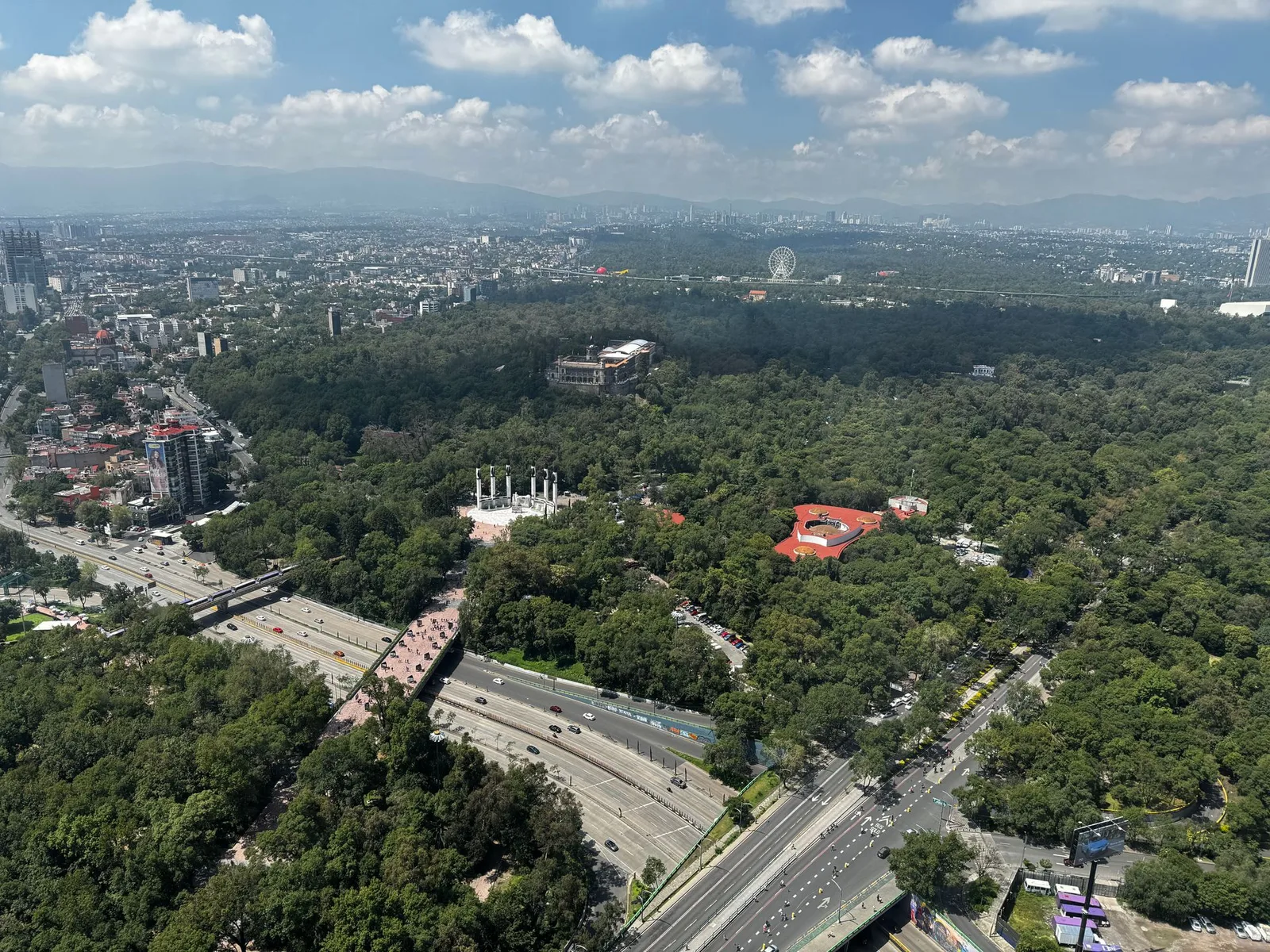
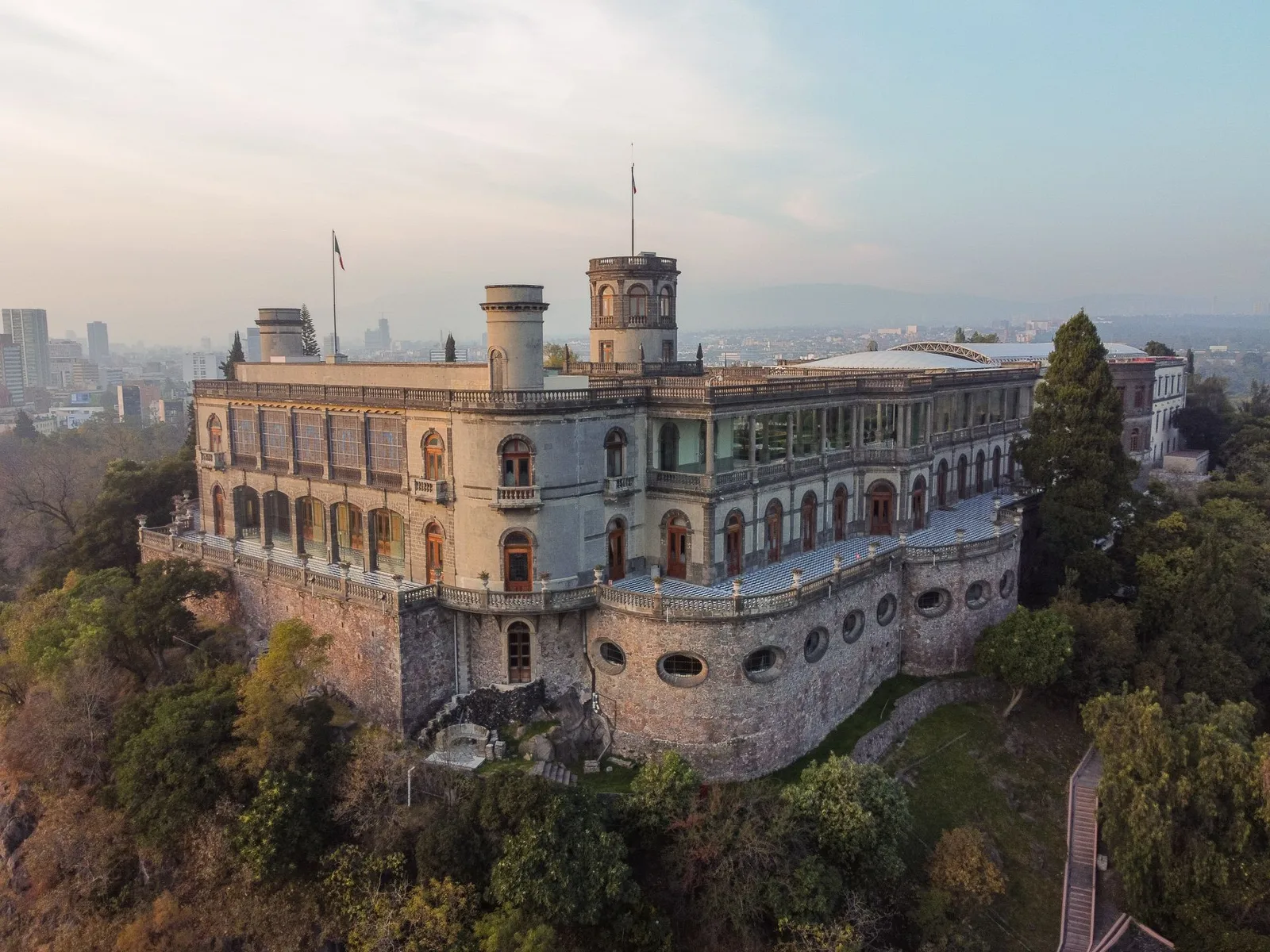
The Museo Nacional de Antropología is the single best museum in the country — the Aztec Sun Stone, Maya jade and colossal Olmec heads under one roof, about $210 MXN. Give it a full morning, then walk up the hill to Chapultepec Castle for the city view. The park around it is the city's green lung; cycling its paths fills an afternoon: rent a bike through BikesBooking or use the Ecobici sharing scheme once you have the mobility card.
Roma and Condesa.
The café-and-galleries districts west of Centro are where the city lingers: tree-lined avenues, Art Deco apartment blocks and some of the best restaurants in the Americas. For a local to structure the eating, a Klook Mexico City tour pairs the landmarks with market tastings, and for the full deep-dive book a food tour of the Roma neighborhood — come hungry and pace yourself.
Coyoacán.
Half an hour south, Coyoacán keeps a small-town feel: cobbled streets, a garden square with a famous coyote fountain, churro stands and the Casa Azul, Frida Kahlo's blue house at Londres 245, where she lived with Diego Rivera. Tickets are about $320 MXN, sold online only, and the museum closes on Mondays — combine it with the nearby Anahuacalli, included on the same ticket, and Xochimilco further south.
After you land in Mexico City: Bookable experiences
Where to stay your first nights
Splurge
Gran Hotel Ciudad de México.
Best for the Zócalo view
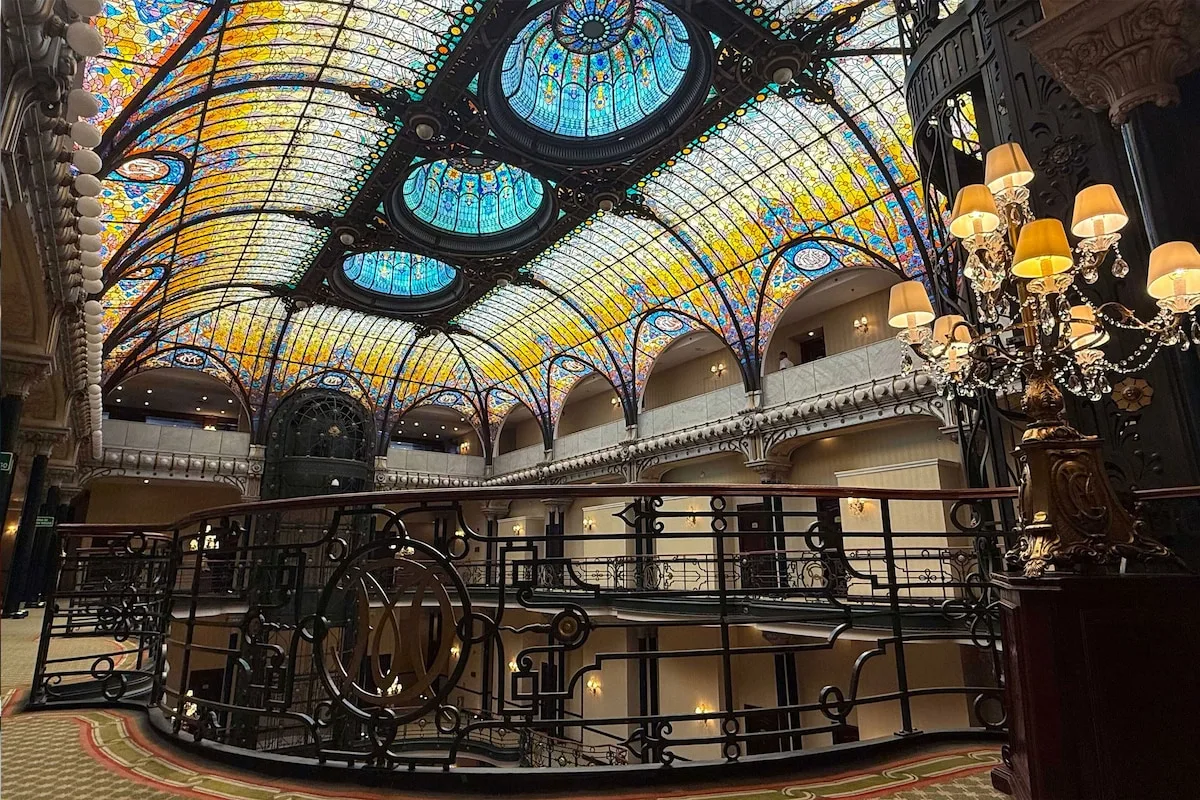
16 de Septiembre 82, Centro Histórico. An Art Nouveau landmark right on the Zócalo — a Tiffany stained-glass ceiling, wrought-iron elevators and a rooftop terrace looking across the square to the Cathedral. The splurge is justified by the building alone.
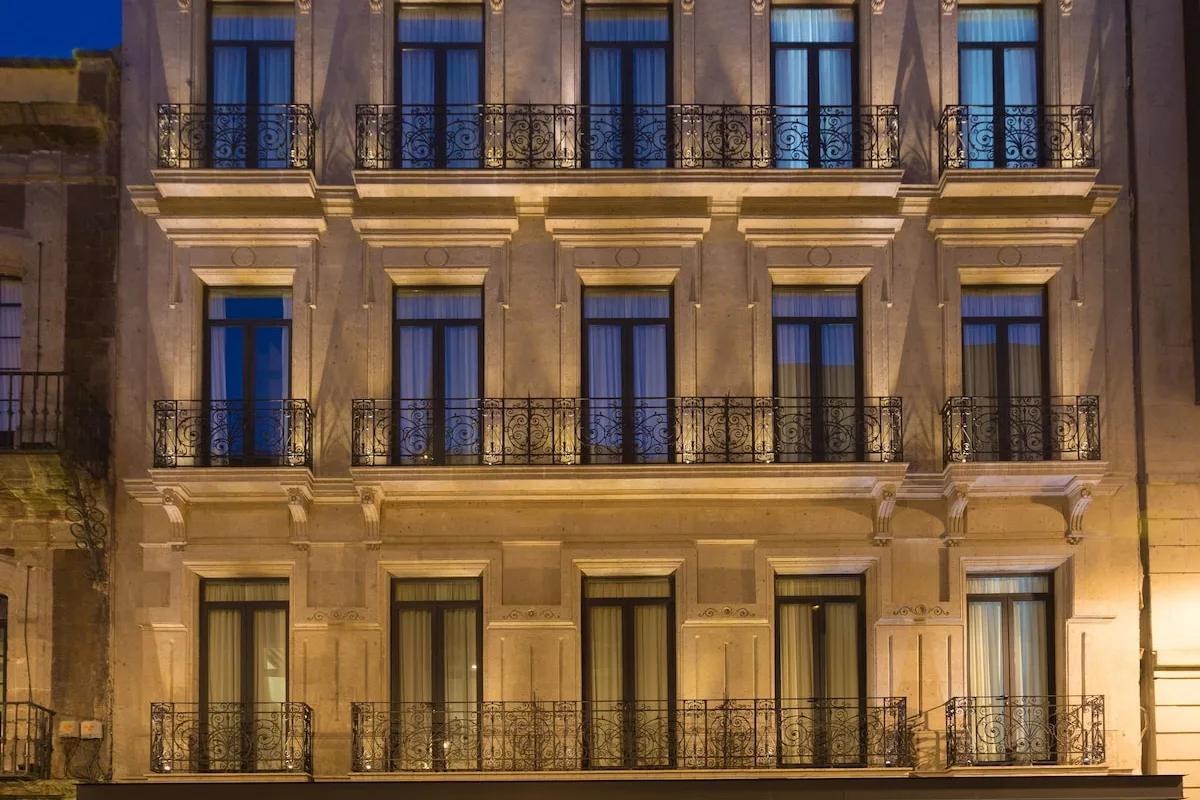
Simón Bolívar 28, Centro Histórico. A handsome colonial-era mansion a few blocks from the Zócalo, known for its 24-hour café — breakfast, coffee and snacks included around the clock, a genuinely useful perk for jet-lagged arrivals.
Isabel la Católica 61-A, Centro. A long-running backpacker base in the historic center with dorms and private rooms, a free breakfast buffet and a sociable bar — the reliable budget anchor between the Zócalo and Bellas Artes.
Centro Histórico puts the Zócalo, the Cathedral and the main museums on your doorstep, with the city's best-value hotels — lively by day, quieter at night. Roma Norte and Condesa are the café districts: leafy, walkable and full of restaurants, the favorite base for longer stays. Polanco is the polished upscale quarter near Chapultepec, and Coyoacán suits a slower, residential stay in the south.
Where to eat first
El Cardenal — classic Centro institution, since 1969.
Map → Calle Palma 23, Centro Histórico. Come for breakfast: hot chocolate whisked at the table, warm conchas with nata, and chilaquiles done properly, in a multi-level dining room a block from the Zócalo. Arrive before 9am on weekends to skip the queue.
Contramar — Roma seafood landmark.
Map → Durango 200, Roma Norte. The tuna tostadas and whole grilled fish — half red salsa, half green — are the order at the city's defining lunch room. Lunch only — doors close at 8pm, and a booking is close to essential.
Taquería El Califa de León — the legendary taco stand.
Map → Av. Ribera de San Cosme 56, San Rafael. A tiny standing-only counter, open since 1968, famous for the gaonera — thin beef fillet seared on the grill, salt, lime, salsa, nothing else. The first taquería ever awarded a Michelin star; expect a line, and bring cash.
Day trips and more
The city alone can fill a week, but three outings stand out. Teotihuacán needs a ticket strategy — gate entry is simple, about $210 MXN, but sunrise and guided packages are worth booking ahead; Tiqets lists Teotihuacán entry and tour options to compare before you commit.
The Zócalo at golden hour
End a Centro day on the great square as the flag comes down and the Cathedral lights up, then walk Madero street to Bellas Artes for the evening.
An hour northeast, the Avenue of the Dead runs between two of the largest pyramids in the Americas. Entry is about $210 MXN and the gates open at 8am — go early, before the heat and the tour buses arrive.
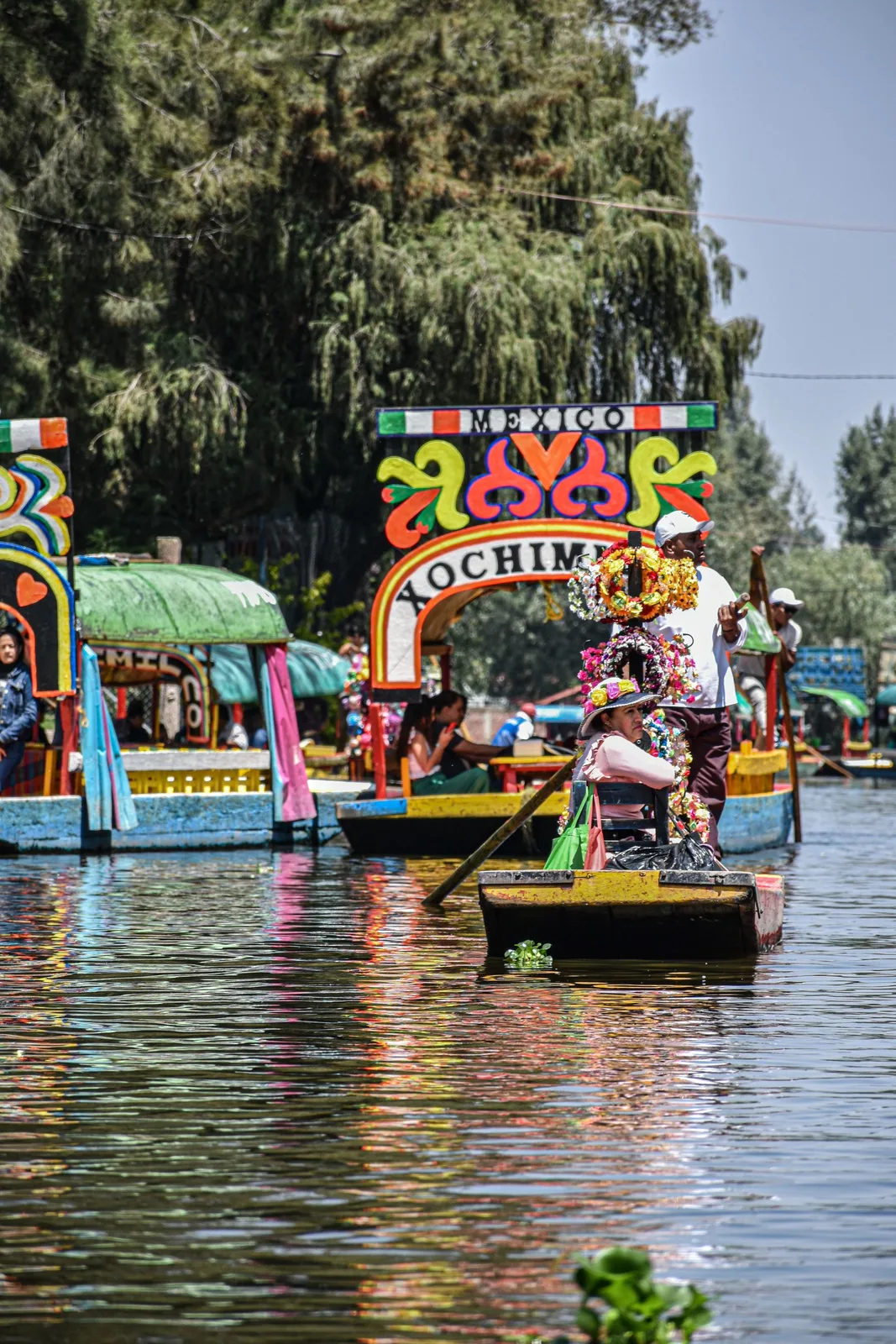
Hire one of the flat-bottomed, flower-bright boats on the last surviving Aztec canals — the official rate is about $750 MXN per boat per hour, posted at the piers. Mariachis pull alongside, food boats do the catering, and the floating gardens do the rest.
Add Puebla, two hours east, for talavera tiles and mole poblano in a colonial center made for walking; the monarch butterfly sanctuaries west of the city from November to March; or a slow weekend in the wine and cheese towns of Querétaro state. Intercity buses from four big terminals are comfortable and cheap.
When to go and what it costs
JanFebMarAprMayJunJulAugSepOctNovDec
March to May
is the sweet spot for a first visit: warm days, jacaranda trees in purple bloom and no rain to plan around, though late May heats up. October and November run a close second — the rains have ended, the air is clear, and the city is at its greenest. June to September is the rainy season: mornings are usually fine, then a heavy downpour lands most afternoons — schedule museums after lunch and expect flight delays, which is exactly when AirHelp can chase compensation for a disrupted flight. December to February is dry with cold nights and warm middays — pack layers and you will be comfortable.
What it costs.
Mexico City is one of the world's great-value capitals. Hostel dorms run about $300–600 MXN a night, good mid-range hotels $1,500–3,000 MXN, and splurge addresses from about $4,000 MXN. Eating is the bargain of the trip: a stand-up taco breakfast for under $100 MXN, a long Contramar lunch for $600–900 MXN a head. A trajinera hour splits to a few hundred pesos each in a group.
What to pack
Tap items to check them off — your list is saved on this device.
As an Amazon Associate I earn from qualifying purchases.
Language, visa and entry
Spanish runs the city, and even a handful of words changes how people respond. Chilango Spanish is fast and playful, full of slang that dictionaries miss — start with the essentials below and use them freely.
buenos días good morninggracias thank youcuánto cuesta how much does it costórale let's go, wow
A greeting earns goodwill: buenos días until midday, buenas tardes after it, and a gracias for every small thing. Cuánto cuesta is your market phrase — ask it with a smile before you commit. Órale is pure Mexico City: agreement, encouragement and amazement in one word, and using it will get you a grin.
Entry.
Fly in and the paperwork is already done: Mexico replaced the old paper tourist card with a digital visitor permit, recorded when the immigration officer stamps your passport. There is no form to fill in and nothing to pay at the airport — the fee is already in your airfare. The officer sets your allowed stay, up to 180 days, so check the stamp before you walk away from the desk and keep a photo of it. Your passport must be valid for the length of your stay. Download the digital copy of your entry record afterwards — airlines sometimes ask for it on departure.
Safety and health
Altitude is real
At 2,240 metres you will feel the first day or two: headaches, poor sleep and one drink hitting like two. Take arrival day gently, drink water constantly and save Teotihuacán's steps for day three.
Use apps and authorized taxis
Uber and DiDi are cheap, tracked and the default choice after dark. From the airport, only use the official taxi booths inside arrivals — never a driver who approaches you in the terminal.
Pick your districts after dark
Centro, Roma, Condesa, Polanco and Coyoacán are lively and comfortable in the evening. Between districts at night, take a rideshare rather than walking quiet streets; keep the usual big-city awareness on crowded Metro trains.
Water and street food
Drink bottled or purified water only, including for brushing teeth if your stomach is new to Mexico. For street food, follow the locals: busy stalls with high turnover and food cooked in front of you are the safe bet.
Health.
The high-altitude sun is the everyday risk — sunscreen and a hat matter more here than the temperature suggests, and air quality can dip in the dry months, so sensitive lungs should pace long walks. Pharmacies are everywhere and well stocked; private hospitals are excellent. Sort travel insurance covering medical care and altitude-friendly activity before you fly: state care treats emergencies, but private treatment is what you will actually use.
The facts that matter after you land in Mexico City.
Verified against Metrobús, INM (visitor permit) and museum sources, October 2026.
Metrobús Line 4 runs from both terminals to the Centro in 45-60 minutes for $30 MXN plus a $15 card.
Authorised taxis charge a fixed $250-400 zone fare - buy your ticket at the prepaid booth inside arrivals, never from touts.
Uber and DiDi usually cost $180-320 MXN to central districts - cheaper than the authorised taxi for late-night arrivals.
Use the designated app pickup zones outside each terminal.
Air arrivals get a digital visitor permit automatically - the fee is in your airfare and there is no paper form to fill.
Officers can grant up to 180 days, but the stay is at their discretion.
No. Drink bottled or filtered water only, and be cautious with street-stall drinks and ice.
Most mid-range hotels provide bottled water daily.
Mexico uses Type A and B sockets at 127 volts - the same as the United States.
US visitors need no adapter; everyone else should pack one.
March to May and October to November bring the best balance of warm days and clear skies.
June to September is the rainy season - afternoons storm, mornings are fine.
Metrobús Line 4 $30 MXN (~45-60 min); authorised taxi $250-400; Metro $5; Teotihuacán $210 foreigners; Frida Kahlo $320 (online only, closed Mondays); no city tourist tax.
Mexico City, saved for arrival
Landing soon? Get the printable PDF — the essentials from this guide, formatted for your phone:
The airport transport cheat sheet, with ticket links
Our 3 restaurant picks, with maps
The packing checklist
One email with your Mexico City PDF (guide version: Oct 2026). Fare changes and new guides after that. No spam, unsubscribe anytime.
Sources and last verified
Airport transfers and fares: AICM (Benito Juárez International Airport) and Metrobús CDMX, Line 4 airport service. Museum and site prices: INAH (Teotihuacán and the Museo Nacional de Antropología), Museo Frida Kahlo. Trajinera rates: Xochimilco pier tariff boards. Entry rules: Instituto Nacional de Migración (INM), digital visitor permit. City data: Mexico City government tourism portal. Prices and times verified October 2026. Spot an error? Email hello@afteryouland.com and we will fix it.
Affiliate disclosure: hotel names, transfers, experiences, and products linked in this guide may earn After You Land a commission at no extra cost to you. Prices and times were checked in Oct 2026 and change often — confirm before you book.