
Mérida: your first hour after landing
You have just landed at Merida International, about 9 km from one of the safest and most liveable historic centres in Mexico — a white limestone grid of colonial streets, market halls and mansion boulevards, run on Yucatecan food and serious heat. This guide covers the airport bus and the prepaid taxi maths, where to sleep from a pink Paseo de Montejo mansion to the city's famous backpacker house, a first plate of cochinita pibil, Chichen Itza, Uxmal and the cenote ring as day trips, and the 4.5 percent lodging tax that decides what a room really costs.
In this guide
You just landed in Merida. The Centro is close and the move is simple — the Va-y-Ven airport bus (route 701, MX$45) or a prepaid taxi (MX$300 to 350) from Merida International, with an eSIM keeping you connected from the arrivals hall, a colonial courtyard base near the Plaza Grande, and the days that sell out first — Chichen Itza above all — worth booking ahead through GetYourGuide.
Quick facts
Airport
Getting in
Currency
Languages
Time zone
Emergency
Plugs
Tap water
Tourist tax
Best months
Map
Stays, sights, and landmarks in Mérida — live hotel prices plus the key places from this guide.
Settle in
Land at MID and keep the first move simple: the Centro is 20 minutes away by taxi and under an hour by bus. Save the sightseeing for after a shower and a cold drink.
Set up your data before you leave the terminal: an Airalo eSIM loads a Mexico plan in minutes, so maps and the Va-y-Ven app work from the bus. For a longer Mexico trip, compare Saily and Yesim.
Run the arrival checklist in this order:
- Ride route 701 or a prepaid taxi into the Centro — rideshare pickups are not allowed inside the airport grounds
- Change a little cash or use an ATM in the Centro; card acceptance is good but markets and cenotes run on pesos
- Drop your bags, then walk one slow circuit of the Plaza Grande before the day gets hot
Check the tax line when the hotel quotes your rate: rooms carry the 4.5 percent lodging tax plus 16 percent VAT, and the first quote may show neither.
If a delayed or cancelled flight wrecked the arrival, AirHelp checks whether the airline owes you compensation — worth five minutes before you write the day off.
Getting around

Times are airport to city centre.
Va-y-Ven airport route 701
Va-y-Ven route 701, about every 30 minutes from 05:00 to 22:00; stops at the ADO terminal, Parque Santa Lucia, Paseo 60 and the convention centre; pay by contactless bank card or buy a ticket at the airport booth
Official airport taxi
Fixed zone fares paid in advance at the booth inside arrivals, so the price cannot drift; about 9 km to the Centro; rideshare pickups are not allowed inside the airport grounds
Pre-booked private transfer
A driver waiting in arrivals with your name; book before you fly and the fare is settled whatever the flight does
Rental car from MID
Desks in arrivals; Mexican liability insurance is mandatory and rarely inside the headline quote; the car pays off on cenote and Puuc-route days, less so in the Centro
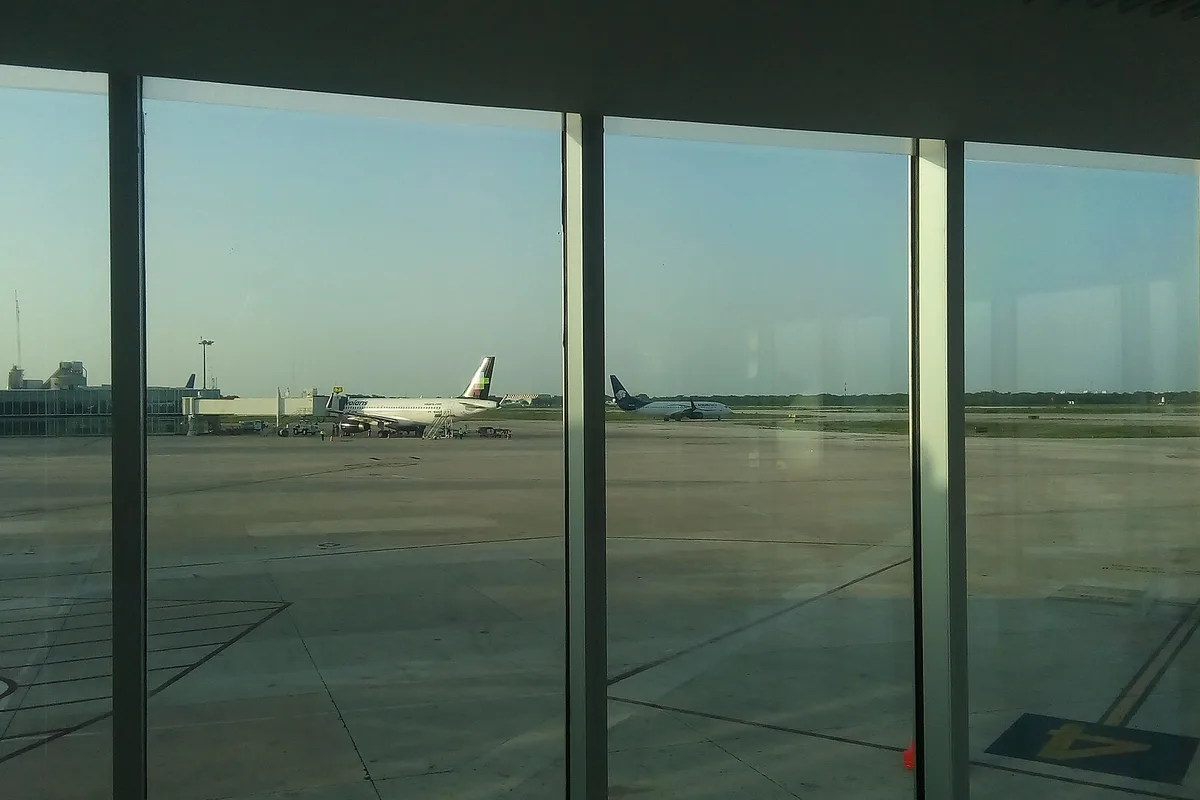
The Centro runs on foot: the colonial grid is flat, compact and numbered. For longer hops, Va-y-Ven buses cover the main avenues for MX$12 a ride, paid by contactless card — route 701 is the airport run, and the airport rides are these:
Choose the bus when you land in daylight with light bags — it stops within a few blocks of most Centro hotels. Choose the taxi when you land late or heavy.
Compare a pre-booked transfer when the hour demands it — a Kiwitaxi transfer or Welcome Pickups puts a driver in arrivals at a fixed price. Driving yourself, price the MID pickup on AutoEurope first — Mexican liability insurance is mandatory and rarely inside the headline quote.
In the city
Walk the Plaza Grande circuit first. The cathedral — the oldest on the American mainland, finished in 1598 — faces the Palacio de Gobierno and its history murals, with the Casa de Montejo museum on the south side. Go early, while the stone is cool.
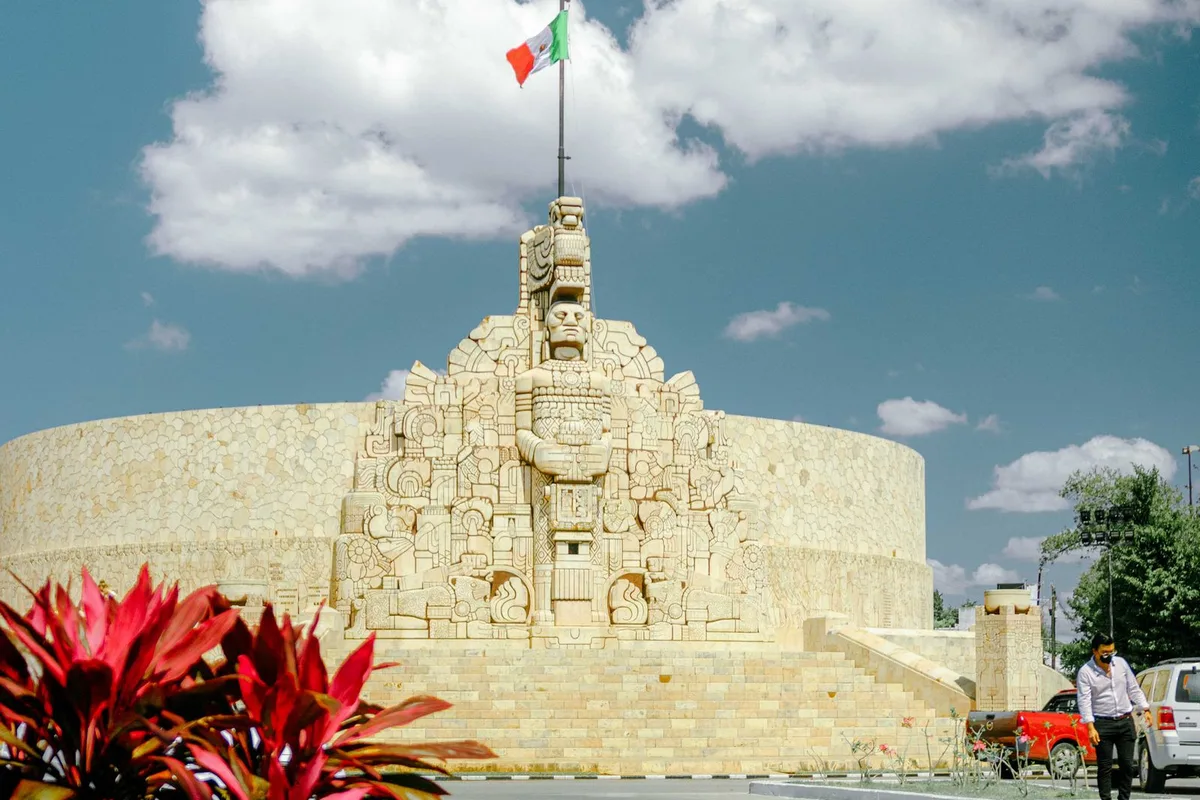
Stroll Paseo de Montejo in the late afternoon. The boulevard runs north past the great henequen-era mansions to the Monumento a la Patria, the vast carved stone circle at its top end. The Palacio Canton museum, halfway up, is the one mansion to step inside. On Sunday mornings the Paseo closes to traffic for the bici-ruta — join it on a rental bike.
Browse Mercado Lucas de Galvez for the real city. The main market fills two floors with fruit, flowers, recado spice pastes and food stalls; go mid-morning and eat where the locals queue.
Ride out to the Gran Museo del Mundo Maya when the heat peaks. The big museum in the north of town tells the Maya story better than any single ruin, and it is gloriously air-conditioned.
Book the headline days before you arrive, because the small-group ruins tours sell out first. Early Chichen Itza departures and weekend cenote runs go first in the dry season — browse the Merida listings on GetYourGuide, and compare Klook when stacking activities.
End one evening in Parque Santa Lucia. The square fills with white chairs and live music for the Thursday serenata, a tradition since 1965 — the streets around it hold some of the best tables in the Centro.
After you land in Mérida: Bookable experiences
Where to stay your first nights

Rosas & Xocolate.
Best for the pink-mansion splurge on Paseo de MontejoStay on Paseo de Montejo at Calle 41, in the unmistakable pink mansion: 17 rooms, a spa and the restaurant that made chocolate the house theme. Book it for Merida's most famous address.
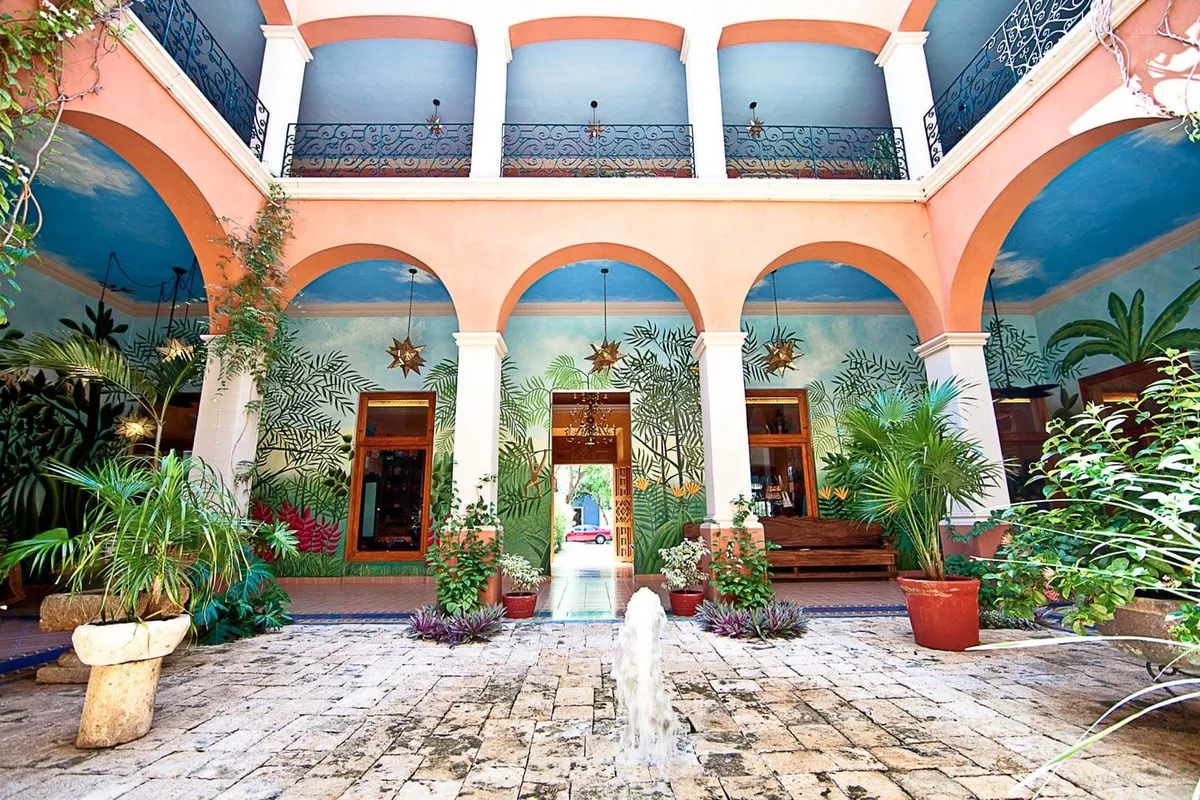
Hotel Boutique Casa San Angel.
Best for the colonial-courtyard boutique where the Paseo beginsSleep at the Remate del Paseo de Montejo, where the boulevard begins, in a 15-room colonial house around a mural-painted courtyard with a small pool and its own bakery cafe.
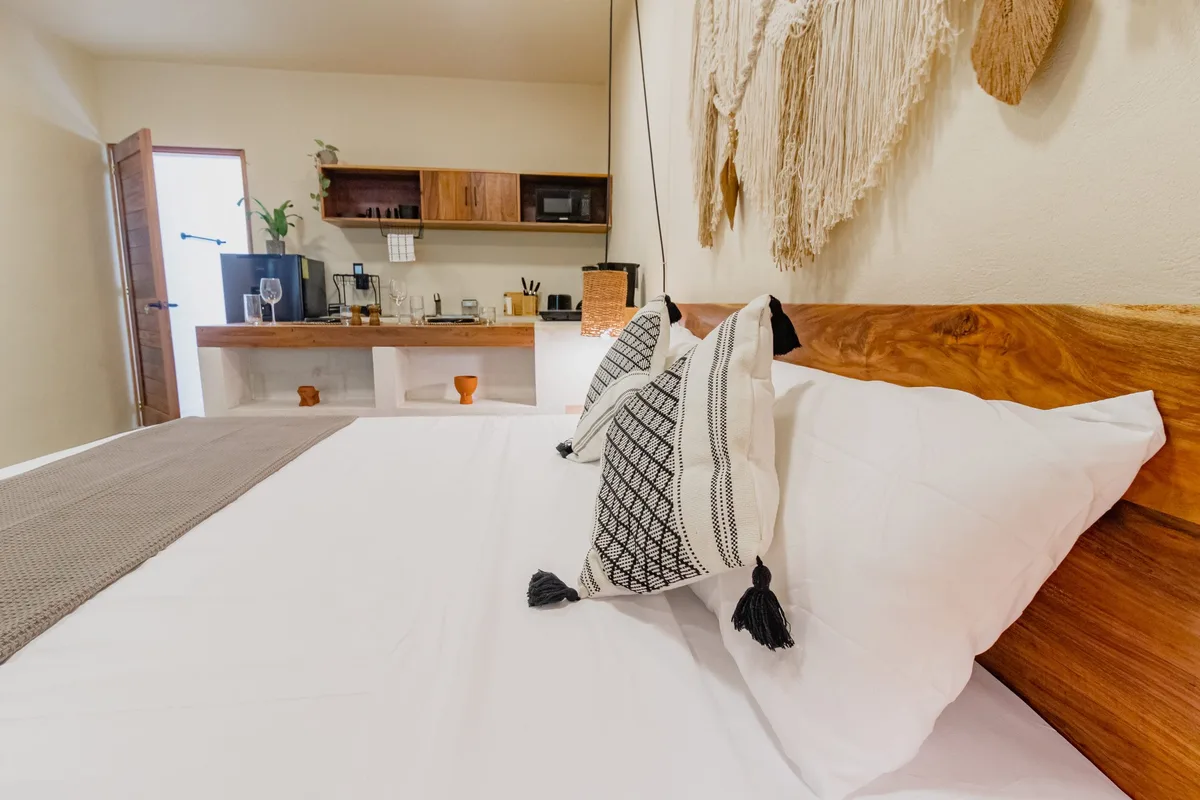
Nomadas Hostel.
Best for dorms and private rooms around a pool garden near the Plaza GrandeBed down on Calle 62, a few blocks from the Plaza Grande, in the colonial house that has hosted backpackers for decades — dorms and private rooms around a pool garden, hammocks and a communal kitchen.
Stay in the Centro for a first visit — a courtyard hotel near the Plaza Grande or along the first blocks of Paseo de Montejo puts dinner, markets and bus stops inside a ten-minute walk.
Book any of the three ahead for the November to March season and Easter week. Confirm whether the quoted total includes the 4.5 percent lodging tax and 16 percent VAT.
Where to eat first
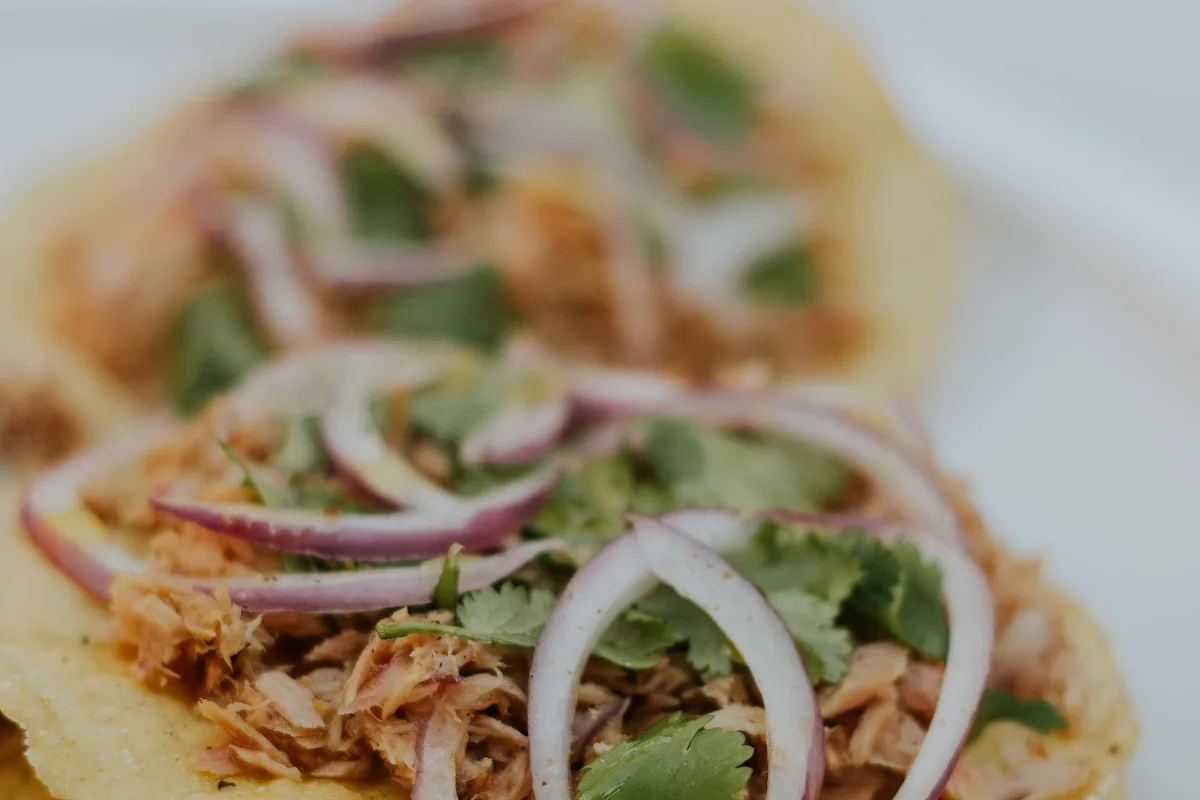
Eat Yucatecan on day one — this kitchen is its own cuisine, built on achiote, sour orange, habanero and slow pits. Three first stops:
Museo de la Gastronomia Yucateca, on Calle 62 near Santa Lucia.
Sit down in the region's food museum and order the canon: cochinita pibil from the pit, relleno negro, papadzules and sopa de lima, with the museum rooms explaining each plate.
La Tradicion, on Calle 60 in the Centro.
Order the classics as chef David Cetina's kitchen serves them — poc chuc grilled over citrus, queso relleno and longaniza de Valladolid. The easiest first-night table in town.
Manjar Blanco, on Calle 47 by Parque Santa Lucia.
Start the next day here instead: the cochinita tortas and tacos at breakfast are a Merida institution. Go before ten, when the line is shortest.
Save room for a marquesita — the crisp rolled wafer with Edam cheese invented for this city's evenings, sold from carts on the Plaza Grande after dark. For market food tours and cooking classes, browse the Merida listings on GetYourGuide.
Day trips and more
Three escapes run from Centro hotel pickups: the wonder of the world at dawn, the Puuc hills' carved cities, and a day swimming through the cenote ring. Carry water and a hat on every one — the ruins have almost no shade.

Chichen Itza, Izamal and a cenote
Leave early for El Castillo and the Great Ball Court before the Cancun buses arrive, swim in a jungle cenote, eat a Yucatecan buffet lunch, and end in Izamal, the yellow town built over Maya pyramids. It rates 4.6 out of 5 from 347 reviews, from US$94. Check availability →
Uxmal and the cenotes
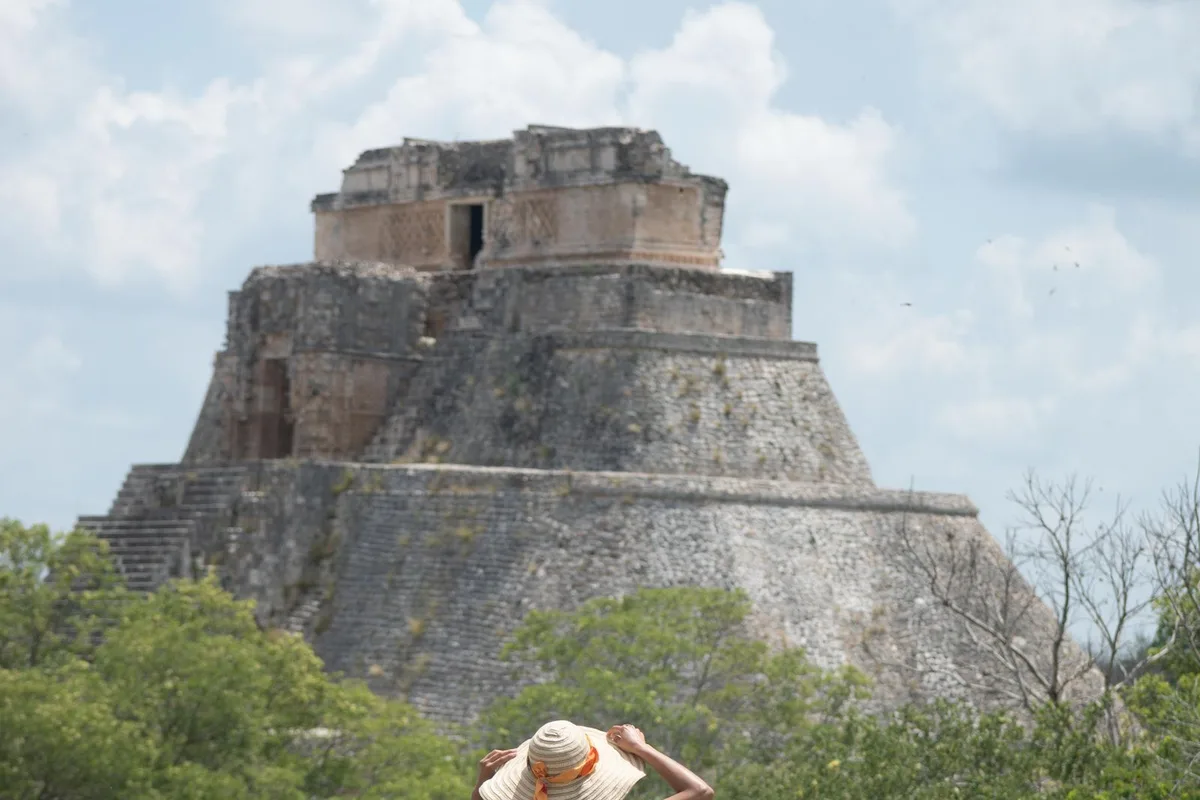
Ride south into the Puuc hills for Uxmal, where the Pyramid of the Magician and the Nunnery's carved facades out-charm Chichen for many travellers, then eat in a village loncheria and swim in two cenotes, one open and one a cave. It rates 4.9 out of 5 from 367 reviews, from US$95. Check availability →
Four rural cenotes
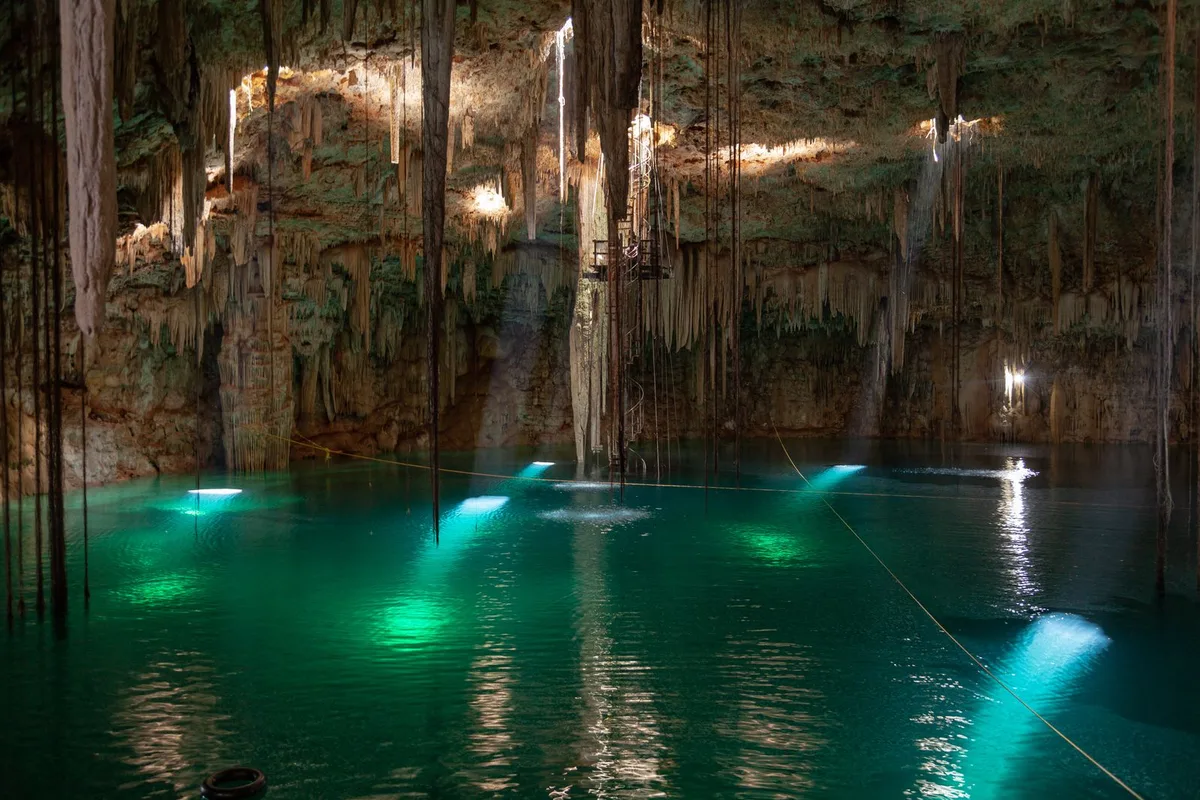
Spend the day on the cenote ring south of the city, where community-run sinkholes stay quiet: jump platforms over deep blue water, a cave cenote with stalactites, and lunch with a Maya family between swims. Drivers can DIY the Homun ring, where moto-taxi guides string the cenotes together. It rates 5.0 out of 5 from 52 reviews, from about US$64. Check availability →
When to go and what it costs
Come from November to March for the Merida everyone promises: dry days around 28 to 31 degrees, cool evenings, Hanal Pixan at the start of November and festival season through Carnaval. This is when the city sells out first.
Come in April or May only with a heat plan. These are the furnace months — highs of 38 to 42 degrees, ruins at opening time, afternoons for museums, siestas and cenotes.
Come from June to October for lower prices and greener jungle. Afternoon storms are near-daily, the cenotes run full, and hurricane season peaks in September and October — keep plans flexible.
Budget Merida by the fixed costs, not by the headline. The airport bus runs MX$45, a city bus MX$12, a prepaid airport taxi MX$300 to 350, headline ruins days from about US$95, and a sit-down Yucatecan dinner for two around MX$600 to 900 before drinks.
Stack the season maths early: the Centro room that is easy in September can double for Christmas week and Easter.
What to pack
Tap items to check them off — your list is saved on this device.
Pack for heat that starts at breakfast — Merida is a linen-and-sandals city for most of the year. This is the full list:
- Comfortable walking shoes Shop walking shoes on Amazon →
- Sunscreen Shop sunscreen on Amazon →
- Reusable water bottle Shop water bottle on Amazon →
- Phone charger and power bank Shop power bank on Amazon →
- Daypack Shop daypack on Amazon →
- Sunglasses Shop sunglasses on Amazon →
- Light rain jacket Shop rain jacket on Amazon →
Add the heat kit on top of the list: a brimmed hat, a swimsuit and quick-dry towel for cenote days, and mosquito repellent for dawn and dusk in the rainy months. Sandals handle the Centro; save closed shoes for the ruins, where the paths are gravel.
Language, visa and entry
! Check visa requirements before you fly
Spanish runs Merida. English covers the hotels and tour desks, then thins out fast in the markets, barrios and cenote villages — where Yucatec Maya is often the first language you hear.
Four phrases do most of the work:
Sort your entry paperwork before you book anything non-refundable. Most visitors — US, Canadian, UK and EU passport holders among them — need no visa for a tourist stay. The old paper FMM card has been phased out at most airports: immigration stamps your passport or issues the digital record, and the officer sets your stay, up to 180 days.
Know how many days you were actually given. Check the stamp on arrival day, not on the way home — overstaying brings a fine and a slow desk. Keep a photo of it.
Do not pay a third-party site for entry forms. Sites selling the FMM for a fee are reselling paperwork that is free at the border.
Safety and health
Merida is one of Mexico's safest big cities — keep normal street sense anyway
Yucatan regularly records the country's lowest crime rates, and the Centro is busy and well lit at night. Keep the usual habits: official taxis or apps at night, valuables out of sight in the markets.
Respect the heat — it is the city's real hazard
Sun and humidity undo visitors who treat Merida like the Mediterranean. Do ruins and markets early, rest through the worst of the afternoon, drink water constantly, and take dizziness seriously.
Guard against mosquitoes in the rainy season
Dengue circulates in Yucatan, especially from June to October. Use repellent at dawn and dusk, cover up on cenote paths, and see a doctor promptly for fever with joint pain.
Drink purified water and let your stomach adjust gently
Ice in established restaurants is factory-purified and safe, but refill bottles from garrafones and go easy on market-stall salsas for the first days.
Related destinations
If you liked Mérida, try these next:
 The Americas
 The Americas
 The Americas
 The Americas
 The Americas
 The Americas
 The Americas
 The Americas
 The Americas
 The Americas
Frequently asked questions
The things travellers ask in the first 48 hours: the airport bus, the heat, the taxes and the day the days run out.
Fares checked against Yucatan Today and Va-y-Ven system reporting October 2026; entry rules against the FMM phase-out guidance.
Ride the Va-y-Ven airport route 701 for MX$45 — it runs about every 30 minutes from 05:00 to 22:00 and stops at the ADO terminal, Parque Santa Lucia, Paseo 60 and the convention centre. Or take an official taxi: prepaid at the booth inside arrivals, MX$300 to 350 to the Centro, about 20 minutes.
November to March — dry days around 28 to 31 degrees and festival season. April and May are the hottest months of the year, with highs pushing 40 degrees, and June to October brings afternoon rain.
Both, on different clocks. The state adds a 4.5 percent lodging tax (ISH) and the federal VAT adds 16 percent. Booking platforms usually fold both into the total; small hotels sometimes add them at checkout.
For most visitors, nothing beyond a valid passport. US, Canadian, UK and EU passport holders need no visa for a tourist stay. The paper FMM card has been phased out at most airports — immigration stamps your passport or issues the digital record, for up to 180 days as the officer decides.
No. Merida's tap water is heavily mineralised and locals do not drink it. Hotels and restaurants use purified water — refill from the garrafon, and do not worry about ice in established places, which is factory-purified.
Yes, easily — allow a full day. Tours leave early for El Castillo before the crowds, add a cenote swim and Izamal, and rate 4.6 out of 5 from 347 reviews, from US$94. Uxmal is the quieter alternative at about the same distance south.
Fares change — the operators and the Va-y-Ven app always win.
Mérida, in your pocket
Landing soon? Get the printable PDF — ticket links, the airport transport cheat sheet, our 3 restaurant picks with maps, and the packing checklist. Everything above, formatted for your phone.
One email with your Mérida PDF. Fare changes and new guides after that. No spam, unsubscribe anytime.
Sources and last verified
Airport transfers against Yucatan Today and local reporting of the Va-y-Ven route 701 airport service (MX$45, 05:00 to 22:00, stops at the ADO terminal, Santa Lucia, Paseo 60 and the CIC), prepaid taxi booth fares of MX$300 to 350, and the MX$12 city fare. Yucatan's 4.5 percent lodging tax plus 16 percent VAT against state tax tables and Yucatan Magazine. Entry rules against the paper FMM phase-out and the up-to-180-day stay. GetYourGuide products opened and read; hub merida-l1903 confirmed. Hotels verified as operating against their own sites and current listings; Expedia pages returned HTTP 429 from this network, so booking URLs stay blank for the confirmation pass. Photo credits: city, ruins, cenote and food photographs via Pexels; the MID apron by PasionPorLaAviacion via Wikimedia Commons, CC BY-SA 4.0; hotel photographs from the properties' own sites. Last verified October 2026.
Affiliate disclosure: hotel names, transfers, experiences, and products linked in this guide may earn After You Land a commission at no extra cost to you. Prices and times were checked in Oct 2026 and change often — confirm before you book.