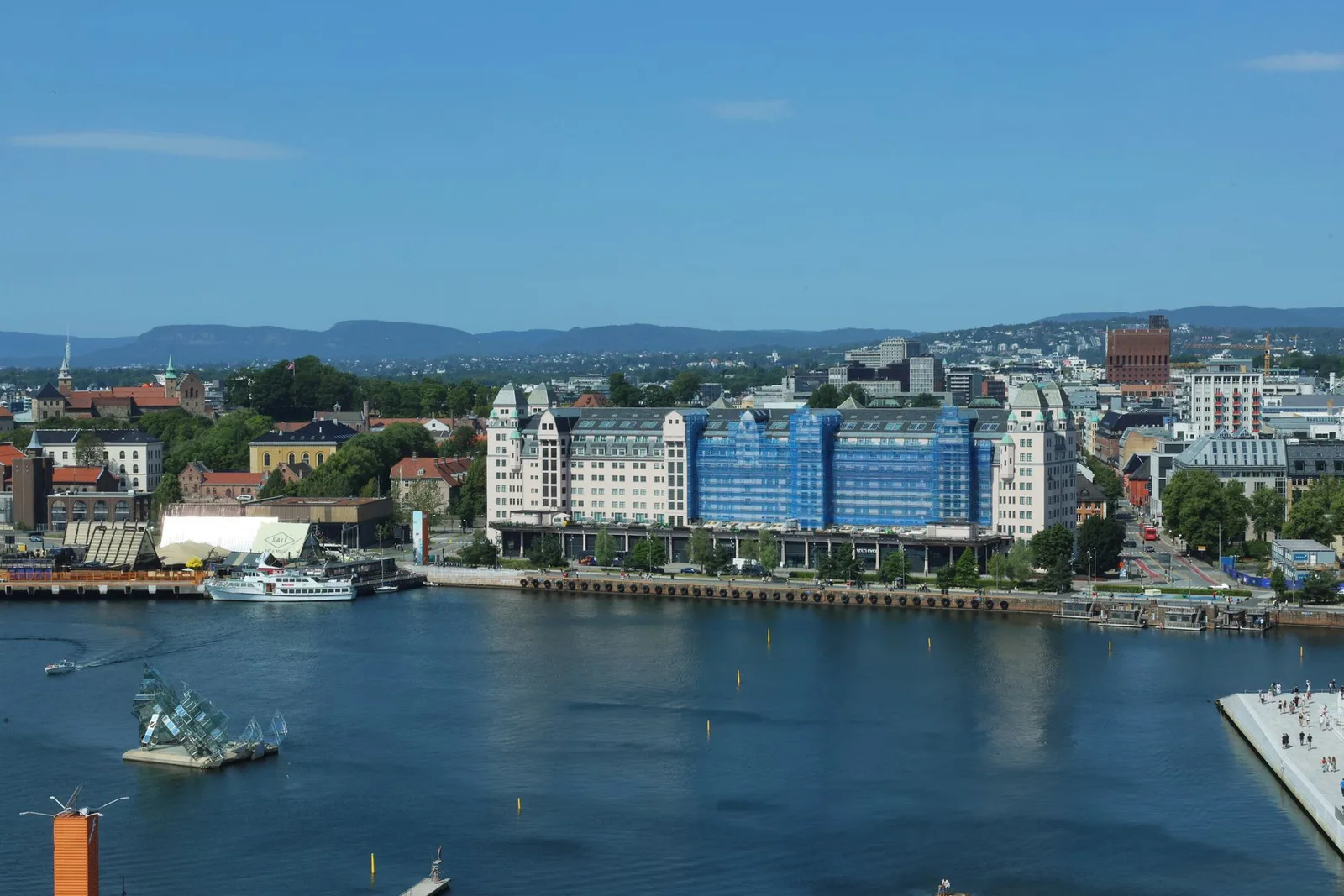
Oslo: your first hour after landing
You have landed in Oslo — a fjord-and-forest capital: climb the Opera House roof within the hour, reach a ski trail by metro. This guide covers the Flytoget and Vy trains from Gardermoen (and the Torp ambush to avoid), MUNCH and The Scream, the Vigeland sculptures and the fjord islands on a city ticket.
In this guide
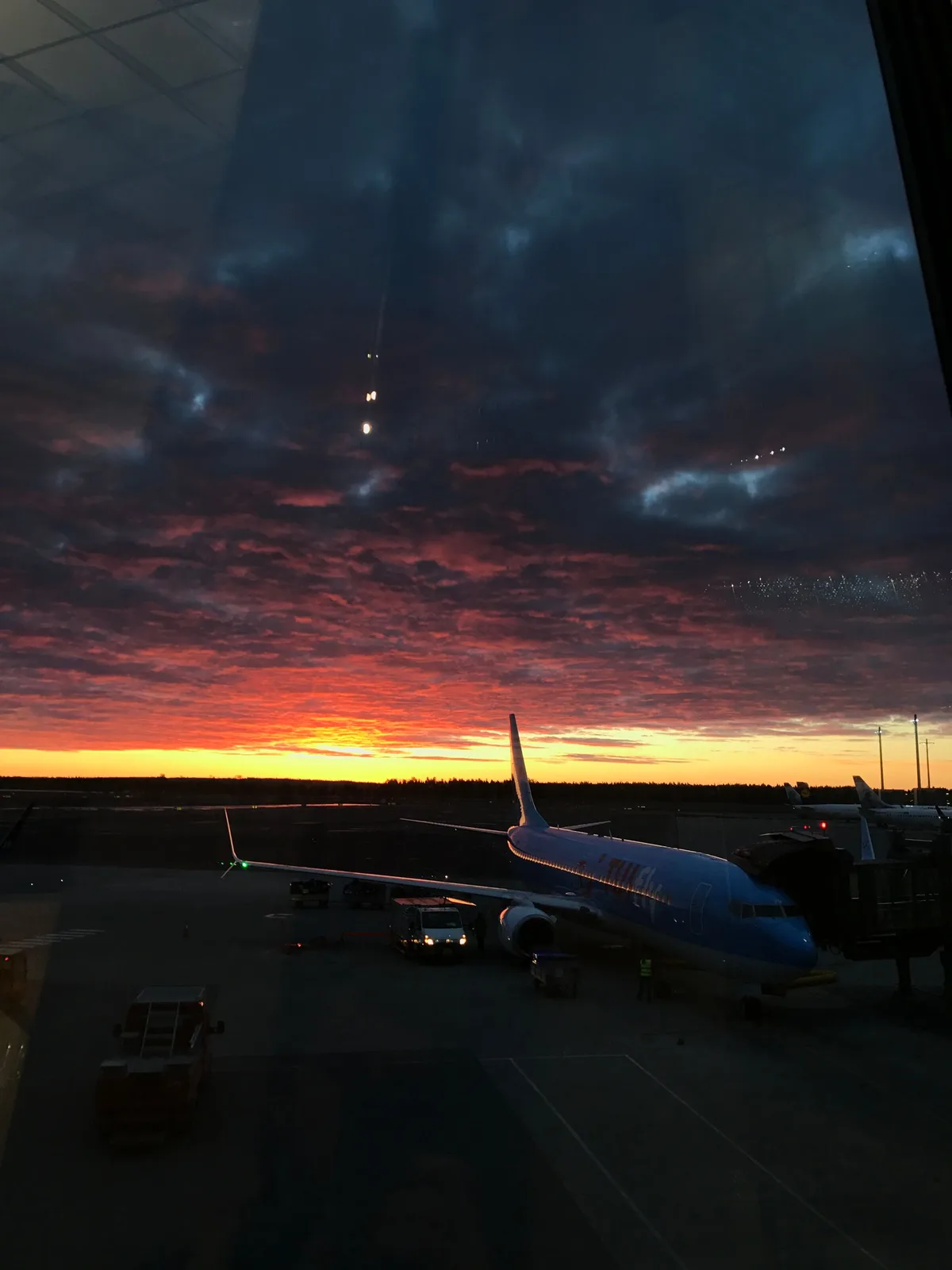
You just landed in Oslo. Flytoget reaches the central station in 19 minutes for 268 kr, while the ordinary Vy trains take a few minutes longer on a 134 kr all-zones Ruter ticket — and Oslo still charges no tourist tax. Sort your Airalo eSIM before you land, and book an Oslo fjord cruise — the Opera roof and the Vigeland sculptures cost nothing, and in summer the boats are the city at its best.
Quick facts
Airport
Getting in
Currency
Languages
Time zone
Emergency
Plugs
Tap water
Tourist tax
Best months
Map
Stays, sights, and landmarks in Oslo — live hotel prices plus the key places from this guide.
Settle in
Get the Ruter app on the train in
It plans journeys and sells every ticket — island ferries included — cheaper than on board. Board nothing ticketless.
Choose the airport train by price, not habit
Vy costs half the Flytoget fare for four minutes longer, both from the same station.
Check your airport code twice:
OSL Gardermoen, TRF Torp — 110 km apart; budget airlines sell both as Oslo.
Download an offline map, forest included
Nordmarka begins where the metro ends, signal fades, and trail junctions assume local knowledge.
Book MUNCH ahead in season
Entry is by timed slot; summer and wet-weekend slots go — likewise tables at the famous old restaurants.
Stock up at Kiwi, Rema 1000 or Coop
Supermarkets soften the restaurant shock — but shop beer sales end at 20:00 weekdays, 18:00 Saturdays.
One street organises Oslo: Karl Johans gate, from Oslo S past the cathedral, Parliament and the National Theatre to the Royal Palace. South: Kvadraturen, old Christiania's 1624 grid, and the harbour; east, Bjørvika's towers, the Opera House and MUNCH; west, Frogner and the Vigeland sculptures; beyond, forest.
Monday bends Oslo plans: the National Museum, the Nobel Peace Center and many smaller museums close, the Bygdøy museums short hours or shut — put the museum marathon on another day.
Getting around
Times are airport to city centre.
Flytoget airport express
Non-stop to Oslo S, every 10 minutes at busy times; tap a bank card at the gates. Under-16s free with an adult
Vy regional train
Same station, via Lillestrøm, some continuing to Nationaltheatret. Buy in the Ruter or Vy app — the all-zones single, half the price
Flybussen coach
Outside the terminal to Oslo Bussterminal and hotels; cheapest online, useful in the small hours; E6 traffic can stretch it past an hour
Taxi
Deregulated, expensive: book at the terminal screens, each company showing its fixed downtown price — from about 900 kr to over 2,000 kr
The centre is compact — Oslo S to the palace a 15-minute stroll — but its system is the T-bane metro, five lines threading one downtown tunnel, backed by trams, buses and the fjord ferries, all on Ruter's one ticket system, valid on Vy's local trains. The airport rides:
Zone 1 covers Oslo, every metro stop, the island ferries. A single is 46 kr in the Ruter app, valid an hour with free transfers; cash on a bus or boat, 66 kr — trams and the metro sell nothing on board. The 24-hour ticket is 137 kr, the 7-day 379 kr. Inspectors check: no valid ticket, a penalty fare of over 1,000 kr.
The airport express folds into Vy in 2027-28, lower fares promised; the Flytoget platforms are the card-gate ones.
From Torp (TRF), 110 km south-west: Torp-Ekspressen coaches run about 1 hour 45 minutes to Oslo Bussterminal, about 300 kr, less online; a free shuttle links terminal to Torp station, trains about 1 hour 50 minutes.
Ruter's ferries leave Aker Brygge for the islands on zone 1 tickets. The museum ferry from City Hall Pier 3 to Bygdøy is private — covered only by the Oslo Pass, not Ruter tickets; bus 30 from Jernbanetorget is the normal-ticket route.
Rather be met? Welcome Pickups runs private pickups, the driver tracking your flight — painless after a long haul.
In the city
- MUNCH — 220 kr, timed slot; under-18s free. The world's largest Edvard Munch collection — thirteen floors on the Bjørvika waterfront, a version of The Scream almost always on view, a top-floor bar facing the fjord. Summer and wet-weekend slots sell out — book MUNCH tickets ahead.
- The Opera House — Free. Norway's opera and ballet house rises from the fjord like a glacier: walk the marble roof to the summit, open whenever the house is; the oak-and-glass foyer rewards the wander.
- The National Museum — 200 kr; under-18s free. Opened 2022, the largest museum in the Nordics — art, design and architecture, the best-known 1893 Scream, a roof terrace over the harbour. Book National Museum tickets ahead in summer.
- Vigeland Park — Free, never closes. Gustav Vigeland's 200-plus granite and bronze figures fill Frogner Park, crowned by the Monolith — 121 intertwined bodies in one stone.
- The Bygdøy museums — 140 to 180 kr each. The Fram, the strongest wooden polar ship — board her, walk below decks; Heyerdahl's balsa raft Kon-Tiki; the Maritime Museum; the Folk Museum and its 13th-century stave church. The Viking Ship House is closed, rebuilt as the Museum of the Viking Age (due 2027); the museum ferry is not on Ruter tickets — bus 30, or the Oslo Pass.
- Akershus Fortress and Kvadraturen — Grounds free. The fortress on the harbour's eastern point, guarding Oslo since the 1290s: the centre's best harbour views, the Resistance Museum inside.
- The Nobel Peace Center and City Hall — On City Hall Square: 180 kr, half price until 12 December 2026 while the second floor is rebuilt. The medal chamber, the Field of a thousand lights, this year's laureate's exhibition. The ceremony fills the City Hall every 10 December.
- Karl Johans gate and the Royal Palace — The ceremonial mile to the palace, where the King's Guard changes at 13:30. Palace tours run only in summer; the park is public all year, Slottsplassen where Oslo gathers.
Oslo is a cycling city half the year: city bikes across the centre, the Akerselva path car-free from Maridalsvannet lake to the fjord. For Huk beach on Bygdøy or the forest trailheads, rent a bike in Oslo.
For passes and extras, Klook's Oslo listings sell the Oslo Pass with fjord cruises and day trips, instant confirmation.
After you land in Oslo: Bookable experiences
Where to stay your first nights

Grand Hotel Oslo, Karl Johans gate 31.
Best for the Karl Johan splurgeNorway's grandest address since 1874, between Parliament and the palace: each December the Nobel laureate stays here and waves from the balcony to the torchlight procession.

Thon Hotel Rosenkrantz, Rosenkrantz' gate 1.
Best for central Oslo comfortA polished, design-led Thon steps from Karl Johans gate, famous for a breakfast topping the national polls; the whole centre inside ten minutes' walk.

Anker Hostel, Storgata 55.
Best for Storgata on a budgetDorms and private rooms on the edge of Grünerløkka, a 15-minute walk from Oslo S: rooftop terrace, kitchen, 24-hour reception; the sister Anker Hotel shares the address.
Sentrum and Kvadraturen are the arrival-smart bases — the station, the sights and the airport trains. Bjørvika is the MUNCH and Opera House quarter, Aker Brygge the harbourside one, Grünerløkka the young district, Frogner the calm west end.
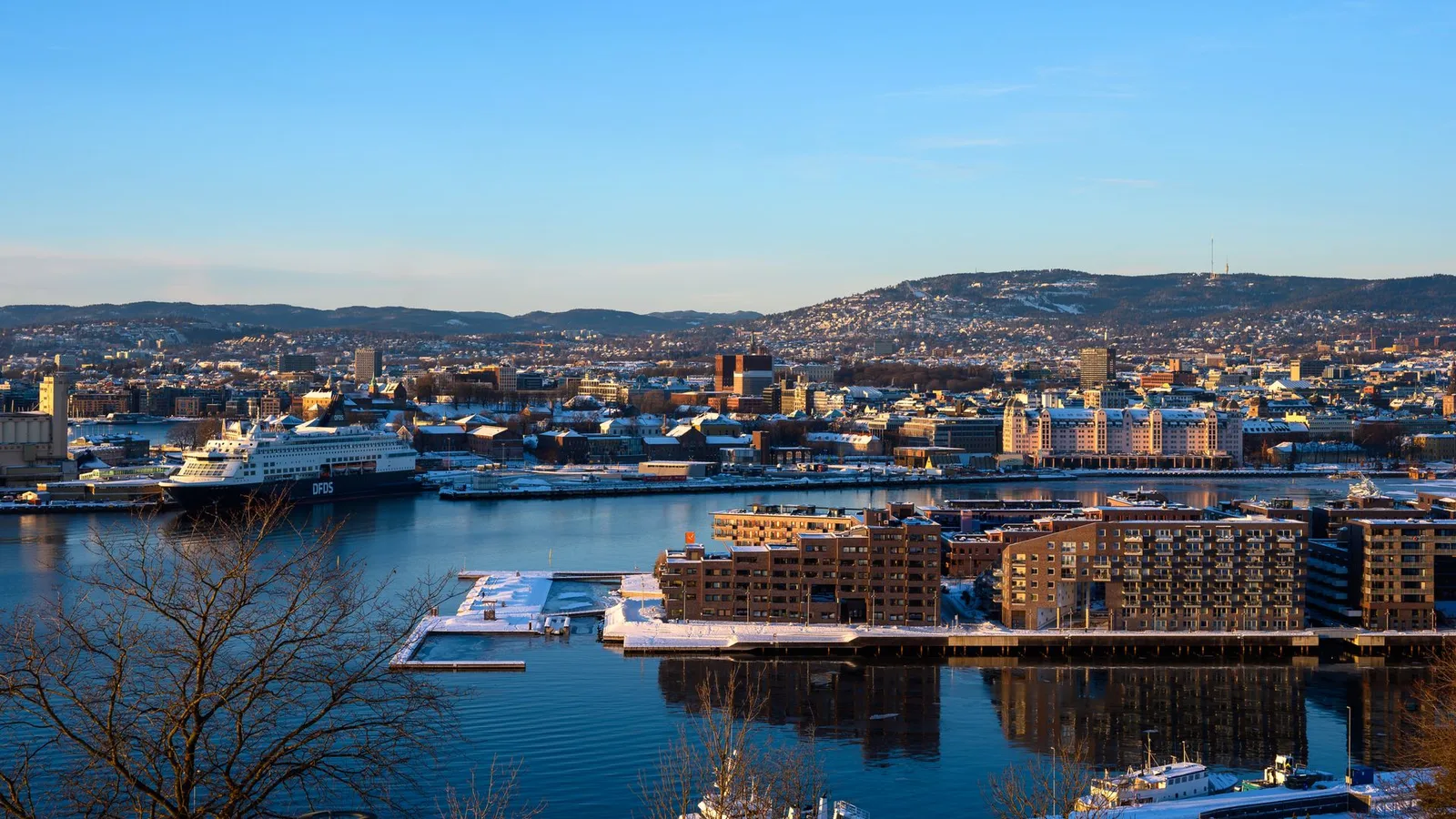
Book early for 17 May, high summer and Nobel week in December. January and February, the bargain: grand hotels discount hard, reliable snow, the city lit by four.
Where to eat first

Norwegian cooking starts from superb raw materials treated simply: salmon and skrei cod, lamb, cloudberries, and brunost, the caramel-brown cheese on waffles. Start with smørbrød and fish soup, graze Mathallen, the Vulkan food hall by the Akerselva, and book one old-guard table.
Lofoten Fiskerestaurant — the Aker Brygge seafood house.
Map → Stranden 75, Aker Brygge. Named for the Arctic fishing islands: king crab, oysters, skrei in season, a famed fish soup — on a terrace over the yacht harbour.
Restaurant Schrøder — traditional Norwegian since 1926.
Map → Waldemar Thranes gate 8, St. Hanshaugen. A century-old restaurant: kjøttkaker meatballs, pork knuckle and lamb in brown sauce, at ungentrified prices. Jo Nesbø fans will recognise Harry Hole's regular table. Closed Mondays.
Engebret Café — Oslo's oldest restaurant.
Map → Bankplassen 1, Kvadraturen. In business since 1848, on this square since 1863, in a low 1760s house — Ibsen, Grieg and Munch kept tables here: fish soup, reindeer, king crab.
Day trips and more
All three run on public transport; the long one sells out in summer, so reserve the Nutshell legs ahead — and for timed entries, booking ahead with Tiqets takes the queuing out of it.

Bergen and the fjords
The Nutshell strings the greatest hits onto one ticket line: the Bergen Railway over the Hardangervidda plateau to Myrdal, the Flåm Railway, a bus to Gudvangen, a boat through the UNESCO-listed Nærøyfjord, then Bergen and its Bryggen wharf. The full route runs 12 hours and more — it deserves a night in Bergen, not a same-day return.
Check availability →
The Oslofjord islands
The inner fjord, minutes from Aker Brygge, is scattered with car-free islands, all on a zone 1 ticket. Hovedøya is closest — Cistercian monastery ruins, beaches, a café; Gressholmen the wild one, an old airfield turned nature reserve; Langøyene has the sandy beach. Swim where the locals swim, and hold one rule: the last ferry back is final — there is no water taxi.
Check availability →
Nordmarka and Holmenkollen
Metro line 1 climbs to the Holmenkollen ski jump, its tower over Oslo, and on to Frognerseteren, where the forest begins. In winter locals step off, click into cross-country skis and vanish onto hundreds of kilometres of lit tracks; in summer, hiking and lake swimming. The Ski Museum under the jump tells the story; the café serves the waffles.
Check availability →When to go and what it costs
Costs: MUNCH 220 kr; the National Museum 200 kr; the Nobel Peace Center 180 kr; the Bygdøy museums 140 to 180 kr each. The Oslo Pass is 580 kr for 24 hours and earns its keep only with two or three paid museums and transport in a day.
Alcohol: wine and spirits only through Vinmonopolet, whose shops keep office hours; supermarket beer and cider up to 4.7 percent until 20:00 on weekdays and 18:00 on Saturdays, never on Sundays. Bar beer: 100 kr and up — hence vorspiel, the warm-up at home, and the Gardermoen duty-free's brisk trade.
Flights cross some of Europe's most delay-prone winter weather: EU261 applies in Norway through the EEA, and a long delay or cancellation can mean up to €600. AirHelp checks what you are owed and handles the claim paperwork.
What to pack
Tap items to check them off — your list is saved on this device.

Oslo's weather is a negotiation: sun, sleet and fjord wind can take a turn before lunch. Dress in layers — the metro reaches a ski track or a lake trail within the hour.
- Comfortable walking shoes Shop walking shoes on Amazon →
- Sunscreen Shop sunscreen on Amazon →
- Reusable water bottle Shop water bottle on Amazon →
- Phone charger and power bank Shop power bank on Amazon →
- Daypack Shop daypack on Amazon →
- Sunglasses Shop sunglasses on Amazon →
- Light rain jacket Shop rain jacket on Amazon →
As an Amazon Associate I earn from qualifying purchases.
Language, visa and entry
✓ Visa-free entry
Norwegian runs the signs and English runs almost everything else: Oslo's English is among the best in Europe, and menus, machines and museum labels assume you read it. Written Norwegian has two official forms: Bokmål, the capital's, and Nynorsk. Four phrases carry the culture — above all takk, deployed constantly.
Norway is outside the EU but inside the EEA and Schengen, so Schengen rules govern your stay: visitors from the US, Canada, Australia, New Zealand, Japan and the UK stay visa-free for 90 days in any 180 across the zone, and days elsewhere in Schengen count against it. The EU Entry/Exit System — fingerprints and a facial image for non-EU visitors — has been live since April 2026; a first arrival can take a few extra minutes. ETIAS is not yet in operation; when it launches it will cover Norway too — until then, no form and no fee. Norway is outside the EU customs union; its duty-free allowances on alcohol and tobacco are tighter than the EU's.
Safety and health
Trams cannot swerve
Oslo's trams are fast, quiet and fixed to their rails: absolute priority, no dodging you. Look both ways crossing any track, never step off a kerb backwards into one while photographing; give cyclists the same respect.
The station crowds
Oslo S and Jernbanetorget are the pickpocketing spots, and the streets just east of the station have a visible street-drug scene — poverty more than danger, but no place to wave a phone around at night. Keep valuables zipped and your wits ordinary.
Ice and darkness
From November the pavements glaze with black ice and the light goes by mid-afternoon. Walk like a penguin, wear the clip-on reflector every Norwegian wears, and plan forest and island trips around the short day.
Cold water, last ferry
The fjord is colder than it looks, in every month — swim where locals swim, never alone after drinking, and treat the islands' last ferry as a hard deadline: there is no water taxi in Oslo, and a sea-rescue call-out starts in the thousands of kroner.
Healthcare and pharmacies
Emergency care is open to everyone: 113 for an ambulance, 116 117 for the legevakt when urgent but not life-threatening. Europeans carry an EHIC or GHIC card for state care at local rates; everyone else, travel insured. Green-cross Apotek pharmacies: first stop for anything minor.
Related destinations
If you liked Oslo, try these next:



Frequently asked questions
The facts that matter after you land in Oslo.
Verified against Ruter fares, Flytoget, Visit Oslo and the museums, October 2026.
Flytoget is the dedicated airport express - 19 minutes non-stop to Oslo Central for 268 kr, with tap-a-bank-card gates and under-16s free with an adult.
The ordinary Vy trains take about 23 minutes and run on Ruter fares: 134 kr for the all-zones single from the airport. For most visitors the Vy train is the smart money.
A zone 1 single costs 46 kr in the Ruter app and covers the metro, trams, buses and the fjord island ferries for an hour.
A 24-hour ticket is 137 kr and pays for itself by the third ride; buying a single on board a bus costs 66 kr in cash, so always buy in the app first.
At 580 kr for 24 hours it covers Ruter zones 1 and 2, the Bygdøy museum ferry, and 30-plus museums including MUNCH, the National Museum and the Fram.
Two big museums plus a day ticket come to roughly the same money, so the pass wins on a packed museum day and loses on a slow one - do the maths against your actual plan.
Not yet. Norway's visitor-contribution law took effect in July 2026 and lets high-pressure municipalities charge 3% on accommodation from 2027 - Tromsø has voted in, Oslo has not.
What Oslo is adding instead is a cruise-passenger charge, which does not touch hotel stays. The price you book is the price you pay.
220 kr for adults in 2026, with timed entry slots and everyone under 18 free.
Several versions of The Scream rotate through the displays - the museum keeps them in controlled light, so which one you see is luck of the day.
Not right now - the Viking Ship House on Bygdøy is closed while it is rebuilt as the Museum of the Viking Age, reopening in 2027.
Until then Bygdøy still gives you the Fram and Kon-Tiki museums, and the National Museum in the centre holds the Viking Age's smaller treasures.
Ruter zone 1 single 46 kr, 24-hour ticket 137 kr; no tourist tax in force in Oslo; tap water superb; Type C and F sockets at 230V; emergency 110 fire, 112 police, 113 medical.
Oslo, in your pocket
Landing soon? Get the printable PDF — ticket links, the airport transport cheat sheet, our 3 restaurant picks with maps, and the packing checklist. Everything above, formatted for your phone.
One email with your Oslo PDF. Fare changes and new guides after that. No spam, unsubscribe anytime.
Sources and last verified
Sources and last verified: Ruter and Vy, Flytoget and Flybussen, Torp-Ekspressen, VisitOSLO and the Oslo Pass, MUNCH, the National Museum, the Fram Museum and the Nobel Peace Center, and the Norwegian Ministry of Trade, Industry and Fisheries — checked October 2026. Fares, prices and times change; confirm before you travel.
Affiliate disclosure: hotel names, transfers, experiences, and products linked in this guide may earn After You Land a commission at no extra cost to you. Prices and times were checked in Oct 2026 and change often — confirm before you book.