You have landed in Europe’s sunniest capital — seven hills of tiled facades, custard tarts and viewpoints over the Tagus. The airport sits in the city, so the first hour is easy; the skills are the metro card, which hill to sleep on, and Tram 28 without the crowds. Then Belém’s monuments, Sintra’s palaces and fado in Alfama.
By Paul GreenUpdated Oct 202613 min readPrices checked Oct 2026
You just landed in Lisbon. The airport is practically in the city: the metro Red Line reaches the centre in about 20 minutes for €1.90. Sort your Airalo eSIM before you land, and book the Sintra and Pena Palace day trip for day two — go early to beat the palace queues.
Quick facts
Airport
Humberto Delgado (LIS), about 7 km north-east of the centre Metro station under Terminal 1; ride-hailing pick-up signposted from arrivals; central neighbourhoods 20 to 30 minutes away. All arrivals come into Terminal 1; Terminal 2 handles some budget departures.
Getting in
Metro Red Line, about 20 minutes for €1.90 Aeroporto station to Alameda, with changes for Baixa-Chiado and the centre. Pre-book a fixed-fare Kiwitaxi airport pickup if you would rather have a driver waiting.
Currency
Euro (EUR, €) Cards and contactless accepted almost everywhere. Keep small cash for tascas, market stalls and the €3.30 on-board tram fare. Use Multibanco ATMs, not standalone Euronet boxes — punishing rates.
Languages
Portuguese; English widely spoken English is strong in hotels, restaurants, transport and among younger locals. A few Portuguese words earn noticeably warmer service.
Time zone
Western European Time, UTC+0, and UTC+1 in summer Same time as London: UTC+0 in winter, UTC+1 from late March to late October; one hour behind Madrid and Paris all year.
Emergency
112 for everything Police, fire and ambulance anywhere in Portugal, with English-speaking operators. Save your hotel's address in your phone — the hills and lookalike street names confuse even taxi drivers.
Plugs
Type F at 230V, and Type C plugs fit Round two-pin sockets at 230 volts. Most European chargers need no adapter; UK and US travellers need one.
Tap water
Safe to drink Safe, well tested, tastes fine. Fill your bottle before heading out; drinking fountains dot the old town, and restaurants serve it if you ask for água da torneira.
Tourist tax
€4 per person per night, capped at 7 nights Every guest aged 13 and over, first seven nights only. Doubled from €2 in September 2024; funds cleaning, transport and upkeep. Collected by your hotel or rental — expect a separate line, often payable on departure.
Best months
April–June and September–October Late spring: warm days, jacaranda blossom, June festivals ahead. Early autumn: warm sea, fewer crowds. July and August are hot and full; winter mild but rainy, and far cheaper.
Map
Find your arrival stop, hotel, and first meal. Stays, sights, and landmarks in Lisbon — live hotel prices plus the key places from this guide.
Pick up a navegante card at Aeroporto Metro station for €0.50, one per person. Load zapping credit — every Metro, bus and tram ride then costs €1.72 — or a 24-hour Carris and Metro ticket for €7.25 if you are sightseeing hard. Older guides call the card Viva Viagem; it was renamed, not replaced.
3. Eat
Your first ritual is a warm pastel de nata with cinnamon, eaten standing at a counter — or the full first meal in Where to eat first below. Landing hungry at an odd hour? The tascas around Rossio serve the prato do dia until mid-afternoon.
4. Walk
Head up to a miradouro, a tiled viewpoint, for your first sunset. Portas do Sol above Alfama and São Pedro de Alcântara facing the castle are the two classic introductions — city, river and bridge below you.
Getting around
Journey times are approximate and refer to the listed stop — not necessarily your hotel. Allow extra time for waiting, walking, and connections.
Metro Red Line
Aeroporto station under Terminal 1 to Alameda, then change for Baixa-Chiado, Rossio and the Green and Blue lines. Trains 06:30–01:00. Load onto a €0.50 navegante card, or tap a bank card at the gates: €1.92.
Price€1.90Journey~20 min
Ride-hailing (Uber, Bolt)
Cheap and everywhere. Book in the app, follow signs to the Terminal 1 pick-up area — price fixed before you ride, removing all taxi-rank doubt.
Price€10–15Journey~20–30 min
Taxi from the official rank
Metered from the rank outside arrivals, plus a luggage charge. A fixed-fare airport scheme is being rolled out — confirm the fare before you set off; never take a ride from a tout inside the terminal.
Price€15–25Journey~20–30 min
Carris city bus
Routes 722, 744 and 783 to Marquês de Pombal and the centre, same navegante card. The old Aerobus no longer runs — discontinued, whatever older guides say.
Price€1.90Journey~40 min
The airport is close enough that every option works. Your choice is about luggage and hills: the old town is steep, and a Metro station at the bottom of the wrong climb changes the maths.
Inside the city, the Metro's four lines cover the modern city, while Carris buses and the yellow trams climb where the Metro cannot. One navegante card runs everything: €1.72 a ride on zapping credit, or the €7.25 24-hour ticket, covering the funiculars and the Santa Justa Lift too. Tram 28 rattles from Martim Moniz to Prazeres through Graça, Alfama and Baixa — ride it from the Martim Moniz terminus before 9am for a seat, pay €1.72 by card; paying the driver costs €3.30 in cash. The Elevador da Glória funicular is suspended since a serious accident in September 2025 — check which funiculars are running before you plan around them. Sightseeing hard? The Lisboa Card bundles unlimited transport with free entry to the Jerónimos Monastery and Belém Tower.
Arriving at midnight with two suitcases and a sleeping child changes the calculation. Welcome Pickups runs fixed-price transfers from arrivals to your door, driver tracking your flight.
In the city
Start at the castle, then lose yourself in Alfama.
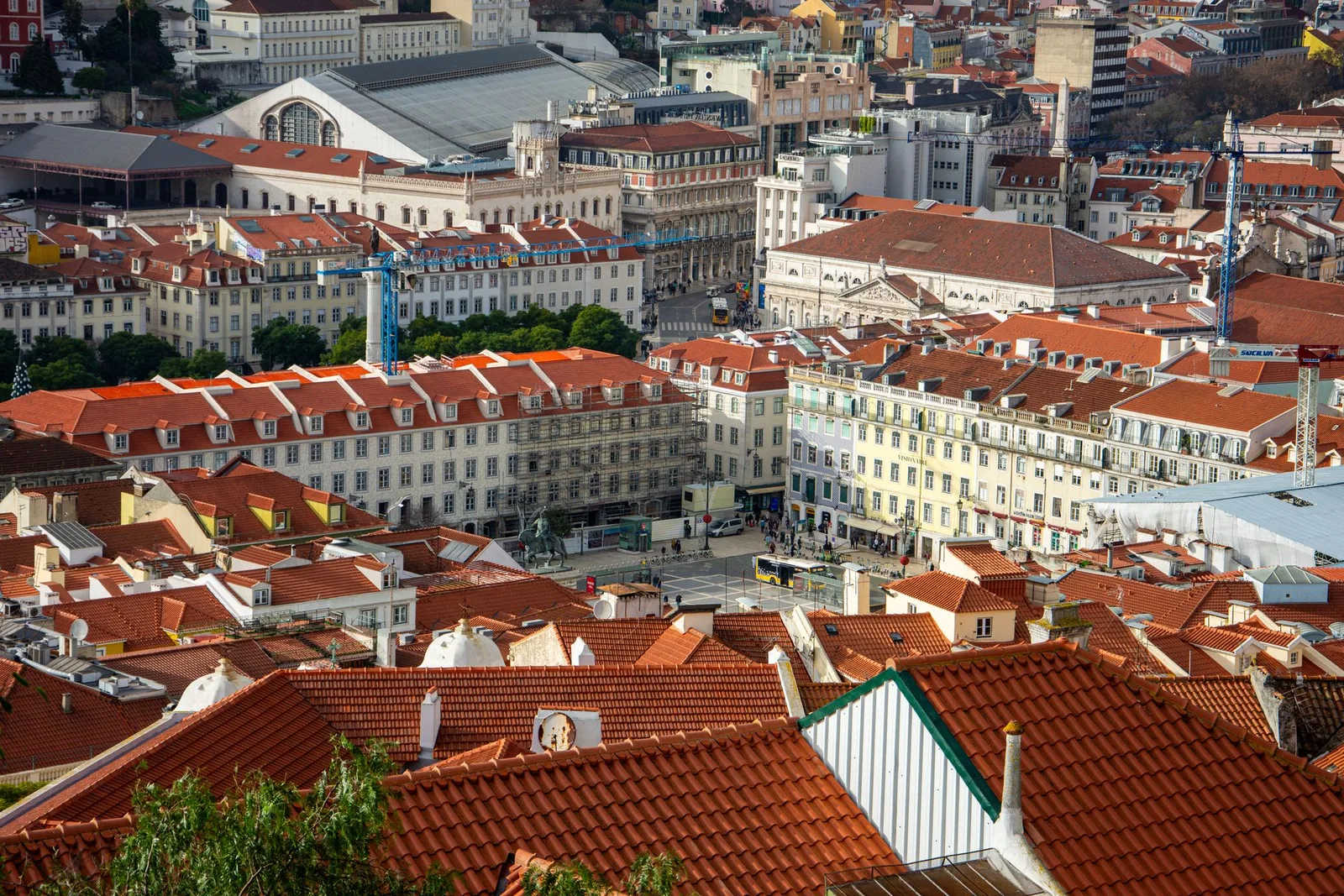
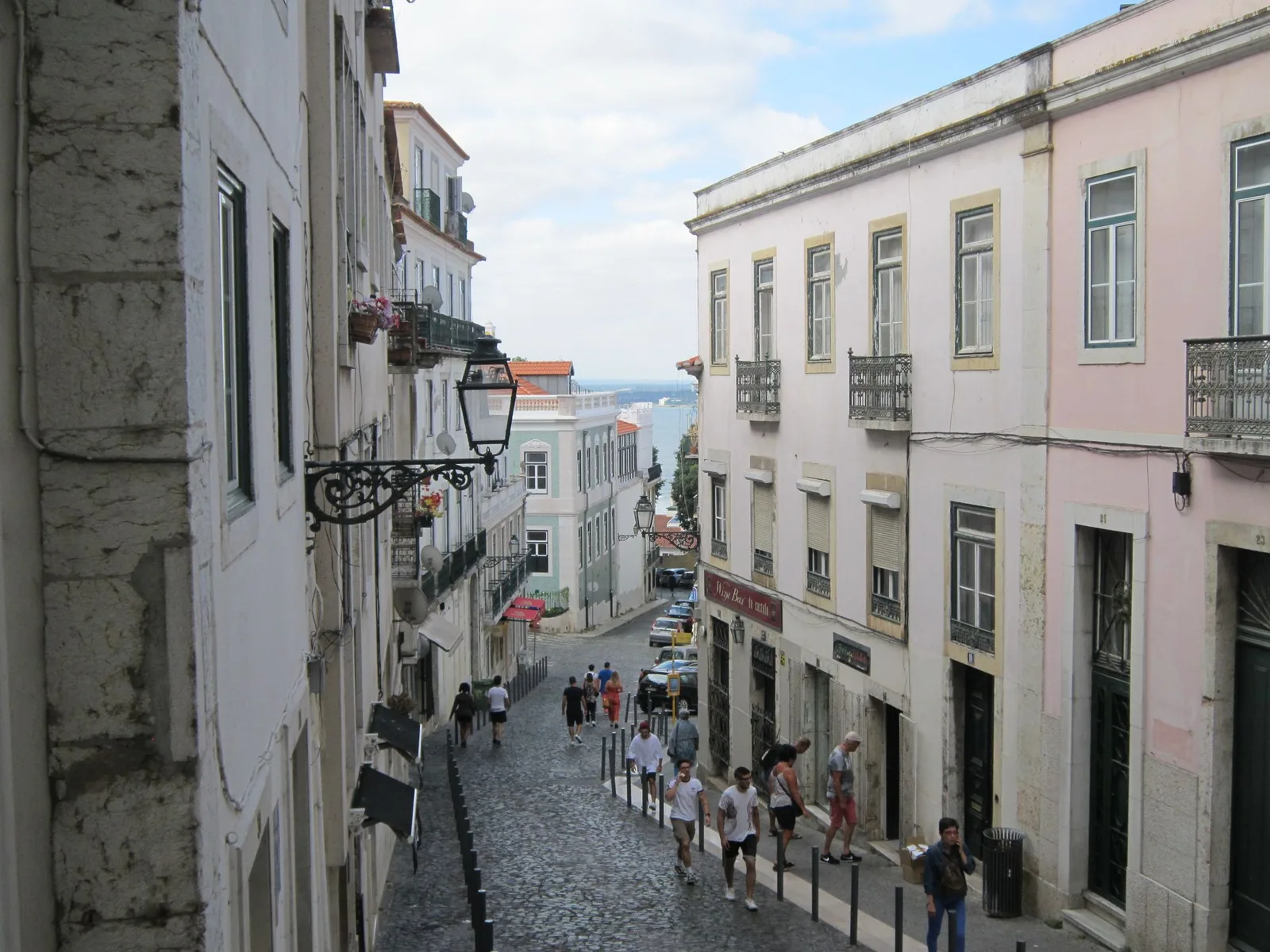
São Jorge Castle is €17 — be there for the 9am opening, while the ramparts, peacocks and camera obscura are still quiet, and the view over rooftops to the river is the best orientation in Lisbon. Then walk down through Alfama, the oldest quarter: the Sé cathedral, laundry lines, and the Portas do Sol and Santa Luzia viewpoints. Book castle tickets on Tiqets ahead in high season — the gate queue is the slowest in the city.
Give Belém a morning.
Tram 15E or the Cascais-line train takes you west to the monuments of the age of discovery. The Jerónimos Monastery cloister is €18, open Tuesday to Sunday — the church next door, holding Vasco da Gama's tomb, is free. Belém Tower reopened in May 2026 after conservation work, with entry capped and staggered at €15, so book a slot rather than turn up hoping. The MAAT museum adds a modern counterpoint on the riverfront for €11.
Ride the flat city by bike, then meet the Oceanário.
Lisbon's hills punish casual cycling, but the riverfront is pancake flat from Santos east to Parque das Nações — the modern district built for Expo 98, where the Oceanário, one of Europe's great aquariums, charges €25. Rent a bike through BikesBooking — an e-bike if you plan to leave the riverfront — and ride the cycle path the whole way.
Spend an evening the Lisbon way.
A ginjinha cherry liqueur from the little counter on Largo de São Domingos, dinner in a Chiado tasca, then fado in an Alfama tavern or a glass of wine at a miradouro as the lights come on. Want a local to tie the city's threads together? A Klook Lisbon city tour covers the highlights on foot — or skip a day of logistics entirely and book a Sintra and Pena Palace day trip with the transport handled.
After you land in Lisbon: Bookable experiences
Where to stay your first nights
Splurge
Bairro Alto Hotel.
Best for the Chiado splurge
Praça Luís de Camões 2, on the seam between Chiado and Bairro Alto. An 18th-century building turned intimate five-star: 55 rooms, a serious restaurant, a rooftop terrace looking straight at the castle and the river.
Rua do Diário de Notícias 142, Bairro Alto. Apartment-style suites with kitchens in a converted 18th-century palace — space you never get in central Lisbon — plus a small spa and rooftop bar made for sunset. Book at the back if Bairro Alto's nightlife noise bothers you.
Praça dos Restauradores 65, two minutes from Rossio station. Rated among the best hostels in Europe: free breakfast waffles, family-style dinners, walking tours, staff who run it like a social club. Dorms and privates, both excellent value.
Map → Avenida Almirante Reis 1, Intendente. Lisbon's legendary beer hall for shellfish: giant tiger prawns, garlic clams, percebes if you are brave, and a buttered prego steak sandwich as the traditional dessert. Almost always a queue — take a ticket, order a beer; it moves fast.
Solar dos Presuntos — the classic Portuguese table.
Map → Rua das Portas de Santo Antão 150, just off Restauradores. Serving since 1974: hanging hams, Alentejo cooking, monkfish rice, lamb locals book for family occasions. Book ahead for dinner; the weekday lunch menu is the insider move.
Pastéis de Belém — the original tart.
Map → Rua de Belém 84–92, beside the Jerónimos Monastery. The only bakery working from the monastery's 1837 recipe — everyone else makes pastéis de nata; these are pastéis de Belém. Warm from the oven with cinnamon and icing sugar for about €1.50 each; the takeaway counter beats the seated-room queue.
Order — a bifana.
Lisbon's pork sandwich: marinated pork in a crusty roll with mustard or piri-piri, eaten at a counter with a small beer. Stands around Rossio and Afonso Henriques do them all day for a few euros.
Order — the prato do dia.
The dish-of-the-day board at any neighbourhood tasca is where Lisbon actually eats lunch: soup, a main of grilled fish or stew, bread and coffee, usually under €12 on weekdays.
Skip — the picture-menu drag-in.
If a smiling man is pulling you towards an empty dining room with laminated photos and a special price just for you, keep walking — every restaurant in this section fills up on its own merits.
Day trips and more
Lisbon's day trips justify a fourth day: Sintra's palaces and Cascais's beaches are each under an hour by train, both on the same navegante card. Pena Palace and Regaleira tickets on Tiqets are worth booking first — Pena's timed slots sell out days ahead in season.
Belém, the discovery quarter
The Jerónimos Monastery cloister at €18, Belém Tower at €15 with timed entry, the Monument to the Discoveries and a pastel de nata at the source. Both monuments close on Mondays — plan for any other day, and go in the morning.
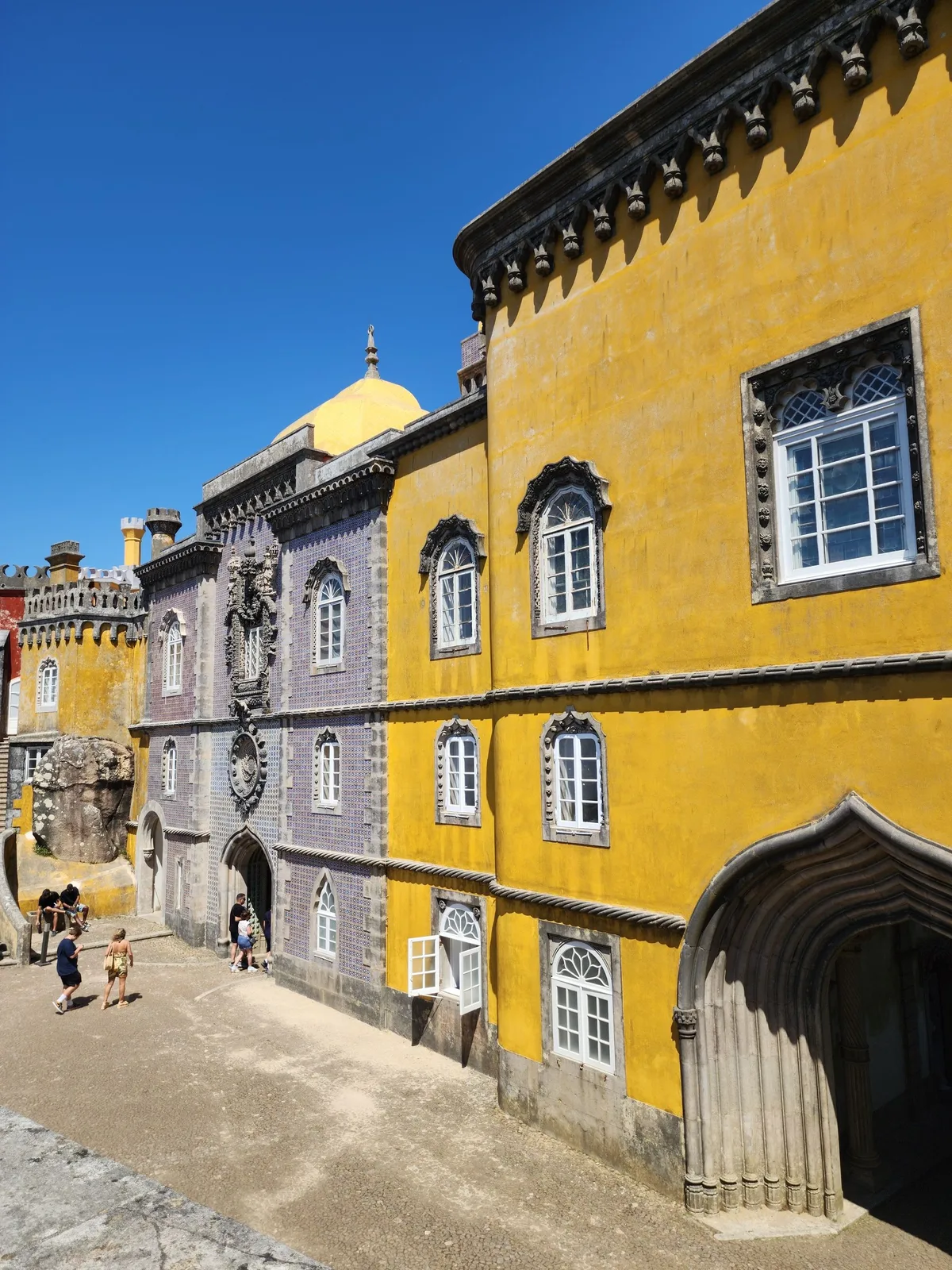
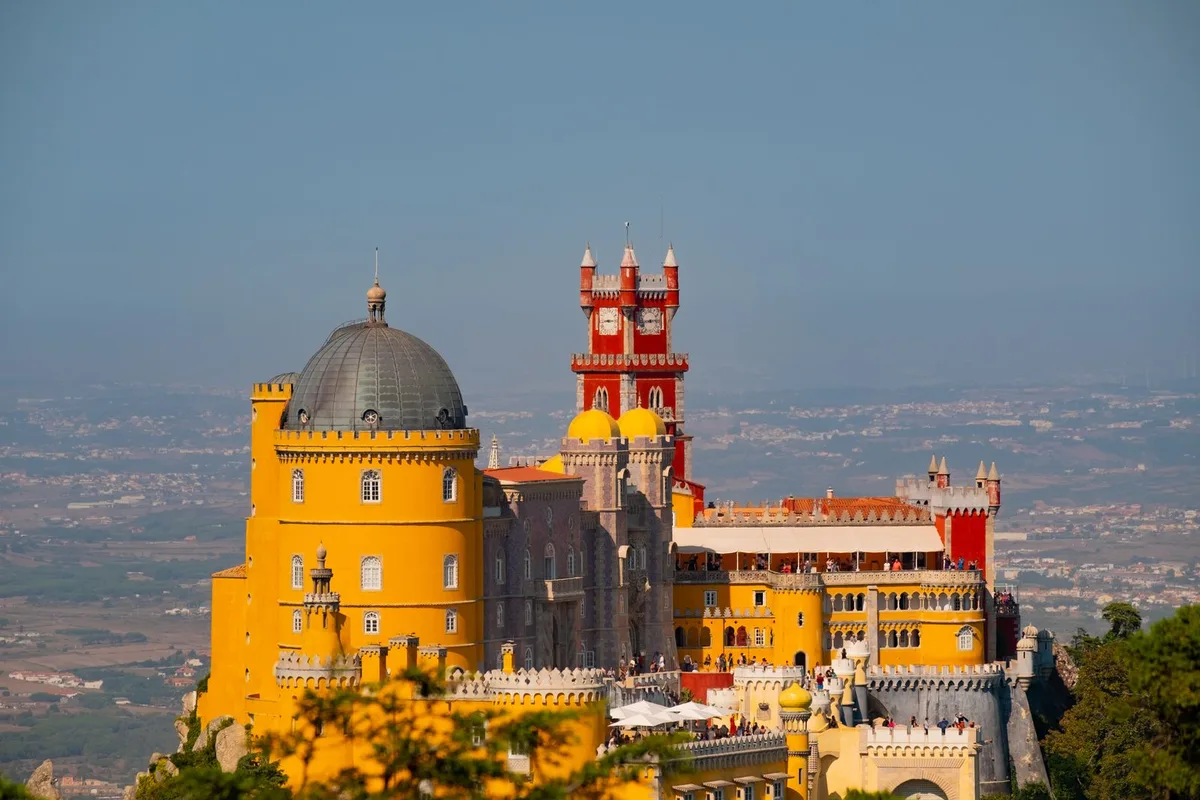
A hill town of royal palaces: Pena's red-and-yellow terraces at €20 for palace and park, the initiation well at Quinta da Regaleira, the Moorish Castle walls between them. Book Pena's timed entry first, take an early train, ride the 434 bus up the hill.
Full day, trains from Rossio take about 40 minutes
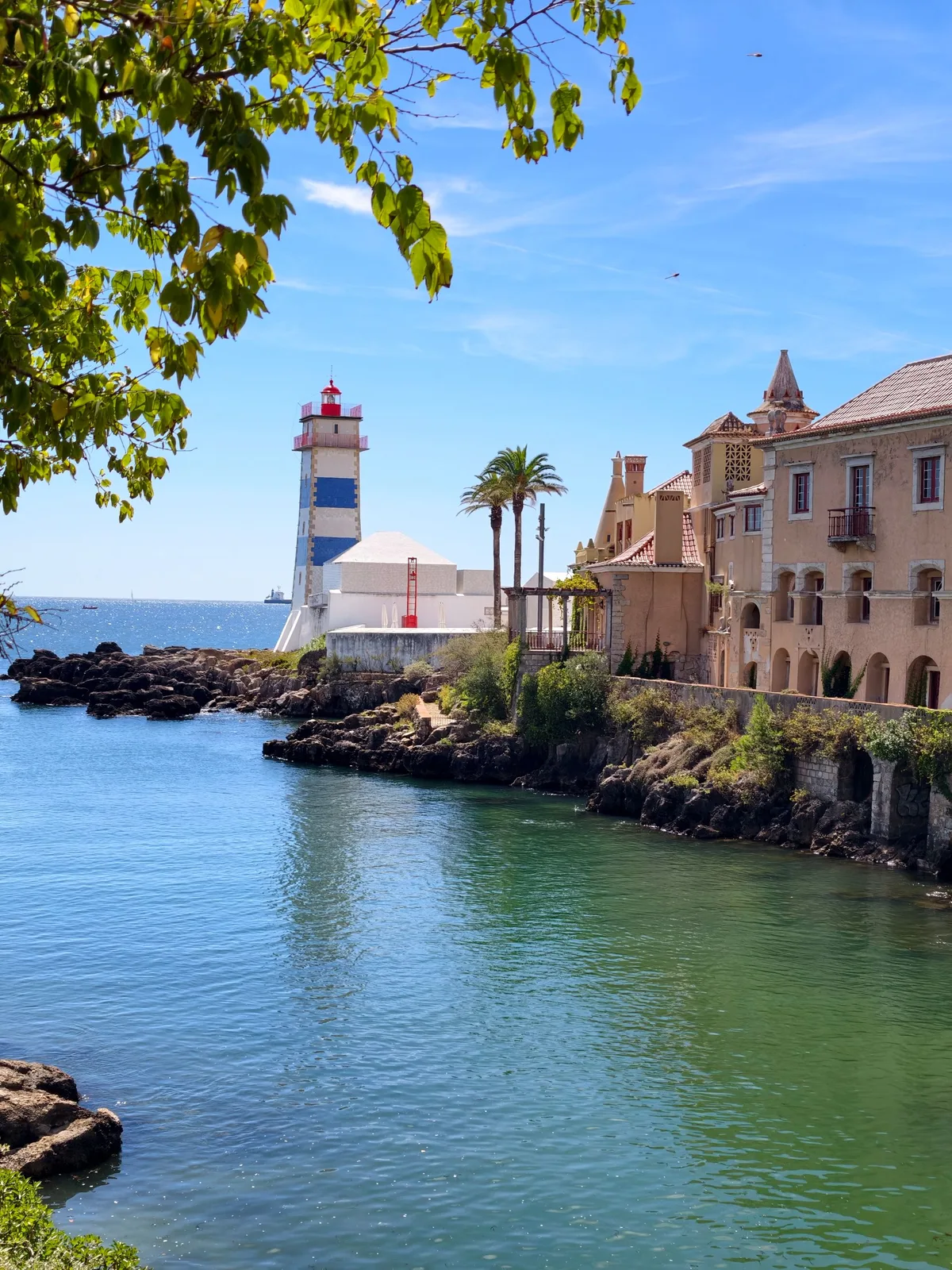
The royal family's old summer resort, now Lisbon's easiest beach day: a sheltered bay, seafood lanes, the Boca do Inferno sea arch, a flat seafront path to walk or cycle to Estoril. Trains from Cais do Sodré run along the river and sea the whole way.
Full day, trains from Cais do Sodré take about 40 minutes
Staying longer? Óbidos, walled village of whitewash and cherry liqueur, is an hour north by bus; Nazaré watches giant winter surf from its cliff fort; Évora pairs a Roman temple with Alentejo wine two hours east. Porto, about three hours by train, is your next base, not a day trip.
When to go and what it costs
JanFebMarAprMayJunJulAugSepOctNovDec
April to June is Lisbon's sweet spot: warm but not hot, the jacarandas in bloom, and the city building towards the Festas de Lisboa — a month of street parties peaking on the night of 12–13 June, when Santo António fills Alfama with grilled sardines, basil pots and marching bands. September and October are nearly as good, with a warm sea and thinner crowds. July and August bring real heat and full prices; November brings Web Summit, when hotel rates spike for a week. If disruption hits your arrival — summer storms and French air-traffic strikes ripple into Lisbon — AirHelp can claim compensation for serious delays and cancellations.
Daily budgets: budget €50–80 covers a top-rated hostel, tasca lunches, the free viewpoints and a zapping-loaded card; mid-range €130–200 covers a boutique hotel in Baixa or Bairro Alto, the paid monuments, one long seafood dinner; splurge €350 and up covers the five-stars and Lisbon's best tables. Add the tourist tax — €4 per person per night, up to €28 per person per stay.
What to pack
Tap items to check them off — your list is saved on this device.
As an Amazon Associate I earn from qualifying purchases.
Language, visa and entry
✓ Visa-free entry for eligible passport holders
Portuguese is the language of the city, worth learning the music of even if you only master four phrases. Locals switch to English with disarming ease, but conversations that start in Portuguese start warmer. One detail catches English speakers out: men say obrigado, women obrigada — the word agrees with the speaker, not the listener.
Olá helloObrigado thank youQuanto custa how much does it costAdeus goodbye
A few habits help. Greet shopkeepers and drivers when you enter — bom dia in the morning, boa tarde after lunch — never start with a request. Bills arrive only when you ask, and the bread and olives set down unasked are charged for if eaten: normal here, not a trick.
Entry runs on Schengen rules. Travellers from the United States, the United Kingdom, Canada, Australia and many other countries enter visa-free for up to 90 days in any 180-day period across the whole Schengen area; everyone else needs a Schengen visa arranged in advance. The EU's Entry/Exit System now registers non-EU arrivals biometrically instead of stamping passports, fully live since April 2026 — expect a fingerprint and photo check on first entry, and slower queues at busy times. ETIAS is not yet in operation: the EU removed its planned late-2026 start, with no new date — nothing to apply for, and any website offering to sell you one is a scam.
Safety and health
Pickpockets on Tram 28
Tram 28 and the Baixa Metro stations are pickpocketing hotspots — everyone is distracted and squeezed together. Wear your bag in front of you, zipped; keep your phone off the ledge by the door; be suspicious of any sudden crush or commotion at a stop — that is the moment hands move.
Slippery cobbles and hills
Lisbon's calçada pavements are polished limestone, beautiful and treacherous — closer to ice than stone when wet, and steep even when dry. Wear shoes with real grip, use the handrails on the stepped lanes, and allow twice the walking time Google suggests whenever the route climbs.
The Baixa street offer
Around Rossio and the Baixa grid, men may mutter an offer of hashish or cocaine as you pass. What they sell is usually bay leaves and flour: a flat no, no eye contact, keep walking — persistent rather than dangerous, and police patrol the area. Never follow anyone to complete a deal.
Nightlife awareness
Bairro Alto's bar lanes and Cais do Sodré's Pink Street run loud and late, the mood friendly — but watch your drink, agree your route home before the last Metro at 1am, and use the apps rather than walking unfamiliar hills at 4am; the steep lanes empty fast once the bars close.
Verified against Metro de Lisboa, Carris and official monument sources, October 2026.
The metro Red Line runs from Aeroporto station to Saldanha and Alameda in about 20 minutes; a single costs €1.90 on a navegante occasional card.
A metered taxi takes 15-25 minutes depending on traffic - agree the meter is running before you ride.
Lisbon charges €4 per person per night, from age 13, capped at 7 nights per stay.
It doubled from €2 in September 2024 and is added to the accommodation bill.
Buying on board costs €3.30 in cash; with a charged navegante card it is €1.72.
The Santa Justa lift costs €6.20 return and is included in the 24-hour Carris and Metro pass at €7.25.
Yes - Belém Tower reopened in May 2026 after conservation work.
Entry is staggered and capped, so book a timed slot ahead; Jerónimos Monastery nearby costs €18 and closes on Mondays.
Yes. Lisbon tap water is safe and good.
Refill a bottle at your hotel before heading up the hills.
April to June and September to October bring warm days without peak crowds.
June is festival month - Santo António fills Alfama with street parties - and November Web Summit week spikes hotel prices.
Metro from the airport about 20 minutes, single €1.90; tourist tax €4 a night capped at 7 nights; tap water safe; Type F sockets at 230V.
Lisbon, Saved for After You Land
Landing soon? Get the printable PDF — the essentials from this guide, formatted for your phone:
The airport transport cheat sheet, with ticket links
Our 3 restaurant picks, with maps
The packing checklist
One email with your Lisbon PDF (guide version: Oct 2026). Fare changes and new guides after that. No spam, unsubscribe anytime.
Sources and last verified
Fares and prices verified October 2026 against Lisbon Metro and Carris tariff tables effective January 2026 (single fare, zapping and 24-hour tickets), the Câmara Municipal de Lisboa tourist tax regulation (€4 since September 2024), Museus e Monumentos de Portugal for the Jerónimos Monastery and Belém Tower, EGEAC for São Jorge Castle, Parques de Sintra for Pena Palace, Oceanário de Lisboa, CP train fares for Sintra and Cascais, and the EU's ETIAS portal for the scheme's not-in-operation status. Hotel and restaurant listings checked the same month. Found something out of date? Tell us and we will fix it.
Affiliate disclosure: hotel names, transfers, experiences, and products linked in this guide may earn After You Land a commission at no extra cost to you. Prices and times were checked in Oct 2026 and change often — confirm before you book.