You have just landed in Marrakech — the red city under the Atlas, where the call to prayer rolls over Jemaa el-Fnaa and the souks run in shaded lanes off the square. This guide covers the airport bus and the taxi board you should trust, then the palaces and the garden you must book ahead, medina movement and metered taxis, mint tea and mechoui lamb, Essaouira’s ramparts, the Ourika Valley and the stone desert at Agafay.
By Paul GreenUpdated Oct 202618 min readPrices checked Oct 2026
You just landed in Marrakech. Take the airport bus 19 for 30 dirhams straight to Jemaa el-Fnaa, or pay the posted rank fare of about 70 dirhams by day for a taxi — never the 200-plus the terminal touts will quote you. Sort your Airalo eSIM before you land, and book the Majorelle Garden ahead — its tickets are online-only, timed, and sell out days in advance.
Quick facts
Airport
One airport Marrakech Menara (RAK), about 6 km from the medina — every flight sold as Marrakech lands here. The train station stands across town in Guéliz, so the ride in is always by road.
Getting in
Bus 19 about 20-30 minutes for 30 MAD, official taxi fixed from 70 MAD ALSA’s airport bus, line 19, runs every 20 to 30 minutes from about 06:00 to 23:00 to Jemaa el-Fnaa and the train station. Official taxis work to fixed fares posted on a board at the rank. A pre-booked Kiwitaxi transfer is the set-price fallback.
Currency
The dirham (MAD) a closed currency you can only buy inside Morocco — at the time of writing €1 buys roughly 11 dirhams, so 100 MAD is about €9. Change money or use an ATM on arrival, keep small notes, and spend or reconvert what is left before you fly out. The medina runs on cash.
Languages
Arabic and French; English is catching up fast the spoken Arabic is the Darija dialect, and French is the working second language of menus and signs. English is common in hotels and the sights, less so among taxi drivers.
Time zone
GMT+1 all year, with a Ramadan exception for the month of Ramadan the clocks drop back an hour to GMT, so double-check the offset if you travel then.
Emergency
19 police, 15 ambulance and fire outside the cities, the Royal Gendarmerie answers on 177. Keep a photo of your passport and its entry stamp on your phone.
Plugs
Type C and E plugs, 220 volts the round two-pin family used in France and Spain. UK, US and Swiss plugs need a converter; most chargers are dual-voltage and need only the shape.
Tap water
Not recommended drink bottled — the tap water is treated and locals drink it, but visitors should stick to bottled water, cheap and sold on every corner. Riads keep large refill bottles.
Tourist tax
Yes two small taxes stack to roughly 16-30 MAD per person per night — the national tax runs from 1 MAD a night at a hostel to 15 MAD at a luxury hotel, and Marrakech adds a 15 MAD city tax on top. Settled in cash at check-out; children under 12 are exempt.
Best months
October, November and March days in the mid-20s, cool evenings and the Atlas snows in view. June to September brings midday heat past 40 °C.
Map
Find your arrival stop, hotel, and first meal. Stays, sights, and landmarks in Marrakech — live hotel prices plus the key places from this guide.
Maroc Telecom, Orange and inwi hand out free tourist SIMs in arrivals and set them up with a data bundle on the spot. To land connected, an Airalo or Saily eSIM does the job from the runway.
Get dirhams in small notes
Airport exchange desks take a poor rate — change a little, then use bank ATMs in town. Ask for small notes and coins: taxi drivers, stalls and porters are not banks.
Match the ride to your arrival
In daylight with light bags, bus 19 is calm and cheap. After dark or with luggage, take a taxi from the official rank at the posted fare, or book the transfer before you fly.
Agree the drop-off point, not just the address
No car can reach a medina riad door. Confirm the gate where you will be met and let the riad send a porter.
Book the Majorelle Garden now
Tickets are sold online only, in timed slots that sell out days ahead in season. Book before you unpack; everything else in this guide can be improvised, that one cannot.
Walk to the square at dusk once
End the first day on Jemaa el-Fnaa as the drums start and a hundred grills light. It is the city’s orientation ceremony and its welcome in one.
Eat something properly Marrakchi first
Orange juice squeezed at a square stall, or a bowl of harira soup at a stall table, costs a few dirhams and sets the tone.
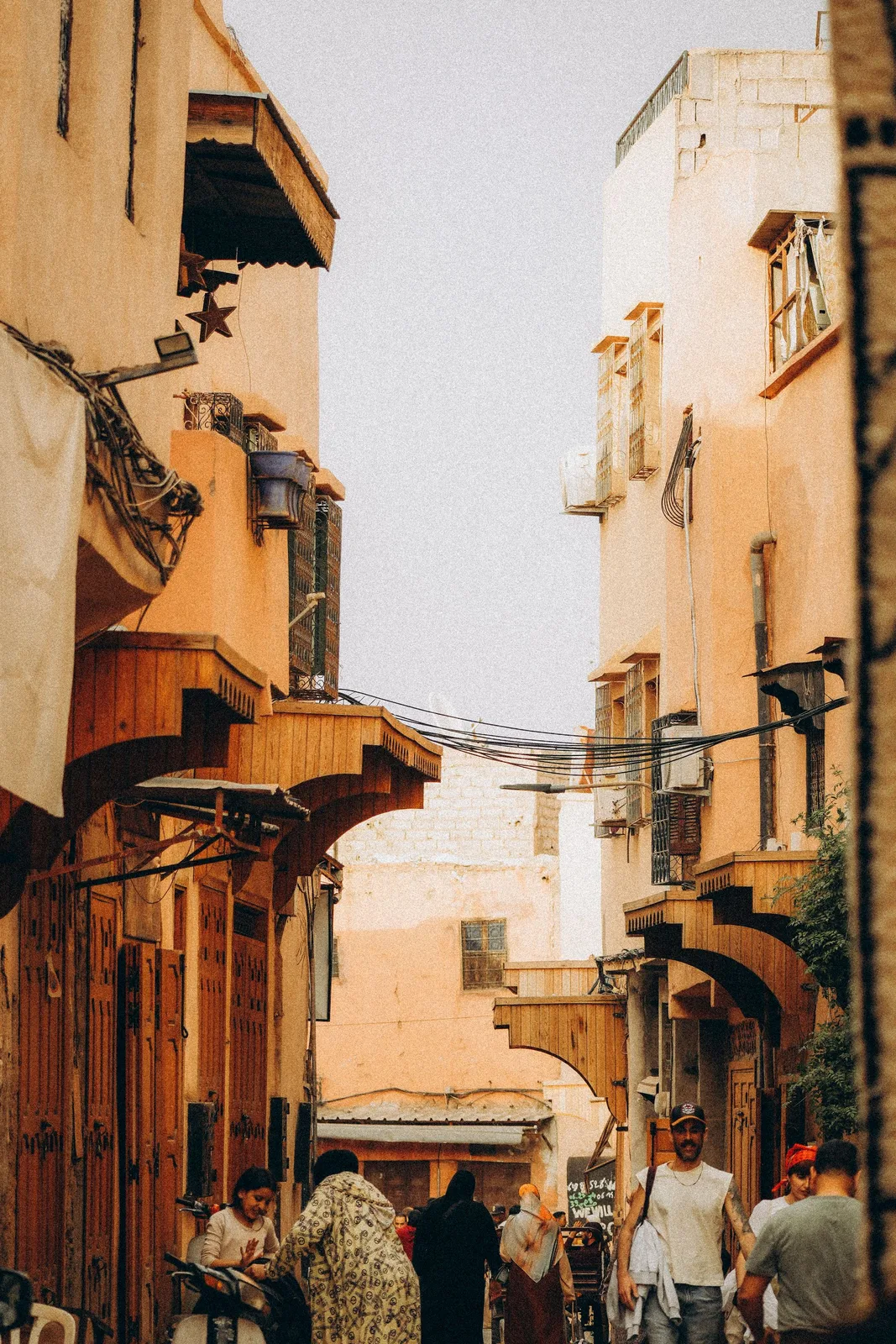
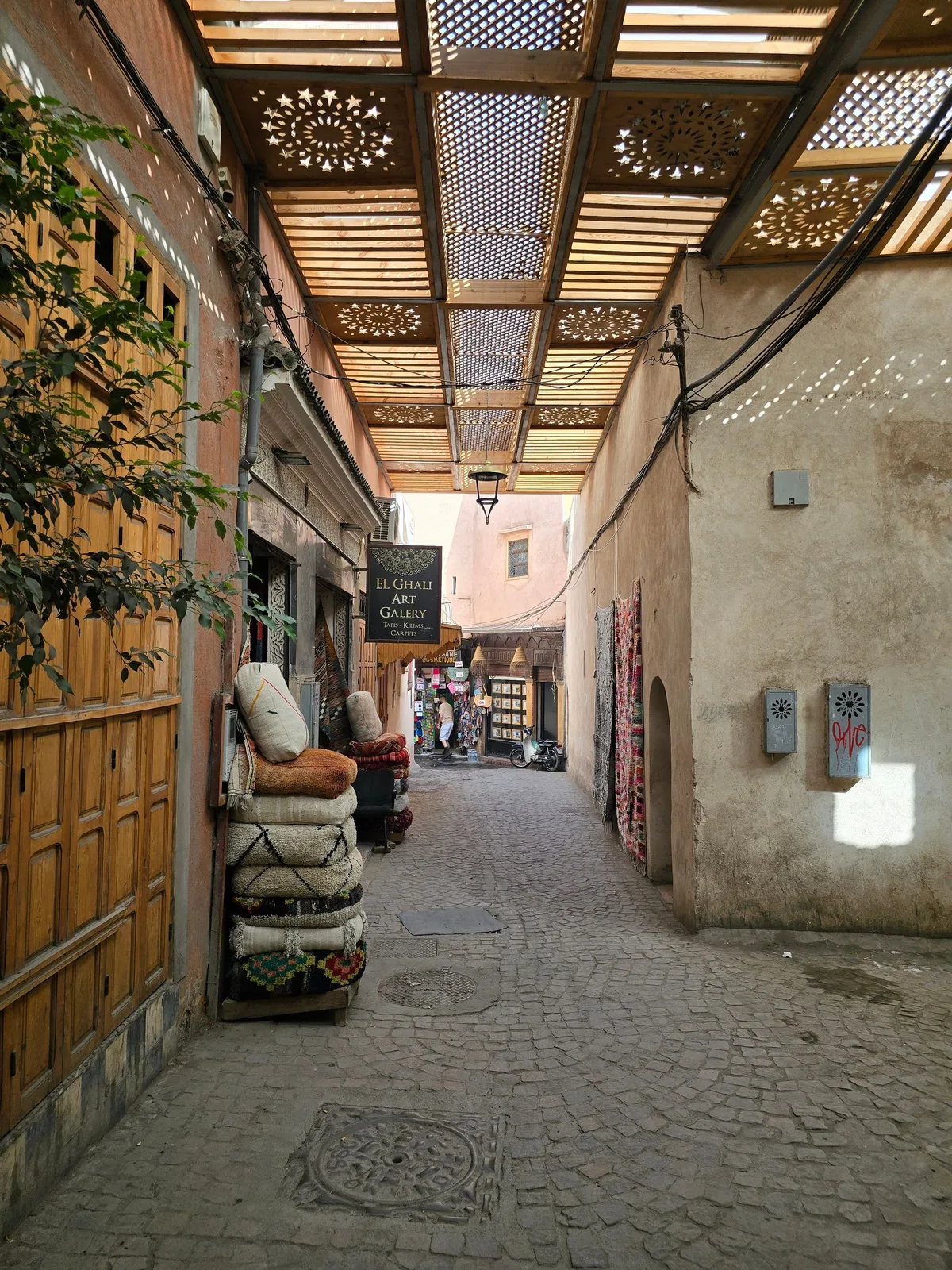
Marrakech divides into two cities. Inside the rose-red walls is the medina: a dense, mostly pedestrian maze of souks, mosques and riad courtyards around Jemaa el-Fnaa, with the Koutoubia minaret at its south-western corner. Outside the walls runs Guéliz, the French-built new town of avenues, cafés and the train station. Cars stop at the medina gates — beyond them, lanes narrow to alleys only feet, carts and mopeds can thread.
So your taxi drops you at a gate or a recognised drop-off point, and for any riad in the lanes a porter with a handcart is the standard system — riads send one if you warn them. Learn the two anchors, the square and the minaret, and the maze becomes navigable faster than you expect.
Getting around
Journey times are approximate and refer to the listed stop — not necessarily your hotel. Allow extra time for waiting, walking, and connections.
Airport bus 19 (ALSA)
The dedicated airport bus from outside arrivals to Jemaa el-Fnaa, then Guéliz and the train station; every 20-30 minutes, about 06:00 to 23:00; 50 MAD return
Price30 MADJourneyabout 20-30 min
Official airport taxi
Fixed fares posted on the board at the official rank — about 70 MAD to the medina by day, more at night; settle the fare before the bags go in and ignore touts quoting 200 MAD and up
Price70-100 MAD by zoneJourneyabout 15-20 min
Grand taxi
The larger cars at the same rank, seating up to six with luggage; the price is per car, not per person
Priceabout 120-200 MAD per carJourneyabout 15-20 min
Pre-booked private transfer
A driver waiting in arrivals with your name and a price fixed when you book — the calm option for late arrivals and heavy luggage
Priceabout 150-250 MADJourneyabout 15-20 min
Inside the medina, your feet are the transport system, and almost everything in the city section is within a 20-minute walk of the square. For anything further — Guéliz, the Majorelle Garden, the train station — the beige petit taxis are the city’s workhorses, backed up by ALSA buses and the horse-drawn calèches by the Koutoubia.
Petit taxis run on meters by law: the meter starts at 1.70 MAD by day and 2.50 MAD after 20:00, with a 7 MAD minimum, so a metered hop from the square to Guéliz lands around 10 MAD. Ask for the compteur before you get in; if a driver refuses, take the next cab. ALSA city buses cost around 4-5 MAD, and calèches are priced by agreement: settle route, duration and price before you climb up.
To remove the negotiation altogether, Welcome Pickups puts a driver in arrivals at a price fixed when you book — worth it after a red-eye, or when your riad sits deep in the lanes and the driver can phone ahead for the porter.
In the city
Marrakech’s sights divide between the medina’s southern palace quarter, the square and the souks at its heart, and one famous garden outside the walls. Much of the best of it is free: the square itself, the Koutoubia gardens, the lanes of the Mellah. Go in this order: palaces in the cool of the morning, the garden booked ahead, the square saved for dusk.
Jemaa el-Fnaa — The square is the city, UNESCO-listed for the traditions performed on it, changing character by the hour. By day: juice stalls, henna artists, water sellers in scarlet. From late afternoon, a hundred grill stalls set up in rows of smoke and lamplight, and dinner at a stall table runs about 60-120 MAD a head. Photograph a performer and a hat will appear; a small coin is the understood price.
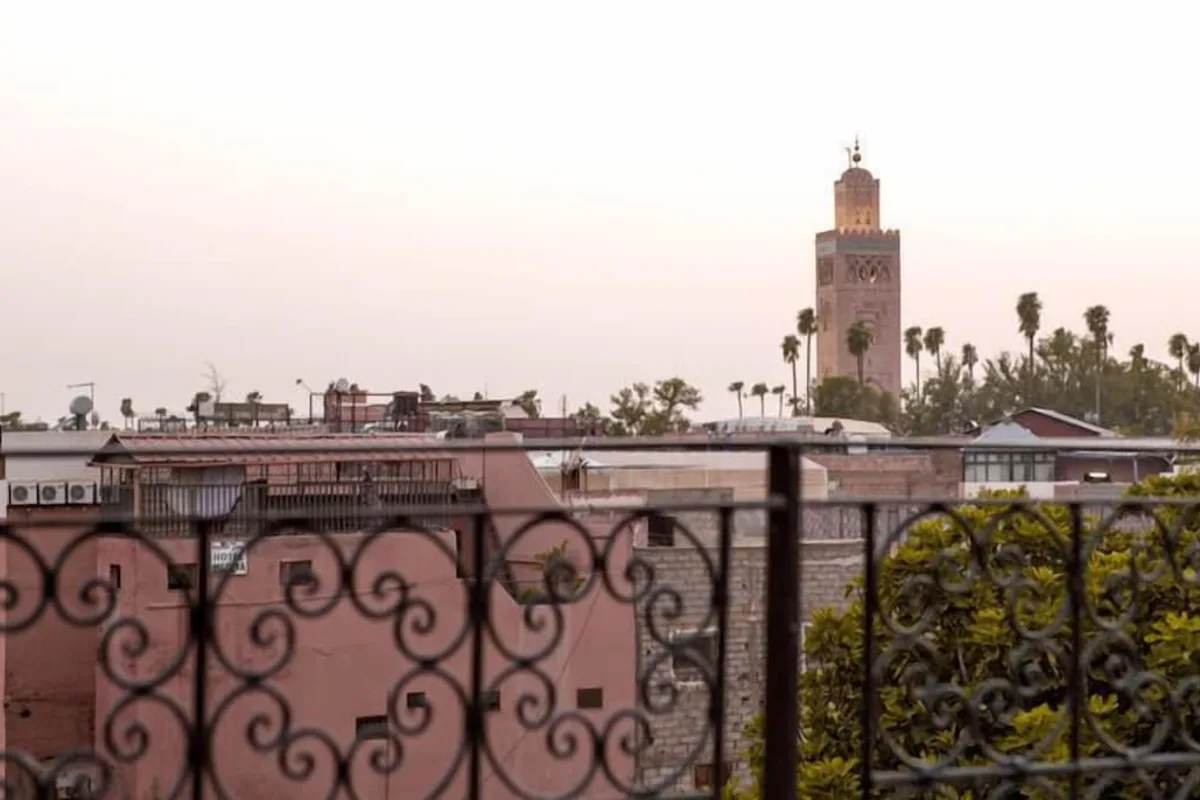
The Koutoubia Mosque — The city’s landmark is a minaret: 77 metres of carved stone finished in the 1190s, visible from half of Marrakech. Mosques are closed to non-Muslims across Morocco, and the Koutoubia is no exception — the famous exception is the Hassan II Mosque in Casablanca. The gardens around it are free and open to everyone.
Bahia Palace — The grand vizier Bou Ahmed’s palace, built over the 1860s to 1900: some 150 rooms of painted cedar ceilings, zellige tilework and carved plaster around courtyard gardens, in the south of the medina. Entry is 100 MAD. Go at opening time, before the tour groups.
The Saadian Tombs — Beside the Kasbah mosque, the necropolis of the Saadian sultans lay walled up and forgotten until 1917, which is why its decoration survived intact. Entry is 100 MAD. Its glory, the Chamber of Twelve Columns, is viewed from a narrow corridor, and a queue forms between 10:00 and 13:00 — come at the 09:00 opening or late afternoon. Skip-the-line tickets and Kasbah tours are bundled on Tiqets.
Ben Youssef Madrasa — The largest Quranic school in Morocco, rebuilt under the Saadians in the 1560s around a courtyard of carved cedar, stucco and tile. Entry is 50 MAD. It reopened in 2022 after a long restoration, and pairs naturally with the souks at its gate.
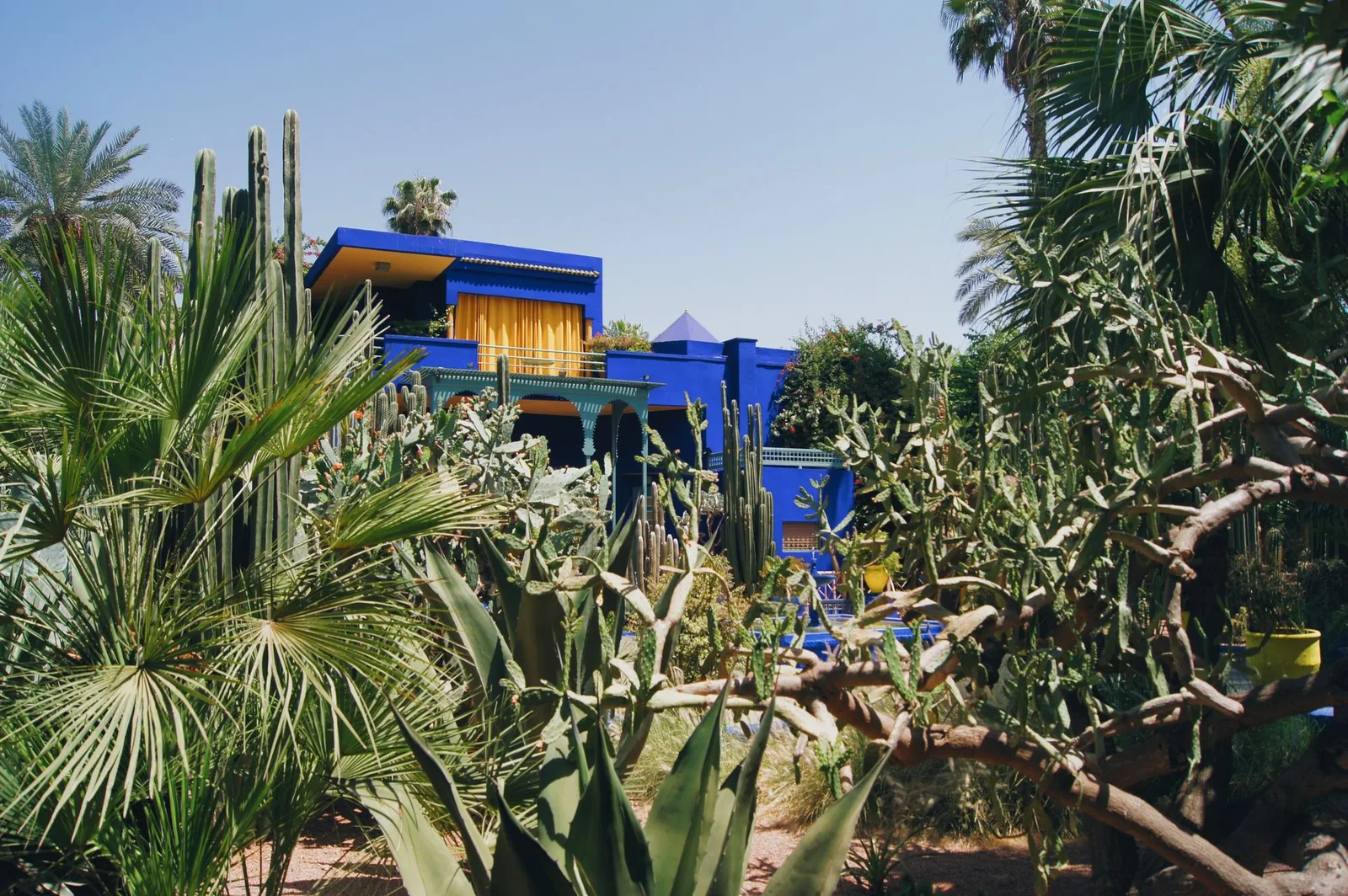
Jardin Majorelle and its museums — Jacques Majorelle’s cobalt-blue garden in Guéliz, rescued by Yves Saint Laurent and Pierre Bergé, is the most visited sight in the city and the one that punishes improvisation: tickets are sold online only, in timed slots, and sell out days ahead. Garden alone 170 MAD; with the Pierre Bergé Museum of Berber Arts 230 MAD; the Yves Saint Laurent Museum next door 140 MAD, closed Wednesdays; all three 330 MAD. Book on the official site or through GetYourGuide, and beware unofficial ticket sites.
Le Jardin Secret — The medina’s own answer to Majorelle: a restored 19th-century palace garden on Rue Mouassine, quieter and more scholarly than its famous rival. Entry 100 MAD, plus 40 MAD to climb the tower for the best rooftop view over the medina. Tickets at the gate.
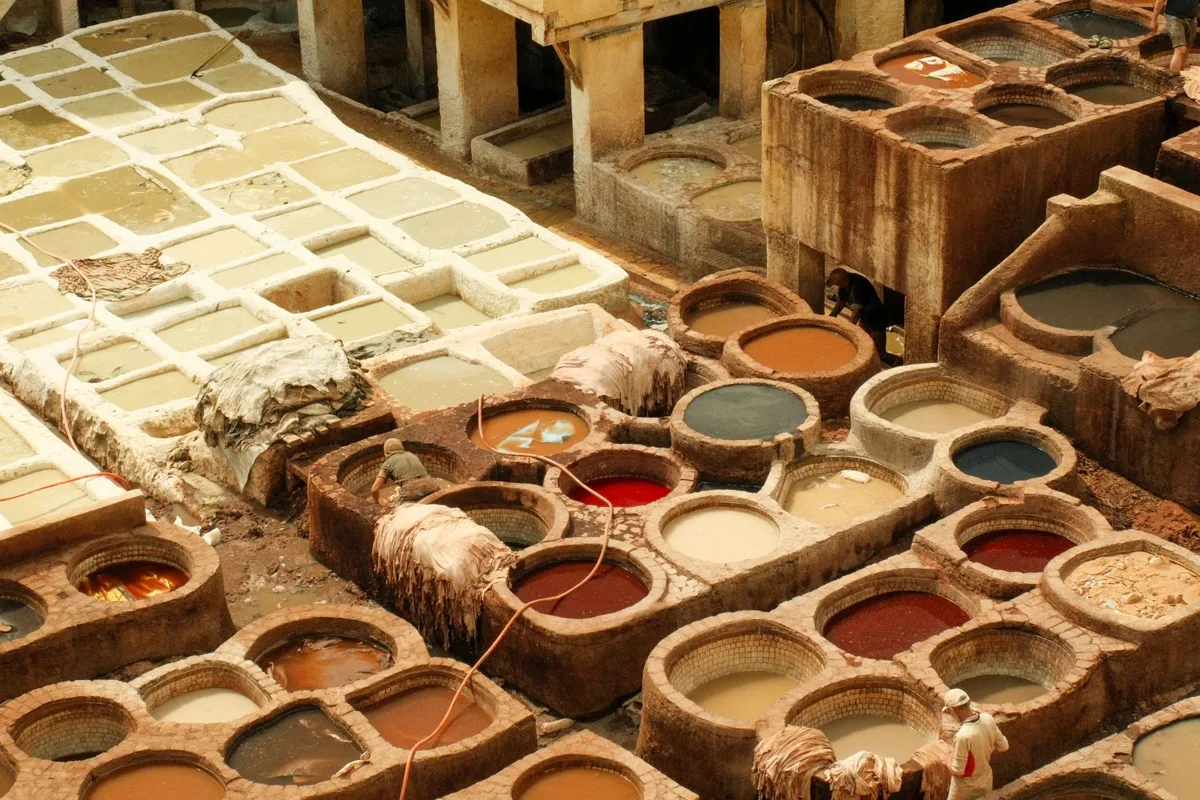
The souks and the tanneries — North of the square the souks organise themselves by trade: dyed wool, lanterns, leather, carpets, the spice pyramids of Rahba Lakdima. Haggling is the etiquette: treat the first price as an opening bid, counter near half, settle in the middle with good humour. The Chouara tanneries near Bab Debbagh are genuinely pungent — you will be handed a sprig of mint to hold to your nose.
A traditional hammam — Neighbourhood hammams charge about 50-150 MAD including the black-soap scrub with a rough kessa glove; separate sections or hours for men and women, and you bring your own towel and swimsuit. Riad and spa hammams charge several times that for marble and calm.
The Palmeraie and Menara gardens suit cycling better than the medina ever will. For a guided ride or a full-day rental, BikesBooking lists the city’s bike tours and rental shops. And if the weather closes in, compare the city pass bundled on Klook against paying at the gates: with the square, the Koutoubia gardens and the souks free, and Majorelle tickets sold only through their own channels, a well-planned week can make the pass unnecessary.
After you land in Marrakech: Bookable experiences
Where to stay your first nights
Splurge
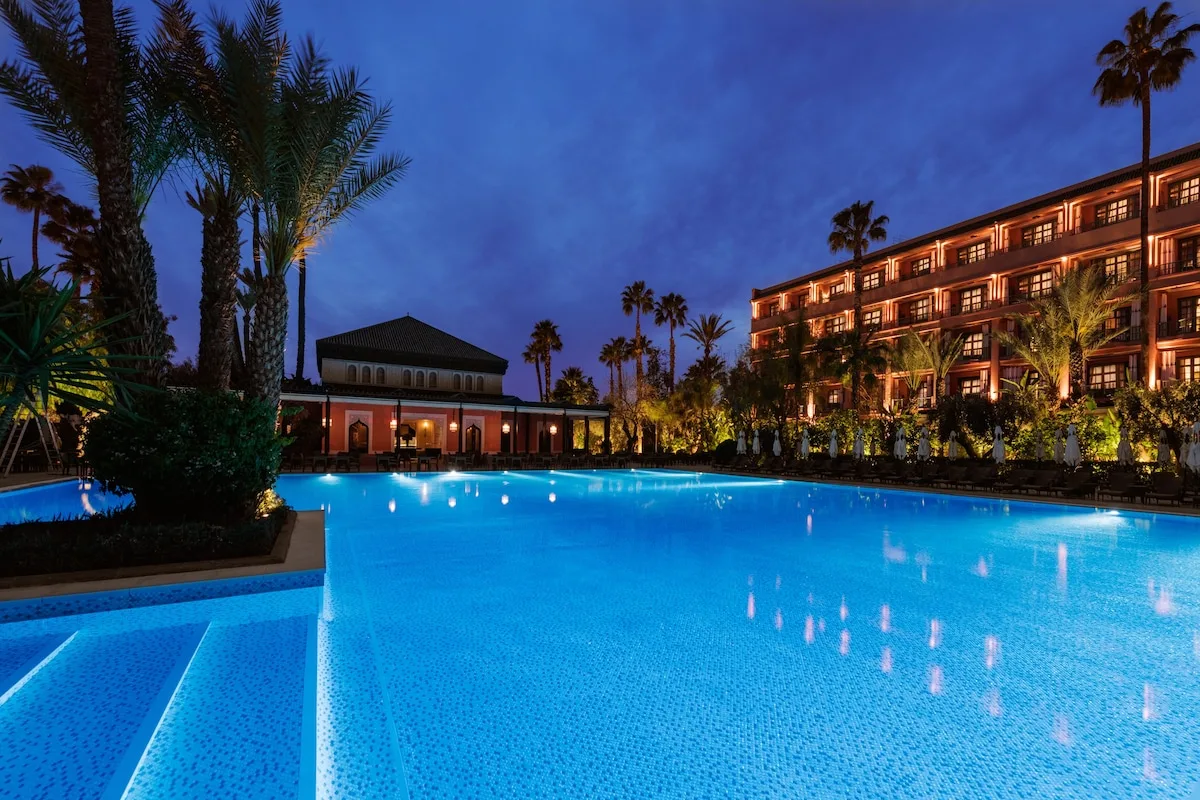
La Mamounia.
Best for the palace splurge
The grande dame of 1923 on Avenue Bab Jdid, in its own walled gardens just outside the medina by the Koutoubia: Churchill’s winter retreat, still the address against which Moroccan hotels are measured.
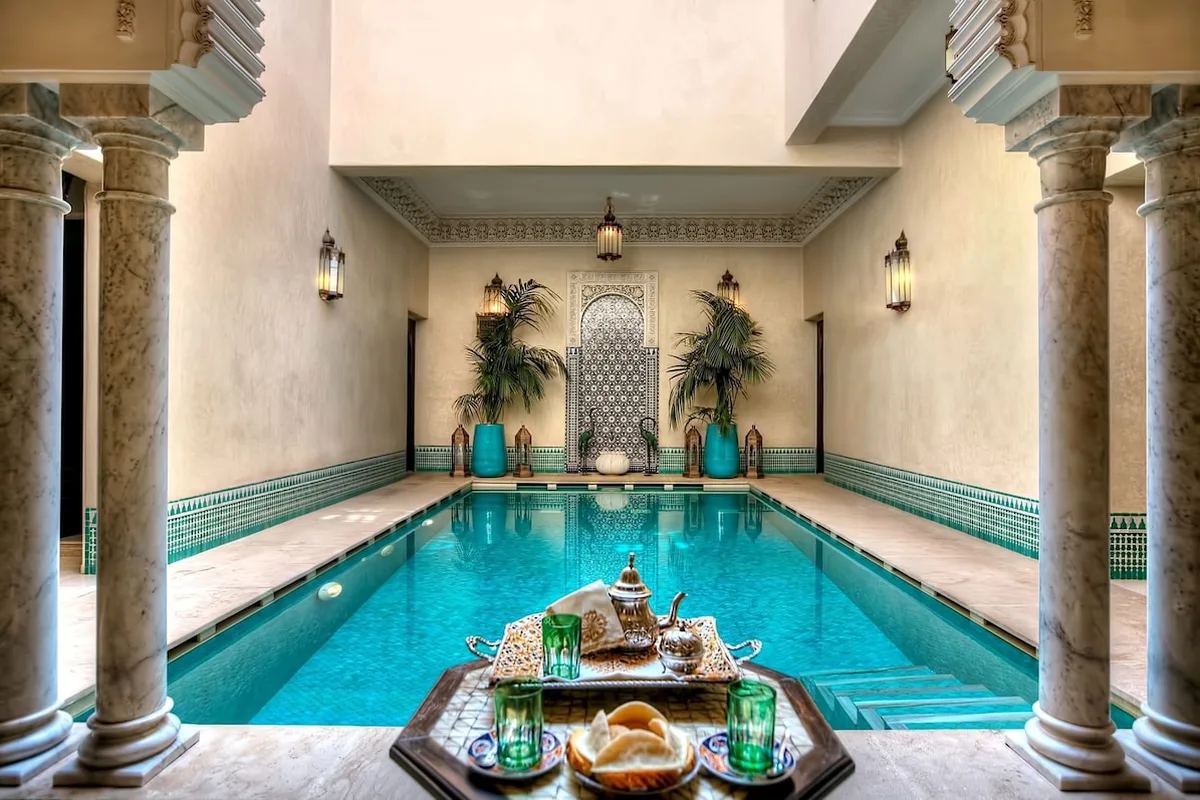
An 18th-century family riad at 34 Derb l’Hotel in Bab Doukkala, run as an 11-suite boutique hotel: three courtyards, a small pool and hammam, a celebrated restaurant, and the owner’s own museum of Moroccan crafts.
Best for budget beds in the medina — dorms and a roof terrace two minutes from Jemaa el-Fnaa
A riad hostel on Derb Chaabane in Riad Zitoune Lakdim, a two-minute walk from Jemaa el-Fnaa: dorms and triple rooms, a roof terrace looking over the medina rooftops to the Koutoubia, and a small spa on site. The medina’s best-value base.
For a first visit, the medina is the experience: a riad down a lane, breakfast on a roof terrace, the square ten minutes away. Guéliz trades atmosphere for ease — bigger hotels, easier taxis, cafés and the station — and the Palmeraie is resort country, beautiful and a drive from everything. Remember the two local taxes: roughly 16-30 MAD per person per night on top of the rate, paid in cash at the property.
Choose Guéliz on a return visit or a work trip, and the Palmeraie only when the resort itself is the destination.
Where to eat first
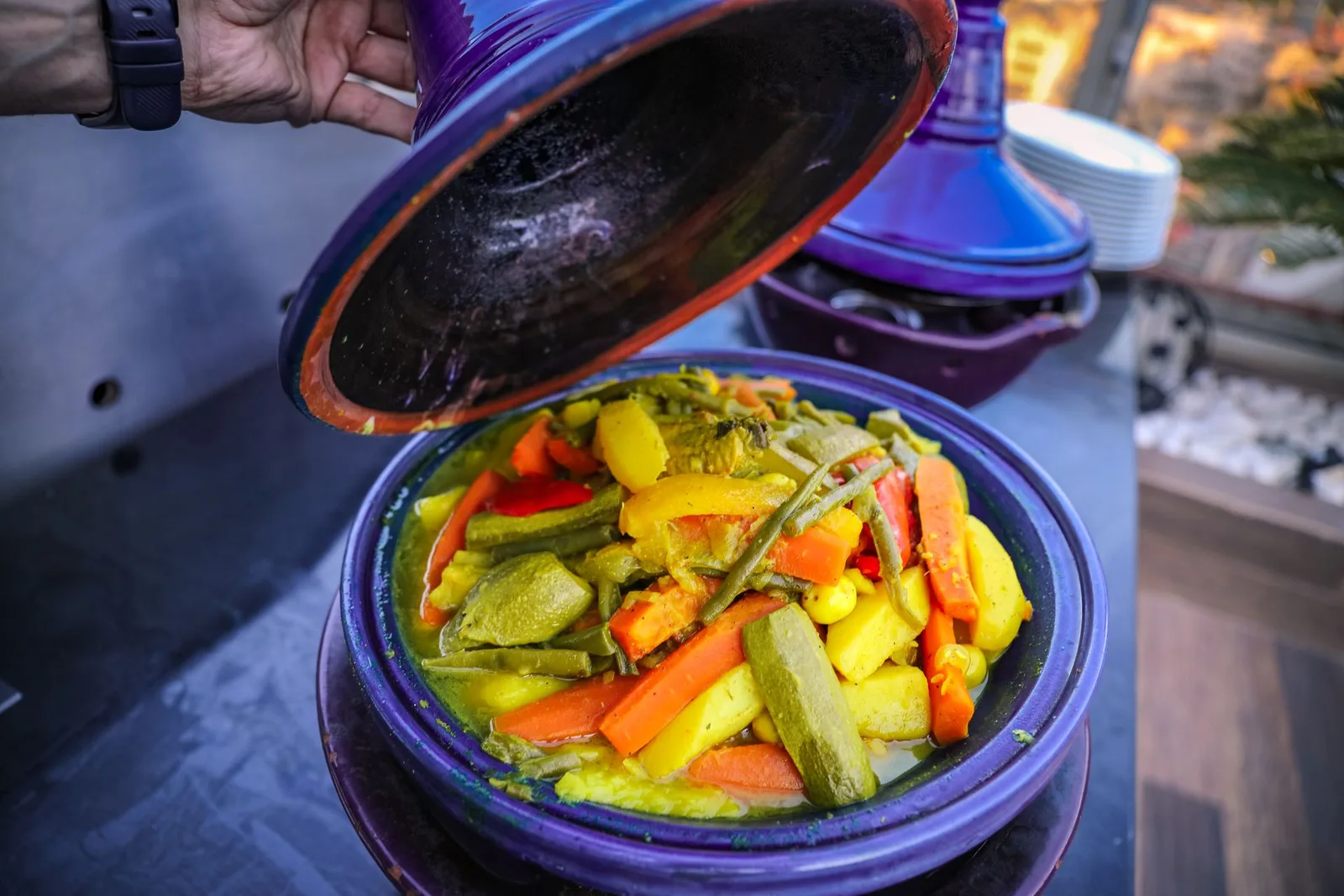
Marrakech cooks with confidence: tagines under conical lids, couscous on Fridays, and the city’s own speciality, tanjia — beef slow-cooked for hours in a clay urn in the ashes of a hammam furnace. Mix one rooftop, one garden and one alley, like this.
Nomad — modern Moroccan above the spice square.
Map → At 1 Derb Aarjane, off Rahba Lakdima, open daily 12:00-22:30. A former carpet shop turned four-storey restaurant: order the modern takes on Moroccan classics on the top terrace at sunset. Book the terrace ahead.
Le Jardin — lunch in a green courtyard.
Map → At 32 Souk Jeld, Sidi Abdelaziz, open daily 10:00-23:00. Behind an unmarked door, a 16th-century house opens into a garden courtyard of banana leaves and resident tortoises.
Mechoui Alley — roast lamb by the square.
Map → In the lane off the square’s north-eastern side, from late morning until the day’s lamb runs out — go for lunch. Whole lambs come up from the pit ovens, carved to order and sold by weight, served on paper with cumin, salt and bread.
Day trips and more
One honesty note before the cards: the Sahara proper — the great dunes at Merzouga — lies eight to nine hours away by road. It is a superb three-day trip and a miserable day trip. The three cards below are what genuinely works in a day: the coast, the mountains and the near desert. Organised versions of all three are compared on Tiqets; the DIY routes are in each card.
Essaouira
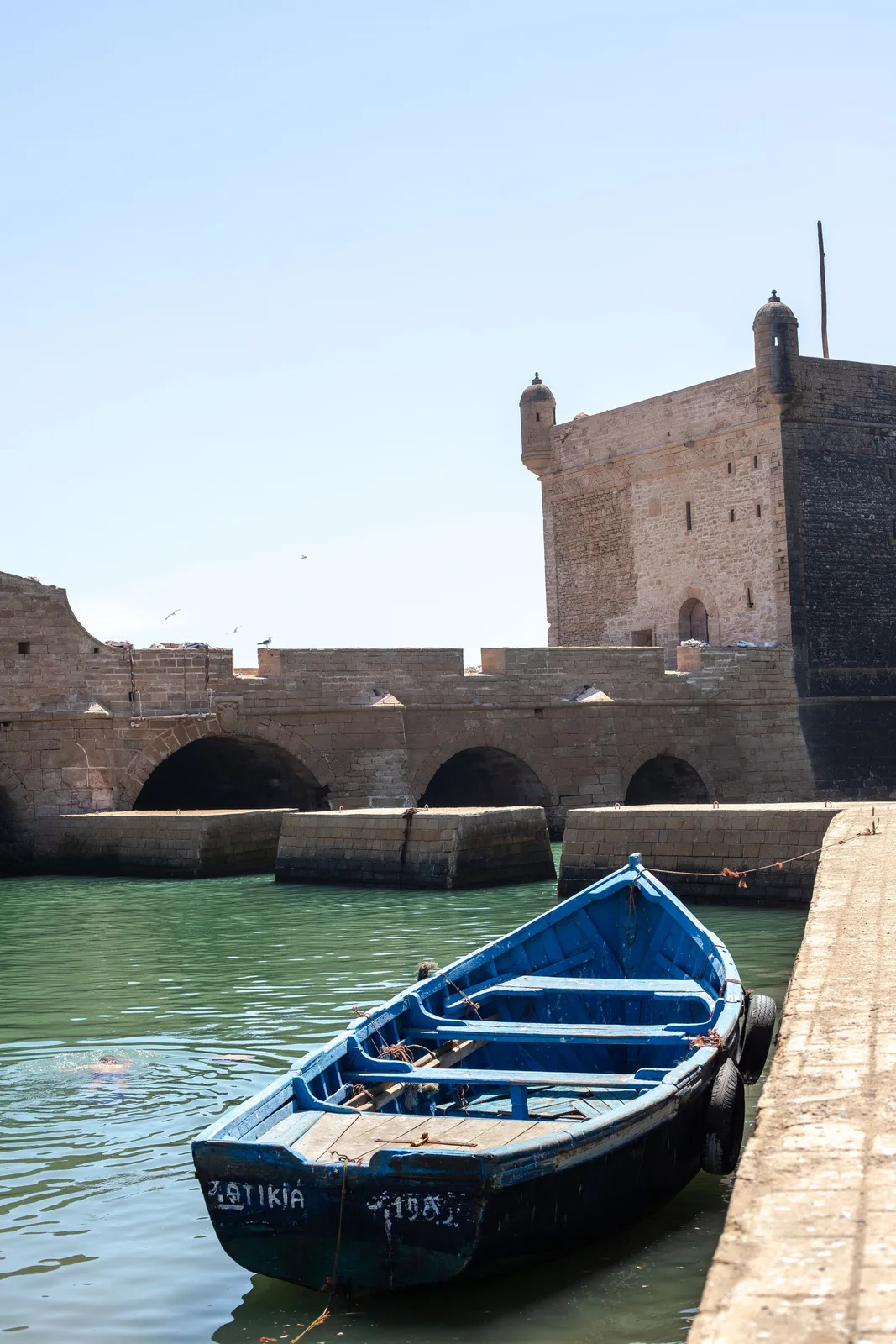
The blue-and-white Atlantic port three hours west: an 18th-century fortress town of straight streets and sea wind, where the fishing fleet unloads under the ramparts and the port grills sell you the catch an hour later. Walk the Skala ramparts and expect the wind that makes the bay a kitesurfing capital. The DIY route is the Supratours or CTM coach, best booked a day ahead in season.
Coach from Marrakech · About 3 hours each way · Book the bus seat a day ahead in season
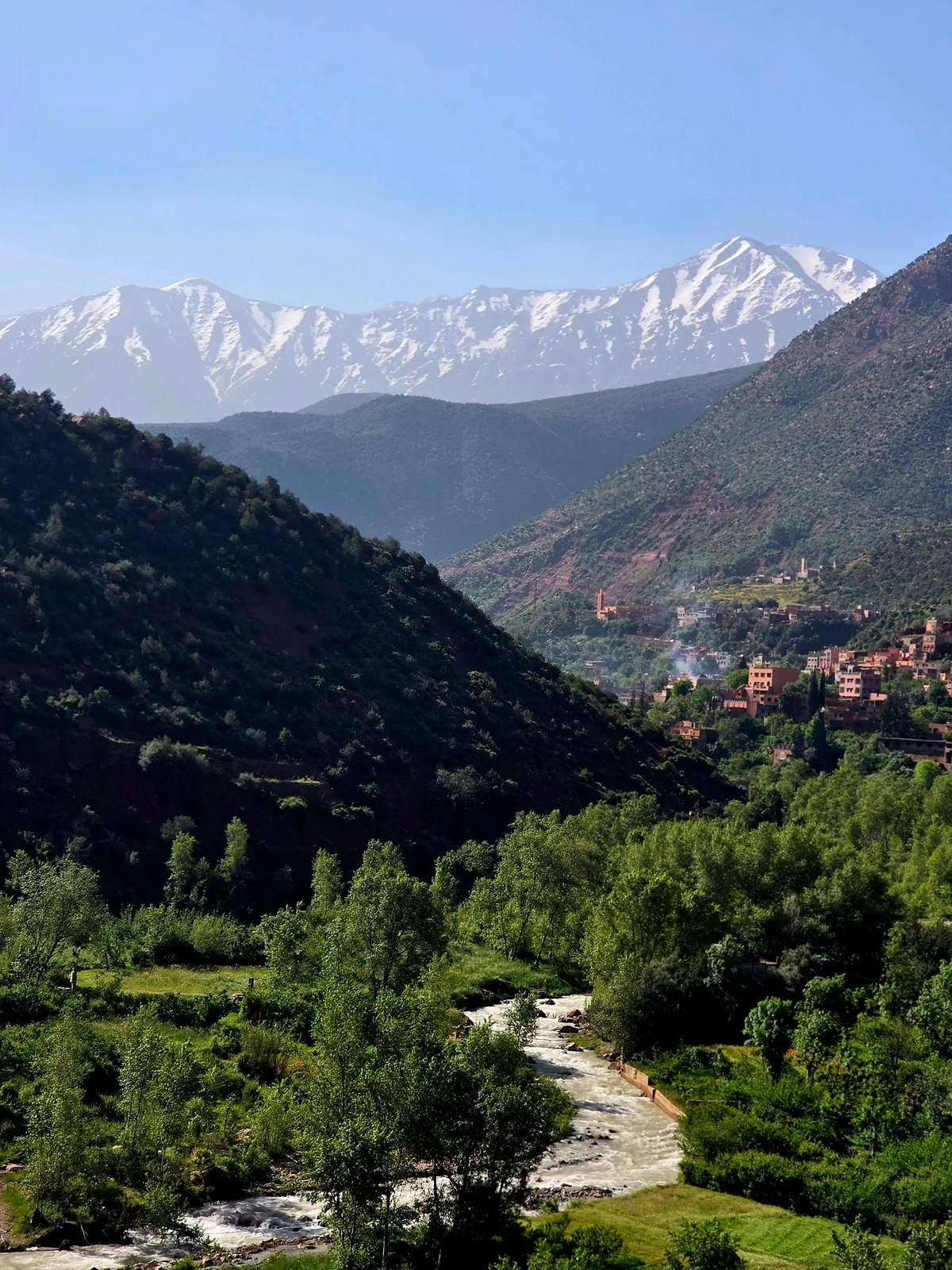
An hour and a quarter south-east, the land rises: a green river valley of walnut trees and Berber villages climbing towards the High Atlas, with cafés setting their tables in the shallows of the river itself. At Setti Fatma, local guides lead the scramble to the seven waterfalls for a small agreed fee — the first fall is an easy walk, the upper ones a proper climb, so bring shoes that grip.
About 1 hour 15 minutes by road · Allow a full day · The coolest escape on a hot day
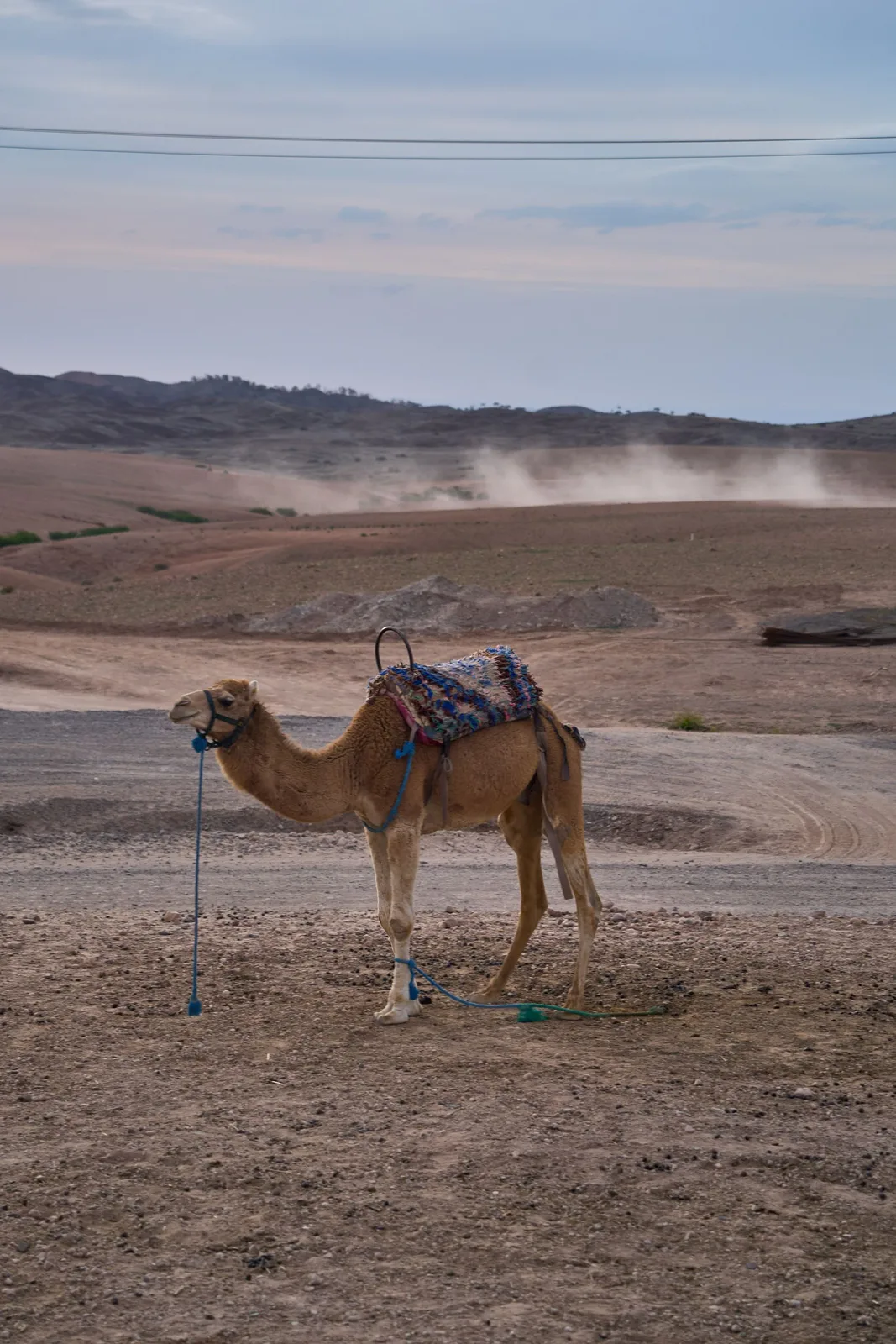
Forty-five minutes south-west, the Agafay is a desert of stone and pale hills, not sand — the dune-sea photographs belong to Merzouga, a day’s drive further on. What Agafay does brilliantly is the evening: a camel ride or quad run at golden hour, then dinner in a camp as the lights come on and, in winter, snow standing on the Atlas behind the fire.
About 45 minutes by road · Best at sunset · Stone desert, not sand dunes
October.The heat breaks and the city exhalesthe start of the golden window, days in the high 20s, terraces full again.
November to February.The clear-air months: days around 20 °C, cold nights, snow-covered Atlas over the city in the morning. Pack a real jacket; riad courtyards are unheated.
March.Spring in full: orange blossom on the air, warm days, the last of the snows on the peaks. With October and November, the best all-round month.
April and May.Warming through the 20s into the 30s, gardens at their best, summer crowds not yet arrived.
June to September.The furnace: midday past 40 °C, the city rearranged around dawn, dusk and shade. Prices drop, and the mountains become the day trip of choice.
Ramadan.The holy month moves about eleven days earlier each yearin 2027 it begins in early February. Days run quiet, cafés close until sunset, sights keep shorter hours, and the evenings after the fast breaks are the most alive of the year.
Costs sit well below Western Europe once you are past the airport taxi rank: a metered petit taxi about 10 MAD; dinner at a square stall 60-120 MAD; monuments between 50 and 170 MAD a ticket, Majorelle at the top of the range; a good mid-range riad double about 900-2,000 MAD a night in season, before the 16-30 MAD per person per night of local taxes. The money discipline that matters is small notes: taxis, stalls, porters and tips all run on cash in denominations the other party can make change for.
If a delayed or cancelled flight wrecks the plan, keep the paperwork: for EU261-covered disruption, AirHelp handles the compensation claim on a no-win, no-fee basis.
What to pack
Tap items to check them off — your list is saved on this device.
Marrakech packing turns on three things: sun fierce enough to matter in January, lanes that punish the wrong shoes, and evenings that turn cold the moment the sun drops. Pack these, then dress a notch more modestly than you would in southern Europe: shoulders and knees covered in the medina is comfort and courtesy at once.
Broken-in walking shoes — the medina is uneven stone end to end, and the Ourika waterfalls add a rocky scramble. Shop walking shoes on Amazon →
Sunscreen — strong in every month, and altitude makes Atlas days burn faster. Shop sunscreen on Amazon →
Reusable water bottle — bottled water is the rule; fill from the large bottles every riad keeps. Shop water bottle on Amazon →
Type C and E adapter — Morocco’s round two-pin sockets; bring one multi-port unit. Shop adapter on Amazon →
Small daypack — large bags are refused at the monuments, so travel light through the lanes. Shop daypack on Amazon →
A light rain jacket — winter rain falls between November and February, and desert evenings turn cold. Shop rain jacket on Amazon →
As an Amazon Associate I earn from qualifying purchases.
Language, visa and entry
✓ Visa-free entry for eligible passport holders
Darija, the Moroccan dialect of Arabic, is what you will hear in the lanes; French opens most other doors, and English is now common across the tourist economy. A greeting offered in Darija changes the temperature of every encounter in the souks.
SalamhelloShukranthank youAfakpleaseLa, shukranno thank you
Citizens of the United States, Canada, the United Kingdom and EU countries enter Morocco visa-free for up to 90 days. Your passport needs at least six months left — airlines enforce this. On arrival, immigration stamps your passport with an entry number: photograph it, because riads and hotels must register every guest with the police and will ask for the number at check-in. Expect shorter hours during Ramadan, alcohol sold only in supermarkets, licensed hotels and bars, and modest dress in the medina as everyday courtesy.
Safety and health
Marrakech is intense rather than dangerous: the risks are heat, hassle and small scams rather than violence, and they all yield to the same calm, amused firmness the city itself runs on.
Leave the drone at home
Drones are banned in Morocco. Bring one without prior authorisation — permission tourists effectively cannot get — and customs will take it: declared drones are held until you leave, with storage fees, and undeclared ones are confiscated for good, with a fine possible on top.
Agree every fare first
The fixed board at the airport rank and the meter in a petit taxi are your two anchors — use them. Walk past the touts inside the terminal, insist on the compteur in town, and close the door on any driver who refuses it.
Respect the sun and the water rule
Drink bottled water, refill at your riad, and treat midday from June to September as indoor time: 40 °C heat plus medina distances catches out fit travellers every week. Sightsee early and siesta like a local.
Play the souks smiling
The standard plays are harmless if you spot them: the friendly stranger for whom the tanneries are closing today, the henna cone already touching your hand before a price is named, the guide who was simply passing. Decline with the fourth phrase in the language section, and agree the price of anything before it starts.
One wider note: cannabis is grown in the Rif and offered quietly in the medina, but it is illegal in Morocco and the penalties are severe — decline and move on. Public drunkenness is likewise an offence; the licensed bars and hotel terraces are where drinking happens. For anything medical, dial 15 for an ambulance or 19 for the police; the private clinics in Guéliz are the usual first call for visitors, and pharmacies are marked with a green crescent and are everywhere.
The facts that matter after you land in Marrakech.
Verified against ALSA, the airport taxi board, the Jardin Majorelle foundation and Moroccan tax schedules, October 2026.
Bus 19 runs from the airport to Jemaa el-Fnaa every 20 to 30 minutes for 30 dirhams one-way or 50 return, taking 20 to 30 minutes.
Taxis use a posted fare board at the official rank: about 70 dirhams by day to the medina, roughly half as much again at night, and 100 to 150 for the Palmeraie. Ignore touts inside the terminal quoting 200-plus.
Yes — petit taxis are metered by law. Flagfall is 1.70 dirhams by day and 2.50 after 20:00, with a 7-dirham minimum; the medina to Guéliz ride is about 10 dirhams on the meter.
Say compteur and insist, or agree the fare before the door closes. A driver who refuses the meter is a driver to walk away from — the next taxi is seconds behind.
Two levies stack: the national accommodation tax runs from 1 dirham a night in the hostel band to 15 in luxury properties, and Marrakech adds its own 15-dirham city tax on top.
Expect roughly 16 to 30 dirhams per person per night, collected in cash by the property; children under 12 are exempt. Riads collect it at check-in or check-out — keep small notes ready.
The garden alone is 170 dirhams, 230 with the Berber Museum, the Yves Saint Laurent Museum is 140 (closed Wednesdays), and all three together are 330.
Tickets are online-only, timed, and sell out days ahead in season — this is the one Marrakech sight to book before you fly. The Bahia Palace is 100 dirhams, the Saadian Tombs 100, Ben Youssef Madrasa 50 and Le Jardin Secret 100 plus 40 for its tower.
No. Drones are banned from import without prior authorisation, which is effectively unavailable to tourists.
Declare one and it is held at the airport until you leave, with storage fees; bring one undeclared and it is confiscated permanently, with a possible fine. Leave the drone at home — the medina photographs beautifully from its rooftops anyway.
US, Canadian, UK and EU passport holders enter visa-free for 90 days. Your passport is stamped on arrival.
Note the stamp number: your riad or hotel registers it with the police, and officials may ask for it. You may also be asked for the address of your first night — have it on your phone.
Two taxes stack to roughly 16-30 dirhams per person per night, paid in cash; tap water is not recommended — drink bottled; plugs are type C and E at 220V; police 19, ambulance and fire 15.
Marrakech, Saved for After You Land
Landing soon? Get the printable PDF — the essentials from this guide, formatted for your phone:
The airport transport cheat sheet, with ticket links
Our 3 restaurant picks, with maps
The packing checklist
One email with your Marrakech PDF (guide version: Oct 2026). Fare changes and new guides after that. No spam, unsubscribe anytime.
Sources and last verified
Marrakech facts checked October 2026 against ALSA Marrakech for the airport bus 19, its 30 MAD fare and city bus prices; Marrakech Menara Airport and the posted airport taxi tariff board for fixed fares; the Fondation Jardin Majorelle for garden, museum prices and online-only ticketing; the venue listings for the Bahia Palace, Saadian Tombs and Ben Youssef Madrasa prices; Le Jardin Secret for its prices; Moroccan tourist-tax summaries and Marrakech’s 15 MAD city tax; the Moroccan civil aviation authority and customs guidance for the drone ban; Bank Al-Maghrib reference rates via OFX; and Moroccan government entry guidance for visa-free stays.
Affiliate disclosure: hotel names, transfers, experiences, and products linked in this guide may earn After You Land a commission at no extra cost to you. Prices and times were checked in Oct 2026 and change often — confirm before you book.