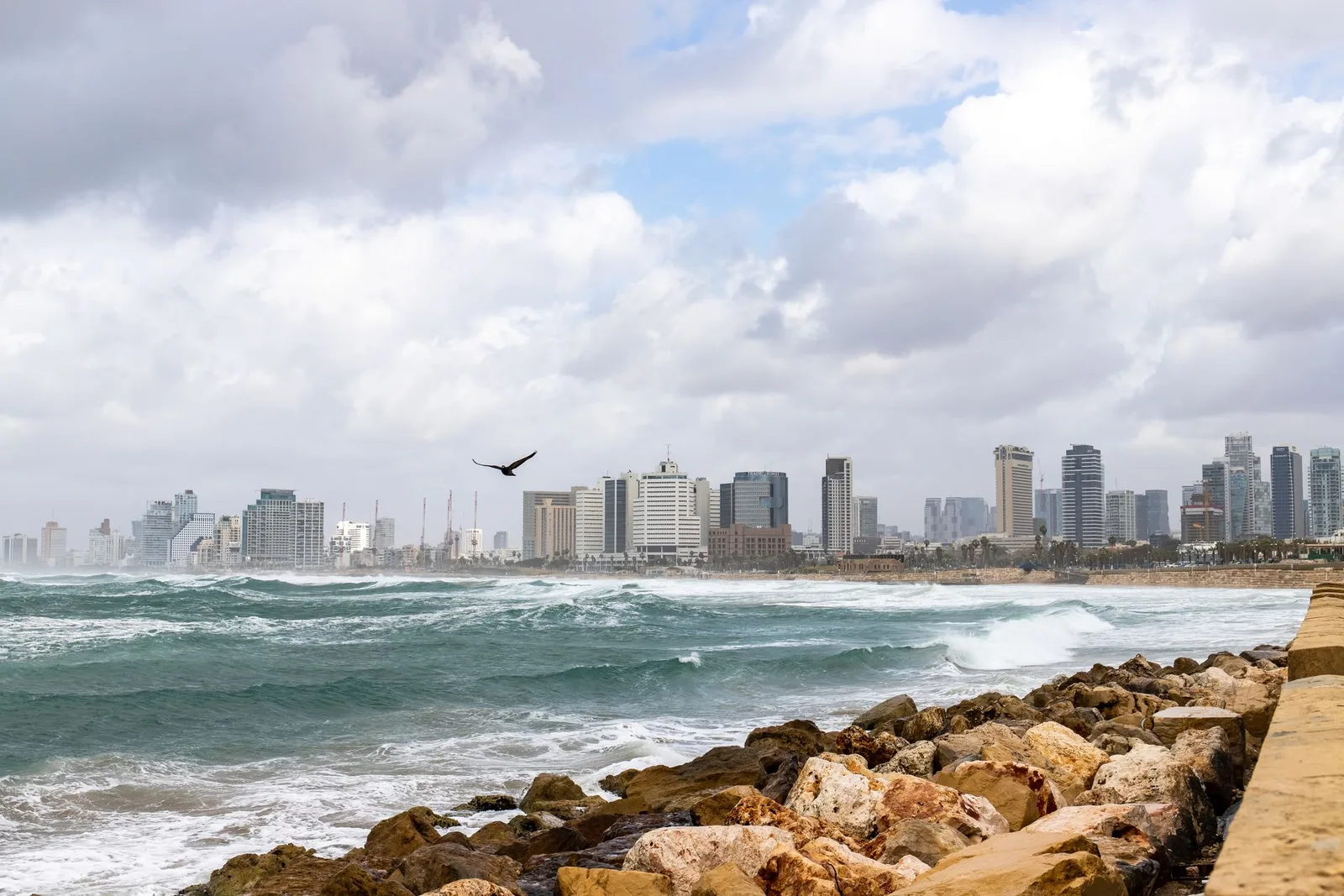
Tel Aviv: your first hour after landing
You have just landed in Tel Aviv — a beach city that stays up late: Bauhaus streets, market lanes, Jaffa's old port, beaches and museums, hummus at its source — plus the airport train, the Shabbat gap, Jerusalem by fast train, Masada at sunrise and a float in the Dead Sea.
In this guide
You just landed in Tel Aviv. The train from under Terminal 3 reaches the centre in about 20 minutes for under ₪18 — unless you land on a Friday afternoon, when Shabbat stops the trains until Saturday night and the 24-hour taxi rank is the way in. Get the ETA-IL done before you fly, Sort your Airalo eSIM before you land, and line up Jerusalem or Masada as a day trip — both run daily from the city.
Quick facts
Airport
Getting in
Currency
Languages
Time zone
Emergency
Plugs
Tap water
Tourist tax
Best months
Map
Stays, sights, and landmarks in Tel Aviv — live hotel prices plus the key places from this guide.
Settle in
Photograph your entry slip the moment you get it
The B2 card is proof of legal entry and the key to VAT-free hotel rates — keep the original safe.
Check the day before you choose the ride
Weekday: the train. Friday afternoon or Saturday: no trains or buses — the official taxi rank, a sherut van or a pre-booked transfer.
Pick the right Tel Aviv station
HaHagana: the south, Florentin and Jaffa; HaShalom: Sarona and the Azrieli junction; Savidor Central: the centre-north and Old North; University: Ramat Aviv and the museums.
Set up payment for transport at the airport station
Buses take no cash: load an anonymous Rav-Kav card at the station, or pay by QR in Moovit, before your first ride.
Eat a first proper meal, and mind Friday
Take a market lunch or dinner from the list below — but on Friday eat before the early closings; the best rooms fill on Thursday and Friday nights.
Tel Aviv-Yafo runs north to south along the sea: Jaffa's ancient port in the south, the beachfront hotel strip, the White City centre, then the Old North and the old port. The four railway stations line the Ayalon corridor on the centre's eastern edge, so most arrivals end with a short bus, taxi or walk.
The working week runs Sunday to Friday; from Friday afternoon to Saturday evening, Shabbat, trains and buses stop, markets and many shops close. Dinner rarely starts before 20:00.
Getting around

Times are airport to city centre.
Train (Israel Railways)
From under Terminal 3 to HaHagana, HaShalom or Savidor Central; every 20-30 minutes by day, hourly at night; no service Friday afternoon to Saturday evening, or on most holidays
Bus 445
Hourly from the Terminal 3 transport level, down the seafront to the Carmelit terminal by Jaffa; budget pick for beachfront hotels, including at night; no Shabbat service
Official airport taxi (Gett)
Official rank outside arrivals, run through Gett — order at a kiosk or in the app, take your ride code to the queue; metered; around the clock, Shabbat included
Pre-booked private transfer
Driver waiting in arrivals, price fixed at booking — the reliable option for Shabbat arrivals, late nights, families and heavy luggage
Tel Aviv is flat: beachfront, centre and Jaffa string along five kilometres of promenade. A Rav-Kav card or the Moovit app covers buses, light rail and trains; a single city ride costs ₪8 including 90 minutes of transfers. The airport rides are these:
The Red Line runs from Petah Tikva through the centre — underground along Yehuda Halevi and Allenby — out to Bat Yam (opened 2023). Validate before boarding, including at street-level stops; it stops for Shabbat. Gett is the standard taxi app — there is no Uber in Israel.
One Shabbat exception: the free Naim Busofash network, funded by Tel Aviv and neighbouring cities, runs on Friday evenings and through Saturday — free because charging fares on Shabbat is not permitted; one line passes Terminal 1 on a limited timetable. MetroFun bike-share docks across the centre, and the promenade cycle path runs the beaches' length — park scooters in marked bays only, or the city removes them.
Driving in the city is a poor idea: traffic, one-way systems, scarce, expensive parking. Rent only for days beyond the city — the Dead Sea, the Galilee, the desert; AutoEurope compares desks.
Welcome Pickups puts a driver in arrivals at a price fixed when you book — worth it after a red-eye.
In the city
Much of Tel Aviv costs nothing: the beaches, the Bauhaus streets, the markets, Jaffa and Neve Tzedek are all free, and the paid sights — three museums — cluster at ₪54-58 a ticket.
- The beaches and the promenade — Fourteen kilometres of free sand, Jaffa to the old port, along the Tayelet. Swim only at lifeguarded beaches and read the flags: white permitted, red caution, black no entry, purple jellyfish. Lifeguard season runs roughly April to October; outside it the sea is unsupervised.
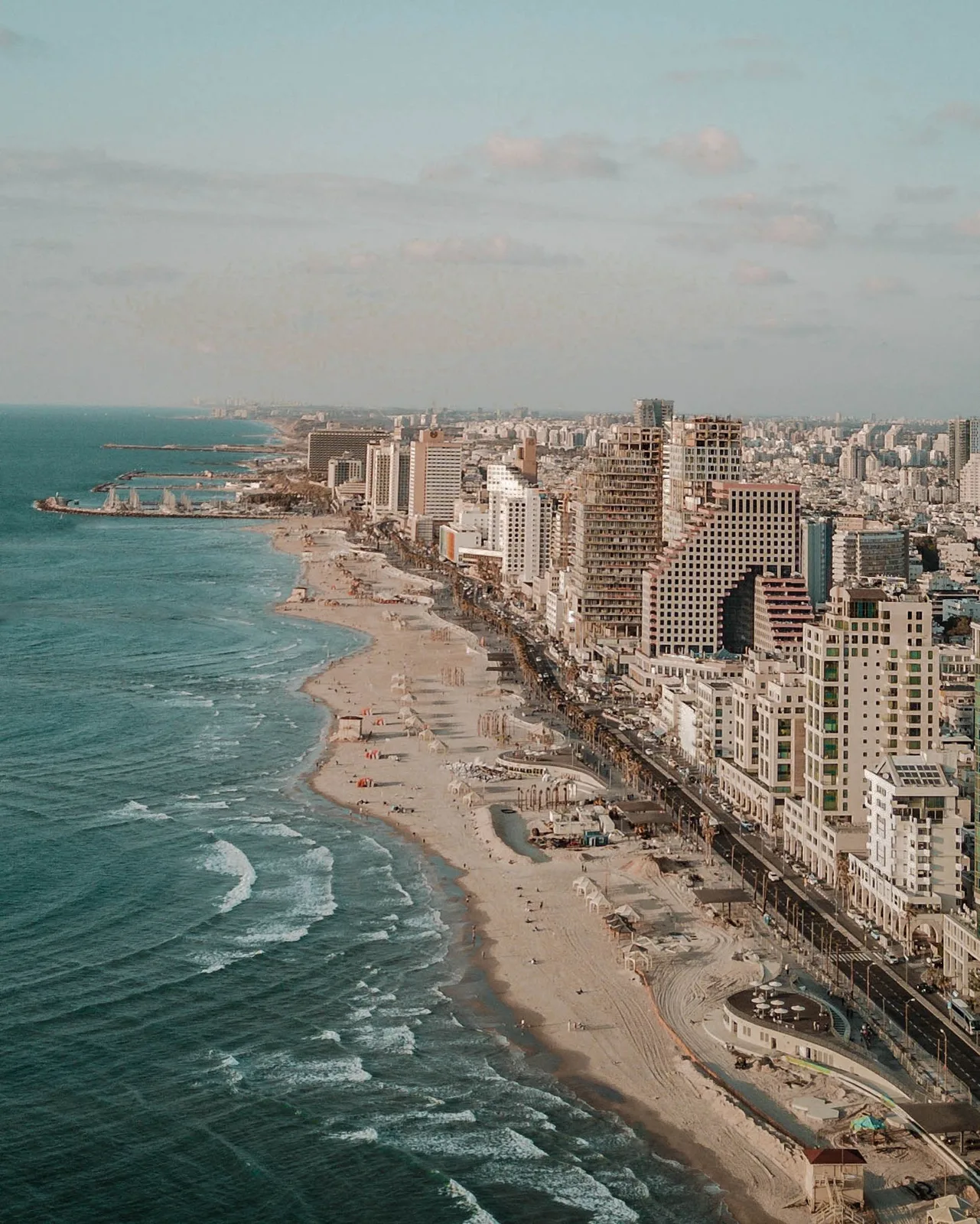
- Jaffa — The ancient port at the southern end, working for some four thousand years: clock tower, old-town lanes, St Peter's Church, the flea market, and the port at dusk. Guided walks run daily on GetYourGuide.
- The White City and Rothschild Boulevard — More than four thousand Bauhaus and International Style buildings from the 1930s — a UNESCO World Heritage site, free to walk. The Bauhaus Center at 77 Dizengoff Street runs exhibitions and tours. Independence Hall at number 16, where the state was declared in 1948, is closed for renovation, with no confirmed reopening date.
- Carmel Market and Nachalat Binyamin — The great food market, from Allenby Street towards the sea: produce, spice sacks, bakeries, juice stalls; the Yemenite Quarter behind is the calm lunch district. Mornings best; Friday biggest, winding down early; Saturday closed. The Nachalat Binyamin crafts fair sets up alongside on Tuesdays and Fridays.
- Levinsky Market — Florentin's spice and deli quarter: dried fruit, nuts, olives, cheeses and Balkan and Persian delicatessens trading since the 1920s. Weekday mornings are the sweet spot; pair it with Florentin's street art.
- Neve Tzedek — The first Jewish neighbourhood built outside Jaffa, from 1887: village houses, boutiques and wine bars along Shabazi Street, and the Suzanne Dellal Centre at its heart. Free; best late afternoon.
- Tel Aviv Museum of Art — The art museum on Shaul HaMelech Boulevard: Israeli art, European masters, temporary exhibitions, the twisting Herta and Paul Amir wing. Entry ₪55, under-18s free; closed Sundays and Mondays, late Tuesdays and Thursdays; big exhibitions are timed entry — book on the museum's site.
- ANU — Museum of the Jewish People — On the Tel Aviv University campus in Ramat Aviv: Jewish life across four thousand years and every continent, rebuilt from the old Beit Hatfutsot. Entry ₪54; allow half a day; closes early on Fridays.
- Eretz Israel Museum — In Ramat Aviv, the MUZA spreads across a garden site around an ancient mound: archaeology, crafts and folklore pavilions and a planetarium. Entry ₪58, under-18s free.
- Sarona — The old Templar colony by the Azrieli towers, restored into gardens, boutiques and a covered food market of some ninety stalls. Free to wander; tunnels and a visitors centre sit underneath.
For a full-day rental or a guided ride out to the Yarkon park and the northern beaches, BikesBooking lists the city's bike tours and rental shops.
Compare Klook bundles against gate prices before you buy: with so much of the city free, a pass has to work hard to pay for itself.
After you land in Tel Aviv: Bookable experiences
Where to stay your first nights
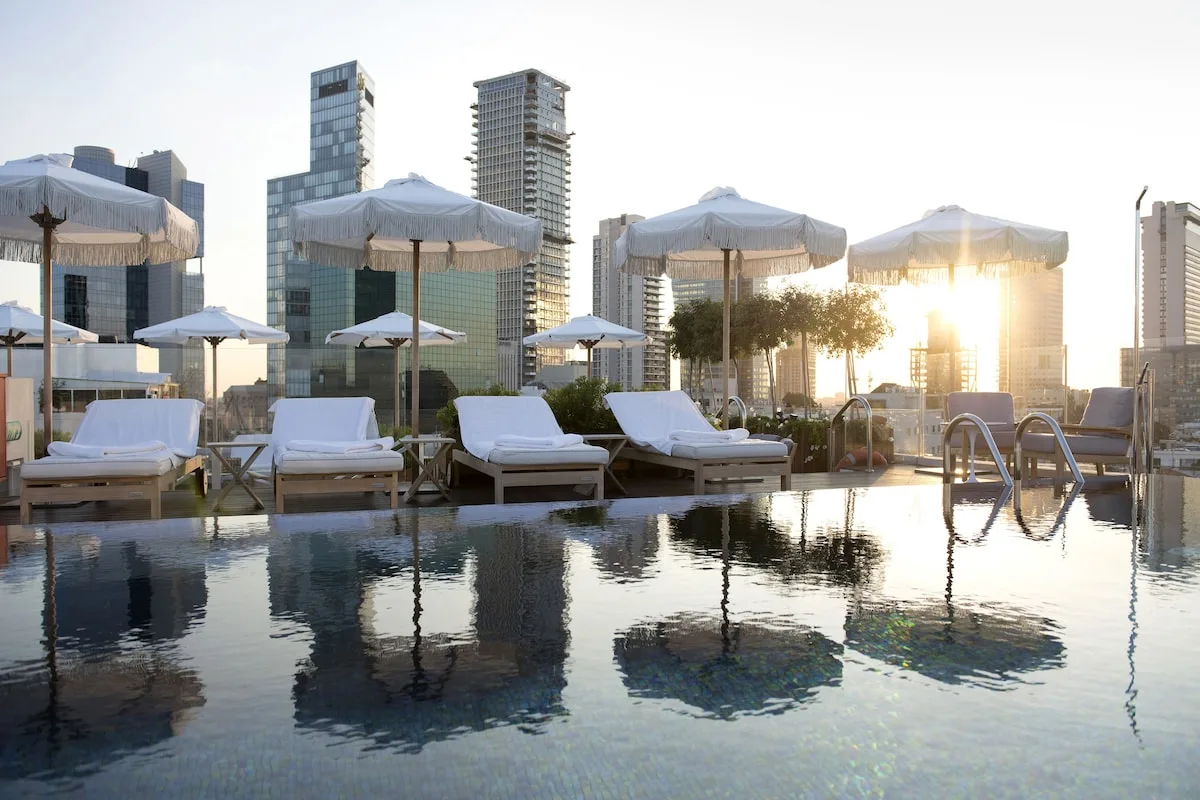
The Norman.
Best for White City luxuryTwo restored 1920s buildings at 23-25 Nachmani Street, a step from Rothschild Boulevard: fifty rooms and suites, a rooftop infinity pool, the Library Bar, a Mediterranean brasserie and the Dinings Japanese restaurant on the roof.

Hotel Montefiore.
Best for boutique Levinsky styleA twelve-room boutique in an Eclectic-style mansion at 36 Montefiore Street, in the White City: quiet and personal, with a Vietnamese-French brasserie downstairs that locals book in its own right.
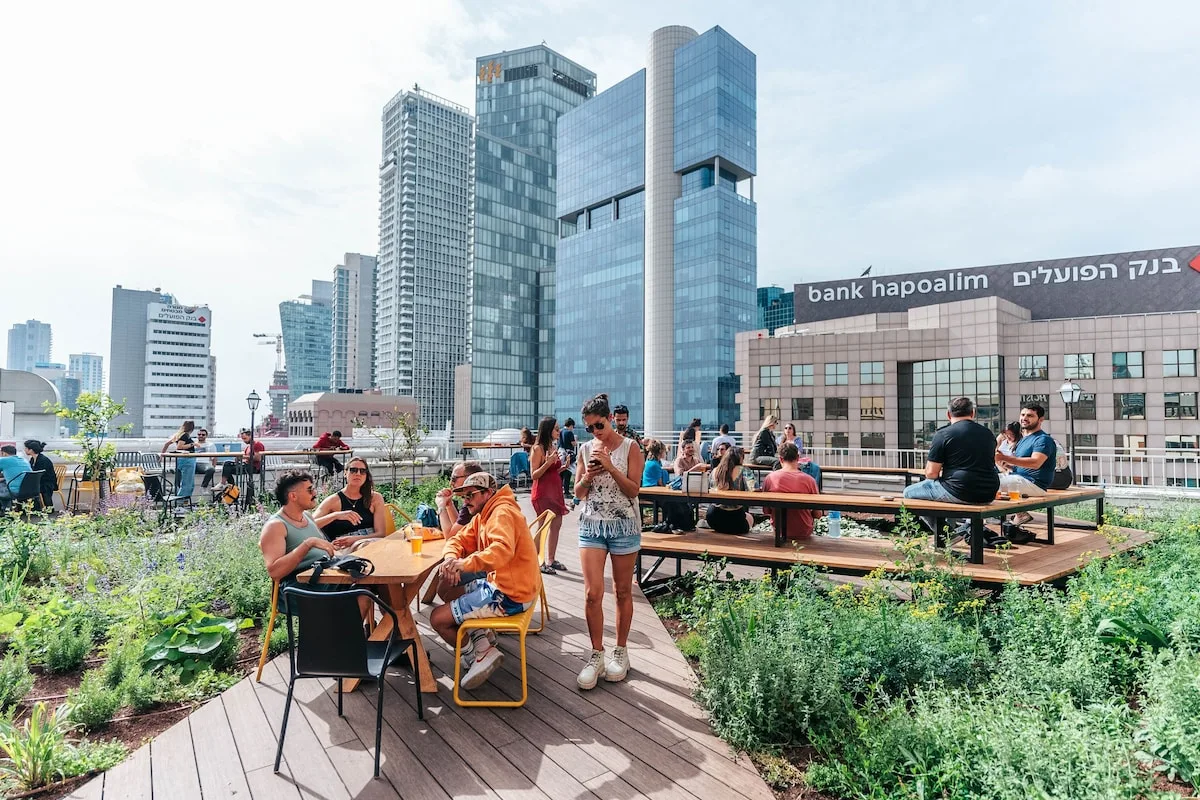
Abraham Tel Aviv.
Best for Levontin nightlife on a budgetThe city's big social hostel at 8 HaRakevet Street, on the edge of Florentin by the Levinsky Market: dorms and private rooms, a large lounge and bar, a communal kitchen, and the tours desk backpackers plan their Masada and Jerusalem days from. Book the private rooms early.
Base a first visit in the walkable core: the beachfront strip puts the sea outside the door; the White City around Rothschild Boulevard is the architectural heart; Jaffa trades centrality for atmosphere. Passport and B2 slip at check-in take the 18% VAT off the room rate; no city tax on top.
Choose Jaffa for a return visit; the northern beachfront around the old port suits a family stay built around the sand.
Where to eat first

Tel Aviv eats brilliantly at every level: a market lunch, a chef's counter and a famous falafel stand, all in the centre.
Port Said — the city's favourite bar-restaurant.
Map → At 5 Har Sinai Street, behind the Great Synagogue on Allenby; open daily from 12:00, Friday service ends at 17:00, Saturday reopens at midday. Eyal Shani's record-library bar-restaurant serves sharing plates — minute steak, ratatouille, Jericho beans, everything with tehina. No reservations; expect a queue.
North Abraxas — the chef's counter.
Map → At 40 Lilienblum Street, lunch and dinner through the week. Shani's original: dishes land on parchment paper at the counter around the open kitchen, menus change with the market, and the whole roasted cauliflower that travelled the world started here. Book ahead.
HaKosem — the falafel and sabich counter.
Map → At 1 Shlomo HaMelech Street, on the King George corner; Sunday to Thursday 10:00-22:00, Friday until 15:30, closed Saturday. What many call the city's best falafel — green, herbed, fried to order — plus a sabich loaded with eggplant and amba.
Day trips and more
Trains stop from Friday afternoon to Saturday evening, and Jerusalem closes far more on Shabbat: run the trips Sunday to Thursday, or take a tour or a car on Saturday. Organised versions of all three are compared on Tiqets.

Jerusalem
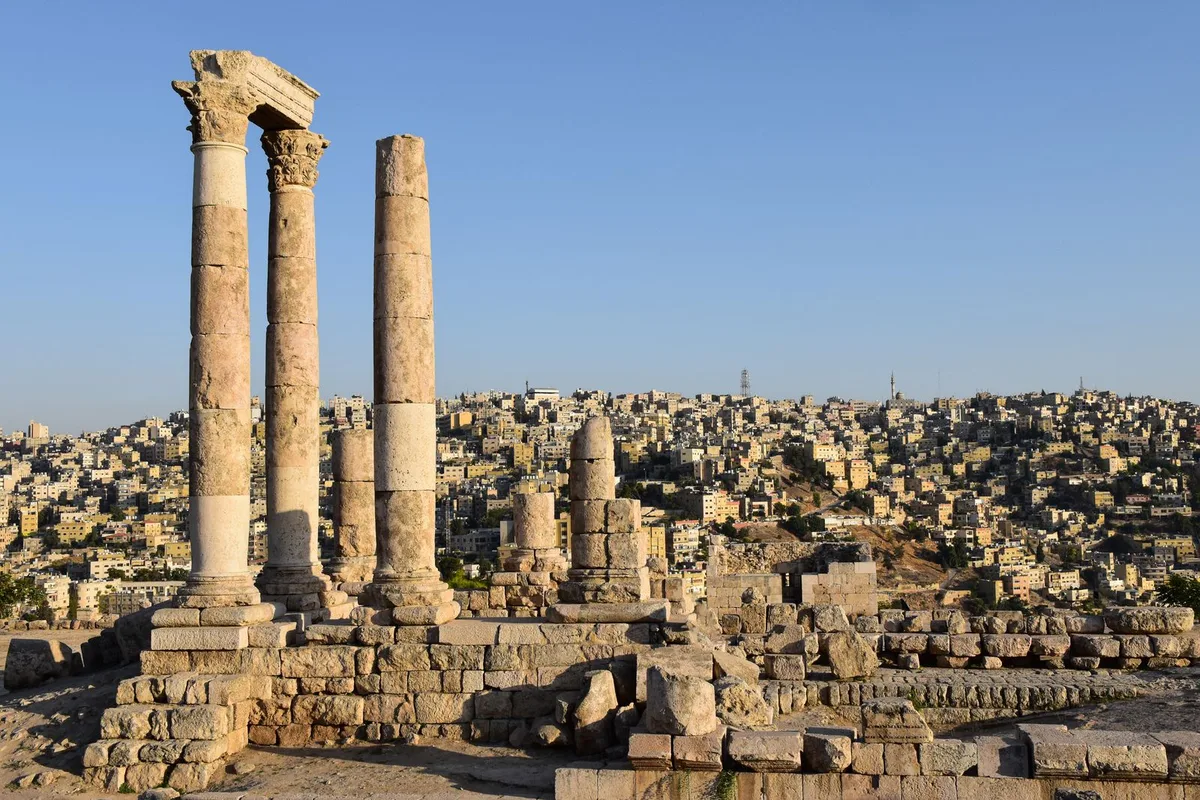
Fast train from HaHagana or Savidor Central to Yitzhak Navon in about 35 to 40 minutes, around ₪23.50; the light rail outside drops you by the Old City walls: four quarters, the Western Wall, the Church of the Holy Sepulchre, the Tower of David and the Mahane Yehuda market for lunch. Go on a weekday — on Shabbat transport stops and much of the Jewish Quarter closes.
Check availability →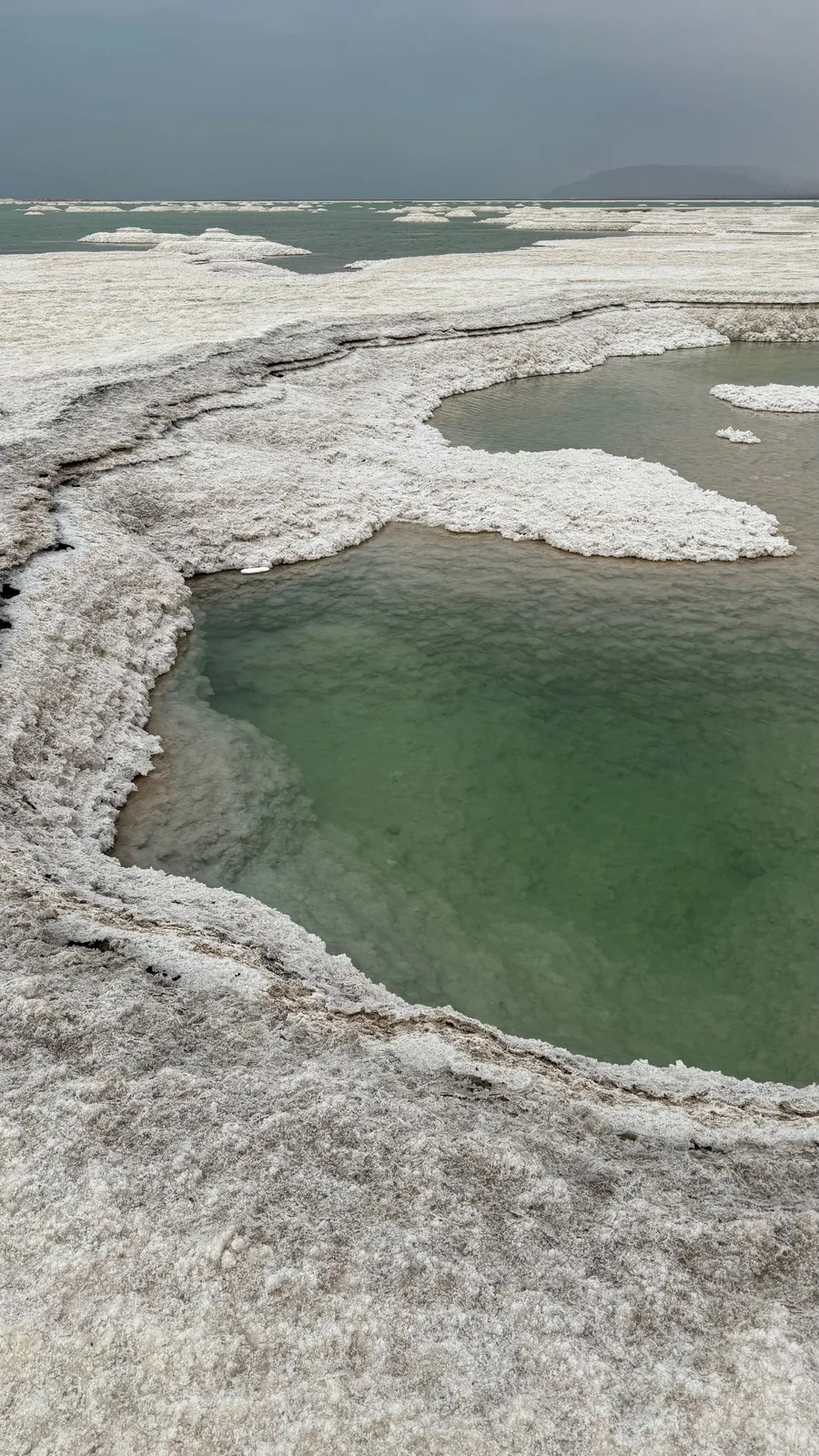
Masada and the Dead Sea
Herod's desert fortress above the lowest shore on earth. Leave before dawn to climb the Snake Path for sunrise, about 45 minutes, or ride the cable car from 08:00: entry ₪37, cable car ₪54 return. Descend to Ein Bokek: free public beach with showers and shade. No train; go by tour or rental car, via Jerusalem.
Check availability →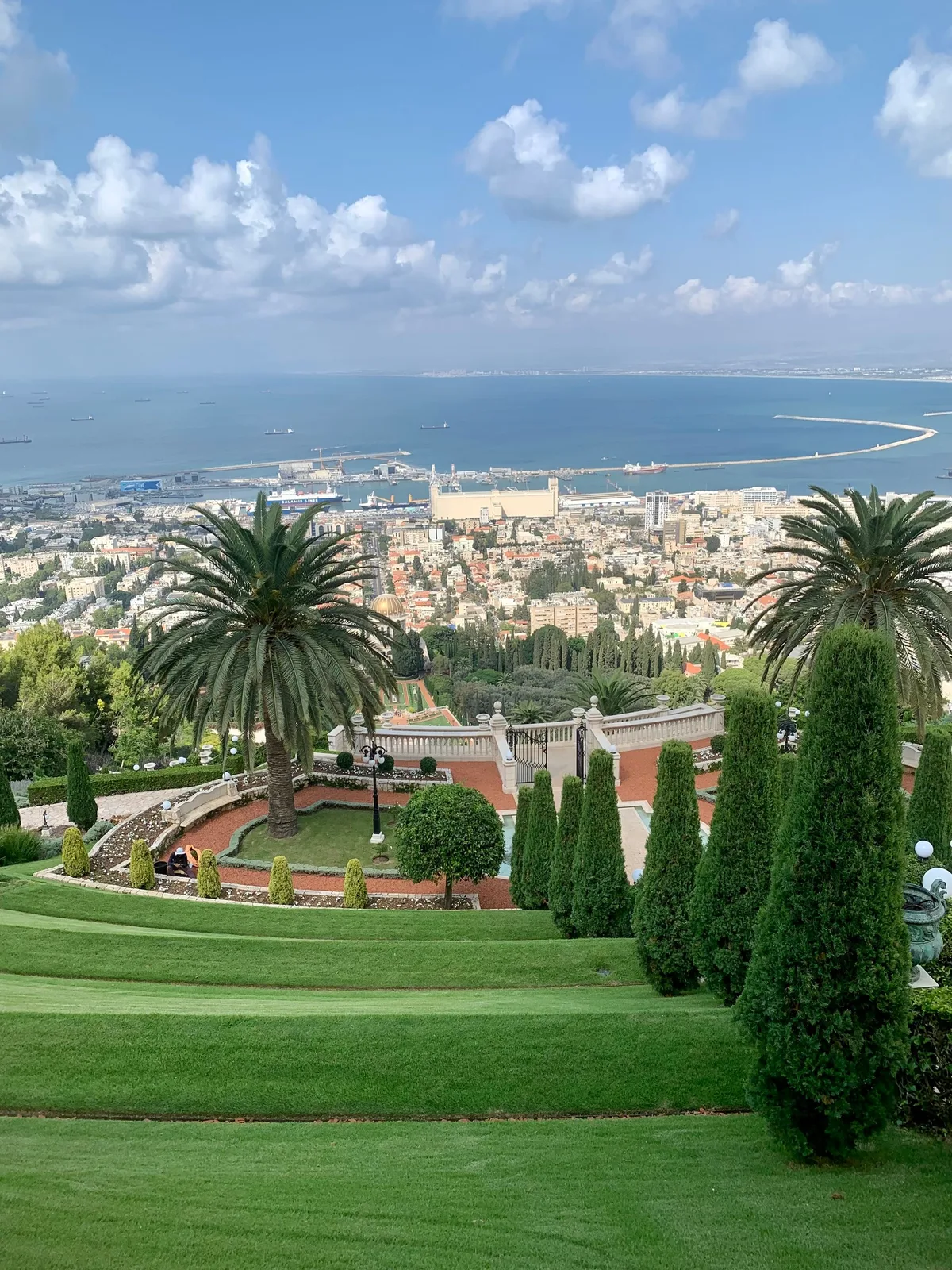
Haifa and Akko
Trains run up the coast to Haifa in about an hour, ₪30.50. The Baháʼí Gardens step down Mount Carmel in nineteen terraces around the golden-domed Shrine of the Báb: entry free; the guided tour down runs Tuesday to Sunday by advance reservation on the official site, shoulders and knees covered. Twenty minutes north, Akko's Crusader Knights' Halls and Templars' Tunnel — a ₪49 combined ticket covers the halls, the tunnel and the Turkish bath museum.
Check availability →When to go and what it costs

A good mid-range double runs roughly ₪600-1,100 a night in season before the tourist VAT exemption.
Keep small-note cash for market stalls, sherut vans, beach kiosks and tips. Restaurant tipping runs about 10 percent, usually left in cash.
Keep every booking confirmation and receipt: for EU261-covered disruption, AirHelp handles the compensation claim on a no-win, no-fee basis.
What to pack
Tap items to check them off — your list is saved on this device.
Pack for the sun, the sea and the desert day trip; the city itself is casual. Add a shoulder-and-knee layer for Jerusalem's holy places and the Baháʼí Gardens.
- Comfortable walking shoes Shop walking shoes on Amazon →
- Sunscreen Shop sunscreen on Amazon →
- Reusable water bottle Shop water bottle on Amazon →
- Phone charger and power bank Shop power bank on Amazon →
- Daypack Shop daypack on Amazon →
- Sunglasses Shop sunglasses on Amazon →
- Light rain jacket Shop rain jacket on Amazon →
As an Amazon Associate I earn from qualifying purchases.
Language, visa and entry
! Check visa requirements before you fly

Hebrew is what you hear everywhere, Arabic runs alongside across Jaffa, and English is understood so widely that language is rarely a problem; signs and station displays rotate through all three.
Sort the ETA-IL before you fly: Israel's electronic travel authorisation, mandatory since January 2025 for visa-exempt travellers. Apply only on the official Population and Immigration Authority portal at israel-entry.piba.gov.il — copycat sites charge many times the real fee. It costs ₪25; apply at least 72 hours ahead; valid two years or until your passport expires, for multiple trips, stays up to 90 days a visit. Airlines check it before boarding, and it does not guarantee entry.
At passport control your passport is not stamped; you receive a printed B2 entry slip with your photo and dates — keep it the whole trip. Hotels ask for it with your passport for the VAT exemption. Arrival questioning can be thorough — where you are staying, what you plan to see; answer plainly and keep your hotel details to hand.
Build in three hours at Ben Gurion for departure: the security interview and screening before check-in are the most detailed most travellers ever meet; bags may be opened, electronics checked.
Safety and health
As of October 2026 the United States lists Israel at Level 3, reconsider travel, and its embassy in Jerusalem issues security alerts as conditions shift. Read your own government's current advice before you book and again before you fly.
Know the alert system
Download the Home Front Command app before you arrive; it pushes real-time alerts for your exact area. Find your building's protected space — the mamad (reinforced room) in most apartments, the stairwell in older ones. If a siren sounds: get in, close the door, stay ten minutes.
Build disruption into the plan
Flights can be delayed, rerouted or cancelled when the security picture changes. Keep the airline app on your phone, check departures before travelling to the airport, buy insurance that explicitly covers disruption, and keep the first and last nights flexible.
Guard your things at the beach
The everyday crime here is the bag lifted from the sand while its owner swims. Swim in turns, leave valuables at the hotel, use the lockers on the busier beaches, and keep documents — passport, entry slip, cards — photographed on your phone, originals in the room safe.
Respect heat, sea and salt
Swim only at lifeguarded beaches and obey the flags. At the Dead Sea, take dips of 10 to 15 minutes, keep your face out of the water, skip shaving that morning, use the official Ein Bokek beaches, never the sinkhole shore further north, and drink water constantly. In hot months, Masada is a dawn climb only.
Ichilov Hospital sits in the city centre; pharmacies are everywhere; the tap water is safe. Buy insurance that covers medical care and trip disruption.
Related destinations
If you liked Tel Aviv, try these next:






Frequently asked questions
The facts that matter after you land in Tel Aviv.
Verified against Israel Railways, the official ETA-IL portal, the Israel Nature and Parks Authority and the Baháʼí Gardens, October 2026.
Yes, if you travel on a visa-exempt passport. The ETA-IL is mandatory since 1 January 2025: it costs ₪25, is valid for two years or until your passport expires, allows multiple entries and stays of up to 90 days.
Apply at least 72 hours before you fly, and only on the official portal, israel-entry.piba.gov.il — copycat sites charge multiples of the fee. Airlines check for it before boarding.
The train from the station under Terminal 3 takes about 12 minutes to HaHagana and 20 to 25 to Savidor Central, costing ₪11.50 to ₪17.50 depending on the station.
The catch is Shabbat: no trains or state buses run from Friday afternoon to Saturday evening. The official taxi rank, now run through Gett, works 24/7 at about ₪150 to ₪230 to the centre, and bus 445 (₪8 to ₪14) covers the seafront at night outside Shabbat.
State trains and buses stop from Friday afternoon until Saturday evening, and many shops and most of Jerusalem shuts with them.
Tel Aviv pushes back: the free Naim Busofash weekend network runs Friday evening and Saturday across the metro area, restaurants and beaches stay busy, and Amal sherut vans serve Haifa for about ₪120 a seat — but the Nesher shared vans to Jerusalem have been discontinued, so for Jerusalem on Shabbat it is a taxi or a pre-booked transfer. There is no sherut into Tel Aviv itself.
A single ride is ₪8, covering 90 minutes of transfers across buses and the Red Line light rail. Pay with a Rav-Kav card or the Moovit app — there is no cash on buses.
Jerusalem by fast train is about ₪23.50 and 35 to 40 minutes to Yitzhak Navon station; Haifa is about ₪30.50 and an hour.
Israel does not stamp passports. The B2 entry slip you are handed is your proof of legal entry — photograph it and keep the original.
It also saves you money: foreign tourists showing a passport plus the B2 slip pay no VAT on hotel stays, and VAT here is 18 percent. Lose the slip and the exemption gets difficult.
Masada entry is ₪37, and the cable car is ₪32 one-way or ₪54 return. The cable car starts at 08:00, so the famous sunrise ascent means walking the Snake Path with a torch.
The Baháʼí Gardens in Haifa are free, but the guided tour is now by advance reservation only, Tuesday to Sunday, booked on the official site. Cover shoulders to knees for the shrine level.
No city tourist tax; VAT is 18 percent but foreign tourists pay none of it on hotel stays with the B2 entry slip; tap water safe; plugs are Type H and C at 230V; police 100, ambulance 101, fire 102.
Tel Aviv, in your pocket
Landing soon? Get the printable PDF — ticket links, the airport transport cheat sheet, our 3 restaurant picks with maps, and the packing checklist. Everything above, formatted for your phone.
One email with your Tel Aviv PDF. Fare changes and new guides after that. No spam, unsubscribe anytime.
Sources and last verified
Tel Aviv facts checked October 2026 against Israel Railways for train fares and times; the Population and Immigration Authority's ETA-IL portal for the ₪25 fee, two-year validity and 90-day stays; the Israel Airports Authority and Gett for the airport taxi system; Tel Aviv-Yafo municipality for the ₪8 city fare, the Red Line and the free Naim Busofash weekend network; the Israel Tax Authority for the 18% VAT rate and tourist exemption on accommodation; the Tel Aviv Museum of Art, ANU Museum and Eretz Israel Museum for admission prices; the Israel Nature and Parks Authority for Masada entry and cable car prices; the Baháʼí World Centre for the reserved guided tour; the Old Acre Development Company for the Akko combined ticket; the US Department of State travel advisory for Israel, reissued August 2026, and US Embassy Jerusalem security alerts; and Xe for the shekel exchange rate.
Affiliate disclosure: hotel names, transfers, experiences, and products linked in this guide may earn After You Land a commission at no extra cost to you. Prices and times were checked in Oct 2026 and change often — confirm before you book.