
Cape Town: your first hour after landing
You have just landed in Cape Town — the city bowl between Table Mountain and the Atlantic: colour-washed Bo-Kaap houses, a working harbour and weather that changes by the hour. This guide covers the airport bus and the honest taxi bands, the cableway you should book online, the island you must book officially, penguins and passes and Winelands rows, and the Peninsula drive.
In this guide
You just landed in Cape Town. The MyCiTi airport bus runs to the Civic Centre for R90 on a myconnect card; an Uber to the City Bowl runs R250 to R400, and there is no airport train. Sort your Airalo eSIM before you land, and book Robben Island only through the official museum site — ferries sell out and ticket scams are common.
Quick facts
Airport
Getting in
Currency
Languages
Time zone
Emergency
Plugs
Tap water
Tourist tax
Best months
Map
Stays, sights, and landmarks in Cape Town — live hotel prices plus the key places from this guide.
Settle in
Set up your movement
Uber and Bolt move the city's visitors — install both; prices differ ride by ride. The myconnect card is sold at the airport kiosk.
Match the ride to the hour
The airport bus is calm and cheap by day; after dark, or with luggage, ride Uber, Bolt or the booked transfer door to door.
Book Robben Island now
The ferry sells out days ahead and sailings cancel in rough weather: book early, on the museum's own website, with days left to rebook. Plan the cableway the same way.
Give the mountain your first calm morning
The cableway closes in high wind and the tablecloth of cloud kills the view without warning: on a still, clear morning, drop everything and go up.
Do not plan around power cuts
Load shedding has not run since May 2025 — 500-plus consecutive days by October 2026. Hotels kept their generators and inverters anyway.
Eat a proper first Cape Town meal
A Kloof Street dinner, Kalk Bay fish and chips or a Sea Point sunset drink — pick one.
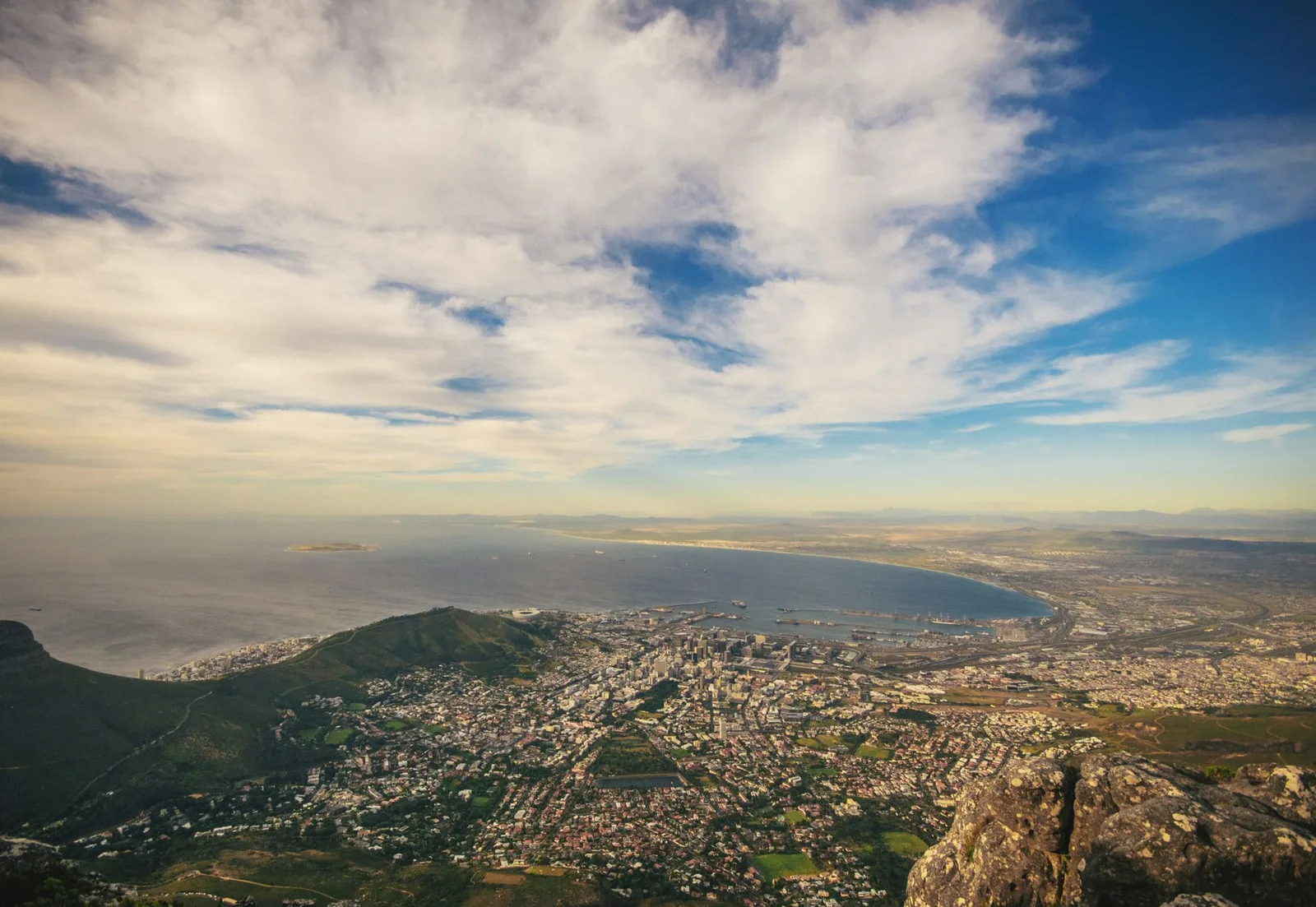
The City Bowl is the amphitheatre between Table Mountain and the harbour: Gardens and Tamboerskloof on its upper rim, Kloof Street's café strip, Long Street below, and the V&A Waterfront on the water's edge. Beyond the mountain run Sea Point, Clifton and Camps Bay along the Atlantic Seaboard.
Getting around

Times are airport to city centre.
MyCiTi A01 airport bus
Across from the terminal to Civic Centre station, every 20-30 minutes through the day; the card covers onward transfers
Uber or Bolt
Marked zones at the terminal; price fixed in the app before you ride. Surge pricing bites at flight banks
Metered taxi
Official rank only; agree the fare before the doors close — many taxis quote a flat rate, not the meter
Pre-booked private transfer
A driver in arrivals with your name board, price fixed at booking — calmest for late arrivals and heavy luggage
The centre, the Waterfront and Sea Point form a walkable triangle; MyCiTi buses cover the main corridors; Uber and Bolt fill every gap, including the cableway run. Drive on the left, and avoid the N2 and M3 at rush hour: 07:00-09:00 and from 16:00.
MyCiTi is the city's proper bus network: card-only. The myconnect card costs R40 at station kiosks; fares are distance-based, cheaper off-peak, and a one-day pass costs R130. Golden Arrow runs older commuter buses on cash. The white minibus taxis are the real mass transit — cheap and fast, but run on local knowledge alone. The Metrorail Southern Line runs to Simon's Town via Muizenberg, along False Bay.
Self-driving earns its keep on two days: the Peninsula loop and the Winelands. Book the car for those days, not the whole stay — AutoEurope compares the fleets — and tip the car guard R10-20 on your return.
Welcome Pickups removes the negotiation: a driver in arrivals at a price fixed when you book — worth it after a long-haul flight.
In the city
The mountain and the island are the two weather-dependent set pieces; around them sit the free pleasures — gardens, promenade, painted Bo-Kaap streets. Book the set pieces first.
- Table Mountain — The flat top: the whole bowl and Robben Island below. Cableway return R475 online, R530 at the office, Fast Track R1,200 (2026); hiking up Platteklip Gorge is free, about two hours. It closes in high wind — check the operating status that morning. Guided hikes are compared on GetYourGuide.
- Robben Island — Reached only by the museum's own ferry from the Nelson Mandela Gateway. Tours run 3.5 to 4 hours: R600 per international adult, R310 per child; sailings 09:00, 11:00 and 13:00, plus 15:00 from September to April. Book only on the official museum website — the full plan is in Day trips below.
- The Bo-Kaap — Cobbled streets of flat-roofed houses in saturated colours on Signal Hill — the Malay quarter, home to freed slaves and artisans from the 1760s. Free to wander; the Bo-Kaap Museum on Wale Street charges a small fee. A lived-in neighbourhood, not a film set: ask before photographing residents.
- The Company's Garden and the museum mile — Planted by the Dutch East India Company in 1652 to provision its ships: oak avenues, a rose garden, Parliament at its edge — all free. The Iziko South African Museum and the National Gallery stand on its avenues for modest fees.
- District Six Museum — A former Methodist church on Buitenkant Street: the story of the 60,000 people forcibly removed after 1966 — photographs, rescued street signs, a floor map annotated by the families; many guides are former residents. Open Monday to Saturday 09:00-16:00, closed Sundays, entry around R60. Guided heritage walks via Tiqets.
- Zeitz MOCAA — The world's largest museum of contemporary African art, in a converted Waterfront grain silo. R350 per adult; under-18s free; African citizens free Wednesdays 10:00-13:00 with ID or an African passport. Daily 10:00-18:00.
- Kirstenbosch — 528 hectares of fynbos, proteas and lawns on the mountain's eastern slopes: the Boomslang canopy walkway, picnic concerts on summer Sunday evenings. International adults R270 (2026), children 6-17 R40, card-only at the gates. Go on a weekday morning.
- The Sea Point Promenade — Four kilometres of seafront to Bantry Bay: runners at dawn, tidal pools, everyone at sunset. Free, flat and lit, with the Sea Point Pool at its centre. The Atlantic is bone-cold — swim in the pools.
- The V&A Waterfront — A working harbour first: fishing boats and seals, the Two Oceans Aquarium, harbour cruises, the food market and the Robben Island ferries in one walkable district. Free to wander; evenings are the city's safest and easiest.
The promenade and the Peninsula beg for two wheels — BikesBooking lists the city's bike tours and rental shops.
If the weather turns the week into a paid-attraction marathon, compare the passes on Klook against gate prices: the Company's Garden, the Bo-Kaap, the promenade and the Waterfront are all free.
After you land in Cape Town: Bookable experiences
Where to stay your first nights

Mount Nelson, A Belmond Hotel.
Best for Gardens luxuryThe pink Nellie of 76 Orange Street in Gardens, painted for peace in 1918: nine acres of gardens, two pools, a spa, the famous afternoon tea, and the new Amura restaurant, opened in December 2025 to instant awards.
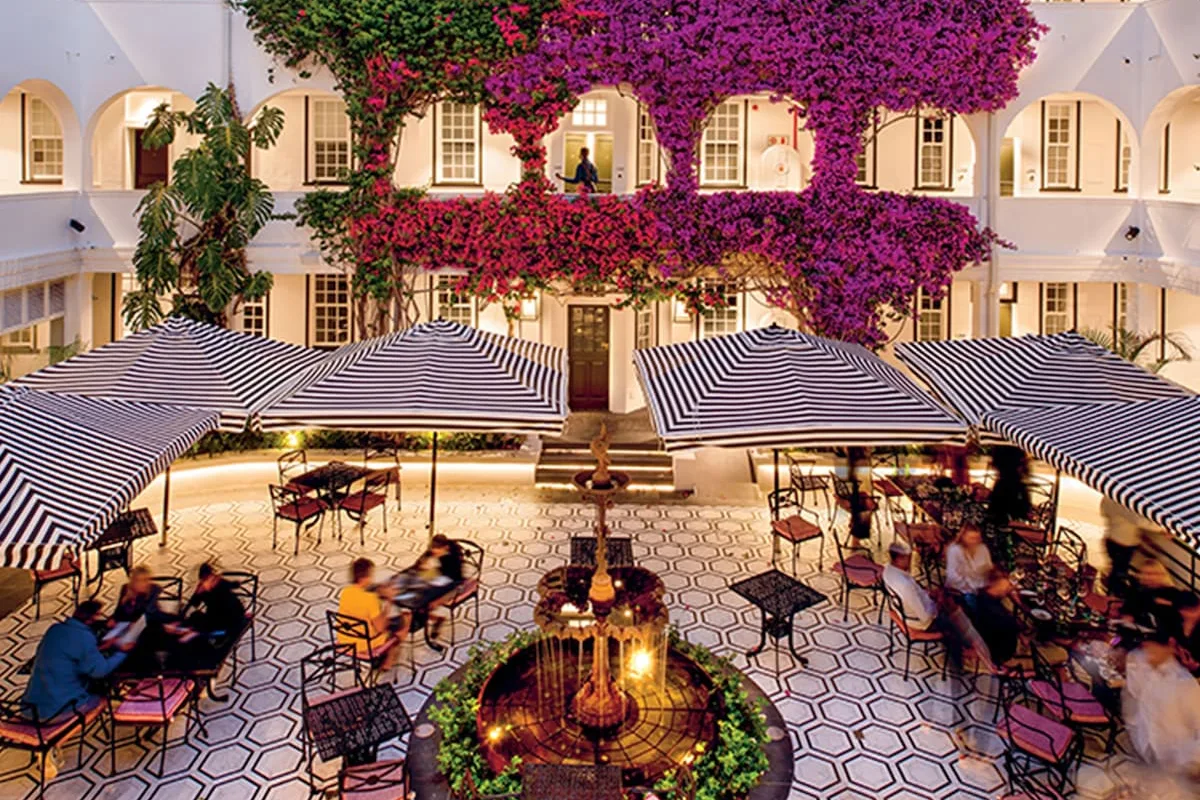
The Winchester Hotel.
Best for Sea PointA 1926 landmark at 221 Beach Road on the Sea Point promenade, kept by Newmark: classic interiors, a courtyard pool, famous breakfasts, and a free Waterfront shuttle.
Ashanti Lodge Gardens.
Best for the Gardens on a budgetCape Town's oldest hostel, 30-plus years in a Victorian mansion at 11 Hof Street in Gardens: dorms and private rooms, a pool and garden under the mountain, a café-bar, and a Garden Route travel desk. Dorm beds from around R320.
First-timers land in one of three bases: the City Bowl — Gardens above all — for Kloof Street's cafés and the mountain over your shoulder; Sea Point for the promenade and the sunset; the V&A Waterfront as the polished, pricier option.
Choose the Waterfront on a short first trip with late arrivals; Constantia or Camps Bay on a return visit.
Where to eat first

Cape Town eats at every level at once: world-award fine dining a short ride from fish and chips off paper. Mix one great room, one institution and one experience. Tipping runs at 10-15% and is genuinely how staff earn.
The Test Kitchen — the reinvention in Woodstock.
Map → At the Old Biscuit Mill, 375 Albert Road, Woodstock. Luke Dale Roberts pared his famous restaurant back: fewer courses, shorter, sharper, still luxurious. Lunch Monday to Saturday, dinner on Fridays and Saturdays; book as far ahead as the trip allows.
La Colombe — the Constantia classic.
Map → At Silvermist Wine Estate, Constantia Nek, open daily for lunch and dinner. Contemporary French cooking with Asian inflections above the Constantia valley, holding three Eat Out stars in 2026. The tasting menu is the point; book weeks ahead and take a taxi.
GOLD Restaurant — a continent in one sitting.
Map → At 15 Bennett Street, Green Point, nightly from 18:30. A set 14-dish tasting tour of Africa — Cape Malay curries, Tunisian, Zambian, Moroccan plates — with djembe drumming and face painting between courses. One seating an evening.
Day trips and more
Three days out cover the Peninsula, the Winelands and the island — all workable self-guided with the notes below. A safari does not work as a day trip: the nearest Big Five reserves are two-plus hours away and deserve an overnight.
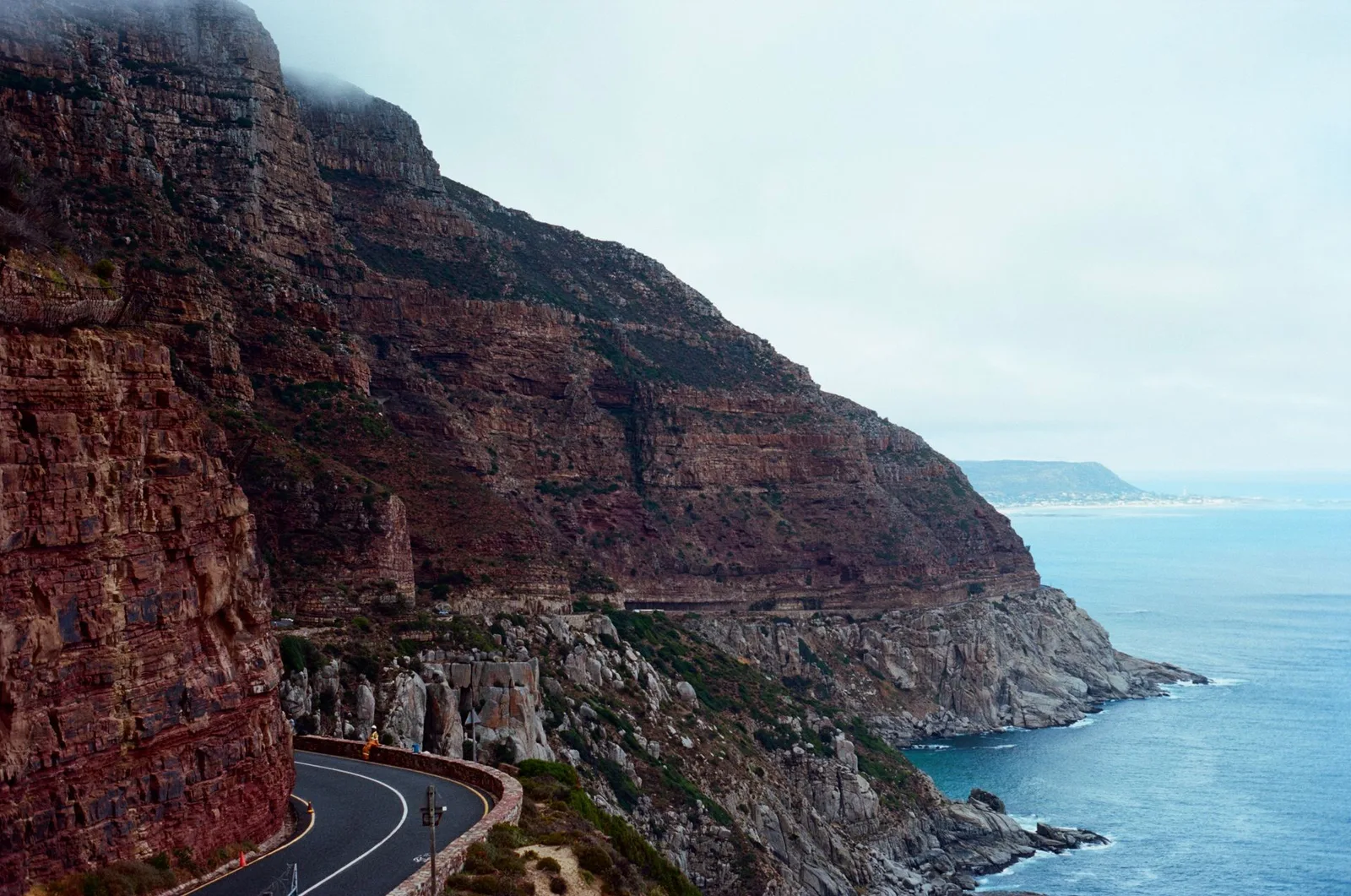
The Cape Peninsula and Cape Point
The great circular drive: Camps Bay and Hout Bay down the Atlantic side, tolled Chapman's Peak Drive, the Cape of Good Hope — entry R515 per international adult, R592 from 1 November 2026. Baboons patrol the roadsides: leave them alone, keep food invisible. Back via Simon's Town: Boulders penguins R245, R282 from the same date.
Check availability →
The Winelands — Stellenbosch and Franschhoek
An hour inland: Stellenbosch, then the Franschhoek valley, where Huguenots planted vines in the 1680s. The Wine Tram runs hop-on hop-off lines between estates all day — from about R350, tastings roughly R60-260 an estate — so nobody drives after the third tasting. Dorp Street, one of the country's oldest streetscapes, repays an hour on foot first.
Check availability →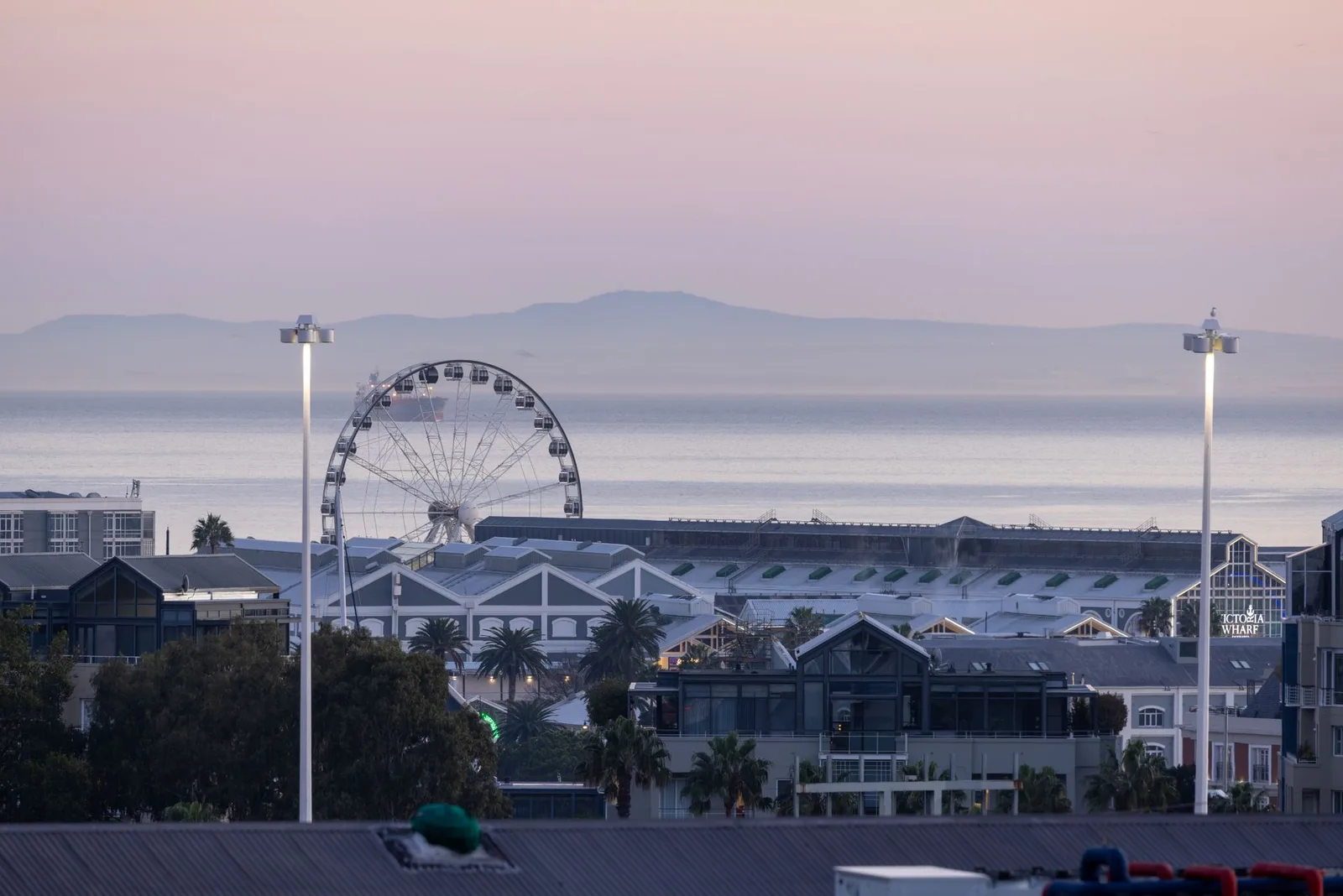
Robben Island
The ferry leaves from the Nelson Mandela Gateway on the V&A Waterfront. The tour — crossing, bus circuit and the prison, walked with a former political prisoner — takes 3.5 to 4 hours, past the cell Mandela occupied for 18 years. Tickets R600 for an international adult, R310 for a child — only on the museum's own website; resellers charge double, and some sell tickets that do not exist. Book before you fly, early in your stay.
Check availability →When to go and what it costs

A mid-range double in season runs roughly R1,800-3,500 a night; the cableway is R475 online, Robben Island R600, park gates R245-R592 at the new November rates — but the promenade, gardens and trails are free. Coffee R40-50, a mid-range main R250-350, an Uber across the bowl rarely passes R120.
Pay by card almost everywhere; carry small notes and coins for tips, car guards and markets, and agree taxi fares before the ride starts. Divide rand by roughly sixteen for dollars, eighteen for euros.
Keep the paperwork if a delayed or cancelled flight wrecks the plan: on routes covered by European or UK passenger-rights rules, AirHelp handles the claim on a no-win, no-fee basis.
What to pack
Tap items to check them off — your list is saved on this device.

Cape Town packing turns on the wind and the mountain's private weather: beach-hot in Camps Bay and jacket-cold on the summit in the same hour, in any month. Layers are the whole strategy, plus respect for a sun that burns harder than its temperature suggests.
- Comfortable walking shoes Shop walking shoes on Amazon →
- Sunscreen Shop sunscreen on Amazon →
- Reusable water bottle Shop water bottle on Amazon →
- Phone charger and power bank Shop power bank on Amazon →
- Daypack Shop daypack on Amazon →
- Sunglasses Shop sunglasses on Amazon →
- Light rain jacket Shop rain jacket on Amazon →
As an Amazon Associate I earn from qualifying purchases.
Language, visa and entry
✓ Visa-free entry
English is the language of every sign, menu and ticket desk, and one of twelve official languages — Afrikaans and isiXhosa are the city's other mother tongues, and a greeting in either opens doors.
Citizens of the United States, Canada, the United Kingdom, the EU, Australia and New Zealand enter South Africa visa-free for up to 90 days. Airlines enforce the passport rules before boarding: the passport must be machine-readable, valid at least 30 days beyond your departure date, and carry at least two completely blank pages for the entry and exit stamps — a nearly full passport is a refused boarding. Everyone else: check whether you need a visa, an eVisa or an electronic travel authorisation under the newer trusted-operator scheme before booking.
Children arriving with both parents no longer need an unabridged birth certificate — that rule was dropped for visitors in 2019. Where a child travels with one parent, or with neither, officials may still ask for supporting documents: a birth-certificate copy and a consent letter from the absent parent settle the question. A yellow fever certificate is required only if you arrive from, or transit through, a country with yellow fever risk.
Safety and health
Cape Town asks for the street sense of any big city, with local knowledge about where and when. The tourist core — the City Bowl, the Waterfront, Sea Point, Camps Bay — is busy, lit and well patrolled.
Ride after dark
Walk freely in busy areas by day; after dark, take Uber or Bolt door to door rather than walking quiet streets. Keep your phone out of sight at the kerb and off the table edge — snatching from passing cars is a known pattern.
The airport road rule
The N2 passes the city's poorest edges, and a documented scam places debris or stones on the road with fake signals to stop. Never stop on the highway or its shoulder: keep doors locked, and if something hits the car or a tyre fails, drive on slowly to the nearest lit petrol station.
Hike in company, hike prepared
Go in a group, start early, tell someone your route, and carry water and a warm layer. Muggings have happened on quiet trails: stick to well-used routes like Platteklip Gorge and Lion's Head at busy hours, ride to the trailhead, and come down before dark.
Guard your cards, choose your guides
Use ATMs inside banks and malls, shield your PIN, and never accept help from a stranger at a machine. Visit the townships properly: Langa and Khayelitsha welcome visitors on guided walks run by local operators — book a reputable local guide rather than driving in alone.
For anything medical, dial 112 from a mobile. Private hospitals are excellent and public emergency services stretched, so real travel insurance — including mountain rescue and medical evacuation cover — is not optional here. Pharmacies are everywhere and advise freely.
Related destinations
If you liked Cape Town, try these next:
 Africa & Middle East
 Africa & Middle East
 Africa & Middle East
 Africa & Middle East
 Africa & Middle East
 Africa & Middle East
 Africa & Middle East
 Africa & Middle East
 Europe
 Europe
Frequently asked questions
The facts that matter after you land in Cape Town.
Verified against MyCiTi, the Table Mountain Aerial Cableway, the Robben Island Museum and SANParks, October 2026.
The MyCiTi A01 bus runs from the airport to the Civic Centre every 20 to 30 minutes: R90 for the trip on a myconnect card (the card itself is R40, and a day pass is R130).
An Uber or Bolt to the City Bowl runs about R250 to R400 and a metered taxi R350 to R500, agreed before you set off. There is no train from the airport — the rail link is still only a plan.
An adult return is R475 booked online or R530 at the ticket office; Fast Track is R1,200. Buy online — it is cheaper and skips the window queue.
The cableway closes in high wind and under the tablecloth cloud, sometimes for days in summer. Keep a flexible morning for it, and check the operating status before you go up Kloof Nek Road.
The ferry and prison tour together cost R600 for international adults and R310 for children, leaving from the Nelson Mandela Gateway at the V&A Waterfront.
Book ONLY on the official Robben Island Museum website — resellers and outright scams are common, and sailings sell out days ahead. Ferries are cancelled in rough seas, so never schedule the island on your departure day.
Until 31 October 2026, international adults pay R245 at Boulders Beach and R515 for the Cape Point section of Table Mountain National Park; Kirstenbosch charges R270.
SANParks' annual rise lands on 1 November 2026: Boulders goes to R282 and Cape Point to R592. The fees are per entry, so plan the Peninsula as one full day.
Not at the moment: Eskom passed 500 consecutive days without load shedding in October 2026, the longest unbroken run in years.
It is suspended, not formally abolished, and most hotels, hostels and restaurants run backup power regardless. If it ever returns mid-trip, the EskomSePush app carries the schedules block by block.
US, UK, EU, Canadian and Australian visitors enter visa-free for 90 days, but the passport rules are strict: 30 days of validity beyond your departure date and TWO completely blank pages for stamps.
The blank-page rule is genuinely enforced — travellers have been refused boarding and turned back at the border over it. Count your pages before you fly, not at the check-in desk.
No tourist tax in Cape Town, though a voluntary 1 percent tourism levy appears at some properties; tap water safe; plugs are the big Type M and newer Type N at 230V; emergency 112 from a mobile, police 10111, city emergencies 107.
Cape Town, in your pocket
Landing soon? Get the printable PDF — ticket links, the airport transport cheat sheet, our 3 restaurant picks with maps, and the packing checklist. Everything above, formatted for your phone.
One email with your Cape Town PDF. Fare changes and new guides after that. No spam, unsubscribe anytime.
Sources and last verified
Cape Town facts checked October 2026 against MyCiTi and the City of Cape Town (the A01 service, the R90 single-trip card, the fare table); the Table Mountain Aerial Cableway's published rates for 1 July 2026 to 30 June 2027; the Robben Island Museum's tour rates and sailing times; SANParks' conservation fee cards for the Cape of Good Hope and Boulders, current and from 1 November 2026; SANBI for Kirstenbosch's 2026-27 fees; Zeitz MOCAA's ticket page (admission, the Wednesday free window); the Department of Home Affairs and embassy guidance (visa-free stays, passport rules, the 2019 children change); the Rates and Monetary Amounts Act of 2026 via SARS (VAT at 15%); the Tourism Business Council of South Africa (the 1% TOMSA levy); Eskom's October 2026 system statements (load shedding); and market exchange rates for the rand in October 2026.
Affiliate disclosure: hotel names, transfers, experiences, and products linked in this guide may earn After You Land a commission at no extra cost to you. Prices and times were checked in Oct 2026 and change often — confirm before you book.