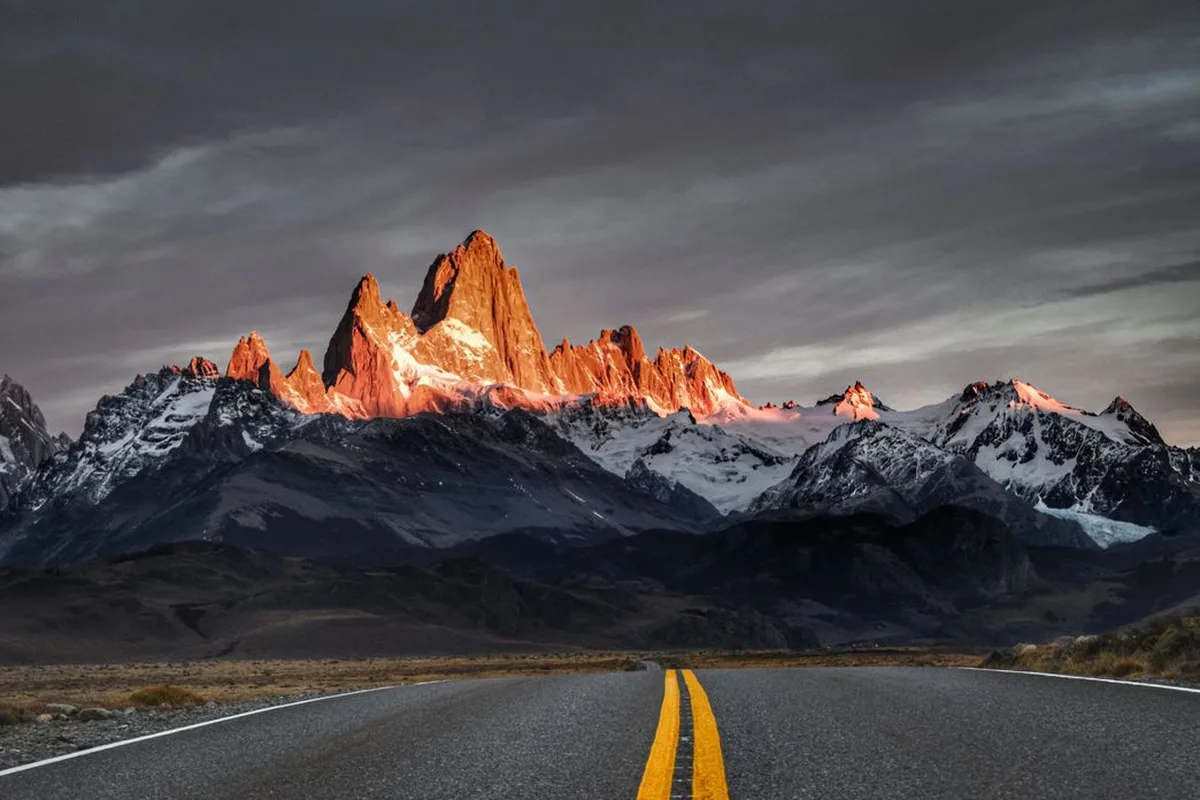
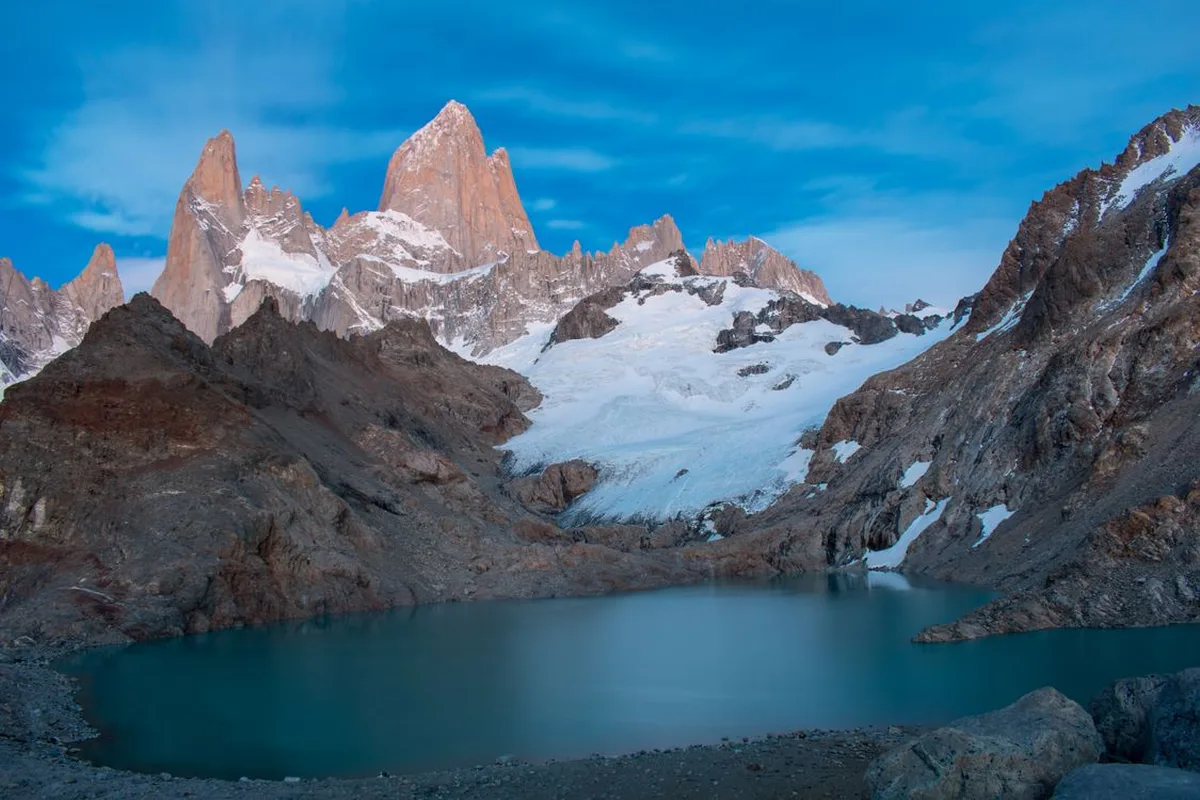
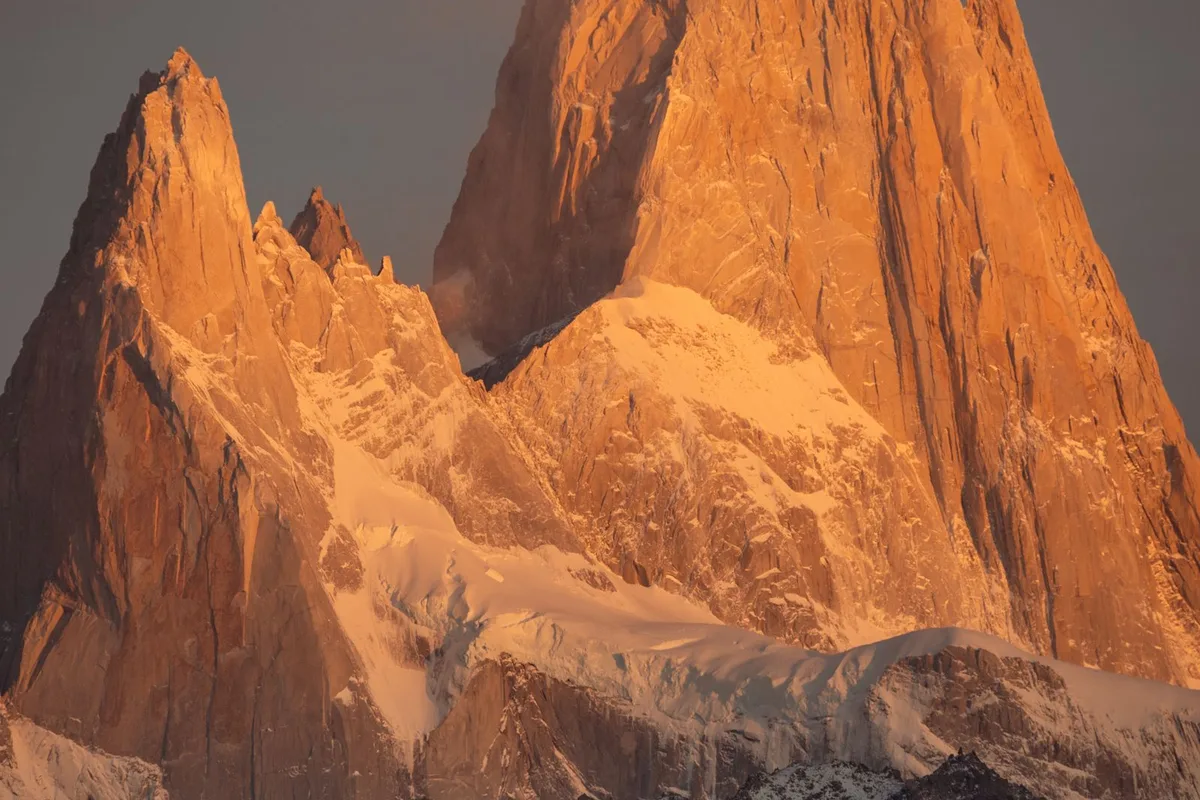
Nobody flies to El Chaltén: you land at El Calafate and ride the bus north through the steppe to a one-street trekking village inside Los Glaciares National Park.
By Paul GreenUpdated Oct 202613 min readPrices checked Oct 2026
You just landed in El Chaltén. Argentina's trekking capital is a one-street village where the Fitz Roy and Cerro Torre trails start at the edge of town and the nearest airport is a bus ride away in El Calafate — sort an eSIM before you leave El Calafate so the maps and the park-pass pages work when the signal thins, and if a guided run at Laguna de los Tres or a day on the Río de las Vueltas is on your list, the small groups fill first through GetYourGuide.
Some links on this page are affiliate links. If you book through one, After You Land may earn a commission — at no extra cost to you.
Quick facts
Airport
El Calafate International (FTE) Every El Chaltén arrival routes through El Calafate, 215 km south-east — there is no airport in the village, and the road north is the only way in.
Getting in
Bus AR$ 70,000 · about 2 hrs 40 min CalTur, Chaltén Travel and TAQSA pick up at the airport; door-to-door shuttles start from AR$ 95,000, and a private transfer runs about US$190–275 per car.
Currency
Argentine peso (ARS) Cards are normal at bigger hotels and restaurants; small bakeries, guides and takeaways are cash-first. Peso prices move with inflation, so trust the AR$ figure at booking.
Languages
Spanish, some English Spanish is the working language. English is common in hotels, tour offices and many restaurants, patchier elsewhere — a few phrases go a long way.
Time zone
UTC-3, no daylight saving Argentina stays on UTC-3 all year. Check the clock on arrival: your phone may still show the last time zone, and the morning bus will not wait.
Emergency
911 911 reaches police, fire and ambulance. El Chaltén has a health post with a doctor and X-ray only — the nearest hospital is in El Calafate.
Plugs
Type C and I · 220 V Argentina uses type C and I sockets at 220 volts. Bring a universal adapter — the slanted two-pin type I is the one travellers lack.
Tap water
Safe to drink The village's own visitor information confirms the tap water is safe — fill bottles at your lodging before the trails rather than carrying bought water.
Tourist tax
Los Glaciares park access AR$ 50,000 a day Park access is charged at the El Chaltén trailheads as well as at Perito Moreno: foreign visitors pay AR$ 50,000 a day, bought online only at ventaweb.apn.gob.ar or by QR at the portal — no cash taken. A second day inside 72 hours costs half; the 3-day FlexiPass (AR$ 100,000) covers both famous trails.
Best months
October to April The hiking season runs October to April; January and February are warmest, fullest and windiest. Buses run all year, at least two a day, but much of the village closes May to September.
Map
Find your arrival stop, hotel, and first meal. Stays, sights, and landmarks in El Chaltén — live hotel prices plus the key places from this guide.
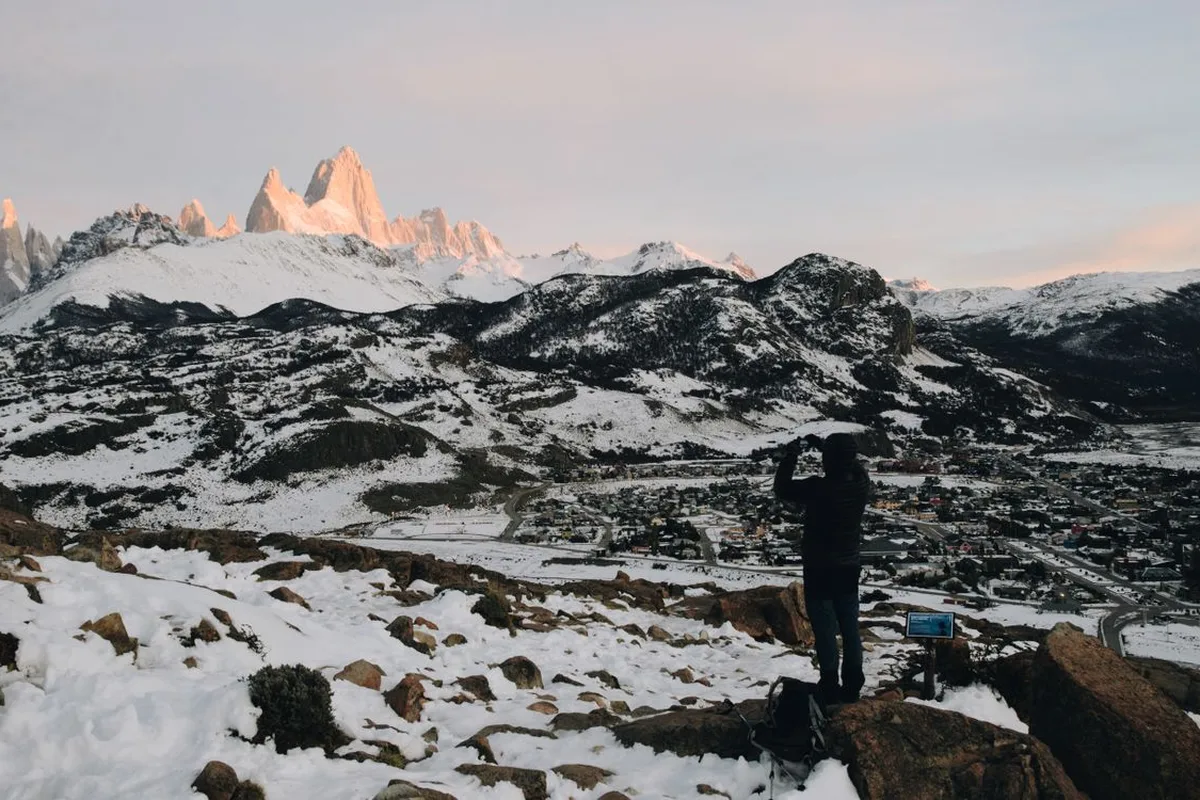
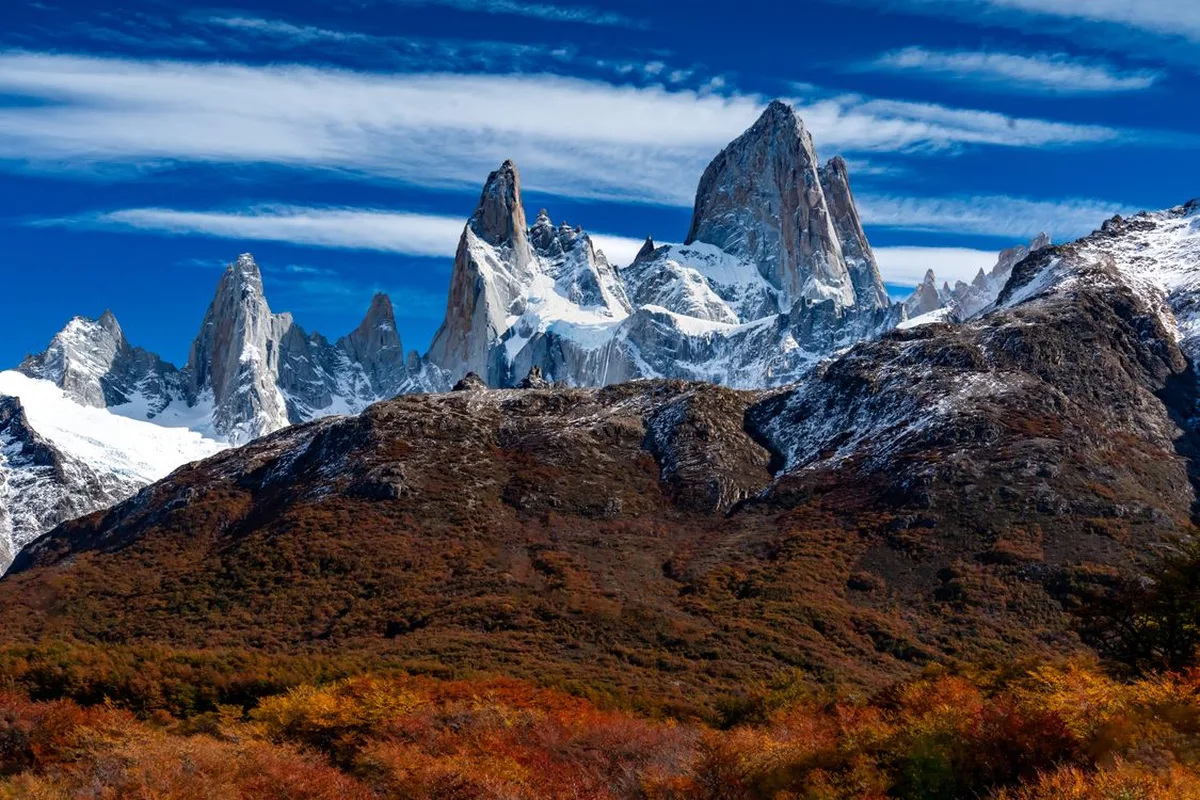
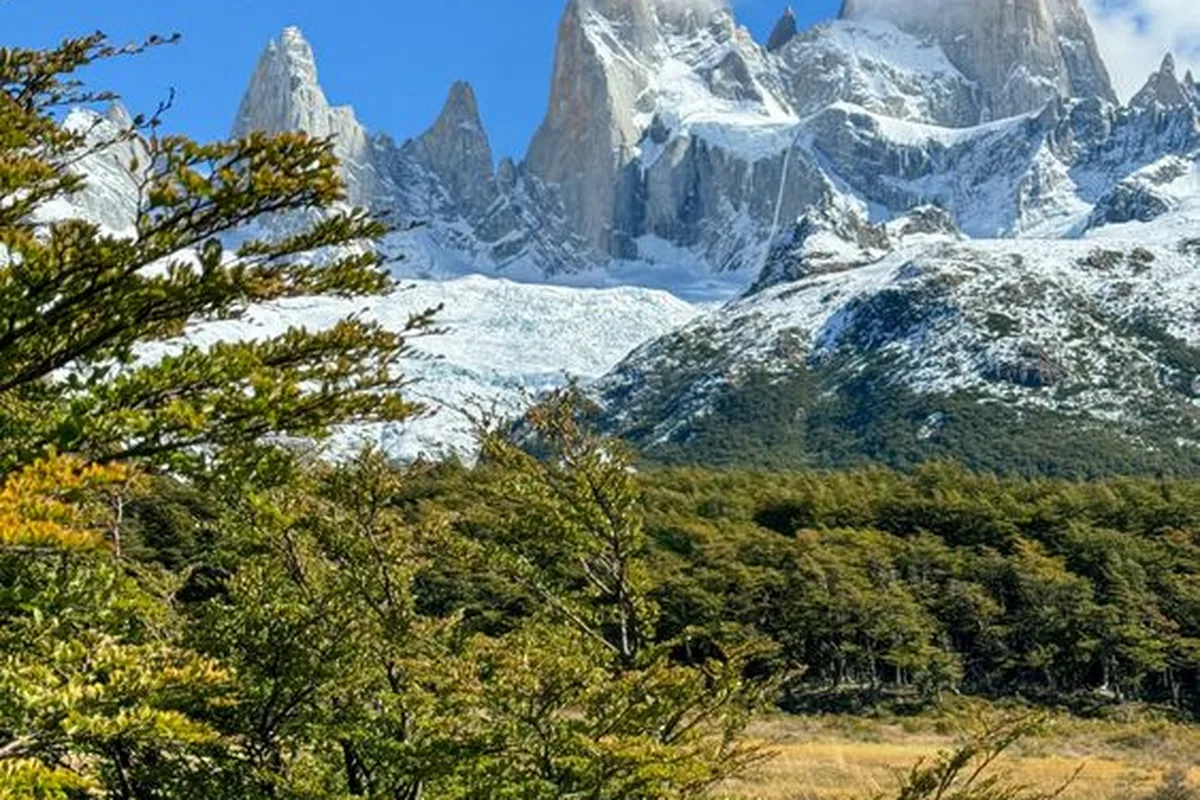
You arrive at El Chaltén's small bus terminal — pay the AR$ 2,000 municipal terminal fee if it was not bundled into your ticket, then walk: every lodging is inside 15 flat minutes. Fitz Roy stands at the end of the street and does the orienting.
Check in and drop the pack
Get the boots off, the layers out and the bottles filled — tap water here is safe and free. Ask at the desk about tomorrow's forecast while you do it: hosts read the wind the way other towns read the news.
Buy tomorrow's park pass tonight
The trailhead portals sell nothing and take no cash: park access is bought online at ventaweb.apn.gob.ar, by card or QR. Buy it on the lodging Wi-Fi tonight, screenshot the ticket, and mornings start at the trailhead.
Get connected before the signal thins
Coverage is thin in the village and dead on the trails, so set up data before leaving El Calafate: load an eSIM while the airport Wi-Fi works, then download offline maps of both big trails. If the flight in ran hours late, compensation may apply — AirHelp handles the claim end to end.
Eat on San Martín
The main street holds the parrillas, trout restaurants and craft-beer bars within a few blocks. Kitchens close earlier than you expect once the last buses leave, so eat before 9 pm on arrival night.
Book the guided day before bed
The guided run at Laguna de los Tres and the river days take small groups and fill first in season — if one is on your plan, book it on GetYourGuide tonight. The park visitor center confirms wind and trail conditions in the morning.
Everything in that first hour sits within a few blocks: terminal, lodging, main street, visitor center. The park pass is the one thing that cannot wait for morning.
Getting around
Journey times are approximate and refer to the listed stop — not necessarily your hotel. Allow extra time for waiting, walking, and connections.
In a hurry? Door-to-door shuttle (Don Atilio, Las Lengas) is the fastest option listed, at about 2 hrs 30 min.
Watching the budget? Bus (CalTur, Chaltén Travel, TAQSA) is the cheapest option listed, at AR$ 70,000 per person.
Heavy bags, a group, or a late arrival? Private transfer takes you door to door — Varies — priced per car, about 2 hrs 30 min.
Bus (CalTur, Chaltén Travel, TAQSA)
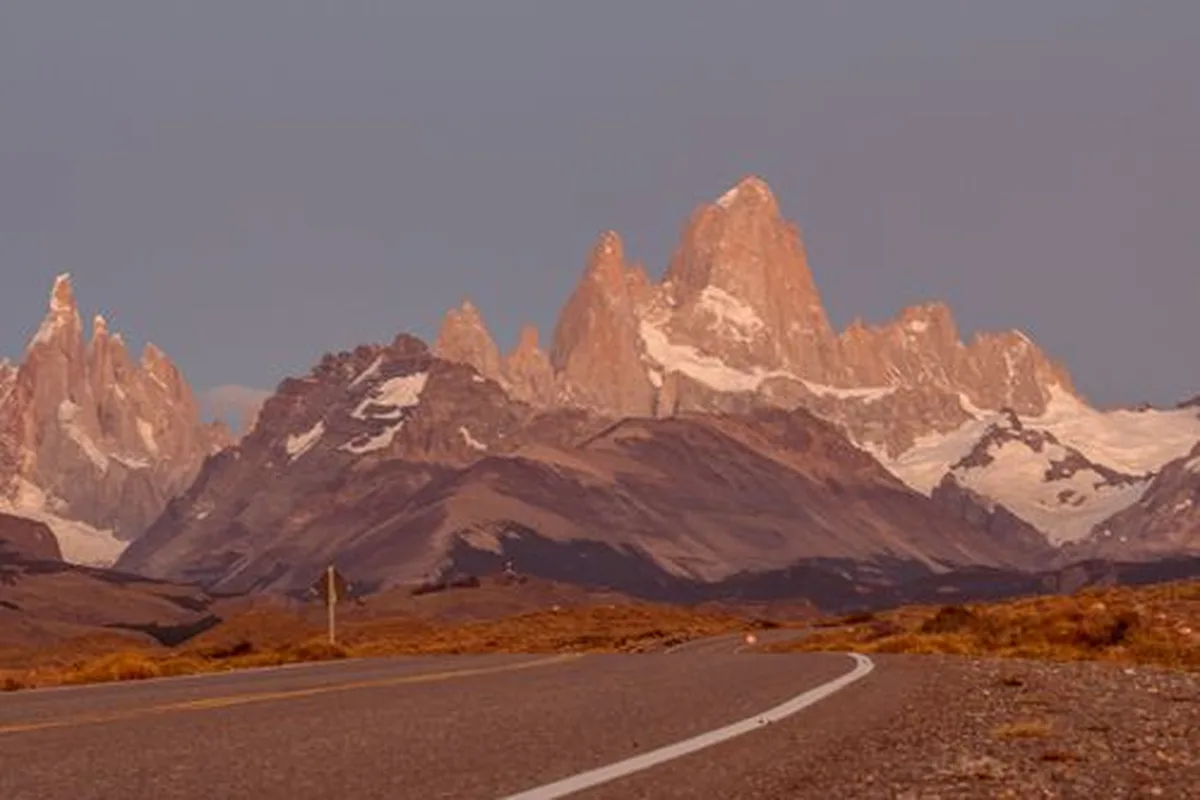
Buses leave El Calafate's terminal and pick up at El Calafate airport (FTE) about 20 minutes later, run 215 km on paved Ruta 40 and Ruta Provincial 41 with a 20-minute stop at the La Leona roadhouse, and arrive at El Chaltén's terminal. Seven departures a day each way in season; at least two a day all year. Add the AR$ 2,000 municipal terminal fee at the El Chaltén end — and book ahead in high season
PriceAR$ 70,000 per personJourneyabout 2 hrs 40 min
Door-to-door shuttle (Don Atilio, Las Lengas)
The shuttle meets your flight at El Calafate airport and drops you at your lodging door in El Chaltén — no terminal at either end. Four departures a day in season; the service can pause in winter, so confirm before you count on it
Pricefrom AR$ 95,000 per personJourneyabout 2 hrs 30 min
Private transfer
A car and driver for your group, timed to your flight, with photo stops on Ruta 40 when you want them. Prices run roughly US$190–275 per car depending on the vehicle. Book through local operators or platforms such as GetYourGuide and Civitatis before you travel — the only option that runs at your hour rather than the timetable's
PriceVaries — priced per carJourneyabout 2 hrs 30 min
Rental car at FTE
Desks at El Calafate airport and in town; the drive north is fully paved. In El Chaltén you will park the car and walk — it earns its keep for Lago del Desierto and a self-driven Perito Moreno day. The village has one fuel station, so arrive with a tank that gets you back
PriceVaries — rental rates change dailyJourneyabout 2 hrs 40 min
El Calafate is the gateway: every arrival routes through its airport, 215 km south-east. Three bus companies — CalTur, Chaltén Travel and TAQSA — run the corridor, with airport pickups, a 20-minute stop at the La Leona roadhouse, and seven departures a day each way in season. At least two a day run all year, winter included. For a car and driver instead, book ahead — GetYourGuide lists private transfers between El Calafate airport and El Chaltén from about US$173 per person, and the shared shuttles (Don Atilio, Las Lengas) drop you at your lodging door.
Renting at the airport suits a longer Patagonia drive — compare the desks through AutoEurope before you travel; there are no rental counters at the village end. The village itself needs no transport plan: the trailheads start where the streets stop.
In the city
Walk to the trailheads.
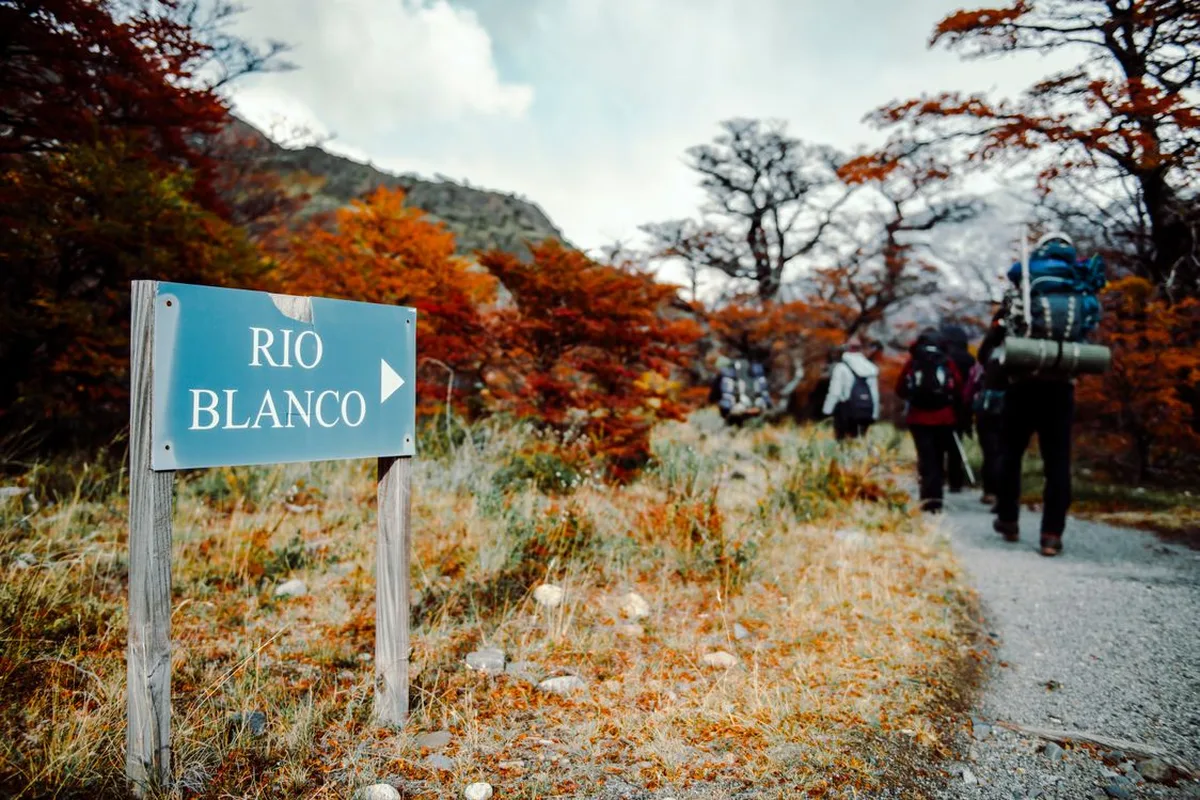
Both flagship hikes start at the northern edge of the village: Laguna de los Tres from the Base Fitz Roy portal past the visitor center, Laguna Torre from the end of the streets on the Río Fitz Roy side. No vehicle, no schedule — and the portals check the day's park pass.
Ride out to the Río Eléctrico start.
A trail shuttle runs up the RP 41 valley to the Río Eléctrico bridge and El Pilar. Starting there shortens Laguna de los Tres to about 22 km and swaps the steepest town climb for a gentler river walk — book the seat through your lodging the day before.
Take a remise anywhere in the grid.
A taxi or remis covers the village in five minutes at most: hail one on San Martín or ask your lodging to call. It earns its keep with luggage on arrival day, and for early group starts.
Spend the rest day on the river.
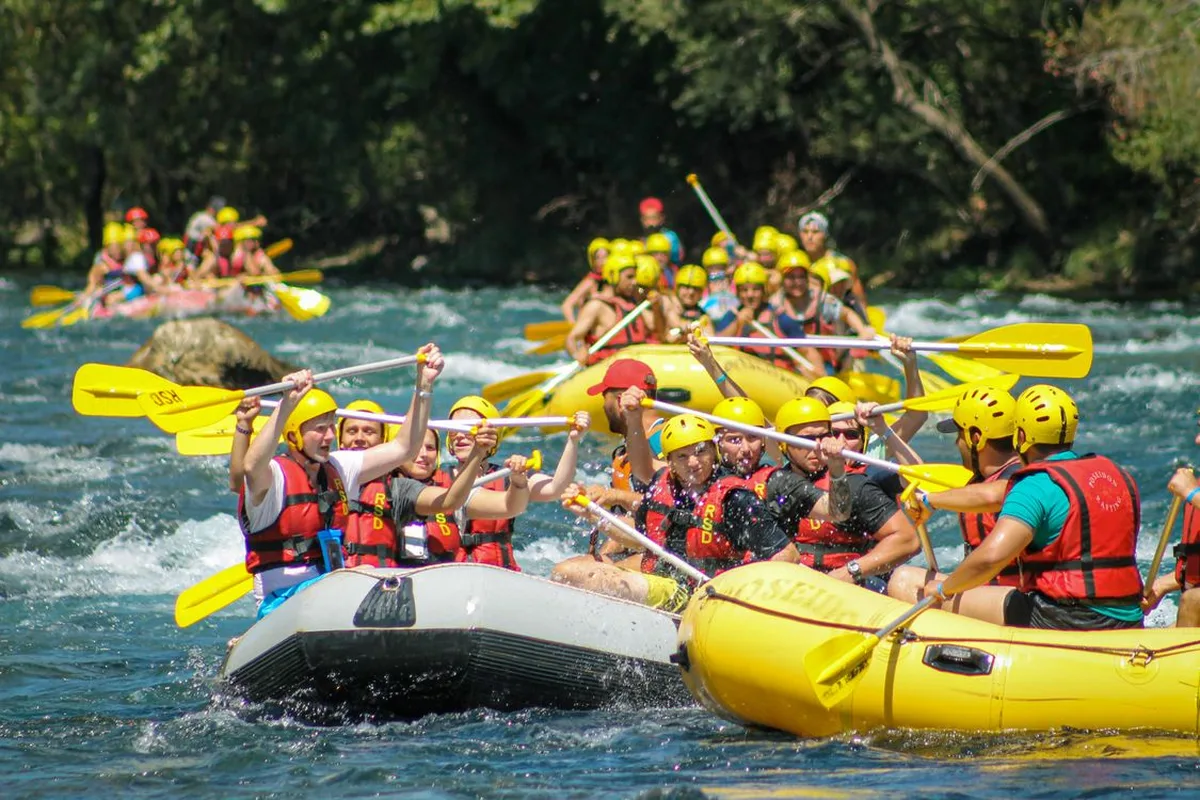
Tour offices along San Martín sell the kayak and rafting days on the Río de las Vueltas, horseback rides up the valley and bike hire. Compare what is running on GetYourGuide before walking the street — the small groups go first either way.
After you land in El Chaltén: Bookable experiences
Where to stay your first nights
Splurge
Explora El Chaltén.
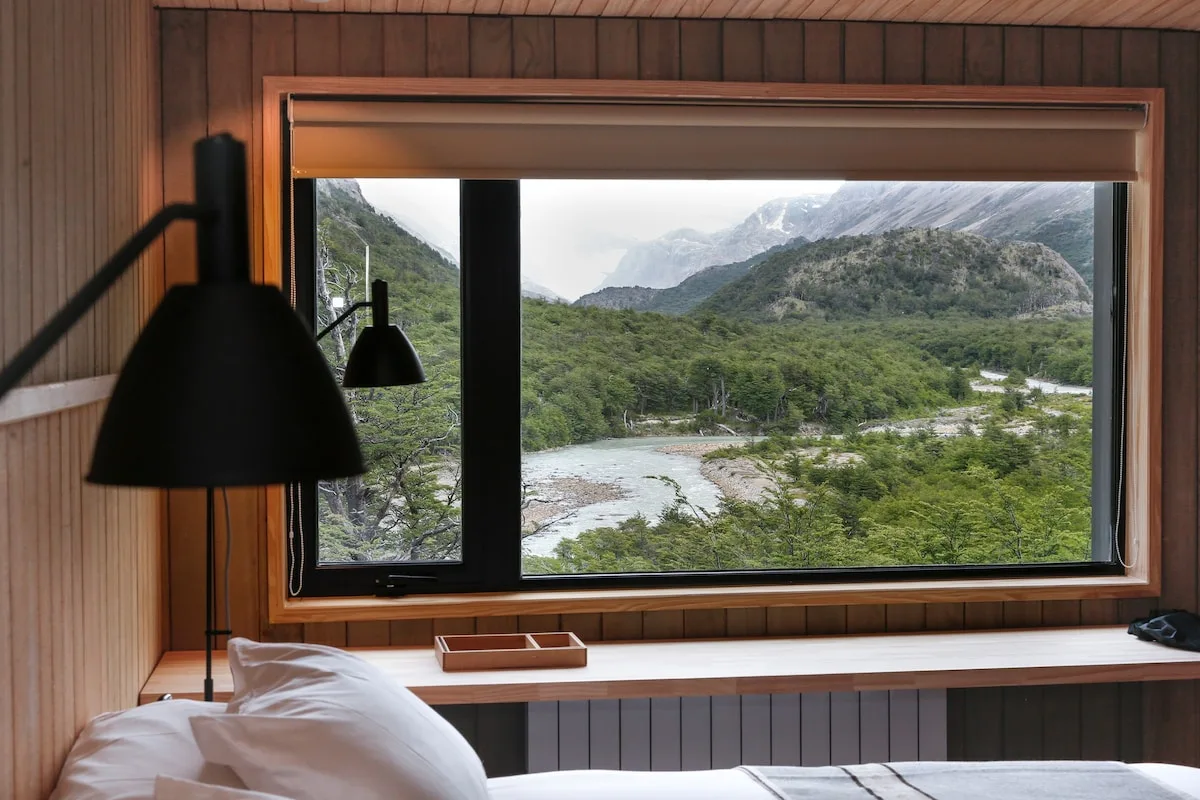
Best for the splurge — an all-inclusive lodge in the Los Huemules reserve, with every guided exploration, meal and park fee included
On Ruta Provincial 41, Km 16, inside the Los Huemules Conservation Reserve north of the village. Twenty rooms in an all-inclusive lodge whose rate covers every meal and drink, the spa, park entry fees, round-trip airport transfers and more than 30 guided explorations. Rated 10 out of 10 on Expedia, from a small pool of reviews, and the season runs roughly October to April.
Best for the sweet spot — a mountain hotel on Lionel Terray 370 with a spa, sauna and gym for post-hike recovery
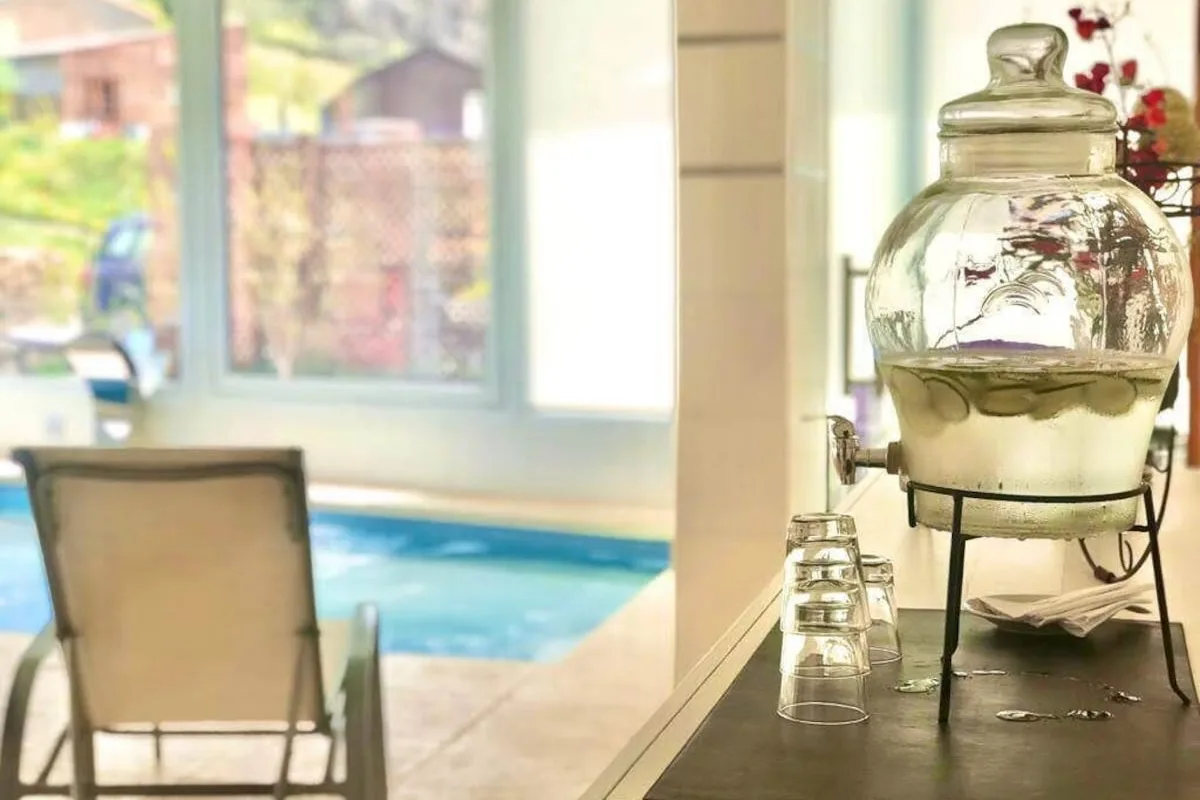
On Lionel Terray 370, a few blocks from the trailhead streets. A mountain hotel with a spa, sauna and gym pointed squarely at post-hike recovery, rated 9.4 out of 10 from 252 Expedia reviews — real comfort and a hot soak after the big days, without the all-inclusive tariff.
Best for value — a sociable hikers' hostel on Avenida San Martín 376, in the center of the village
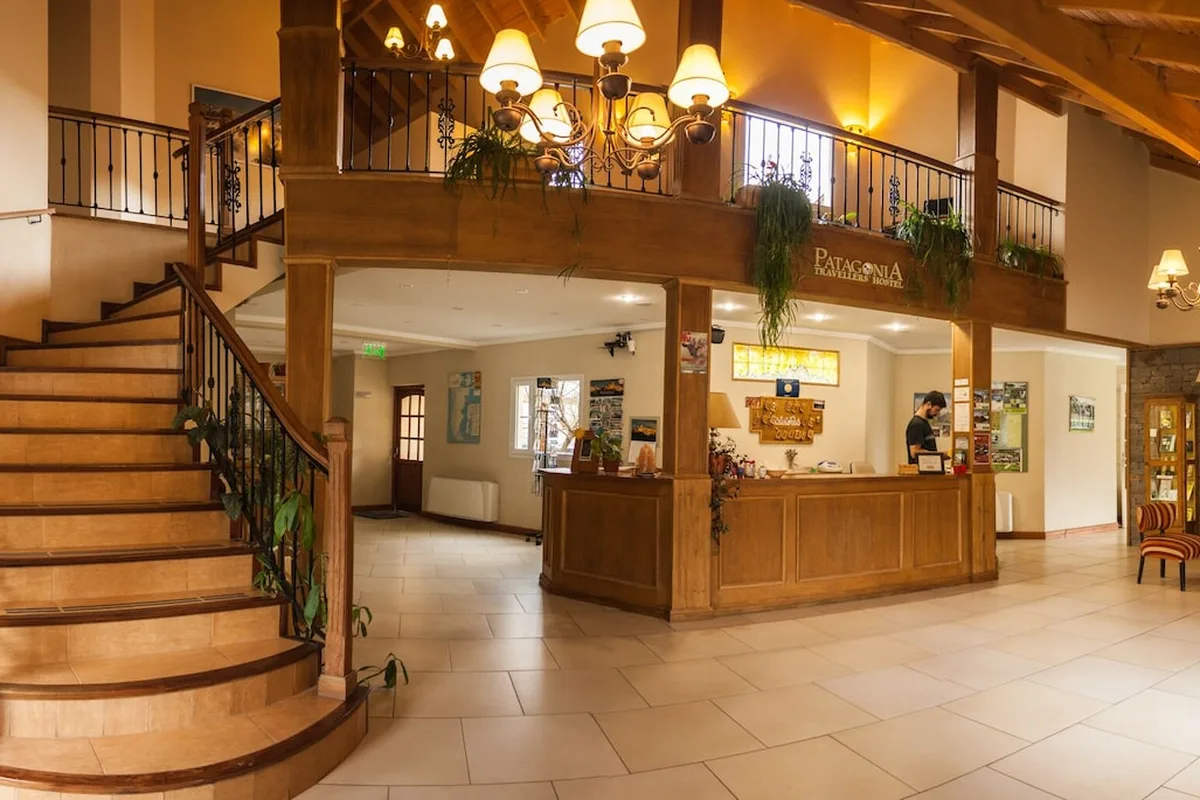
On Avenida San Martín 376, mid-way along the village's one main street. A sociable walkers' hostel and the classic budget base: trailheads a short walk away, with a shared kitchen where tomorrow's hiking partners get found. Rated 8.6 out of 10 on Expedia.
Stay anywhere inside the grid and you walk to dinner and both trailheads; Explora, 16 km north with its own trails, is a stay in itself rather than a bed in town.
Where to eat first
Patagonian lamb (cordero patagónico)
Map → is the signature dish: slow-roasted, often at a parrilla on San Martín, with chimichurri and papas. Ask what cut is on before you order — some kitchens roast to order and the wait can be long.
Trout (trucha)
Map → from local rivers and lakes is the lighter main, grilled or in a cream sauce, at the village's sit-down restaurants.
Empanadas and locro
Map → are the budget warm-ups: empanadas by the half-dozen from bakeries and takeaways, locro (a hearty bean and meat stew) on cold days.
Craft beer
Map → is a small scene of its own — a couple of San Martín breweries pour their own ales, and it is where the trail talk happens after dark. Most kitchens close earlier than you expect after the buses leave, so eat before 9 if you can.
Order this
Patagonian lamb. Order the cordero patagónico off the parrilla — slow-roasted with chimichurri and papas — but ask what cut is on before you commit, because some kitchens roast to order and the wait can be long.
Trout. Order the trucha, grilled or in a cream sauce at one of the village's sit-down restaurants — the lighter main after a heavy trail day.
Empanadas and locro. Order empanadas by the half-dozen from the bakeries for the trail tomorrow, and a bowl of locro when the day turns cold.
Day trips and more
The two famous trails are self-guided and start in town, so what you book here is the guided version of the big one, the river days, or a seat toward Perito Moreno. Start with GetYourGuide's El Chaltén page for what is running.
Laguna de los Tres with a mountain guide
~9 hrs · El Chaltén's signature day hiked with two certified guides: about 24 km and 9 hours on foot from the Río Eléctrico start to the lake under Fitz Roy, a Laguna Capri plan B when the weather closes in, and crampons included when the last stretch runs icy. From $258 per person. Check availability →
Rafting the Río de las Vueltas
~2 hrs on the river · Twenty rapids through the canyon below town — class III to III+ in season — run from the operator's base on Avenida San Martín, the canyon stretch saved for the second hour. The wettest rest day in the village. From $120 per person. Check availability →
Kayaking the Río de las Vueltas
~2 hrs paddling · A 12 km guided paddle down the river corridor in beginner-friendly boats, with a country brunch stop along the way — its own page rates it 4.9 out of 5. The calm-water counterpart to the rafting day. From $135 per person. Check availability →
Do it yourself: Laguna Torre (about 18 km, 6 to 7 hours) and the short walk to Chorrillo del Salto (about 6 km) need nothing but the day's park pass. Lago del Desierto, 37 km north, pairs with the shuttle up and the walk back along the river. Perito Moreno is the big swap: a very long day from here, or a night in El Calafate first — its GetYourGuide page carries the boardwalk and boat days.
When to go and what it costs
The hiking season runs October to April. January and February are warmest, fullest and windiest; March and April trade warmth for autumn color and thinner trails. Explora's season — roughly October to April — is a fair marker for the village's own. From May to September many kitchens close, buses drop to a couple a day and the high trails turn wintry: it is a quieter trip.
The fixed points: the bus is AR$ 70,000 a seat, the park pass AR$ 50,000 a day for foreign visitors (second day half price inside 72 hours, or AR$ 100,000 for the 3-day FlexiPass), and the door-to-door shuttle from AR$ 95,000 a person. Peso prices move with inflation — these are the park's and operators' own October 2026 figures, and any dollar conversion is a snapshot, not a promise.
Book the moving parts early: buses in January, Explora in any month, guided treks before the groups fill. The park pass needs nothing further ahead than the evening before. More bookable days sit on GetYourGuide once dates are set.
What to pack
Tap items to check them off — your list is saved on this device.
Spanish is the working language; English gets you through hotels and tour offices. Worth having: Hola hello · Gracias thank you · La cuenta, por favor the bill, please · ¿Dónde está el sendero? (where is the trail?) · Soy alérgico a… (I am allergic to…). The emergency number is 911.
Most visitors enter Argentina visa-free for tourism — keep the passport valid for the whole trip. There are no formalities in El Chaltén itself: immigration happens wherever you first land in Argentina, and El Calafate is a domestic arrival when you connect via Buenos Aires.
One money rule is worth real savings: foreign visitors are exempt from the 21% IVA (VAT) on accommodation at registered properties when paying with a foreign-issued card — a rule Argentina's official tourism site still promotes. Across a week's lodging it adds up.
Safety and health
Wind is the real hazard
Patagonian wind turns a fair forecast into a hard day on the exposed final stretch to Laguna de los Tres, and closes ridgelines. Check the morning forecast at the park visitor center and treat a wind warning as a plan change, not a challenge — the short trails and the village are the fallback.
There is no hospital in El Chaltén
The village runs a health post with a general doctor and X-ray; the nearest hospital is in El Calafate, about 2 hours 40 minutes by road. Carry medication you cannot replace, and make sure your cover includes remote-area evacuation: a twisted ankle ten kilometres up a trail is a rescue, not a walk-out.
River crossings and late returns
Unbridged streams rise after rain and snowmelt — start early, cross carefully or not at all, and tell your lodging where you are headed and when you expect to be back. There is no signal out there to correct a late return; a backup data option like Saily helps only at the village edge, so offline maps are the real tool.
Leave the trails as you found them
Pack out everything, stay on marked paths where the park asks, and give guanacos and livestock room on the roads north. The village water is safe — refill the bottle rather than buying water the town then has to truck out as waste.
The things travellers ask first: the bus from El Calafate, the park pass, and the big hike.
Bus times and fares checked against elchalten.com's operator tables, updated October 2026; park tariffs against the Administración de Parques Nacionales tarifario on argentina.gob.ar, in force since 1 June 2026, and its online sales portal; Explora's inclusions against explora.com; guided days opened and priced on GetYourGuide, El Chaltén. Checked October 2026.
Can't find your answer? Email hello@afteryouland.com and we'll add it.
El Chaltén, Saved for After You Land
Landing soon? Get the printable PDF — the essentials from this guide, formatted for your phone:
The airport transport cheat sheet, with ticket links
Our 3 restaurant picks, with maps
The packing checklist
One email with your El Chaltén PDF (guide version: Oct 2026). Fare changes and new guides after that. No spam, unsubscribe anytime.
Affiliate disclosure: hotel names, transfers, experiences, and products linked in this guide may earn After You Land a commission at no extra cost to you. Prices and times were checked in Oct 2026 and change often — confirm before you book.