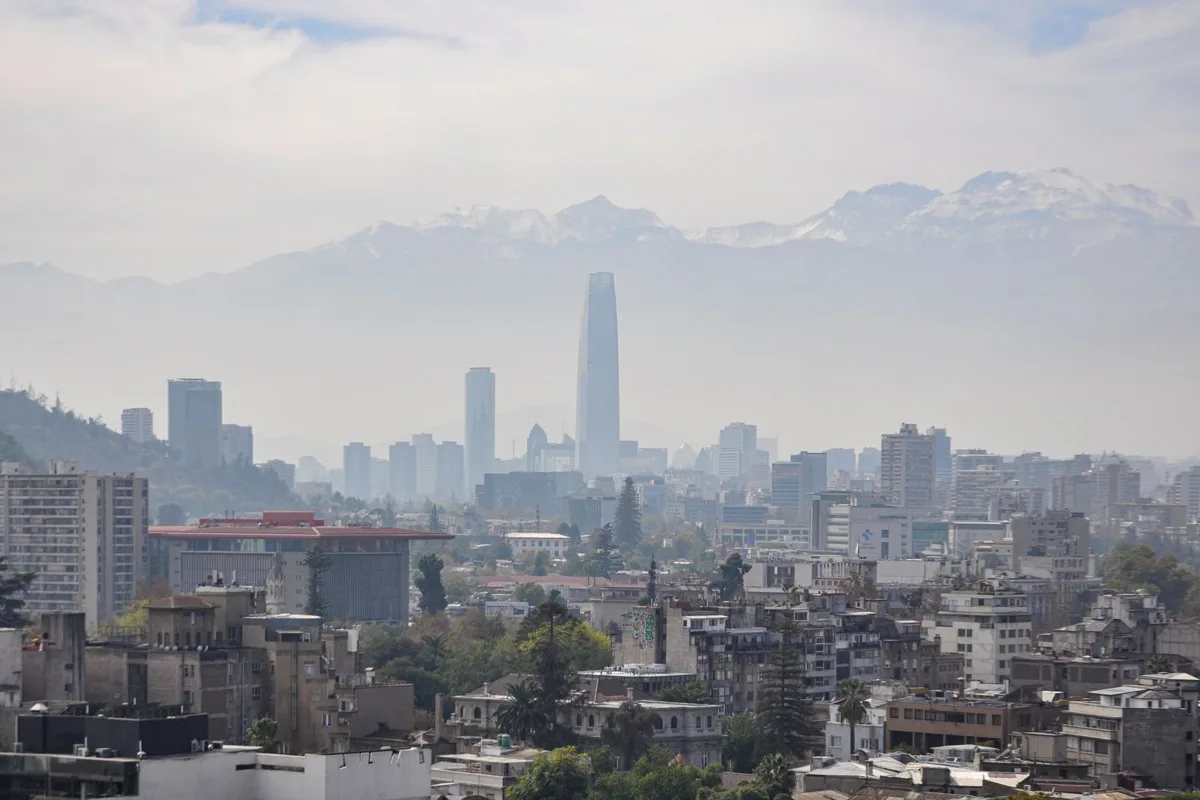
You have just landed in Arequipa — the White City, built from pale volcanic sillar under the perfect cone of El Misti. This guide gets you from the airport to the Plaza de Armas, fed, connected and settled, with the altitude handled honestly.
By Paul GreenUpdated Oct 202613 min readPrices checked Oct 2026
You just landed in Arequipa. The White City sits at 2,335 m under three volcanoes, so land softly: sort data before you fly with a Yesim eSIM, ride the flat-fare taxi (about S/25) to the historic centre, and keep day one gentle — a slow circuit of the plaza, a picantería lunch and an early night. Tomorrow, the Santa Catalina Monastery and the road to Colca Canyon are waiting.
Some links on this page are affiliate links. If you book through one, After You Land may earn a commission — at no extra cost to you.
Quick facts
Airport
Alfredo Rodríguez Ballón International Airport (AQP), about 8 km northwest of the Plaza de Armas One compact terminal. LATAM, JetSmart and Sky fly in from Lima, and LATAM also flies from Cusco — almost every arrival is a short domestic hop, so you clear immigration in Lima, not here.
Getting in
A taxi from the airport to the historic centre takes about 20 to 25 minutes The airport runs on a flat posted fare of about S/25 to the centre. Agree the price before you get in, and note there is no public transport at the terminal.
Currency
Peruvian sol (PEN, S/) Cards are widely accepted in the centre, but carry small soles in cash for taxis, markets and the Colca Canyon ticket checkpoints, which are cash-only.
Languages
Spanish; English in hotels and tour agencies Staff in the historic centre usually manage some English, but a few Spanish phrases go a long way everywhere else.
Time zone
Peru Time (PET), UTC-5, no daylight saving The same time as Lima all year round.
Emergency
Call 105 for police, 116 for fire and 106 for an ambulance (SAMU) There is a tourist police office near the Plaza de Armas. Keep your hotel's address saved in your phone.
Plugs
Type A and C sockets, 220V North American flat-pin plugs fit, but the supply is 220V — check your chargers are dual-voltage before plugging in.
Tap water
Not recommended straight from the tap Drink bottled or filtered water. Most hotels provide it free, and refill stations are easy to find in the centre.
Tourist tax
No city tourist tax, and foreign guests skip the 18% hotel tax (IGV) Show your passport and your digital entry record (TAM) at check-in so the hotel can apply the exemption. Colca Canyon charges its own visitor ticket on top.
Best months
April to October for the driest weather The dry season brings blue skies and the clearest volcano views. January to March is the rainy season, though the city stays mild all year.
Map
Find your arrival stop, hotel, and first meal. Stays, sights, and landmarks in Arequipa — live hotel prices plus the key places from this guide.
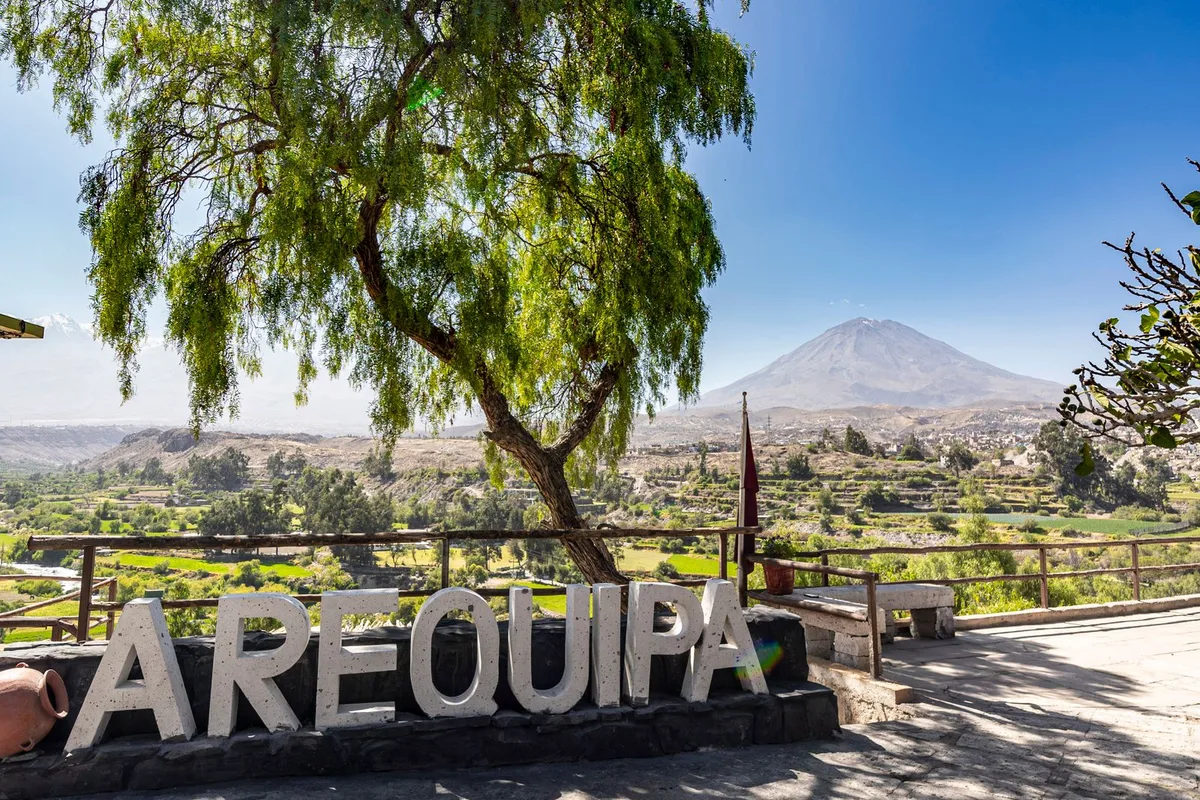
Arequipa is the White City: a colonial centre built from pale volcanic sillar stone, watched over by the perfect cone of El Misti and its two neighbours, Chachani and Pichu Pichu. It is also a city at 2,335 m, which shapes your first hours more than anything else. Land softly. The historic centre is compact and flat, strung around the Plaza de Armas, and almost everything in this guide sits within a 15-minute walk of it.
Sort your phone before anything else. An eSIM is the cleanest route — Airalo sells Peru data packs you can install on the plane, and Saily is a good backup if you are hopping on to other countries afterwards. For cash, the ATMs along the Portal de la Municipalidad on the plaza and the Banco de la Nación machines give the fairest deal; decline the machine's conversion offer and let your own bank do it. Then walk slowly, drink water, and let the city come to you. A gentle first evening works best: one slow circuit of the plaza as the cathedral lights come on, an early dinner, and bed. Save the monastery, the markets and the mountains for tomorrow, when your body has caught up with the altitude.
Getting around
Journey times are approximate and refer to the listed stop — not necessarily your hotel. Allow extra time for waiting, walking, and connections.
Airport taxi
Fares are posted at the terminal and charged flat to the centre — agree the rate before you get in, as there are no meters.
PriceAbout S/25 flatJourney20–25 min
Pre-booked transfer
The driver tracks your flight and meets you in arrivals — worth it for late Lima connections or a first night at altitude.
PriceFrom about $15Journey20–25 min
Hotel pickup
Most centre hotels arrange pickups on request — ask when you book, and confirm the price in writing.
PriceAbout $10–25Journey20–25 min
Rideshare app
inDrive and DiDi pick up from the terminal forecourt and fix the price upfront — you will need mobile data or the airport Wi-Fi.
PriceAbout S/20–30Journey20–25 min
From the airport there is really one decision: the flat-fare taxi at the terminal door, or a pickup arranged in advance. A pre-booked transfer with Kiwitaxi costs a little more and removes the kerbside haggle entirely, Welcome Pickups adds a meet-and-greet in arrivals, and GetYourGuide lists private and shared Arequipa airport transfers alongside its tours if you would rather book everything in one place.
Once you are in, your feet do most of the work: the centre is a walkable grid, and the Yanahuara viewpoint is a 25-minute stroll or a short taxi ride away. Taxis are everywhere and cheap — flag one down, agree the fare before you set off (about S/5–8 covers most in-centre rides), and keep small notes handy. App taxis such as inDrive work well too and fix the price upfront. For onward travel, long-distance buses to Cusco, Puno and Lima leave from the Terminal Terrestre, a 10-minute taxi ride south of the centre — arrive with time to spare, as the terminal runs on a pay-a-small-departure-fee system at the gate.
In the city
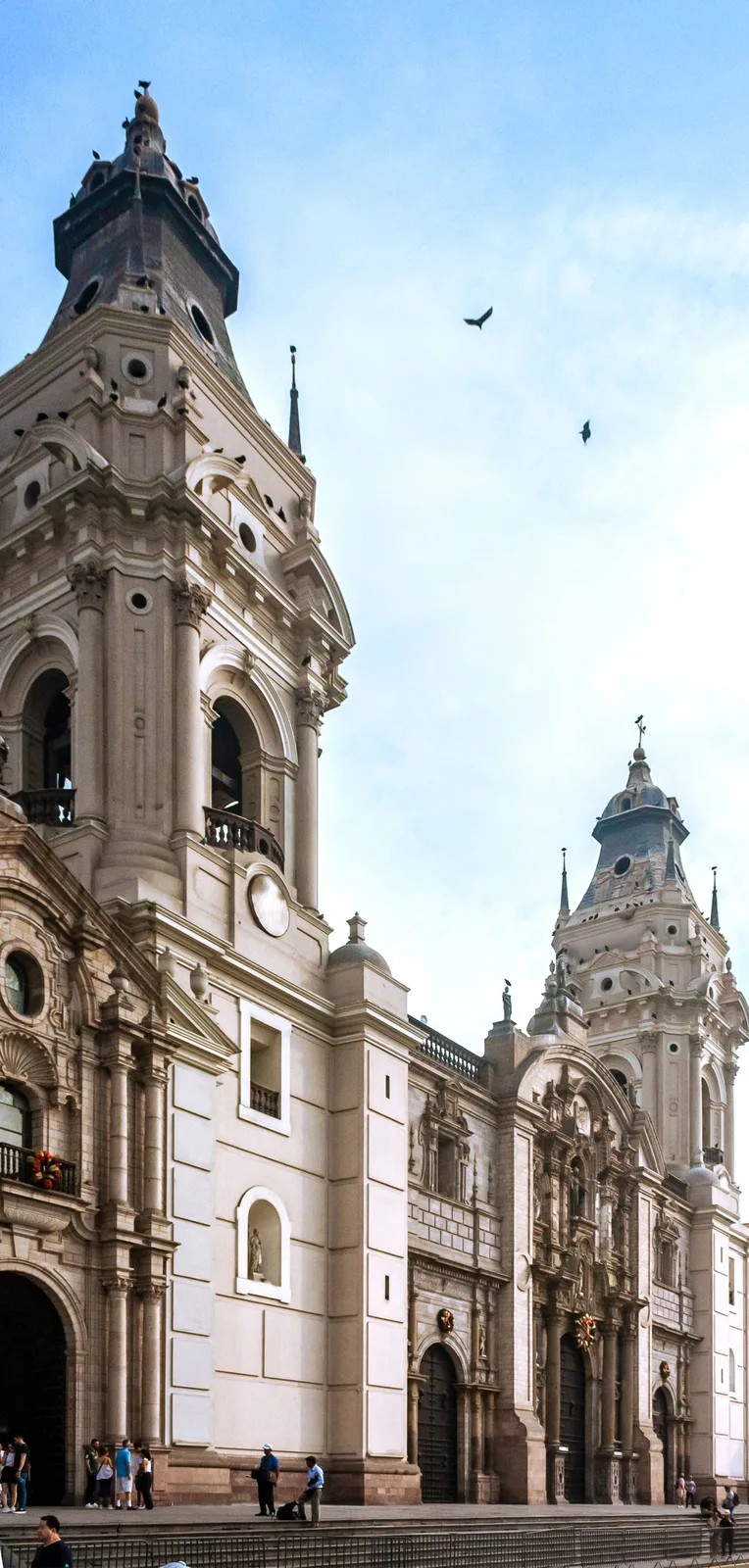
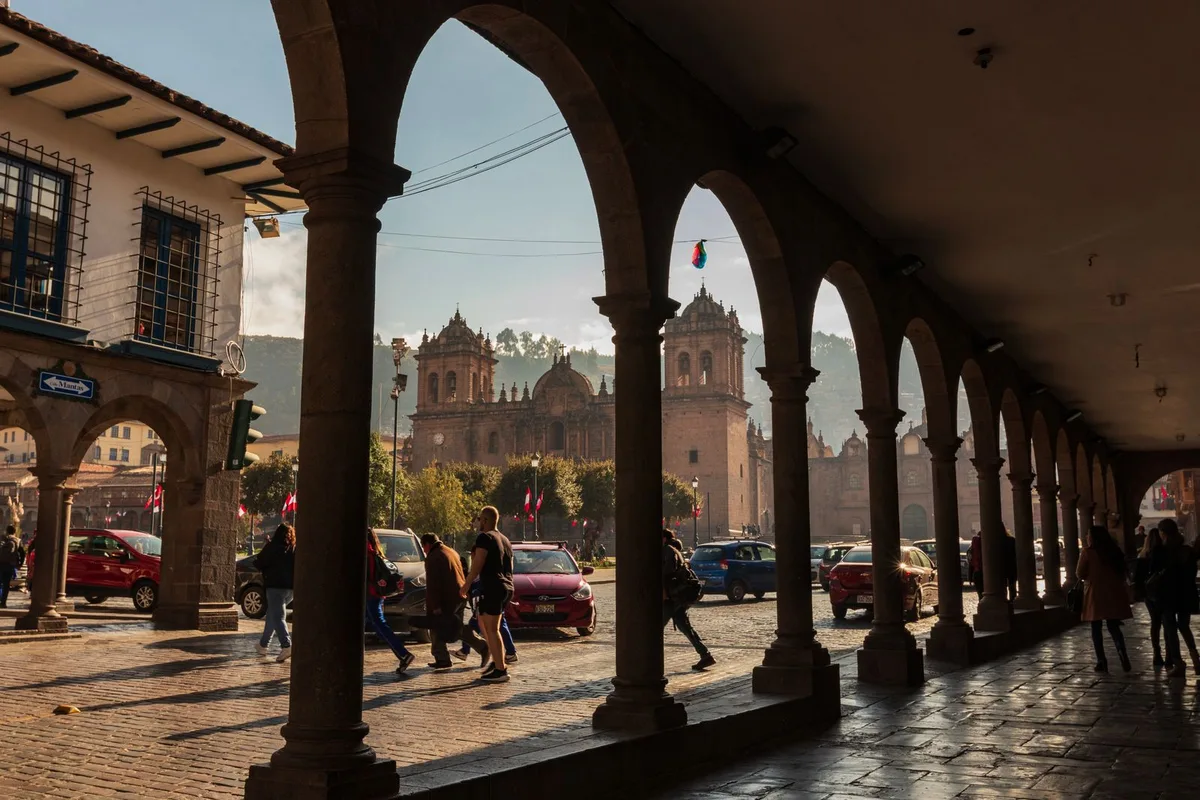
Cross the Plaza de Armas at golden hour. The cathedral fills one whole side of the square and the sillar arcades glow as the light drops. It is the city's living room — start here.
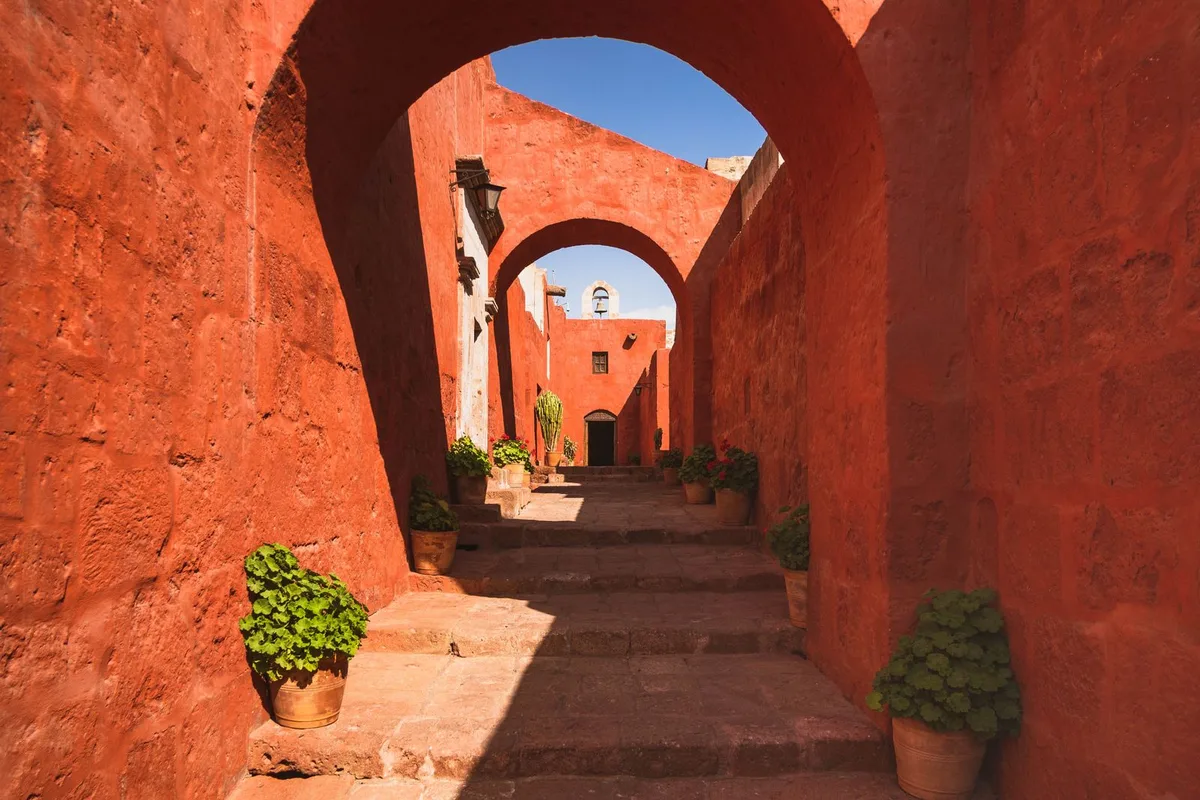
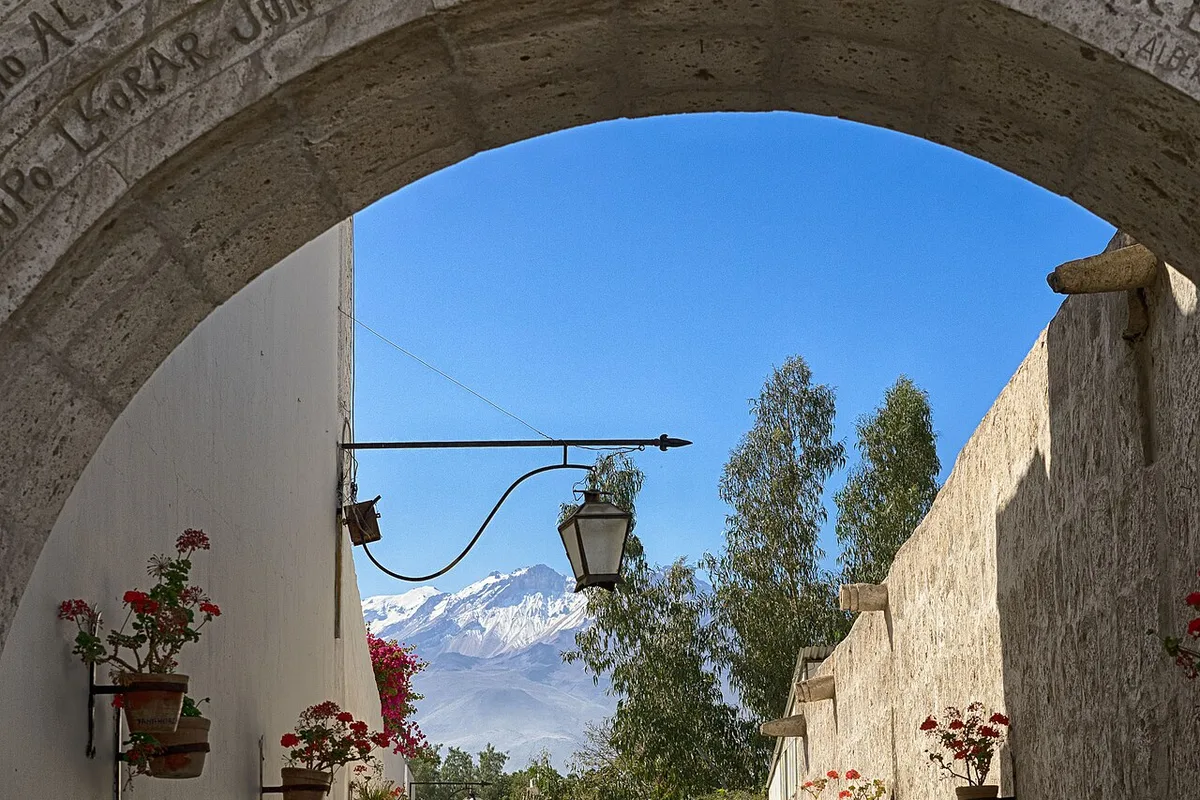
Get lost inside Santa Catalina Monastery. A walled city within the city, all red and blue lanes and quiet courtyards. Entry is S/45, it opens daily from 9 am, and local guides at the gate charge about S/20 — worth it for the stories. Give it two hours.
See Juanita at the Museo Santuarios Andinos. The famous Ice Maiden mummy from Mount Ampato, shown with the offerings buried with her. Entry is S/25, visits are guided only, and no photos are allowed inside.
Walk up to the Yanahuara viewpoint. The sillar arches frame El Misti and Chachani like a postcard. Come in the morning for the clearest views, and try a queso helado from the stalls while you are there.
Graze through San Camilo Market. Arequipa's beloved covered market, a few blocks southeast of the plaza: juice stalls upstairs, wheels of cheese, rocoto peppers and a food court of lunchtime stalls.
Step inside La Compañía church and its cloisters. The carved sillar facade beside the plaza is the city's stone-carving showpiece, and the painted cloisters next door are calm and cool at midday.
After you land in Arequipa: Bookable experiences
Where to stay your first nights
Splurge
CIRQA – Relais & Châteaux.
Best for a once-in-a-trip splurge — an 11-room 1540 sillar parador with a serious kitchen and a rooftop facing El Misti, one block from Santa Catalina.
A 1540 parador built from black and white sillar on Calle Sucre, one block from Santa Catalina, with just 11 rooms around two stone courtyards. There is a rooftop facing El Misti, a serious restaurant and a small plunge pool; check-in is from 3 pm. It is the most atmospheric bed in the city.
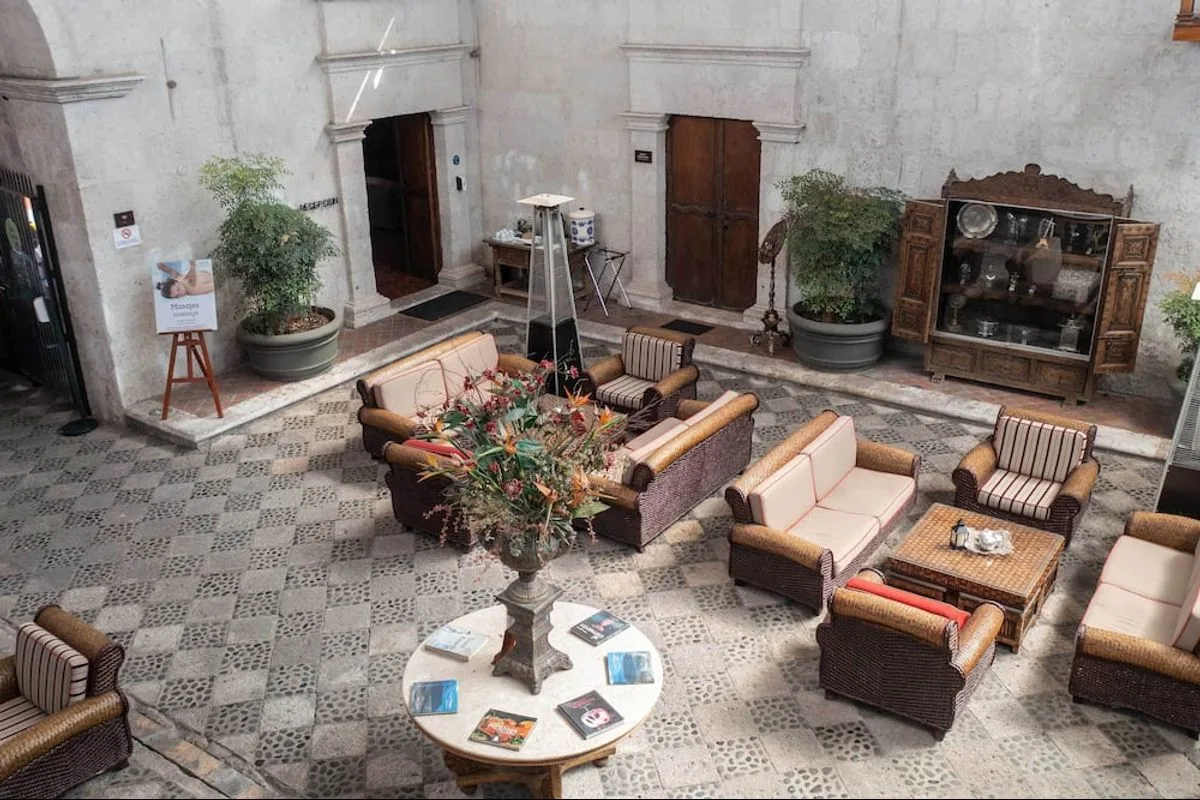
Best for a central, full-service base — the old Casa de la Moneda mint on Calle Ugarte, five minutes from the plaza, with a buffet breakfast included.
The city's old mint, the Casa de la Moneda, on Calle Ugarte — five minutes from the plaza and a block from Santa Catalina. Big, quiet rooms wrap around a stone courtyard, a buffet breakfast is included, and check-in is from 2 pm. The reliable full-service option.
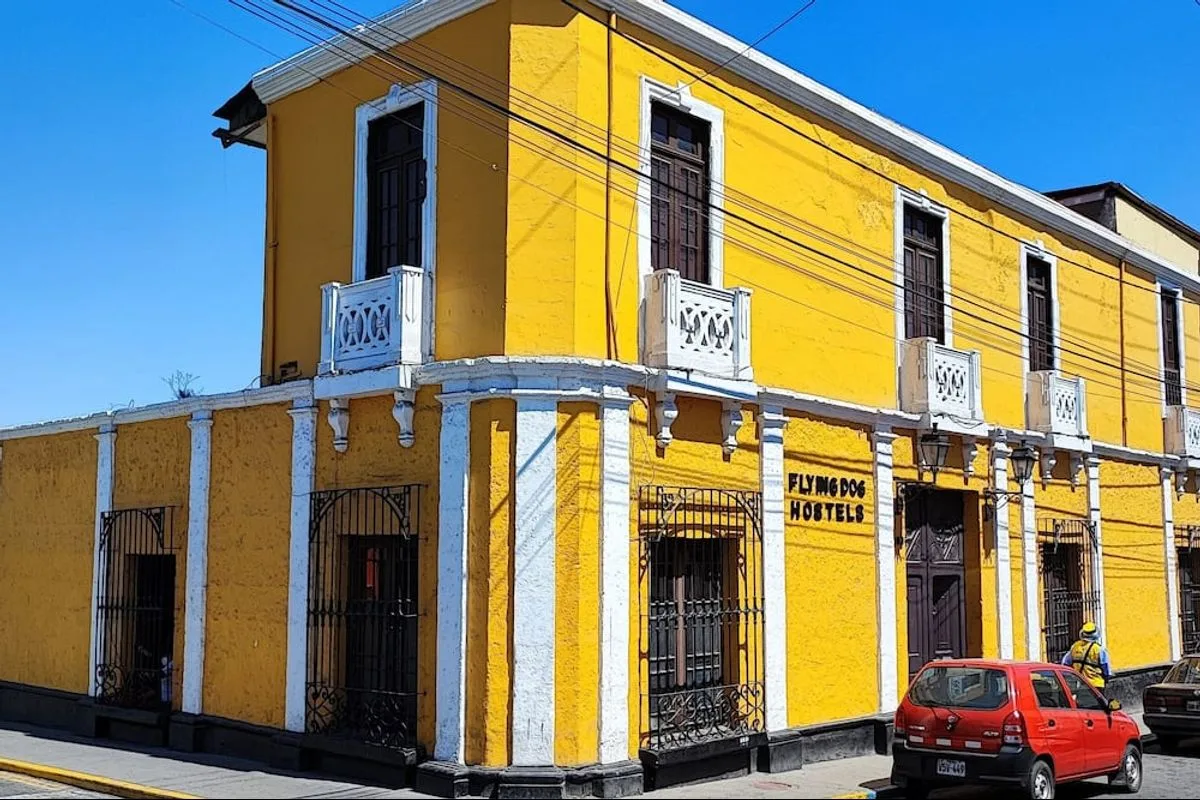
Best for budget travellers who still want character — dorms and private rooms around a blue courtyard, breakfast included, five minutes from the plaza.
A bright yellow colonial house on Calle Melgar, five minutes from the plaza, with dorms and private rooms around a blue courtyard and fountain. Breakfast is included, the bar keeps it sociable, and check-in is from 1 pm. The backpacker base most people end up extending.
Stay in the historic centre for a first visit — the streets around the Plaza de Armas and Santa Catalina put every sight in this guide on your doorstep, and the sillar buildings are half the experience. Yanahuara and Cayma, across the river, are the quieter, more local alternative, with the best volcano views in the city and a short taxi ride back to the plaza.
Start with a picantería, the spicy, generous lunch halls Arequipa is famous for — this is the one locals name first. Order the rocoto relleno, the chupe de camarones if prawns are in, and a queso helado to finish. Lunch only, roughly noon to 4:30 pm; Sundays open early for adobo, the slow pork breakfast stew.
Chicha por Gastón Acurio, Calle Santa Catalina 210.
The polished take on the same tradition, two blocks from the plaza: guinea pig, river prawns and pisco sours in a sillar house. Book ahead for dinner.
Zig Zag, Calle Zela 210.
Alpaca and beef served sizzling on volcanic stone at your table, in a sillar house by the San Francisco church. The splurge dinner of the trip.
Day trips and more
Book the big days before you land if dates are tight — Klook lists Arequipa day trips alongside the three below.
Colca Canyon in a day
One of the world's deepest canyons, twice as deep as the Grand Canyon in places, and the classic Arequipa day out. Pickups run from about 3 am; you breakfast in Chivay, watch condors ride the morning thermals at Cruz del Cóndor, soak in the Yanque hot springs and stop at a viewpoint near 4,860 m on the way home, reaching Arequipa about 5:30 pm. The Colca visitor ticket (S/70 for foreigners) is paid in cash on top.
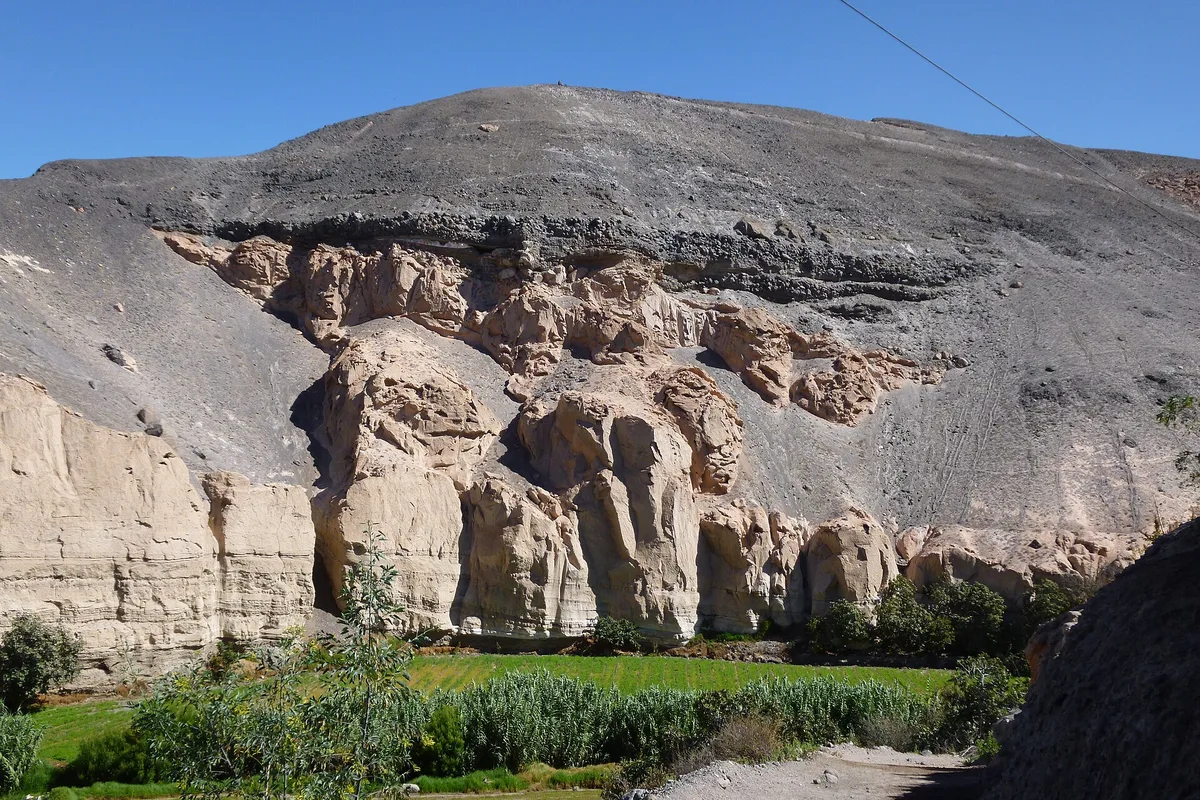
A half-day trip to where the White City actually comes from. Watch carvers split and shape sillar blocks by hand at the Añashuayco quarry, see the petroglyphs in the Culebrillas ravine, and stop at the Yanahuara viewpoint on the way. Morning and afternoon departures keep it easy to fit around a slow start.
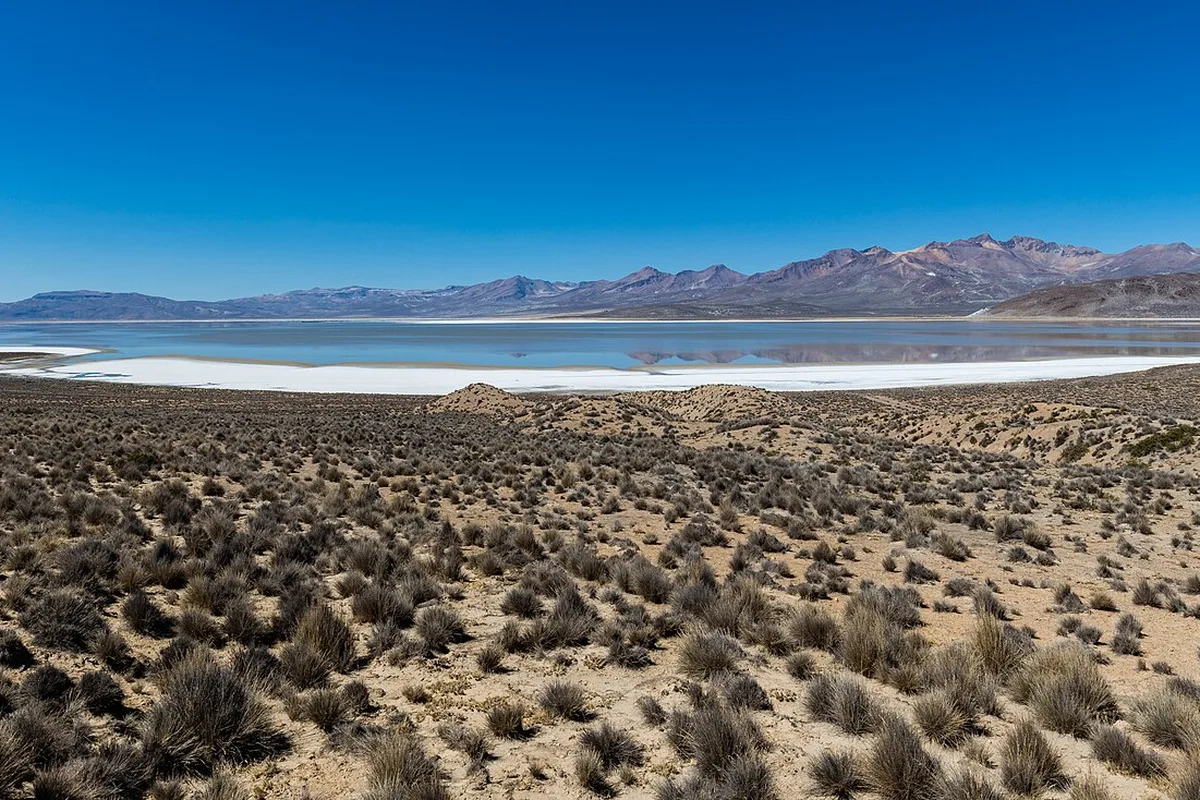
A full day up at about 4,300 m in the Salinas y Aguada Blanca Reserve: a white salt lagoon that turns mirror-still, flamingos in season, vicuñas grazing the puna and volcanoes on every side. The reserve entrance (about S/10) is not included, and the altitude makes this one to schedule after a day or two in the city, not on arrival.
Dry season, April to OctoberBlue skies, cold nights and the clearest volcano views of the year. August is peak seasonbook Colca tours and the better hotels ahead.
Rainy season, January to MarchAfternoon downpours, greener hills and thinner crowds. Colca roads can be disrupted, so keep a spare day in hand.
Shoulder months, April, May and OctoberThe sweet spotdry-season light without peak-season prices or crowds.
Costs are kind by capital-city standards: about S/25 for the airport taxi, S/45 for Santa Catalina, S/25 for the Juanita museum, S/70 for the Colca visitor ticket, a set picantería lunch for about S/25–40, dorm beds from about $12 and good mid-range doubles from about $80. You do not need a car in the city, but for the Chili valley or a self-drive to Colca, compare local car hire on Localrent and AutoEurope before you commit — and remember the canyon road is a mountain drive, not a Sunday spin.
What to pack
Tap items to check them off — your list is saved on this device.
Arequipa's climate is two seasons a day: strong high-altitude sun and warm afternoons, then a real chill once the light goes. Layers, sun protection and a bottle you actually refill beat any gadget. If you are heading to Colca or Salinas, add a proper warm layer for the high passes.
Arequipa runs on Spanish, and even a little of it changes how the city treats you:
Buenos días — good morning
Buenas tardes — good afternoon
Gracias — thank you
La cuenta, por favor — the bill, please
¿Cuánto cuesta? — how much does it cost?
Almost everyone reaches Arequipa on a domestic flight, which means you clear immigration in Lima, not at AQP. Citizens of the United States, Canada, the United Kingdom, the European Union, Australia, New Zealand and many other countries enter Peru visa-free; the officer usually grants up to 90 days, and your passport needs six months of validity. There is no paper form any more — your entry record (the TAM) is digital, and your hotel will ask to see it with your passport so your room bill skips the 18% IGV tax. If a delay or cancellation wrecks the Lima connection on the way in, AirHelp and Compensair both handle flight-compensation claims on a no-win, no-fee basis.
Safety and health
Altitude is the main event
At 2,335 m most people feel day one as a mild headache or poor sleep, and the Colca road — which crosses a pass near 4,900 m — is the real test. Take the first afternoon slowly, eat lightly, hold the pisco sours until night two and drink water steadily. Coca tea is on every menu. If a headache turns severe, or you are breathless at rest, get medical help and descend; hotels can call a doctor any hour.
Sun and dry air do quiet damage
The high-altitude sun burns fast even when the breeze feels cool, and the desert air cracks lips and dries throats. Wear sunscreen and a hat from your first morning, carry lip balm, and keep refilling your bottle — half of what people blame on altitude is plain dehydration.
The centre is calm, with normal city smarts
The historic centre is busy and well lit into the evening. Use official or app-booked taxis after dark, agree every fare before you set off, keep phones off cafe tables facing the street, and leave the passport in the hotel safe — a phone photo of it covers most checks. Arequipa also sits in earthquake country and small tremors are part of life here; hotels post evacuation routes, so glance at yours when you arrive.
Water, stomachs and emergencies
Stick to bottled or filtered water, and respect the rocoto: picantería heat is genuine, so order mild until you know your level. Pharmacies are plentiful and helpful for altitude tablets and stomach upsets. In an emergency call 105 for police, 116 for fire or 106 for an ambulance, and keep your insurer's assistance number saved offline.
The things travellers ask in the first 48 hours: the flat taxi fare, the altitude, the monastery ticket and the Colca day trip.
Airport fares and routes checked against CORPAC and Aeropuertos Andinos del Perú, monastery entry against the Monasterio de Santa Catalina, Colca ticket against AUTOCOLCA, museum entry against the Museo Santuarios Andinos (UCSM) and entry rules against Peru's migration authority, October 2026.
Take a taxi from the terminal: the fare to the historic centre is a flat posted rate of about S/25 and the ride takes 20 to 25 minutes. Agree the price before you get in. There is no public transport at the airport.
Possibly, mildly. At 2,335 m most visitors feel only a headache or light sleep on day one. Take it easy, drink water and skip alcohol the first night. The Colca road, which crosses about 4,900 m, is the bigger test.
Entry is S/45 for adults. The monastery opens daily from 9 am to 6 pm, with last entry at 5 pm, and local guides at the gate charge about S/20 extra. Allow at least two hours inside.
Yes. Day tours pick up from about 3 am, reach the Cruz del Cóndor viewpoint for the morning condor flights, and return by about 5:30 pm. The Colca visitor ticket costs S/70 for foreigners, paid in cash on top of the tour.
Many nationalities, including the US, Canada, the UK, the EU and Australia, enter visa-free and are usually granted up to 90 days. Your passport needs six months of validity, and your entry record is now digital rather than a paper card.
April to October is the dry season, with blue skies and the clearest views of El Misti and Chachani. January to March brings the rains and greener hills. April, May and October balance good weather with smaller crowds.
Fares and fees change — the monastery, CORPAC and the migration authority pages always win.
Arequipa, Saved for After You Land
Landing soon? Get the printable PDF — the essentials from this guide, formatted for your phone:
The airport transport cheat sheet, with ticket links
Our 3 restaurant picks, with maps
The packing checklist
One email with your Arequipa PDF (guide version: Oct 2026). Fare changes and new guides after that. No spam, unsubscribe anytime.
Sources and last verified
Researched and verified in October 2026 against CORPAC and Aeropuertos Andinos del Perú for Rodríguez Ballón airport, the Monasterio de Santa Catalina for entry prices and hours, AUTOCOLCA for the Colca visitor ticket, the Museo Santuarios Andinos (UCSM) for Juanita entry, Peru's migration authority for visa-free entry and the digital TAM, GetYourGuide (Arequipa, l2859) for the day trips, and Expedia and the hotels' own sites for the stays. Prices are in Peruvian soles (S/) unless shown in dollars, and they change — treat every figure here as the honest going rate at the time of checking, and confirm big-ticket items before you travel.
Affiliate disclosure: hotel names, transfers, experiences, and products linked in this guide may earn After You Land a commission at no extra cost to you. Prices and times were checked in Oct 2026 and change often — confirm before you book.