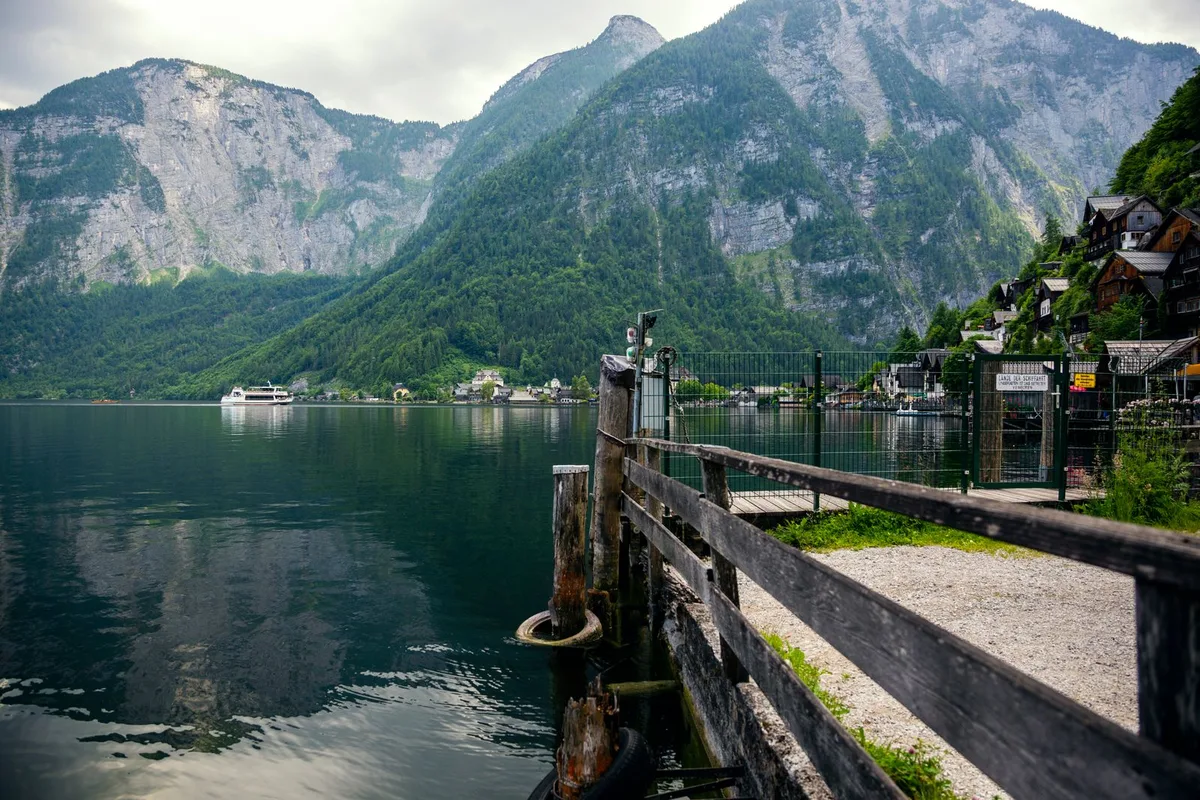
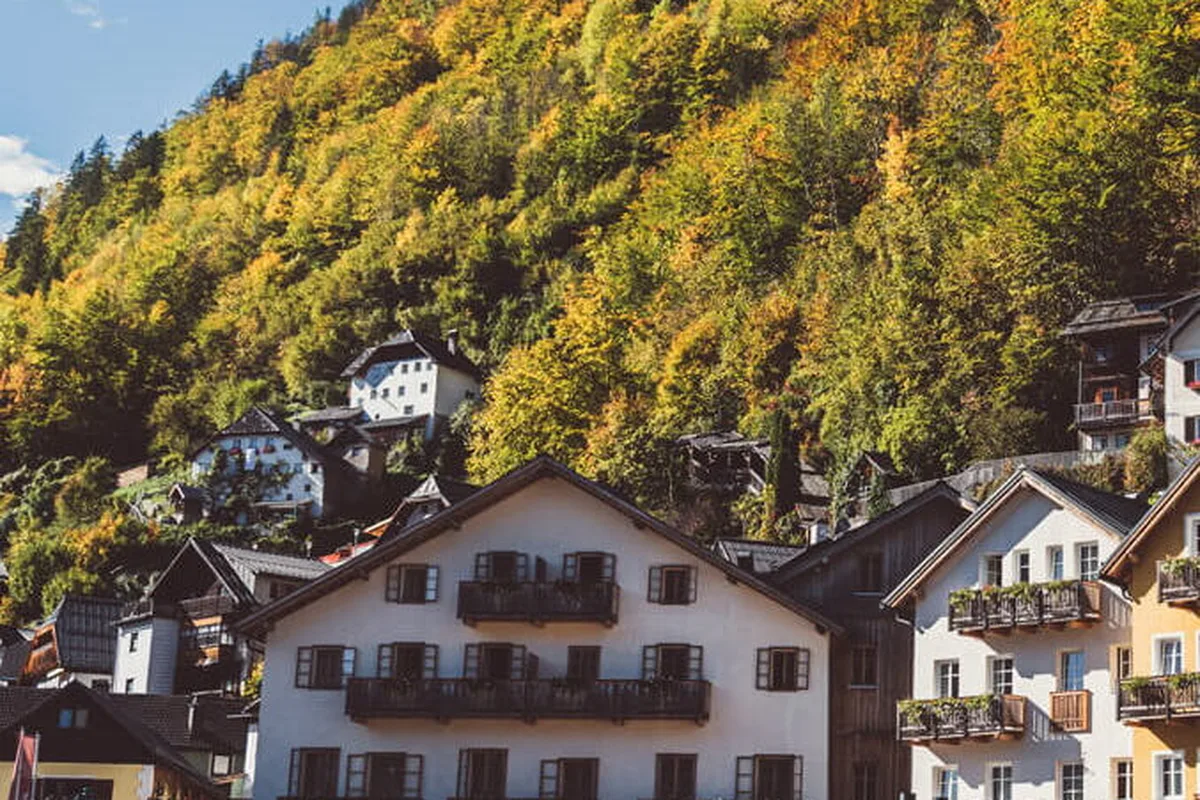
You have just landed in a village with no airport, squeezed between the Hallstätter See and the Dachstein: fewer than 800 residents, a million visitors a year, and 7,000 years of salt under the mountain. This guide covers the relay in from Salzburg — bus, or train and ferry — where to sleep, the €2.40 tourist tax, the first plate of lake fish, and the salt mine, Skywalk and Dachstein cave days that fill day two. The one rule: sleep here, and see it before 9am.
By Paul GreenUpdated Oct 202612 min readPrices checked Oct 2026
You just landed in Hallstatt. There is no airport and no station in the village — Salzburg is the gateway: the last leg is a bus relay into Lahn, or a train plus the €4 lake ferry. Get an Airalo eSIM before you leave Salzburg, arrive ahead of the crowds, and book the salt mine and Dachstein cable cars through GetYourGuide.
Quick facts
Airport
None in the village Salzburg Airport (SZG) is the nearest, about 70 km away — Fly to Salzburg W. A. Mozart (SZG), or Munich (MUC) for more long-haul choice, then ride two and a half hours into the Salzkammergut by bus, or by train and ferry.
Getting in
Bus €14.60 with two changes, or train about €20 to €30 plus the €4 ferry, about 2.5 hours from Salzburg Bus 150 runs Salzburg to Bad Ischl, then 542 to Gosau and 543 to Hallstatt Lahn. The train changes at Attnang-Puchheim and ends across the lake — the Stefanie ferry, €4 cash, meets it.
Currency
Euro (EUR) cards widely accepted, cash still king on the ferry and in small cafés — Cash machines sit in the village, but arrive holding small euro notes: the station ferry takes cash only.
Languages
German an Austrian dialect locally, with English widely spoken in hotels and tours — A greeting in German opens doors in a village that hosts a million visitors a year; the phrase chips below cover the basics.
Time zone
Central European Time CEST (UTC+2) in summer, CET (UTC+1) in winter — Clocks go back on 25 October 2026, so an October visit straddles the change.
Emergency
112 for the EU-wide emergency line; 144 reaches an ambulance in Austria directly Police are 133 and fire 122. The nearest hospital is in Bad Ischl, 25 minutes by road.
Plugs
Type F (Schuko) and Type C sockets, 230 volts North American and British plugs need an adapter; most phone and laptop chargers are dual-voltage.
Tap water
Excellent mountain spring water, safe and good straight from the tap — Refill your bottle at the hotel before Dachstein days.
Tourist tax
Upper Austria's Ortstaxe under the state tourism law: under-15s are exempt, and your host adds it to the bill — rarely inside the quoted rate.
Best months
May, June and September warm lake days without the peak crush — Day trippers flood in between about 10am and 4pm in every season. Stay overnight and the early mornings and evenings are a different, quieter village.
Map
Find your arrival stop, hotel, and first meal. Stays, sights, and landmarks in Hallstatt — live hotel prices plus the key places from this guide.
There is no airport, no motorway exit and no station in the village itself, so your first hour starts before you arrive: pick the arrival that drops you at the right shore, at the right end of the day.
Set up data before you leave home — an Airalo eSIM loads in minutes, so ÖBB trains, bus connections and the ferry timetable work from Salzburg station onwards. For a longer Austria trip, compare Saily and Yesim. The arrival checklist, in order:
Hold small euro notes before you board anything — the station ferry is cash only, €4 a crossing
Ride in early or late: aim to reach the village before 9am or after 4pm, outside the day-trip surge
Walk straight to your room and drop your bags — the lanes are steep, stepped and no place for a roller case tour
If a delayed or cancelled flight wrecked the arrival, AirHelp checks whether the airline owes you compensation — worth five minutes.
Getting around
Journey times are approximate and refer to the listed stop — not necessarily your hotel. Allow extra time for waiting, walking, and connections.
Bus 150 with two changes
Bus 150 runs about 90 minutes to Bad Ischl, then the 542 to Gosau and the 543 to Hallstatt Lahn; one Verkehrsverbund ticket covers the whole run; evening services thin out — check the last connection before you fly
Price€14.60Journeyabout 2.5 hours
Train plus the lake ferry
Change at Attnang-Puchheim; the Stefanie ferry meets the trains at Hallstatt station and crosses in about 10 minutes, €4 single and cash only; Sparschiene rail fares from about €9 sell out early on oebb.at
Door to door from Salzburg with about 2.5 hours free in the village — enough for the lanes, the square and the lake, not the salt mine; the Skywalk funicular and mine tickets are extras
Pricefrom about €85Journeyabout 5.5 hours round trip
Driving yourself
The A1 and the B145 lakeside road to P1, the main lot outside the car-free village; P1 fills by mid-morning in peak season and hotels collect guests from it by shuttle
Priceabout €15 a day parkingJourneyabout 75 min
Hallstatt has no airport and no railhead in the village: every arrival is a relay. Salzburg, about 70 km north-west, is the gateway, and the last leg is either a bus threading the lakes into Lahn, at the village's south end, or a train that stops on the far shore and hands you to a ferry. The rides in from Salzburg:
Choose the bus on a budget and with light bags; choose the train for the arrival across the water — the ferry crossing is the postcard view, delivered as transport. Keep €4 in small notes, and note the last ferry back leaves the village in the early evening.
Prefer to be met? A Kiwitaxi transfer or a Welcome Pickups driver drives Salzburg to the village edge at a fixed price. Driving yourself, price the Salzburg pickup on AutoEurope first — a car earns its keep for Gosau and the Dachstein, not inside a car-free village.
In the village you walk: one lakeside lane, stepped alleys, and everything inside 20 minutes. Buses 542 and 543 link Lahn with Obertraun and Bad Goisern.
In the city
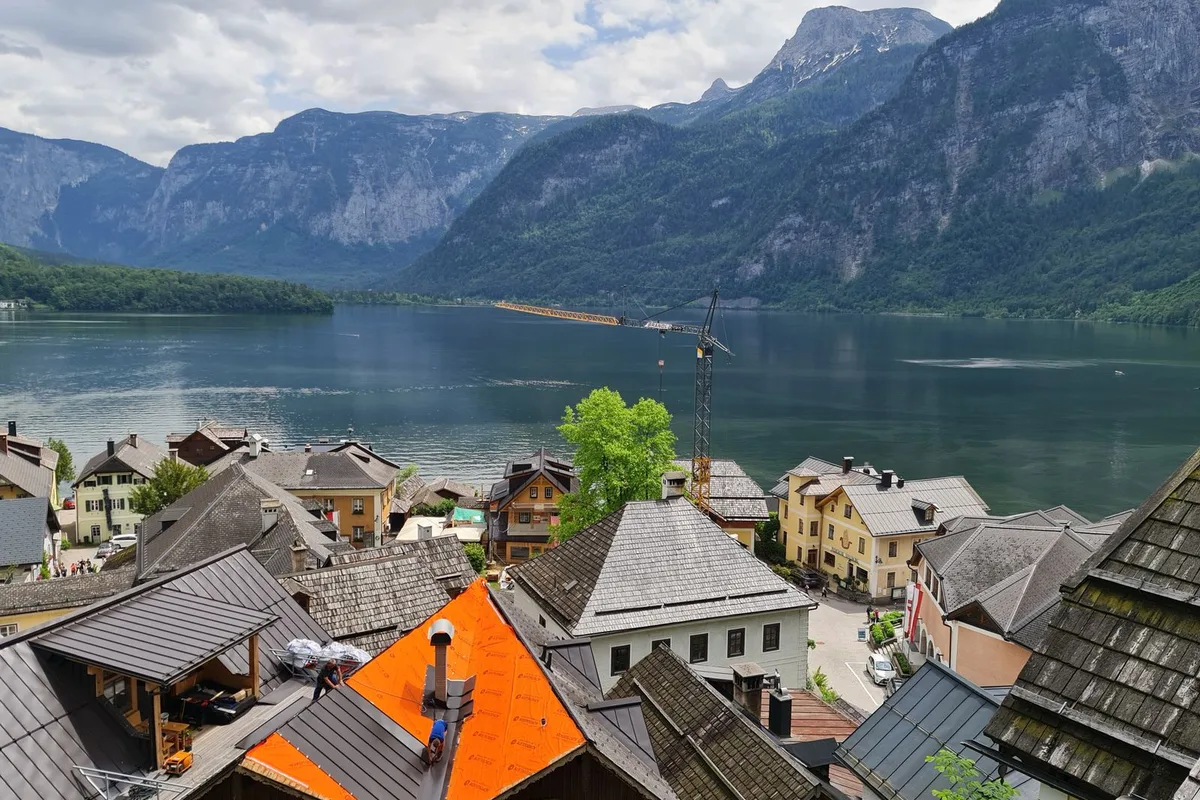
Start on the water. The classic view is from the north end of the lakeside path: pastel houses, the Evangelical church spire and the Dachstein behind. Walk it before 9am and the lane is yours; by noon it is a queue of tripods. Drop into Marktplatz, the small sloping square at the village heart, then climb to the Catholic church and its tiny graveyard, where the Beinhaus — the bone house of painted skulls, kept since the 12th century because burial space ran out — tells you more about this valley than any museum label.
Ride the Salzbergbahn funicular from Lahn to the Salzberg high valley for the Skywalk, the platform floating 360 metres above the rooftops, and the salt mine entrance — the two big-ticket sights share one ride up. Book the headline days before you arrive, because mine slots sell out first — browse the Hallstatt listings on GetYourGuide and compare Klook when stacking tickets.
After you land in Hallstatt: Bookable experiences
Where to stay your first nights
Splurge
Heritage.Hotel Hallstatt.
Best for the lakeside splurge — three historic houses by the ferry landing, every room facing the lake
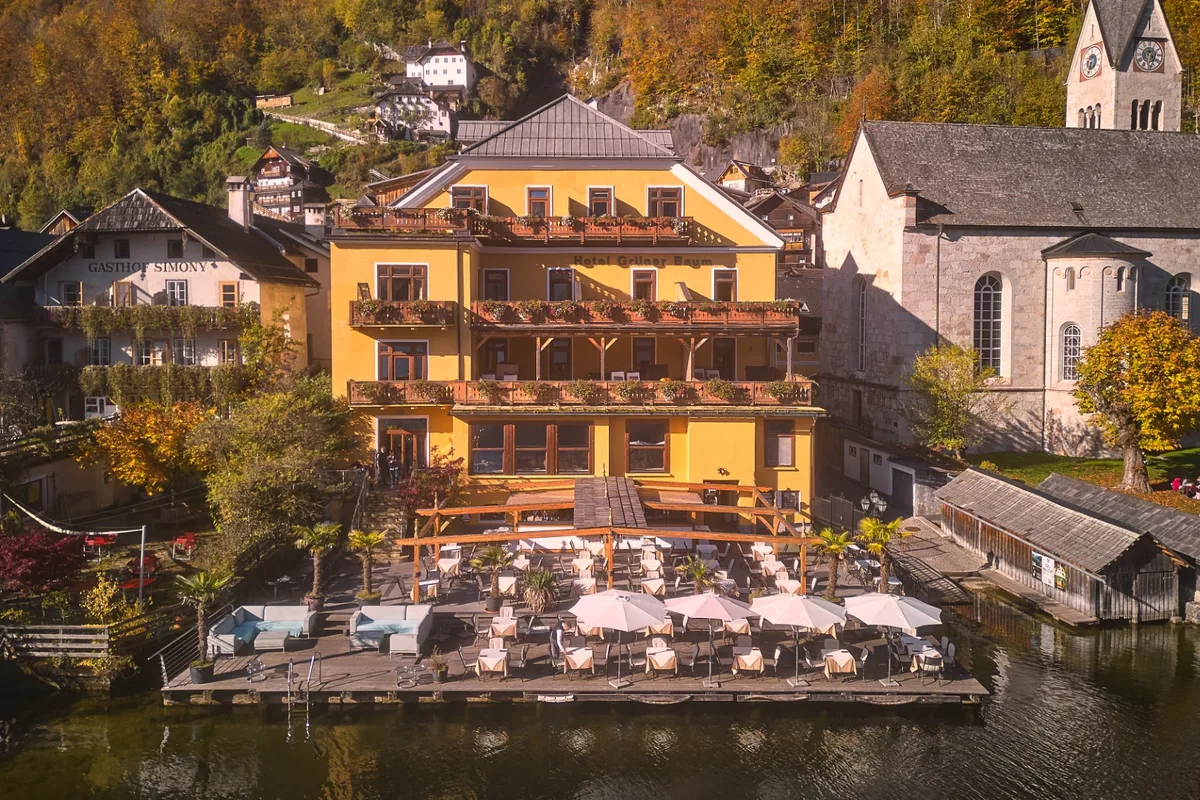
Stay at Landungsplatz 101, beside the ferry landing — three historic houses, including the 500-year-old Haus Stocker, with 63 rooms and suites, every one facing the lake, plus a sauna and a lakeside terrace. Book it for the postcard, from your own window.
Best for the market-square boutique — a house first documented in 1700, with the lake terrace behind
Stay on Marktplatz itself, at No. 104 — a boutique house first documented in 1700, 29 rooms above the square, with the lake terrace behind and Empress Sisi and Agatha Christie in the guest-book history. Book it for the square-side base.
Best for budget beds in the old town — a family-run guesthouse in a 15th-century house
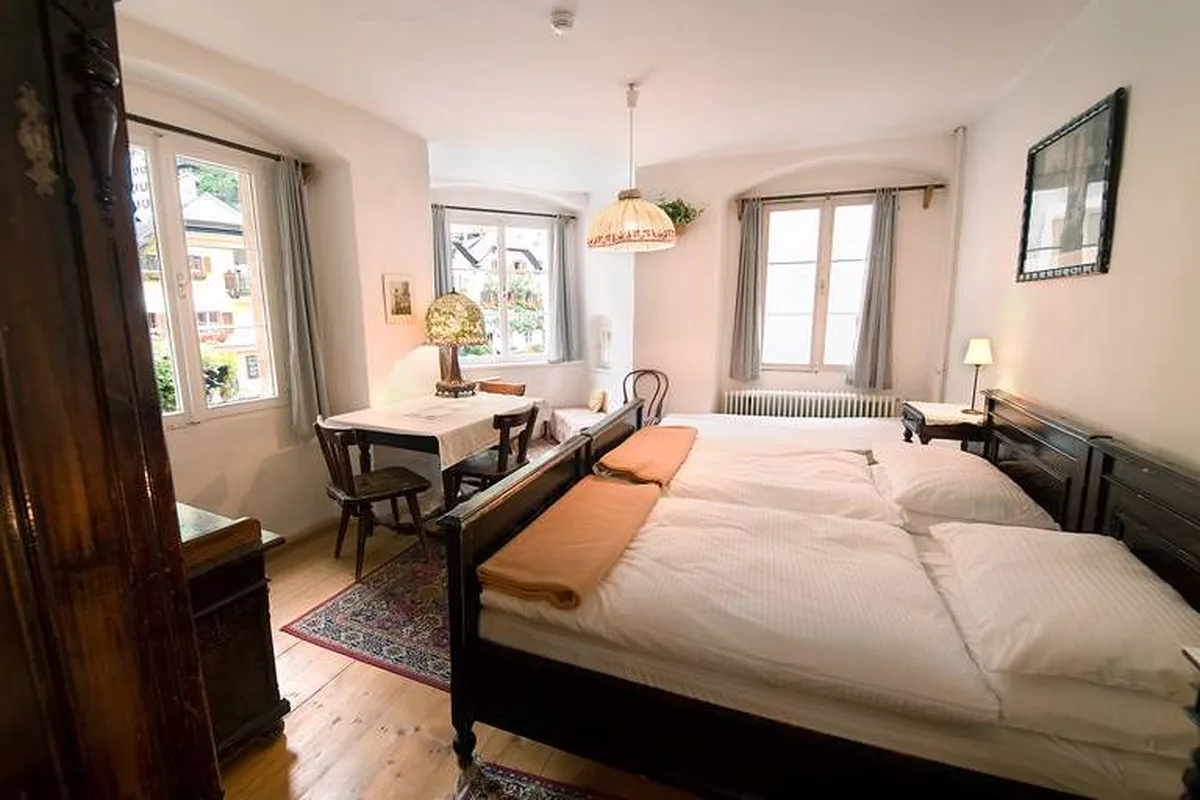
Bed down in a 15th-century house in the old town lanes — a family-run guesthouse of wood-floored rooms, some with lake views and some sharing bathrooms, minutes from the landing. Book it for a real roof inside the village at its lowest honest price.
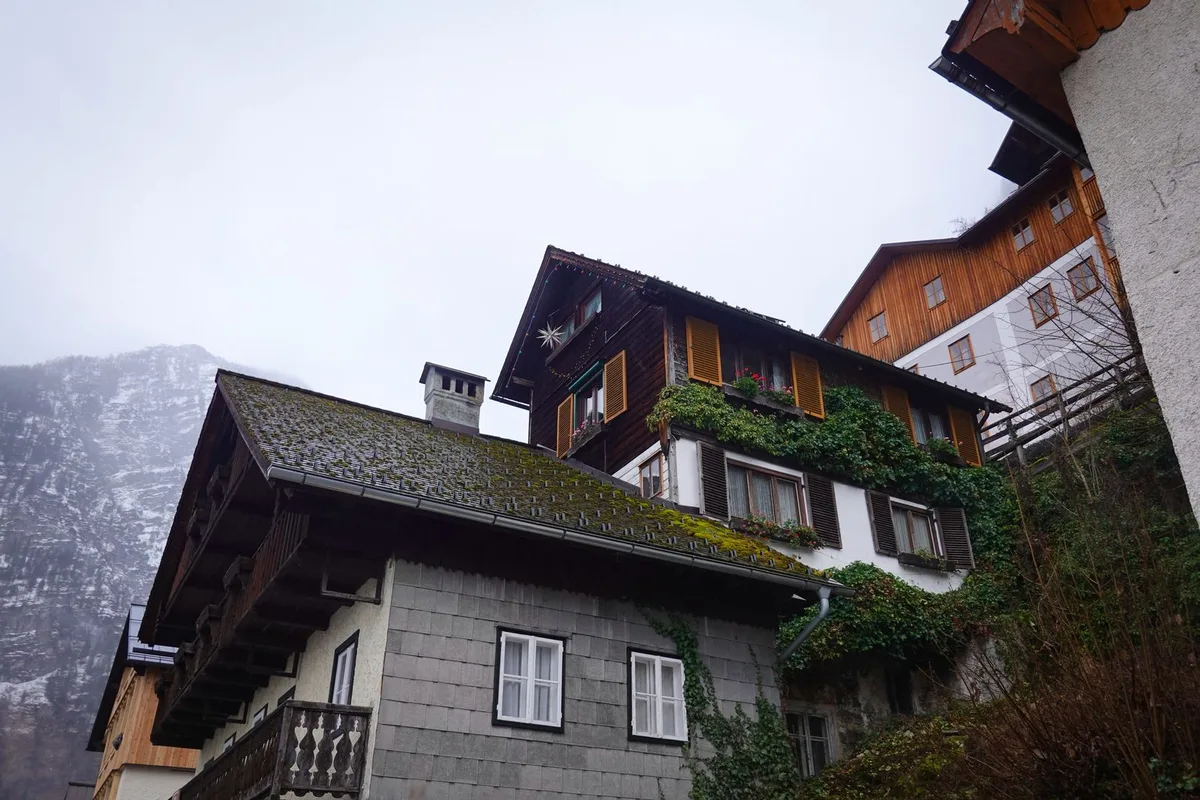
Sleep inside the village if you can — that single choice buys you the empty 7am lanes and the lake at dusk, which no day trip can. The old town suits photographers; Lahn, the flat southern quarter by the bus stop and funicular, suits heavy bags or a Dachstein day.
Book early: a few hundred beds serve a million visitors a year, and the €2.40 per person, per night tax lands on top of the quoted rate.
Where to eat first
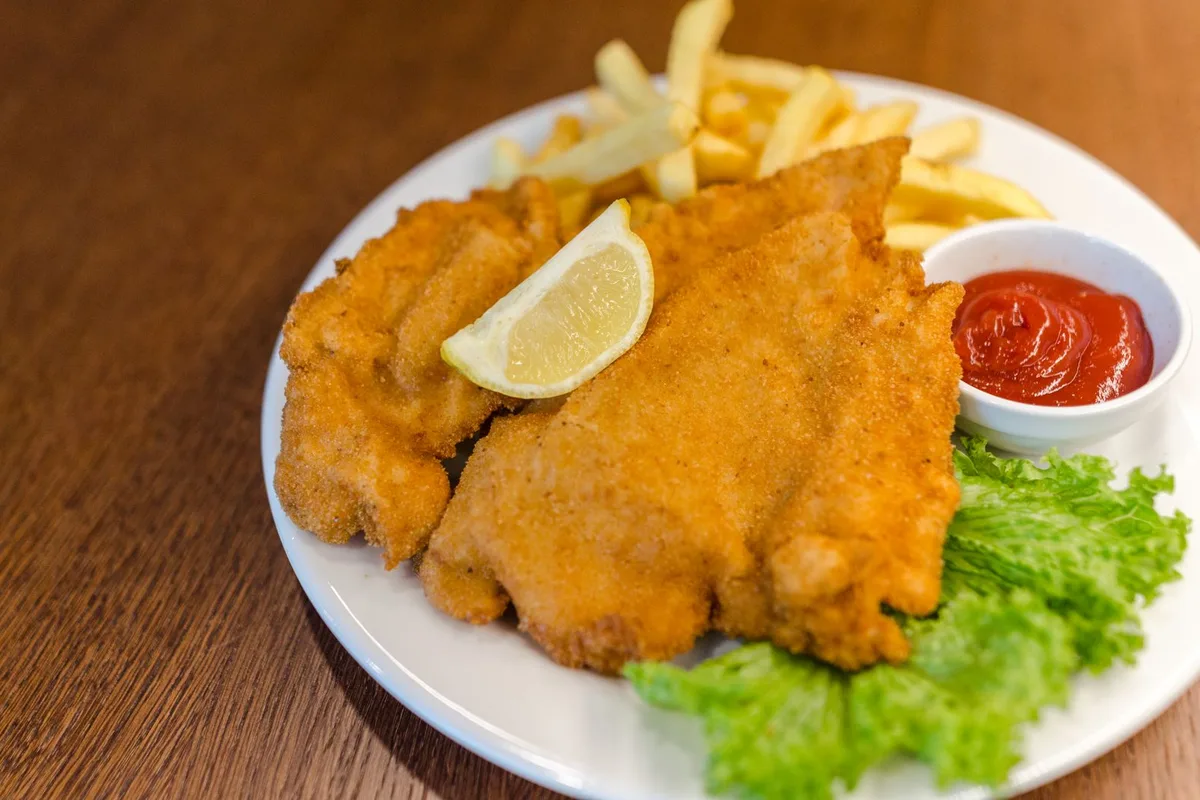
Eat the lake, then the mountain. The Salzkammergut plate is Char — the local lake fish, grilled whole — backed by schnitzel, Kaspressknödel and apple strudel. Lunch service is crushed between noon and 2pm, so eat at 11.30 or after 2. Three first stops:
Bräugasthof Hallstatt, on the Seestrasse in Lahn.
Eat at the brewery inn on the lake — a 15th-century house with a lakeside terrace and traditional Austrian cooking, ten minutes from the square and far calmer at lunchtime.
Gasthaus zum Salzbergwerk, by the Salzbergbahn valley station.
Graze the mine-side inn for schnitzel and grilled lake trout around the funicular — the practical lunch that pairs with a Salzberg afternoon.
Seewirt Zauner, by Marktplatz.
Settle into the Zauner family's dining room, the classic table for lake Char and Dachstein game — book the evening sitting, when the village has emptied.
For food tours and cooking classes across the Salzkammergut, browse the listings on GetYourGuide.
Day trips and more
Three escapes use Hallstatt as the base: the salt mountain above your roof, the caves inside the Dachstein across the lake, and the high plateau day for walkers. Carry a warm layer for all three — the mine sits at 8°C all year.
Salzwelten salt mine and Skywalk
Half a day, starting with the funicular from Lahn: the Skywalk platform 360 metres up, then miners' clothing, wooden slides and an underground salt lake on the official 90-minute guided tour, about three hours door to door. A private Salzburg-based option bundles funicular, Skywalk and a fixed-time mine ticket, from about US$404 per group. Check availability →
Dachstein Krippenstein All-in-One Ticket
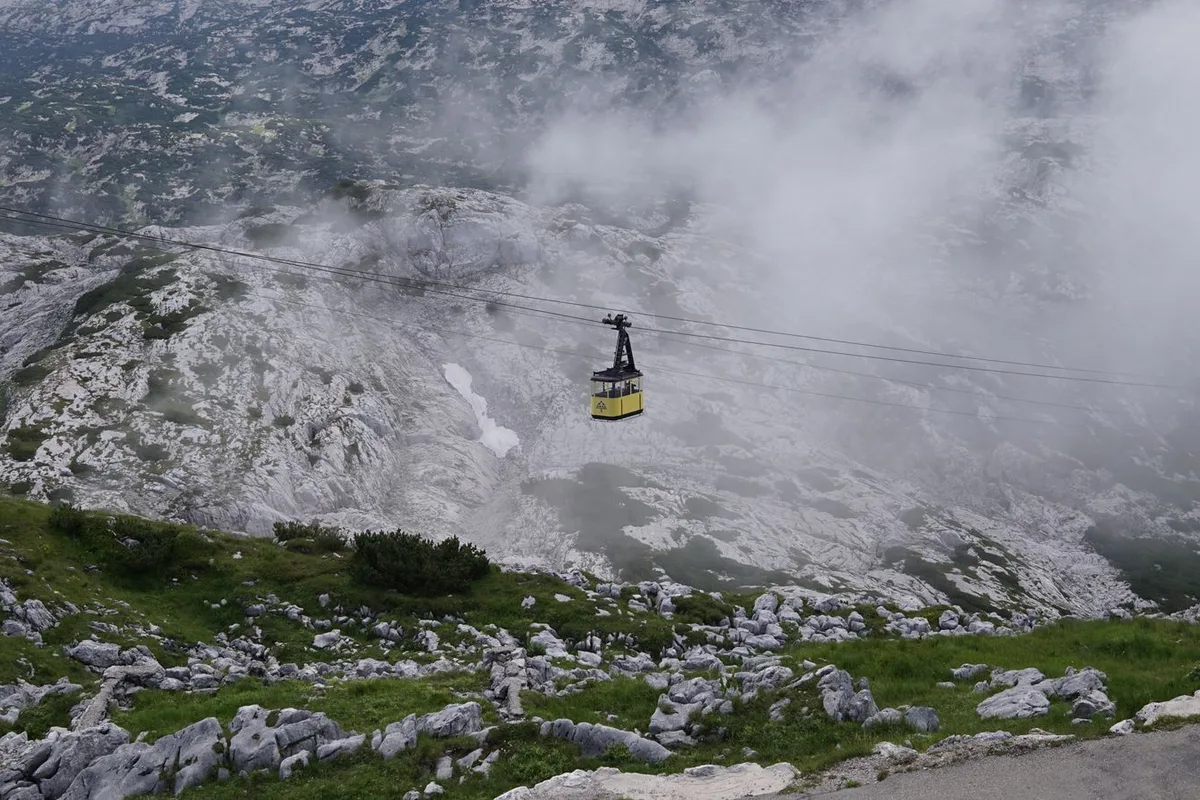
One day in Obertraun, one stop by train and a short bus on: all three cable car sections plus guided entry to the Giant Ice Cave and the Mammoth Cave, and the 5fingers platform over the lake. Rated 4.5 from recent reviews, from about US$74. Start up before noon for both caves. Check availability →
Dachstein Krippenstein Panorama Ticket
One day at 2,100 metres without the caves: every cable car section, the World Heritage Spiral lookout, the 5fingers and the Heilbronn circular trail. Rated 4.8 from recent reviews, from about US$52. Check availability →
Leave a spare half day for Gosausee, the mirror lake under the Dachstein glacier, 20 minutes by bus 542 — go at dawn, before the wind wakes it.
When to go and what it costs
JanFebMarAprMayJunJulAugSepOctNovDec
Budget€70–100
Mid-range€180–260
May, June and September are the sweet spot: the lake swimmable by June, the funicular and mine on full schedules, and crowds a notch below the July and August peak. October brings mist, larch colour and thin weekdays — and the clock change on 25 October. December is the storybook version: snow, the small Christmas market and the village at its quietest, with some guesthouses closed.
Budget in euros, honestly: Hallstatt prices for its postcode, not its size. A backpacker sleeping in Lahn, on bakery lunches and the bus: €70 to €100 a day. Mid-range — an old town room, a lakeside dinner, the mine or the cable cars: €180 to €260 a day. A splurge day with a lake-view suite passes €400. Staying overnight is both the expensive choice and the whole point.
What to pack
Tap items to check them off — your list is saved on this device.
Pack for a steep, car-free village in mountain weather — sun on the lake, cold in the mine, rain off the Dachstein. This is the full list:
Add the Hallstatt extras: a Type F adapter for Austria's Schuko sockets, a genuinely warm layer for the 8°C salt mine even in August, and small euro notes and coins — the ferry and some cafés run on cash.
Language, visa and entry
✓ Visa-free entry for eligible passport holders
German runs the Salzkammergut — Grüß Gott for hello, a softer lilt than the north, and English ready in every hotel and café. The respect move is simple: greet first, in German, then ask.
Four phrases do most of the work:
Grüß GotthelloDankethank youDie Rechnung, bittethe bill, pleaseSprechen Sie Englisch?do you speak English?
Sort your entry paperwork before you book anything non-refundable. Austria sits inside Schengen: US, Canadian, British, Australian and New Zealand passport holders enter visa-free for up to 90 days in any 180-day period across the whole Schengen area, not per country. As of October 2026 no ETIAS authorisation is yet required of visa-exempt visitors, but the scheme is coming — check the official EU page before you fly, and carry proof of onward travel.
Safety and health
Give the crowds a wide berth, not your attention
Hallstatt's real risk is volume, not crime: a million visitors a year in lanes built for a village. Pickpocketing is rare, but the crush at the north viewpoint at noon is real — keep a hand on your phone there, and take your photos at 8am instead.
Respect the lake and the mountain weather
The Hallstätter See is deep, cold and steep-sided — swim only at the signed bathing spots, never off the landing steps. Dachstein weather turns in minutes: the last cable car down is a hard deadline.
Carry cash, and know the ferry's last sailing
The station ferry is cash only and its last crossing back leaves in the early evening; miss it and the bus round via Lahn adds the best part of an hour. Keep €4 in small notes separate, and check the day's sailings against your train before dinner.
Walk the lanes like a local lives there — because they do
Stay off private steps and doorways, keep voices down after dark, and never fly a drone over the village: it is banned, and the rule is enforced. For anything serious, dial 112.
The relay in, the ferry cash and the tourist tax, in short.
Facts verified October 2026
No airport or station sits in the village. From Salzburg, ride bus 150 to Bad Ischl, then the 542 to Gosau and the 543 into Hallstatt Lahn — about two and a half hours, €14.60 for the full run. Or take the train via Attnang-Puchheim to Hallstatt station and the Stefanie ferry across, €4 in cash; the rail leg runs €20 to €30, less on advance Sparschiene fares.
For most visitors, no: Austria is in Schengen, and US, Canadian, British, Australian and New Zealand passport holders stay visa-free for 90 days in any 180 across the whole Schengen area. As of October 2026, visa-exempt visitors do not yet need an ETIAS authorisation — check the official EU page before travel, as the scheme is being introduced.
Yes — it changes the place. Day trippers fill the lanes between about 10am and 4pm; overnight guests get the lakeside path at dawn, the village at dusk and first pick of mine and funicular slots. Beds are scarce and pricey, so book early.
€2.40 per person per night, set by Upper Austria's tourism law. Your hotel or guesthouse collects it on the bill — it is usually on top of the quoted rate, not inside it. Guests under 15 are exempt.
Mostly: hotels, restaurants and shops take cards. The exception that catches everyone is the station ferry — €4 single, €8 return, cash only, with no cash machine on the station shore. Carry small euro notes from Salzburg onwards.
May, June and September for warm lake days and full schedules without the peak crush. December is the quiet, snowy storybook version. In every season, plan sights for before 9am or after 4pm.
Fares change — ÖBB, the Salzburg Verkehrsverbund and the ferry timetable always win.
Hallstatt, saved for arrival
Landing soon? Get the printable PDF — the essentials from this guide, formatted for your phone:
The airport transport cheat sheet, with ticket links
Our 3 restaurant picks, with maps
The packing checklist
One email with your Hallstatt PDF (guide version: Oct 2026). Fare changes and new guides after that. No spam, unsubscribe anytime.
Sources and last verified
Arrival routes against ÖBB and Salzburg Verkehrsverbund listings: bus 150 to Bad Ischl, then 542 and 543 to Hallstatt Lahn, €14.60 for the full run; trains via Attnang-Puchheim in about two and a half hours. Ferry against Hallstättersee Schifffahrt listings and 2026 timetable reporting: the Stefanie crosses in about 10 minutes at €4 single and €8 return, cash only — older €3.50 listings are superseded. Parking at P1 per village listings (€15 a day). Tourist tax against Upper Austria's tourism law and Salzkammergut tourism sources: Ortstaxe €2.40 per person per night, under-15s exempt, collected by the host. Entry rules against EU and Austrian guidance for Schengen visa-free stays, checked October 2026; ETIAS not yet required of visa-exempt visitors at that date. Tours against the GetYourGuide product pages opened October 2026: the private salt mine and Skywalk tour and the two Dachstein Krippenstein tickets; the Skywalk stands 360 metres above the village per Salzwelten. Expedia returned rate limits during this build, so hotel URLs are empty pending the confirmation pass. Photo credits as in the guide data. Last verified October 2026.
Affiliate disclosure: hotel names, transfers, experiences, and products linked in this guide may earn After You Land a commission at no extra cost to you. Prices and times were checked in Oct 2026 and change often — confirm before you book.