
Jerusalem: your first hour after landing
You have just landed for Jerusalem — through Ben Gurion and the train up into the hills, then it is all golden stone: the walled Old City, the Wall, the markets and the Mount of Olives. This guide covers the arrival run, the Shabbat shutdown, the holy sites' visiting rules, market lunches, Bethlehem and Masada at sunrise.
In this guide
You just landed in Jerusalem — by way of Ben Gurion: the direct train climbs from the airport to Yitzhak Navon station in about half an hour for roughly ₪23, and the light rail outside runs to the Old City gates. Sort your Airalo eSIM before you land, and start the Old City early — the great sites are free, and mornings beat every queue.
Quick facts
Airport
Getting in
Currency
Languages
Time zone
Emergency
Plugs
Tap water
Tourist tax
Best months
Map
Stays, sights, and landmarks in Jerusalem — live hotel prices plus the key places from this guide.
Settle in
Photograph your entry slip the moment you get it
— the B2 card is your proof of legal entry and your key to VAT-free hotel rates.
Land Friday afternoon or Saturday
and the plan is the taxi rank or a pre-booked transfer — the Nesher sherut vans no longer run.
Choose your base by the walls:
Jaffa Road or Jaffa Gate puts the Old City a walk or one tram hop away.
Buses take no cash:
load an anonymous Rav-Kav card at Yitzhak Navon, or pay by QR in Moovit, before your first ride.
Ride the light rail to City Hall or Damascus Gate
on the first evening and walk the lanes as the light fades.
Mind Friday:
take a market lunch or a dinner from the list below — but land on Friday and eat before the early closings.
Inside the Ottoman walls, the Old City packs four quarters — Christian, Muslim, Jewish and Armenian — into about a square kilometre of stepped lanes. West of the walls, the modern city runs down Jaffa Road from Jaffa Gate to Yitzhak Navon station, the light rail stitching the halves together; most first stays anchor along that line.
From Friday afternoon to Saturday evening, trains, light rail and city buses stop, and Mahane Yehuda and most western shops and restaurants close. The Old City's Christian and Muslim quarters trade through Saturday, and East Jerusalem's Arab buses keep running — plan an Old City and Mount of Olives weekend.
Getting around
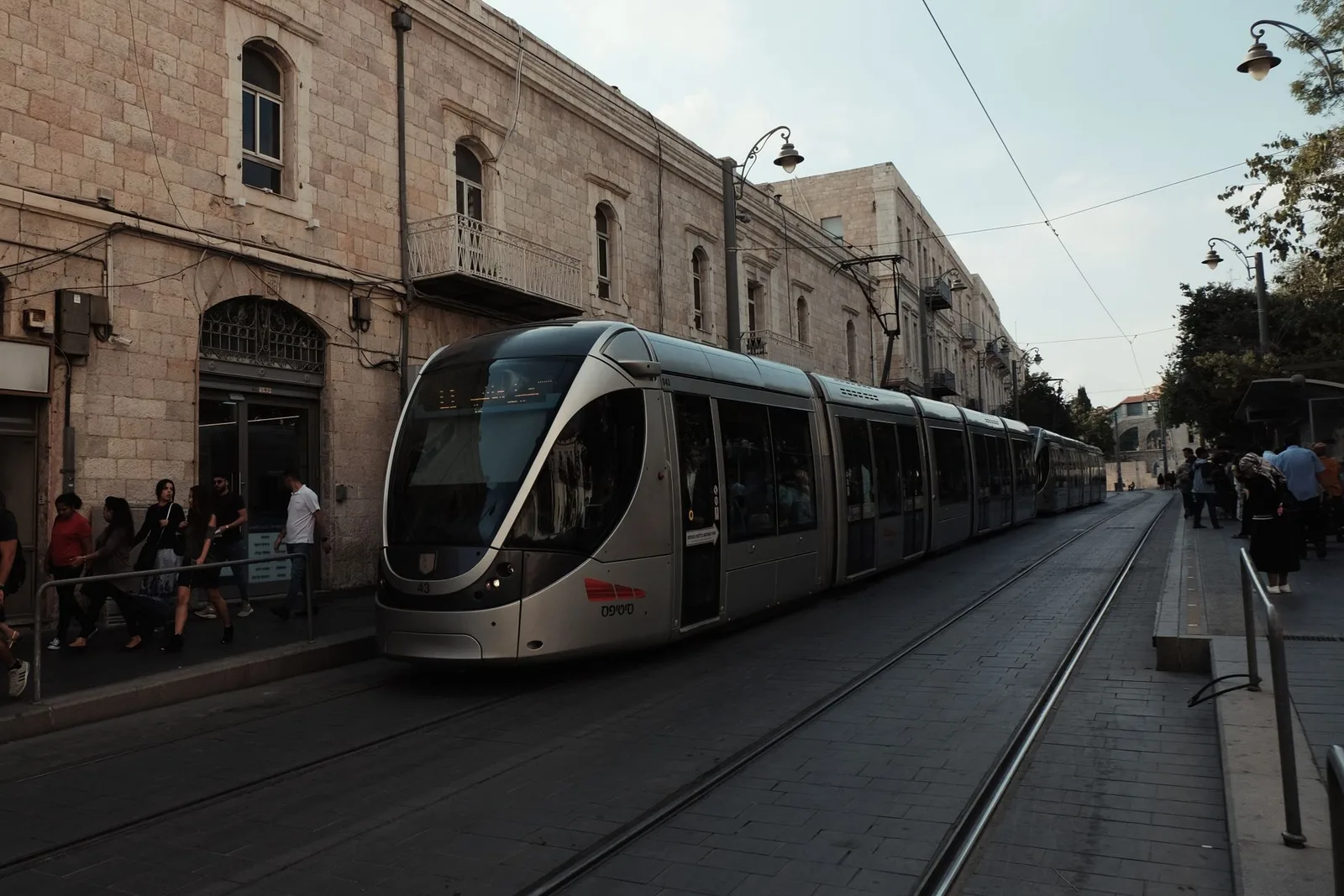
Times are airport to city centre.
Train (Israel Railways)
Direct from under Terminal 3 to Yitzhak Navon, 80 m underground beside the Central Bus Station; roughly hourly; no Shabbat or holiday service
Bus 485 (Egged)
Cheapest ride, to the Central Bus Station area — cut back in 2026 to a handful of departures a day; check Egged or Moovit first; no Shabbat service
Official airport taxi
Official rank outside Terminal 3 arrivals, dispatched through Gett — order at a kiosk or in the app, ride code to the queue; metered; runs around the clock, Shabbat included
Pre-booked private transfer
Driver waiting in arrivals, price fixed at booking — reliable for Shabbat arrivals, late nights, families and heavy luggage
Inside the walls the Old City is walking-only — stepped, cobbled, steep. Outside, the light rail along Jaffa Road and city buses do the work; a Rav-Kav card or Moovit covers buses, light rail and trains. A single city ride costs ₪8 including 90 minutes of transfers. The airport rides are these:
The Red Line runs from Neve Yaakov past Damascus Gate and City Hall, down Jaffa Road past Mahane Yehuda to the Central Bus Station and Hadassah Ein Kerem. A first Green Line section opened in August 2026: Malha via the Central Bus Station to the Givat Ram campus. Validate before boarding.
On Shabbat, East Jerusalem's Arab buses run through Saturday from the stations by Damascus Gate and Herod's Gate.
Driving is a poor idea: one-way lanes, scarce expensive parking, the Old City closed to cars. Rent only for Masada, the Dead Sea and the desert; AutoEurope compares desks. Rentals are not insured across Area A checkpoints, so Bethlehem is a bus or tour day.
Welcome Pickups puts a driver in arrivals at a price fixed when you book — worth it after a red-eye.
In the city
Jerusalem inverts the sightseeing budget: the Western Wall, the Church of the Holy Sepulchre, the Temple Mount esplanade and the Mount of Olives are all free; the paid tier — archaeology and museums, mostly ₪38 to ₪58 — comes second.
- The Western Wall — Judaism's holiest prayer site, the Temple plaza's retaining wall — free, open around the clock. Security checks at entrances; men's and women's sections, paper head coverings provided for men, modest dress required. Busiest Friday sundown and Saturday; no photography then or on festivals.
- Temple Mount and Haram al-Sharif — The esplanade above the Wall: the Dome of the Rock and Al-Aqsa Mosque. Non-Muslims enter only via the Mughrabi Gate walkway by Dung Gate, Sunday to Thursday — winter (Oct-Mar) 7:30-10:30 and 12:30-13:30; summer (Apr-Sep) 7:30-11:00 and 13:30-14:30. Closed Fridays, Saturdays and Muslim holidays, sometimes without notice. Free; bring your passport, dress modestly, no religious articles or large bags. The mosques are for Muslim worshippers only.
- The Church of the Holy Sepulchre and the four quarters — The church over the sites of the crucifixion and the tomb — free; come at opening, 4:30 to 5:00, before the Tomb queues. Around it: the Cardo, the Jewish Quarter squares, the Muslim souks, the Armenian courtyards. The Ramparts Walk, about ₪25, circles the wall tops from Jaffa or Damascus Gate. Guided walks daily on GetYourGuide.
- Tower of David Jerusalem Museum — The Jaffa Gate citadel, reopened June 2023 after a complete renewal, with the finest wall-top views. Adult ₪55; allow two hours; evening shows booked separately.
- City of David and Hezekiah's Tunnel — Five minutes from Dung Gate; guided tours including the tunnel from ₪45, on the City of David site. The wet route wades 30 minutes through water up to 70 cm deep, in the dark — water shoes and a change of clothes are essential; the dry Canaanite channel is the alternative. Closes Saturdays and early Fridays.
- The Western Wall Tunnels — Guided tours only, along the Wall's full underground length beneath the Muslim Quarter — Herodian masonry. Adult ₪38, on the Western Wall Heritage Foundation site; busy-week slots sell out ahead.
- Israel Museum — The national museum at Givat Ram: the Shrine of the Book with the Dead Sea Scrolls, the model of Second Temple-period Jerusalem, wings for a full day. Adult ₪54; children free Tuesdays and Saturdays; short hours Fridays, Tuesday evenings only.
- Yad Vashem — The World Holocaust Remembrance Center on Mount Herzl, at the Red Line's western end. Free entry; a timed reservation on the official site is required; the history museum admits ages 10 and over only. Closed Saturdays and Jewish holidays; allow half a day.
- Mahane Yehuda Market — The city's larder, off Jaffa Road: produce, halva, spices, bakeries and juice stalls by day, bars in the shuttered lanes after dark. Weekday mornings for shopping; Friday is the pre-Shabbat surge; closed Saturday until the bars reopen.
- The Mount of Olives — Free; the first panorama: the Old City across the Kidron Valley from the Seven Arches viewpoint. Walk down past the churches to Gethsemane — small donations at some, modest dress at several. Go early; the climb back is steep, taxis at top and bottom.
Guided e-bike tours make the hills rideable — BikesBooking lists tours and rentals. On a short trip, compare Klook bundles against gate prices: a pass here must beat the paid core — Tower of David, the tunnels, the Ramparts Walk and the museums.
After you land in Jerusalem: Bookable experiences
Where to stay your first nights

Mamilla Hotel.
Best for the Jaffa Gate luxury stayJerusalem stone and glass on Mamilla Avenue at 11 King Solomon Street, minutes' walk from Jaffa Gate: rooftop restaurant looking straight at the walls, a serious spa and pool.

The American Colony Hotel.
Best for East Jerusalem characterA late-Ottoman palace at 1 Louis Vincent Street, north of the Old City above Damascus Gate: gardens, a courtyard pool and tile-and-arch interiors with a century of history. Ten minutes' walk from the walls.

Abraham Jerusalem.
Best for Davidka Square on a budgetThe city's big social hostel at 67 HaNevi'im Street, on Davidka Square one light-rail stop from the centre, a short walk from Mahane Yehuda: dorms and private rooms, lounge and bar, communal kitchen, and a busy tours desk. Book private rooms early.
Base yourself on the Jaffa Road line or the Old City's edge: Mamilla and Jaffa Gate put the walls at walking distance; Zion Square trades a little proximity for restaurants and the tram.
For a quieter return visit, Ein Kerem and the German Colony trade the tram line for atmosphere; hotels inside the walls put the sites at your door, with every arrival a walk with luggage.
Where to eat first
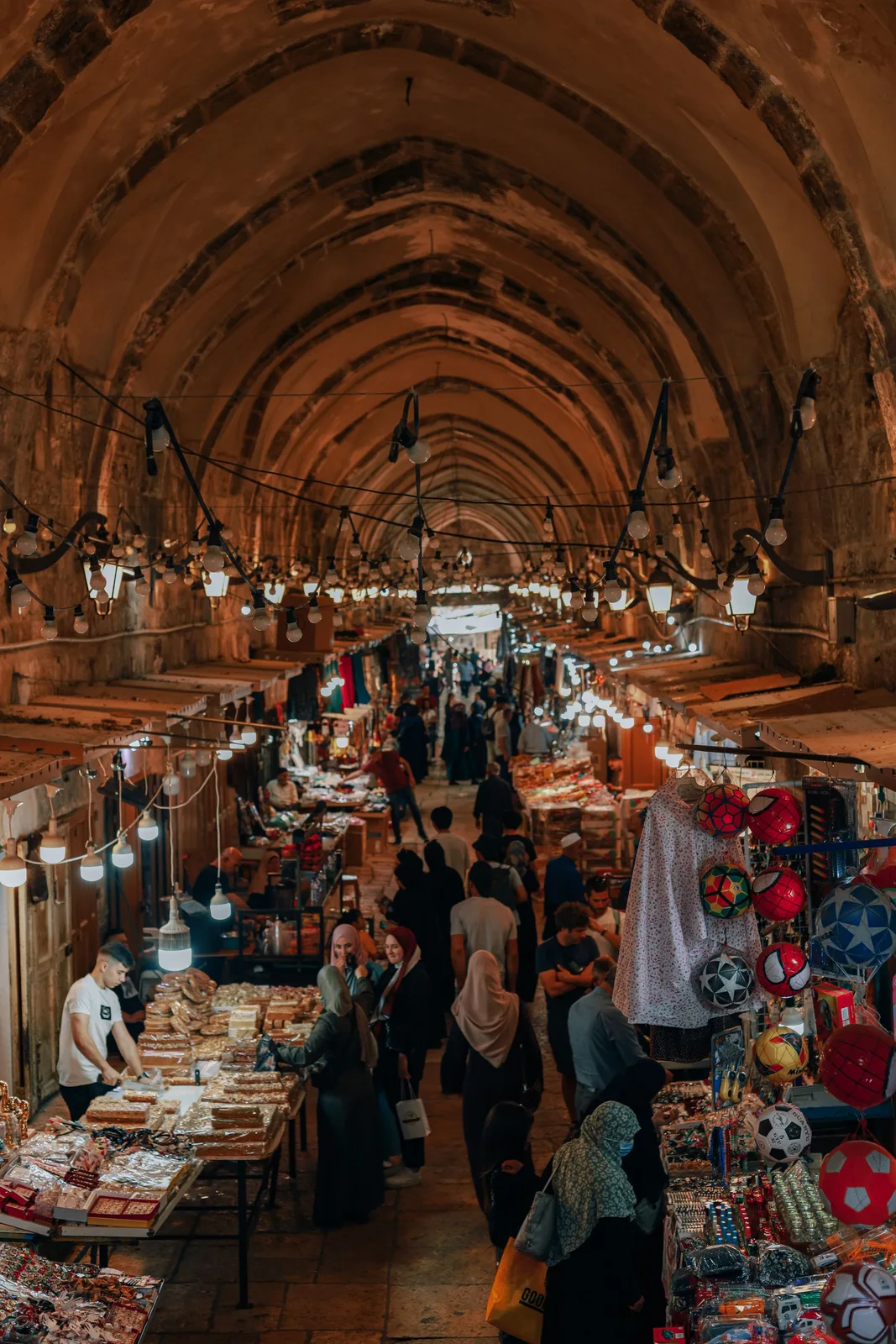
Market cooking is Jerusalem's fine dining: Mahane Yehuda's stalls feed a ring of serious restaurants, and the centre hides a beloved bookstore café. All three below are a short walk from Jaffa Road, closed or curtailed on Saturday — plan them for weekdays.
Machneyuda — the market chef's restaurant.
Map → At 10 Beit Ya'akov Street, on the market's edge; lunch Sunday to Friday, dinner through the week, closing Friday mid-afternoon, reopening Saturday evening. Book well ahead.
Azura — the market's Iraqi kitchen.
Map → In Mahane Yehuda's Iraqi lanes at 4 HaEshkol Street; lunch only, Sunday to Thursday from 10:00, Friday until 14:00, closed Saturday. Kubbeh soups and slow stews on kerosene burners since 1952 — beet kubbeh, hamusta, oxtail when it is on.
Tmol Shilshom — the bookstore café.
Map → Up a courtyard at 5 Yoel Moshe Salomon Street in Nahalat Shiva; Sunday to Thursday from 09:00, Friday until 14:00, closed Saturday. A kosher dairy café inside a working bookshop in a 150-year-old stone building: famous shakshuka, salmon in fig sauce.
Day trips and more
Day trips take a Sunday-to-Thursday rhythm — trains and Egged buses stop over Shabbat, while Bethlehem's Arab buses run daily. Organised versions of all three are compared on Tiqets.

Bethlehem
Bus 231 from the Arab bus station by Damascus Gate, about ₪7, runs via Beit Jala into central Bethlehem in 30 to 45 minutes; walk twenty minutes from the terminus to Manger Square and the Church of the Nativity. Carry passport and entry slip for the checkpoint; Israeli citizens cannot enter Area A. The church is free and unbooked; the Grotto queue is the bottleneck — arrive early. The Milk Grotto is five minutes away.
Check availability →
Masada and the Dead Sea
Egged 486 from the Central Bus Station, several times a day: about an hour and a half to Masada, on to Ein Bokek's beach hotels for about ₪42; the 444 runs the same road towards Eilat. Climb the Snake Path before dawn for sunrise, or take the cable car from 08:00. Ein Bokek's public beach is free, with showers and shade; float in dips of 10 to 15 minutes.
Check availability →
Tel Aviv
The fast train from Yitzhak Navon takes about 35 minutes, around ₪23.50: beaches, Bauhaus streets, the Carmel Market and nightlife. Day-trip it on a weekday. Saturday trains resume in the evening.
Check availability →When to go and what it costs

Jerusalem prices a step below Tel Aviv: a good mid-range double runs roughly ₪450-900 a night in season before the tourist VAT exemption; paid sights sit at ₪25-58.
Keep cash in small notes for church donations and tips; restaurant tipping runs about 10 percent, usually left in cash.
Keep every booking confirmation and receipt: for EU261-covered disruption, AirHelp handles the compensation claim on a no-win, no-fee basis.
What to pack
Tap items to check them off — your list is saved on this device.
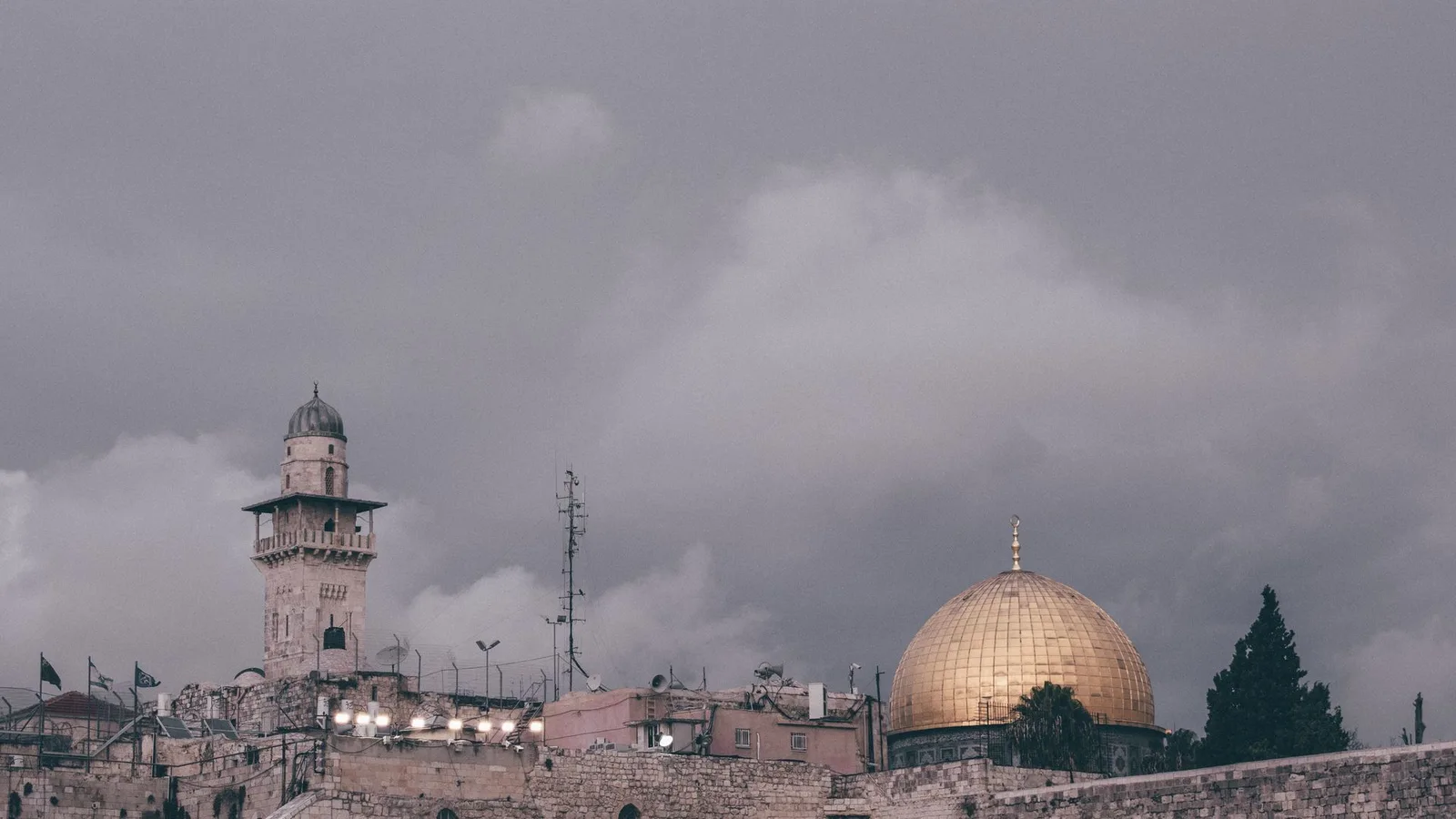
Packing turns on altitude and stone: evenings cool in every month, and the Old City is a stepped, cobbled climb. Add a layer covering shoulders and knees for the holy places.
- Comfortable walking shoes — steps and polished stone, the Mount of Olives climb, tunnel water underfoot. Shop walking shoes on Amazon →
- Sunscreen — sun at altitude, spring to autumn; the Dead Sea shore gives no shade. Shop sunscreen on Amazon →
- Reusable water bottle — tap water is safe. Shop water bottle on Amazon →
- Phone charger and power bank — for Moovit, taxi apps and alerts. Type H sockets — pack an adapter. Shop power bank on Amazon →
- Daypack — for the cover-up layer, water and market finds. Shop daypack on Amazon →
- Sunglasses — glare off pale stone and rooftops, all year. Shop sunglasses on Amazon →
- Light rain jacket — winter rain November to March; evening chill at the Mount of Olives. Shop rain jacket on Amazon →
As an Amazon Associate I earn from qualifying purchases.
Language, visa and entry
! Check visa requirements before you fly
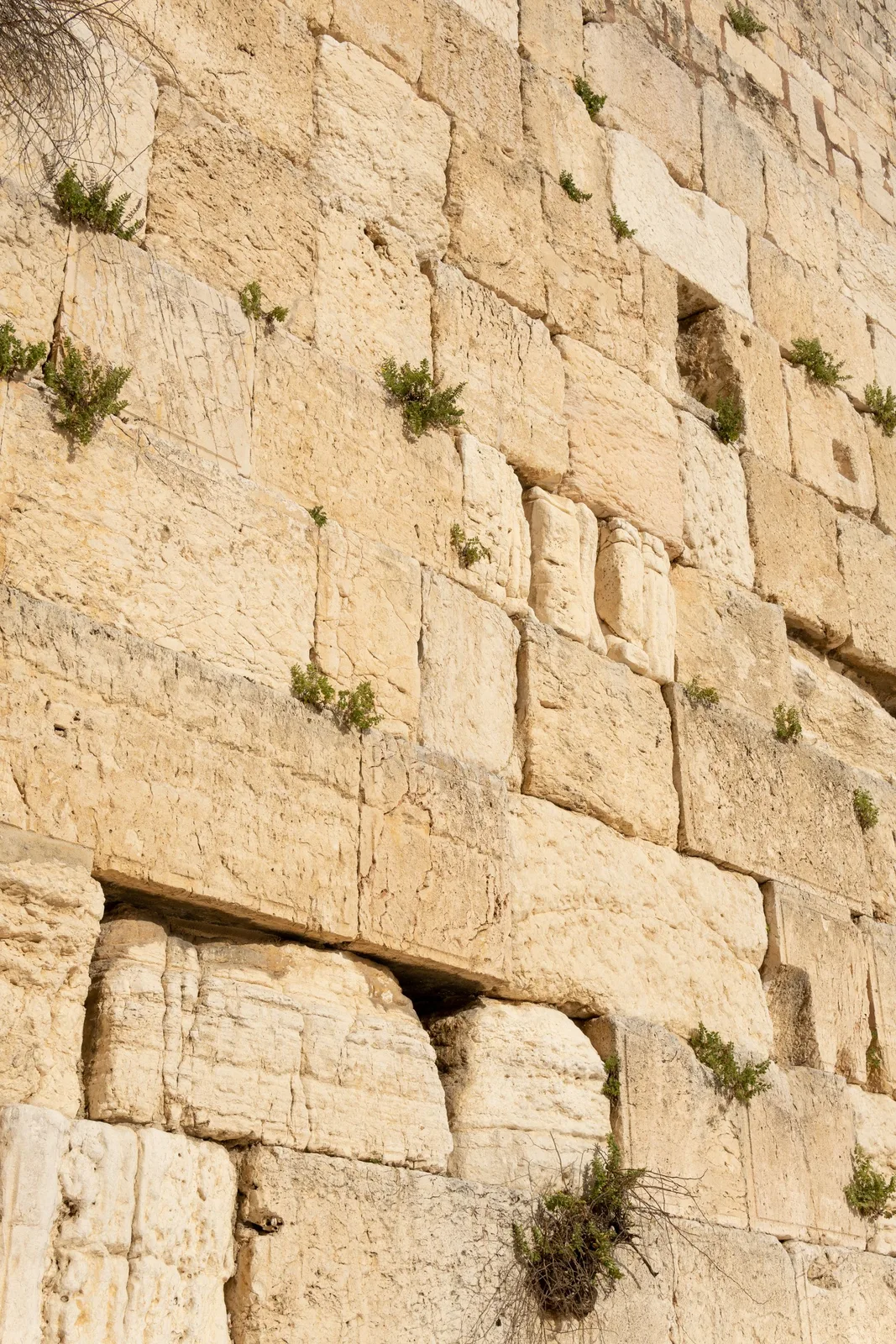
English is widely understood at sights, hotels and stations — less so deep in the souks, where the four phrases below earn their keep.
Sort the ETA-IL before you fly: Israel's electronic travel authorisation, mandatory since January 2025 for visa-exempt travellers. Apply only on the official Population and Immigration Authority portal, israel-entry.piba.gov.il — copycat sites charge many times the real fee. It costs ₪25; apply at least 72 hours ahead; valid two years or until your passport expires, for multiple trips, stays up to 90 days a visit. Airlines check it before boarding; it does not guarantee entry.
Your passport is not stamped at passport control; you receive a small printed B2 entry slip — keep it all trip. Hotels ask for it with your passport for the VAT exemption, and border police on the Bethlehem run may ask for it too.
Build in three hours at Ben Gurion for departure: the security interview and screening before check-in are the most detailed most travellers ever meet; bags may be opened, electronics checked.
Safety and health
As of October 2026 the United States lists Israel at Level 3, reconsider travel; its embassy in Jerusalem issues security alerts as conditions shift. Read your own government's advice before you book and again before you fly.
Know the alert system
Download the Home Front Command app before you arrive; it pushes real-time alerts for your exact area. Find your building's protected space — the mamad (reinforced room) in most apartments, the stairwell in older ones. If a siren sounds: get in, close the door, stay ten minutes.
Build disruption into the plan
Flights can be delayed, rerouted or cancelled when the security picture changes. Keep the airline app on your phone, check departures before travelling to the airport, buy insurance that explicitly covers disruption, and keep the first and last nights flexible.
Expect checks and crowds at the holy sites
Bag checks and metal detectors stand at the Western Wall plaza, the Temple Mount walkway and other entrances. Follow police instructions; keep passport and entry slip on you. On Fridays and festivals the lanes can be crush-tight; if a site closes without notice, walk away and return another day.
Dress, stone and sun
Modest dress is enforced at the holy sites — cover shoulders and knees, carry the layer. Use only licensed guides: gate-side queue-skip offers are touts. Polished steps are treacherous when wet, and the summer Mount of Olives climb catches visitors out — go early, taxi one way, drink water.
Magen David Adom ambulances answer on 101, police on 100, fire on 102. Hadassah and Shaare Zedek hospitals serve the city; pharmacies are everywhere; tap water is safe. Buy insurance covering medical care and disruption.
In ultra-Orthodox neighbourhoods such as Mea Shearim, dress modestly and do not photograph residents, above all on Shabbat.
Related destinations
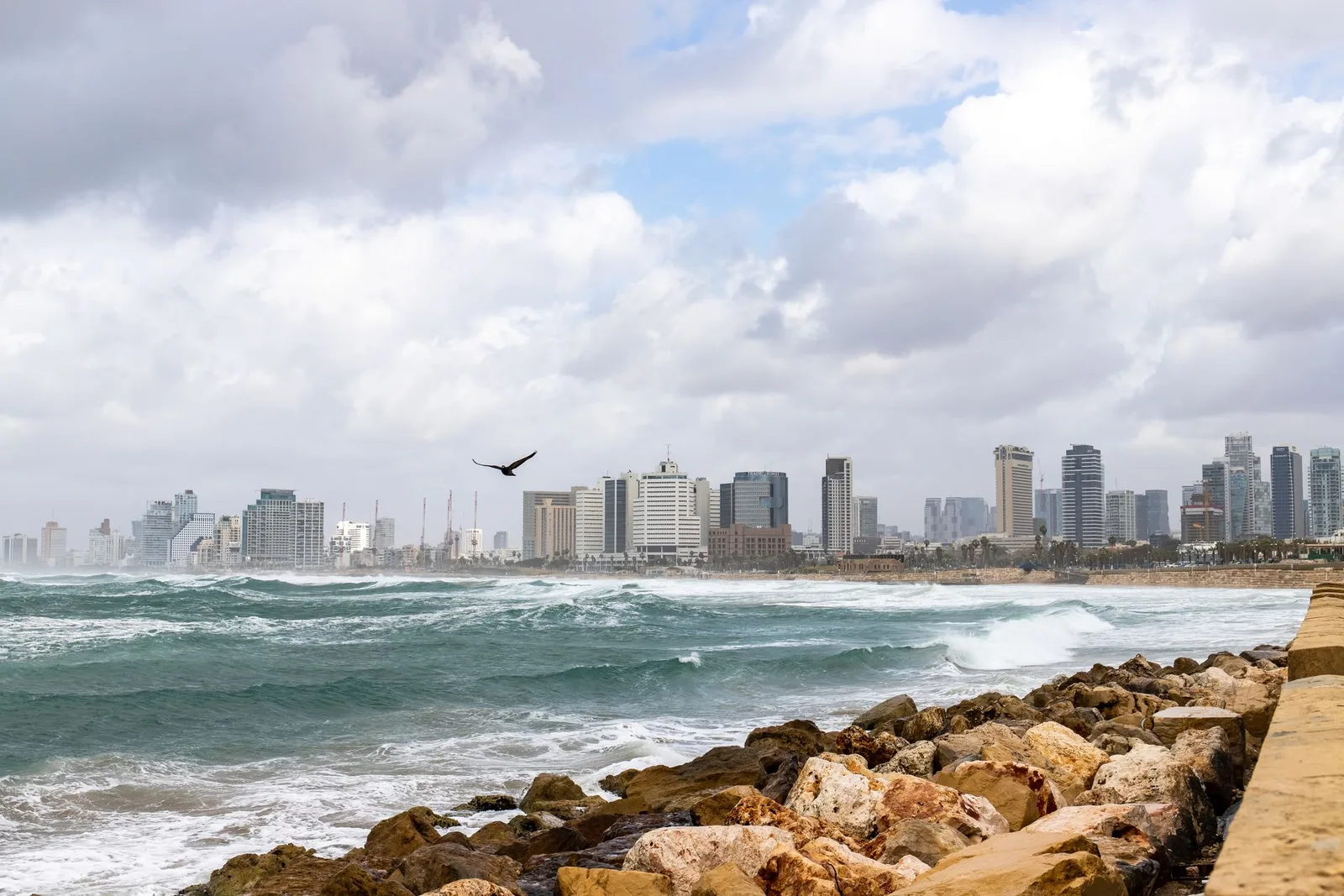
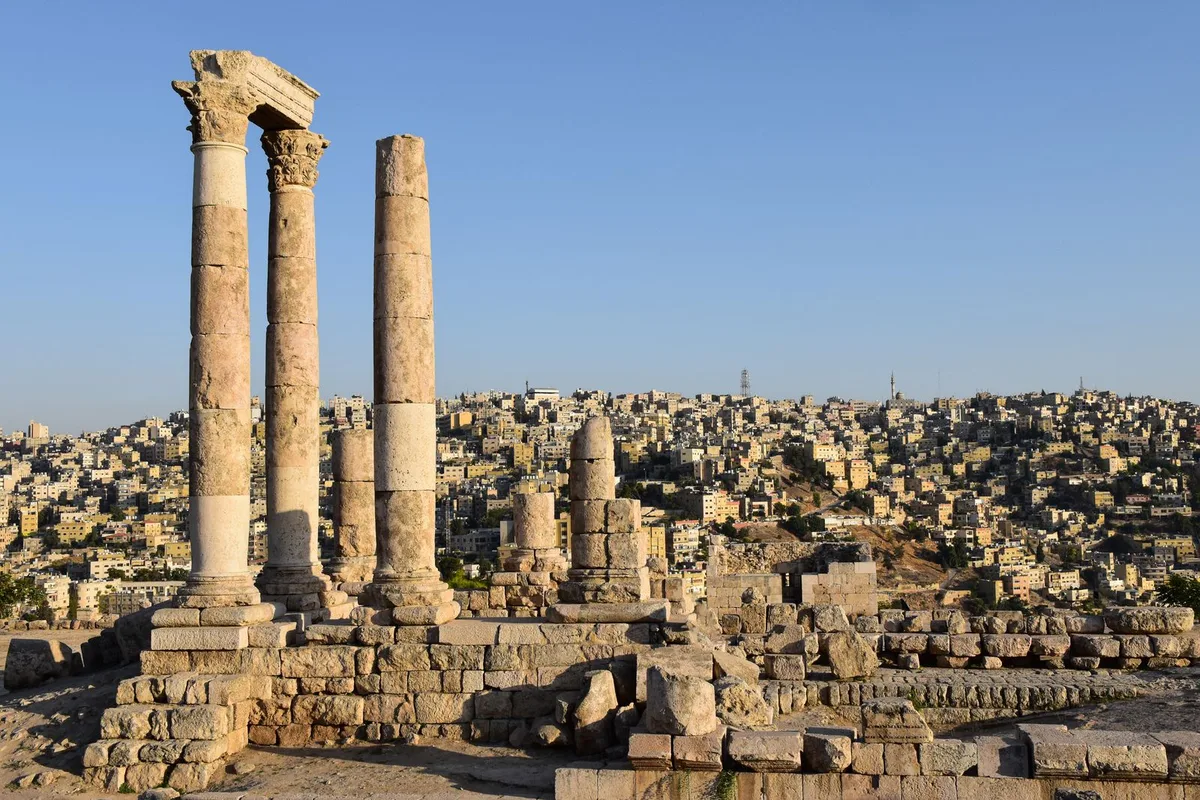
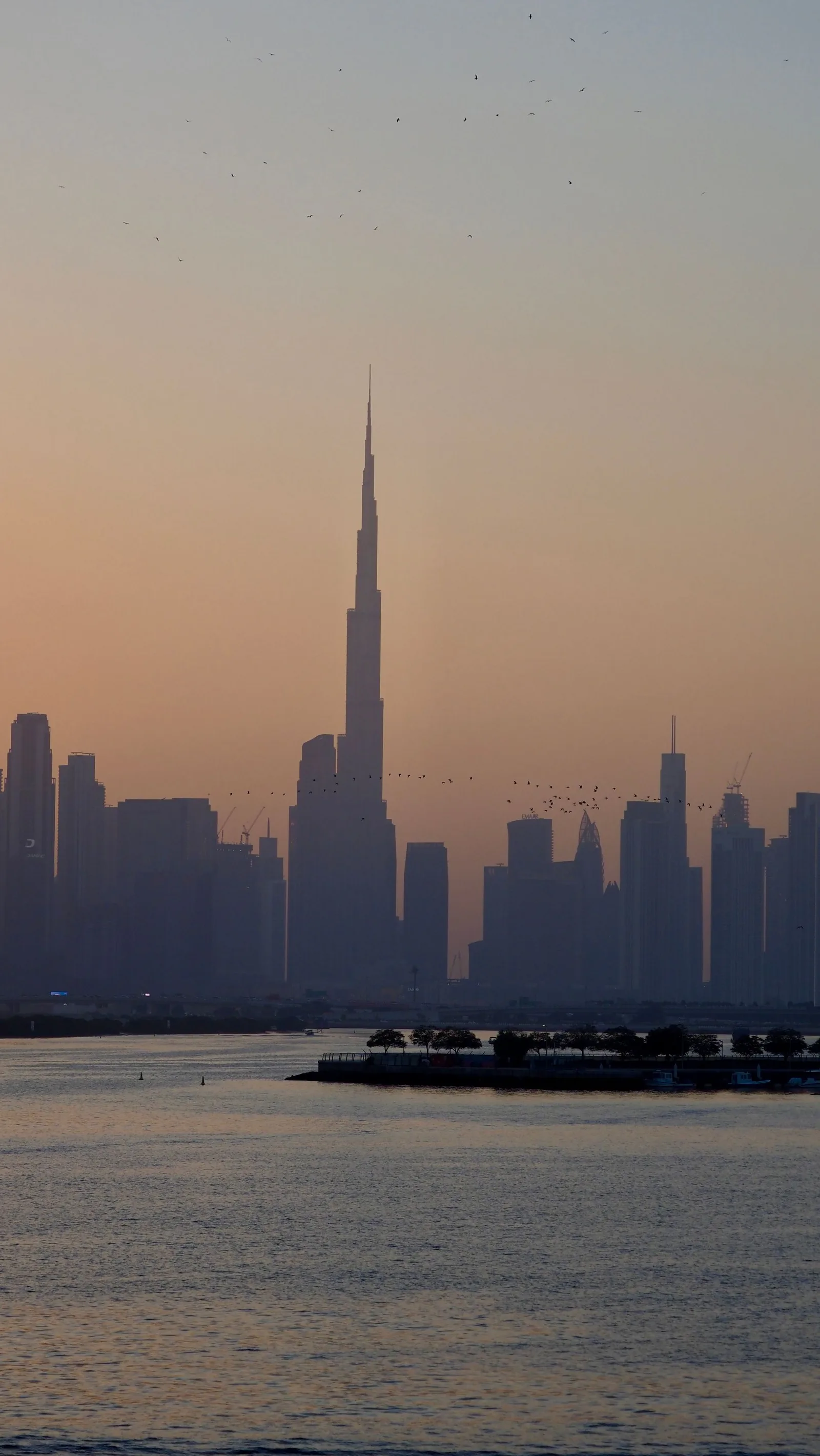
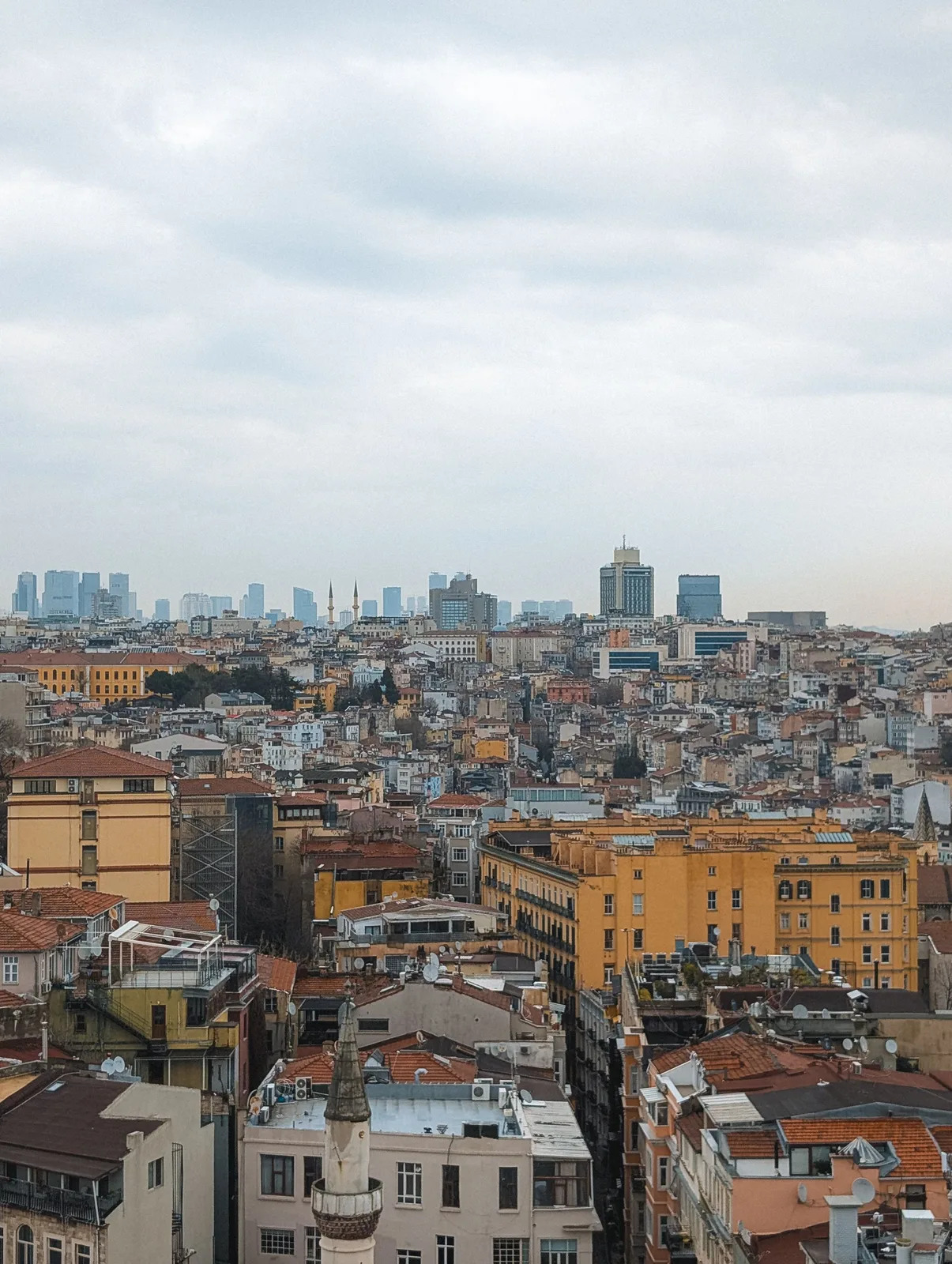
If you liked Jerusalem, try these next:





Frequently asked questions
The facts that matter after you land in Jerusalem.
Verified against Israel Railways, the Israel Museum, Yad Vashem and the Israel Nature and Parks Authority, October 2026.
The direct train from the airport station to Jerusalem Yitzhak Navon takes about 25 to 30 minutes and costs roughly ₪23. The station is 80 metres underground beside the Central Bus Station — allow a few minutes for the escalators, then take the light rail toward the Old City.
Bus 485 runs the same trip for ₪16 in about an hour but was cut to a handful of departures a day in 2026 — check the day. A metered taxi runs about ₪300 to ₪360 and works 24/7, including Shabbat, when neither trains nor buses run.
No — the Nesher sherut service from the airport to Jerusalem has been discontinued, and its phones are disconnected. Older guides still recommend it; do not plan around it.
The working alternatives are the train, bus 485, the official taxi rank and pre-booked transfers. Inside Jerusalem, shared options are limited to taxis and the light rail.
Sunday to Thursday only, entering by the Mughrabi Gate walkway beside the Western Wall plaza. In winter the windows are 7:30 to 10:30 and 12:30 to 13:30; in summer 7:30 to 11:00 and 13:30 to 14:30.
Entry is free but screened: bring your passport, dress modestly, and leave religious articles and large bags behind. Non-Muslim visitors cannot enter the Dome of the Rock or Al-Aqsa Mosque, the compound closes on Fridays, Saturdays and Muslim holidays, and it can close without notice.
The Israel Museum is ₪54 (children enter free on Tuesdays and Saturdays), the renewed Tower of David Museum is ₪55, the Western Wall Tunnels are ₪38 and guided-only, and the Ramparts Walk is about ₪25.
Yad Vashem is free, but a timed reservation booked ahead on the official site is required, and its Holocaust History Museum admits ages 10 and over. The Western Wall, the Holy Sepulchre and the Mount of Olives viewpoints are all free.
Bus 231 leaves the Arab bus station by Damascus Gate, costs about ₪7 and reaches Bethlehem via Beit Jala in 30 to 45 minutes; from the terminus it is about a 20-minute walk to Manger Square.
Carry your passport and B2 slip for the checkpoint on the way back. The Church of the Nativity is free with no booking system — the Grotto queue is the whole game, so go early or with a small-group tour. Israeli citizens cannot enter Area A, and Israeli rental cars are not insured there.
More than Tel Aviv: the light rail and city buses stop from Friday afternoon to Saturday evening, Mahane Yehuda and most shops and restaurants close, and Temple Mount is shut to visitors on Friday and Saturday anyway.
The Old City's Christian and Muslim quarters keep trading, East Jerusalem services run, and Saturday night brings the city back all at once. Plan the Wall and the churches for Sunday to Thursday mornings if you can.
No city tourist tax; VAT is 18 percent but foreign tourists pay none of it on hotel stays with the B2 entry slip; tap water safe; plugs are Type H and C at 230V; police 100, ambulance 101, fire 102.
Jerusalem, in your pocket
Landing soon? Get the printable PDF — ticket links, the airport transport cheat sheet, our 3 restaurant picks with maps, and the packing checklist. Everything above, formatted for your phone.
One email with your Jerusalem PDF. Fare changes and new guides after that. No spam, unsubscribe anytime.
Sources and last verified
Jerusalem facts checked October 2026 against Israel Railways for fares and times; Egged for the 485 and 486 services; the Population and Immigration Authority's ETA-IL portal for the ₪25 fee, two-year validity and 90-day stays; the Israel Airports Authority and Gett for the taxi system and fare band; the Jerusalem municipality and official tourism site for light rail lines, the ₪8 city fare and Temple Mount visiting windows; the Tower of David Museum, Israel Museum, City of David and Western Wall Heritage Foundation for prices and booking rules; Yad Vashem for its reservation and age rules; the Israel Nature and Parks Authority for Masada prices; the Israel Tax Authority for the 18% VAT rate and tourist exemption; the US Department of State travel advisory for Israel, reissued August 2026, and US Embassy Jerusalem security alerts; and Xe for the exchange rate.
Affiliate disclosure: hotel names, transfers, experiences, and products linked in this guide may earn After You Land a commission at no extra cost to you. Prices and times were checked in Oct 2026 and change often — confirm before you book.