
Manila: your first hour after landing
You have just landed at Ninoy Aquino International, where the first decision is which of the terminals you are standing in — Philippine Airlines flies international from Terminal 1, Cebu Pacific and most foreign carriers from Terminal 3. This guide covers the ride out above the traffic on the Skyway, the free eTravel form every passenger files, where to sleep from a grand Ayala Avenue hotel to a Poblacion hostel roofdeck, a first plate of sisig, the volcano ridge, the rapids and the crater lake as day trips, and the 12% VAT that decides what a room really costs.
In this guide
You just landed in Manila. The move is a Grab from the arrivals kerb — about ₱300 to ₱500 to a Makati hotel door, the fare fixed before you ride — with an eSIM keeping the app live from the terminal, your free eTravel QR code already screenshotted, and the days that sell out first, the Pinatubo crater trek above all, worth booking ahead through GetYourGuide.
Quick facts
Airport
Getting in
Currency
Languages
Time zone
Emergency
Plugs
Tap water
Tourist tax
Best months
Map
Stays, sights, and landmarks in Manila — live hotel prices plus the key places from this guide.
Settle in
Touch down at MNL and sort the terminal first: Philippine Airlines international arrivals come into Terminal 1, Cebu Pacific and most foreign carriers into Terminal 3 — different buildings, different kerbs. Everything after that is one car ride to Makati or BGC.
Set up data before you leave the terminal: a Philippines plan on an Airalo eSIM loads in minutes, so your Grab booking, maps and hotel messages work from the kerb. Comparing plans for a longer Philippines trip, check Saily and Yesim as the alternatives.
Run the arrival checklist in this order:
- Finish the free eTravel registration at etravel.gov.ph within 72 hours before you fly, and screenshot the QR code
- Carry a first float of small peso notes — tolls, tips and the bus are cash-first
- Book the Grab from inside the terminal, or pay the fixed fare at the coupon taxi booth, never with a kerbside tout
Check the tax line when the hotel quotes your rate: Manila rooms carry 12% VAT, and many properties quote before VAT and a service charge, so the final bill runs higher than the first number.
If a delayed or cancelled flight wrecked the arrival, AirHelp checks whether the airline owes you compensation — worth five minutes before you write the day off.
Getting around
Times are airport to city centre.
Grab car
Book in the app or at the Grab booth outside arrivals; the airport programme holds pickup fares flat, and the fare is fixed before you ride
UBE Express P2P bus
Premium point-to-point buses from the terminals to fixed stops in Makati, BGC, Ortigas and Alabang; cash or beep card, luggage rides free
Metered taxi
Yellow airport taxis and white city taxis queue outside arrivals; insist the meter runs and keep small peso notes for Skyway tolls
Coupon taxi
Pay the fixed fare at the booth before you ride; it costs more than the meter and removes every fare argument after a long flight
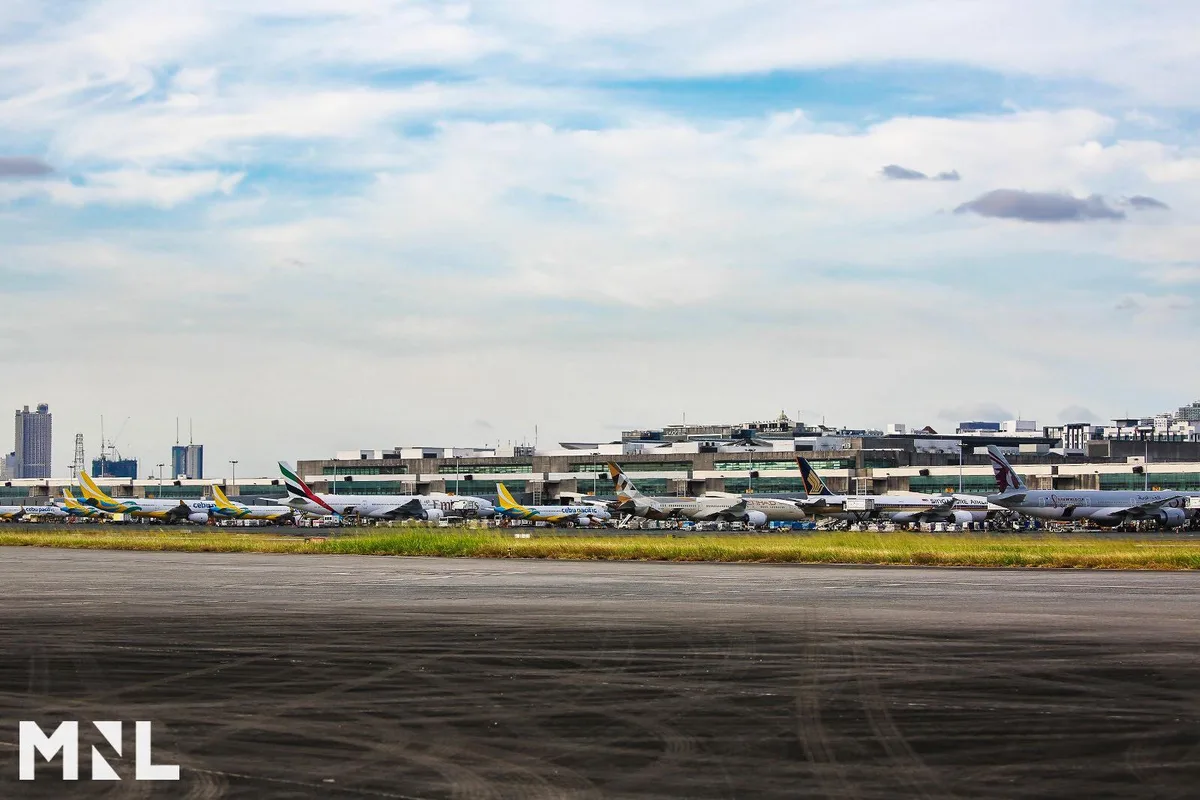
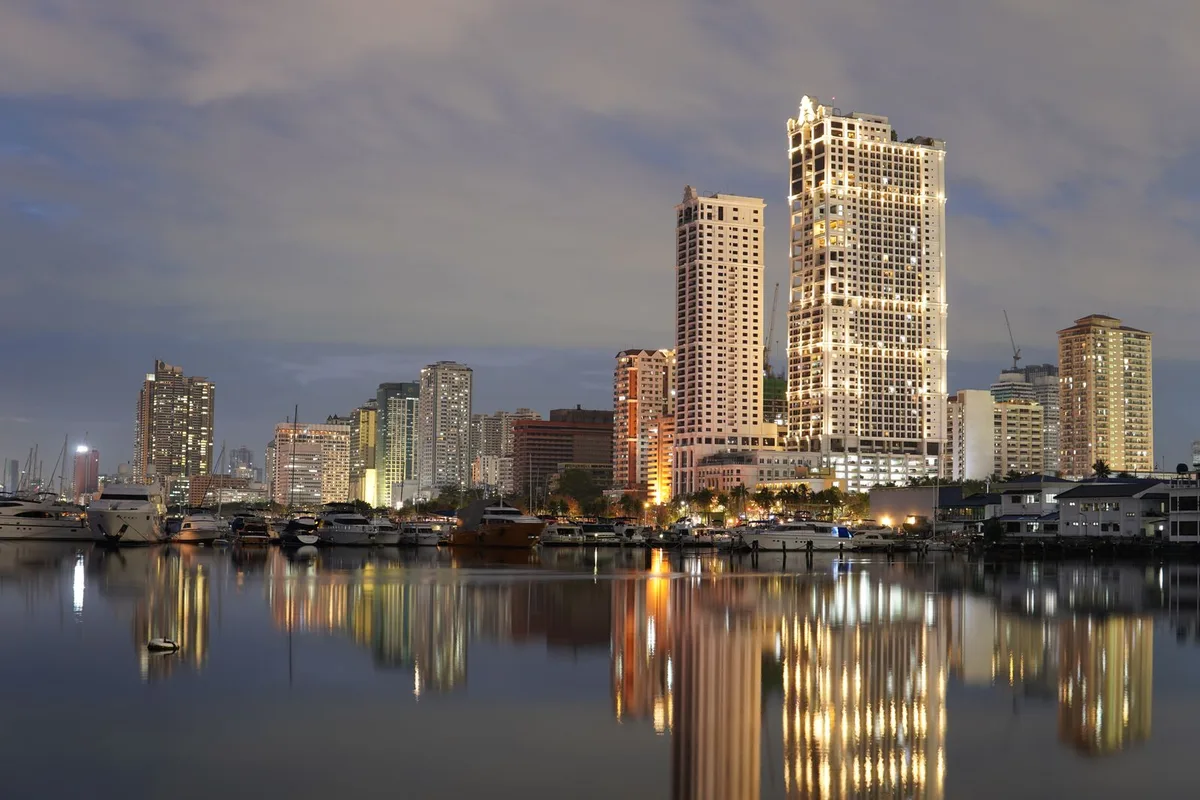
Manila traffic is the city's defining force, and the Skyway is the escape hatch: the elevated NAIA Expressway links the terminals to Makati and BGC above the street grid. Off-peak the run takes about 30 minutes; at rush hour, double it. The rides in:
Choose Grab by default — the fare is set before you ride. Choose the coupon taxi after a long-haul arrival when you want zero discussion: pricier than the meter, and no argument.
Compare a pre-booked transfer when the hour or group maths demands it — a Kiwitaxi transfer or Welcome Pickups puts a driver in arrivals at a fixed price. Do not drive yourself in Metro Manila traffic; for a road trip beyond the city, price the pickup on AutoEurope first.
Inside the city, ride the MRT-3 along EDSA, hail Grab cars for everything else, and treat jeepneys as a short-hop adventure — fares start at about ₱13, paid in cash.
In the city
Walk Intramuros first, while the day is young. Inside the Spanish walls, Fort Santiago guards the Pasig River gate where José Rizal spent his last night, and San Agustin Church — the country's oldest stone church, finished in 1607 and a UNESCO site — stands a few streets away. Go before ten.
Cross to Rizal Park and the National Museum complex afterwards. The fine arts and anthropology museums face each other across the park, both free, and together they run from pre-colonial gold to the Spoliarium.
Eat your way through Binondo, the world's oldest Chinatown. Ride a Grab to Ongpin Street for dumplings, hopia and century-old panciterias — or join a guided food walk so the tasting order makes sense.
End one day on the bay. Sunset over Manila Bay from the Roxas Boulevard seawall is the city's daily ceremony; get there by six, then drift up to Makati for dinner. Browse guided versions on GetYourGuide, and compare Klook when stacking activities.
After you land in Manila: Bookable experiences
Where to stay your first nights

The Peninsula Manila.
Best for the grand Ayala Avenue landmark stay and the famous Lobby loungeStay at 1226 Makati Avenue, corner of Ayala Avenue — the 1976 grand hotel with 351 rooms, the famous Lobby lounge, an outdoor pool and Greenbelt five minutes away. Book it for the full landmark version of Makati.
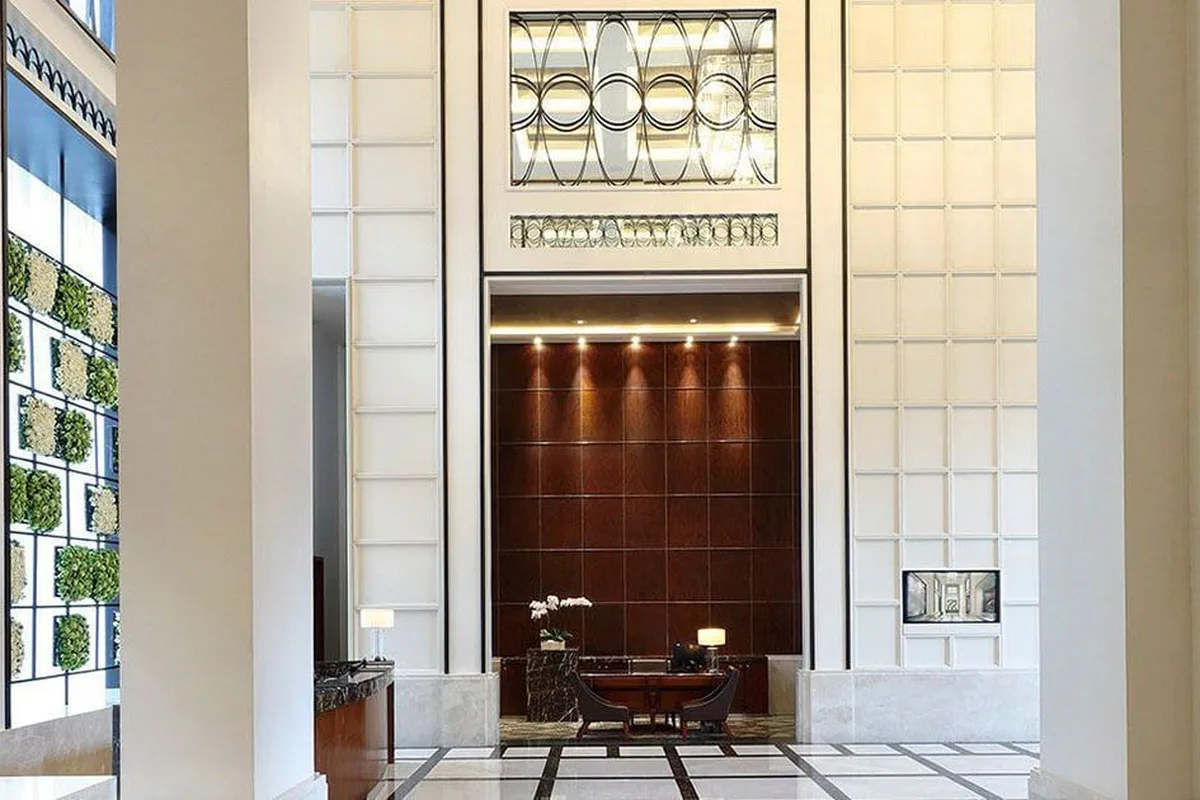
Makati Diamond Residences.
Best for apartment space with kitchenettes, Greenbelt across the streetSleep at 118 Legazpi Street in Legazpi Village, across from Greenbelt — 410 serviced rooms with kitchenettes and washer-dryers and a 25-metre indoor lap pool. Guests rate it 9.0 out of 10 on Expedia; book it for apartment space at a hotel address.

Z Hostel.
Best for dorms, private rooms and the Poblacion roofdeck sceneBed down at 5660 Don Pedro Street in Poblacion — 128 beds in dorms and private rooms, a 24-hour café and the roofdeck bar that made it Manila's backpacker meeting point. Book it for the social base; guests under 18 are not admitted.
Stay in Makati for a first visit — the safest, most walkable base, with the CBD malls and Poblacion's bars inside one district and the shortest airport run Manila allows. Choose BGC for a newer, quieter grid, and Ermita or Malate only if old Manila on the doorstep matters more than calm streets.
Book any of the three early for December to February. Confirm whether the quoted total includes the 12% VAT and service charge.
Where to eat first

Eat the canon first: adobo, the national braise of vinegar and soy; sinigang, the sour tamarind soup; lechon, roast pig with crackling skin; and sisig, sizzling chopped pork with calamansi. Three first stops:
The Aristocrat, 432 San Andres Street, Malate.
Start at the 1936 original on Roxas Boulevard for chicken barbecue and pancit malabon — the first-night table generations of Manila families grew up on.
Manam, Greenbelt 3, Makati.
Order the comfort-food canon done properly: crispy sisig, sinigang with watermelon, and kare-kare with bagoong, in a bright dining room built for a first Filipino meal.
Locavore, Forbes Town, Burgos Circle, BGC.
Finish with the modern reading — sizzling sinigang, oyster sisig and lechon belly from one of the city's most copied kitchens. Book ahead at weekends.
Save room for halo-halo, the shaved-ice dessert that ends half the meals in this city. For guided eating, the Binondo food tours on GetYourGuide walk the old Chinatown with tastings built in.
Day trips and more
Three escapes cover the essentials: a volcano ridge, a river gorge and a crater lake. All three are long days — the tours exist because the drives are real.
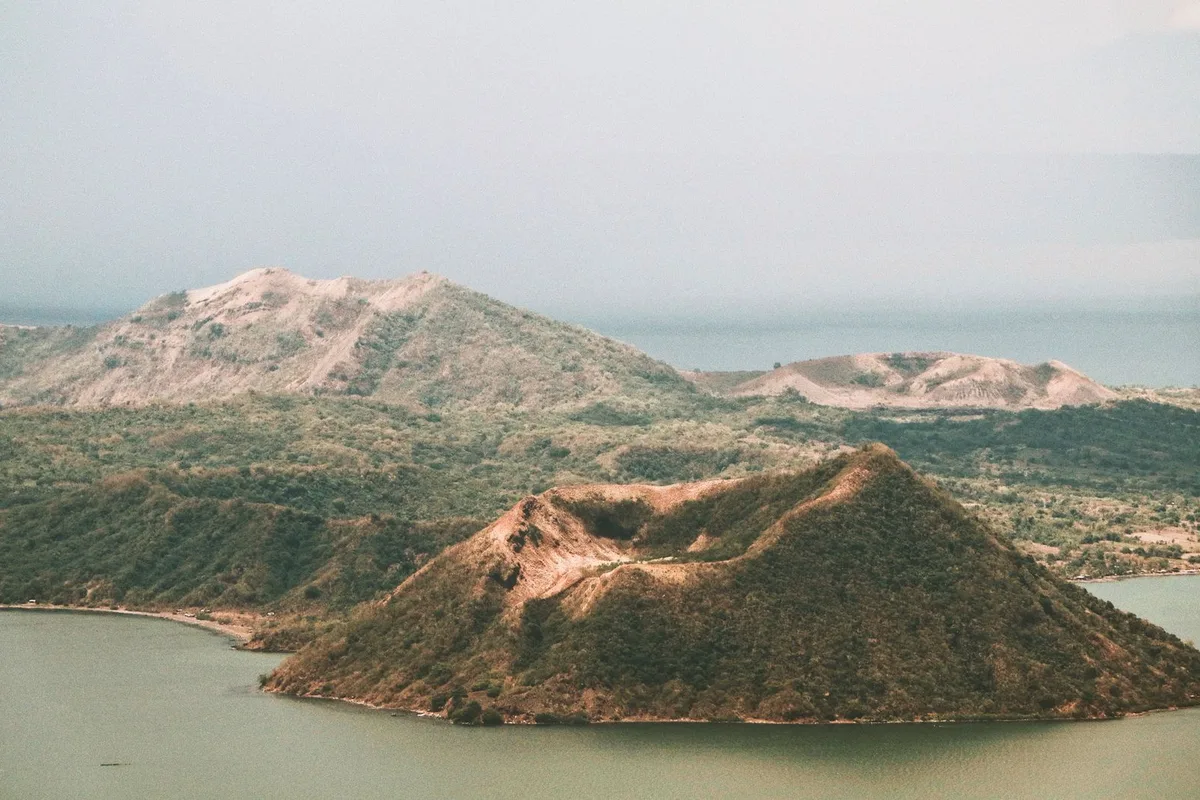
Tagaytay and Taal Volcano
Drive about 1.5 to 2 hours south to the ridge city, where the view runs over Taal Lake to Volcano Island — a volcano inside a lake inside a volcano. The private guided day strings together the Picnic Grove viewpoint, fruit stops and a descent to the lakeshore at Talisay; it rates 4.7 out of 5 from 151 reviews and runs about 7 hours with pick-up in the capital. Check availability →

Pagsanjan Falls
Ride about 2.5 hours to Pagsanjan in Laguna, then climb into a bangka canoe while two boatmen paddle and haul you up the gorge against the current. At the top, a bamboo raft pulls you under the main falls into the Devil's Cave — expect a total soaking. The guided day runs about 10 hours, out at 07:30. Check availability →

Mount Pinatubo
Commit to the midnight start: the 4x4 crosses the lahar fields of the 1991 eruption at dawn, then a hike of roughly an hour each way climbs to the turquoise crater lake. Swimming is banned; the shore picnic is the reward, and the day ends back in Makati by about 22:30. It rates 4.6 out of 5. Check availability →
When to go and what it costs
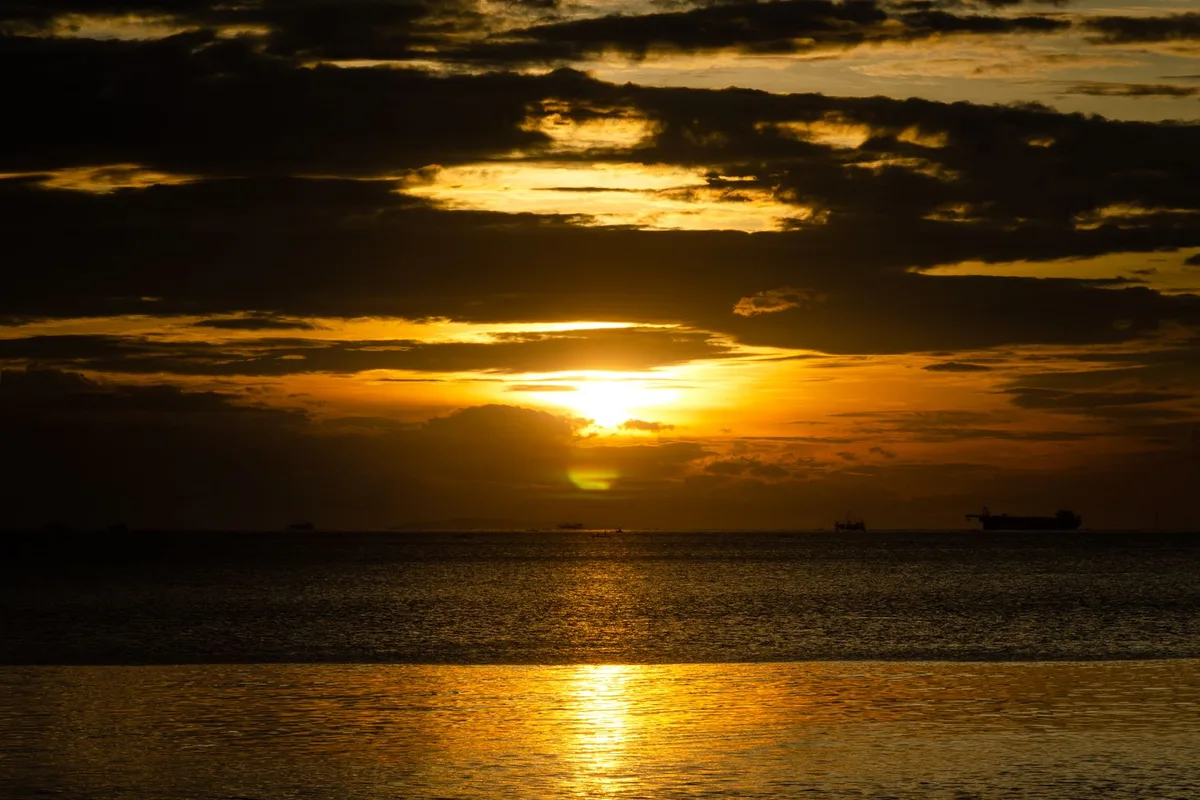
Come in December to February for the full deck: dry days, the coolest air of the year and festival season. Book beds and volcano days early — this is when Manila fills.
Come in March to May with your eyes open. Afternoons pass 35 degrees and the city runs on mall air-conditioning; the payoff is dry roads, clear volcano views and Holy Week, when half of Manila leaves and the streets briefly empty.
Come from June to October only with flex in the plan. The monsoon brings daily downpours, street floods and typhoons that can close the airport and cancel volcano days — build spare days around anything you book.
Budget by the fixed costs. The UBE Express bus costs about ₱150, a Grab to Makati ₱300 to ₱500, a jeepney ride from about ₱13, street-food meals ₱150 to ₱300, and a good mall restaurant ₱400 to ₱800 a head before drinks.
What to pack
Tap items to check them off — your list is saved on this device.
Pack for heat, humidity and air-conditioning that fights back. This is the full list:
- Comfortable walking shoes Shop walking shoes on Amazon →
- Sunscreen Shop sunscreen on Amazon →
- Reusable water bottle Shop water bottle on Amazon →
- Phone charger and power bank Shop power bank on Amazon →
- Daypack Shop daypack on Amazon →
- Sunglasses Shop sunglasses on Amazon →
- Light rain jacket Shop rain jacket on Amazon →
Add the Manila extras: a compact umbrella for monsoon rain and midday sun alike, a light layer for the malls, and a dry pouch for your phone on the Pagsanjan day.
Language, visa and entry
✓ Visa-free entry

English runs Manila: it is an official language, printed on every sign and spoken by drivers, guards and vendors. Tagalog is the language of the street, and four phrases do most of the work:
Sort the eTravel form before you fly. Every arriving passenger registers free at etravel.gov.ph within 72 hours before arrival — it replaces the paper arrival card and carries your customs declaration. Screenshot the QR code; airlines check at boarding, and copycat sites that charge are scams.
Know your visa maths. Most visitors — including US, UK, EU, Canadian, Australian and Japanese passport holders — enter visa-free for 30 days, with a passport valid for six months and an onward ticket officers can ask to see. Stays extend at Bureau of Immigration offices.
Check your terminal twice. Assignments moved in 2026 — Philippine Airlines international in Terminal 1, Cebu Pacific in Terminal 3, AirAsia international moved to Terminal 1, most other foreign carriers in Terminal 3 — and the terminals are separate buildings. Never cut a cross-terminal connection fine.
Safety and health
Pay the fare the official way
The classic arrival scam is the inflated fixed rate offered by touts inside the terminal. Book in the Grab app, pay the coupon booth, or insist the meter runs — and walk away from anyone who approaches you first.
Treat traffic as the main hazard
Drivers treat lanes as suggestions and motorcycles filter everywhere. Use footbridges and marked crossings, look both ways twice, and keep your phone out of your hand near the kerb.
Respect the rain
From June to October, storms flood streets within the hour and typhoons can shut the airport for a day. Follow local weather advice, never wade through floodwater, and keep a flexible day in wet-season plans.
Drink safe water and manage the heat
Tap water is not for drinking; bottled and refilled water is everywhere. Heat and humidity dehydrate quietly, and dengue circulates in the wet months — repellent in the day bag.
Related destinations
If you liked Manila, try these next:
 Asia & Pacific
 Asia & Pacific
 Asia & Pacific
 Asia & Pacific
 Asia & Pacific
 Asia & Pacific
 Asia & Pacific
 Asia & Pacific
 Asia & Pacific
 Asia & Pacific
Frequently asked questions
The things travellers ask in the first 48 hours: the terminal maze, the free form every passenger files, and the ride out of the airport.
Fares checked against 2026 NAIA transfer reporting; terminal assignments against NNIC and airport reporting after the March 2026 reshuffle; entry rules against the Bureau of Immigration and the Department of Foreign Affairs.
Take a Grab car: about ₱300 to ₱500 with the fare fixed in the app, 30 to 60 minutes depending on traffic. The UBE Express premium bus costs about ₱150 to fixed city stops, coupon taxis charge a fixed zone fare, and metered taxis run about ₱250 to ₱500 when the meter is honest.
Check the booking, not an old guide: assignments moved in 2026. Philippine Airlines international flights use Terminal 1, Cebu Pacific uses Terminal 3 for both domestic and international flights, AirAsia international flights moved to Terminal 1, and most other foreign carriers use Terminal 3.
Probably not. Most visitors, including US, UK, EU, Canadian, Australian and Japanese passport holders, enter visa-free for 30 days; Brazil and Israel get 59 days. Bring a passport valid for six months and an onward or return ticket, which officers can ask to see.
eTravel is the free online arrival registration every passenger completes at etravel.gov.ph within 72 hours before flying. It replaces the paper arrival card and carries your customs declaration; screenshot the QR code for the airline desk and immigration. Any site charging for it is a copycat.
There is no tourist tax for foreign visitors. Hotel rooms carry 12% VAT and often a service charge, and Manila properties frequently quote rates before both — expect the final bill to run noticeably above the first number. The ₱550 international terminal fee is already inside your air ticket.
December to February: dry days and the coolest air of the year. March to May is dry but fiercely hot. June to October is monsoon and typhoon season, with street flooding and cancelled trips — travel then only with spare days built in.
Fares change — the Grab app and the official booth prices always win.
Manila, in your pocket
Landing soon? Get the printable PDF — ticket links, the airport transport cheat sheet, our 3 restaurant picks with maps, and the packing checklist. Everything above, formatted for your phone.
One email with your Manila PDF. Fare changes and new guides after that. No spam, unsubscribe anytime.
Sources and last verified
Terminal assignments against NNIC and airport reporting through the March 2026 reshuffle; check your booking for the final word. eTravel rules against etravel.gov.ph and Bureau of Immigration guidance. Visa-free stays against Department of Foreign Affairs rules. Fares against 2026 Manila transfer reporting after the March 2026 taxi fare adjustment: Grab to Makati about ₱300 to ₱500, coupon taxis about ₱600 to ₱1,200 by zone, UBE Express about ₱150. GetYourGuide products opened and read; hub manila-l235 confirmed from the opened pages. Hotels against Expedia property pages opened this session (Makati Diamond Residences, Z Hostel); The Peninsula Manila's Expedia URL is flagged in the pack for confirmation. Photo credits: see the pack. Last verified October 2026.
Affiliate disclosure: hotel names, transfers, experiences, and products linked in this guide may earn After You Land a commission at no extra cost to you. Prices and times were checked in Oct 2026 and change often — confirm before you book.