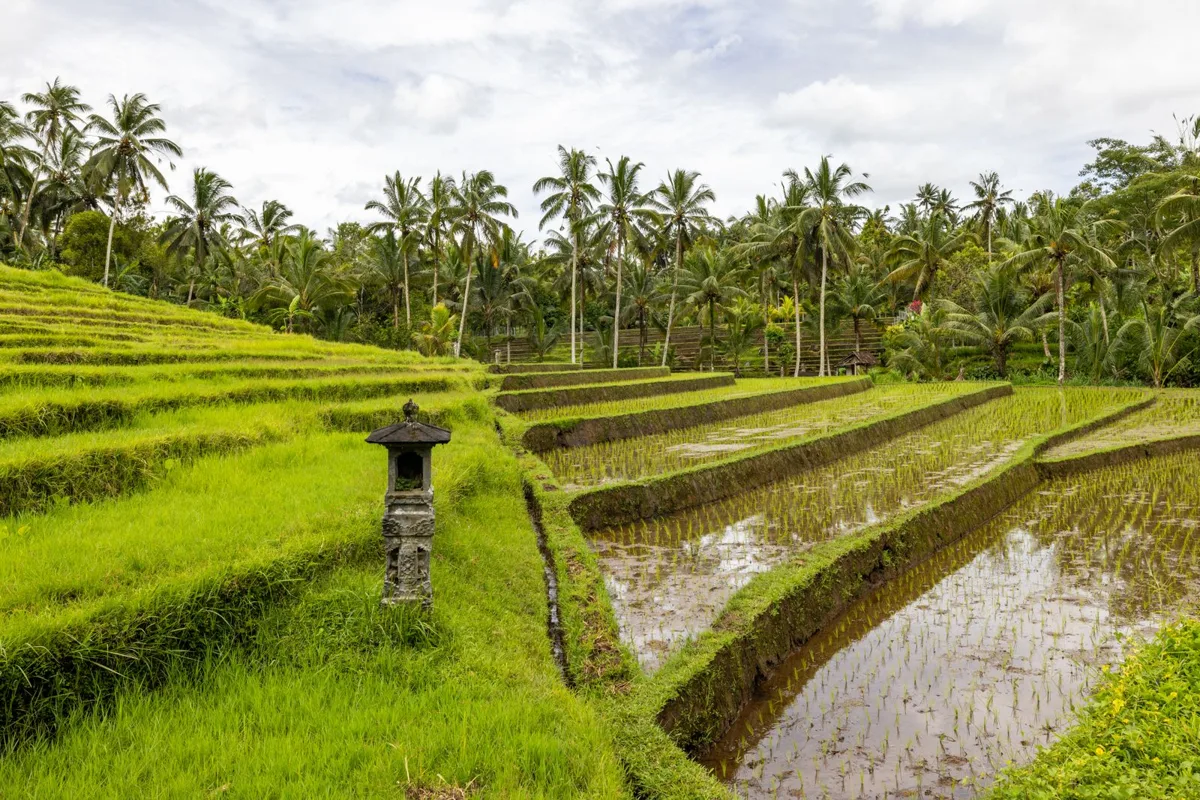
Ubud: your first hour after landing
You have just landed at Ngurah Rai, bound for Ubud — Bali's inland town of temples, rice terraces and yoga shalas, an hour and a half to two and a half hours north by road. This guide covers the long drive in, where to sleep from a river-gorge resort to a garden hostel, the roast-pig counters and café lanes, a first day from palace to lotus temple, and the volcano, terrace and dance days that fill the rest of the week.
In this guide
You just landed in Ubud. You actually touched down at Ngurah Rai (DPS), 36 km south — the move is a pre-booked driver or the fixed-fare airport taxi for the 1.5 to 2.5 hour drive north, with a Saily eSIM live from arrivals, both QR codes ready (the free All Indonesia card and the Rp 150,000 Bali levy), and the sunrise and temple days that sell out first worth booking ahead through GetYourGuide.
Quick facts
Airport
Getting in
Currency
Languages
Time zone
Emergency
Plugs
Tap water
Tourist tax
Best months
Map
Stays, sights, and landmarks in Ubud — live hotel prices plus the key places from this guide.
Settle in
Land at Ngurah Rai and accept the shape of day one: Ubud is inland, and the drive north is part of the arrival.
Set up your data before you leave arrivals: a Yesim eSIM loads an Indonesia data plan in minutes, so Grab, maps and your hotel messages work from the kerb. Comparing plans for a longer Bali trip, check Saily and Airalo as the alternatives.
Run the arrival checklist in this order:
- File the free All Indonesia arrival card online within 72 hours before landing and screenshot the QR code
- Pay the Bali levy (Rp 150,000) on the Love Bali portal and keep that QR beside the first one
- Book the transfer before you fly if you land late — the drive is long and the airport taxi queue is slow at peak banks
If a delayed or cancelled flight wrecked the arrival, AirHelp checks whether the airline owes you compensation — worth five minutes before you write the day off.
Getting around

Times are airport to city centre.
Official airport taxi
Fixed fare paid upfront at the counter inside arrivals, then a car is assigned outside; the queue can add 20 to 30 minutes at peak arrival banks
Pre-booked private driver
Book the day before and the driver waits in arrivals with a name board; most Ubud hotels arrange one, and it is the easiest option after a late flight
Grab or Gojek
Use the official Grab and Gojek lounges in arrivals and their designated pickup point; a small airport exit fee of about Rp 10,000 is added and surge pricing applies at busy times
Shared shuttle via Kuta
No shuttle departs the terminal itself: take a short taxi to the Kuta hub, then the shared shuttle north, running about twice daily — confirm the current schedule with the operator before relying on it
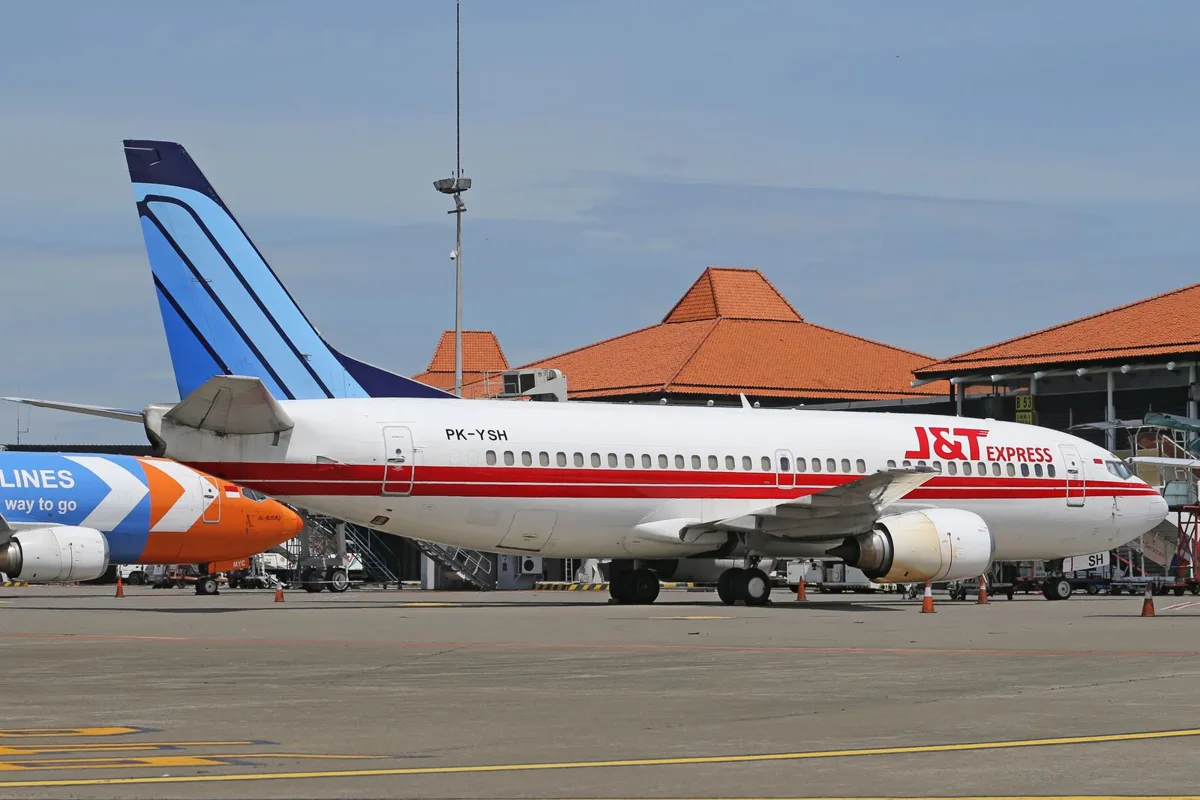
Ngurah Rai International (DPS) sits by the sea at Tuban, about 36 km south of Ubud, and there is no train and no direct bus. Every arrival funnels onto one road north through Denpasar: about 90 minutes in light traffic, two hours and more in the afternoon peak. The airport rides are these:
In Ubud itself, walk the centre: Jalan Monkey Forest, Jalan Hanoman and Jalan Raya Ubud form a slow triangle of temples, cafés and shops. For anything further — Tegalalang, Tirta Empul — hire a local driver by the day. Ride-hailing pickups are restricted in parts of the centre, around the palace and Monkey Forest, where local drivers hold the stands: drop-offs work fine, but for a pickup walk a few hundred metres to a main road or ask your hotel to arrange a local car.
Prefer to be met? A Kiwitaxi transfer or a Welcome Pickups driver puts a name board in arrivals at a fixed price. Renting a car, price it on AutoEurope first, and think twice: Bali drives on the left and centre parking is scarce.
In the city
Start at the town's crossroads. Ubud Palace (Puri Saren Agung) faces the art market at the top of Jalan Monkey Forest: look in at the carved gate and courtyard in the morning, then cross to the market's rebuilt halls for sarongs, baskets and wood carving — bargain politely, starting well under the first price.
Walk five minutes west to Pura Taman Saraswati, the lotus-pond temple behind the main road, best in late light. Then walk the Campuhan Ridge at golden hour: a paved grassland spine between two river valleys, about 2 km each way, free and best before 09:00 or after 16:30.
Give the Sacred Monkey Forest its own morning. The sanctuary at the bottom of Jalan Monkey Forest (daily 09:00 to 18:00, last entry 17:00) holds banyan forest, three temples and hundreds of macaques; international entry is Rp 130,000 for adults. Go early and leave food and loose bottles in your bag.
Book the headline days before you arrive, because the sunrise trips sell out first — browse the Ubud listings on GetYourGuide for the volcano and river days, and compare Klook when stacking attraction tickets.
After you land in Ubud: Bookable experiences
Where to stay your first nights

Komaneka at Bisma.
Best for the art-filled splurge above the Campuhan RiverThe art-filled five-star on Jalan Bisma: rooms and pool villas above the Campuhan River gorge, two outdoor pools, a spa, the Seneng Kitchen restaurant and free afternoon tea. Ubud Palace is a 12-minute walk; check-in from 14:00.

Bisma Eight Ubud.
Best for a design-led base with a forest infinity pool on Jalan BismaA design-led stay further down Jalan Bisma: suites and pool villas around a forest-facing infinity pool, two restaurants, morning yoga and free bicycles. The Monkey Forest is a 13-minute walk; check-in from 14:00.

Puri Garden Hotel and Hostel.
Best for budget beds with a garden pool and free yoga in PengosekanThe social budget base on Jalan Raya Pengosekan No. 63: 23 private rooms plus dorms with 32 beds, a garden pool, free daily yoga and a healthy café. The Monkey Forest is about 15 minutes on foot.
Stay in the centre for a first visit — along Jalan Bisma for quiet lanes five minutes from the palace, or down in Pengosekan for village calm by the Monkey Forest.
Book early for July, August and Christmas. Confirm whether the quoted total includes accommodation taxes.
Where to eat first

Eat Balinese on day one. The plate is nasi campur — rice ringed with small tastes of the day's cooking: spiced chicken, lawar (vegetables with coconut and spices), sambal matah, a satay stick or two. Around it: babi guling, the celebratory roast suckling pig, and jamu, the turmeric-ginger tonic sold everywhere. Three first stops:
Warung Babi Guling Ibu Oka.
The town's famous roast-pig counter near the palace, serving since long before the crowds: crisp skin, lawar and rice on one plate. Go before 13:00 — the pig sells out, and cash is fastest.
The Jalan Dewi Sita cafés.
Ubud's café lane: bakeries, jamu bars and smoothie bowls for the morning after a long flight.
The Jalan Goutama warungs.
The locals' dinner street running south off Jalan Raya Ubud: family warungs plating nasi campur and mie goreng at village prices, full by 19:00.
For cooking classes, market tours and farm lunches, browse the Ubud listings on GetYourGuide and book a morning slot — the good classes start with the market at dawn.
Day trips and more
Three escapes run out of Ubud: the temple and terrace loop, the volcano at sunrise, and the dance after dark. Carry a sarong and small cash.

Full-day rice terrace, Monkey Forest and waterfall tour
Nine hours with a private driver-guide and hotel pickup: the Monkey Forest in the morning cool, the Tegalalang rice terraces, purification fountains at Tirta Empul water temple, a coffee plantation tasting, and a swim at Tibumana Waterfall to finish. Check availability →

Mount Batur shared jeep sunrise and hot spring tour
Five to eight hours from an early Ubud pickup: a 4WD jeep up Batur's black lava fields in the dark, sunrise over the caldera and Lake Batur, then a soak in a natural hot spring before the drive home. Check availability →

Ubud Kecak and fire dance show tickets
One hour at an open-air temple stage: the chanting monkey chorus telling the Ramayana by voice alone, ending in the fire dance. Gates open from 18:00 for a 19:00 start — follow the venue on your voucher and arrive 30 minutes early. Check availability →
When to go and what it costs

April to October is the dry season and the sweet spot: clear mornings for volcano trips and dry ridge walks. July and August are the peak — book early and start before 09:00. November to March brings heavy afternoon rain, thinner crowds and lower prices. One date moves everything: Nyepi, the day of silence (usually in March), closes the airport for 24 hours — check it before booking flights.
A backpacker in a dorm, on warung plates and shuttle buses: Rp 400,000 to Rp 600,000 a day. Mid-range — a boutique room with a pool, café lunches, a driver day: Rp 1,200,000 to Rp 2,000,000 a day. A splurge day with a valley resort and a private tour passes Rp 3,500,000 without trying.
Stack the driver maths early: a private driver for a full day usually beats three separate ride-hail legs, and waits at every temple gate.
What to pack
Tap items to check them off — your list is saved on this device.
Pack for heat, humidity and one downpour a day — Ubud sits inland and higher than the coast, but the air stays tropical. This is the full list:
- Comfortable walking shoes Shop walking shoes on Amazon →
- Sunscreen Shop sunscreen on Amazon →
- Reusable water bottle Shop water bottle on Amazon →
- Phone charger and power bank Shop power bank on Amazon →
- Daypack Shop daypack on Amazon →
- Sunglasses Shop sunglasses on Amazon →
- Light rain jacket Shop rain jacket on Amazon →
Add the Ubud extras: a sarong that lives in the daypack, sandals for wet temple steps, mosquito repellent for dusk, and a dry bag for waterfall days.
Language, visa and entry
! Check visa requirements before you fly

Indonesian first, Balinese in the villages — a little goes a long way in both. Say terima kasih thank you at every counter, and step round the small palm-leaf offerings on the pavement rather than over them. Temple dress means shoulders covered and a sarong below the knee, for everyone. Market prices are negotiable; warung prices are fixed.
Four phrases do most of the work:
Sort your entry paperwork before booking anything non-refundable. Most visitors enter on a Visa on Arrival (B1): Rp 500,000, 30 days, extendable once for 30 more. Buy it as an e-VOA at evisa.imigrasi.go.id before you fly to skip the airport counter, or pay on arrival. Your passport needs six months of validity; an onward ticket may be asked for.
Everyone also files the free All Indonesia arrival card — one digital form merging the immigration, customs and health declarations — at allindonesia.imigrasi.go.id within 72 hours before arrival. It is not a visa; it produces the QR code officers scan on landing. Third-party sites charge for this free form: use only the official portal.
Bali's own levy sits on top: Rp 150,000 per foreign visitor per entry, paid through the Love Bali portal (lovebali.baliprov.go.id). Enforcement is by spot check at major attractions rather than a hard airport gate — pay before you fly, keep the QR voucher on your phone, and expect to show it at big temples.
Safety and health
Monkeys take what you show them
In the Monkey Forest, sunglasses, earrings, water bottles and snack packets are targets: zip them inside your bag, never hold food out, and do not crouch for a selfie with a monkey on your shoulder. If one jumps on you, walk calmly and let it drop off — staff are posted on every path.
The scooter is the biggest risk in town
Ubud's lanes are narrow, potholed and busy with first-time riders. Wear a helmet every ride, ride as a passenger with an experienced local driver if you are new to scooters, and check your insurance covers motorbikes before you rent one — many policies exclude them.
Drink the refill water, not the tap
Stick to bottled or refill-station water and ease into the sambal — Bali belly is usually a day lost, not a hospital trip. Pharmacies on Jalan Raya Ubud handle mild cases; the big hospitals sit in Denpasar and Kuta.
Respect ceremonies and the dark
Village processions close roads without notice — wait, and never overtake one. After dark the lanes out to Pengosekan are unlit: carry a phone torch and let your hotel call a known local driver.
Related destinations
If you liked Ubud, try these next:
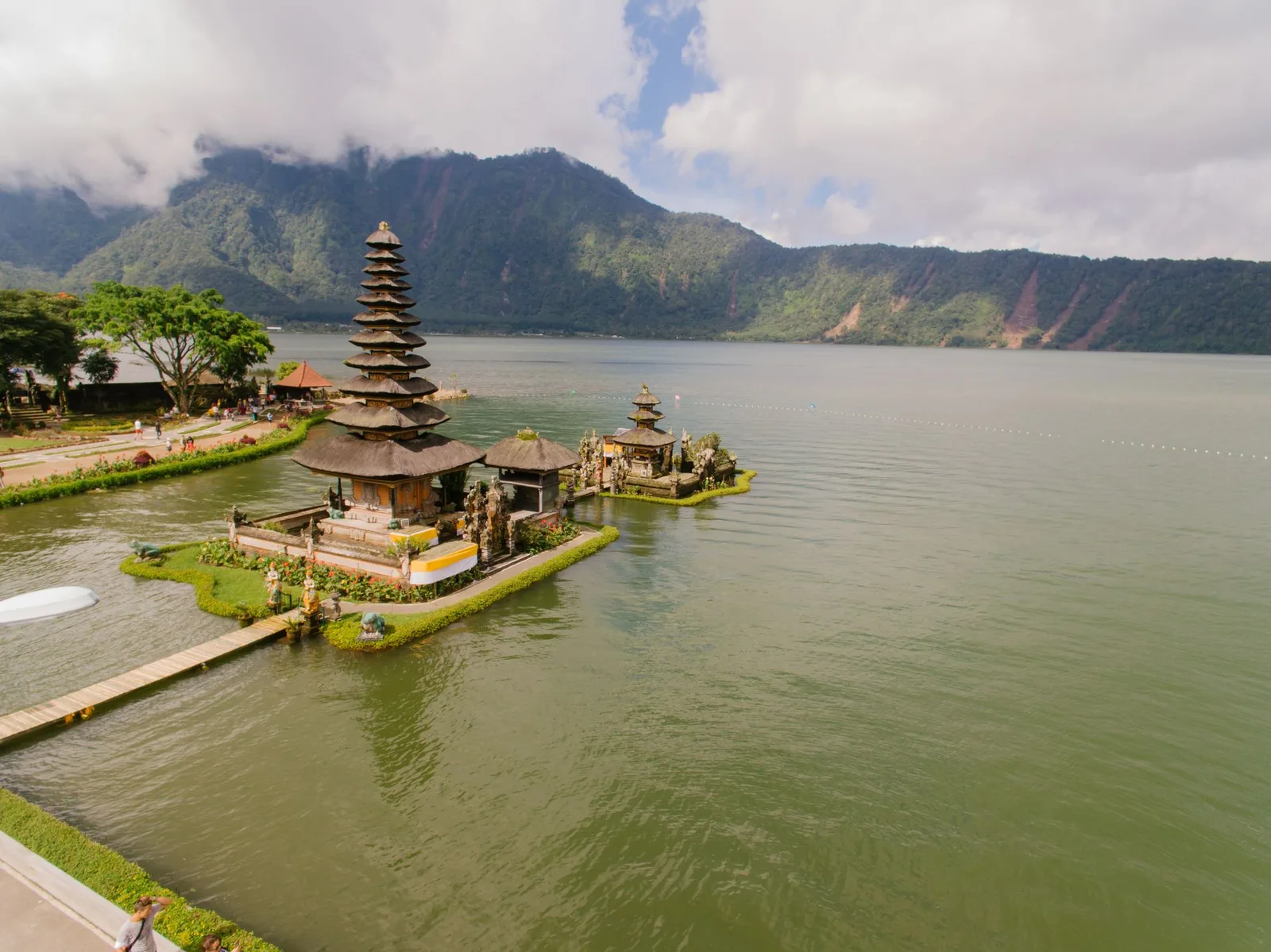 Asia & Pacific
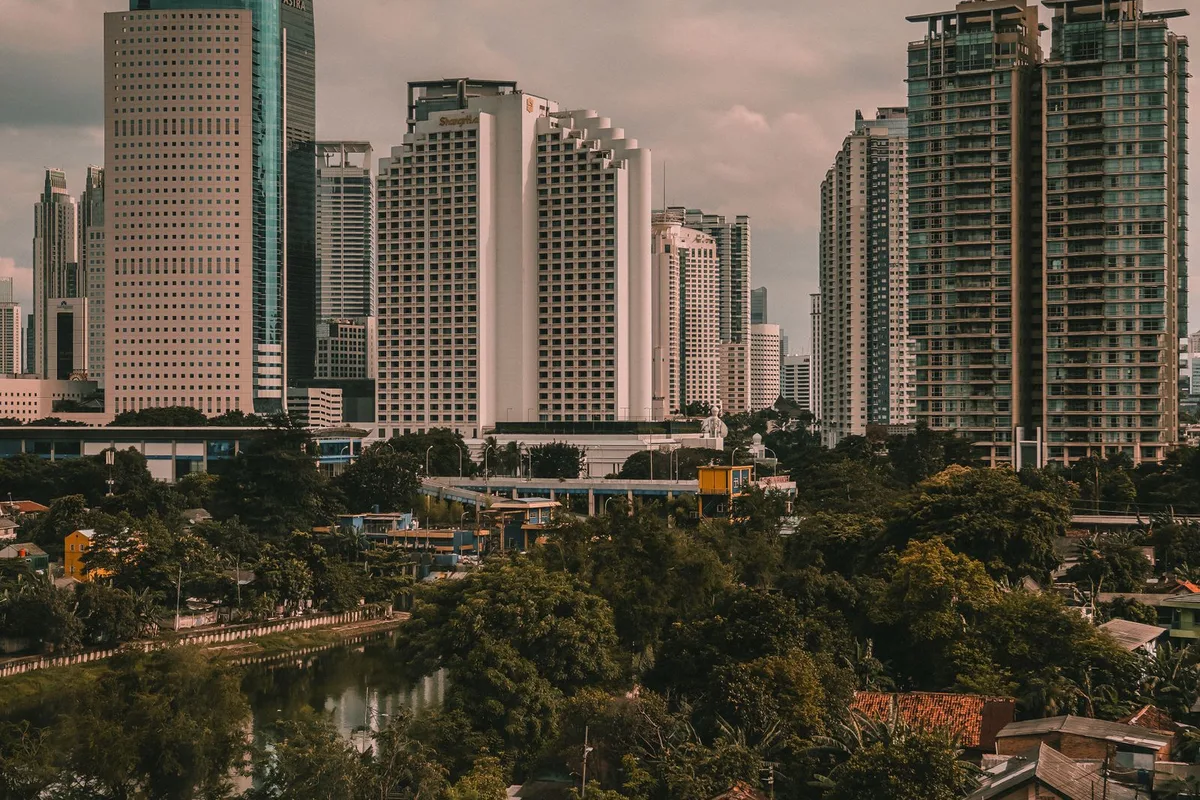 Asia & Pacific
 Asia & Pacific
 Asia & Pacific
 Asia & Pacific
 Asia & Pacific
 Asia & Pacific
 Asia & Pacific
 Asia & Pacific
 Asia & Pacific
Frequently asked questions
The things travellers ask in the first 48 hours: the long drive in, the two QR codes, and why the app will not pick you up at the palace.
Fares checked against Ngurah Rai transfer guides, entry rules against Indonesian immigration sources, and the levy against the Love Bali portal, October 2026.
There is no direct bus and no train. Take a fixed-fare official taxi from the arrivals counter (about Rp 400,000), a Grab or Gojek from the official airport lounges (about Rp 250,000), or a pre-booked private driver (about Rp 350,000). Budget 1.5 to 2.5 hours by road.
Most nationalities use the Visa on Arrival (B1): Rp 500,000 for 30 days, extendable once for 30 more. Apply online as an e-VOA at evisa.imigrasi.go.id before you fly to skip the airport counter. Everyone also files the free All Indonesia arrival card within 72 hours before landing.
Yes — Rp 150,000 per foreign visitor per entry, separate from the visa fee. Pay through the official Love Bali portal before you fly and keep the QR voucher: enforcement is by spot check at major temples and attractions.
April to October, the dry season: clear mornings for Mount Batur, dry ridge walks and the rice at its greenest turning gold. November to March brings heavy afternoon rain, fewer crowds and lower prices.
Pickups are restricted in parts of the centre — around the palace and the Monkey Forest, local drivers hold the stands. Drop-offs work everywhere. For a pickup, walk a few hundred metres to a main road, or let your hotel arrange a local driver.
Three nights covers the centre, the Monkey Forest and one full day trip. Five nights adds the volcano sunrise, a second temple loop and a slow rice-field day — Ubud rewards the slower pace.
Fares change — the airport counter, the apps and the Love Bali portal always win.
Ubud, in your pocket
Landing soon? Get the printable PDF — ticket links, the airport transport cheat sheet, our 3 restaurant picks with maps, and the packing checklist. Everything above, formatted for your phone.
One email with your Ubud PDF. Fare changes and new guides after that. No spam, unsubscribe anytime.
Sources and last verified
Transfers and fares against 2026 Bali transfer guides: official taxi to Ubud about Rp 360,000 to Rp 450,000, Grab about Rp 200,000 to Rp 320,000 from the airport lounges, shuttles about Rp 80,000 to Rp 100,000 from a Kuta hub with no direct terminal departure. Hotel details against the properties' Expedia listings opened October 2026 and their own sites; Puri Garden has no Expedia URL here pending a confirmation pass. Entry rules against Indonesian immigration sources: Visa on Arrival and e-VOA Rp 500,000 for 30 days, extendable once; All Indonesia card free within 72 hours. Bali levy Rp 150,000 via the Love Bali portal, spot-checked at attractions. Monkey Forest hours and April 2026 entry price (Rp 130,000) against the sanctuary's published updates. GetYourGuide Ubud hub (ubud-l32246) and each tour page opened October 2026. Photo credits as in the guide data. Last verified October 2026.
Affiliate disclosure: hotel names, transfers, experiences, and products linked in this guide may earn After You Land a commission at no extra cost to you. Prices and times were checked in Oct 2026 and change often — confirm before you book.