
Sapa: your first hour after landing
You just landed in Hanoi — because Sapa, Vietnam's great mountain town at 1,600 m, has no airport and no station of its own. This guide covers the real arrival: the overnight train to Lao Cai or the sleeper bus up the expressway, where to sleep from an Indochine palace to a lake-side hostel, the Fansipan cable car, the first salmon hotpot, and the valley treks and Bac Ha market day that fill the days after.
In this guide
You just landed in Sapa. Except you did not — Sapa has no airport, so you landed in Hanoi and the last leg is the journey: an overnight train to Lao Cai or a sleeper bus up the expressway, with an Airalo eSIM live for the dawn pickup messages, and the Fansipan cable car and valley treks worth booking ahead through GetYourGuide.
Quick facts
Airport
Getting in
Currency
Languages
Time zone
Emergency
Plugs
Tap water
Tourist tax
Best months
Map
Stays, sights, and landmarks in Sapa — live hotel prices plus the key places from this guide.
Settle in
You do not land in Sapa — you surface there, off a night train at dawn or out of a sleeper bus, at 1,600 m. Treat the first hour as admin: cash, data and a warm layer out before the fog lifts.
Set up data before you leave home — an Airalo eSIM loads in minutes, so maps and pickup messages work from the Lao Cai platform. For a longer Vietnam trip, compare Saily and Yesim.
The arrival checklist, in order:
- Have the Lao Cai leg settled before you sleep — a booked van seat or hotel pickup, never the first tout at the gate
- Keep dong in small notes for the van, the village ticket and coffee: dawn arrivals are cash territory
- Check in, drop the big bag and keep the warm layer — Sapa mornings run far colder than Hanoi
If a delayed or cancelled flight wrecked the arrival, AirHelp checks whether the airline owes you compensation — worth five minutes.
Getting around

Times are airport to city centre.
Overnight train and Lao Cai van
SP3 leaves Hanoi at 22:00 and reaches Lao Cai at 05:55 (SP7 runs later); the fare shown is a Vietnam Railways soft berth from about VND 495,000 plus the shared van, VND 50,000 to 60,000, for the last 35 km up to Sapa — private carriages such as Sapaly and Chapa cost US$35 to 55 a berth
Sleeper cabin bus
Sao Viet runs about hourly from the Old Quarter and picks up at Noi Bai Airport (domestic gate E1, international column 17) — the only cabin bus on the route with a toilet on board; night departures at 22:00 and 23:00 save a hotel night
Day limousine van
Nine-seat limousine vans with reclining seats on the CT05 Noi Bai to Lao Cai expressway — Sapa Express and Inter Bus Lines are the established names; daylight runs give you the mountain views the sleeper misses
Private car
Priced per vehicle, not per person, with tolls and fuel included — a standard car or five-seat SUV from Hanoi city or Noi Bai; the only option that runs entirely on your clock and stops where you ask
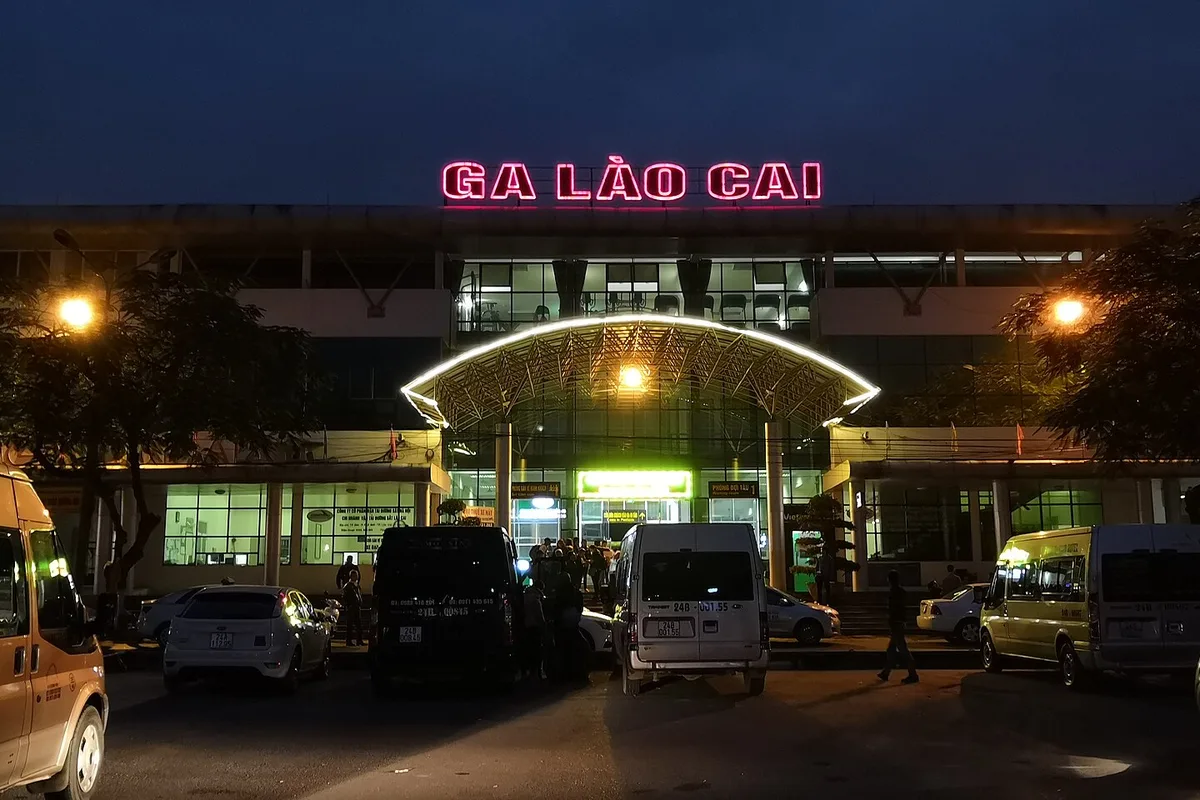
Every Sapa arrival is a two-part journey. Part one gets you from Hanoi to the mountains: the overnight train to Lao Cai, a cabin bus straight to town, a day limousine van, or a private car. Part two, for train riders only, is the 35 km climb from Lao Cai station — about an hour by shared van for VND 50,000 to 60,000, or the public bus for VND 30,000 to 40,000. The rides from Hanoi:
Choose the train for the steadier night; choose the cabin bus for one ticket and no transfer. The limousine van is the daylight pick — reclining seats, few stops, views in the last hour.
Prefer to be met? A Kiwitaxi transfer or a Welcome Pickups driver puts a name board at Lao Cai station at a fixed price. Driving yourself, price the Hanoi pickup on AutoEurope first — most visitors do not self-drive these mountain roads.
In town, Sapa is a walking town with steep edges: centre, lake and market sit inside 15 minutes on foot. Xe om motorbike taxis wait by the square — agree the fare before you climb on. Metered taxis suit Fansipan and Thac Bac runs. Rental motorbikes are everywhere, but wet valley roads are no place to learn: rent only with a licence, a helmet and dry weather.
In the city
Start at the Stone Church and the square.
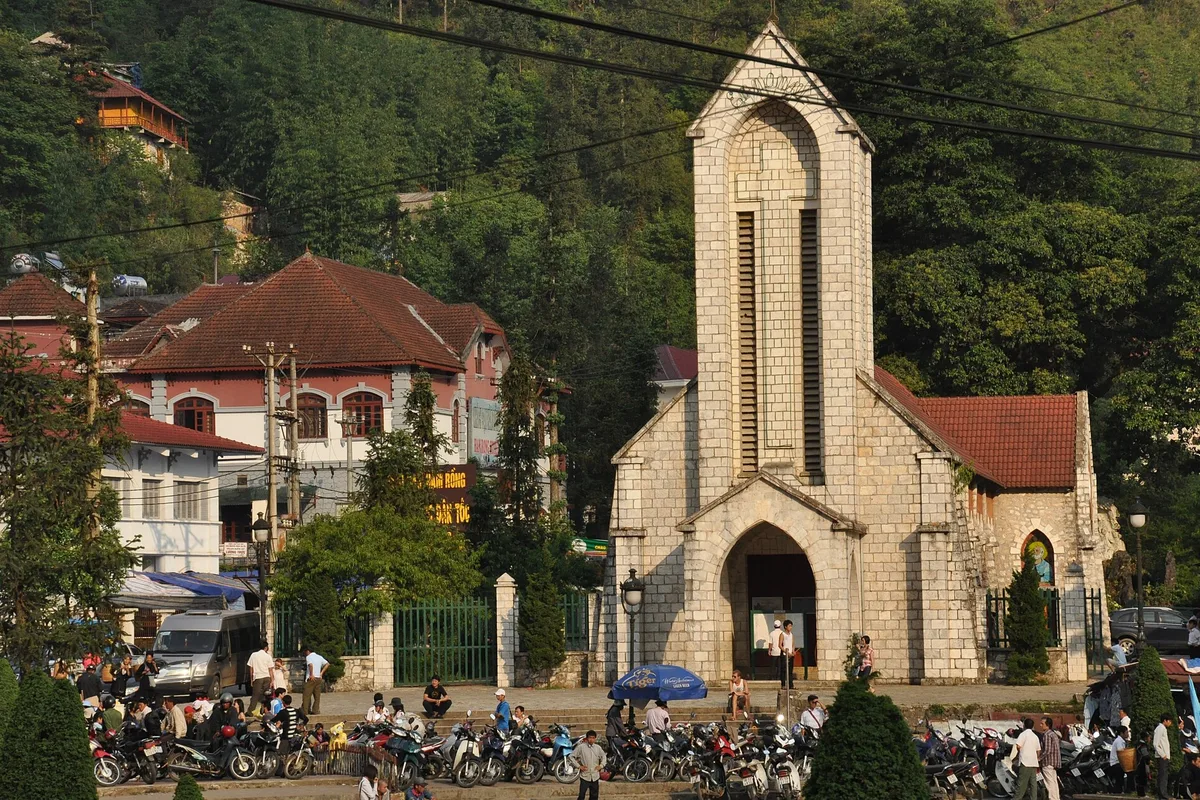
The French-era stone church, built in 1935, anchors the town: the square fills with Hmong and Dao traders, and the Sapa Museum explains the valley's peoples before you trek into it.
Walk around Sapa Lake and up Ham Rong.
The lake loop is the flat warm-up; Ham Rong rises behind the church, a ticketed garden of orchids and viewpoints (VND 70,000) ending above the rooftops — go late afternoon, when fog often peels off Fansipan.
Ride the Muong Hoa funicular to the Fansipan cable car.
From Sun Plaza beside the square, the mountain train crosses to the cable car station; the gondola climbs to 3,143 m, the roof of Indochina. A return ticket is VND 850,000 with Sun World — start early, before summit fog builds.
Browse GetYourGuide for treks and Fansipan days, and compare Klook when stacking activities.
Where to stay your first nights

Hôtel de la Coupole - MGallery.
Best for the Indochine splurge — 249 rooms fused with Sun Plaza, heated pool and the funicular in-houseSleep at 1 Hoang Lien Street, fused with Sun Plaza — Bill Bensley's Indochine palace of 249 rooms, a heated indoor pool, and the funicular leaving from its own station. Book it for the fullest version of Sapa polish.
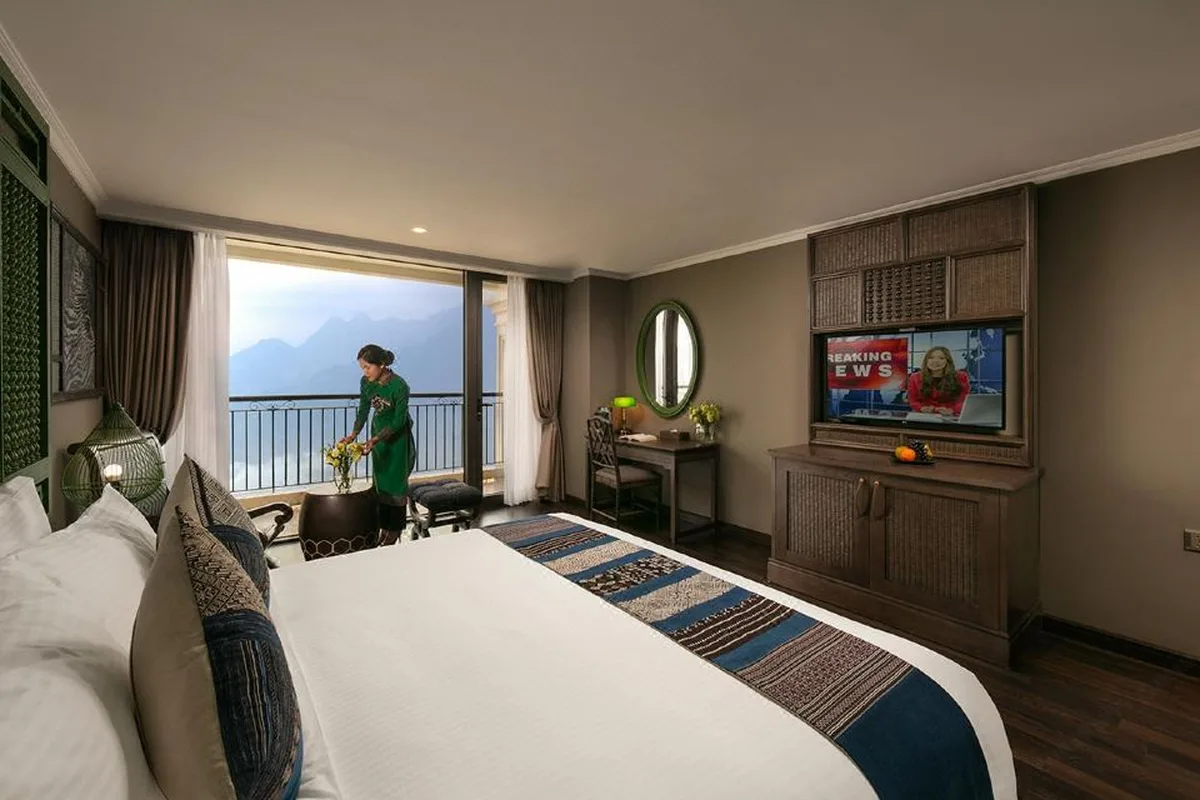
Pistachio Hotel Sapa.
Best for near-five-star comfort at a four-star price — two pools and high-floor valley viewsStay at 29 Thac Bac Street, ten minutes from the square — a 95-room four-star with a four-season indoor pool, a rooftop infinity pool and sky bar, and high-floor valley rooms. Book it for five-star comfort at a four-star price.

Flaco Hostel Sapa.
Best for social budget beds by Sapa Lake — big clean rooms and a trek desk at the counterBed down at 516 Dien Bien Phu, a minute from Sapa Lake — large, clean rooms and dorms from about US$6, a 24-hour desk and staff who arrange treks. Book it for the social, trek-base version of Sapa.
Sleep in town on a first visit — you arrive there, eat there and start treks from the church steps. The centre suits short stays; the valley road suits view-first stays, a short taxi below town and quieter.
Book ahead for September and October weekends, when harvest season fills the town. Valley homestays in Ta Van and Lao Chai are the alternative — simpler, family-run, reached by trek or taxi.
Where to eat first
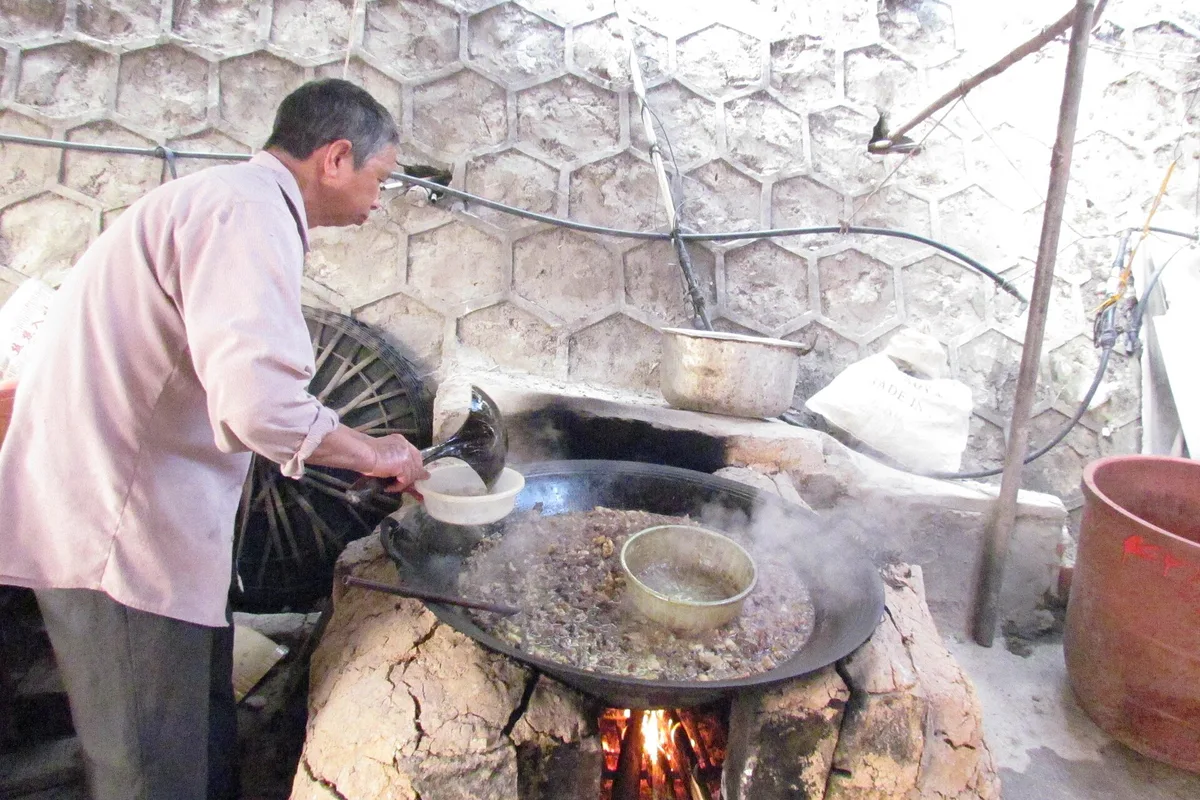
Sapa cooks mountain food: river fish, hill pork, greens, and salmon and sturgeon farmed in cold streams — the only place in Vietnam cold enough to raise them. One honesty note: thang co, the Hmong market stew, is traditionally horse meat and offal with mountain spices — rich, dark and not for everyone. The salmon hotpot is the gentler first night. Three first stops:
Red Dzao House, 4B Thac Bac Street.
Eat the herbal salmon hotpot — the Red Dao are famous for medicinal-leaf baths, and the same pharmacy flavours this broth. Grilled salmon and roast pork back it up; expect VND 200,000 to 400,000 a person.
A Phu Restaurant, 15 Fansipan Street.
Order the salmon or sturgeon hotpot in a big wood-and-bamboo room — the safe table to try a small bowl of thang co alongside, tourist-adjusted but true to the dish.
Cho Tinh Quan, 63D Fansipan Street.
Graze the crowd-pleaser — Hmong-inspired cooking, salmon pots for groups, fried rice and pho. Come hungry and order to share.
For food tours and cooking classes, browse the Sapa listings on GetYourGuide and book a slot for your first free evening.
Day trips and more
Three escapes cover Sapa at three speeds: the summit on foot, the valley on foot and the great Sunday market. Carry layers — every one starts cold.
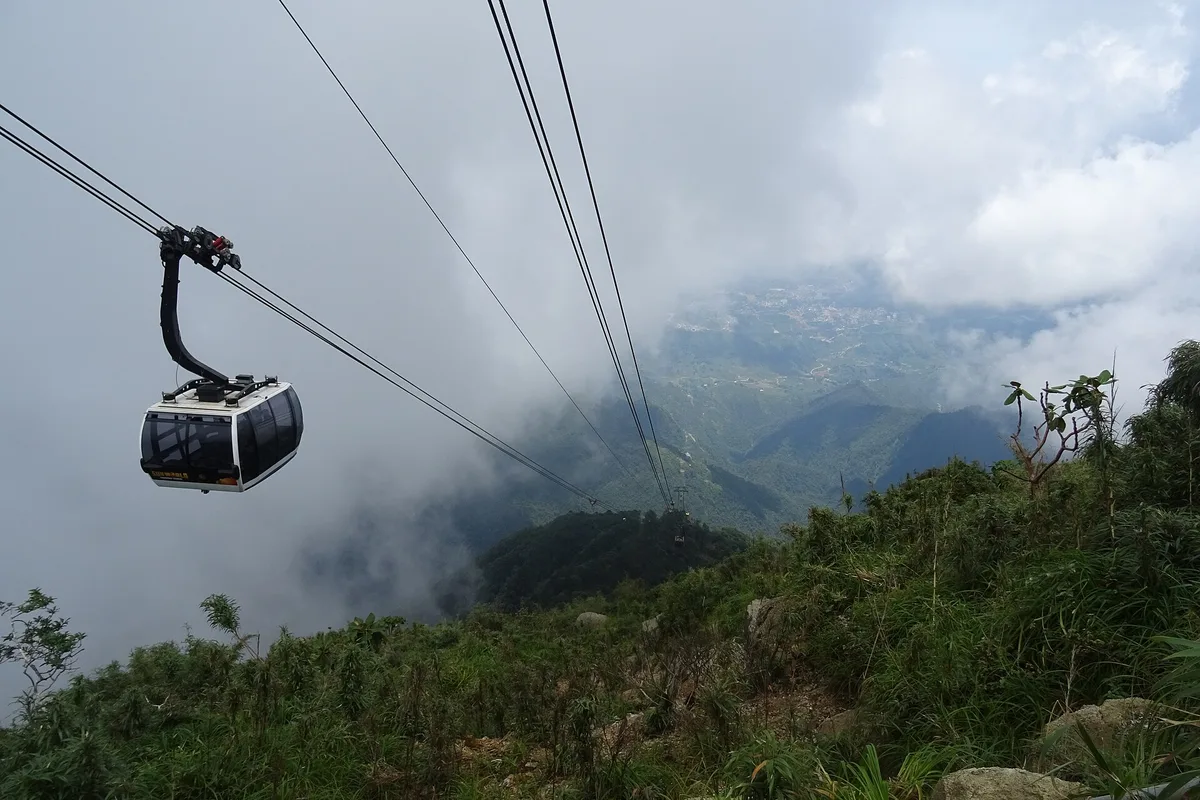
Fansipan one-day trek
One day, small group, pickup in town: transfer to the trailhead at about 1,900 m, then forest and bamboo trails to the 3,143 m summit with a local Hmong guide. For fit walkers only, from about US$52. Check availability →
Muong Hoa valley eco trek
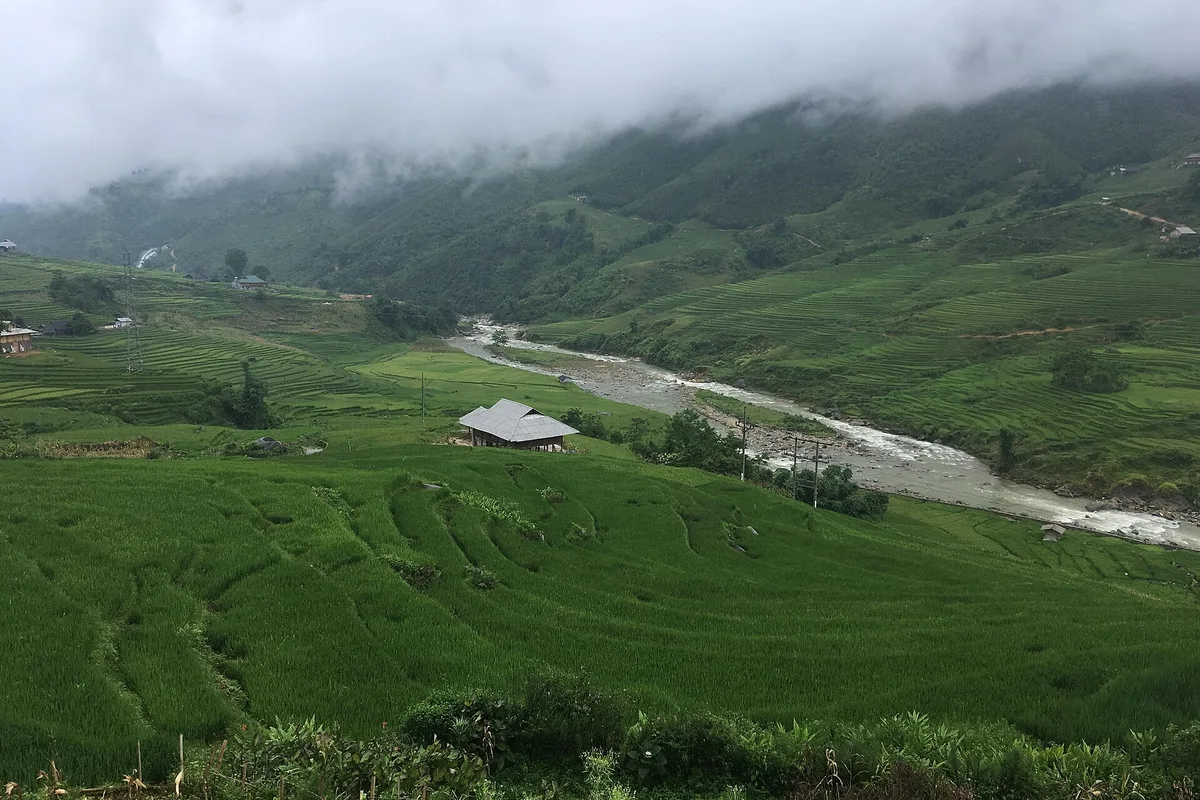
Six and a half hours through the valley: Y Linh Ho, a home-cooked lunch with a Hmong family in Lao Chai, then Ta Van, with local guides telling the valley's story. Rated 4.9 from over 1,400 reviews, from about US$28. Check availability →

Bac Ha Sunday market
One day, Sundays only: a 110 km mountain drive to the largest and most colourful ethnic market in the north, Flower Hmong, Tay and Dao traders, a village walk and lunch. Pickup about 07:00, from about US$35. Check availability →
Leave a spare half-day for Cat Cat village, the closest Hmong settlement — ticketed at VND 150,000, paved and busy, best in the first hour.
When to go and what it costs
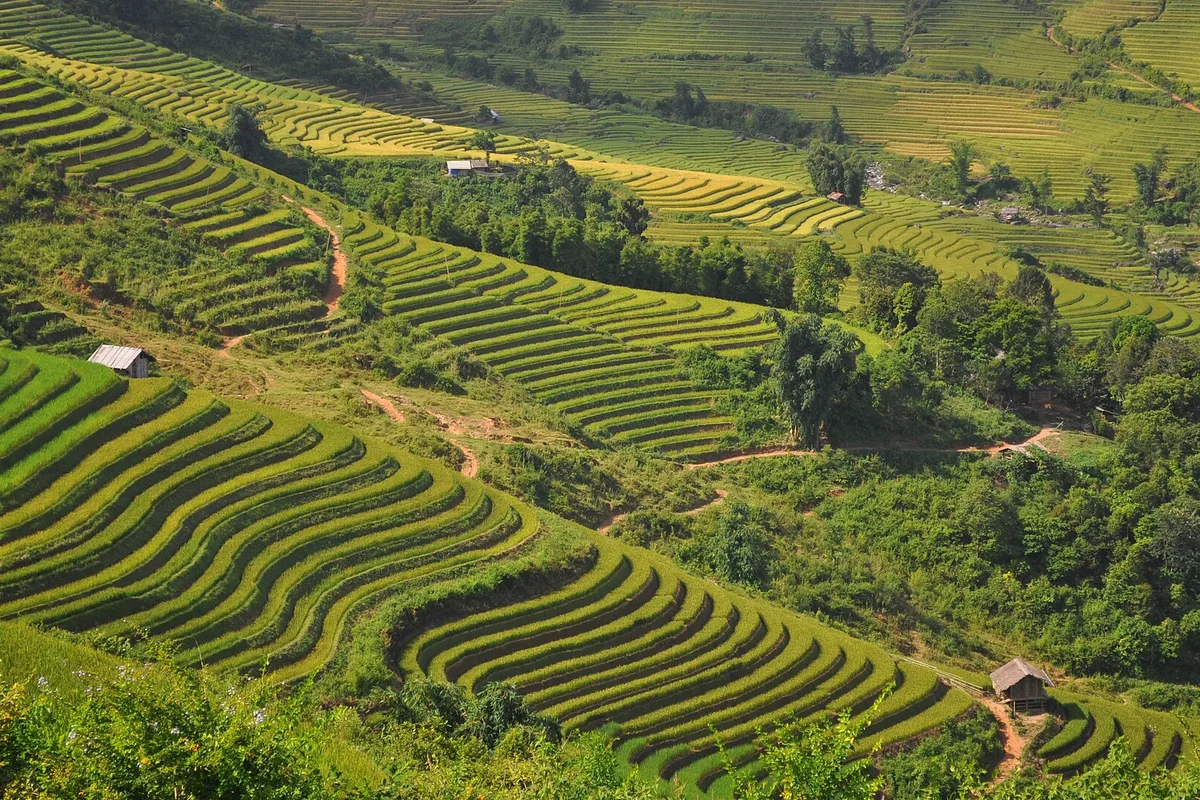
September and early October are the famous weeks: the Muong Hoa terraces ripen gold, families cut by hand, and post-monsoon air turns clear. Be honest about timing — the harvest peaks from mid-September into the first two weeks of October, and by late October most lower terraces are cut stubble, traded for the year's widest views. Days run 15 to 23°C, nights toward 10°C, and fog owns many mornings. March to May is the second window: warmer, terraces filling with water. June to August is monsoon. December to February is properly cold, with frost on Fansipan.
Budget in dong; the rate sits at VND 25,800 to US$1 (October 2026). A pho breakfast is about US$2; a village ticket US$3 to 6; the cable car about US$33; a salmon hotpot dinner US$8 to 16 a person.
A backpacker in a dorm, on market lunches and shared vans: US$30 to 45 a day. Mid-range — a four-star room, hotpot dinners, a guided trek: US$80 to 120 a day. A splurge day with the Coupole and a private car passes US$250.
What to pack
Tap items to check them off — your list is saved on this device.
Pack for altitude in the tropics — warm sun at noon, near-winter cold after dark, slick trails. This is the full list:
- Comfortable walking shoes Shop walking shoes on Amazon →
- Sunscreen Shop sunscreen on Amazon →
- Reusable water bottle Shop water bottle on Amazon →
- Phone charger and power bank Shop power bank on Amazon →
- Daypack Shop daypack on Amazon →
- Sunglasses Shop sunglasses on Amazon →
- Light rain jacket Shop rain jacket on Amazon →
Add the Sapa extras: a warm layer and hat for 1,600 m nights and the 3,143 m summit, shoes with real grip, and small dong notes — village tickets and vans do not take cards.
Language, visa and entry
✓ Visa-free entry
Vietnamese runs the town; in the villages you are in Hmong and Dao country, where many older people speak little Vietnamese, let alone English. Guides bridge it. A smile and four phrases do most of the work:
Sort your entry paperwork before you book anything non-refundable — you enter Vietnam at Hanoi, not Sapa. Most visitors use the official e-visa: open to all nationalities since 2023, up to 90 days, single entry US$25 or multiple entry US$50, applied for at evisa.gov.vn and usually approved in three working days. Apply a week ahead and print the approval.
Citizens of 24 countries, including the UK, France, Germany, Italy, Spain, Japan and South Korea, enter visa-free for 45 days; ASEAN nationals get shorter stays. US, Canadian, Australian and New Zealand citizens are not exempt — the e-visa is your route.
Safety and health
Agree every fare before the wheels move
The classic Sapa frictions are money, not danger: touts at Lao Cai selling van seats twice, xe om fares that grow at drop-off, unmetered taxis. Pay the driver directly and let your hotel book dawn transfers.
Respect the altitude and the cold
Town sits at about 1,600 m and Fansipan at 3,143 m — the summit is near freezing when town is mild. Take it slowly, carry water and a real jacket, and skip the trek version if weather closes in.
Ride defensively or not at all
Motorbike rental is the region's main injury route: wet bends, fog on the Tram Ton pass, trucks on the Lao Cai road. A home licence alone does not cover Vietnam — you need an international permit with the motorcycle category, or insurance is void.
Drink safe water and eat cooked food hot
Tap water is not drinkable; hotpots and pho arrive boiling and are the safe core of the local kitchen. Care in Sapa is basic — anything serious means Hanoi, hours away, so evacuation cover matters. Dial 115 for an ambulance, 113 for police.
Related destinations
If you liked Sapa, try these next:
 Asia & Pacific
 Asia & Pacific
 Asia & Pacific
 Asia & Pacific
 Asia & Pacific
 Asia & Pacific
 Asia & Pacific
 Asia & Pacific
 Asia & Pacific
 Asia & Pacific
Frequently asked questions
The Hanoi journey, the cable car and the visa, in short.
Fares checked against operator reporting and Sun World's 2026 price list, October 2026; entry rules against the official e-visa portal and GOV.UK travel advice.
You cannot — Sapa has no airport. Fly to Hanoi Noi Bai (HAN), then travel overland: the overnight train to Lao Cai plus a one-hour van (about 9 hours in all), a direct sleeper cabin bus in about 6 hours, or a private car in about 5.
For most visitors the cabin bus: one ticket, Old Quarter or Noi Bai pickup, Sapa town drop-off, about 6 hours, from about VND 465,000 with Sao Viet. The train is the calmer night — a proper berth on SP3 or SP7 — but adds the Lao Cai van at dawn.
VND 850,000 return for adults with Sun World in 2026, plus VND 200,000 if you ride the Muong Hoa funicular from Sun Plaza to the cable car station. Children 1 m to 1.4 m pay VND 550,000; under 1 m ride free. Go early — summit fog builds by midday.
Probably an e-visa: Vietnam's official e-visa is open to all nationalities, runs up to 90 days, and costs US$25 single entry or US$50 multiple entry via evisa.gov.vn. Citizens of 24 countries including the UK, France, Germany and Japan get 45 days visa-free; US, Canadian and Australian citizens are not exempt and need the e-visa.
September to October for the golden harvest — the terraces are cut from late September, so early October catches the last gold with the clearest post-monsoon air. March to May is the second window. December to February is cold and foggy; June to August is monsoon.
Yes, with normal mountain care. The risks are road and weather, not crime: agree van and xe om fares in advance, think hard before renting a motorbike on wet passes, and dress for near-freezing cold on Fansipan. Town care is basic, so carry evacuation cover.
Dong fares move — the operator, the station desk and Sun World always win.
Sapa, in your pocket
Landing soon? Get the printable PDF — ticket links, the airport transport cheat sheet, our 3 restaurant picks with maps, and the packing checklist. Everything above, formatted for your phone.
One email with your Sapa PDF. Fare changes and new guides after that. No spam, unsubscribe anytime.
Sources and last verified
Arrival fares against October 2026 operator reporting: SP3 and SP7 times (Hanoi 22:00, Lao Cai 05:55), state berths from about VND 495,000, private carriages (Sapaly, Chapa, Livitrans) at US$35 to 55; Lao Cai vans VND 50,000 to 60,000 against Vexere's station guide; Sao Viet cabins at US$18; limousine vans VND 400,000 to 550,000; private cars from VND 2,800,000. Fansipan against Sun World's 2026 list: cable car VND 850,000, funicular VND 200,000 — one trekking source still quotes VND 800,000, and the Sun World figure is printed. Cat Cat VND 150,000 against three 2026 sources (one older guide says VND 100,000). Exchange anchor VND 25,800 to US$1. Entry rules against the official e-visa portal and GOV.UK. GetYourGuide hub opened and heading-verified as Sa Pa; all three products opened. Expedia returned 429s during this build, so hotel URLs are empty pending the confirmation pass. Photo credits as in the guide data. Last verified October 2026.
Affiliate disclosure: hotel names, transfers, experiences, and products linked in this guide may earn After You Land a commission at no extra cost to you. Prices and times were checked in Oct 2026 and change often — confirm before you book.