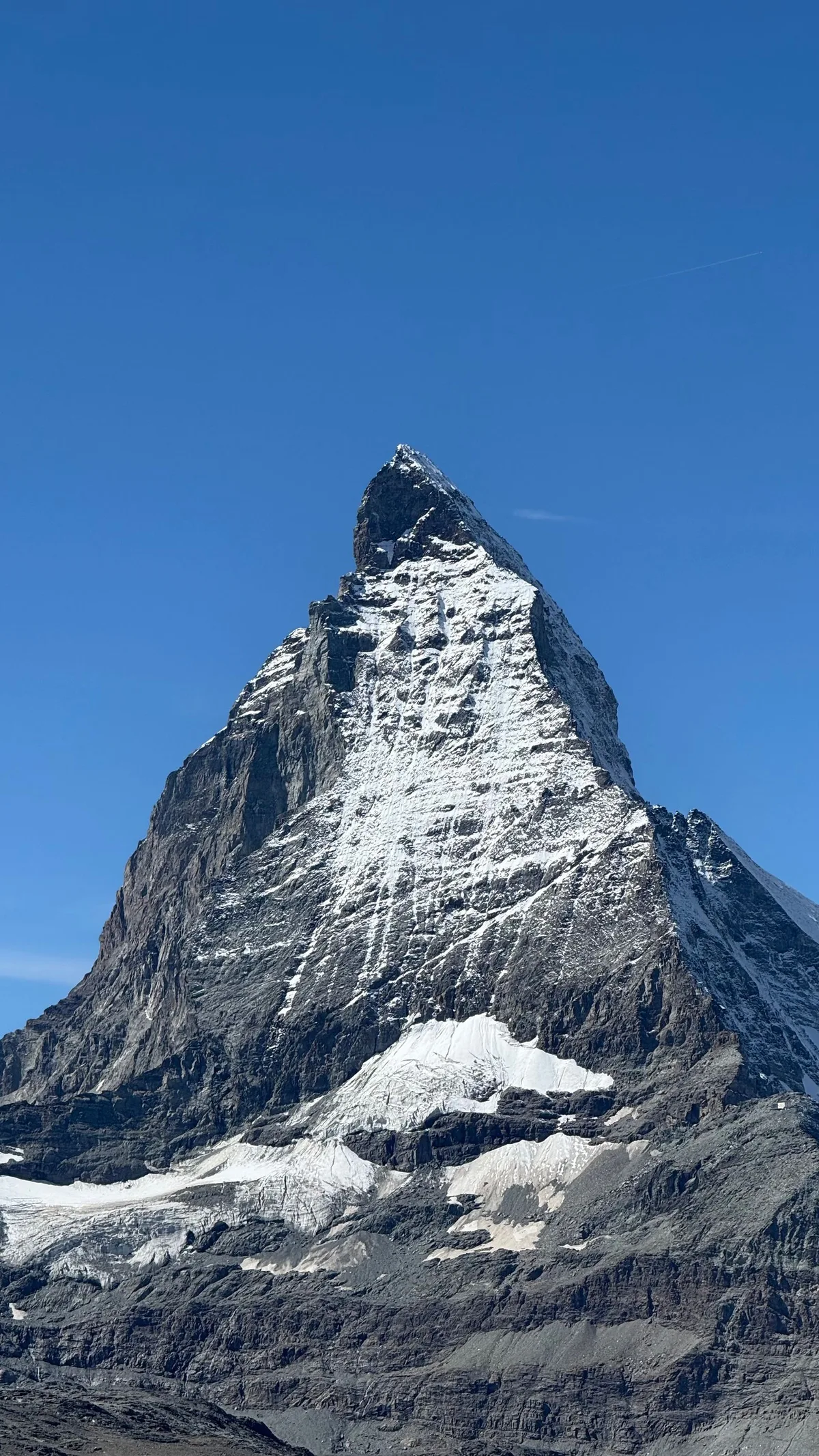
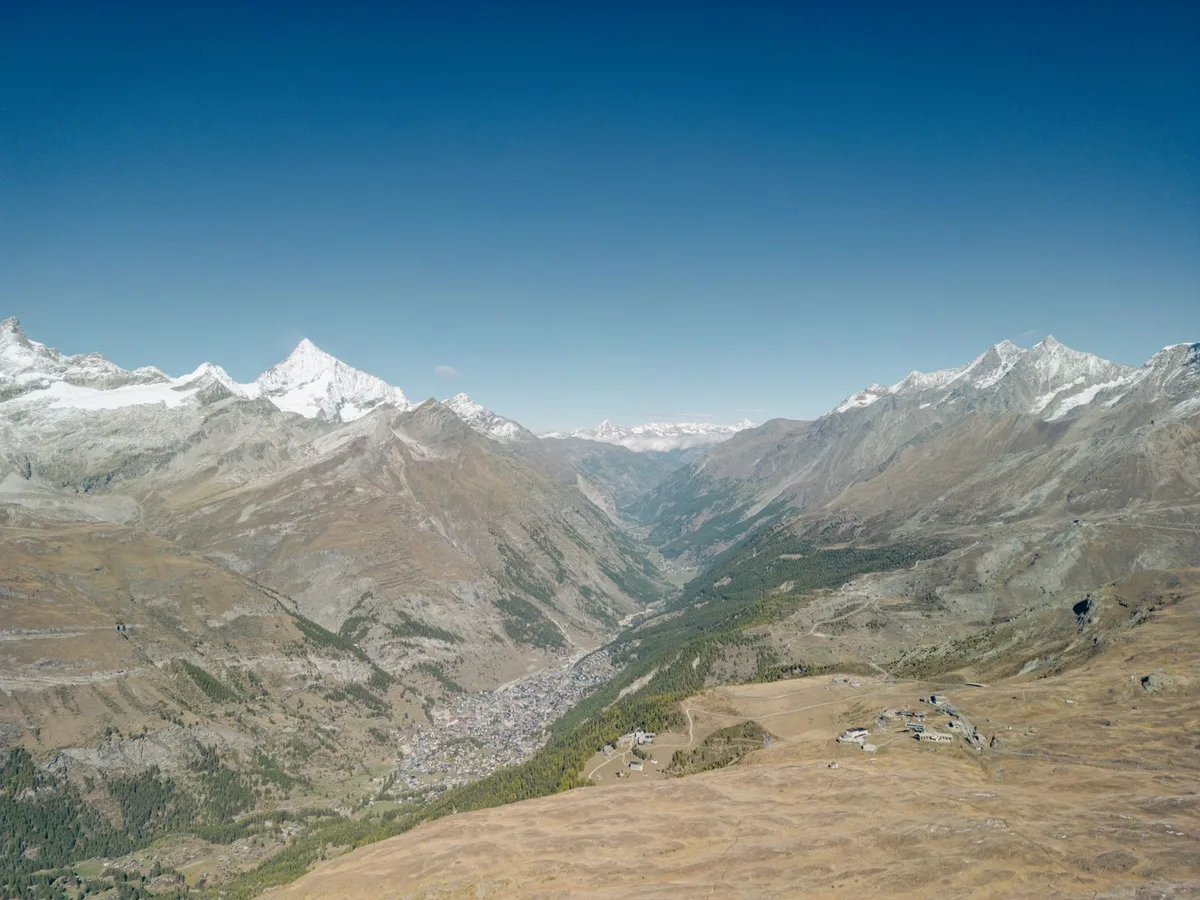
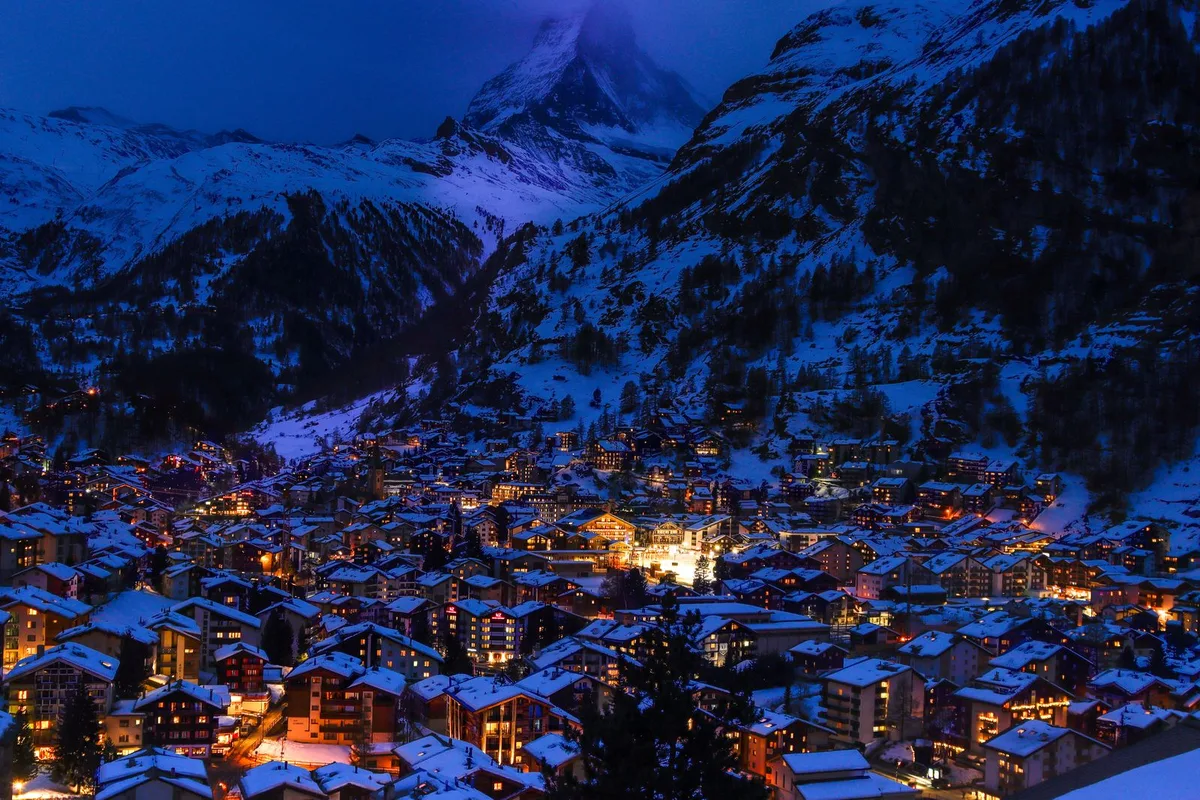
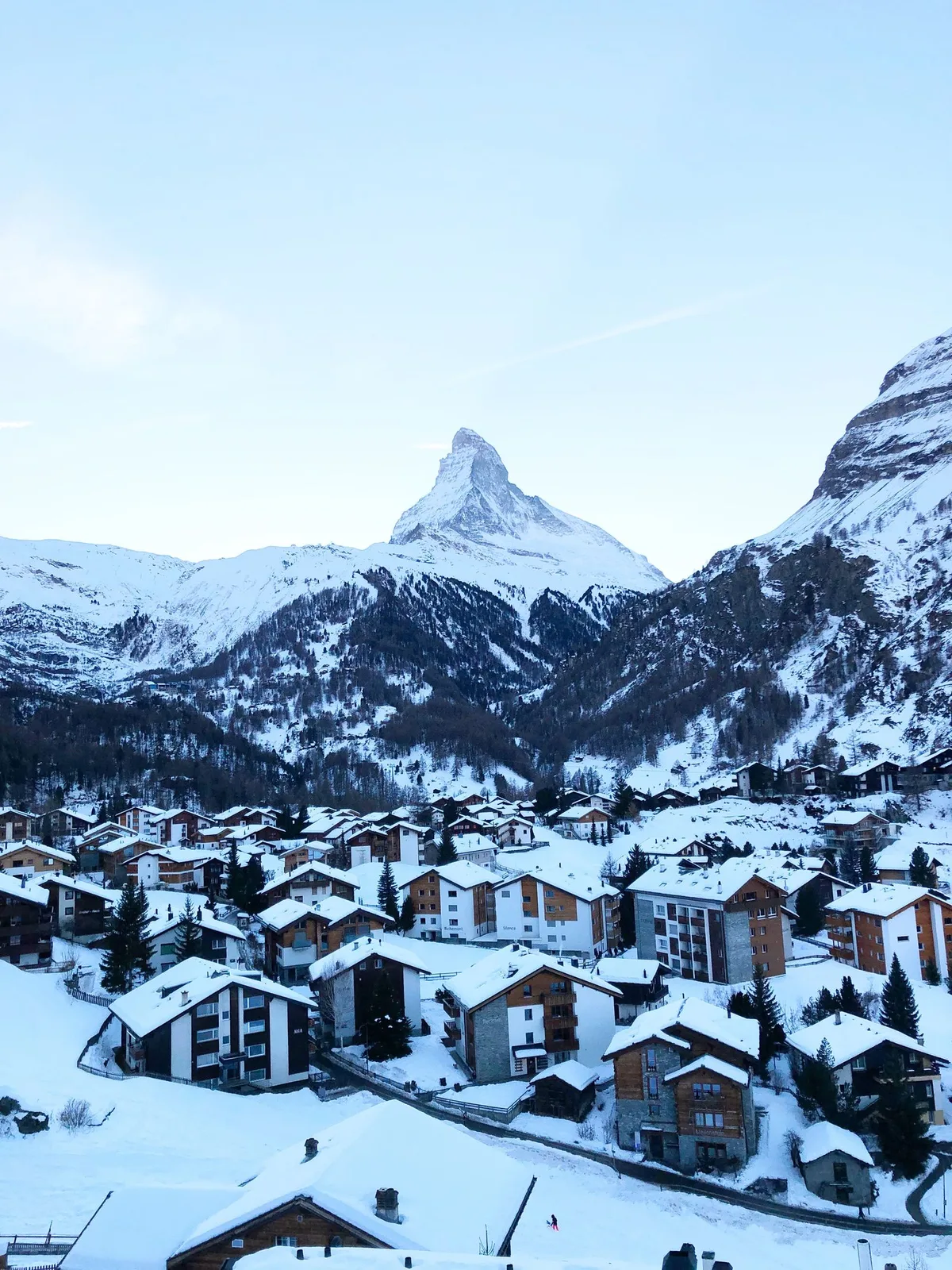
Zermatt is a car-free mountain village at the foot of the Matterhorn — the most famous peak in the Alps — in the canton of Valais, in the south of Switzerland. No cars, no through traffic, just electric buggies, horse-drawn carriages and footpaths between wooden chalets, with the Matterhorn filling the sky at the end of the main street. It is a ski resort, a hiking base and a viewpoint all at once: the Gornergrat railway climbs to a 360-degree panorama, cable cars reach the Klein Matterhorn glacier at 3,883 m, and the Five Lakes Walk strings alpine lakes together beneath the peak. Come for the mountain, stay for the quiet.
By Paul GreenUpdated Oct 202613 min readPrices checked Oct 2026
You just landed in Zermatt. The landing really happens on the train — Zurich Airport is about 3½ hours away by rail and Geneva about 4, the last hour climbing the valley on the Matterhorn Gotthard Bahn into a car-free village, with an eSIM live before you board and the two rides that sell out first — the Gornergrat railway and the Glacier Paradise cable cars — worth booking ahead through GetYourGuide.
Some links on this page are affiliate links. If you book through one, After You Land may earn a commission — at no extra cost to you.
Quick facts
Airport
Zermatt has no airport Geneva (GVA) or Zurich (ZRH), then trains via Visp or Brig — Zurich Airport is about 3½ hours away by train and Geneva Airport about 4 hours; the last leg is the Matterhorn Gotthard Bahn up the valley to Zermatt station.
Getting in
By train to Zermatt station the only way in — Drivers park at Täsch and ride the shuttle train (12 minutes, every 20 minutes). No private cars enter Zermatt.
Currency
Swiss franc (CHF) cards widely accepted — Carry some cash for mountain huts and small purchases.
Languages
German (Swiss German in Valais) English widely spoken — Hotels, restaurants and lift stations all work in English; a "Grüezi" still earns a smile.
Time zone
Central European Time (UTC+1; UTC+2 in summer) The whole rail journey from either airport stays in the one zone, so the transfer never changes your clock.
Emergency
112 for the European emergency line 117 police, 118 fire, 144 ambulance — In the mountains, 1414 reaches Rega air rescue. Save the numbers before you head up.
Plugs
Type C/J sockets, 230V Most European two-pin plugs fit; everyone else needs a Swiss adapter.
Tap water
Safe to drink spring-fed and excellent quality — Refill your bottle from any tap; Zermatt's own supply is spring water, cold and soft.
Tourist tax
A local visitor tax is charged on stays in Zermatt Hotels add it per person per night or fold it into the rate — check whether your quoted total carries it before you compare prices.
Best months
December to March for skiing; June to September for hiking and viewpoints April to May and October to November are shoulder seasons: quieter, but some lifts, restaurants and hotels close between seasons.
Settle in
Arrive the way everyone arrives: by train, stepping off at Zermatt station with the Matterhorn — on a clear day — straight ahead at the end of the main street. The village is car-free and compact, so the first hour is about bags, bearings and the weather, in that order.
Set up your data before you board: an Airalo eSIM loads a Switzerland data plan in minutes, so live train times, lift status and the hotel's pickup message all work on the climb up the valley. Comparing plans for a longer Swiss trip, check Saily and Yesim as the alternatives.
Run the arrival checklist in this order:
Ride the train all the way in — if you drove, leave the car at Täsch and take the shuttle
Let your hotel collect you from the station by electric buggy, or take an electric taxi from the rank
Drop your bags, then check today's lift openings, weather and closures before planning anything
Walk Bahnhofstrasse to the church bridge for the classic first Matterhorn photo
Detour into the Hinterdorf old village behind the main street — five minutes into Zermatt's timber-barn past
Check the tax line when the hotel quotes your rate. Zermatt adds a local visitor tax per person per night, and the first quote may not show it.
If a delayed or cancelled flight wrecked the arrival, AirHelp checks whether the airline owes you compensation — worth five minutes before you write the day off.
Getting around
Journey times are approximate and refer to the listed stop — not necessarily your hotel. Allow extra time for waiting, walking, and connections.
In a hurry? Hotel electric buggy is the fastest option listed, at about 5 to 10 min.
Watching the budget? Hotel electric buggy is the cheapest option listed, at Free with most hotels.
Heavy bags, a group, or a late arrival? Electric taxi takes you door to door — Metered in the village — agree the fare first, about 10 min across the village.
Train from Zurich or Geneva airport
Trains from the airport stations via Visp or Brig, then the Matterhorn Gotthard Bahn up the valley, about every half hour. A Swiss Travel Pass covers the whole journey; the SBB Saver Day Pass is the cheap booked-ahead day ticket; a Half Fare Card halves standard fares
PriceCovered by a Swiss Travel Pass; Saver Day Pass from CHF 52Journeyabout 3½ hrs from Zurich; 4 hrs from Geneva
Täsch shuttle train
The drivers' arrival: park at the Matterhorn Terminal in Täsch (2,100 covered spaces) and ride in. Every 20 minutes from 05:55 to 21:55, hourly into the night and all night at weekends; Swiss Travel Pass and GA holders ride free, Half Fare Card holders pay half
PriceCHF 8.60 one way; CHF 17.20 returnJourney12 min
Electric taxi
Licensed e-taxis wait at the station rank and hotels can book them; the village is small so rides are short, but confirm the fare before you set off
PriceMetered in the village — agree the fare firstJourneyabout 10 min across the village
Hotel electric buggy
Many hotels collect guests and bags from the station by electric buggy — confirm the pickup when you book and call as your train arrives; the easiest first ten minutes in the village
PriceFree with most hotelsJourneyabout 5 to 10 min
Zermatt runs on foot, on rails and on lifts. The village itself is flat enough to walk end to end, a free e-bus loops on two routes (the Ski-Bus and Winkelmatten lines), and the lifts do the vertical work. There are no private cars: every arrival funnels through the station or the Täsch shuttle. The arrival rides are these:
Choose the train when you land tired — one change at Visp or Brig and the valley does the rest. Choose Täsch and the shuttle when you are driving the Alps: the terminal is covered and bookable, and the shuttle boards inside it.
In winter, check lift and piste status each morning — wind and avalanche risk close lifts without warning.
In the city
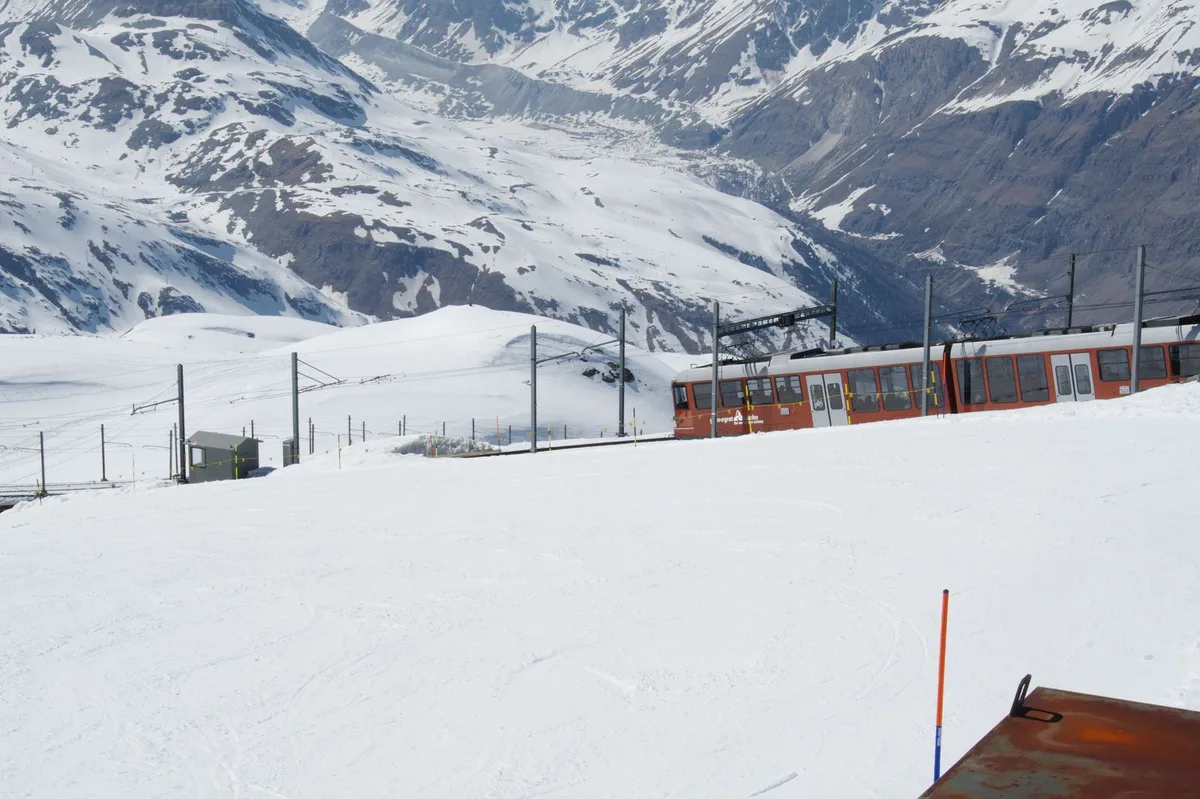
Ride the Gornergrat Railway first, while the sky is clear. The cogwheel train climbs from the village station in about half an hour to Gornergrat at 3,089 m, with a 360-degree panorama over 29 four-thousand-metre peaks, including Monte Rosa. From Rotenboden, one stop below the summit, a short trail leads to the Riffelsee — the lake of the classic Matterhorn reflection photo — so go early, for still water.
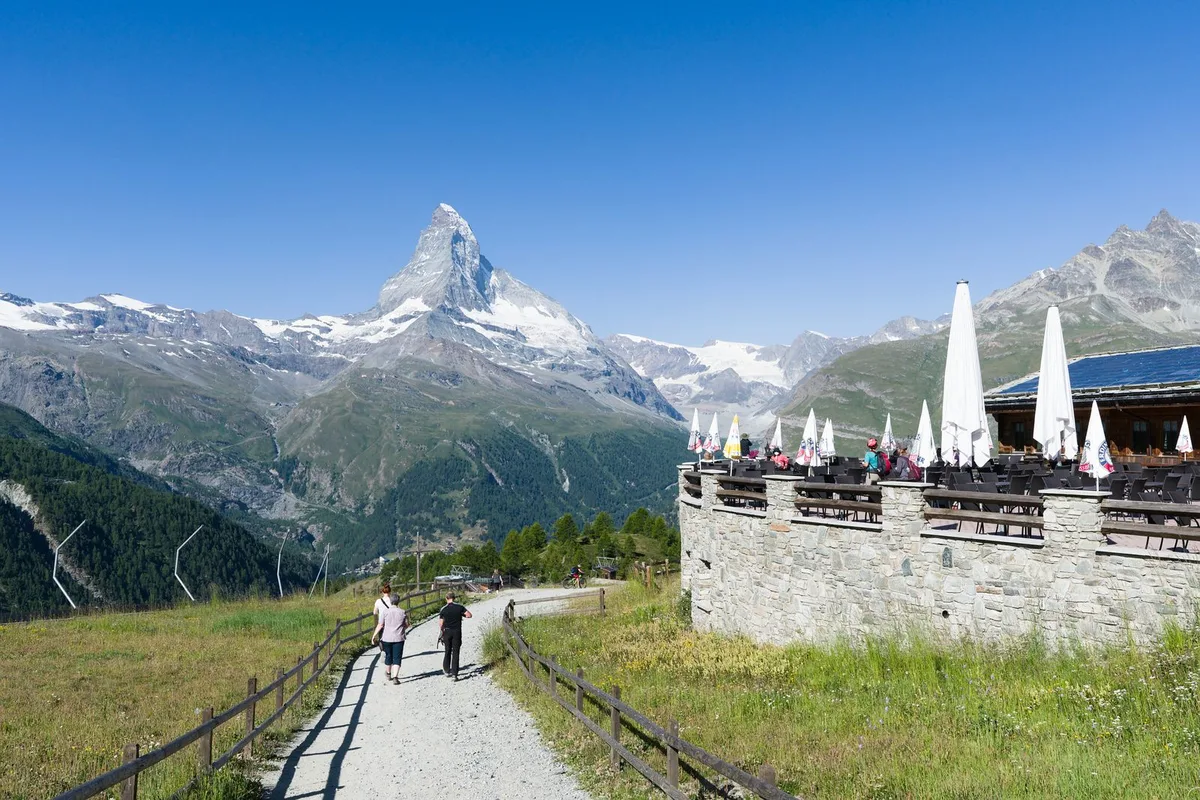
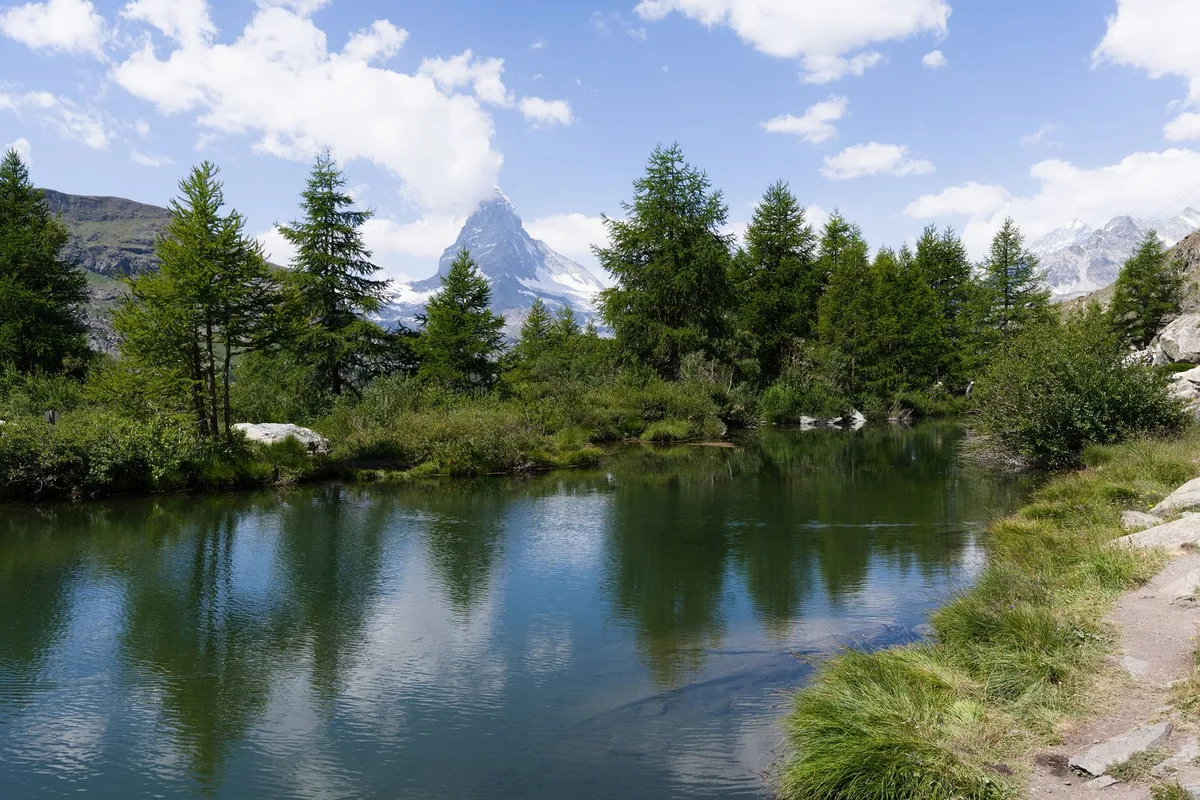
Ride the Sunnegga funicular next, for the Five Lakes Walk. The Blauherd–Sunnegga trail strings the Stellisee, Grindjisee, Grünsee, Moosjisee and Leisee together over about 9.8 km and two and a half hours, mostly downhill — on a calm day the Matterhorn mirrors in the Stellisee.
Slow down in the old village afterwards. Behind the main street, the Hinterdorf quarter keeps Zermatt's dark timber barns and granaries, and the Matterhorn Museum in the village tells the story of the peak's first ascent in 1865.
Keep the first evening easy: a stroll up Bahnhofstrasse, the Matterhorn glowing pink at sunset, then dinner — fondue is the first-night rite — and a walk back through the quiet, car-free streets. Early night if the Gornergrat railway is tomorrow's plan.
Book the headline rides before you arrive, because the mountain fills its trains first. Timed Gornergrat departures and the glacier cable cars go early in season — browse the Zermatt listings on GetYourGuide for the big lift days, and compare Klook when you are stacking activities into one pass.
After you land in Zermatt: Bookable experiences
Where to stay your first nights
Splurge
The Omnia.
Best for the most polished, design-led stay in Zermatt
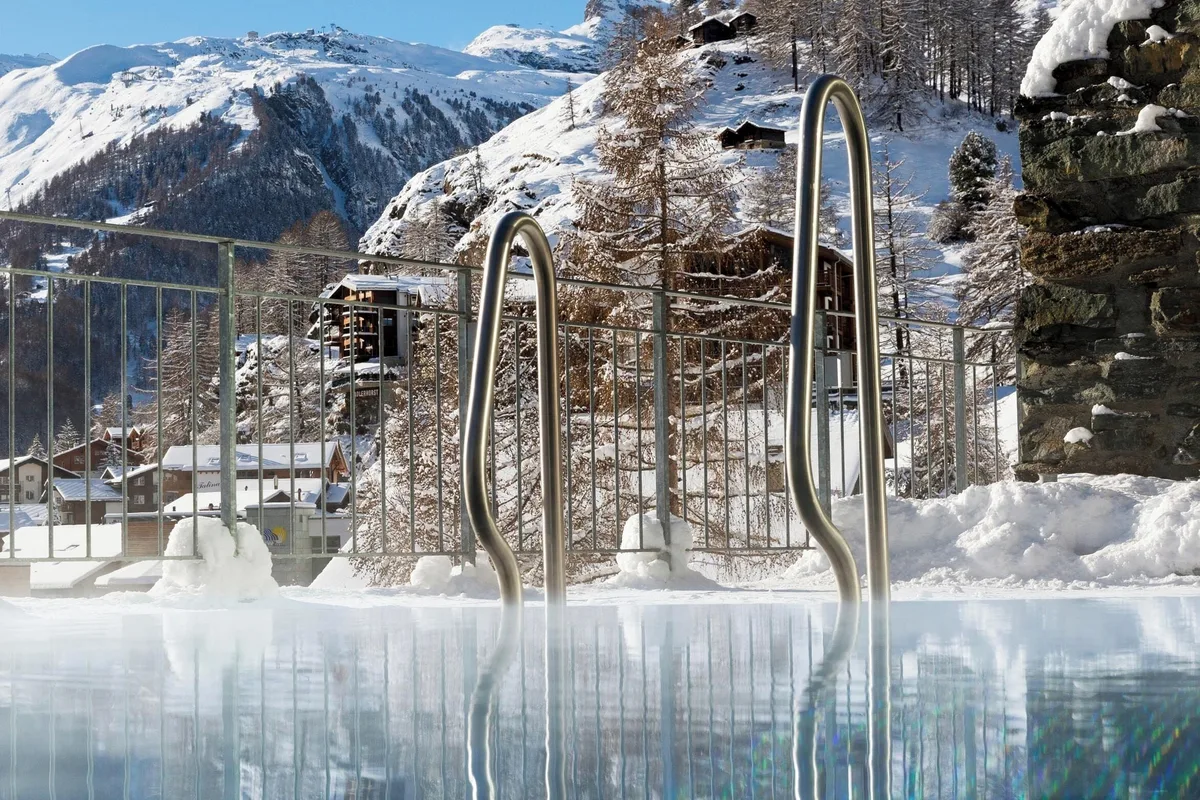
A design hotel at Triftweg 40, above the village, with Matterhorn views, a spa, and station pickup by electric buggy. Best if you want the most polished, design-led stay in Zermatt.
Best for grand-hotel atmosphere in the centre of the village
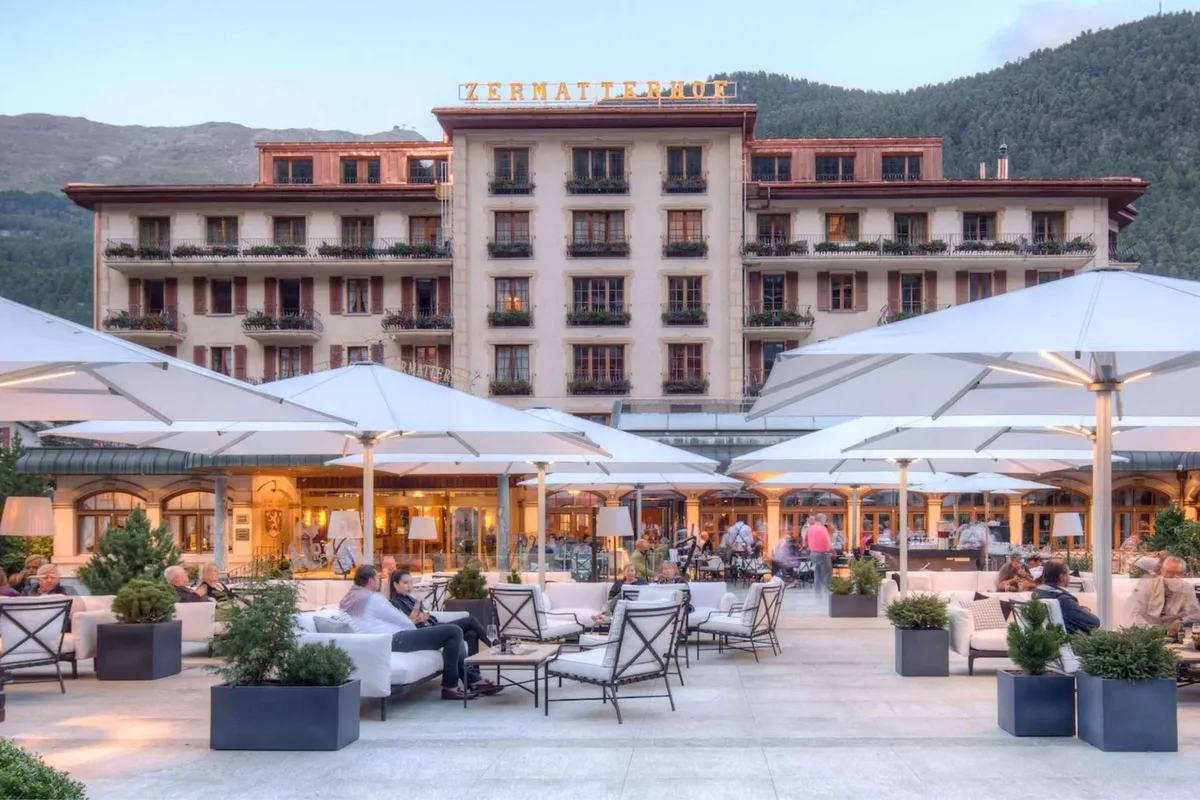
A five-star hotel on the main street at Bahnhofstrasse 55, in business since 1879, with a spa and restaurants. Best if you want grand-hotel atmosphere in the centre of the village.
Best for the cheapest real bed in the village, opposite the station
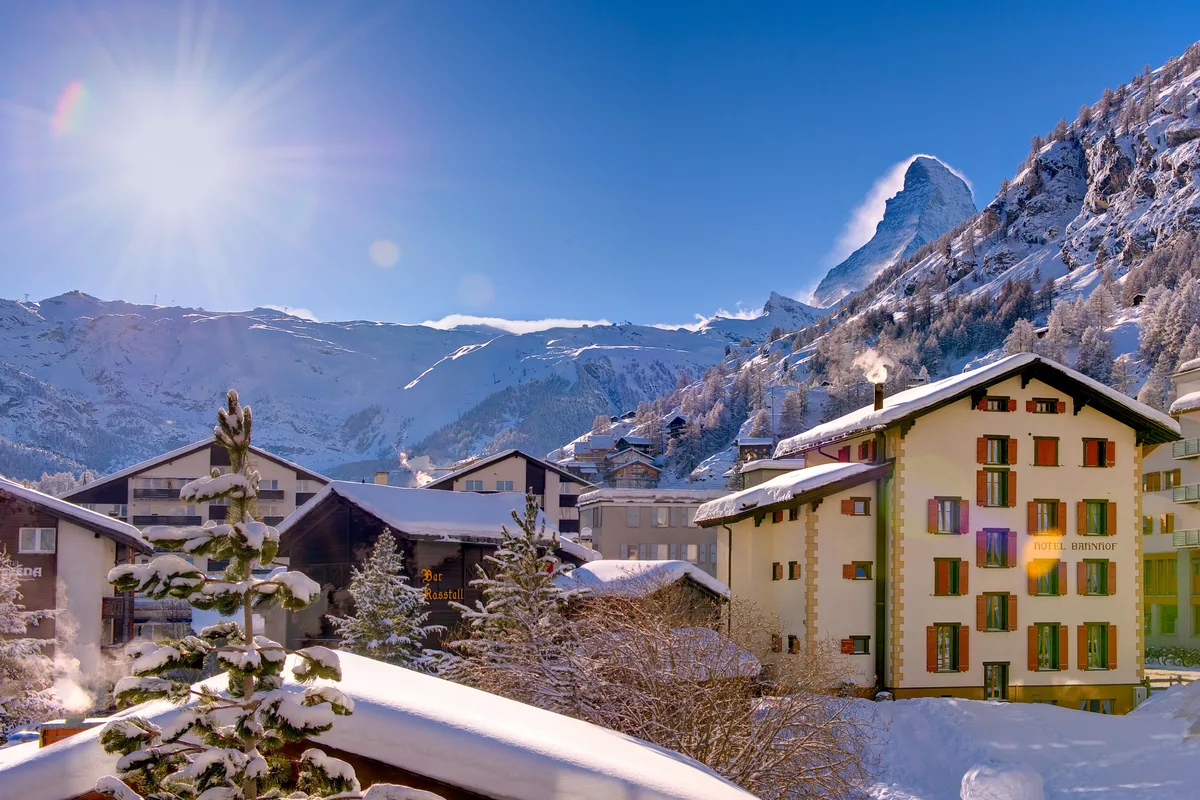
A budget hotel and hostel directly opposite the station at Bahnhofplatz 54, in business since 1902, with private rooms and dorms, shared and private bathrooms, and a common kitchen. Best if you want the cheapest real bed in the village and a two-minute walk to the trains.
Stay in the village for walking access to the station, lifts, and restaurants — Zermatt is compact, and every part of it is within walking distance of the main street. All three picks below are real, operating properties.
Book any of the three early for the ski season and the summer hiking peak. Confirm whether the quoted total includes the local visitor tax.
Where to eat first
Eat Valais first — the canton's kitchen is built on cheese, potatoes and its own wines, and the first night belongs to the classics:
Fondue.
Map → Melted cheese with bread for dipping — the dish to order on your first night. Half-and-half Gruyère and Vacherin is the classic mix.
Raclette.
Map → Melted cheese scraped over potatoes, pickles, and cured meats — the other great Valais cheese ritual.
Rösti.
Map → Crisp grated-potato cake, served as a side or topped with egg and cheese — mountain fuel.
Valais wines.
Map → The canton of Valais produces Fendant (a dry white) and Dôle (a red blend) — order local by the glass.
Mountain restaurants.
Map → Lunch on a sunny terrace above the village is half the point of Zermatt — mountain restaurants such as Chez Vrony above Findeln serve Valais dishes with Matterhorn views. Book ahead in peak season.
Rivella and chocolate.
Map → Rivella, the Swiss whey-based soft drink, and a bar of Swiss chocolate are the low-effort souvenirs.
For a mountain-lunch booking above the village, browse the Zermatt listings on GetYourGuide and reserve the terrace before you arrive — the best tables go first in season.
Day trips and more
Three escapes start inside the village: the cogwheel railway to the Gornergrat panorama, the cable cars to the glacier at 3,883 m, and the same lift system across the border into Italy. The full Zermatt list is on GetYourGuide — the three below are the ones to lock in first.
Gornergrat Railway
Ride the cogwheel line from the village station to 3,089 m for the 360-degree view over 29 four-thousand-metre peaks and the Gorner Glacier, then hop off at Rotenboden on the way down for the short trail to the Riffelsee, where the Matterhorn mirrors on still mornings. Trains run from early; the first departure is the quiet one. Check availability →
Matterhorn Glacier Paradise
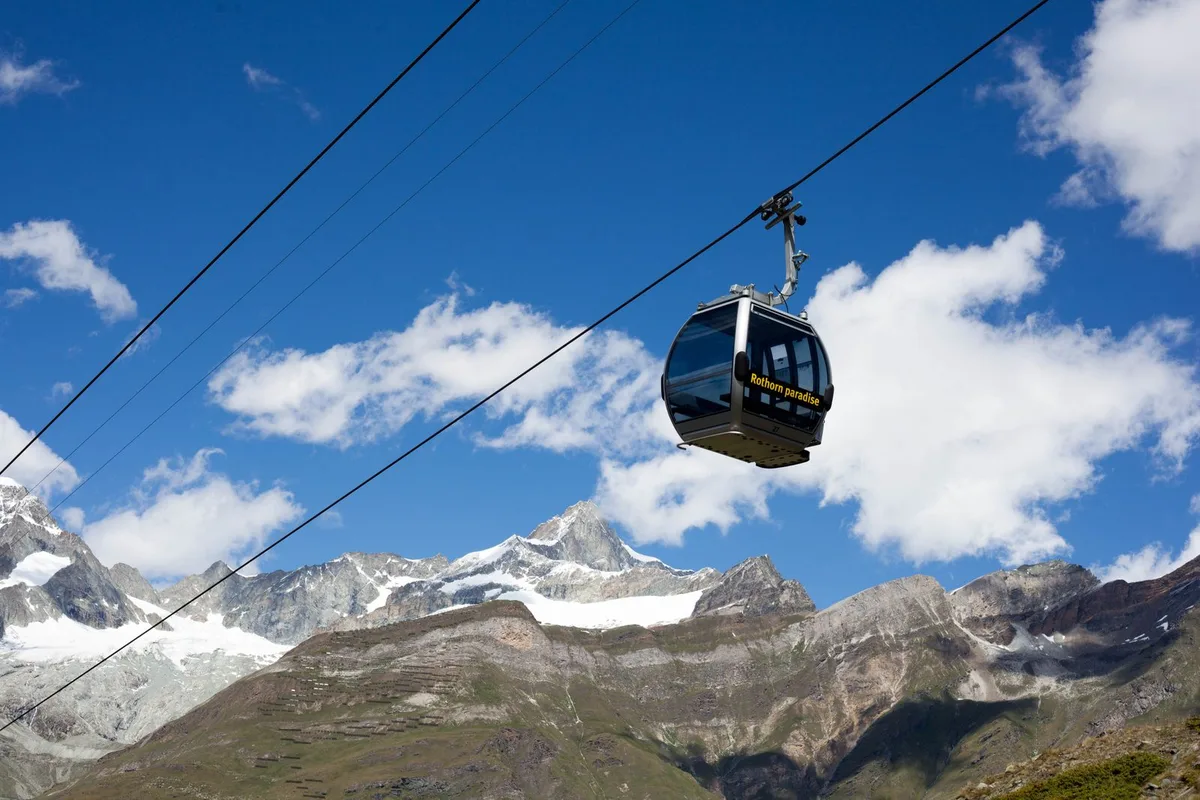
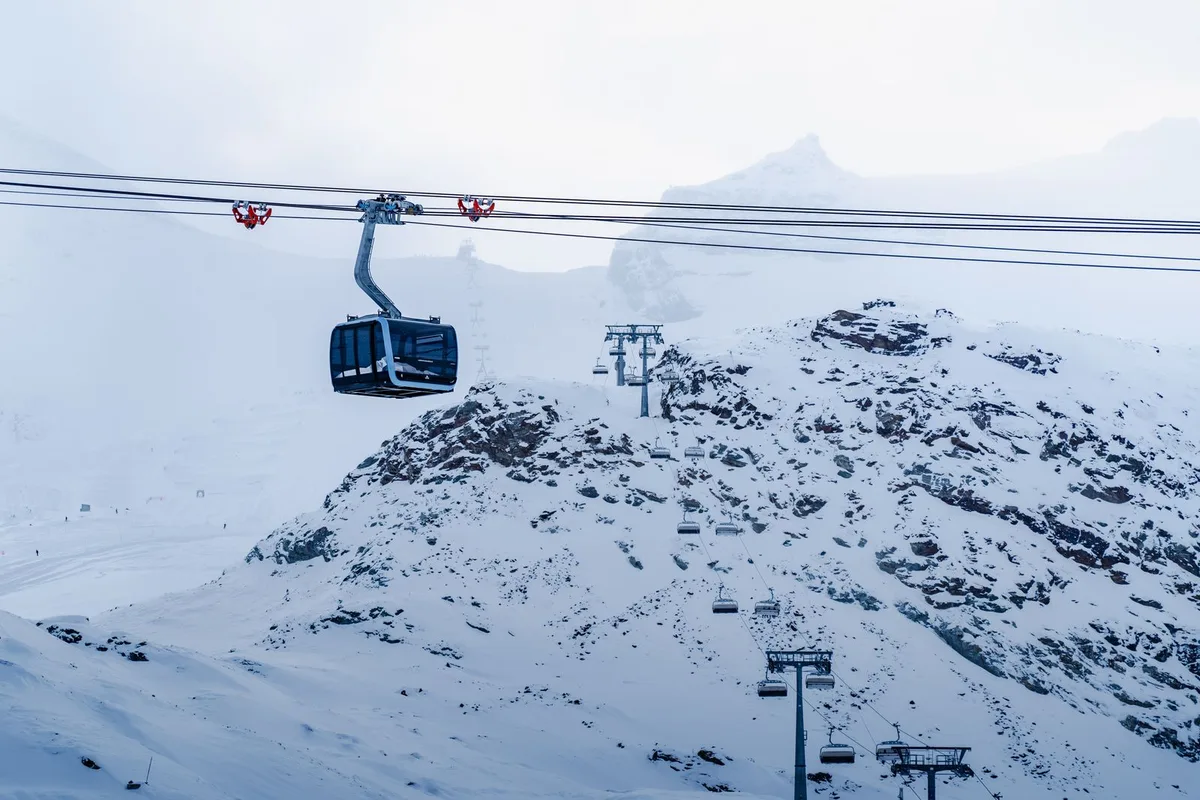
Ride via Schwarzsee and Trockener Steg to the Klein Matterhorn at 3,883 m: a viewing platform facing Mont Blanc, an ice palace carved into the glacier, and snow underfoot every day of the year — skiing is possible here even in summer. Take it slowly at the top; the air is thin. Check availability →
Cervinia, Italy
From Glacier Paradise, the Matterhorn Alpine Crossing carries you over the Theodul Glacier to Testa Grigia and down into Breuil-Cervinia, the Italian resort on the Matterhorn's other face — lunch in Italy, back in Switzerland by lift. Carry your passport or ID for the crossing. Check availability →
Two slower days need no booking button. The Gorner Gorge, just outside the village, threads a wooden walkway through a narrow canyon of waterfalls and polished rock — an easy rest-day detour. And the Glacier Express runs from Zermatt to St. Moritz across 291 bridges and 91 tunnels and the Oberalp Pass at 2,033 m: a full-day scenic journey, not a transfer — reserve seats ahead.
When to go and what it costs
Come in winter for the full deck. December to March is ski season — the linked Zermatt–Cervinia area offers about 360 km of pistes, with glacier skiing at Klein Matterhorn on top. Book beds, trains and mountain restaurants weeks ahead for the Christmas and February peaks.
Come in summer for the trails. June to September brings the hiking season and long days: the Five Lakes Walk, the Hörnli Hut trail from Schwarzsee (about 4.3 km each way with steep, exposed sections — only for sure-footed hikers in good conditions), and every lift running. With a week, add a ski day across to Cervinia, the Glacier Express to St. Moritz, and a guided 4,000 m peak or glacier walk — Zermatt's guides run these all summer.
Come in the shoulder months with your eyes open. April to May and October to November are quieter and cheaper, but some lifts, restaurants, and hotels close between seasons — check before booking.
Budget Zermatt by Swiss levels, not Alpine ones. Plan roughly CHF 200–350 per person per day at the modest end (hostel or guesthouse, self-catering, one mountain outing), CHF 400–700 mid-range, and CHF 800+ for a proper splurge. Confirm current lift and lodging rates when booking.
The lift days are the big spend — compare Gornergrat and glacier tickets on Tiqets before you travel, then let the forecast pick the day.
What to pack
Tap items to check them off — your list is saved on this device.
Pack for a village at 1,620 m with lifts to 3,883 m — the list below is Zermatt-specific, built for glacier sun, fast weather and a car-free village:
Add one habit on top of the list: check the lift board and the forecast every morning. Wind and avalanche risk close lifts without warning, and the best day on the mountain is the one the weather allows, not the one the calendar promised.
Language, visa and entry
✓ Visa-free entry for eligible passport holders
German runs the village — Zermatt sits in Swiss-German Valais, and signs, menus and lift boards lead with it. French and Italian are also national languages; English is widely spoken in hotels, restaurants and lift stations, so day to day you will manage in English everywhere it matters.
Four phrases do most of the work:
GrüezihelloDankethank youBittepleaseEntschuldigungexcuse me
Sort your entry paperwork before you book anything non-refundable. Switzerland is in Schengen: many nationalities enter visa-free for tourist stays of up to 90 days in any 180-day period, and EU, EEA and Swiss citizens enter on a passport or ID card. Check the current rules for your passport before booking — and note that ETIAS is not in operation (checked October 2026), with no start date set: there is nothing to apply for or pay.
Carry your passport or ID whenever you ride the lifts towards Italy. The Cervinia crossing leaves Switzerland at 3,883 m, and border checks are possible at the top station.
Money is simple: Swiss francs (CHF) for lift tickets, mountain huts, and small shops. Cards work at most hotels and larger restaurants.
Safety and health
Dial 112 for any emergency — and know the Swiss numbers: 117 police, 118 fire, 144 ambulance
Save them before you head up. In the mountains, 1414 reaches Rega air rescue, the helicopter service that covers the high trails and pistes.
Take altitude seriously — the village sits at 1,620 m and the lifts reach 3,883 m
The village itself rarely bothers anyone, but at Glacier Paradise the air is thin: drink water, take the lifts slowly, rest on the first day, and descend if you feel dizzy or headachy.
Mountain weather turns fast — check lift status and the forecast every morning
Wind and avalanche risk close lifts without warning, and storms arrive quickly even in summer. Carry the layers from the pack list, tell someone your trail plan, and turn back when the weather builds.
The sun at altitude is fierce — sunscreen, sunglasses and lip balm even on cool days
Glacier light reflects off snow in every season, and sunburn and dehydration are the common mountain complaints. Refill your bottle often; the tap water is spring-fed and safe.
The things travellers ask in the first 48 hours: the train that replaces the airport run, the car you cannot bring, and the pass maths that decides the fare.
Journey times against Zermatt Tourism; shuttle times, fares and pass validity against the Matterhorn Gotthard Bahn; Saver Day Pass terms against SBB; entry rules against the Swiss State Secretariat for Migration. Checked October 2026.
By train — it is the only way in. Fly to Zurich or Geneva and ride from the airport station: about 3½ hours from Zurich Airport and about 4 hours from Geneva, changing at Visp or Brig onto the Matterhorn Gotthard Bahn for the climb up the valley to Zermatt station. Trains run about every half hour. If you are driving, the road ends at Täsch: park there and take the 12-minute shuttle train.
No. Zermatt is car-free, and private vehicles — electric ones included — are allowed only as far as Täsch, five kilometres down the valley. Park at the Matterhorn Terminal (2,100 covered spaces) and ride the shuttle train in; driving on without authorisation brings large fines.
Let the hotel collect you. Many Zermatt hotels pick guests and bags up from the station by electric buggy — confirm it when you book and call as your train arrives. Otherwise the licensed electric taxis wait at the station; the village is compact so rides are short — agree the fare before you set off. Everything is walkable, but bags and the 1,620 m altitude make the first walk harder than it looks.
If you are travelling around Switzerland, usually yes. The Swiss Travel Pass is valid all the way to Zermatt — including the Täsch shuttle, where pass holders need no separate ticket — and a Half Fare Card halves the shuttle and standard fares. If Zermatt is your only big rail day, price an SBB Saver Day Pass for the arrival day instead: it starts at CHF 52 in 2nd class booked ahead and covers a full day across the GA travelcard area. Zermatt's mountain railways and cable cars are separate tickets either way.
Early in the day, before cloud builds over the peak — which is why the first Gornergrat train is the classic move. December to March is ski season; June to September brings the hiking trails and long, clear days. Give the mountain more than one morning if you can: it hides in cloud often, and a second day doubles your chance of the classic view.
Yes — the Matterhorn Alpine Crossing runs by cable car from Zermatt via the Klein Matterhorn at 3,883 m down to Breuil-Cervinia, and skiers cross on the same link all winter. Carry your passport or ID card, as checks are possible at the border. Ride back the same way before the last lift down.
Fares change — the operators' and SBB pages always win.
Zermatt, Saved for After You Land
Landing soon? Get the printable PDF — the essentials from this guide, formatted for your phone:
The airport transport cheat sheet, with ticket links
Our 3 restaurant picks, with maps
The packing checklist
One email with your Zermatt PDF (guide version: Oct 2026). Fare changes and new guides after that. No spam, unsubscribe anytime.
Sources and last verified
Journey times and the car-free arrival rules against Zermatt Tourism — 3½ hours by train from Zurich Airport, 4 hours from Geneva, and the 12-minute Täsch shuttle. Shuttle times, the CHF 17.20 return fare and Swiss Travel Pass validity against the Matterhorn Gotthard Bahn. Saver Day Pass terms — from CHF 52 in 2nd class, valid across the GA travelcard area — against SBB. Entry rules against the State Secretariat for Migration, and mountain weather against MeteoSwiss. Drinking-water quality against Zermatt's spring-water supply reporting. Photo credits: photographs via Pexels; hotel photographs from the properties' own Expedia listings. Last verified October 2026.
Affiliate disclosure: hotel names, transfers, experiences, and products linked in this guide may earn After You Land a commission at no extra cost to you. Prices and times were checked in Oct 2026 and change often — confirm before you book.