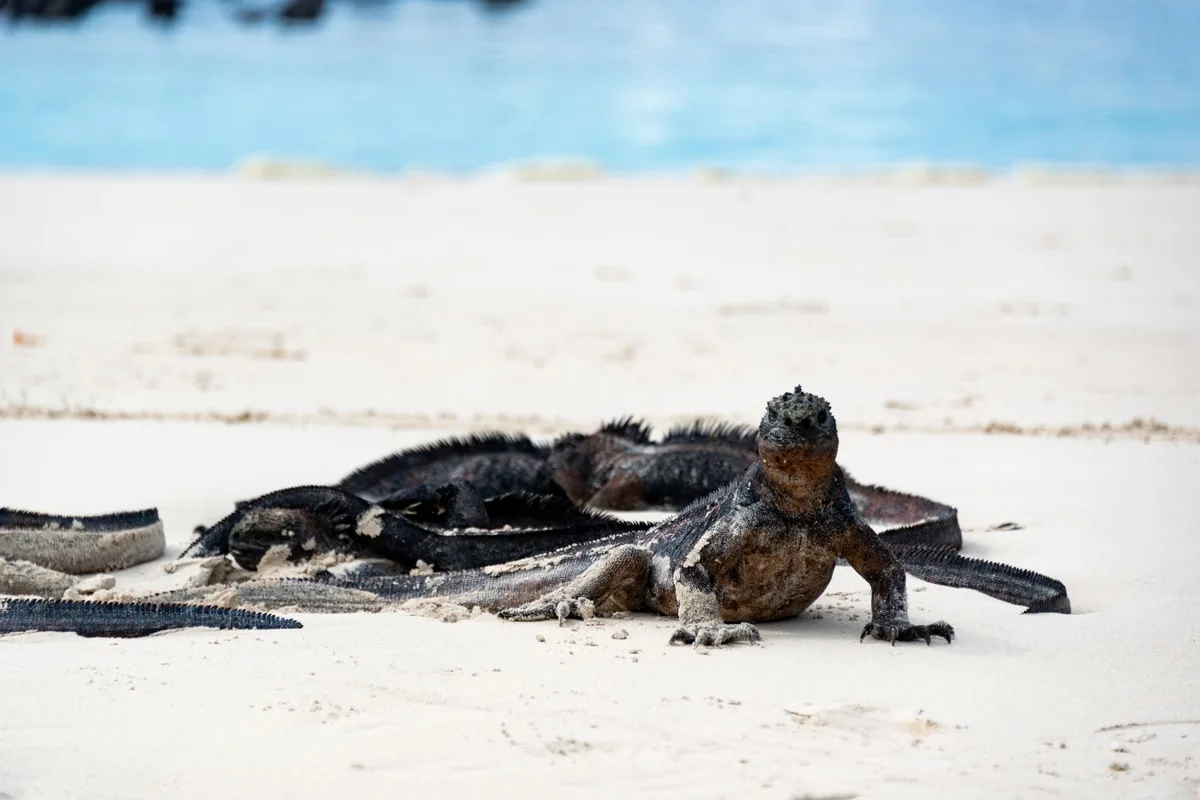
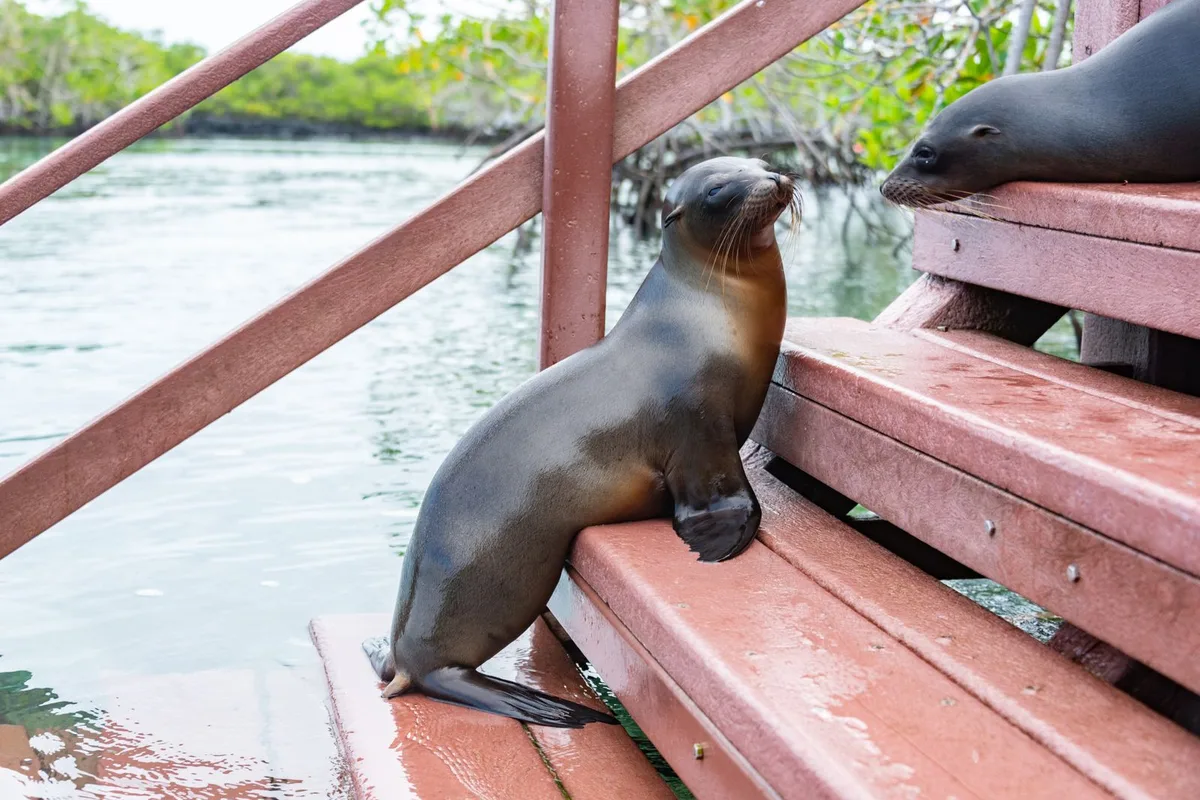
You have just landed on Baltra, a flat sliver of an island with an airport and not much else — and that is the right way round. Puerto Ayora, the islands' working town and your base, lies 42 km south across Santa Cruz, reached by the bus, ferry and bus chain every arrival takes. What waits at the end of it is unlike anywhere else on earth: sea lions on the pier benches, giant tortoises in the highland mist, and day boats leaving at dawn for islands where the animals have never learned to fear you. This guide walks the arrival in order — the park fee and transit card, the three-leg hop to town, where to sleep, the yacht days that sell out, the inter-island ferries, and the two rules that matter most: keep two metres from the wildlife, and never touch it.
By Paul GreenUpdated Oct 202612 min readPrices checked Oct 2026
You just landed in Galapagos. Pay the US$200 park fee in cash on Baltra, ride the bus, ferry and bus chain to Puerto Ayora for about US$11, and book the yacht days before the town's small boats sell out. Keep an Airalo eSIM live for maps in town — the visitor sites have no signal — and book Bartolomé and the highlands tortoises early, because park quotas cap every landing.
Quick facts
Airport
Seymour Airport (GPS) on Baltra, gateway for Puerto Ayora; San Cristóbal (SCY) is the second gateway LATAM and Avianca fly from Quito (about 2 hrs 10 min, via Guayaquil) and Guayaquil (about 1 hr 55 min).
Getting in
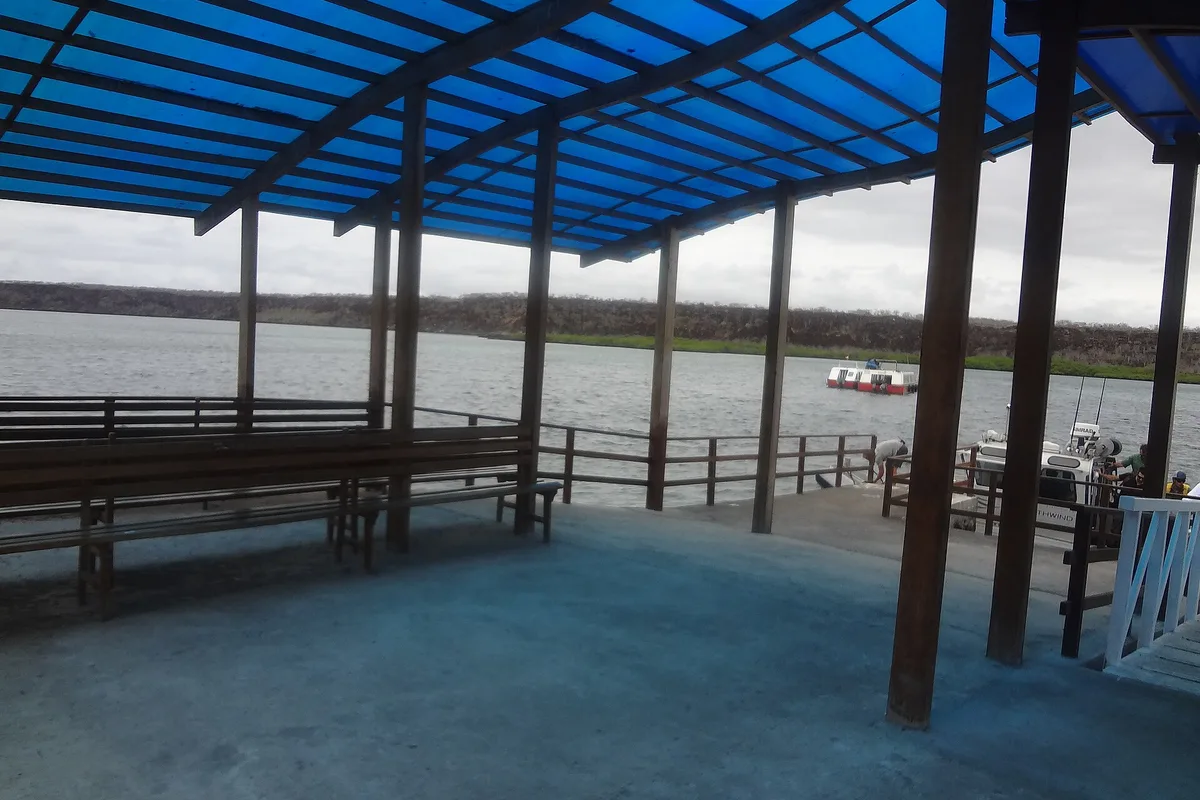
Bus, ferry and bus from Baltra to Puerto Ayora takes about 1 hr 45 min and costs about US$11 US$5 for the airport bus to the Itabaca Channel, US$1 for the ferry barge, then US$5 by bus or US$25 to US$30 per car by taxi down to town.
Currency
The US dollar Ecuador is fully dollarised — Cards work at hotels and agencies; the park fee, ferries, taxis and kiosks run on cash — bring small bills, because Puerto Ayora's ATMs can run dry and Baltra has none.
Languages
Spanish runs the islands; English works at hotels, agencies and with naturalist guides Licensed guides work bilingually; the phrase chips below cover the piers and the kiosks.
Time zone
Galápagos Time (UTC−6), one hour behind mainland Ecuador Set your watch back on landing.
Emergency
911 for police, ambulance and fire anywhere in Ecuador Puerto Ayora's hospital is basic; serious cases fly to the mainland, so arrive insured.
Plugs
Type A and B sockets at 120 volts, the same as the United States European plugs need an adapter; American ones plug straight in.
Tap water
Do not drink it the town supply is desalinated and brackish — Hotels run purified-water dispensers; refill there instead of buying plastic.
Tourist tax
The park entrance fee is US$200 per foreign adult (US$100 under 12), paid in cash on arrival, plus the US$20 Transit Control Card In force since 1 August 2024. Andean Community and Mercosur citizens pay US$100 (US$50 under 12), residents US$30 (US$15), under-2s free. Register and pay the TCT online before you fly.
Best months
December to May for warm seas and calm crossings; June to November for the richest wildlife Warm-season water tops out near 27°C; garúa months are cooler and rougher.
Map
Find your arrival stop, hotel, and first meal. Stays, sights, and landmarks in Galápagos — live hotel prices plus the key places from this guide.
Land on Baltra and treat the arrival as a drill: show the transit card, pay the park fee in cash, clear the biosecurity check, ride the three-leg chain to town.
Sort the paperwork before you leave home. Register the Transit Control Card on the Government Council portal 24 to 48 hours before you fly and screenshot the QR code — the airport counter is the fallback, not the plan. An Airalo eSIM loads before departure, so the confirmation works from the terminal; for a longer trip, compare Saily and Yesim.
Run the arrival checklist in this order:
Screenshot the TCT confirmation and your return flight details — both get checked
Carry the US$200 park fee in cash, small bills included — Baltra has no ATM
Book the headline yacht days before you fly — Bartolomé and North Seymour sell out under park quotas
Expect the biosecurity ritual on landing: bags are scanned, fresh food and seeds are seized, soles get checked.
If a delayed mainland flight wrecks the arrival, AirHelp checks whether the airline owes compensation.
Getting around
Journey times are approximate and refer to the listed stop — not necessarily your hotel. Allow extra time for waiting, walking, and connections.
Bus, ferry and bus from Baltra
Three cash legs: US$5 for each bus and US$1 for the ferry, paid on board. The buses meet the flights, and staff move your bags from bus to barge to bus — keep small bills ready and your park fee receipt handy.
Priceabout US$11Journeyabout 1 hr 45 min
Bus, ferry and taxi from Baltra
The taxi is priced per car for up to four passengers, not per person, so it nearly matches the bus for a group. Agree the fare before you ride, and ask for a photo stop at Los Gemelos, the twin craters beside the road down.
Priceabout US$31 to US$36Journeyabout 1 hr 30 min
Pre-booked hotel transfer
Top-end hotels run the whole chain as a paid shuttle — Finch Bay charges US$65 per person, booked 72 hours ahead. Hotels on the Punta Estrada side finish with the US$1 water taxi across Academy Bay.
Priceabout US$65 per personJourneyabout 1 hr 30 min
San Cristóbal gateway, then the ferry
The regulated tourist fare since August 2026, on top of the short taxi from San Cristóbal Airport to Puerto Baquerizo Moreno. Boats leave morning and afternoon; the crossing is open sea. Worth it if Kicker Rock is on your list — spend a night there first.
PriceUS$50 ferry fareJourneyabout 2 hrs on the ferry
There are no rental cars in the Galápagos and Puerto Ayora needs none — the town is a 20-minute waterfront walk, white pickups work as taxis, and US$1 water taxis hop across Academy Bay around the clock. The rides in from Baltra:
Choose the public chain by default: it is how the islands move. Choose the taxi for four people or heavy bags: at US$25 to US$30 per car it nearly matches the bus.
For the Quito or Guayaquil airport leg, a Kiwitaxi transfer or Welcome Pickups puts a driver at arrivals instead of a taxi queue.
Between islands, public speedboats are the system — to San Cristóbal and Isabela, morning and afternoon, at the regulated US$50 fare (US$65 special service). Check in an hour ahead with photo ID; bags are inspected before every sailing.
In the city
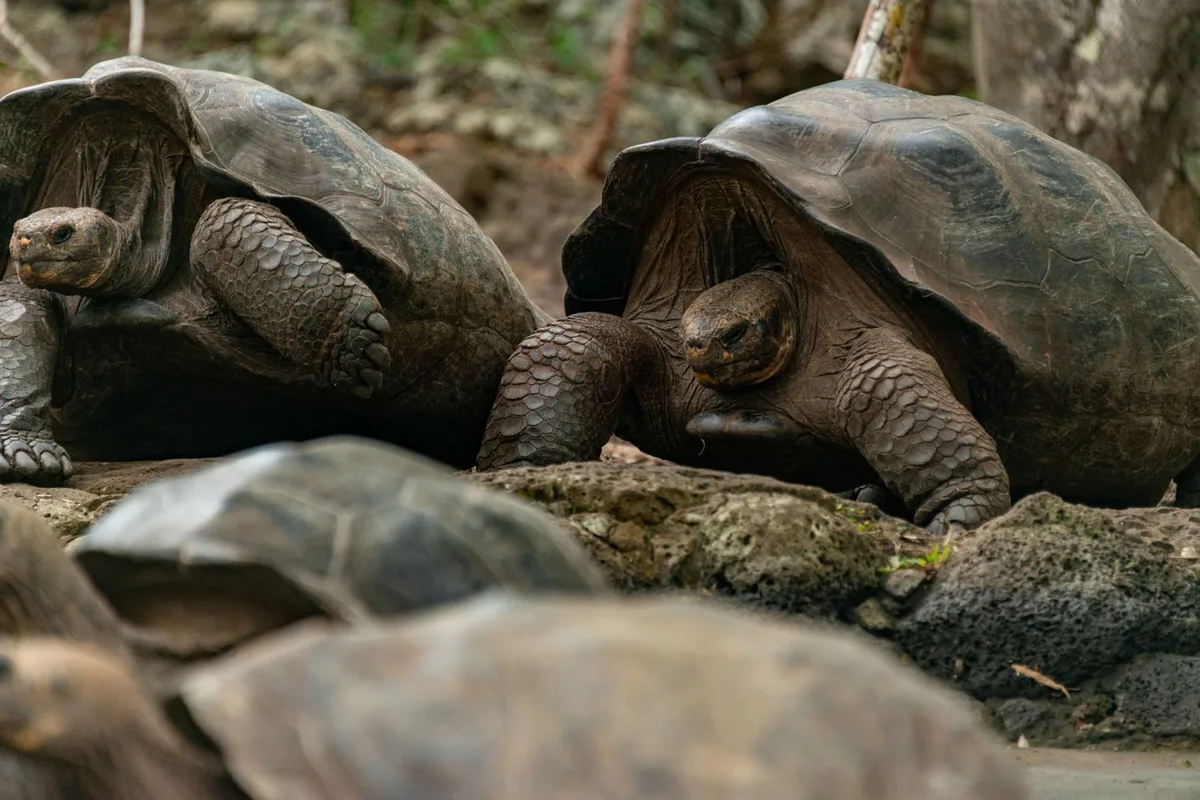
Walk along Avenida Charles Darwin to the Charles Darwin Research Station, fifteen minutes from the pier. The interpretation centre is free and worth an hour; beyond it, the Fausto Llerena breeding centre walks you past tortoise corrals from every island programme.
Stop at the fish market on the way back. The morning catch lands on the cleaning tables and the boldest residents queue for scraps — sea lions under the counters, pelicans on the posts, frigatebirds overhead: the best free show in town. The comedores beside it serve encebollado, the tuna and yuca soup Ecuador eats for breakfast.
Swim at Las Grietas, the brackish fissure in the lava beyond Punta Estrada. Take the US$1 water taxi across the bay and walk the signed path past Playa de los Alemanes and the salt flats — the water between the rock walls is deep, still and startlingly clear. Go early, before the day groups arrive.
Give Tortuga Bay its own half day. Sign in at the trailhead booth and walk the 2.5 km paved path — about 45 minutes — to Playa Brava, then round the point to Playa Mansa, calm as a lagoon. Be back before the gate closes in the late afternoon.
Book the boat days from the avenue's agencies or ahead online — the Puerto Ayora listings on GetYourGuide cover the regulated day tours, and Klook covers mainland add-ons around the trip.
Where to stay your first nights
Splurge
Finch Bay Galapagos Hotel.
Best for the beachfront splurge — the only hotel on Playa de los Alemanes, pool, spa and its own yacht for day trips
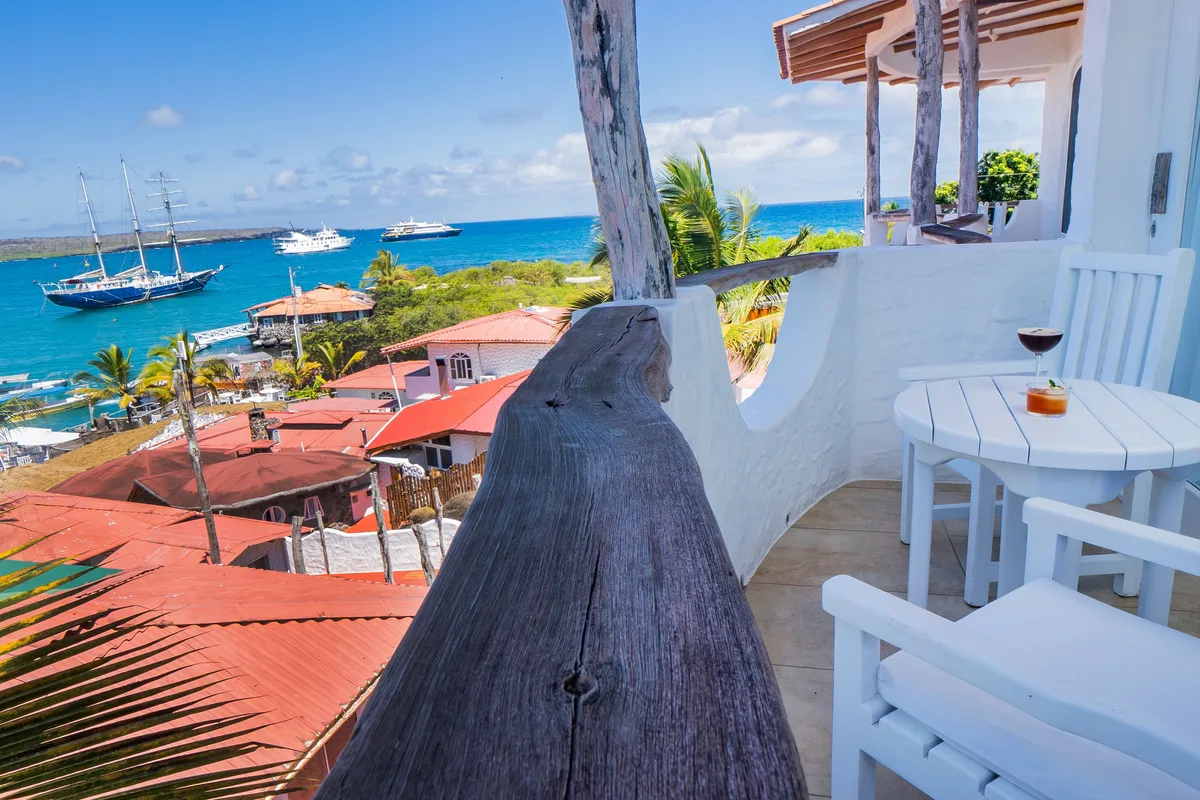
Stay at Punta Estrada, steps from Playa de los Alemanes — Puerto Ayora's only beachfront hotel: rooms and suites around gardens, a pool, a spa, and its own yacht for day trips. It holds 9.4 out of 10 on Expedia.
Best for waterfront calm — Gus Angermeyer's lava-rock homestead across the bay, reached by the US$1 water taxi
Sleep at Punta Estrada, on the homestead of settler Gus Angermeyer — lava-rock buildings, the old cave in the grounds, cooked-to-order breakfasts, and a pier reached by water taxi. Book it for history and quiet water; 9.4 out of 10 on Expedia.
Best for a proper hotel at a gentler price — pool, jacuzzi and a cactus garden a few blocks from the pier
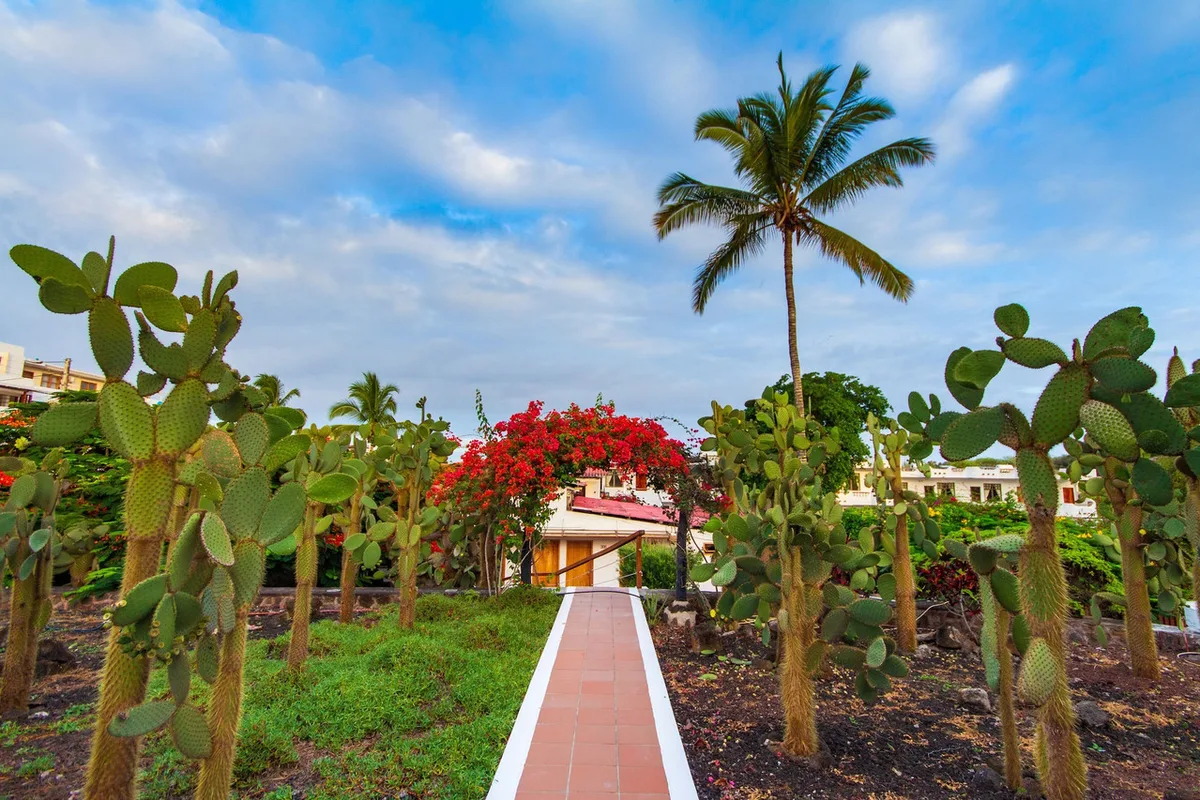
Bed down at Calle Moisés Brito y Juan Montalvo, a few blocks back from the pier — a family hotel with a pool, jacuzzis, bar and cactus garden by the Las Ninfas lagoon. Book it for a proper hotel at a gentler price; it rates 9.0 out of 10 on Expedia.
Stay on Avenida Charles Darwin to be in the middle of it, or across Academy Bay at Punta Estrada for quiet, at a US$1 water taxi per hop. Book well ahead for December to January and June to August.
Where to eat first
Eat the canon first: encebollado for breakfast, grilled brujo (the local scorpionfish) or the day's catch for dinner, ceviche at lunch, and lobster when the season is open, usually late in the year. Three first stops:
Los Kioskos, Avenida Charles Darwin.
Start where the town eats: the row of open-air kiosks by the fish market fires up its grills at dusk — whole fish, rice, patacones and salad at long shared tables. Point at what looks good, agree the price first, and eat with the crews.
The comedores by the fish market, Avenida Charles Darwin.
Eat breakfast where the catch lands — small diners serving encebollado from early, with sea lions still begging under the cleaning tables outside.
Isla Grill, Avenida Charles Darwin.
Finish at the avenue's sit-down standard — grilled seafood, brujo when it runs, and the dining room locals name for a celebration. Book ahead in high season.
For food tours and market walks, browse the Puerto Ayora listings on GetYourGuide and book ahead in high season.
Day trips and more
The Galápagos is a boat destination: nearly every site that matters is a yacht day from the pier, with a licensed naturalist guide and a park quota — the small boats sell out days ahead. All three run on GetYourGuide with the island operators.
Santa Cruz highlands
The gentle first day: 4.5 hours in the misty highlands, where giant tortoises graze free at a ranch reserve (entry about US$10), a lava tunnel runs under the fields, and Los Gemelos, the twin craters, yawn beside the Baltra road. DIY it with a taxi for about US$60 including waiting; the tour adds the guide. It rates 4.5 out of 5 from 79 reviews, from about US$68. Check availability →
Bartolomé
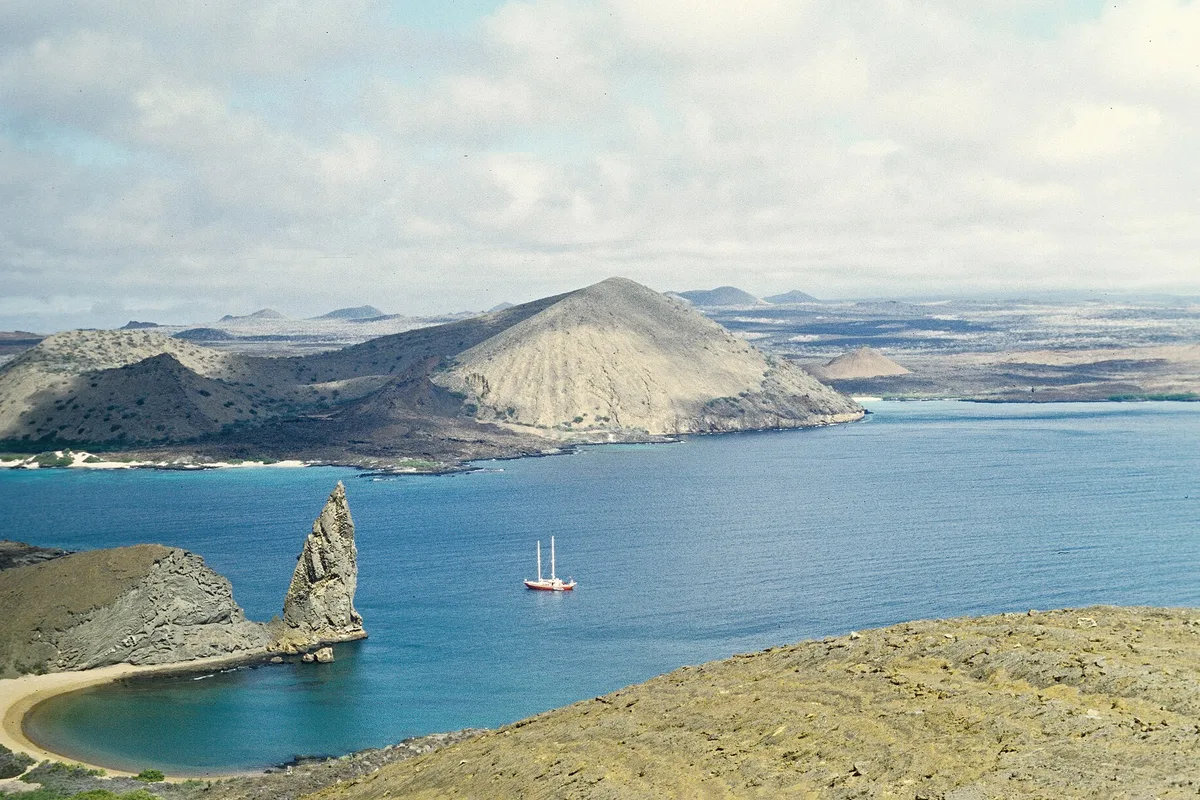
The postcard, earned: a 06:45 bus to the channel, two hours by yacht, then the boardwalk climb to the viewpoint over Pinnacle Rock — the most famous view in the islands. Snorkel at Sullivan Bay after, where penguins hunt the shallows over black lava. It rates 4.6 out of 5 from 17 reviews, from about US$495. Check availability →
Isabela in a day
The long day: two hours by speedboat each way (take the seasickness tablet — see the ferry FAQ), then penguins on the harbour rocks, the Tintoreras walk past iguanas and white-tip sharks resting in the channel, a snorkel, and Isabela's tortoise centre. Add the US$10 Isabela arrival tax in cash. It rates 4.6 out of 5 from 83 reviews, from about US$289. Check availability →
Add a second base if you have the nights — San Cristóbal, two hours by ferry, for Kicker Rock and the 360 tour.
When to go and what it costs
Come December to May for the warm season — seas up to 27°C, calm crossings, snorkelling without a wetsuit, and afternoon downpours. The yachts book out first, and the tortoises nest on the beaches.
Come June to November for the garúa — cooler air, mist on the highlands, rougher crossings that test your sea legs, and the richest ocean: the Humboldt current brings the food, and the wildlife follows.
Budget by the fixed costs. Flights from the mainland run about US$250 to US$550 return for non-residents, the park takes US$200 and the TCT US$20, the Baltra chain US$11, ferries US$50 a hop, yacht days from about US$150 to near US$500 for the headline islands — the variables are the room and how many boats you take.
What to pack
Tap items to check them off — your list is saved on this device.
Pack for boats, lava trails and two seasons in one week. This is the full list:
Add reef-safe sunscreen (the equatorial sun burns through cloud), a rash guard or shorty for June to November water, a dry bag for wet landings, and seasickness tablets for every boat day. Bring small bills — the park fee and the piers run on them.
Language, visa and entry
✓ Visa-free entry for eligible passport holders
Spanish runs the Galápagos. Hotels, agencies and guides work in English; the piers, kiosks and taxi pickups run on Spanish — and a greeting before a question is local etiquette.
Six phrases do most of the work:
Buenos díasgood morningGraciasthank youPor favorplease¿Cuánto cuesta?how much does it cost?La cuenta, por favorthe bill, please¿Dónde está el muelle?where is the pier?
Sort entry in two layers. Ecuador itself is visa-free for most visitors — Americans, Canadians, Britons and many others — for up to 90 days, on a passport valid six months beyond travel; health insurance is mandatory, and your onward flight gets checked. The Galápagos layer sits on top: the TCT online before you fly, the biosecurity declaration and bag check at the mainland airport, then the park fee in cash on landing. Arrive two hours early — the queues are three separate ones.
Pay the park fee and the TCT as the islands' entry charges see Quick facts; there is no further tax on Santa Cruz, though Isabela charges its own US$10 at the pier.
Safety and health
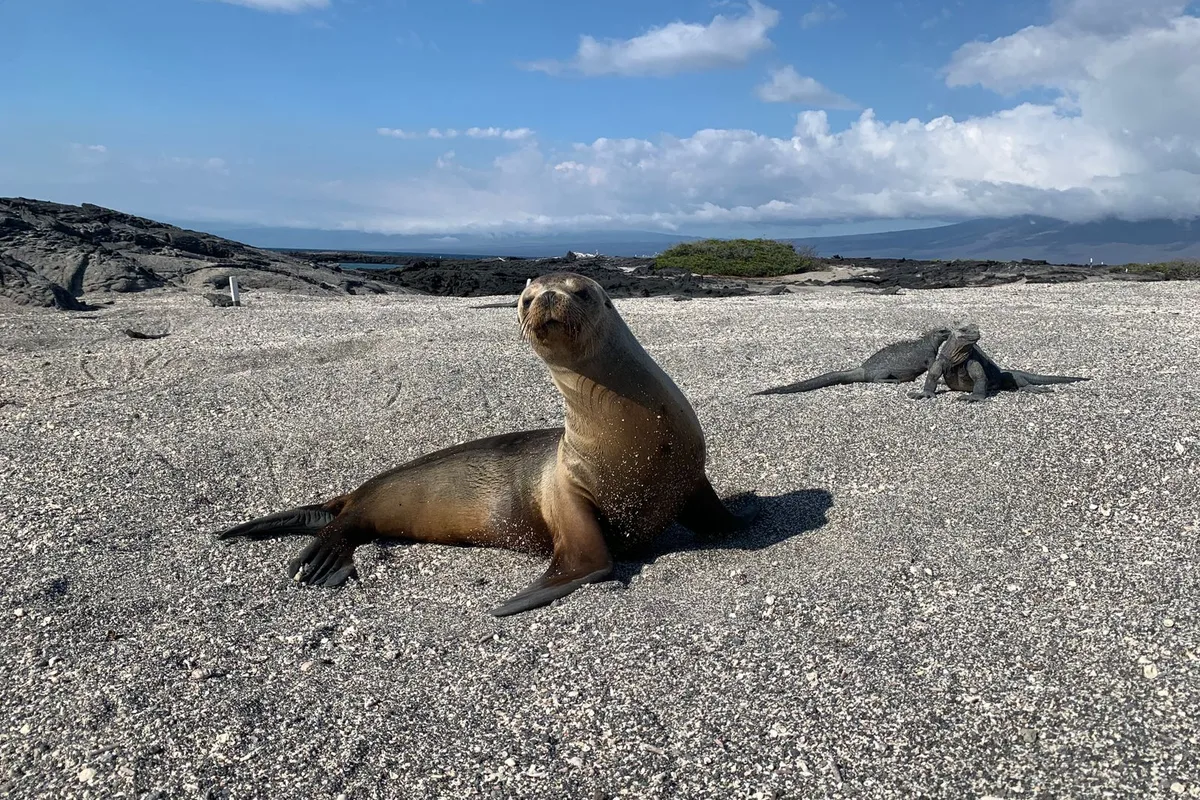
Keep two metres from every animal, and never touch or feed one
The distance is park law, not etiquette — animals have right of way on every trail, and a sea lion on your bench is a photo, not a pet. Stay on marked paths; take nothing, not even a shell.
Respect the sea and the equatorial sun together
Crossings are open-ocean and bounciest from July to October: dose tablets 30 minutes before every sailing, sit toward the stern, and save the big breakfast for land days. The sun at the equator burns through garúa cloud — hat, reef-safe sunscreen and a refilled bottle on every boat.
Carry medical cover that includes air evacuation
Puerto Ayora's hospital handles the basics; anything serious is flown to the mainland, and the medevac bill is the expensive souvenir nobody budgets for. Insurance is mandatory for foreign visitors anyway — make sure yours names evacuation.
Use ordinary small-town sense, and dial 911
Puerto Ayora is sleepy and safe; the real risks are the Pacific and a bag left open on pier morning. Note the tsunami evacuation routes as you walk (they run uphill, inland), swim only where locals do, and treat Playa Brava as a beach for looking, never swimming.
The fees, the ferry chain and the two seasons, in short.
Facts checked October 2026.
US$220 per foreign adult before you have moved a metre: the US$200 national park entrance fee, paid in cash on landing, plus the US$20 Transit Control Card (TCT), registered and paid online before you fly. Foreign children under 12 pay US$100 for the park; under-2s are free.
Three legs, all cash: the airport bus to the Itabaca Channel (US$5), the ferry barge across (US$1, paid on board), then either the bus down to Puerto Ayora (US$5) or a white pickup taxi (US$25 to US$30 per car). Allow 1 hour 30 minutes to 2 hours door to door; the buses meet the flights.
Yes — that is exactly what this guide assumes. Sleep in Puerto Ayora, sail out on day yachts to islands like Bartolomé and Santa Fe, and hop between inhabited islands on the public speedboat ferries (US$50 per person one way since August 2026). Nearly every visitor site is still visited with a licensed naturalist guide, which the day tours include.
There is no bad month, only a choice of seas. December to May brings warm water (up to 27°C), calm crossings and afternoon showers; June to November is the garúa — cooler, mistier, rougher crossings, wetsuit water below 20°C. If you get seasick easily, choose the warm season.
Do not drink the tap water — the town supply is desalinated and brackish; every hotel runs a purified-water dispenser for refilling bottles. Cards are fine at hotels, restaurants and tour agencies, but the park fee, ferries, taxis and kiosks run on cash. Bring small bills from the mainland: Puerto Ayora's ATMs can run dry, and Baltra Airport has none.
Honestly: they are open-sea speedboats, not ferries in the car-ferry sense — about 2 hours to San Cristóbal, nearer 2 hours 30 minutes to Isabela, and bounciest from July to October. Take a tablet 30 minutes before and sit toward the back. Small inter-island planes (about US$150 to US$245) are the calm alternative.
Prices are typical 2026 rates in US dollars (USD). Park fees, the TCT and ferry fares verified October 2026.
Galápagos, Saved for After You Land
Landing soon? Get the printable PDF — the essentials from this guide, formatted for your phone:
The airport transport cheat sheet, with ticket links
Our 3 restaurant picks, with maps
The packing checklist
One email with your Galápagos PDF (guide version: Oct 2026). Fare changes and new guides after that. No spam, unsubscribe anytime.
Sources and last verified
Park fees against the Park Directorate's current table (April 2026), published by the Government Council — in force since 1 August 2024. TCT against Government Council reporting: online registration since 29 May 2025, US$20. Ferry fares against Resolution MIT-SPTM-2026-0126-R (August 2026): US$50 tourist, US$65 special service. Baltra chain against the directorate's route text and October 2026 traveller reporting. GetYourGuide products opened and read (hub puerto-ayora-l148437). Hotels against Expedia property pages opened this session. Last verified October 2026.
Affiliate disclosure: hotel names, transfers, experiences, and products linked in this guide may earn After You Land a commission at no extra cost to you. Prices and times were checked in Oct 2026 and change often — confirm before you book.