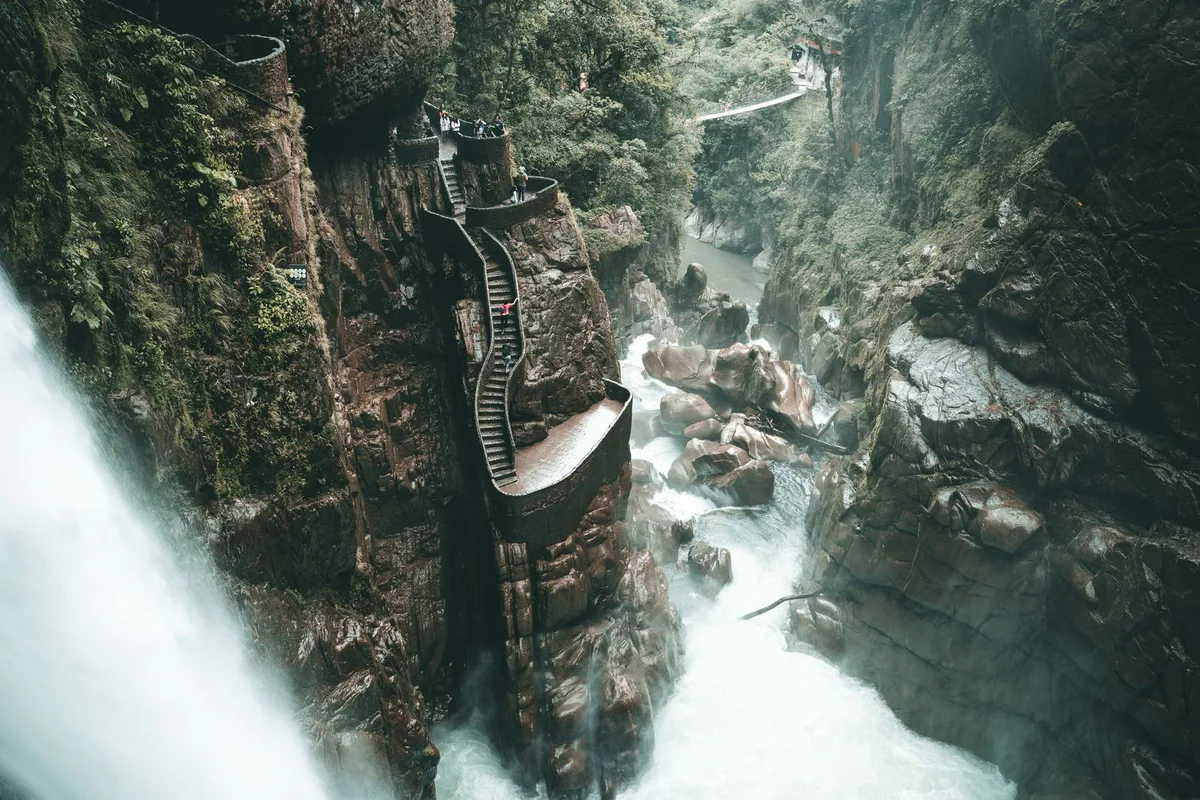
Baños: your first hour after landing
You have just landed in Quito, bound for Baños — the last three and a half hours down the Panamericana are part of the trip, as the bus drops off the high plateau, passes Ambato and threads into the green Pastaza valley. This guide covers the Quitumbe bus and the transfer maths, the public hot springs under the waterfall and the swim cap they insist on, where to sleep from a hacienda spa to the town's favourite hostel, a first plate of llapingachos at the market, the waterfall road, the rafting run and the canyon as bookable days, and the 15% IVA that decides what a room really costs.
In this guide
You just landed in Baños. The landing actually happened in Quito — the move is the bus south, about three and a half hours and about $7 from Quitumbe terminal to a town of hot springs under the Tungurahua volcano, with an eSIM keeping you connected from the arrivals hall, a swim cap packed for the Termas de la Virgen, and the waterfall route, the rafting run and the canyon worth booking ahead through GetYourGuide.
Quick facts
Airport
Getting in
Currency
Languages
Time zone
Emergency
Plugs
Tap water
Tourist tax
Best months
Map
Stays, sights, and landmarks in Baños — live hotel prices plus the key places from this guide.
Settle in
Land at Quito and treat the crossing as stage one. The airport sits at Tababela, east of the city, while Baños buses leave from Quitumbe in the far south — cross Quito first, about an hour, or sleep a night in the capital and ride south fresh.
Set up data first: an Ecuador plan on an Airalo eSIM loads in minutes, so times and maps work from the arrivals hall. For a longer Ecuador trip, compare Saily and Yesim.
Run the arrival checklist in this order:
- Ride to Quitumbe terminal and buy the Baños ticket at the Transportes Baños or Expreso Baños window — about 3 hours 30 minutes, about $7
- Keep your passport, cards and camera in the cabin with you — never in the luggage hold
- Travel the Ambato road by daylight, and drop your bags at the hotel before the first soak
Check the tax line when a hotel quotes your rate: 15% IVA lands on top at many properties, plus a 10% service charge, so the first quote is rarely the final number.
If a delayed or cancelled flight wrecked the arrival, AirHelp checks whether the airline owes you compensation — worth five minutes before you write the day off.
Getting around

Times are airport to city centre.
Interprovincial bus
Transportes Baños and Expreso Baños run through the day from Quitumbe; Baños terminal is a short walk from the centre; travel by daylight and keep valuables in the cabin
Private transfer
Door to door from Quito airport arrivals or a Quito hotel; the fare only beats the bus when three or more split it, or when you land late
Long-distance taxi
Agree the total before you set off; listings put the Quito to Baños taxi at about $100 to $130 depending on pickup point
Rental car
About 185 km on the E35 Panamericana via Latacunga and Ambato; centre parking tightens at weekends, and the waterfall road east is the same E30

Baños itself runs on foot. The basilica, the market, the baths and the agency street sit inside a 10-minute square, and rental bikes wait on every corner for the waterfall road. The rides down from Quito are these:
Choose the bus when you land rested — direct and cheap. Choose the transfer when you land late, in a group, or with big bags in tow.
Compare a pre-booked transfer when the maths demands it — a Kiwitaxi transfer or Welcome Pickups puts a driver in arrivals at a fixed price. Driving yourself, price the Quito pickup on AutoEurope first, and know that centre parking tightens up on weekends.
In the city
Start at the Termas de la Virgen, the public hot springs under the La Virgen waterfall at the east end of town. Go at opening or after dark, bring a swim cap — required, and sold at the door — and expect to pay about $4 to $6. The Piscinas El Salado, across the Bascún bridge, are the quieter alternative.
Walk the basilica and Parque Palomino Flores afterwards. The church of Our Lady of the Rosary of Agua Santa gave the town its name — the Virgin's image is credited with saving Baños more than once, and the small museum beside the church tells that story.
Ride up to La Casa del Árbol in Runtún for the swing at the end of the world. The tree house stands at about 2,660 m, the swing costs about $1, and on a clear morning Tungurahua fills the frame. Buses run up from near the central market; taxis take about 25 minutes.
Watch melcocha being made on the main street. Candy makers pull hot sugar cane taffy on wooden pegs in open doorways — buy a warm piece, and a jugo de caña from the stall next door.
Book the adventure days before you arrive in high season — the river and the canyon sell out first. Browse the Baños listings on GetYourGuide for rafting and canyoning, and compare Klook when stacking activities into one day.
After you land in Baños: Bookable experiences
Where to stay your first nights
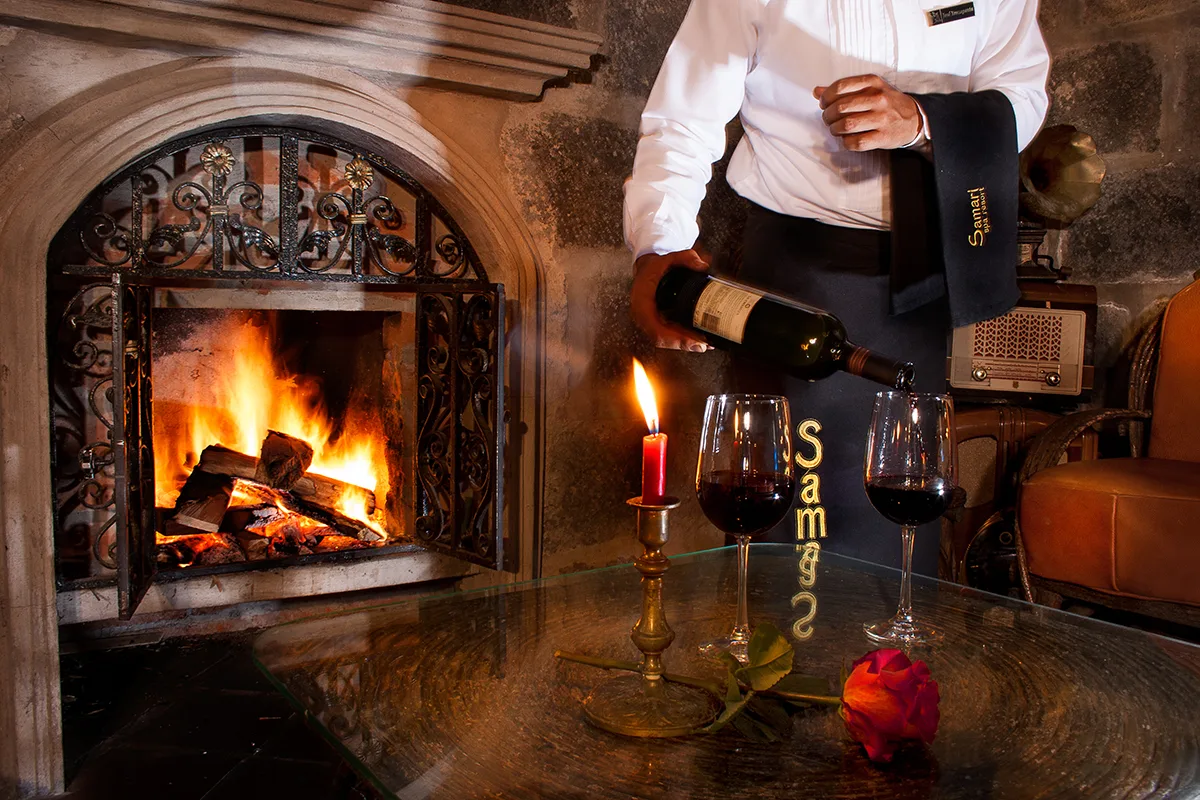
Samari Spa Resort.
Best for the hacienda spa splurge with the full breakfast includedStay in a converted hacienda on the E30 at the edge of town. Expect 37 rooms, a full spa with a Turkish bath, an indoor pool and the La Casa de Piedra restaurant — book it for the restorative Baños, breakfast included.

Sangay Spa Hotel.
Best for waking beside the La Virgen waterfall, one minute from the bathsSleep at Plazoleta Isidro Ayora 100, facing the La Virgen waterfall, one minute from the baths. Expect 66 rooms across executive, cabin and colonial wings, an outdoor pool and the Indra Ayurvedic spa — book it when you want the baths as your morning routine.
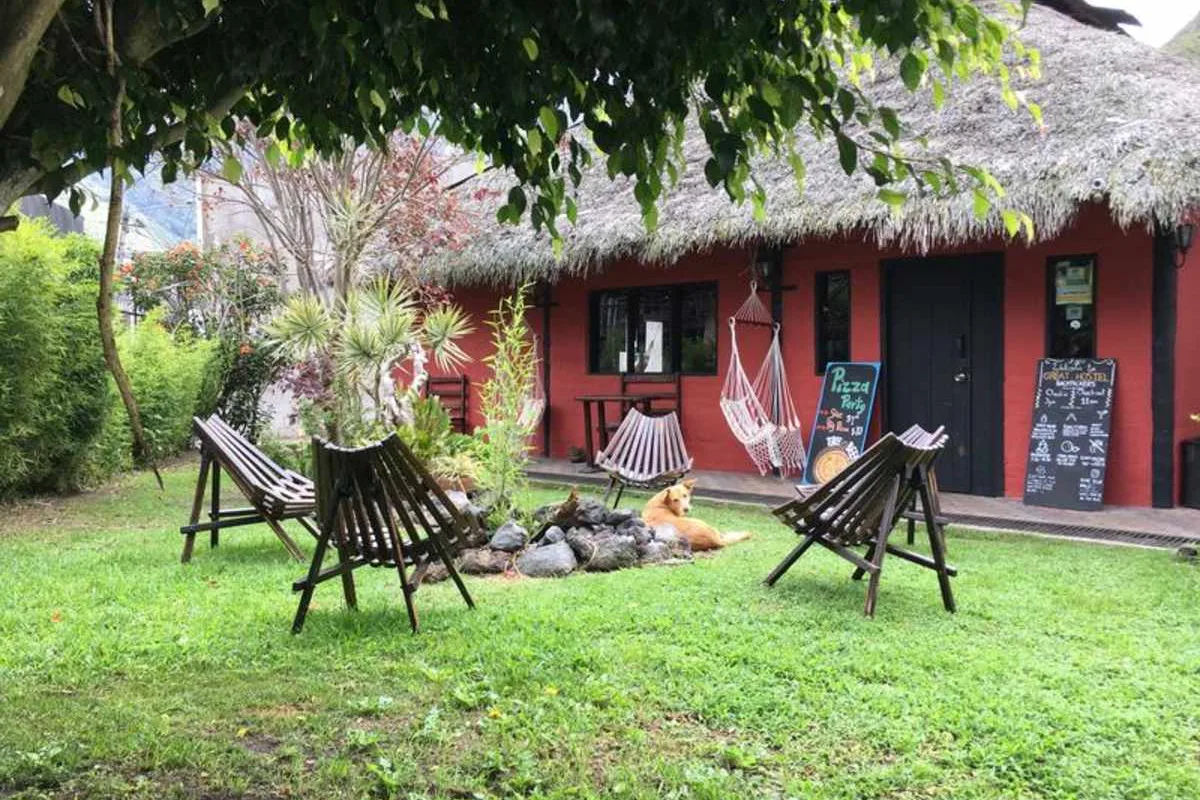
Great Hostels Backpackers Los Pinos.
Best for dorms and a social garden 300 metres from the hot springsBed down about 300 metres from the Termas de la Virgen, in the town's best-known backpacker house. Expect dorms from about $9, free breakfast, a garden with hammocks and a kitchen — book it for the social base and tour desk.
Stay central for a first visit — the flat grid puts the baths, the market and the agency street in a short walk. Choose the Runtún road above town for a spa splurge with the volcano view, and the streets near the bus terminal for the cheapest beds.
Book any of the three early for Carnival, Holy Week and holiday weekends, when Quito empties into Baños. Confirm whether the quoted total includes the 15% IVA and 10% service before comparing prices.
Where to eat first

Eat close on day one — Baños feeds travellers well at every price. Three first stops:
Mercado Central, one block east of Parque Palomino Flores.
Sit at a market counter for llapingachos — cheese-stuffed potato patties with sausage, egg and avocado — or hornado, slow-roasted pork with mote corn. The cheapest full plate in town, and cuy for the brave.
Al Fuoco, Montalvo and Velasco Ibarra, beside the Sangay hotel.
Order the homemade pasta and wood-fired pizza in the town's best-loved Italian room. Book ahead on weekend nights, when the whole town queues for it.
Café del Cielo, at Luna Volcán on the Runtún road, Km 6.
Start the next day here instead: coffee and cake on a terrace about 400 metres above the town, with Tungurahua on one side and the Pastaza valley opening on the other.
Save room for the street sweets: melcocha is sold warm from the doorways where it is pulled, and cane juice is pressed while you watch. For food tours and evening experiences, browse the Baños listings on GetYourGuide.
Day trips and more
Three bookable days cover the Baños essentials: the waterfall road, the river itself, and the canyon above town. Carry a dry bag and a layer for all three — the gorge keeps its own weather.
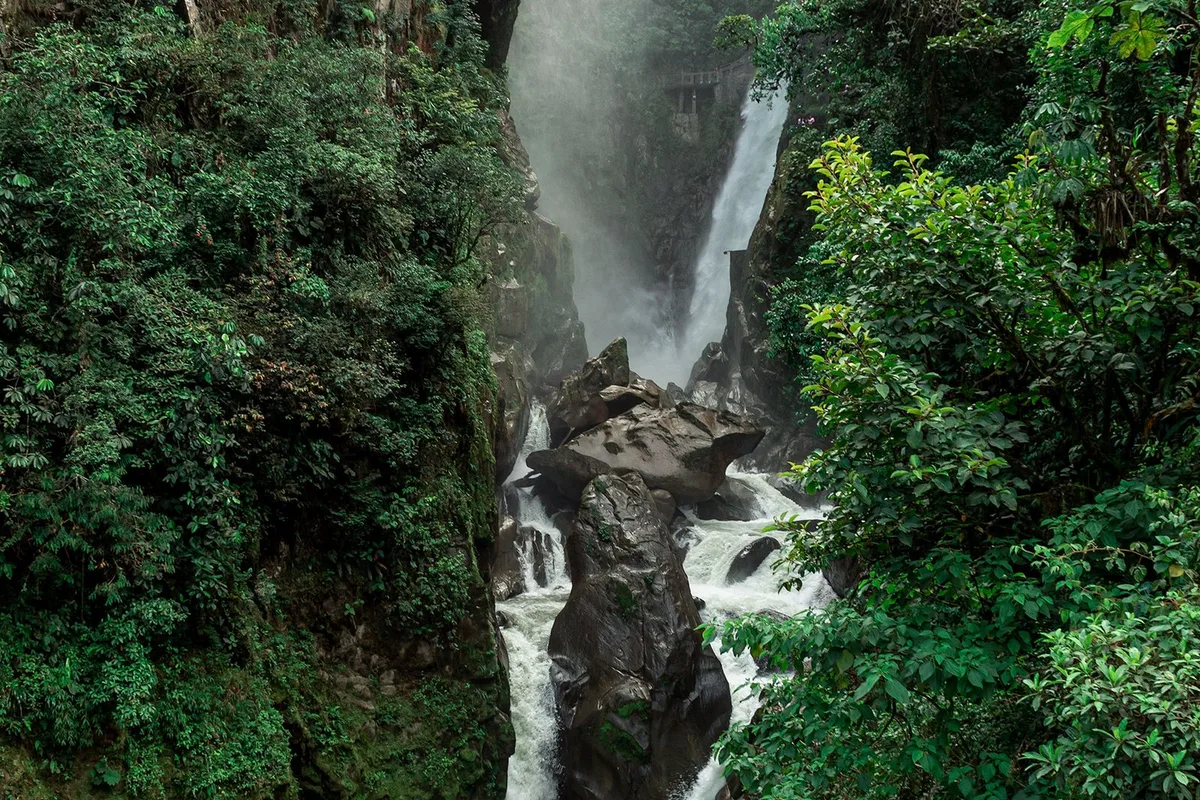
The waterfall route
Ride the Ruta de las Cascadas with a guide, stopping at La Virgen, Agoyán and Manto de la Novia before the main event: Pailón del Diablo, where the Río Verde drops about 80 metres into the gorge. About six hours with lunch and a melcocha stop. Check availability →
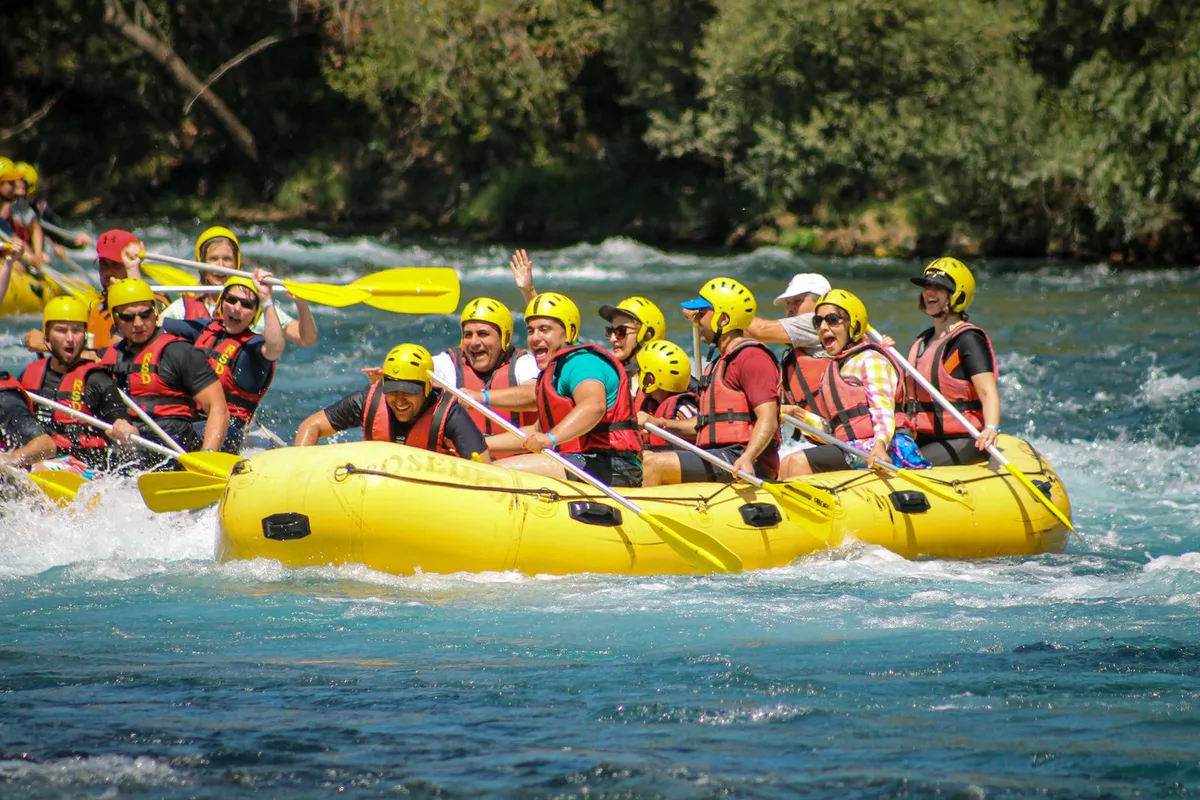
Pastaza River rafting
Paddle Class III-IV rapids, with IV+ at high water, on a 5.5-hour trip finishing with lunch in Topo. All equipment and an expert instructor are included. Check availability →
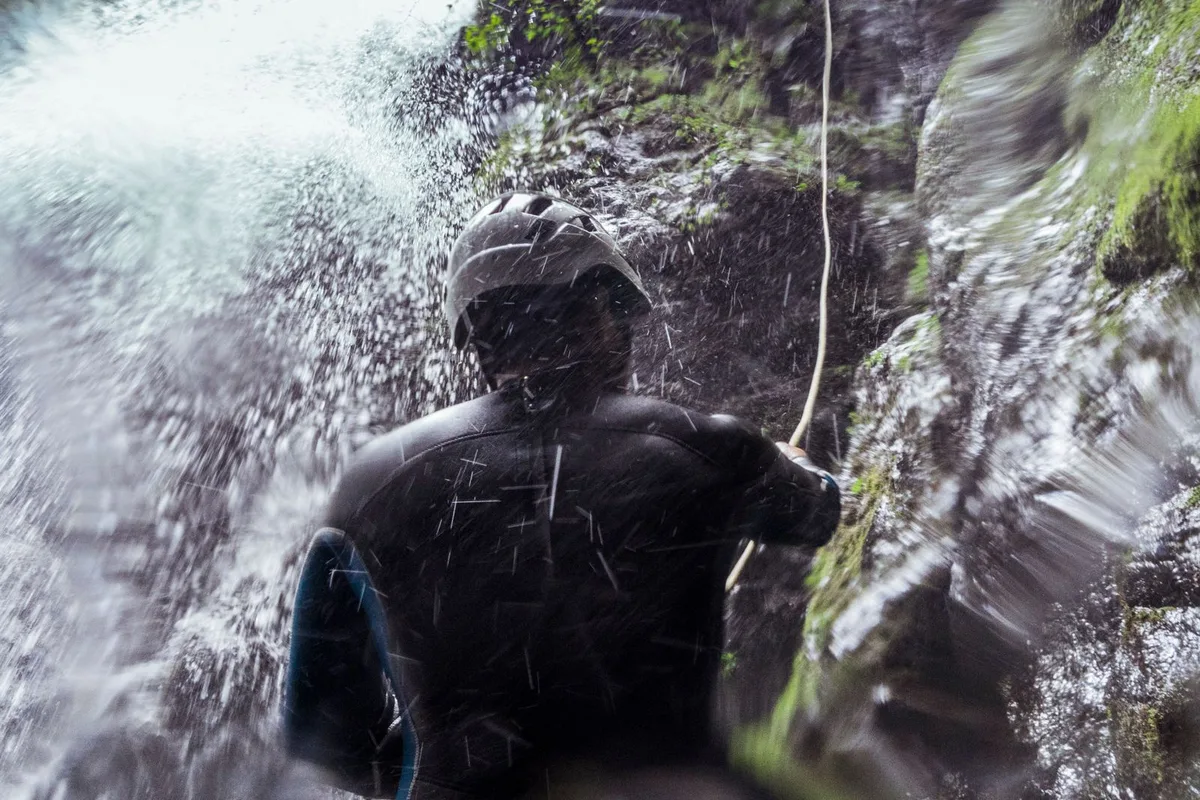
Chamana canyoning
Travel 15 minutes out of town, hike 20 minutes to the top of the Chamana canyon, then rappel and slide down five falls between 8 and 35 metres. The descent takes about three hours in a small group, with certified guides and photos included. Check availability →
Leave a spare day for Puyo if the Amazon calls — about 60 km down the same road, where the Andes give out into jungle; go with a local guide and start early.
When to go and what it costs
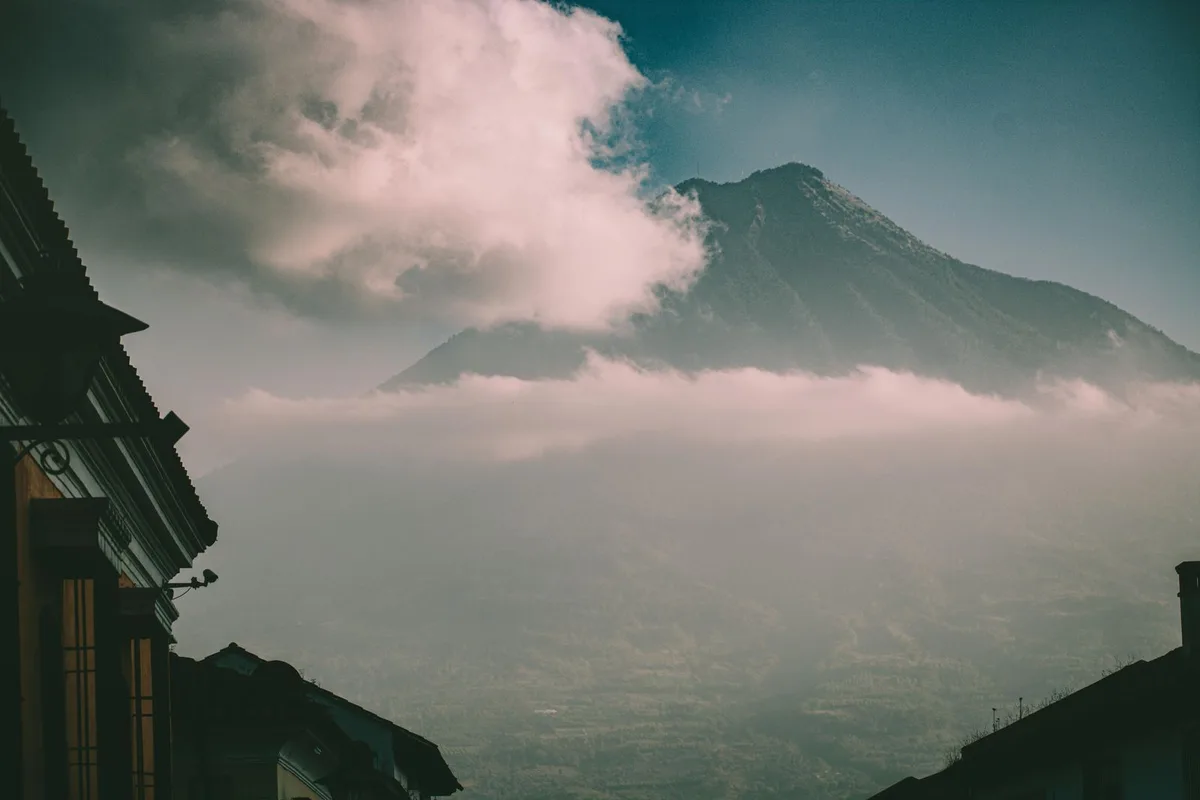
Come June to September for the driest trails and clearest volcano views. December and January bring the second dry window and the liveliest holiday weekends.
Come in the green season for waterfalls at full power — Pailón del Diablo after rain is louder, wetter and worth the spray. Rafting and canyoning cancel when rivers run too high.
Avoid Carnival and Holy Week unless crowds are the point: on holidays the baths queue and room rates jump — book weeks ahead or pick another weekend.
Budget Baños by the small numbers. The bus costs about $7, the baths about $4 to $6, the swing about $1, Pailón del Diablo entry about $3 to $5 by gate, a rental bike about $10 a day, and a guided adventure day starts at about $35.
What to pack
Tap items to check them off — your list is saved on this device.
Pack for a town where you can soak, hike and get rained on in one afternoon. This is the full list:
- Comfortable walking shoes Shop walking shoes on Amazon →
- Sunscreen Shop sunscreen on Amazon →
- Reusable water bottle Shop water bottle on Amazon →
- Phone charger and power bank Shop power bank on Amazon →
- Daypack Shop daypack on Amazon →
- Sunglasses Shop sunglasses on Amazon →
- Light rain jacket Shop rain jacket on Amazon →
Add a swimsuit and a swim cap for the baths — the cap is compulsory. Add a warm layer for 1,820 m evenings and dry bags for the river days.
Language, visa and entry
✓ Visa-free entry
Spanish runs Baños. Agency staff and hotel desks work in English too, but the baths, buses and market run on Spanish — and a greeting before a question is the local etiquette.
Six phrases do most of the work:
Sort entry paperwork before booking anything non-refundable. Most visitors — including Americans, Britons, Europeans, Canadians, Australians and New Zealanders — enter visa-free for up to 90 days in any 12-month period, with a passport valid for at least six months. One paid 90-day extension exists; overstays are fined.
Know the land-border wrinkle. If you enter overland from Colombia or Peru, officials can ask for an apostilled criminal record certificate covering the last five years, or run a check on Ecuador's own migration system instead. None of that applies when you fly in.
Think about yellow fever before the Amazon day trip. Vaccination is recommended for the lowlands around Puyo, ideally at least 10 days before — Baños itself sits at 1,820 m, above the mosquito line that matters.
Safety and health
Treat Tungurahua as a monitored volcano, not a backdrop
The town lives under an active volcano whose last eruptive period ran 1999 to 2016 — in October 1999 the whole town was evacuated for months. Ecuador's Instituto Geofísico (IG-EPN) monitors it around the clock: active, not erupting. Check its bulletin before volcano-view hikes, and follow local instructions if the alert level rises.
Book adventure sports with licensed operators, and accept cancellations
Standards vary between agencies — choose certified guides, included equipment and a safety briefing you actually understood. The Pastaza rises fast after heavy rain; when an operator cancels for water levels, that is the system working, not a scam.
Travel the region by day and keep your valuables in the cabin
The US State Department rates Ecuador Level 2 overall — exercise increased caution — with Level 4 do-not-travel pockets on parts of the coast and the northern border. Tungurahua and Baños are not in those zones, but the pattern applies: daylight interprovincial buses, ATMs inside banks, bags where you can see them.
Drink the refill water, and respect the hot pools
Refill your bottle at the hotel's filtered station. At the baths, shower first, keep the swim cap on, and take the hottest pool in short rounds — the water runs genuinely hot, and the UV at 1,820 m is stronger than the mild air suggests.
Related destinations
If you liked Baños, try these next:


Frequently asked questions
The things travellers ask in the first 48 hours: the airport that is in Quito, the volcano above the town and the swim cap the baths insist on.
Bus times and fares checked against Quito Tour Bus and Rome2Rio October 2026 listings; bath prices against Community Adventures' September 2026 Baños update; volcano status against IG-EPN reporting via VolcanoDiscovery; entry rules against October 2026 Ecuador guidance.
Ride the direct bus from Quitumbe terminal in the south: about 3 hours 30 minutes and about $7 with Transportes Baños or Expreso Baños. The airport is at Tababela, about an hour from Quitumbe — allow for the crossing, or book a transfer.
No. Baños has no airport at all. Quito (UIO) is the gateway, about 185 km north, and the last leg is the point: a half-day road trip down the Panamericana and into the Pastaza valley.
Quiet, on current evidence. Tungurahua's last eruptive period ended in 2016, and Ecuador's IG-EPN classes it as active, not erupting, under round-the-clock monitoring. The town was evacuated in 1999, so locals take the bulletins seriously — check IG-EPN before volcano-view hikes.
About $4 to $6 at the Termas de la Virgen, depending on the complex and the hour, with children around half price. A swim cap is compulsory — bring one or buy it at the door. Piscinas El Salado, across the bridge, prices similarly.
For most visitors, no. Americans, Britons, Europeans, Canadians, Australians and New Zealanders get up to 90 days in any 12-month period on arrival, with a passport valid for at least six months. One paid 90-day extension exists.
June to September for the driest trails and the clearest volcano views, with December to January as the second window. Come in the green season instead for the waterfalls at full power — Pailón del Diablo after rain is the headline version.
Fares change — the operators and the IG-EPN bulletin always win.
Baños, in your pocket
Landing soon? Get the printable PDF — ticket links, the airport transport cheat sheet, our 3 restaurant picks with maps, and the packing checklist. Everything above, formatted for your phone.
One email with your Baños PDF. Fare changes and new guides after that. No spam, unsubscribe anytime.
Sources and last verified
Bus times and fares against Quito Tour Bus and Rome2Rio (Quitumbe to Baños about 3 hours 30 minutes; fares $4 to $14, printed hedged at about $7). Bath and entry prices against Community Adventures' September 2026 update (Termas de la Virgen about $4 to $6, swim cap required; Pailón del Diablo about $3 to $5 by gate; Casa del Árbol about $1). Volcano status against VolcanoDiscovery and the same update: the eruptive period ended in 2016 and Tungurahua is classed active, not erupting, by the IG-EPN. Entry rules against October 2026 Ecuador guidance (90 days in any 12 months, passport valid six months, land-border criminal record rule). Taxes: 15% IVA standard, 10% service in many hotels and restaurants, tourism IVA cut to 8% on declared holiday periods. Safety framing against the US State Department's Ecuador advisory (Level 2 overall, updated August 2026). GetYourGuide products opened and read: the 8 Waterfall Route, Pastaza River rafting and Chamana canyoning. Hotel details against the properties' own sites and the Expedia pages for Samari Spa Resort and Sangay Spa Hotel; Great Hostels Backpackers Los Pinos has no Expedia page. Photo credits: all photographs via Pexels except the Sangay facade and the Great Hostels garden, via the properties. Last verified October 2026.
Affiliate disclosure: hotel names, transfers, experiences, and products linked in this guide may earn After You Land a commission at no extra cost to you. Prices and times were checked in Oct 2026 and change often — confirm before you book.