You have just arrived in an archipelago with no single front door: jets land at Evenes on the mainland, turboprops hop onto the islands at Svolvær and Leknes, and one road — the E10 — strings the fishing villages together. This guide covers the three ways in, why Svolvær wins the first night, where to eat stockfish where it was traded, and the westward, fjord and aurora days that fill a trip.
By Paul GreenUpdated Oct 202612 min readPrices checked Oct 2026
You just landed in Lofoten. There is no single gateway — Evenes takes the jets, three hours by bus or car from Svolvær, while Widerøe hops land on the islands — with an Airalo eSIM live for the Reis app and road, a first night in Svolvær, and the westward photo day, Trollfjord cruise and aurora hunt that sell out first worth booking ahead through GetYourGuide.
Quick facts
Airport
No single gateway Evenes (EVE) for jets, Svolvær (SVJ) and Leknes (LKN) for island hops — Evenes, 164 km from Svolvær, takes the larger aircraft. Widerøe turboprops land at Svolvær Helle, 6 km from the harbour, and at Leknes.
Getting in
Route 300 bus from Evenes about NOK 350 to 400, about 3 hours; taxis meet the island hops Route 300 leaves Evenes twice a day. The island airports have no bus — a taxi or rental car covers the last stretch.
Currency
Norwegian krone (NOK), about NOK 9.3 to US$1 in October 2026 Cards and phone payments run everything, buses and ferries included. Cash is rarely needed.
Languages
Norwegian, with English spoken widely and well Almost everyone in tourism, transport and shops works comfortably in English.
Time zone
Central European Time (CET, UTC+1) and CEST (UTC+2) in summer Clocks go back on Sunday 25 October 2026, when CEST ends.
Emergency
112 police, 110 fire, 113 ambulance Dial 112 if you are unsure which service you need — call early, not late, for mountain and sea trouble.
Plugs
Type C and Type F sockets, 230 volts The standard European two-pin plugs. North American and British travellers need an adapter.
Tap water
Excellent and safe everywhere among the best in Europe — Fill your bottle from any tap. Bottled water is a choice here, never a necessity.
Tourist tax
None charged in 2026 a 3% visitor contribution is planned from 2027, not yet in force in Lofoten — In force from 1 July 2026: municipalities may charge 3% of the pre-VAT price from 2027 with an approved plan. Vestvågøy has approved its plan, but no Lofoten charge applies to 2026 stays.
Best months
June to August for midnight sun and hiking; September to March for the northern lights The sun barely sets from late May to mid-July; aurora season runs late August to April. October brings dark nights and early aurora — and no midnight sun.
Map
Find your arrival stop, hotel, and first meal. Stays, sights, and landmarks in Lofoten — live hotel prices plus the key places from this guide.
Lofoten has no single front door. Land at Evenes and three hours of the E10 still lie ahead; land at Svolvær or Leknes and you are on the islands, a short taxi ride from your bed.
Set up data before you leave home — an Airalo eSIM loads in minutes, so the Reis app, maps and aurora forecasts work from arrivals. For a longer Norway trip, compare Saily and Yesim.
The arrival checklist, in order:
Screenshot your onward bus time before you fly — from Evenes there are only two route 300 departures a day
Buy the bus ticket in the Reis app — buying on board adds a fee, and the app is the timetable that counts
Sleep in Svolvær on night one — the widest bed stock, the restaurants and every tour departure, whatever time you land
If a delayed or cancelled flight wrecked the arrival, AirHelp checks whether the airline owes you compensation — worth five minutes.
Getting around
Journey times are approximate and refer to the listed stop — not necessarily your hotel. Allow extra time for waiting, walking, and connections.
Lofotekspressen bus (route 300)
The Lofotekspressen: twice a day from Evenes (10:50 and 17:05), so match your flight to it; buy in the Reis app — onboard purchase adds NOK 20; the Travel Pass Nordland covers this route
PriceNOK 350 to 400Journeyabout 3 hours
Rental car at Evenes
Desks for the major rental brands sit in the Evenes terminal; about 164 km of E10 to Svolvær; island fleets are small, so the car is the booking to make first, not last
PriceVaries by season — book aheadJourneyabout 2 hours 45 min
Widerøe hop to Svolvær (SVJ), then taxi
Widerøe turboprops via Bodø or Tromsø land at Svolvær Helle, 6 km from the harbour; there is no airport bus — taxis meet flights, or collect a rental car at the terminal
PriceVaries — small-plane fare plus a short taxiJourneyabout 10 min by taxi from SVJ
Widerøe hop to Leknes (LKN), then onward
Widerøe via Bodø lands just outside Leknes town; route 300 or a rental car continues along the E10 to Svolvær; the better hop if your bed is in the west of the islands
PriceVaries — small-plane fare plus bus or carJourneyabout 1 hour 45 min onward to Svolvær
One road runs Lofoten: the E10, from the mainland bridges through Svolvær and Leknes to Reine and Å. Buses follow it thinly, so arrival is a decision, not a detail. The realistic ways in, for a first night in Svolvær:
Choose route 300 with a flight that meets the 10:50 or 17:05 departures; choose the car if yours does not — outside summer the bus net is sparse, and a car is close to essential for Reine, the beaches and aurora chasing. The Travel Pass Nordland (about NOK 1,990 for seven days) covers route 300. A new Flybussen Lofoten coach also links Evenes and Svolvær in 2026 — check flybussen.no. Third route in: the Bodø to Moskenes ferry (about three and a half hours) lands near Reine; foot passengers currently cross free — confirm in the Reis app.
Prefer to be met? A Kiwitaxi transfer or a Welcome Pickups driver covers the Evenes run at a fixed price — expensive, but it removes the two-buses-a-day gamble. Driving yourself, price the pickup on AutoEurope first, and book early: island fleets are small.
In the city
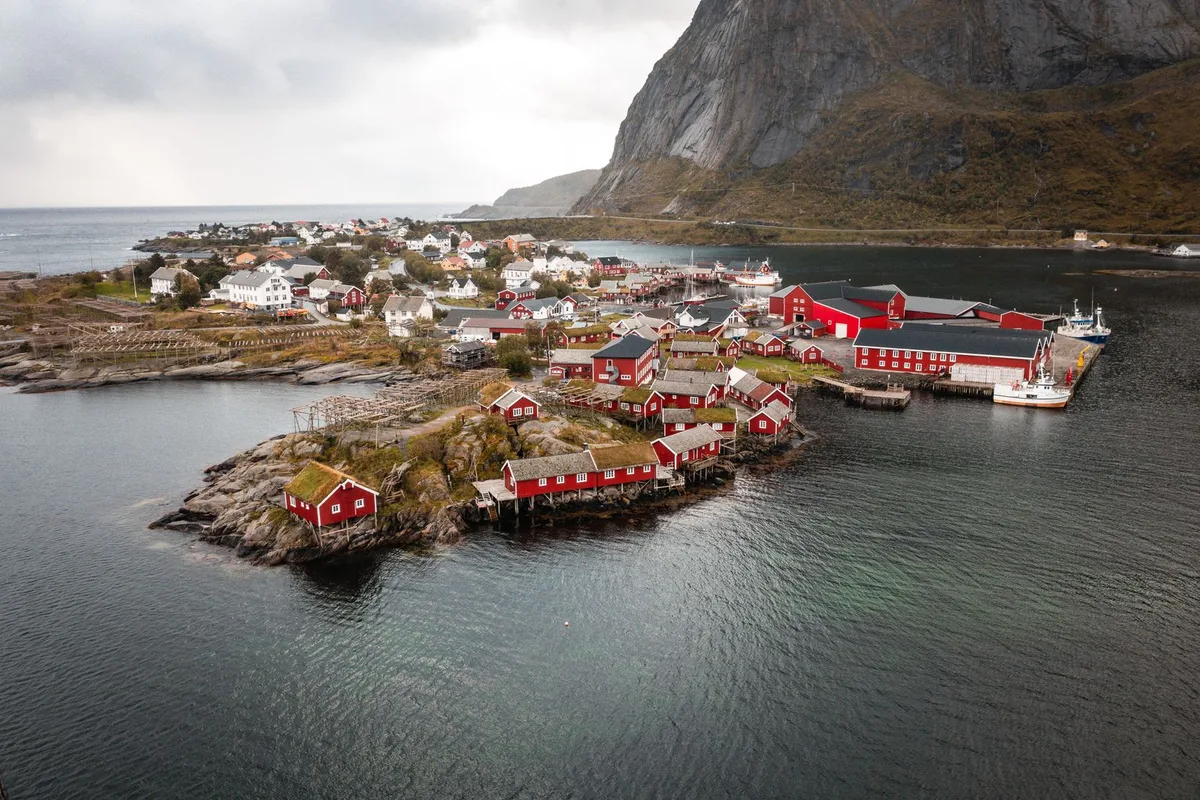
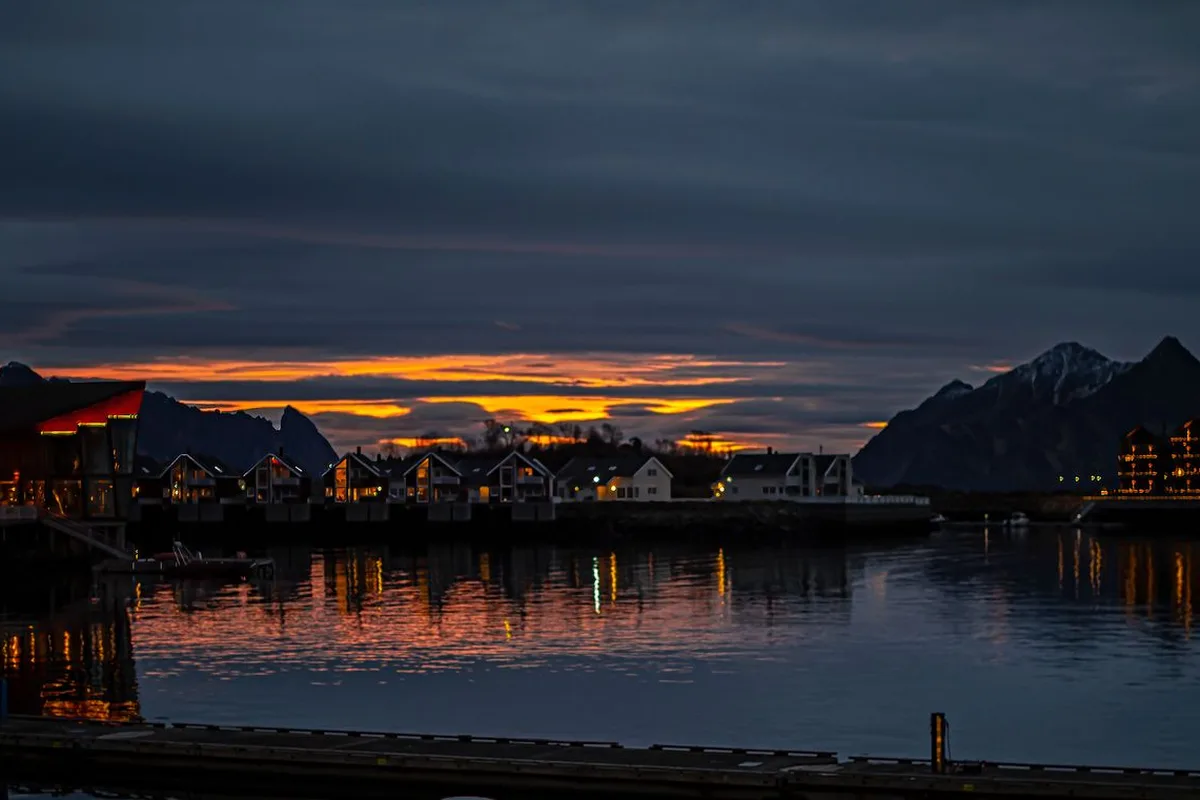
Your first town is Svolvær, the islands' working capital: fish plants, rorbu cabins and tour boats under the Svolværgeita pinnacle. Start at Torget, the main square, and walk the quay as the boats come in.
Cross the bridge to Svinøya, the old fishing island: stockfish racks, cabins on stilts, the 1828 warehouse restaurant. Back in town, the Lofoten War Memorial Museum packs the Second World War years, including the 1941 raid, into one harbour-side building.
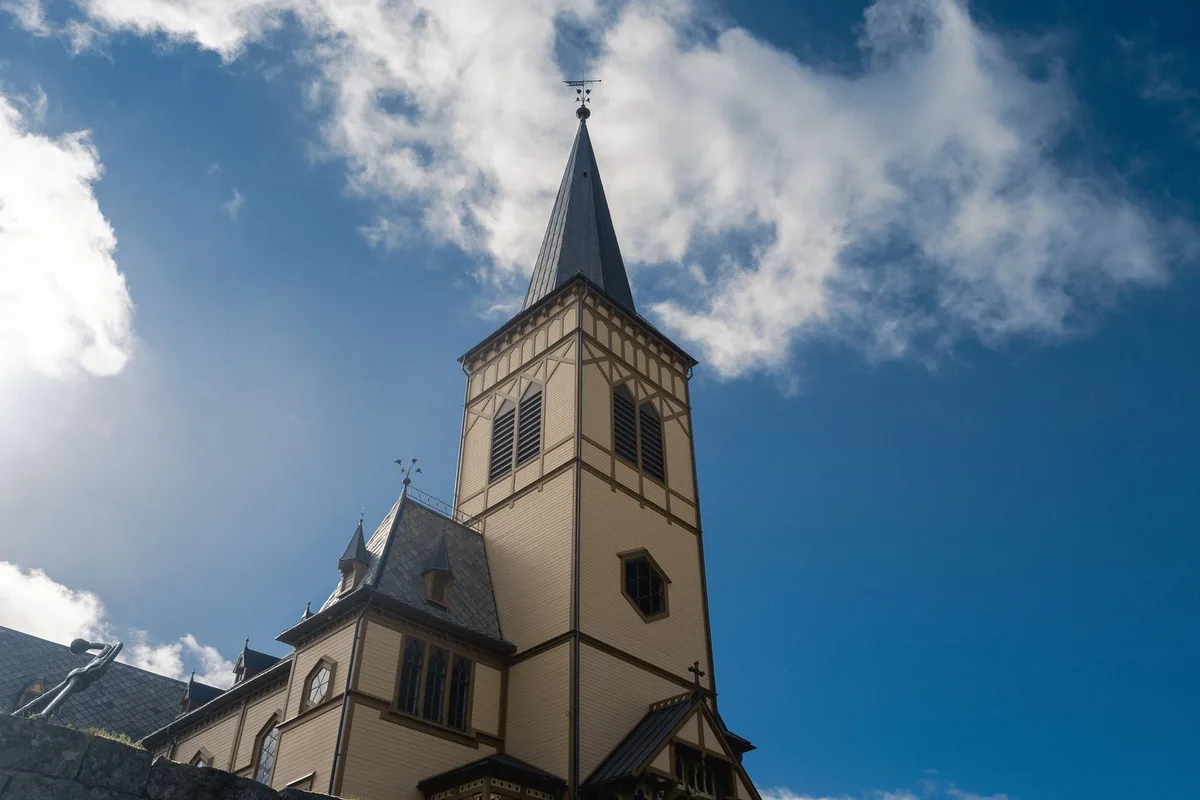
Go 5 km west to Kabelvåg for Vågan Church — the vast wooden church known as the Lofoten Cathedral. The Fløya hike above Svolvær is the classic first-day viewpoint; check conditions first, and skip it in ice or storm.
Book the headline days before you arrive, because the small-group tours sell out first — browse GetYourGuide for the boat and photo days, and compare Klook when stacking activities.
After you land in Lofoten: Bookable experiences
Where to stay your first nights
Splurge
Svinøya Rorbuer.
Best for the classic rorbu splurge — fishermen's cabins on stilts over Svinøya harbour, with the Børsen restaurant in the 1828 warehouse
Sleep across the bridge on Svinøya, in fishermen's cabins on stilts over the harbour — the classic Lofoten bed, upgraded, with the Børsen restaurant a short walk away. Book it for the fullest version of the islands — the cabins face dark water, not street lights.
Best for the easiest first night — 190 rooms on Torget square, the coastal steamer outside and an award-winning breakfast
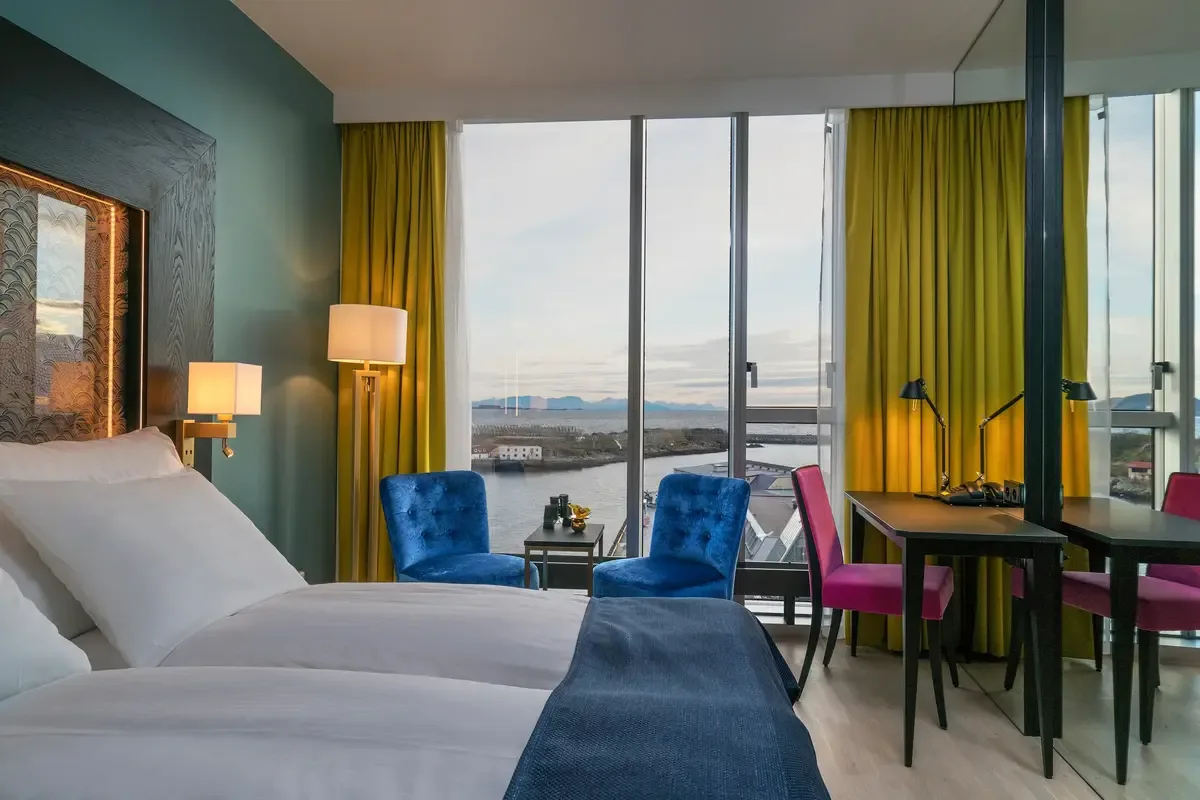
Stay on Torget itself: 190 rooms, the Paleo Arctic restaurant and a breakfast voted among Norway's best. The coastal steamer docks outside; every tour leaves from the harbour below. Book it for the easiest first night.
Best for the cheapest proper bed in the centre — self check-in, plain modern rooms a minute from Torget
Bed down a minute from Torget: self check-in by code, plain modern rooms, nothing you do not need. The same harbour base as the big hotels at the lowest proper-bed price in town — spend the saving on a boat day.
Base in Svolvær on a first visit — the transport hub, the tours, the restaurants, the widest range of beds. Reine is the scenic second base: beautiful, but thin on services and hours from the airports. Henningsvær suits drivers who want village quiet.
Book early for summer and the February to March aurora peak. No visitor tax applies to 2026 stays (see Quick facts).
Where to eat first
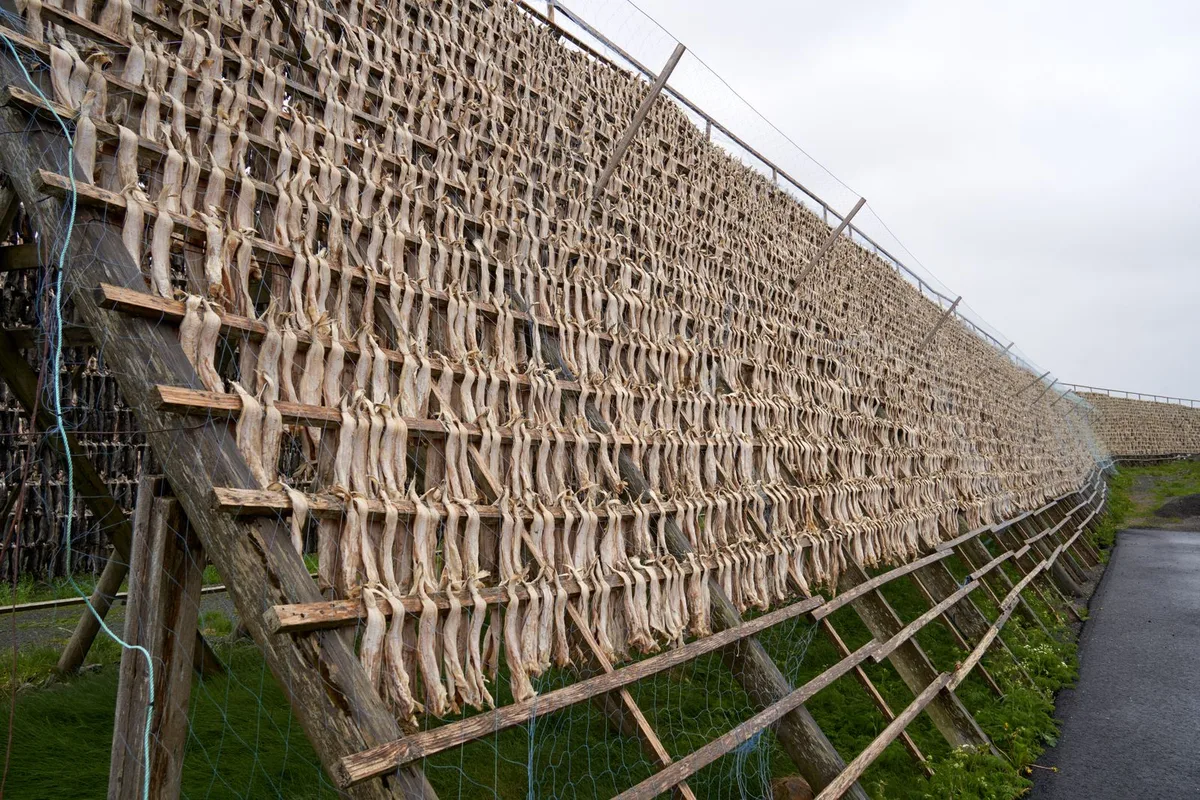
Eat fish, in the place that dries it for half of Europe. Skrei (winter cod) and stockfish built these towns; the racks of split cod over every shore are the industry in the open air. Around them: bacalao, fish soup, and brown cheese on waffles. Three first stops:
Børsen Spiseri, on Svinøya.
Eat inside the 1828 fish warehouse across the bridge — stockfish and skrei cooked where they were once traded. The splurge dinner of a Svolvær stay; book it.
Paleo Arctic, Thon Hotel Lofoten, Torget.
Eat the harbour hotel's Arctic menu without staying there — local fish and lamb and the square outside the window. The reliable smart dinner when the village places are full.
Anita's Seafood, Sakrisøy — worth the drive west.
Stop on a Reine day for the fish soup and fish burgers travellers cross the islands for. Go early or late to dodge the tour groups.
For food walks and fishing-and-dinner trips, browse the Lofoten listings on GetYourGuide.
Day trips and more
Three escapes cover Lofoten at three ranges: the archipelago in one westward day, the fjord the boats were built for, and the dark-season sky. Dress for the deck — all three spend hours outdoors.
Reine, Hamnøy, Sakrisøy and Å in one day
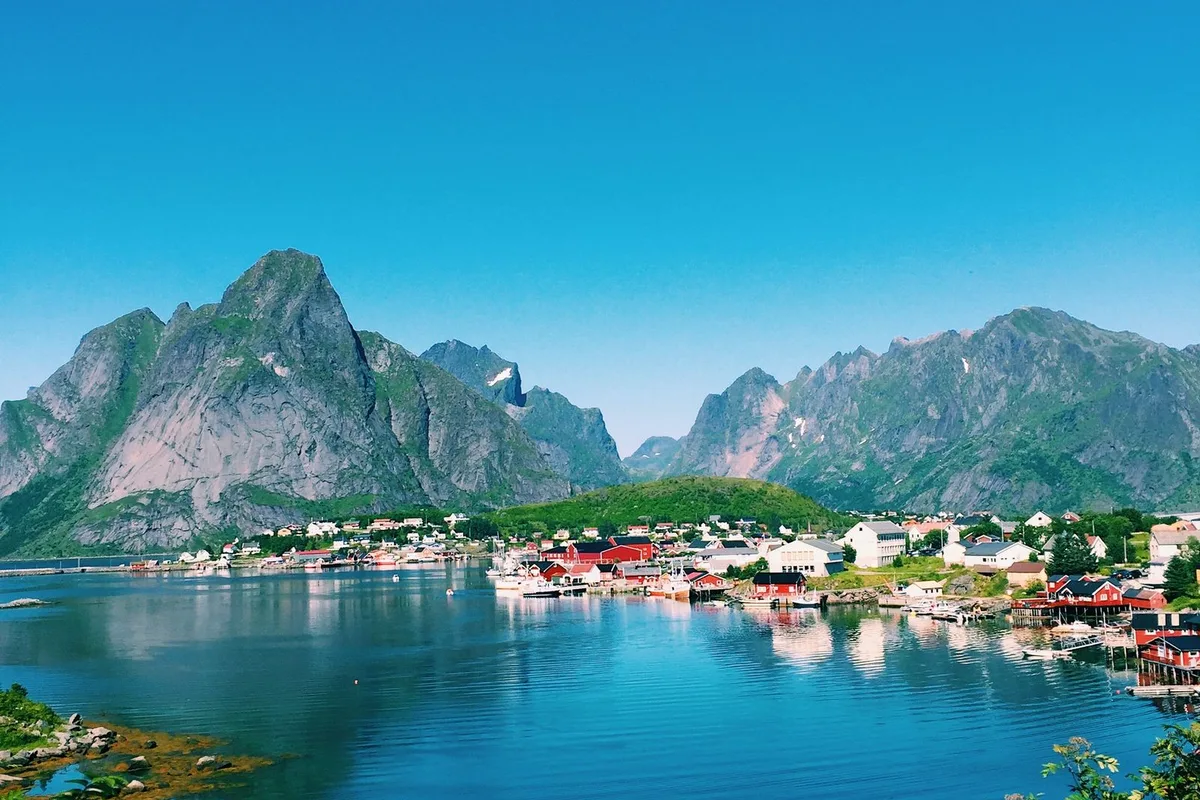
Nine hours by minivan from Svolvær, eight guests at most: the Hamnøy bridge viewpoint, Sakrisøy's yellow rorbu cabins, Reine under its peaks and Å at the end of the road, with a local guide. Rated 4.8 from recent reviews, from about US$206. Check availability →
Silent Trollfjord cruise
Three and a half hours from Svolvær harbour: out to Trollfjord, a sheer-walled side fjord barely wider than the boat, watching for white-tailed eagles, with an underwater drone when conditions allow. Rated 4.8 from over 3,700 reviews, from about £120. Check availability →
Experience the Magic of the Northern Lights
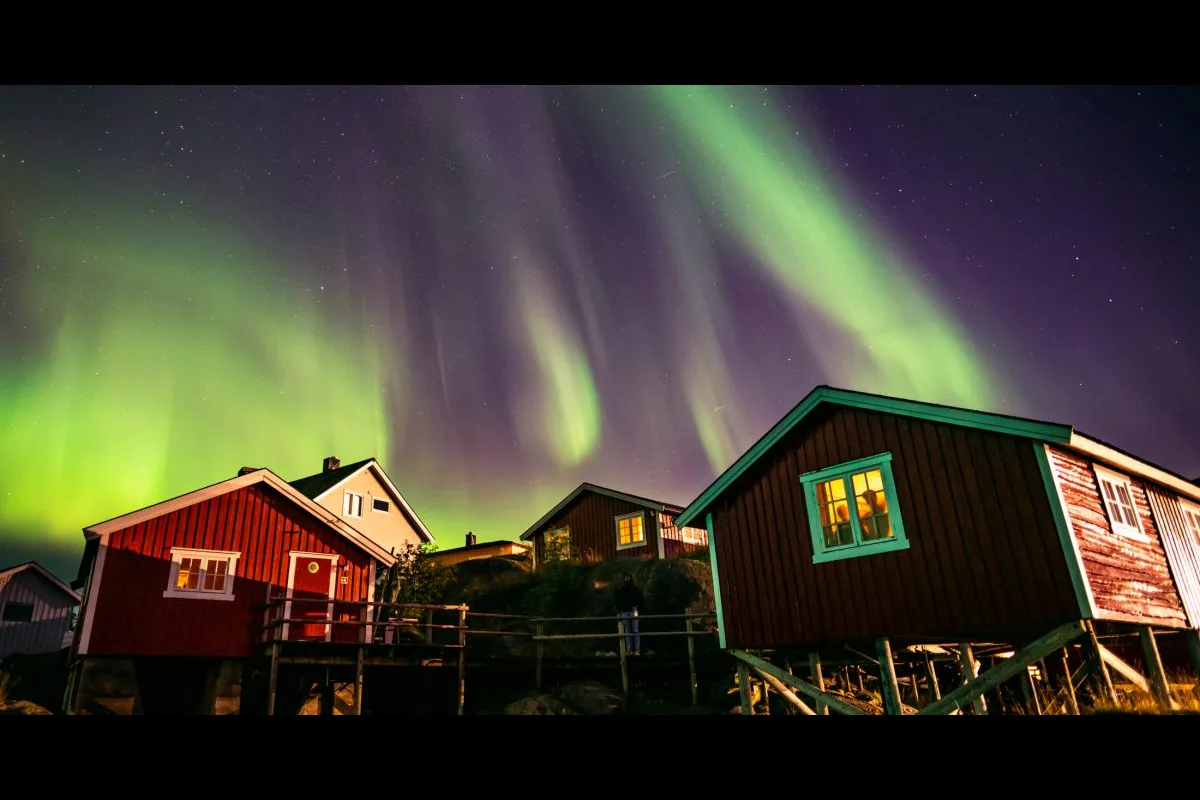
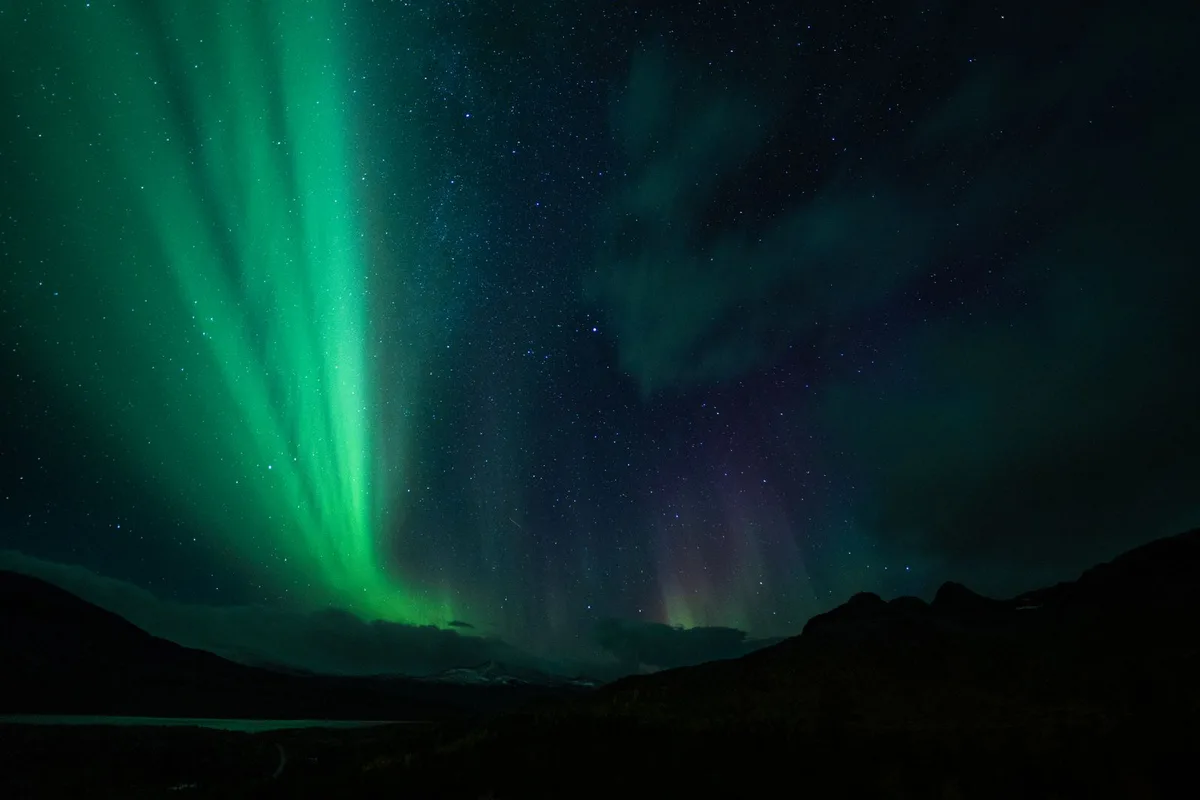
Five hours in a small group of eight at most, chasing clear sky away from the town lights with a photographer-guide: photography help, hot drinks and a bonfire when the weather allows. Rated 4.9 from recent reviews, from about £132. Check availability →
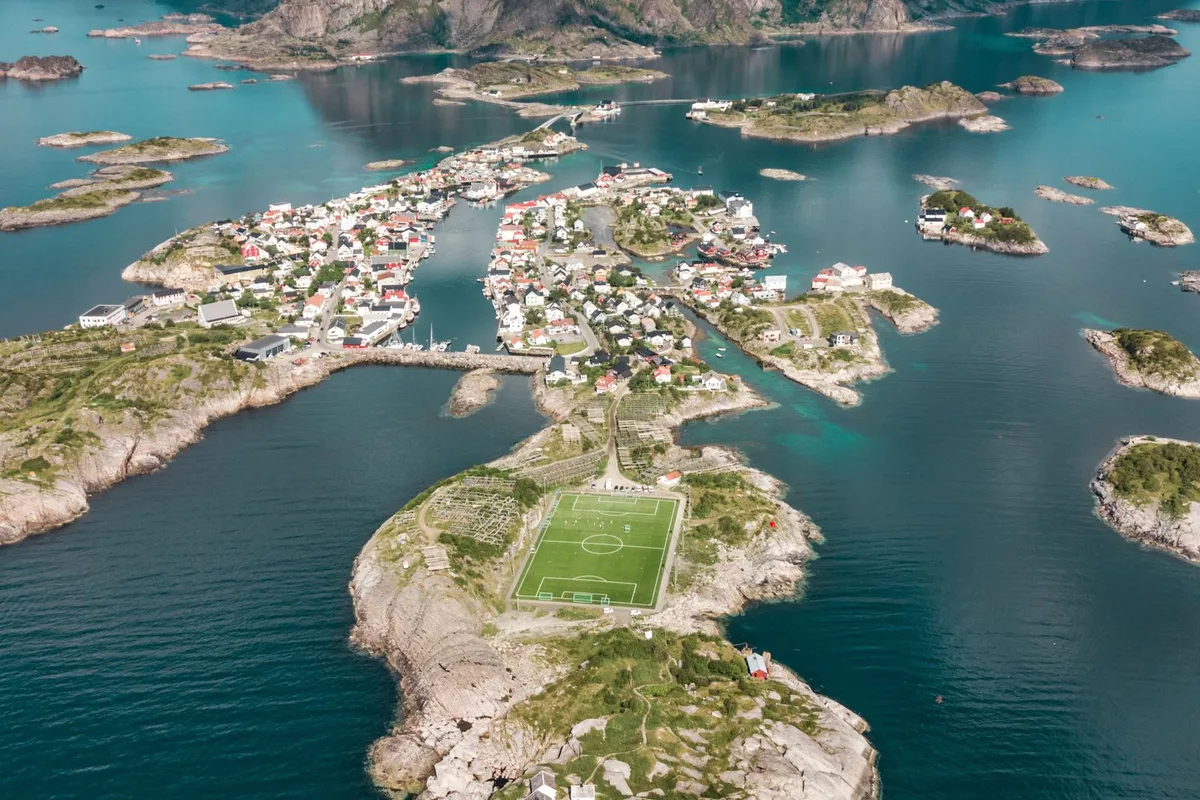
Leave a spare day for Henningsvær and its island football pitch, or the beaches at Haukland and Uttakleiv — both reward a slow afternoon.
When to go and what it costs
Two Lofotens alternate. From late May to mid-July the sun circles without setting: hiking at midnight, the fullest prices of the year. From late August the nights return, and with them the aurora — September to March is lights season, peaking in December to February, when skrei fishing fills the harbours. October sits at the hinge: dark enough for early aurora, thin crowds, weather that turns in an hour.
Norway is expensive, and Lofoten is Norway at full price. At about NOK 9.3 to US$1 (October 2026): the route 300 bus is about US$40; a fish-soup lunch US$25 to 35; dinner US$45 to 70 a person before drinks — a restaurant beer can pass US$12.
A backpacker in the budget hotel, self-catering: NOK 900 to 1,300 a day. Mid-range — a harbour hotel, one paid boat day, dinners out: NOK 2,500 to 3,500 a day. A splurge day with the Børsen dinner passes NOK 5,000. The Travel Pass and a supermarket breakfast are the two honest savings.
What to pack
Tap items to check them off — your list is saved on this device.
Pack for four seasons in a day and wind as a constant — the weather arrives horizontally here. This is the full list:
Add the extras: a genuinely waterproof shell and trousers (the jacket above is the summer minimum), warm layers and a hat in any month, grippy boots for ice and wet rock, and a headtorch for unlit cabin steps.
Language, visa and entry
✓ Visa-free entry for eligible passport holders
Norwegian runs the islands, and English runs alongside it — harbour crews, drivers and café staff switch without thinking. The one word that does everything is takk — thanks.
Four phrases do most of the work:
HeihelloTakkthank youHvor mye koster det?how much does it cost?Regningen, takkthe bill, please
Sort your entry paperwork before you book anything non-refundable. Norway is in Schengen: US, Canadian, British, Australian and other visa-exempt nationals enter visa-free for up to 90 days in any 180-day period. Since April 2026 the Entry/Exit System (EES) is fully live — non-EU travellers are registered with photo and fingerprints at the first Schengen border instead of a stamp, adding minutes, not forms.
ETIAS is not operating yet: no application, no fee for a 2026 trip, whatever third-party sites claim. Your passport should be valid at least three months beyond departure. If your first Schengen stop is Oslo, EES registration happens there — allow a longer layover.
Safety and health
Respect the weather — it is the main risk here
Weather turns in minutes: gales close bridges and cancel ferries, and July walks are mountaineering in February. Check yr.no each morning, tell your hotel your plan, and turn back without arguing — Reinebringen's steps ice over, and the sea runs cold all year.
Drive the E10 like a local, not a tourist
One lane each way, sheep on the road, photo stops that tempt you to brake mid-corner. Use the lay-bys, keep headlights on at all hours — mandatory — and in winter slow down before the bridge decks, which ice first. Never stop on a bridge for a photograph.
Dress for the water temperature, not the air
The sea stays cold even in August. Kayak and RIB trips provide suits for a reason; on your own, swim from sandy beaches and stay shallow. Aurora watching means dark, icy ground — warm boots matter more than the camera.
Crime is the least of it
Lofoten is one of Europe's safest corners; the realistic losses are to weather, water and timetable optimism. Know the numbers: 112 police, 110 fire, 113 ambulance.
Three airports, one road and two seasons, in short.
Arrival routes checked against Avinor, Visit Lofoten and Reis Nordland sources, October 2026; entry rules against Visit Norway and EU EES guidance; the visitor contribution against the law in force from 1 July 2026 and October 2026 municipal reporting.
There is no single gateway. Fly to Evenes (EVE) for the widest choice of jets, then ride route 300 (about NOK 350 to 400, about 3 hours, twice a day) or drive the E10 to Svolvær. Or connect through Bodø or Tromsø on a Widerøe turboprop to Svolvær (SVJ), 6 km from the harbour, or Leknes (LKN) — the island airports have no bus, so a taxi or rental car covers the last stretch.
Outside the summer season, close to yes. Buses follow the E10 thinly — route 300 runs twice a day from Evenes — and the villages, beaches and aurora spots sit off it. A car-free trip works from a Svolvær base with tours and the Travel Pass Nordland (about NOK 1,990 for seven days), but a rental car is what most visitors end up wishing they had booked.
Svolvær for almost every first trip: the transport hub, the tour boats, the restaurants and the widest range of beds. Reine is the scenic second base at the far west end — beautiful, but thin on services and hours from the airports. Henningsvær suits drivers who want a quiet fishing village 25 minutes from Svolvær.
Norway is in Schengen: US, Canadian, British, Australian and other visa-exempt nationals enter for up to 90 days in any 180-day period. Since April 2026 the Entry/Exit System (EES) registers non-EU travellers with a photo and fingerprints at the first Schengen border instead of a passport stamp. ETIAS is not operating yet — there is no application to file for a 2026 trip.
Not in 2026. Norway's visitor contribution law took effect on 1 July 2026 and lets high-pressure municipalities charge 3% of the accommodation price before VAT — but only from 2027, and only with an approved spending plan. Vestvågøy has approved its plan and the Lofoten municipalities are coordinating; no Lofoten charge applies to 2026 stays.
For the midnight sun, late May to mid-July, when the sun never fully sets and hiking runs around the clock. For the northern lights, September to March — October already brings properly dark nights and early aurora chances, with none of the midnight sun. Winter adds skrei fishing season and the harshest weather; book flexibility into any dark-season trip.
Bus times change — the Reis app and Avinor always win.
Lofoten, Saved for After You Land
Landing soon? Get the printable PDF — the essentials from this guide, formatted for your phone:
The airport transport cheat sheet, with ticket links
Our 3 restaurant picks, with maps
The packing checklist
One email with your Lofoten PDF (guide version: Oct 2026). Fare changes and new guides after that. No spam, unsubscribe anytime.
Sources and last verified
Arrival routes against Avinor, Visit Lofoten and Reis Nordland: Evenes is 164 km from Svolvær, Svolvær Helle 6 km from the harbour; route 300 leaves Evenes at 10:50 and 17:05 daily; the NOK 350 to 400 fare follows travel-guide reporting, with the Reis app as live authority (onboard adds NOK 20). Travel Pass at about NOK 1,990 against July 2026 reporting; the Bodø to Moskenes ferry against 2026 route reporting. Entry against Visit Norway and EU sources: EES live since 10 April 2026; ETIAS not operating. Visitor tax against the law in force from 1 July 2026 and October 2026 reporting (Vestvågøy plan approved; no 2026 Lofoten charge). Exchange anchor: NOK 9.3 to US$1, 23 October 2026. Clocks go back Sunday 25 October 2026. GetYourGuide products opened and read. Expedia returned HTTP 429 during this build, so hotel URLs are empty pending the confirmation pass. Photo credits as in the guide data. Last verified October 2026.
Affiliate disclosure: hotel names, transfers, experiences, and products linked in this guide may earn After You Land a commission at no extra cost to you. Prices and times were checked in Oct 2026 and change often — confirm before you book.