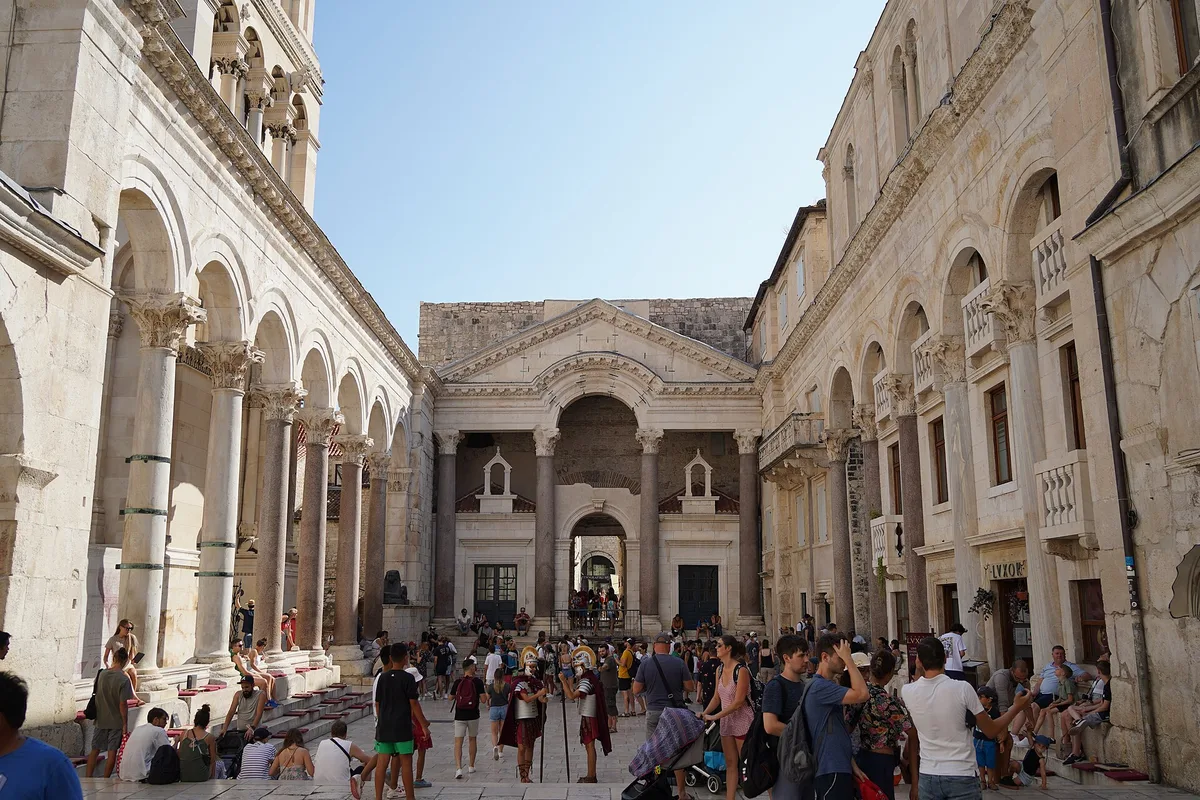
Split: your first hour after landing
You have just landed in Split — in through Kaštela, and one shuttle ride later you are standing on the Riva with a 1,700-year-old palace for a city centre. This guide runs the first hour and everything after it: the ride in, the palace sights that charge and the lanes that never do, where to base from the palace walls to Bačvice, a first pašticada, and the ferries and boats that make Split the islands' front door.
In this guide
You just landed in Split. The Platanus shuttle reaches the port-side bus station in about 35 minutes for €10, an eSIM keeps you connected from the stop, and the palace maths is easy — the lanes and Peristyle are free, the five-sight cathedral ticket is €15, and the island boats reward booking ahead through GetYourGuide.
Quick facts
Airport
Getting in
Currency
Languages
Time zone
Emergency
Plugs
Tap water
Tourist tax
Best months
Map
Stays, sights, and landmarks in Split — live hotel prices plus the key places from this guide.
Settle in
Land at Split Airport and take the shuttle first. Platanus runs the official airport bus — €10 one way, luggage included, timed to landings — and it drops you at the Main Bus Station beside the port and the palace, where every first hour in Split starts.
Set up your data before you leave the terminal: an Airalo eSIM loads a Croatia plan in minutes, so maps and ride apps work from the curb. For a longer Adriatic run, compare Saily.
Run the arrival checklist in this order:
- Buy the shuttle ticket online or on board — the QR code is enough, no printing
- Load the Promet app before you need it — a city ride costs €1 in the app against €2 from the driver
- Drop your bags before the palace — the lanes are pedestrian, cobbled and hard on luggage wheels
Check the tax maths when the hotel quotes your rate. Split's sojourn tax — €2.65 a night in season, €1.86 off-season — is collected by your accommodation on top of the room rate; confirm whether the quoted total already includes it.
If the flight in went wrong, AirHelp checks whether compensation is owed before you spend your first evening on forms.
Take one hour: the Riva, the palace walls and the port sit within ten minutes of the bus station. Find your bearings over a coffee, then start the palace.
Getting around
Times are airport to city centre.
Platanus airport shuttle
Drops at the Main Bus Station by the port — timed to flights, luggage included
Promet bus 37
All-stops local bus from the main road by the terminal to Sukoišan, about every 20 minutes
Rideshare
Uber and Bolt both run from the airport pickup point
Taxi
Rank outside arrivals — insist the meter runs
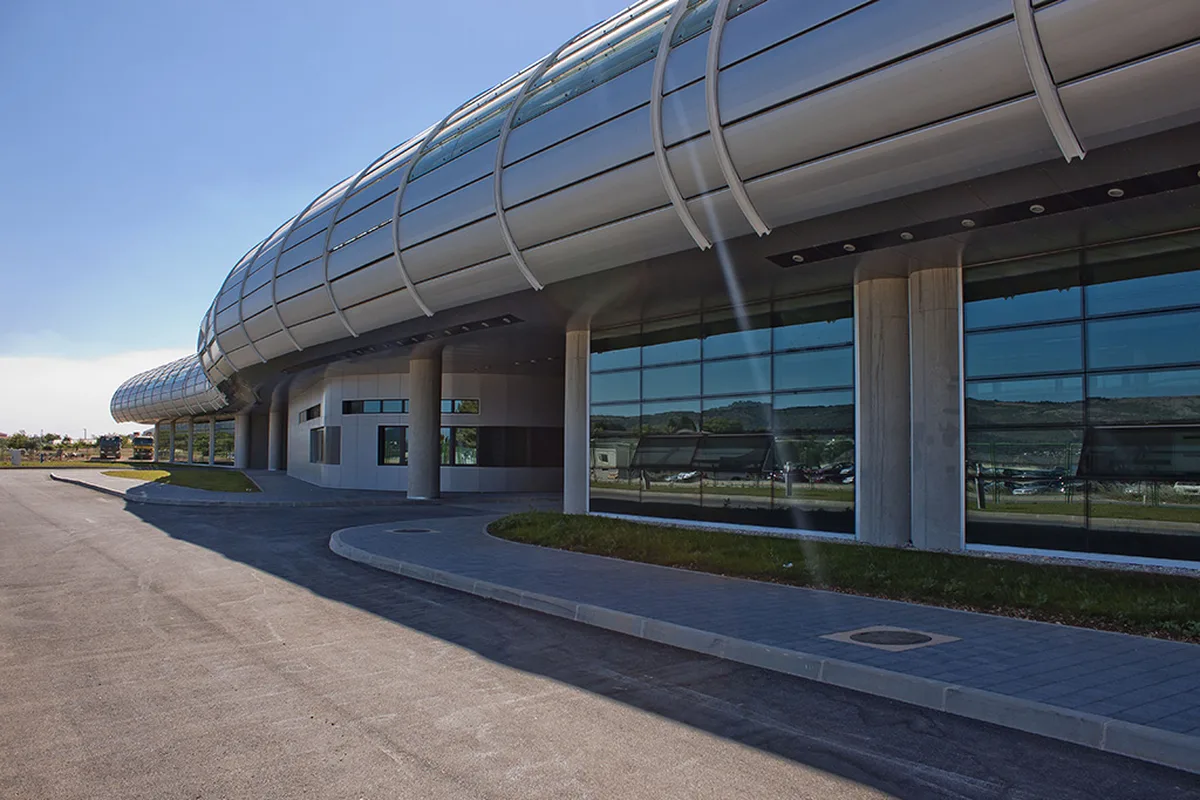
The palace lanes are pedestrian; the port, bus station and train station stand together at the old town's eastern edge. Promet runs the city buses: a single ride costs €1 in the app or at a kiosk and €2 from the driver, a one-day ticket costs €4 and a three-day ticket €10. The airport rides are these:
Choose bus 37 when your bags are light and your hotel sits near Sukoišan; choose the shuttle with luggage — it drops you at the port, not the city edge. In high summer, leave for the airport 90 minutes ahead — the coast road clogs.
Book the paid sights early — bell tower and cellar slots go first on cruise days, and Tiqets is the practical route when the queue wraps around the Peristyle.
Compare a pre-booked transfer when the group maths demands it. A metered taxi to Bačvice runs about €45; a fixed price removes the guesswork — compare a Kiwitaxi transfer with Welcome Pickups, both with a driver waiting in arrivals.
In the city
Start with the fact that the palace is free. Diocletian's retirement palace, finished around 305 AD, is no museum behind a rope — it is the city centre, home to about 3,000 residents, and its lanes, gates, Peristyle and Vestibule stay open day and night for nothing. Klapa singers use the Vestibule's dome most mornings.
Pay for the cathedral complex as one ticket. The Cathedral of Saint Domnius — Diocletian's mausoleum, among the oldest cathedrals in continuous use — sells singles from €3 to €7: cathedral €5, bell tower €7, crypt €3, Temple of Jupiter €3, treasury €5. The Green ticket bundles cathedral, bell tower and treasury for €12; the Purple covers all five for €15. Climb the 57-metre bell tower early or late to dodge the cruise crowds.
Go underground. The substructures mirror the emperor's apartments above and held the dragons in Game of Thrones — the central corridor is free, the ticketed side halls cost €10 and stay cool at midday. When official slots sell out, check Tiqets for remaining timed entry.
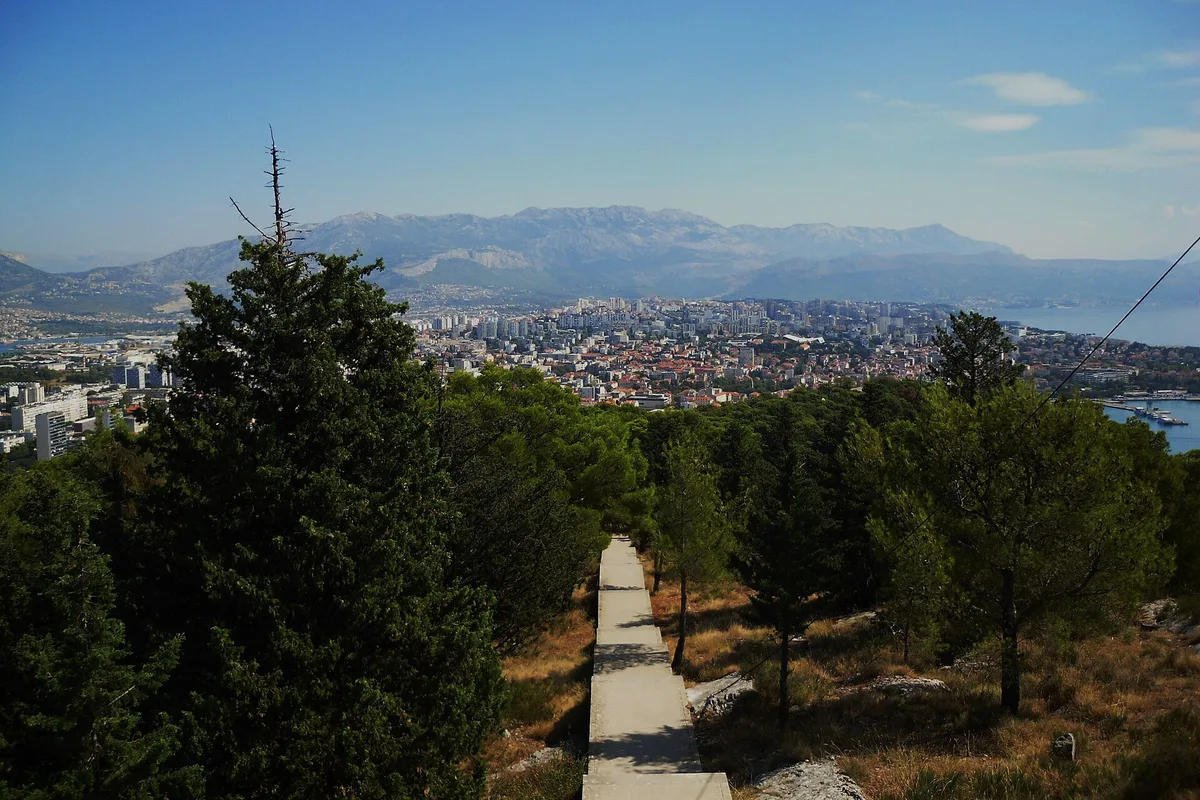
Climb Marjan for the panorama. The pine forest park west of the Riva is open to everyone; its Telegrin summit stands 178 metres up — 314 steps at the top — and the Vidilica terrace cafe sits on the first shoulder. Ride the trails on a rental booked through BikesBooking, then drop to the coves at Bene or Kašjuni for a swim.
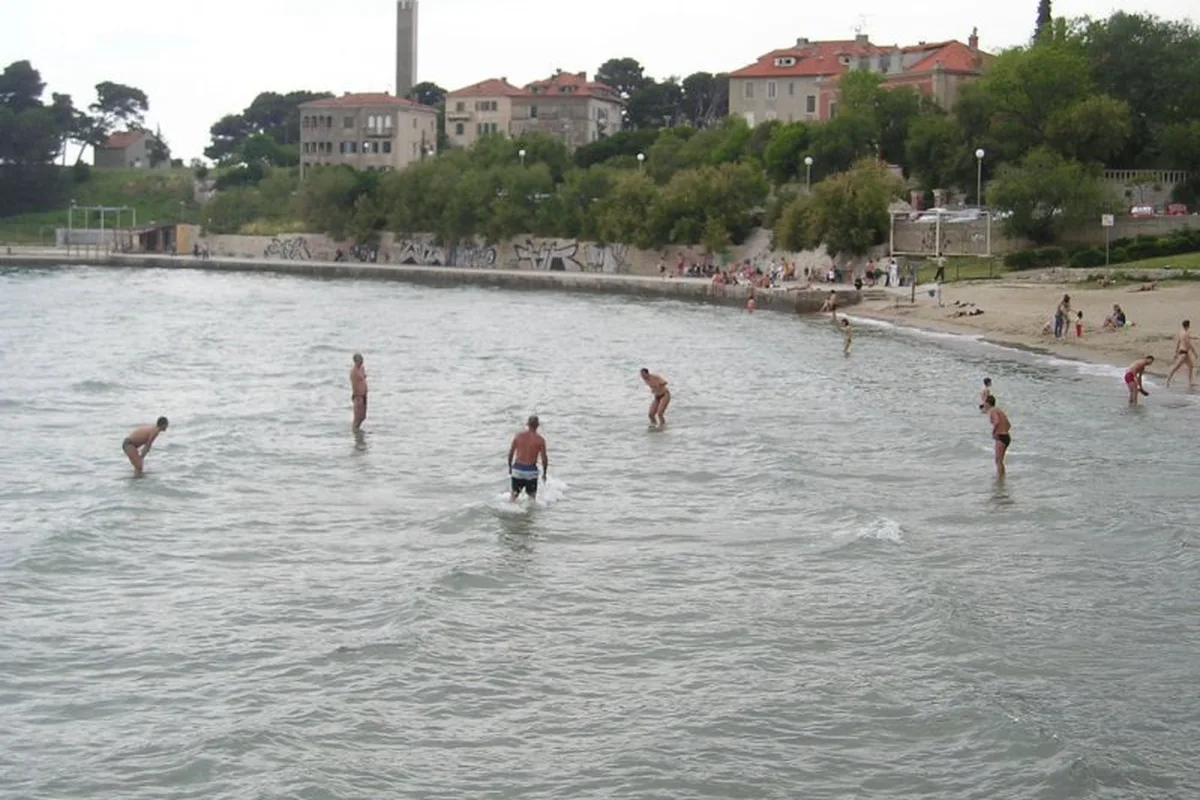
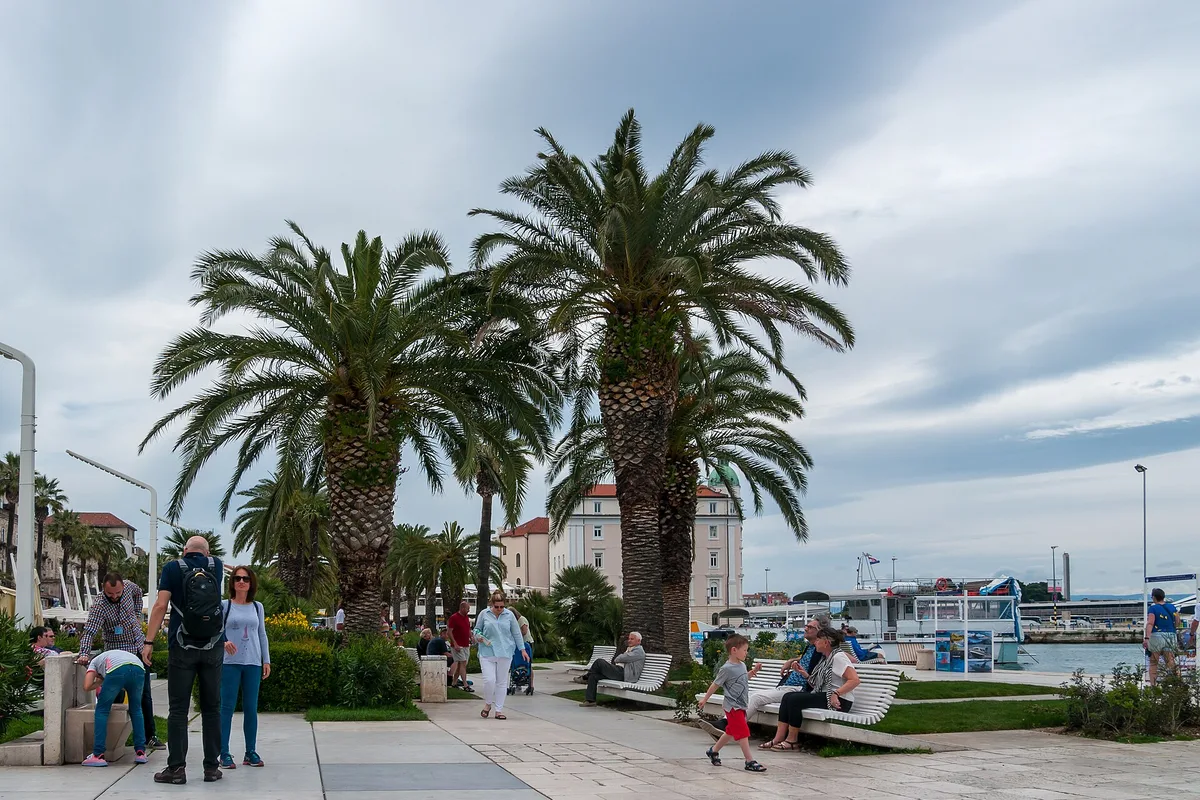
Swim where Split swims. Bačvice, ten minutes east of the palace, is the city's sandy beach — shallow, warm and home to picigin, the keep-the-ball-up game locals play standing in the sea. Rub Gregory of Nin's big toe by the Golden Gate for luck on the way back.
After you land in Split: Bookable experiences
Where to stay your first nights

Cornaro Hotel.
Best for the five-star splurge at the palace edgeStay at Sinjska ulica 6, at the palace's north-western edge, three minutes from the Peristyle. Expect a five-star spa hotel renovated in 2023, a rooftop terrace with hot tubs and full breakfast included — book it for a landmark trip or celebration.

Marvie Hotel and Health.
Best for pools and a spa a short walk from Bačvice beachSleep at Peričićeva 1 in Firule, ten minutes from Bačvice beach and about twenty from the palace. Expect indoor and outdoor pools, a spa and a free breakfast buffet — book it for beach mornings and palace evenings.
Hotel Peristil.
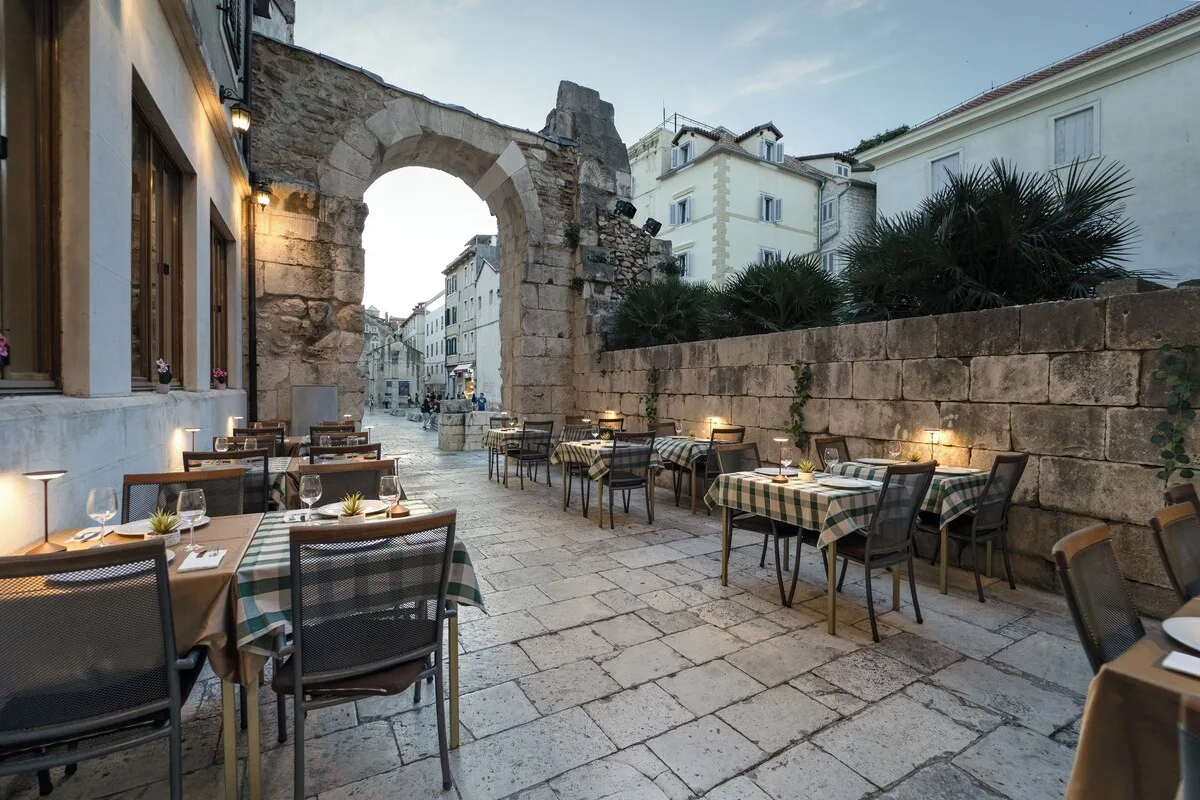
Best for sleeping inside the palace walls by the PeristyleBed down at Poljana kraljice Jelene 5, inside the palace by the Silver Gate, where some of the 12 rooms face the Peristyle itself. Expect free continental breakfast, a terrace restaurant and pets staying free — book early, because twelve rooms go fast.
Stay inside the palace for atmosphere — Roman walls, no cars and stairs instead of lifts. Choose Varoš, the old fishermen's quarter west of the centre, for quiet lanes and konoba evenings, and Bačvice or Firule, east of the port, for the beach and bigger hotels.
Book any of the three early for July and August, and confirm whether the quoted total includes the sojourn tax before comparing prices.
Where to eat first

Eat close on day one — Dalmatian cooking is slow food. Three first stops cover the essentials:
Bokeria, in the lanes west of the Peristyle.
Order the crni rižot — black cuttlefish risotto — and whatever the fish counter brought in. Expect a wine-bar buzz and small plates built for sharing.
Fife, Trumbićeva obala in Varoš.
Sit where the fishermen eat and order the pašticada — beef slow-cooked in wine and prunes, the Dalmatian celebration dish — with gnocchi. Expect big portions and small bills.
Pazar, the green market inside the Silver Gate.
Graze the morning stalls for cheese, figs and a slab of soparnik, the chard pie from the Poljica villages. Expect the city's real breakfast crowd.
For guided food walks and market tours, browse the Split listings on GetYourGuide and book a slot for your first free evening.
Day trips and more
Split is the islands' front door, and the port does DIY days well. Jadrolinija car ferries sail to Supetar on Brač in about 50 minutes — foot passengers pay about €7 to €11, a car €26.10 — and to Stari Grad on Hvar in about two hours, cars €47.60 in season. Catamarans reach Hvar town in about an hour, from about €6 to €25 by operator and season. Winter timetables thin sharply, so check the sailing day before; book summer catamaran seats ahead through Klook or the operators' own sites.

Krka National Park
Ride about 1 hour 15 minutes inland to Skradinski Buk, a staircase of travertine falls crossed on boardwalks. Swimming is banned inside the park itself, so the swim stop is Skradin or the beach at Primošten; park entry, if your tour does not include it, is paid in cash on the day — €30 for adults from June to September, €16 in April, May and October. Check availability →

The Blue Cave and Hvar
Spend 10 to 11 hours on the water: the glowing Blue Cave on Biševo, Komiža and Stiniva Cove on Vis, a swim in the Pakleni islands' Blue Lagoon, and Hvar town to finish. The cave runs on calm seas only — keep a spare day in windy weeks. Check availability →

Trogir and the Blue Lagoon
Ride 30 minutes up the coast to Trogir, a UNESCO-listed old town on its own island, then swim the Blue Lagoon by Drvenik and call at Maslinica on Šolta. At 3 to 5 hours it fits a first or last day. Check availability →
When to go and what it costs
Come in May or June: the sea is swimmable, the palace lanes breathe, and the full ferry network runs without the August squeeze. September and October keep the warm water and lose the crowds — the locals' favourite weeks, at shoulder prices.
Come in July and August for the festival version: beach clubs full, catamarans hourly and the palace at its most alive, traded against heat, cruise-day crowds and the year's highest room rates.
Come in winter with your eyes open. November to March is quiet, mild by northern standards and cheap — but catamarans thin to a skeleton timetable and the bura can shut the sea down for a day at a time.
Budget Split by the day, not by the headline. A budget bed, a €4 day bus ticket, the free palace lanes and market eating keeps a careful day near €70 to €100. A mid-range hotel, one boat day and a konoba dinner pushes a day towards €180 to €250 per person sharing.
Count the fixed costs: the shuttle in is €10, a city bus ride €1 in the app, the all-five cathedral ticket €15, the cellar halls €10, a Supetar ferry about €7 to €11 on foot, and sojourn tax €2.65 a night in season.
What to pack
Tap items to check them off — your list is saved on this device.
Pack for a walking city of polished stone — lanes slippery when wet, summer sun bouncing off limestone and sea. This is the full list:
- Comfortable walking shoes Shop walking shoes on Amazon →
- Sunscreen Shop sunscreen on Amazon →
- Reusable water bottle Shop water bottle on Amazon →
- Phone charger and power bank Shop power bank on Amazon →
- Daypack Shop daypack on Amazon →
- Sunglasses Shop sunglasses on Amazon →
- Light rain jacket Shop rain jacket on Amazon →
Pack swim shoes too — most beaches beyond Bačvice are pebble or rock shelf, and sea urchins reward the prepared. Evenings on the water cool fast, even in August.
Language, visa and entry
! Check visa requirements before you fly
Croatian runs everything in Split; English is the coast's working second language — menus, skippers and market grandmothers alike. A few words of Croatian go a long way.
Four phrases do most of the work:
Most visitors arrive via Schengen: Croatia has been a full member since 2023, so there are no border checks when travelling on from another Schengen country. EU, EEA and Swiss citizens need only a passport or ID card. Visa-exempt visitors — the US, UK, Canada, Australia, New Zealand, Japan and most others — may stay 90 days in any 180 across the whole Schengen area, not per country.
Since April 2026 the Entry/Exit System records fingerprints and a photo at the border, so the first crossing runs slower than the old stamp. ETIAS is NOT in operation — the 2026 launch was withdrawn and 2027 is the current expectation; any site selling an ETIAS today is a scam.
Build tipping into the budget — it is a thank-you, not a tax. Round up café bills, leave about 10 percent in konobas and restaurants when the food earns it, and tip boat crews in cash.
Carry ID on island days — ferry crews can ask at boarding, and hotels register every guest with the police by law.
Safety and health
Watch your bag around the port, the bus station and the market crowds
Split's visitor crime is opportunistic pickpocketing where travellers bunch — ferry queues, the Pazar stalls and packed promenade evenings. Wear a cross-body bag in front and keep a hand on your phone at the ticket windows.
Dial 112 for any emergency and head for a big hospital without hesitation
The 112 number reaches police, fire and ambulance from any phone, operators in English; the main hospital, KBC Split, sits in Firule east of the centre. EU visitors should carry an EHIC or GHIC card; everyone else pays, so travel insurance is not optional.
Drink the tap water and refill as you go
Split's supply comes from the Jadro spring — the same source Diocletian's aqueduct tapped — and it is safe, tested and famously good. Public fountains pour the same water, handy on long palace and Marjan days.
Take the summer sun and the bura seriously
July and August heat on exposed limestone is a real risk — climb Marjan early, carry water and rest in the cellars at midday. Wear swim shoes against urchins on rocky coves, and check the morning forecast on island days: a strong bura can cancel catamarans.
Related destinations
If you liked Split, try these next:




Frequently asked questions
Ride the Platanus shuttle — €10 one way, timed to flights, about 30 to 40 minutes to the Main Bus Station by the port. Bus 37 costs €1.50 bought ahead but takes about an hour; taxis run about €45, Uber and Bolt €22 to €35.
The palace lanes, gates, Peristyle and Vestibule are free day and night — the palace is the city centre. Paid sights: the cathedral complex (all five sights €15 on the Purple ticket, €12 Green) and the palace cellars at €10.
Visa-exempt visitors need only a passport, up to 90 days in 180 across Schengen. Since April 2026 the Entry/Exit System records fingerprints and a photo at the border. ETIAS is NOT in operation — sites selling it are scams.
Two days cover the palace, Marjan and Bačvice without rushing. A third buys the water — a Hvar or Blue Cave boat, or Krka inland — and four lets you ride the ferries like a local, to Brač or Vis.
May, June, September and October bring a swimmable sea without the worst crowds. July and August are the festival peak — fullest ferries, highest prices — so book boats, beds and the bell tower ahead.
Croatia prices in euros, and has since 2023 — there are no kuna left to change. The sojourn tax is collected by your accommodation on top of the room rate: €2.65 a night from April to September, €1.86 off-season.
Split, in your pocket
Landing soon? Get the printable PDF — ticket links, the airport transport cheat sheet, our 3 restaurant picks with maps, and the packing checklist. Everything above, formatted for your phone.
One email with your Split PDF. Fare changes and new guides after that. No spam, unsubscribe anytime.
Sources and last verified
Airport transport via Split Airport and Platanus, official shuttle operator since February 2026: €10 one way, departures about 30 minutes after landings, Main Bus Station Platform 1. Promet fares — €1 for Zone 1 and €1.50 to the airport's Zone 3 bought ahead, double from the driver, one-day €4 and three-day €10 — checked against two transcriptions of Promet's official price list and its line 37 timetable. Taxi about €45 metered and rideshare €22 to €35 from 2026 Split airport guides. Cathedral tickets — singles €3 to €7, Green €12, Purple €15 — from 2026 Split guide listings and recent visitor reports; cellars €10 from the City Museum's tariff and October 2026 reports. Sojourn tax €2.65 April to September and €1.86 off-season from the city tax notice carried on Expedia property pages. Ferry times and tariffs from Jadrolinija's 2026 price lists via Visit Croatia and Ferryhopper's 2026 survey. Krka entry cash prices from the tour operator's 2026 listing. Entry rules from EU reporting: Schengen since 2023, EES operational since 10 April 2026, ETIAS not in operation. Marjan's 178-metre Telegrin summit and 314 steps from park trail listings. Last verified October 2026.
Affiliate disclosure: hotel names, transfers, experiences, and products linked in this guide may earn After You Land a commission at no extra cost to you. Prices and times were checked in Oct 2026 and change often — confirm before you book.