
Budapest: your first hour after landing
You have just landed in Budapest — in through Liszt Ferenc, and one express bus later the Danube city opens out between the castle hill and the Parliament dome. This guide runs the first hour and everything after it: the ride in, the one bus your travelcard does not cover, the districts to base in, the baths etiquette, and the artists' town, the great bend and the empress's palace that earn a day each.
In this guide
You just landed in Budapest. The 100E reaches Deák Ferenc tér in about 40 minutes for its own 2,500 HUF ticket — travelcards do not cover it — an eSIM keeps you connected from the stop, and always pay in forints when the terminal asks; the day to book before you fly is the Danube Bend, and Klook covers the baths and river days.
Quick facts
Airport
Getting in
Currency
Languages
Time zone
Emergency
Plugs
Tap water
Tourist tax
Best months
Map
Stays, sights, and landmarks in Budapest — live hotel prices plus the key places from this guide.
Settle in
Land at Terminal 2 and head to the bus stops outside arrivals. The 100E express is the default first ride: one ticket, no changes, down to Deák Ferenc tér, where M1, M2 and M3 meet.
Sort your connection before you land — an eSIM live at landing removes the airport scramble. Compare Airalo, Saily and Yesim; local SIMs are the fallback.
Drop your bags early — most central properties hold luggage free. District V around Deák and the Basilica walks everywhere, District VI along Andrássy út adds the Opera, District VII is the nightlife and budget end, and Buda under the Castle is quieter.
First loop: Deák to the Danube promenade, across the Chain Bridge, Parliament from the Buda bank, back up Andrássy út to the Opera — and you hold the centre's map.
Buy transport before your first ride, because Budapest inspects tickets seriously. The BudapestGO app sells every ticket and pass, validating by QR scan; purple BKK machines sell paper.
Getting around
Times are airport to city centre.
100E Airport Express bus
Travelcards do NOT cover it; Pay and Go on board
200E bus and M3 metro
Bus to Kőbánya-Kispest, then the M3 metro; travelcards cover it
Taxi
Metered; official rank or app booking outside arrivals
Pre-booked transfer
Driver waiting in arrivals with a name board

Budapest runs one BKK network: four metro lines, tram 2 along the Danube, trams 4 and 6 around the Grand Boulevard, buses and green HÉV trains. The airport rides:
Learn the ticket ladder once. A single costs 500 HUF for one uninterrupted ride on one vehicle — metro changes allowed, but a tram or bus needs a new one. Time tickets solve that: 600 HUF buys 30 minutes, 850 buys 90, changes included. Travelcards: 24 hour 2,750 HUF, 72 hour 5,750, both unlimited.
Keep the 100E rule separate. The express takes only the 2,500 HUF airport ticket, bought in BudapestGO, at airport machines, or by tapping a bank card on the Pay and GO reader aboard. Travelcards and the standard Budapest Card don't work on it; pass holders buy a 1,000 HUF add-on. It runs through the night, as do trams 4 and 6; night buses cover the rest.
Széchenyi fills fast on weekends and Parliament tours sell out days ahead. Tiqets is the practical route for bath entry, queue skipped; Parliament's official seller only.
Choose a taxi or transfer for groups or late hours. All licensed taxis run one regulated tariff, raised on 1 August 2026: 1,300 HUF to start, about 520 a kilometre, 130 a minute standing, airport trips from a higher 2,100 HUF base — a metered centre run lands at about 13,000 to 18,000 HUF, no night surcharge. Főtaxi staffs the arrivals booth; Bolt and Uber work. For a fixed price, compare a Kiwitaxi transfer with Welcome Pickups.
In the city
Start with Parliament. The Országház fills the Pest bank at Kossuth Lajos tér; entry is by official guided tour only — about 45 minutes through the grand staircase, Dome Hall and Holy Crown. Prices since 1 January 2026 split by citizenship: 7,000 HUF for Hungarian and EEA citizens, 14,000 for others, half price for students aged 6 to 24, free under 6.
Cross the river for Castle Hill: walk the Chain Bridge or ride bus 16 from Deák, and spend the morning among the Royal Palace courtyards, Matthias Church and the Fisherman's Bastion. The Bastion's lower terraces are free; the upper ones cost 1,700 HUF by card, 9am to 7pm.
Take St Stephen's Basilica, five minutes from Deák: 2,600 HUF for the church hall, 5,000 for the terrace and treasury, 6,800 for everything, under-6s free. Buy the terrace if you buy one thing, and see the Holy Right, Hungary's most guarded relic.
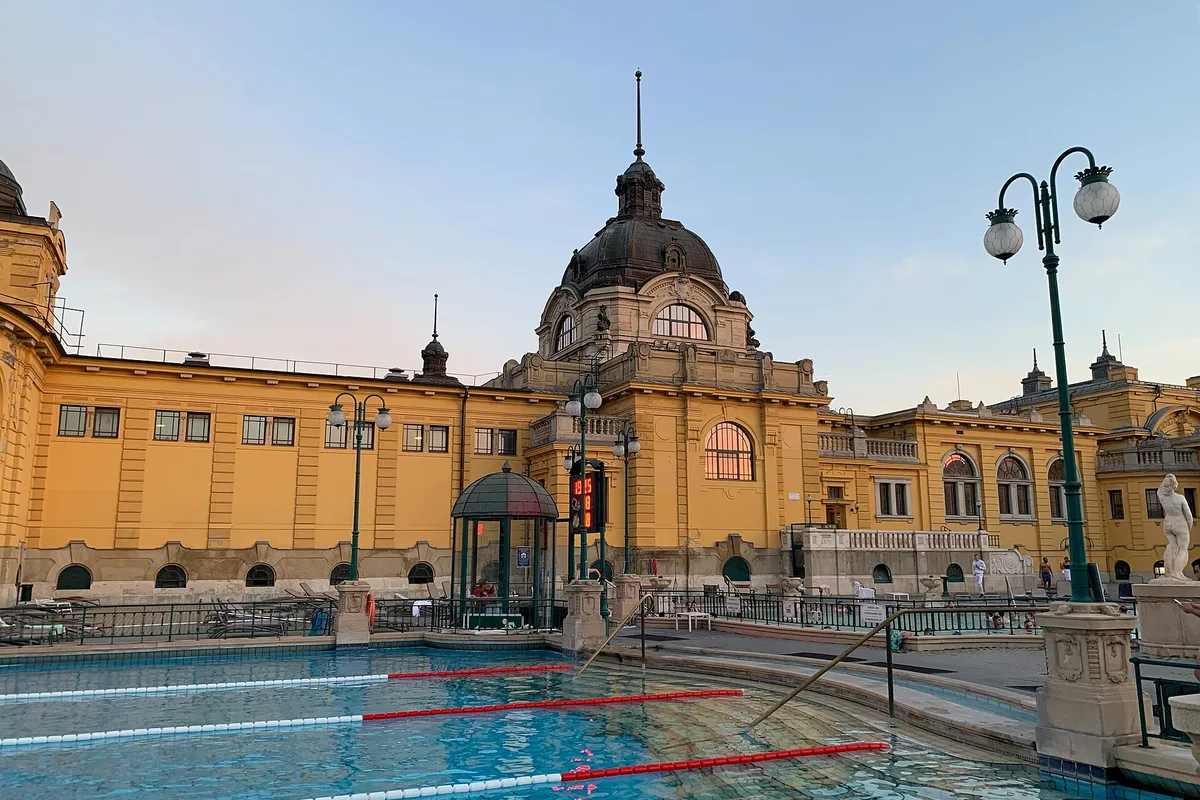
Soak at Széchenyi, Europe's largest bath complex, in City Park at the end of the M1: 18 pools, outdoor water at 38 degrees. A weekday locker ticket is 13,200 HUF, weekends 14,800; the Good Morning ticket — entry before 9am — is 10,500. Bring a towel and flip-flops: towels are sold at 6,900 HUF, never rented. Swim caps only in the lap pool; no under-14s since August 2025. Gellért Bath is closed for renovation until 2028 — try Rudas instead, 12,000 HUF on weekdays, or Lukács for 7,000.
Wander the Jewish Quarter after dark: the Dohány Street Synagogue — Europe's largest, ticketed, closed on Saturdays — and the ruin bars grown from derelict courtyards, Szimpla Kert on Kazinczy utca the original. Go early, and eat before you drink.
See the city from the water: between the Margaret and Liberty bridges sit Parliament, the Castle, Gellért Hill and five bridges. When slots sell out, check Tiqets for timed entry, and Margaret Island by bike via BikesBooking.
After you land in Budapest: Bookable experiences
Where to stay your first nights

Four Seasons Hotel Gresham Palace.
Best for the Art Nouveau splurge at the Chain BridgeStay at Széchenyi István tér 5-6, in the Art Nouveau palace at the Pest end of the Chain Bridge. Expect a mosaic-and-ironwork lobby under a glass cupola, rooms facing the Danube or the Castle, and a spa.
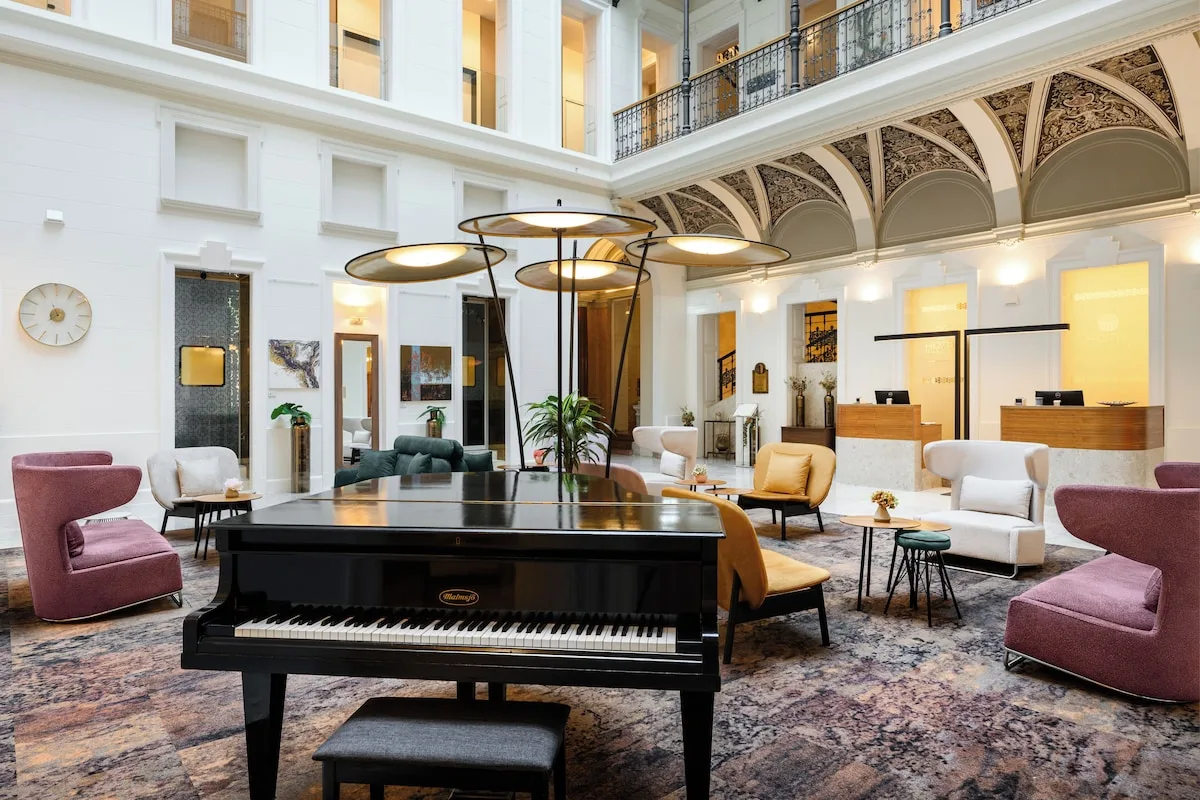
Hotel Moments Budapest.
Best for Andrássy Avenue style by the OperaSleep at Andrássy út 8, in a 19th century mansion on the World Heritage boulevard, 300 metres from the Basilica. Expect 99 rooms behind a frescoed lobby, free tea and coffee, and the M1 at the door for Széchenyi.

Wombat's City Hostel Budapest.
Best for hostel value in the Jewish QuarterBed down at Király utca 20, a block off Andrássy út and five minutes from Deák Ferenc tér. Expect big ensuite dorms and private rooms, air conditioning, a bar and a kitchen.
Stay in Pest for a first visit — sights, baths and the evening city lean east of the river. District V is the centre, District VI along Andrássy út is for the Opera, District VII for the Jewish Quarter's bars and cheapest beds, Buda's Castle District for cobbles and quiet nights.
Book any of the three early for Sziget week, the 20 August holiday, the July Grand Prix weekend and Christmas market season, when river-view rooms sell out. The 4 percent tourist tax rides on top of the nightly rate.
Where to eat first

Eat simply and locally on day one — fast, filling, close to where you dropped your bags. Three first stops cover the essentials:
Great Market Hall, Vámház körút 1-3 at Fővám tér.
Work the ground floor — paprika strings, salami, goose liver, produce — then climb to the gallery stalls and order a lángos, the deep-fried flatbread loaded with sour cream and grated cheese. A working market under a Zsolnay-tiled roof, closing mid-afternoon on Saturdays.
Gettó Gulyás, Wesselényi utca 18 in the Jewish Quarter.
Order the gulyás — a paprika-rich beef soup with pinched noodles, not the thick stew the word means abroad — then a pörkölt or chicken paprikás, and the túrógombóc, sweet cottage-cheese dumplings, if any are left. Expect grandmother cooking done properly.
Bors GasztroBár, Kazinczy utca 10 in the Jewish Quarter.
Queue at the counter two doors from Szimpla Kert and order the day's soups — inventions like pumpkin with raspberry — plus a grilled baguette. Expect street prices and the centre's most inventive cheap lunch. Opens at 11:30am.
Save a proper sit-down meal for later — your neighbourhood beats a cross-town pilgrimage on night one. For the evening version — dinner cruises, food walks, wine tastings — browse the Budapest listings on GetYourGuide.
Carry forints in cash for market stalls, small bars and bakeries; on card terminals always choose forints, never your home currency. Tipping runs about 10 percent for good table service — check first: many restaurants add a service charge.
Day trips and more
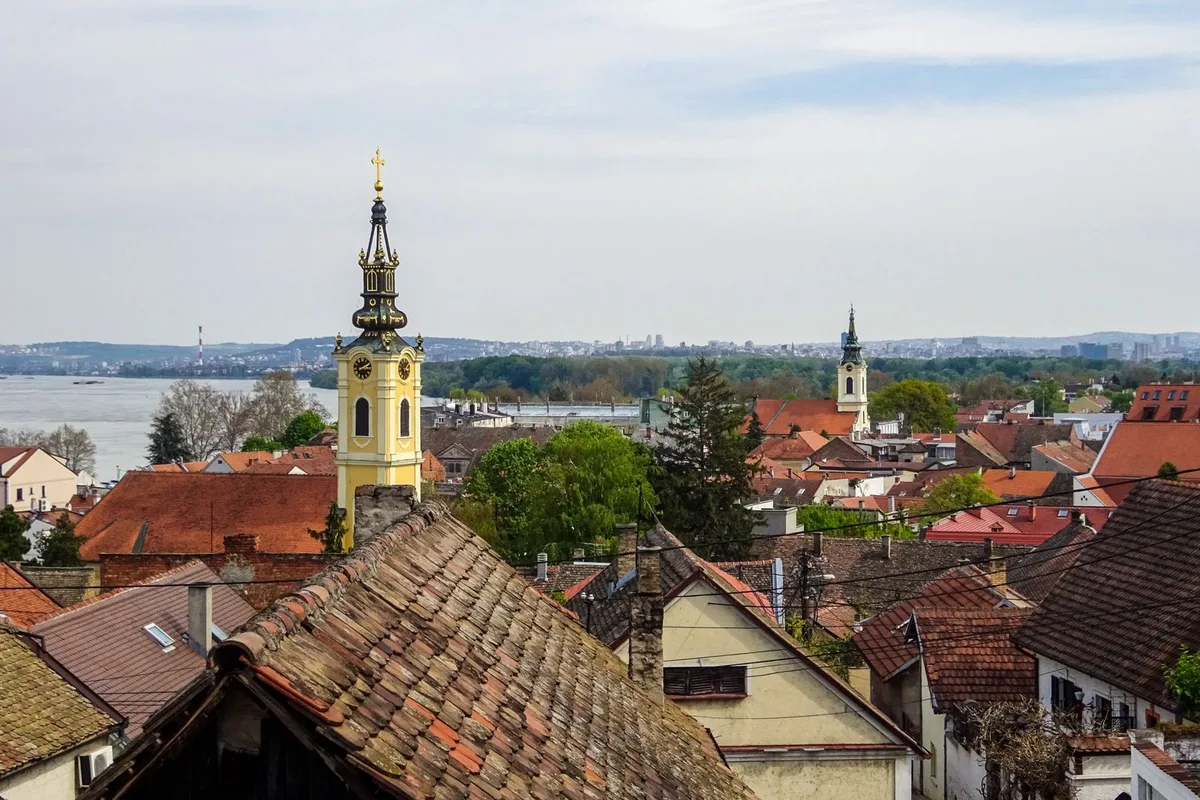
Szentendre
Ride the green H5 from Batthyány tér: cobbled lanes, Serbian churches, galleries, marzipan. Your city ticket covers you only to Békásmegyer — add a 450 HUF suburban ticket beyond it. Mahart boats on this route were suspended for low water through October 2026. Check availability →

The Danube Bend
Visegrád by train from Nyugati to Nagymaros-Visegrád (an hour), a five minute ferry and the climb to the Citadel for the river panorama; or Esztergom, where S72 trains run every half hour to the country's largest church — free to enter, treasury and dome terrace ticketed — and a bridge into Slovakia. Check availability →

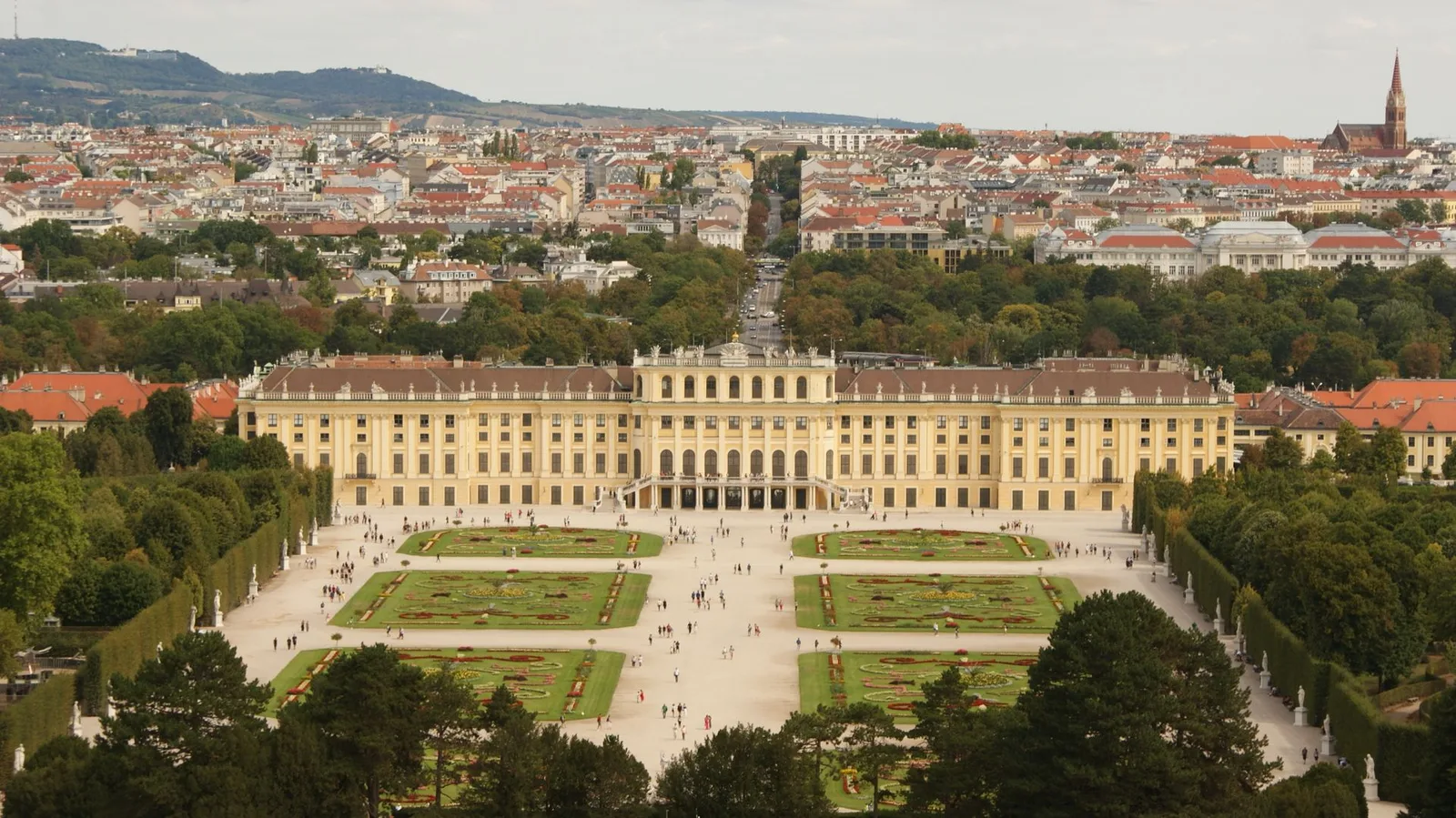
Gödöllő Palace
Ride the H8 HÉV from Örs vezér tere, about 40 minutes east — same boundary rule, so add an extension ticket — to the Grassalkovich Palace, Franz Joseph and Queen Elizabeth's 1867 coronation gift. Royal suites open daily from 10am, admission around 5,000 HUF weekdays, the park behind free. Check availability →
When to go and what it costs

Come in May, June or September: warm days in the low-to-mid 20s, terrace tables, the full calendar running most weekends.
Come in October or April for the shoulder bargain: October opens mild and ends cold, autumn colour on Gellért Hill, crowds gone by late month. Mid-month, 23 October is a national holiday: the Market Hall closes, and the National Museum and Fisherman's Bastion open free. December brings Christmas markets; January and February are the honest winter, with the year's cheapest rooms.
Budget by the day, in forints. A hostel bed, a travelcard, one paid sight and market eating keeps a careful day near 18,000 to 25,000 HUF; a mid-range hotel, a bath and a sit-down dinner pushes towards 45,000 to 70,000 per person sharing. Count the fixed costs: airport 2,500 HUF (100E) or 850 (bus and metro); 72 hour travelcard 5,750; Széchenyi 13,200 weekday; Parliament 7,000 EEA / 14,000 non-EEA; Gödöllő about 5,000. The forint ran at roughly 320 to the US dollar when checked.
Stack passes only when the maths works. BKK travelcards are transport only. The Budapest Card, reset on 1 May 2026 at 17,990 HUF (24 hours) and 29,990 (72), bundles travel with museum entries and bath discounts — but at 72 hours it costs five times the travelcard, so price your entry list against it and single tickets on Klook. Only Card Plus covers the 100E.
Watch the calendar for price spikes: Sziget week in mid-August, the 20 August fireworks, the July Grand Prix weekend, New Year and Christmas market weeks lift hotel rates. Book the room first.
What to pack
Tap items to check them off — your list is saved on this device.
Pack for a walking city of long days and cobbles:
- Comfortable walking shoes Shop walking shoes on Amazon →
- Sunscreen Shop sunscreen on Amazon →
- Reusable water bottle Shop water bottle on Amazon →
- Phone charger and power bank Shop power bank on Amazon →
- Daypack Shop daypack on Amazon →
- Sunglasses Shop sunglasses on Amazon →
- Light rain jacket Shop rain jacket on Amazon →
Add the bath kit — not optional gear in Budapest: swimwear, flip-flops and your own towel (Széchenyi rents none and sells its own at 6,900 HUF), a swim cap for the lap pool, and a plastic bag for wet gear.
Language, visa and entry
✓ Visa-free entry

Hungarian runs the city and gives a visitor almost nothing for free: no shared roots with English, and a name order that puts the family name first — Liszt Ferenc is Franz Liszt. Signage and centre menus run in English, so a phrasebook is a courtesy, not a survival tool.
Start with the courtesies: a hello, a thank you and a cheers in a ruin bar open more doors than silent fluency would.
Hungary is a Schengen member, and most readers arrive visa-free: US, UK, Canadian, Australian, New Zealand, Japanese, South Korean and EEA citizens may stay 90 days in any 180 across the Schengen area. Your passport must be valid at least three months beyond the day you leave Schengen and issued within the last ten years. Everyone else applies in advance.
The Entry and Exit System, EES, is live: fully operational since 10 April 2026, replacing passport stamps with a digital record; your photograph and fingerprints are taken on first entry, which can slow arrivals. ETIAS is not live: the EU withdrew its planned late-2026 launch in July 2026, no date is set, 2027 is the expectation, and the fee is set at 20 euros. Any site selling an ETIAS today is selling nothing.
Hotels will ask for your passport at check-in: Hungarian law requires providers to register every guest, so the scan is the state's paperwork, not suspicion. Keep a photo on your phone, and the document in the room safe.
Safety and health
Watch your belongings on busy lines and in busy bars
Keep phone and wallet out of back pockets on trams 4 and 6, at Deák and Keleti stations, in market crowds and in ruin bars. Petty theft is the main visitor crime; a cross-body bag in front ends most of the risk.
Book taxis by app or from the official rank, and never from a tout
Every licensed cab takes cards and charges no night surcharge. The trap is the 'hyena' tout in the terminal or outside Keleti quoting euro prices at three times the meter — walk past: Főtaxi booth, Bolt or Uber.
See the price before you drink, and change money only at a bank or an ATM
The party district's oldest trick: a stranger steers you to an unpriced bar, drinks arrive unordered, and the bill is enormous and non-negotiable. Drink where menus carry prices; change cash only at banks or bank ATMs, never on the street.
Validate every ticket, and call 112 in an emergency
Controllers check at metro gates and on trams; an unvalidated ticket draws a 12,000 HUF penalty on the spot, rising to 25,000 if billed. Visitors pay for most medical care unless an EHIC or reciprocal scheme covers them, so travel insurance is not optional.
Related destinations
If you liked Budapest, try these next:



Frequently asked questions
Ride the 100E from Terminal 2 to Deák Ferenc tér — about 40 minutes, around the clock — on its own 2,500 HUF ticket: travelcards do NOT cover it. The alternative is the 200E bus plus M3 metro on an 850 HUF 90-minute ticket or travelcard.
Visa-exempt citizens need only a passport, for up to 90 days in 180. Since April 2026 the EU Entry/Exit System records fingerprints and a photo. ETIAS is NOT in operation: withdrawn in July 2026 with no date set, and any site selling one is fraudulent.
Two days cover both banks — Parliament and the Castle District — plus one long bath. A third day buys a second bath or the Danube Bend, and four lets you add Szentendre or Gödöllő without rushing the ruin bars.
Book both ahead. Széchenyi: 13,200 HUF entry with locker, 10,500 Good Morning before 9am; towels sold (6,900 HUF), never rented — bring your own. Parliament: 7,000 HUF EEA, 14,000 non-EEA since January 2026 — book only on the official seller. Gellért is closed until 2028.
Take the H5 HÉV from Batthyány tér — about 40 minutes. Your travelcard covers the city stretch; add a 450 HUF extension ticket from the boundary. Buy both before boarding: inspectors ride this line.
Pay in forints. Budapest is card-friendly, but when a terminal offers to charge you in your home currency, decline — dynamic currency conversion marks the rate up several percent. Choose HUF every time.
Budapest, in your pocket
Landing soon? Get the printable PDF — ticket links, the airport transport cheat sheet, our 3 restaurant picks with maps, and the packing checklist. Everything above, formatted for your phone.
One email with your Budapest PDF. Fare changes and new guides after that. No spam, unsubscribe anytime.
Sources and last verified
Fares checked against BKK and Budapest Airport: 100E 2,500 HUF, travelcards excluded, 1,000 HUF pass-holder add-on; 200E covered by the 850 HUF 90 minute ticket or a travelcard; single 500 HUF, 24 hour travelcard 2,750, 72 hour 5,750. Széchenyi weekday locker 13,200 HUF, towels sold at 6,900, never rented, no under-14s since August 2025; Gellért closed since October 2025, reopening planned 2028. Parliament since 1 January 2026: EEA 7,000 HUF, non-EEA 14,000. EES fully operational since 10 April 2026; ETIAS not in operation, fee set at 20 euros for when it starts. Photographs via Wikimedia Commons: SkyCourt at Budapest Airport by DavidivardiIL, CC BY 4.0; Great Market Hall by Clay Gilliland, CC BY-SA 2.0; Royal Palace of Gödöllő by Rlevente, CC BY-SA 3.0; Széchenyi Bath by Robot8A, CC BY-SA 4.0; Danube Bend by Szilas, public domain. Last verified October 2026.
Affiliate disclosure: hotel names, transfers, experiences, and products linked in this guide may earn After You Land a commission at no extra cost to you. Prices and times were checked in Oct 2026 and change often — confirm before you book.