
Gdansk: your first hour after landing
You have just landed in Gdańsk — the Baltic port where the Second World War began and where Solidarity set Europe moving, its merchant streets rebuilt gable by gable along the Motława. This guide covers the airport train and the ticket trap it hides, the Royal Way and St Mary’s, the shipyards and the two great history museums, amber streets and pierogi, Sopot’s pier, Malbork’s brick fortress and the sand spit at Hel.
In this guide
You just landed in Gdańsk. The airport trains run on railway fares — 8.50 zł, with a change at Wrzeszcz — because city tickets are not valid on them; bus 210 takes the city ticket instead. Sort your Airalo eSIM before you land, and book Malbork ahead in summer — the castle runs on timed entry, and the rebuilt Royal Way is best walked once before the museums open.
Quick facts
Airport
Getting in
Currency
Languages
Time zone
Emergency
Plugs
Tap water
Tourist tax
Best months
Map
Stays, sights, and landmarks in Gdansk — live hotel prices plus the key places from this guide.
Settle in
Learn the two ticket worlds now
ZTM tickets cover trams and buses; trains run on railway tickets. A city ticket on a train earns a fine, not a ride.
Buy one city ticket first
The 4.80 zł one-ride ticket, or the flexible 6.00 zł 75-minute ticket — in the jakdojade app, at a stop machine, or by card on the FALA validators.
Validate the moment you board
Stamp paper tickets in the yellow validators; activate app tickets before the vehicle moves. Inspectors work the airport and Sopot trains especially.
Walk the Royal Way end to end
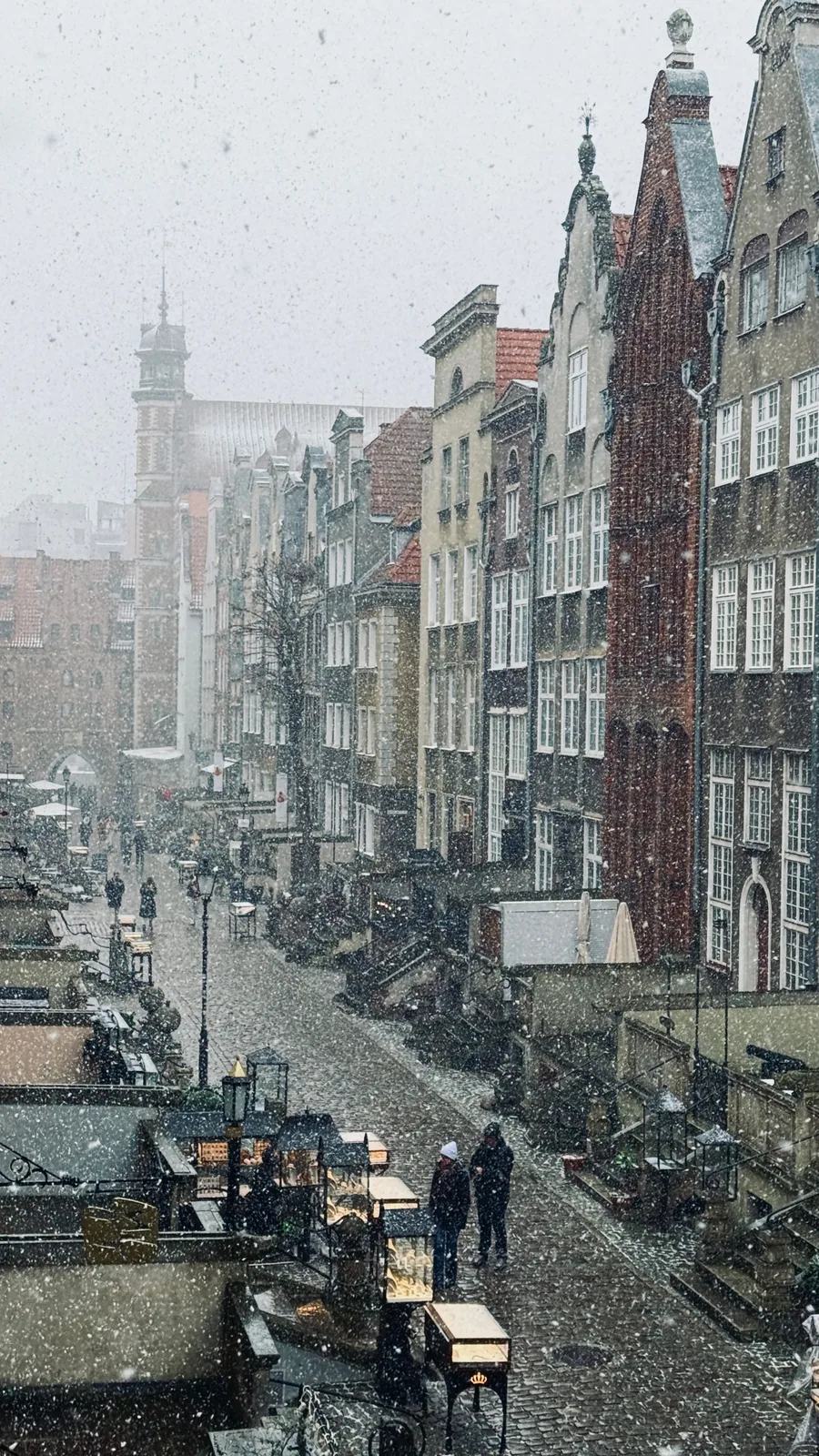
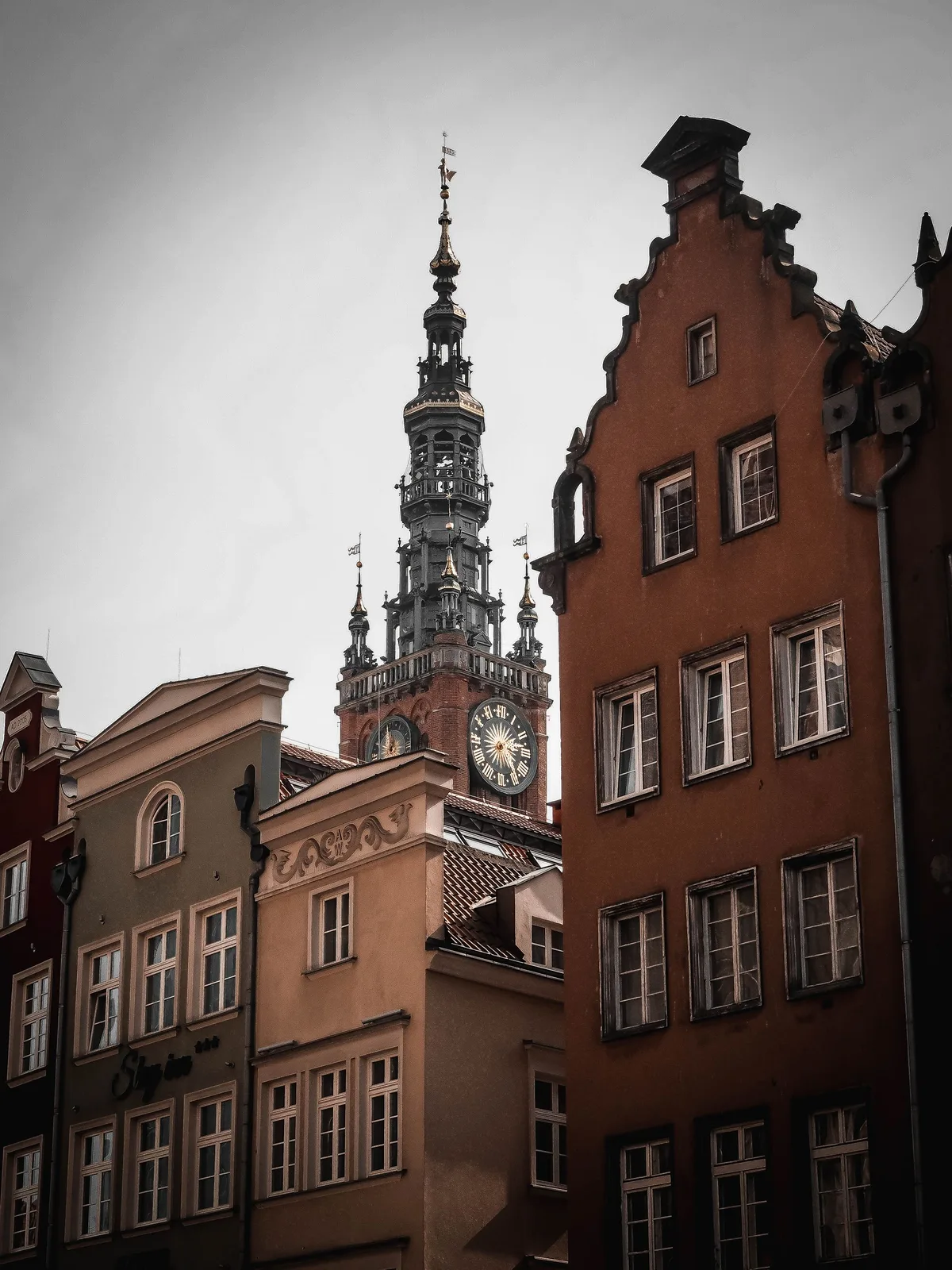
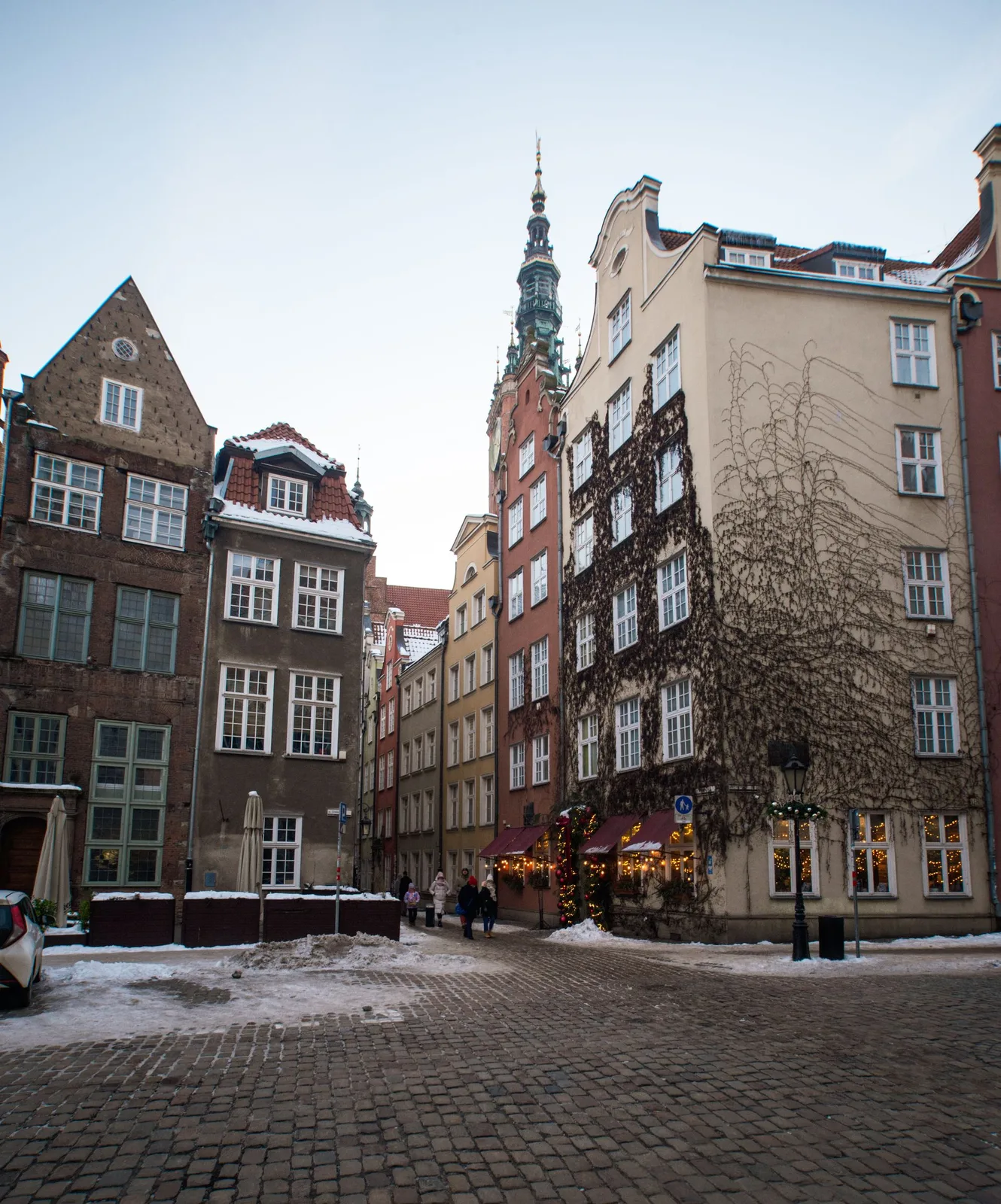
Down Ulica Długa from the Upland Gate to the Green Gate, past the Main Town Hall and Neptune’s Fountain: the city’s spine in ten minutes.
Cross to Granary Island for the postcard in reverse
The footbridges give the postcard view: the Crane, the ship Sołdek, the merchant rows.
Eat the first meal standing on ceremony
Pierogi at Mandu or a milk-bar lunch — dumplings, Baltic fish, a liqueur with gold in it.
The Main Town — Główne Miasto — packs the Royal Way, St Mary’s and the waterfront into a grid crossed in fifteen minutes, with Granary Island across the Motława, Gdańsk Główny station at its north-western edge and the shipyard cranes just beyond.
The Main Town was destroyed in 1945 and rebuilt — facades reconstructed from paintings, photographs and fragments: Warsaw rebuilt a royal capital, Gdańsk a Hanseatic port. The living layer is the shipyard: Solidarity, 1980, and the fall of European communism that started at Gate No. 2.
Getting around
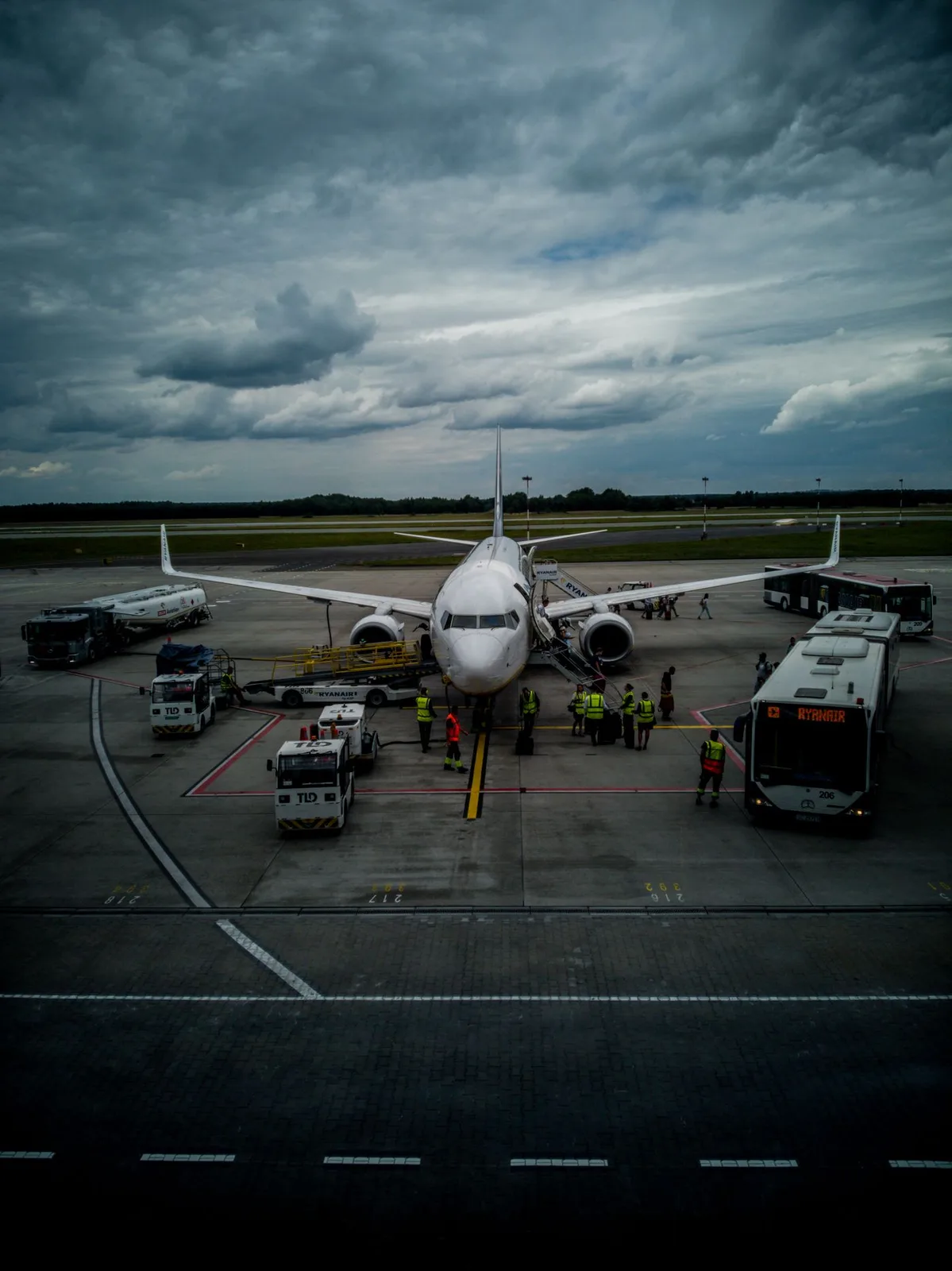
Times are airport to city centre.
PKM train via Wrzeszcz
Station by the covered footbridge; Wrzeszcz in 21-23 minutes, then SKM to Główny — a railway fare, city tickets not valid
Bus 210 to Gdańsk Główny
The one airport ride a city ticket covers; every 30 minutes on weekdays, hourly Sundays; night bus N3 after hours
Official airport taxi
Partner cabs post fixed fares to the centre — agree the fixed price before you set off, keep off the meter
Bolt or Uber
Usually the cheapest door-to-door option; the price is agreed in the app
Gdańsk’s network is ZTM: trams and buses on timed tickets, from the jakdojade app. Over it sits the railway — SKM trains stitch Gdańsk, Sopot and Gdynia together every 10-15 minutes, plus the PKM airport line. City tickets and train tickets are separate worlds, joined only by the metropolitan passes below.
City ticket maths: one ride 4.80 zł, one line, no changes; 75 minutes 6.00 zł with changes across the city network; 24 hours 22 zł for Gdańsk’s trams and buses. MZKZG metropolitan tickets bridge the worlds: the 24-hour rail-and-city ticket at 30 zł adds SKM and regional trains — the airport line included — to one city’s buses and trams; 34 zł covers all three Tricity networks; the 72-hour all-network version costs 68 zł.
The SKM works like a metro: Gdańsk Główny to Sopot takes 15-20 minutes and costs 8 zł; Gdynia about 35 minutes and 11 zł; trains every 10-15 minutes through the day. Buy at platform machines, in apps, or from the conductor at the front for a small surcharge; stamp paper tickets in the platform validators first.
Welcome Pickups puts a driver in arrivals at a price fixed when you book.
In the city
Gdańsk’s sights fall into three walks: the rebuilt merchant city along the Royal Way and the Motława, the great modern museums of the war and of Solidarity, and the water — Westerplatte, the beaches and Oliwa to the north.
- The Royal Way and Długi Targ — The Upland and Golden Gates, Ulica Długa’s facades, the Main Town Hall, Artus Court and Neptune’s Fountain on Długi Targ, and the Green Gate: the ceremonial spine — free and floodlit.
- St Mary’s Church — The largest brick church in the world, holding 25,000 people. Entry free outside services; come at 11:57 for the astronomical clock’s procession; the tower (16 zł) climbs 400 steps to the view over the Main Town, shipyards and sea.
- Artus Court and the Main Town Hall — Two Museum of Gdańsk branches on Długi Targ: the merchants’ great hall, with Europe’s largest tiled stove at 10.64 metres, and the town hall. Each 26 zł; both free on Mondays, closed Tuesdays. The town hall tower is closed for renovation — climb St Mary’s.
- The Crane and the Maritime Museum — The black Żuraw on the Motława, Europe’s largest surviving medieval port crane. A National Maritime Museum combined ticket for the Crane and the Maritime Culture Centre costs 36 zł; the museum ship Sołdek, first ship built in post-war Poland, moors alongside.
- The Museum of the Second World War — The war from the civilian’s side, in a vast underground exhibition. Entry 33 zł; closed Mondays; free on Tuesdays — desk-collected and capped, so book ahead on Tiqets in season.
- The European Solidarity Centre — Beside Gate No. 2 of the Lenin Shipyard, under the Monument to the Fallen Shipyard Workers, the ECS tells how the August 1980 strike ended European communism. The permanent exhibition costs 35 zł and closes on Tuesdays outside summer. Tours run on GetYourGuide.
- The Amber Museum — In the Great Mill, medieval Europe’s largest industrial building, the exhibits make Gdańsk’s case as world capital of amber — insects in 40-million-year-old resin to a full-size amber guitar. Entry 37 zł, free Mondays, closed Tuesdays.
- Westerplatte — The peninsula where the Schleswig-Holstein’s shells at dawn on 1 September 1939 opened the Second World War; the Polish garrison held out for seven days. Bus 106, 25 minutes; the grounds, ruined barracks and Monument to the Coast Defenders are free; Guardhouse No. 1 costs 8 zł in season. The commemoration begins at 04:45 on 1 September.
- Oliwa Cathedral — The Cistercian cathedral’s 18th-century organ has moving angels and trumpeting figures, demonstrated through the day in season; its International Festival of Organ Music runs each July and August, since 1957. Oliwa Park beside it is free.
The Motława banks and the paths to Brzeźno and Stogi make Gdańsk a cycling city in summer; the marked route along the bay runs to Sopot’s pier. BikesBooking lists Gdańsk’s bike tours and rental shops.
Compare the city sightseeing pass bundled on Klook against the free-day strategy before you buy — a week planned around the Monday and Tuesday free days can make it unnecessary.
After you land in Gdansk: Bookable experiences
Where to stay your first nights
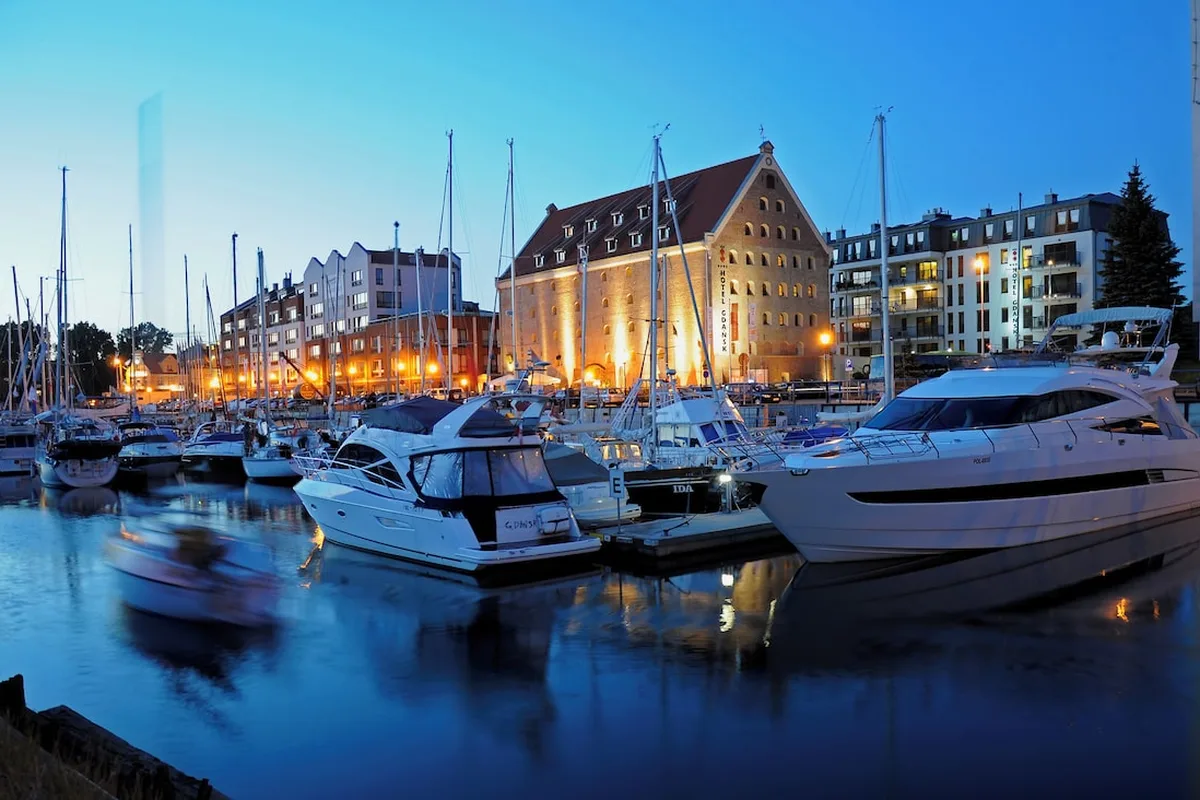
Hotel Gdańsk Boutique.
Best for the Motława waterfrontThe city’s landmark hotel at Szafarnia 10, pairing a restored 17th-century granary with a yachting-themed wing on the marina, facing Granary Island across the Old Motława. A spa, a brewery restaurant and the waterfront at the door.
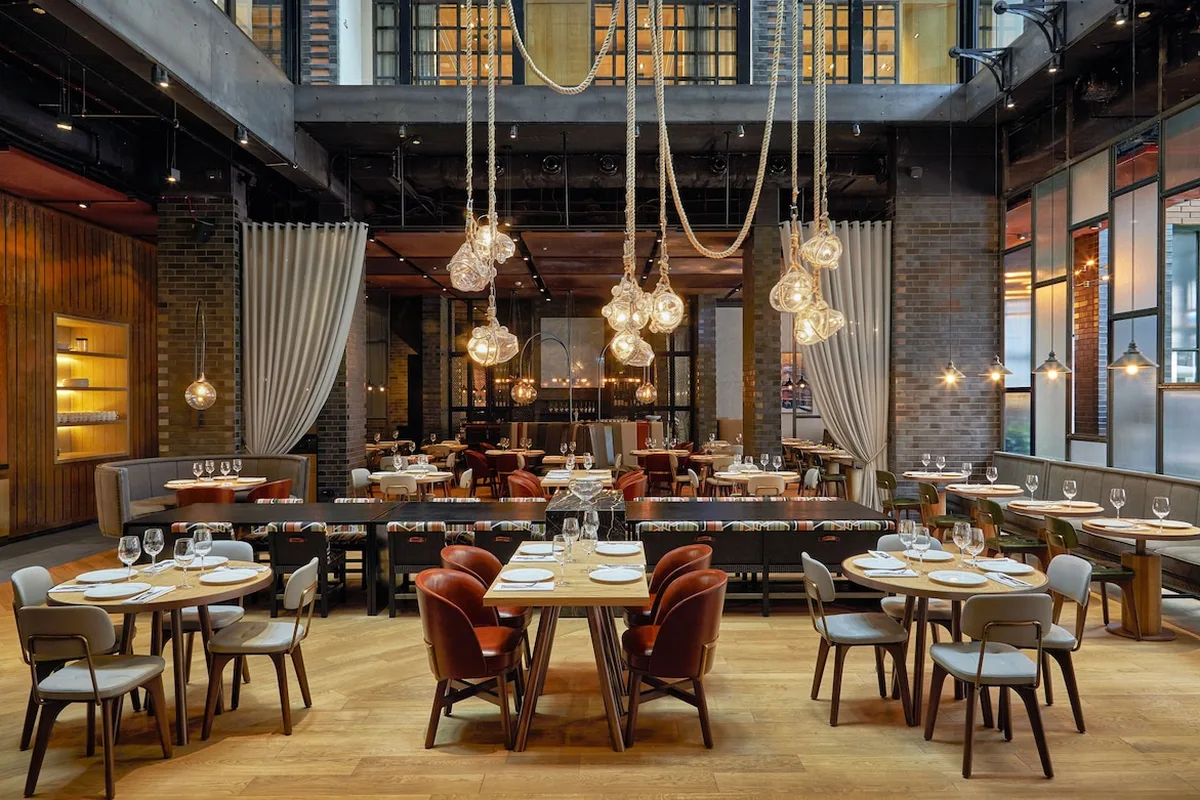
PURO Gdańsk Stare Miasto.
Best for Granary Island designThe design chain’s Granary Island house at Stągiewna 26: tablet check-in, a garden courtyard and the Main Town a footbridge away, at a price-to-design ratio the international chains do not match.
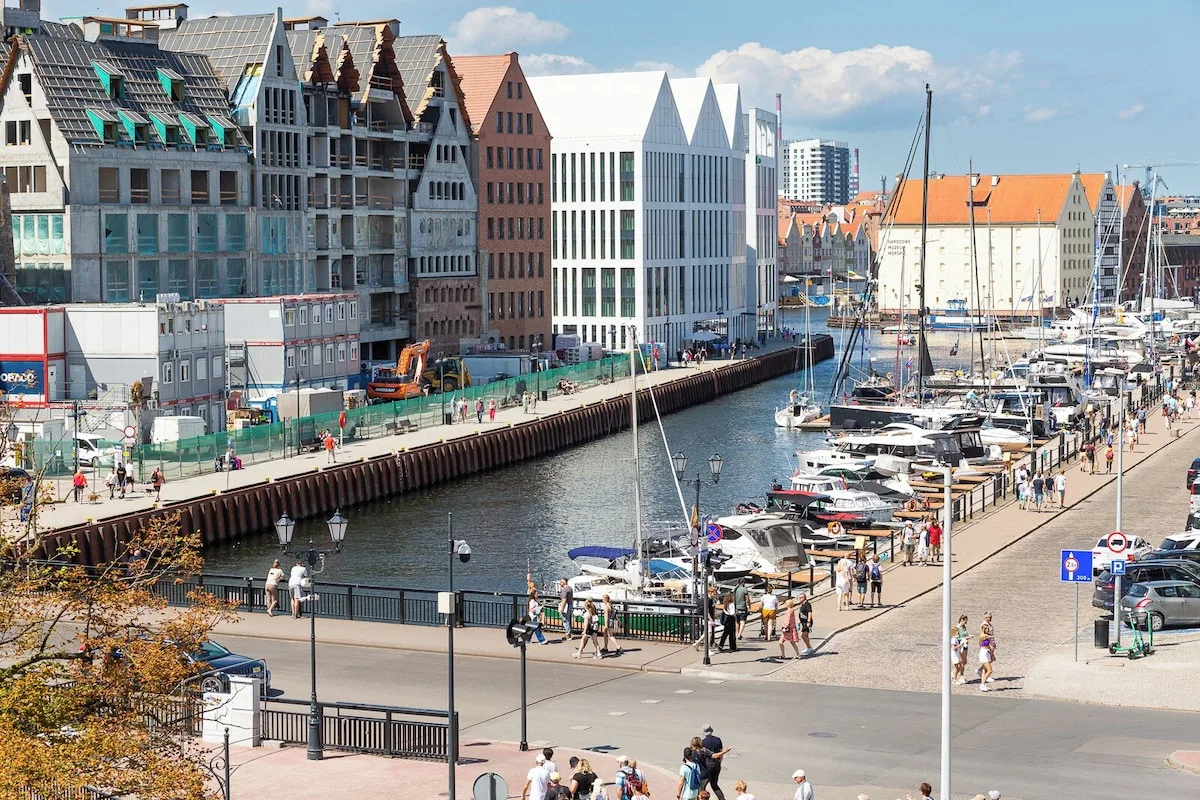
Moon Hostel Gdańsk.
Best for the Old Town on a budgetThe hostel at Długie Ogrody 6A, ten minutes’ walk from Długi Targ on the Main Town’s eastern edge: dorms and private rooms, a sociable kitchen, the cheapest well-located beds in the old centre.
For a first visit, stay in or beside the Main Town: everything is a walk, the station ten minutes away. Granary Island, a footbridge across the Motława, is the quieter, newer alternative with the postcard view back. Wrzeszcz, two SKM stops north, is where locals live and prices soften.
Choose Sopot only if the beach is the point — the Main Town’s evenings are half the reason to come.
Where to eat first
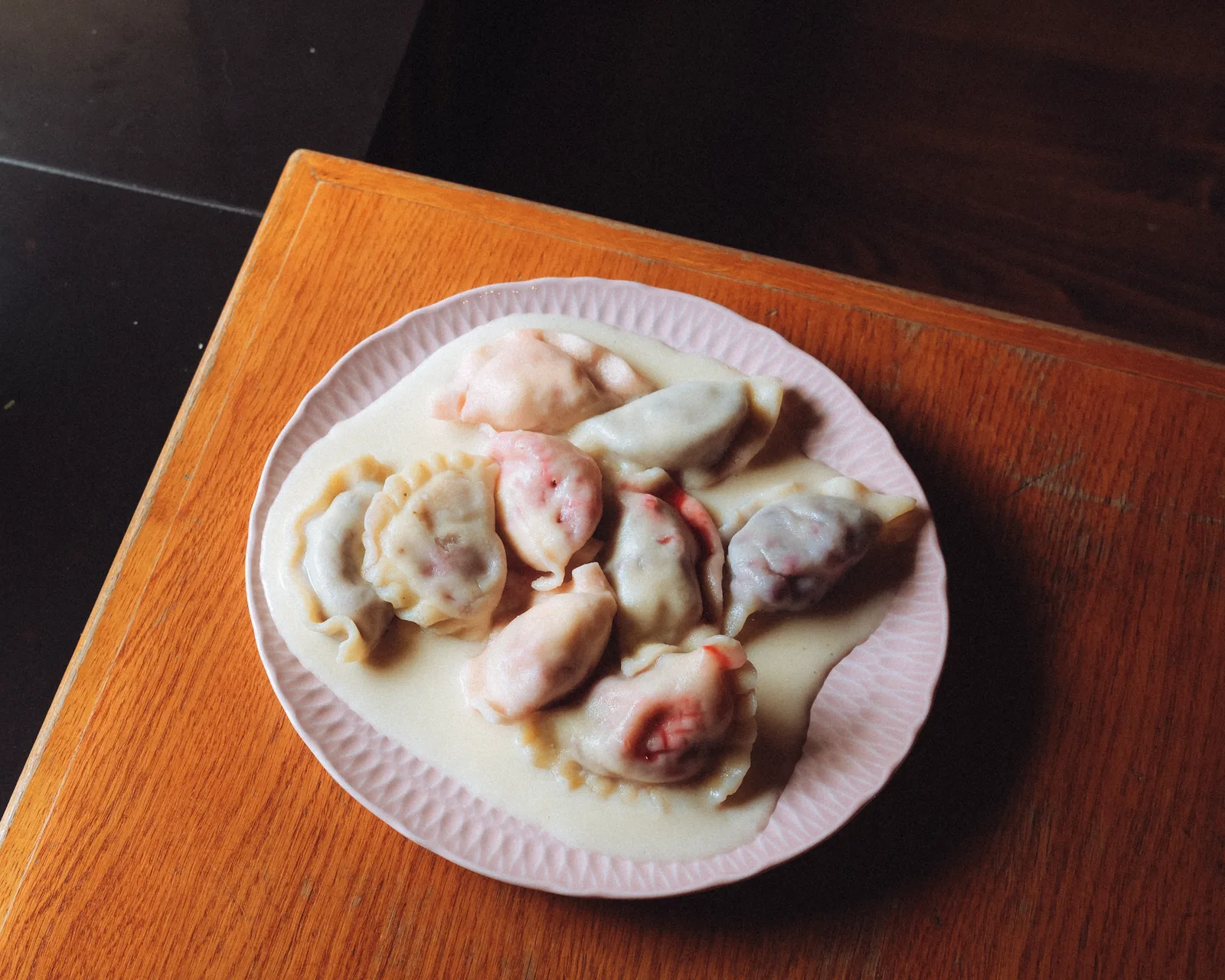
Gdańsk eats like a port that got rich: pierogi in every filling, Baltic herring and flounder, duck and goose at the old restaurants, and Goldwasser — the herbal liqueur flecked with real gold leaf, created here in 1598 — to finish. Menus quote złoty, never euros — anywhere offering to bill in euros is doing itself a favour.
Pierogarnia Mandu — the pierogi benchmark.
Map → At Elżbietańska 4/8, beside St Elizabeth’s Church west of the station. Every dumpling is folded by hand — ruskie, meat, cabbage and mushroom, and sweet plates with fruit and cream. Go before noon or after the lunch rush.
Gdański Bowke — the port tavern on the Motława.
Map → On Długie Pobrzeże 11, named for the old Gdańsk dockside rogue. Fish soup, herring three ways, its own unpasteurised family-brewery beer, and pralines filled with Goldwasser for the way home.
Restauracja Kubicki — the old master’s dining room.
Map → At Wartka 5 on the Old Motława, trading since 1918 and describing itself — fairly — as Gdańsk’s oldest restaurant. White tablecloths, Polish classics with a modern touch, and a terrace over the marina: the place for the trip’s one proper dinner.
Day trips and more
The day trips radiate from Gdańsk Główny along one railway line. Check Tiqets first: Malbork’s timed entry has an hourly cap and sells out on summer weekends; the Hel train fills by mid-morning in July and August.
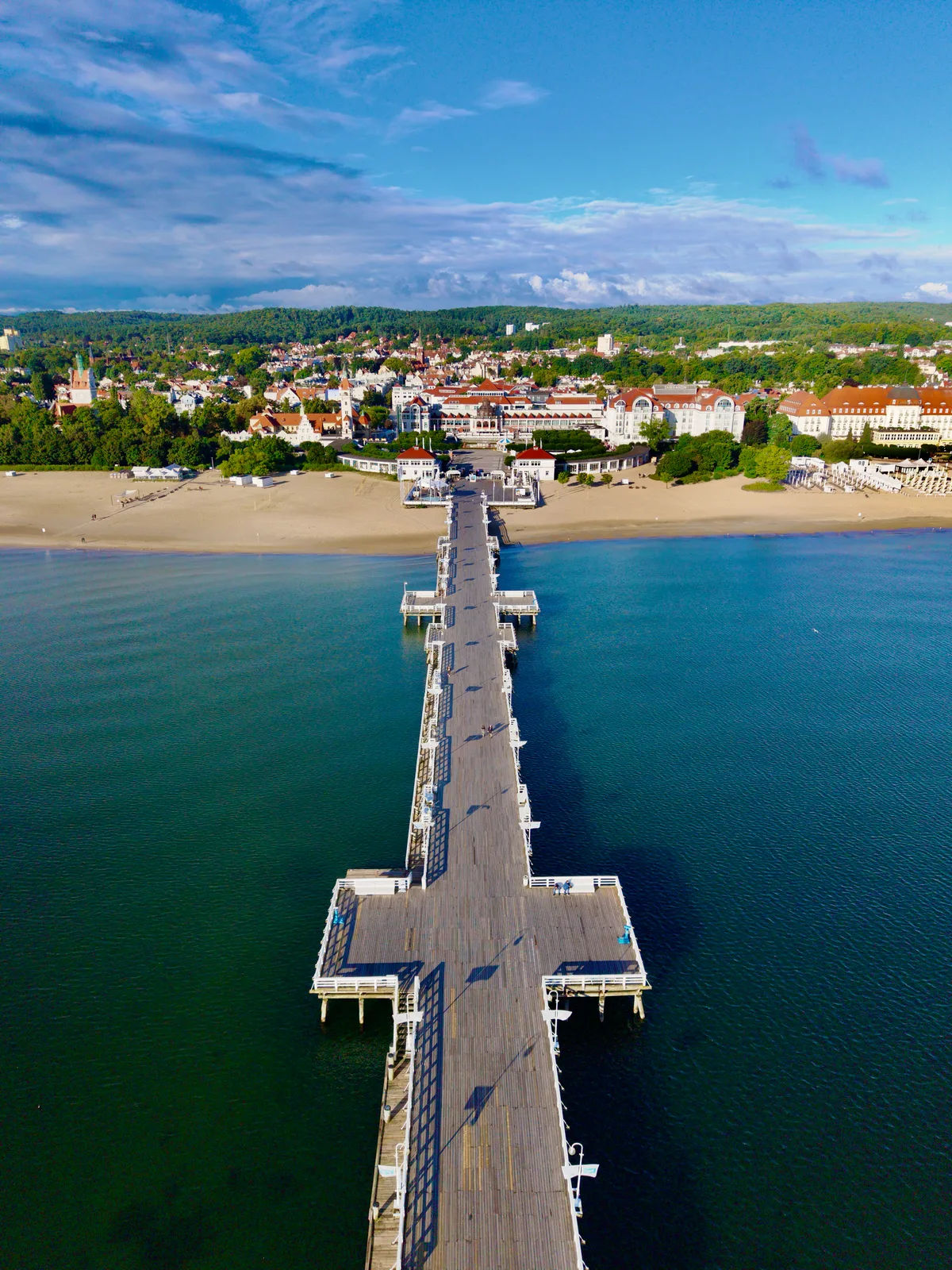
Sopot
The Tricity’s beach since the 19th century, 15 minutes up the line: the Monte Cassino promenade of cafés, and the pier — at 511 metres the longest wooden pier in Europe. Pier entry costs 10 zł in the ticketed season (April to the end of September in 2026) and is free the rest of the year.
Check availability →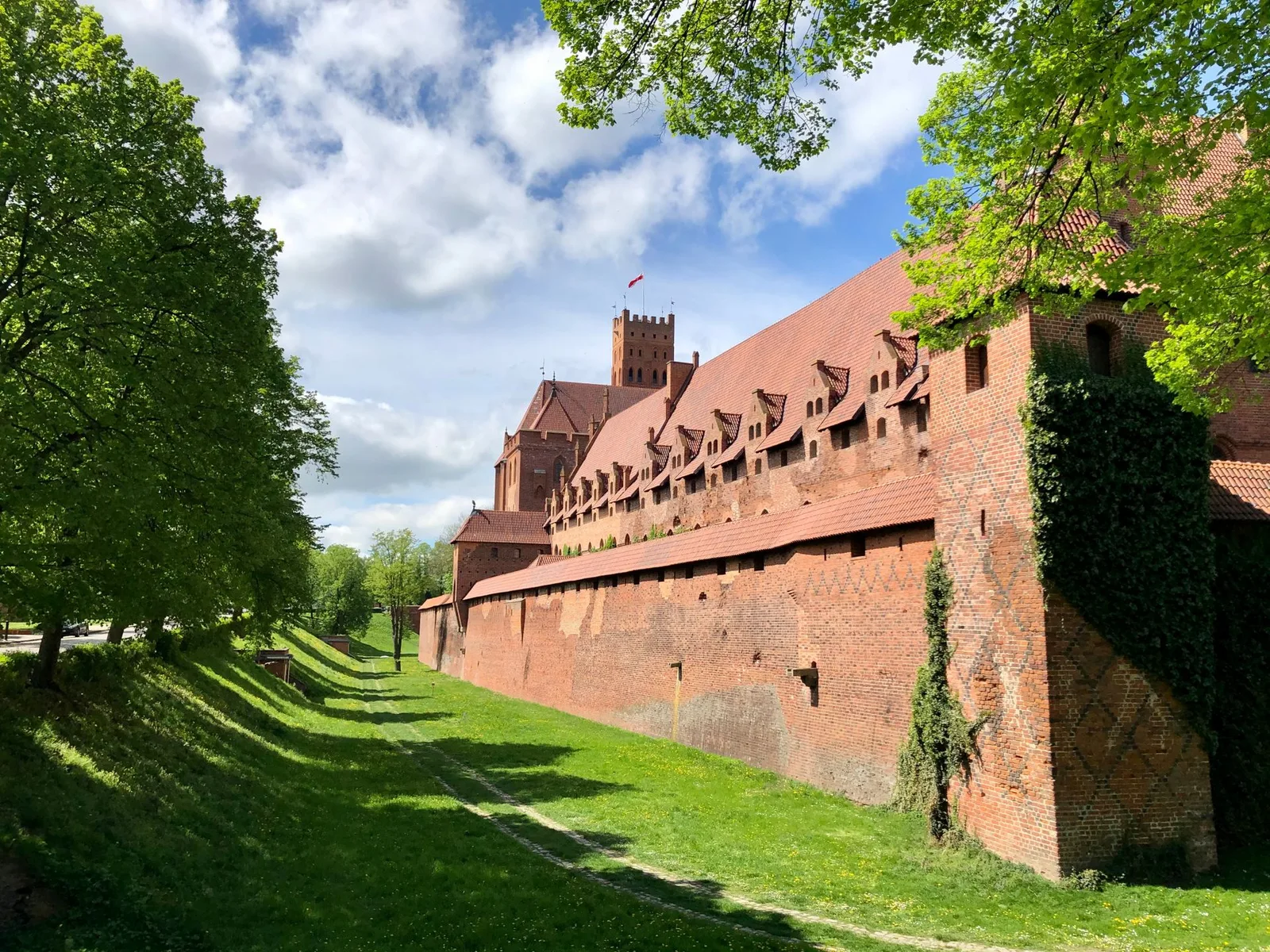
Malbork Castle
The Teutonic Knights’ fortress on the Nogat is the largest castle in the world by land area, a UNESCO site of some 30 million bricks. The full Historical Route, audio guide included, costs 80 zł and takes about three and a half hours; in autumn and winter, Mondays open the grounds route only, free. Entry is capped at 500 people an hour.
Check availability →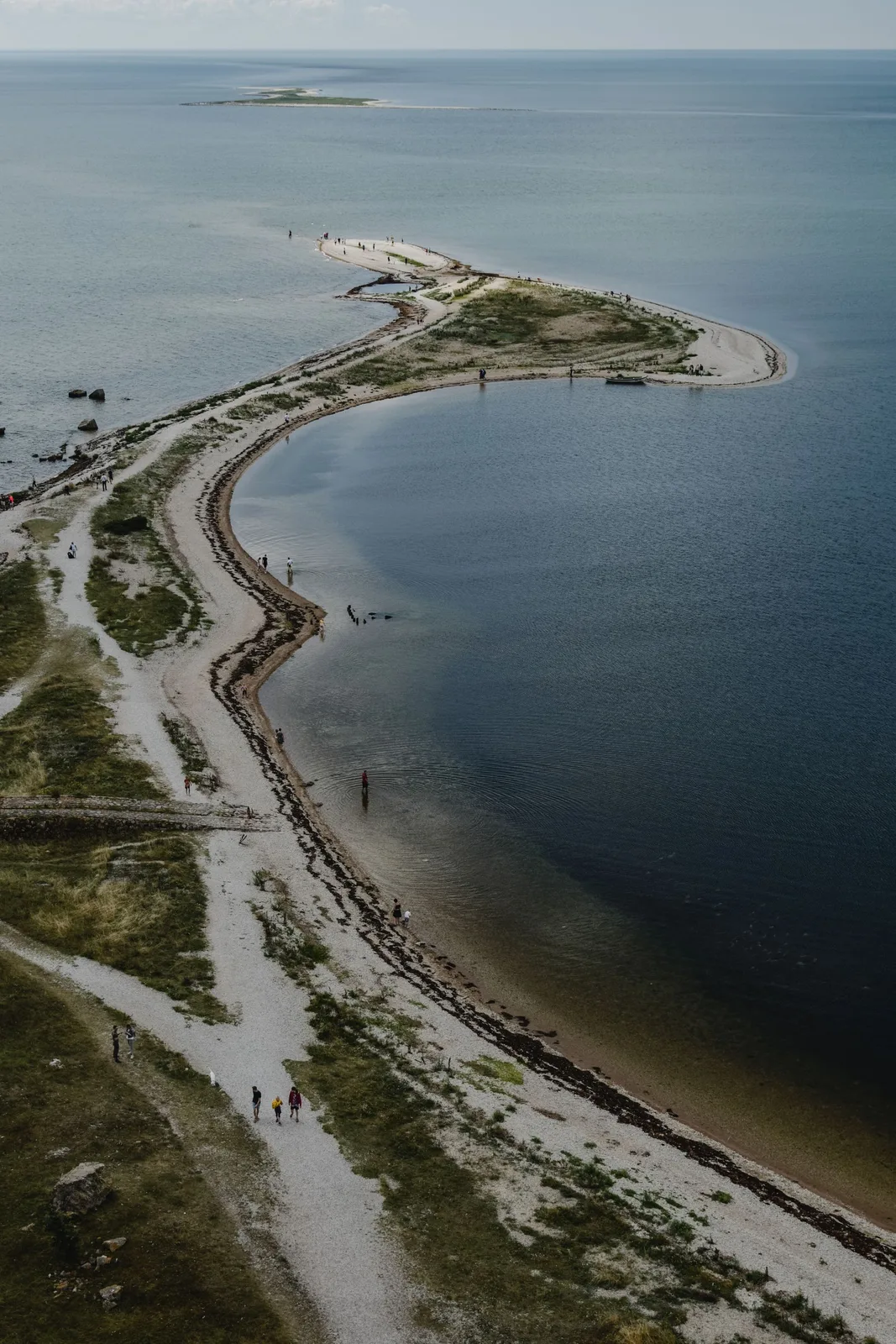
The Hel Peninsula
A 35 km spit of sand and pine forest, in places barely 300 metres wide — open Baltic on one side, the Bay of Puck on the other. At the town at its tip, the University of Gdańsk’s Fokarium sanctuary feeds grey seals at 11:00 and 14:00 for 30 zł.
Check availability →When to go and what it costs
Transport: 4.80 zł a ride, 22 zł a city day, 30 zł for the rail-and-city day covering the airport train and Sopot. The big museums run 26-37 zł. Stack the Monday and Tuesday free days to cut a culture-heavy week’s cost. A milk-bar lunch of soup, a main and kompot costs less than one museum ticket.
Evenings are priced kindly: a half-litre of lager in a central bar runs 15-20 zł; a Goldwasser shot is priced as a digestif. Eat one street inland from Długi Targ and the same plate of pierogi drops by a third.
If a delayed or cancelled flight wrecks the plan, keep the paperwork: for EU261-covered disruption, AirHelp handles the compensation claim on a no-win, no-fee basis.
What to pack
Tap items to check them off — your list is saved on this device.
Maritime weather: a beach morning can end in a squall by six. Pack for distance — cobbles, pier boards, hours on your feet at Malbork — and one layer against the Baltic wind.
- Comfortable walking shoes — cobbles, pier boards and Malbork’s brick courtyards. Shop walking shoes on Amazon →
- Sunscreen — sun off water and sand; the breeze hides the burn. Shop sunscreen on Amazon →
- Reusable water bottle — tap water is safe; refill before day trips. Shop water bottle on Amazon →
- Phone charger and power bank — bring a Type C and E adapter. Shop power bank on Amazon →
- Daypack — extra layer and swim things; big museums cloak large bags. Shop daypack on Amazon →
- Sunglasses — low sun off the bay glares in October as in June. Shop sunglasses on Amazon →
- Light rain jacket — squalls clear within the hour; it cuts the Westerplatte harbour wind. Shop rain jacket on Amazon →
As an Amazon Associate I earn from qualifying purchases.
Language, visa and entry
✓ Visa-free entry
Polish is a West Slavic language in the Latin alphabet, its spelling regular — learn the sounds and you can read a sign aloud. Dzień dobry is the safe all-day greeting, and younger Gdańsk residents will usually answer you in easy English. German survives in street names, Kashubian in the countryside beyond the airport.
Poland is in the EU and Schengen — your Schengen allowance covers your days here — but not in the eurozone: the złoty is the only currency that works. US, Canadian, Australian and British passport holders enter visa-free for up to 90 days in any 180-day period. The EU Entry and Exit System now records fingerprints and a facial image at the border in place of a passport stamp; ETIAS is not yet in operation. Check the entry rules on gov.pl before you fly.
Safety and health
Gdańsk is a calm, heavily visited port city; its risks are practical, not personal.
Buy amber like a sceptic
Amber is sold everywhere, and some of it is plastic. Real Baltic amber is warm to the touch, light, and floats in strong salt water while imitations sink. Do the Amber Museum first, then buy on Mariacka Street and ask for the certificate.
Two ticket systems, one fine
The classic Gdańsk fine is a valid ticket for the wrong system: a ZTM ticket on an SKM train, or a train ticket on a tram. Inspectors check the airport and Sopot trains constantly. Stamp, activate, keep the ticket until you leave the station.
Swim where the flags fly
The Baltic is cold even in August, with currents along the piers; swim at the guarded beaches — Stogi, Brzeźno, Jelitkowo, Sopot. Swim inside the flags, warm up slowly, and never swim after drinking.
Keep the late-night ride in an app
Długi Targ on a summer weekend draws stag parties and their touts. Use Bolt or the official ranks rather than cars that find you, watch your glass in busy bars, and let the app record the ride home.
For anything medical, dial 112; visitors with a European Health Insurance Card or its UK GHIC successor are covered for state treatment, and travel insurance should cover the rest. Apteka pharmacies are everywhere in the centre and advise on minor problems over the counter.
Related destinations
If you liked Gdansk, try these next:


Frequently asked questions
The facts that matter after you land in Gdańsk.
Verified against ZTM Gdańsk, the PKM and SKM railways, the city's local-fee table and the museums, October 2026.
Trains from Gdańsk Port Lotniczy run to Wrzeszcz, where you change for the SKM into Gdańsk Główny — about 35 minutes in all on a railway ticket costing 8.50 zł.
The catch: ZTM city tickets are NOT valid on those trains. Bus 210 takes the city ticket (4.80 zł, about 40 minutes); the official taxis run about 99 zł by day and 120 zł at night.
A one-ride ticket is 4.80 zł, a 75-minute ticket allowing changes is 6.00 zł, and a 24-hour city pass is 22 zł.
The 24-hour metropolitan pass at 30 zł adds the SKM and regional trains — the one to buy if you are riding out to Sopot, which costs 8 zł and takes 15 to 20 minutes on the SKM's own fares.
Yes — Gdańsk is the exception among Poland's big three. The local fee is 3.46 zł per person per night in 2026, added by the property to your bill.
Warsaw and Kraków charge nothing today. From January 2027 the national cap for such fees becomes 5 zł, so expect this figure to move at the New Year.
The Museum of the Second World War charges 33 zł, closes on Mondays and is free on Tuesdays — collect the free ticket at the desk.
The European Solidarity Centre beside the shipyard gates charges 35 zł and closes on Tuesdays outside the summer season. Both deserve half a day; do not try to stack them back to back.
Trains from Gdańsk Główny reach Malbork in about half an hour to an hour, and the castle is a short walk from the station.
The full Historical Route costs 80 zł including the audio guide and takes about three hours. Entry is timed with an hourly cap, and summer weekends sell out — book ahead.
Yes — 15 to 20 minutes on the SKM for 8 zł buys you the Tricity's beach town: a long sand curve, the Monte Cassino promenade and the pier.
At 511 metres it is the longest wooden pier in Europe; entry costs 10 zł in the ticketed season. The same SKM line continues to Gdynia in about 35 minutes for 11 zł.
Gdańsk, unlike Warsaw and Kraków, charges a local fee of 3.46 zł per person per night; tap water safe; Type C and E sockets at 230V; emergency 112.
Gdansk, in your pocket
Landing soon? Get the printable PDF — ticket links, the airport transport cheat sheet, our 3 restaurant picks with maps, and the packing checklist. Everything above, formatted for your phone.
One email with your Gdansk PDF. Fare changes and new guides after that. No spam, unsubscribe anytime.
Sources and last verified
Gdańsk facts checked October 2026 against ZTM Gdańsk and the MZKZG metropolitan tariff for city and rail fares; Gdańsk Lech Wałęsa Airport for transfer options; SKM and Polregio for Tricity and Hel services; the Museum of Gdańsk for Artus Court, the Main Town Hall, the Amber Museum and Westerplatte’s Guardhouse No. 1; the National Maritime Museum for the Crane pass; the Museum of the Second World War and the European Solidarity Centre for prices and closing days; the Castle Museum in Malbork; MOSiR Sopot for the pier season and entry fee; the University of Gdańsk Marine Station for the Fokarium; St Mary’s Basilica for the tower; the Ministry of Finance and October 2026 local-fee legislation for the visitor-tax position; and gov.pl and the European Commission for entry rules, the Entry and Exit System and ETIAS.
Affiliate disclosure: hotel names, transfers, experiences, and products linked in this guide may earn After You Land a commission at no extra cost to you. Prices and times were checked in Oct 2026 and change often — confirm before you book.