Matera: your first hour after landing
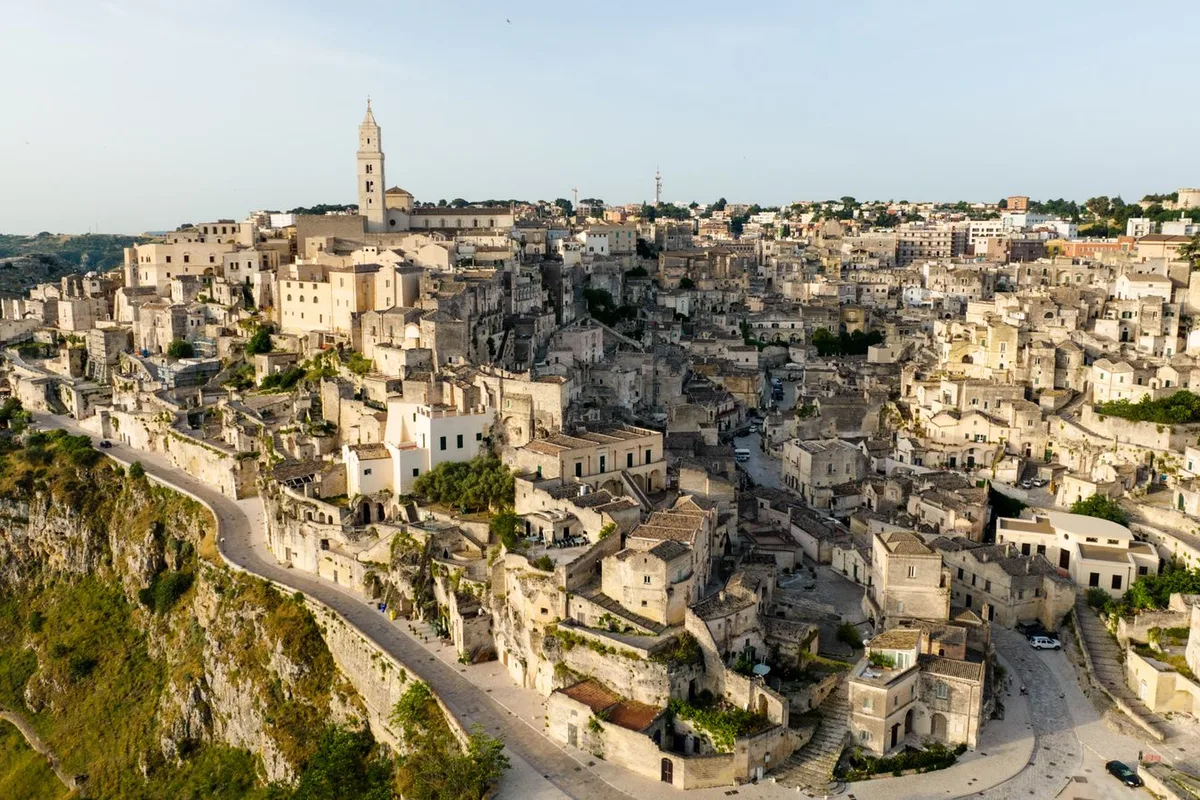
You have just landed at Bari, 65 kilometres from a town with no airport of its own — Matera, where two quarters of cave houses, the Sassi, spill down a ravine in Basilicata and people lived in the rock into the 1950s. This guide covers the coach and train runs in from Bari, where to sleep from a grotto suite to a hostel in the caves, the tiered tourist tax, what to eat first, and the sunset walk across the Gravina that fills day two.
In this guide
You just landed in Matera. There is no airport here — Bari (BRI) is 65 km away, and the move is the Pugliairbus coach, about €6 and 75 minutes to Piazza Matteotti, with an Airalo eSIM live for the walk into the Sassi and the cave walks that fill first worth booking ahead through GetYourGuide.
Quick facts
Airport
Getting in
Currency
Languages
Time zone
Emergency
Plugs
Tap water
Tourist tax
Best months
Map
Stays, sights, and landmarks in Matera — live hotel prices plus the key places from this guide.
Settle in
Matera has no runway, so arrival is two journeys: the flight into Bari, then 65 kilometres inland to a town built into a ravine. Book the second leg before you fly.
Set up before you leave home — an Airalo eSIM loads in minutes, so maps work from the Bari arrivals hall. For a longer Italy trip, compare Saily and Yesim.
The arrival checklist, in order:
- Book the coach seat or a private transfer before you fly — walk-up seats sell out on flight banks
- Screenshot your property's directions — GPS puts Sassi addresses on the wrong lane, and cave hotels hide down steps
- Leave the wheeled case at the top: from Piazza Matteotti the Sassi are steps and polished stone, so a backpack or a porter beats a roller
If a delayed or cancelled flight wrecked the arrival, AirHelp checks whether the airline owes you compensation — worth five minutes.
Getting around
Times are airport to city centre.
Direct airport bus (Pugliairbus)
Direct coaches from outside arrivals to Piazza Matteotti, beside Matera Centrale, through the day; SITA Sud runs extra departures on the same route from about €4.50; book the seat online before you fly — walk-up seats go on flight banks
Trains via Bari Centrale
Airport train to Bari Centrale in about 17 minutes for €5.30, then the FAL narrow-gauge from its own platforms beside the main station, about 1 hour 45 minutes; some FAL departures change at Altamura and Sunday service runs thinner
Private transfer or taxi
Pre-booked cars meet you in arrivals and drop at Piazza Matteotti or the edge of the Sassi — no car enters the cave lanes; there is no posted fixed taxi tariff for the 65 km run, so agree the price in writing before you ride
Rental car
SS96 and SS7 via Altamura, about an hour; the car earns its keep on Murgia and Puglia days, not in Matera — the Sassi are a camera-enforced ZTL, so park at Via Lanera, Via Saragat or Piazza della Visitazione and walk in
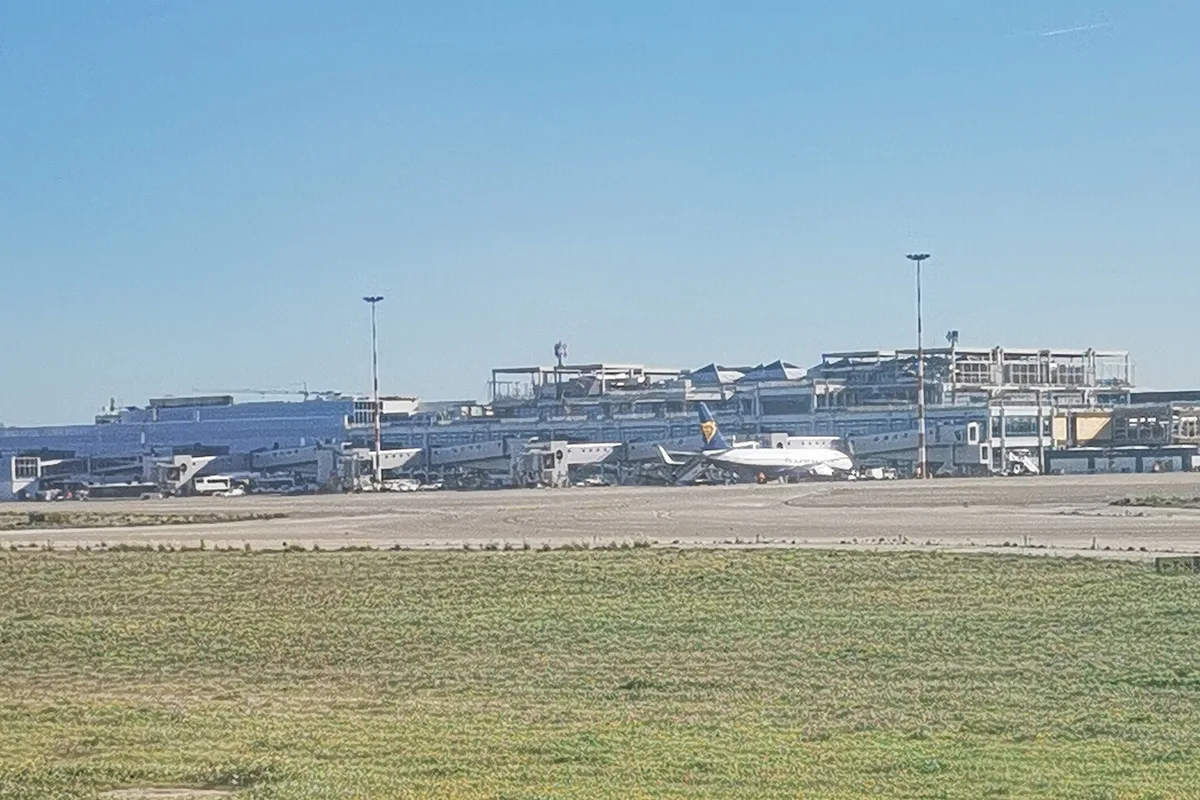
The direct coach is the default: it leaves from outside arrivals and lands at Piazza Matteotti, beside Matera Centrale. The rail route is slower, and a pre-booked car is the late-flight answer. The rides in from BRI:
Choose the coach with a booked seat and a daylight arrival; choose the private car for late flights, heavy bags or an unfamiliar Sassi address. The trains suit light luggage — the FAL leaves from its own platforms beside Bari Centrale's main entrance, and some departures change at Altamura.
Prefer to be met? A Kiwitaxi transfer or a Welcome Pickups driver puts a name board in arrivals at a fixed price. Driving yourself, price the airport pickup on AutoEurope first — then read the ZTL warning in Safety before you drive at the old town.
In town, you walk. The Sassi and historic centre are a limited-traffic and pedestrian zone, local buses loop the modern town (the Linea Sassi links the Via Saragat parking with the old town edge), and taxis wait at Piazza Matteotti.
In the city
Start on the Piano, the flat baroque town above the caves, at Piazza Vittorio Veneto. Beneath it hides the Palombaro Lungo, a cathedral-sized 19th-century cistern — the Sassi ran on stored rainwater, and this is where you understand how. From the piazza's balconies the Sasso Barisano falls away below.
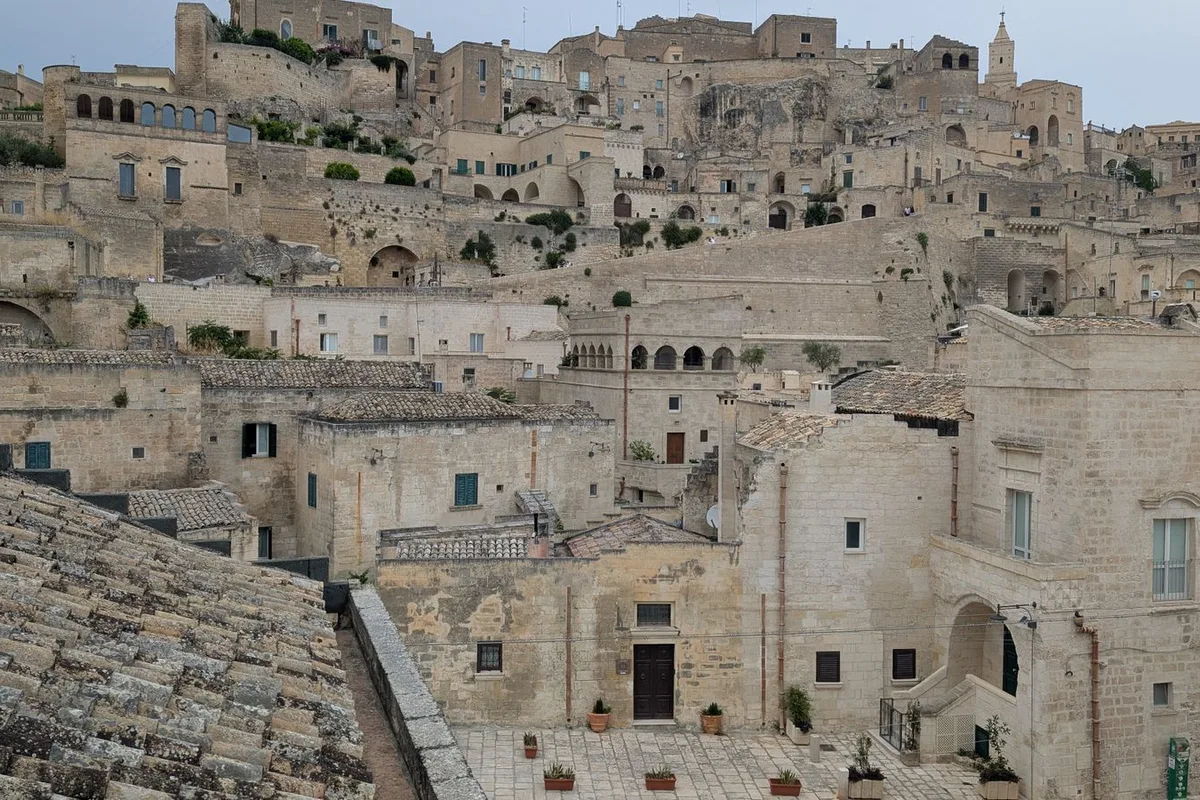
Drop into the caves in layers. The Casa Grotta di Vico Solitario shows one family's cave home as it stood when the Sassi were emptied in the 1950s — bed, stable and loom in one vaulted room. Climb to the Civita, the walled spur between the two Sassi, for the Duomo, then cross Sasso Caveoso to the rock churches of Santa Maria de Idris and San Giovanni in Monterrone, frescoed chapels cut into one outcrop above the ravine.
Give the far bank its own half day: the Murgia plateau across the Gravina holds the oldest cave churches and the Belvedere Murgia Timone viewpoint. Walk over the Tibetan suspension bridge from Porta Pistola, or ride out and walk the plateau paths.
Browse GetYourGuide for Sassi walks and Murgia trips, and compare Klook when stacking activities.
After you land in Matera: Bookable experiences
Where to stay your first nights

Sextantio Le Grotte della Civita.
Best for the definitive cave splurge — 18 candle-lit cave rooms in the Civita facing the Murgia parkSleep at Via Civita 28, in the Civita, the oldest spur of the Sassi — 18 vast cave rooms around a rock church turned candle-lit common room, facing the Murgia park across the ravine. Book it for the definitive Matera splurge: stone, silence and that view.

L'Hotel in Pietra.
Best for a cave stay at boutique scale — eight rooms inside a 13th-century rock church in Sasso BarisanoStay on Via San Giovanni Vecchio 22 in Sasso Barisano — eight rooms inside a converted 13th-century rock church, breakfast in the old nave, some suites with stone baths and terraces over the caves. Book it for a cave stay at boutique scale, a few steps from the Duomo.
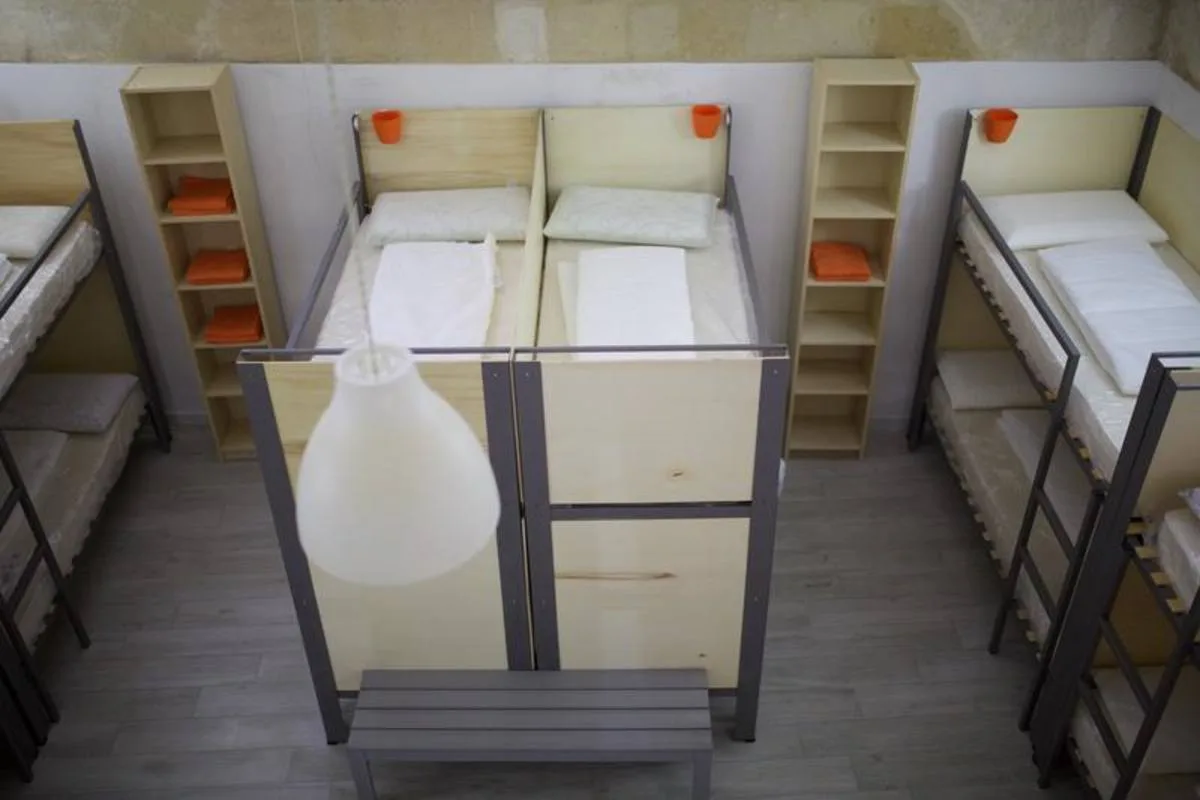
L'Ostello dei Sassi.
Best for budget beds inside Sasso Caveoso — dorms and privates in restored lamioni on Via CasalnuovoBed down on Via Casalnuovo 50 in Sasso Caveoso — dorms and privates in restored lamioni, the barrel-vaulted halls above the caves, free Wi-Fi throughout and dorms from about €25. Book it for the social budget base inside the caves themselves.
Sleep in the Sassi if you can — a cave room is the Matera experience. Sasso Barisano, the northern bowl, is gentler and closer to the Piano's restaurants; Sasso Caveoso, the southern bowl, is steeper and quieter. Arriving late or with big bags, the Piano's flat streets near Matera Centrale are the pragmatic first night.
Book ahead for Easter, summer and the Festa della Bruna on 2 July. Budget the tourist tax on top: €2 or €4 a night for the first three nights, under-14s exempt.
Where to eat first

Eat Lucanian first: this is a bread and beans kitchen, not a seafood one. The loaf is pane di Matera, a horn-shaped semolina bread baked here for centuries. Around it: lagane, broad pasta ribbons with chickpeas; fave e cicoria, fava purée under bitter chicory; and peperoni cruschi, sun-dried peppers fried crisp over everything. Three first stops:
A Piano bakery for pane di Matera.
Buy the loaf warm in the morning, tear it open on a balcony over the caves, and plan lunch around the rest.
Via Fiorentini, Sasso Barisano.
Graze the cave-quarter lane of wine bars and small kitchens below the Piano — the easiest first-evening wander, with cruschi peppers and Aglianico by the glass.
Piazza San Pietro Caveoso.
Eat facing the ravine in Sasso Caveoso, where the tables look across to the Murgia and Santa Maria de Idris above. Book terrace tables in season.
For pasta classes and food walks, browse the Matera listings on GetYourGuide and book your first free evening.
Day trips and more
Matera's excursions stay close: two guided ways into the Sassi, and the sunset crossing to the far bank. Book the Murgia trip for your clearest evening.
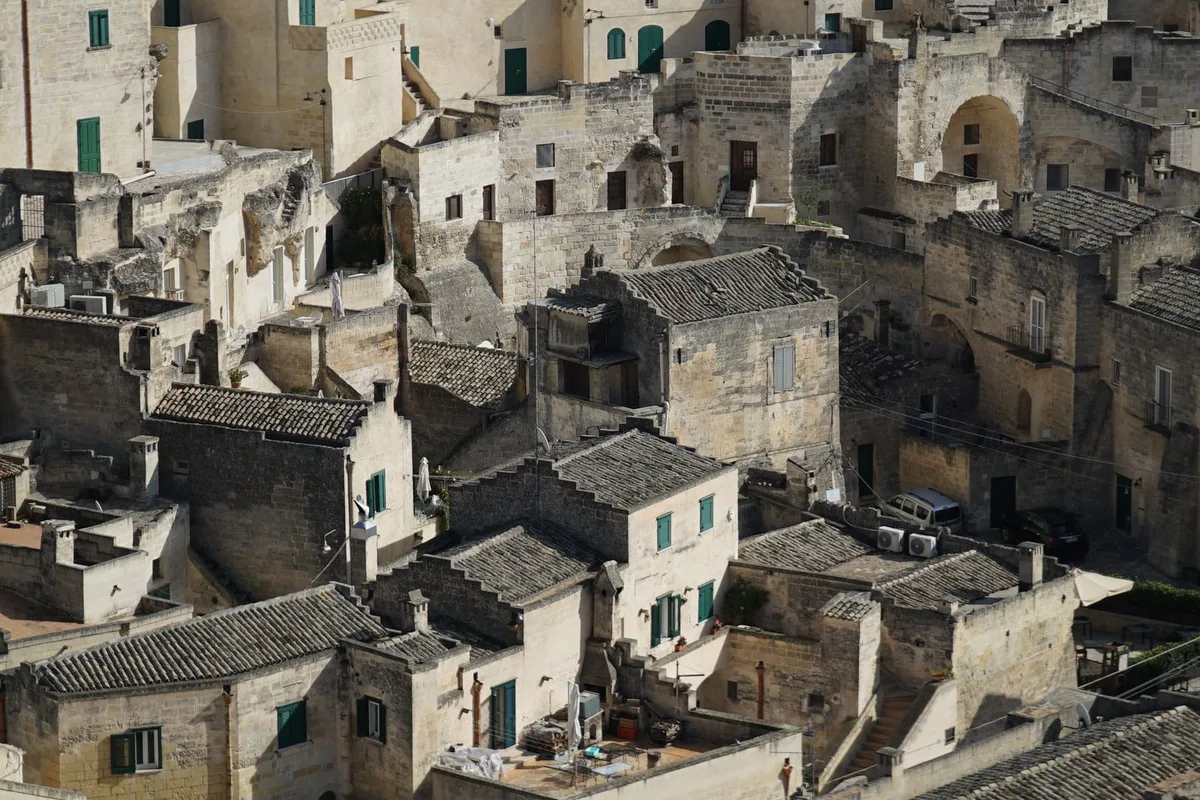
Sassi tour with cave house and rupestrian church
Two hours through both cave quarters from Via Alessandro Volta: San Francesco church, the rupestrian church of Sant'Antonio Abate, a furnished cave house and the panoramic Via Madonna delle Virtù. Rated 4.7 from over 7,900 reviews, from about US$28. Check availability →
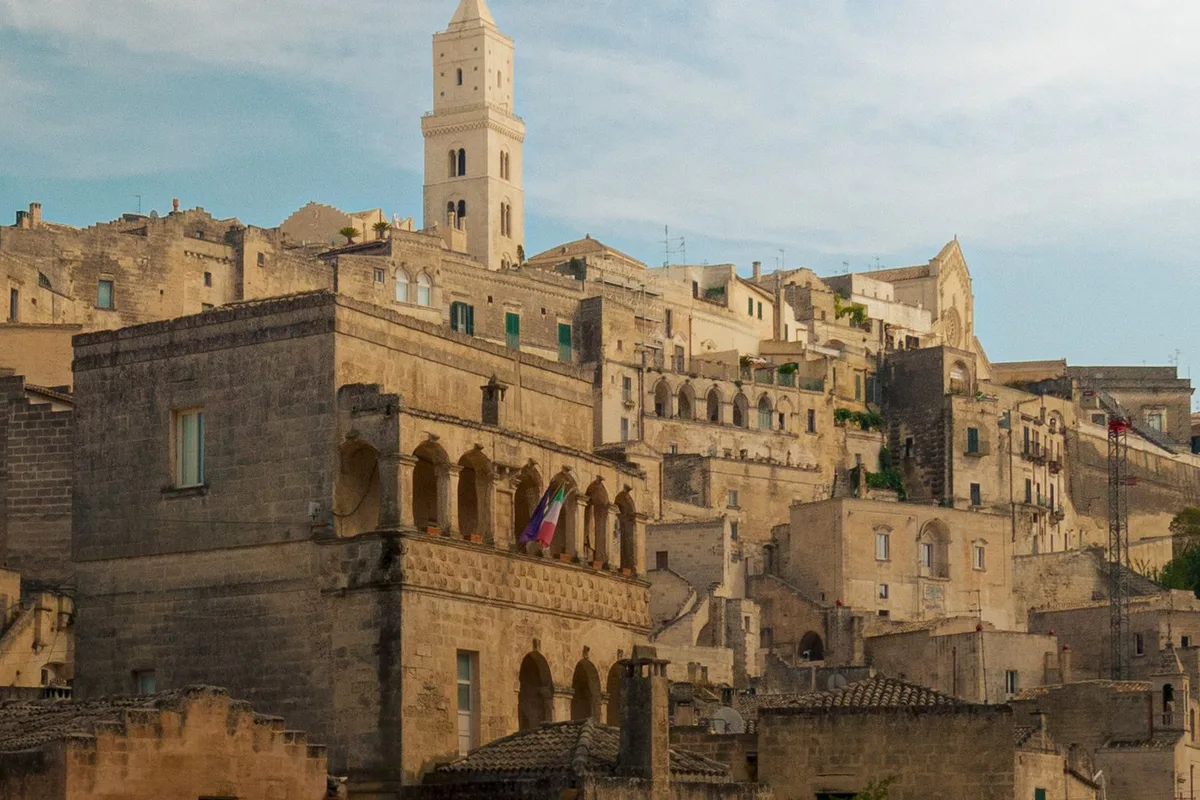
Tour of the Sassi with iconic rock-cut churches
From Via Don Minzoni 13 through the historic centre and Civita into Sasso Caveoso: the Monterrone churches of Santa Maria de Idris and San Giovanni in Monterrone, a Casa Grotta and the Museum of Peasant Civilization. From about US$40. Check availability →

Murgia Timone belvedere at sunset
Two and a half hours, return transfer included: the Neolithic village site, the rock churches of San Falcione and Madonna delle Tre Porte, then the Belvedere as the Sassi light up. Rated 4.7, from about US$47. Check availability →
Leave a spare morning for the Crypt of Original Sin outside town — small booked groups only.
When to go and what it costs
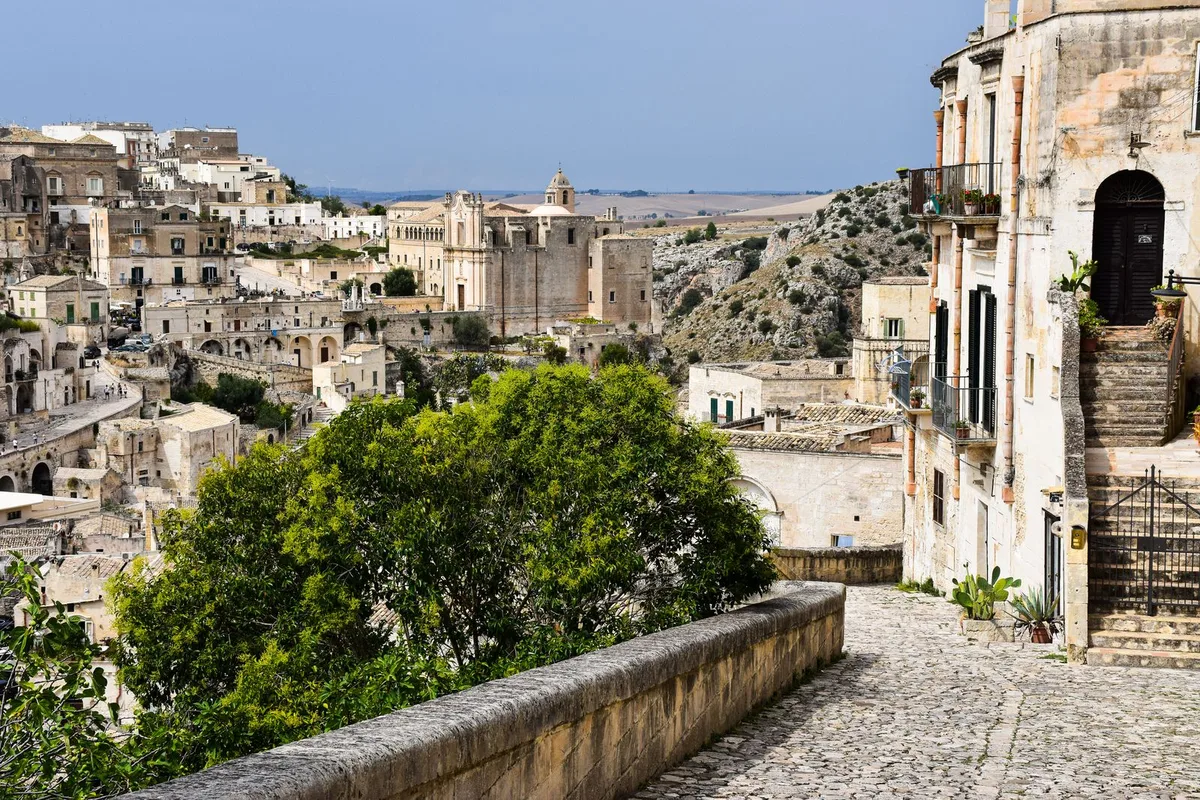
April to June and September to October are the sweet spot: warm walking days, cool evenings and the plateau green or golden. July and August bring real heat — over 35°C on stone that stores it — and the biggest crowds. Winter is the quiet Matera: near-empty lanes and cold, clear light.
A coach seat from Bari is about €6; a cave-house or rock-church ticket €3 to €5; a guided Sassi walk about €25 to €40; a restaurant dinner with Aglianico €25 to €40 a person.
A backpacker in a dorm, on bakery lunches and free viewpoints: €45 to €65 a day. Mid-range — a cave boutique room, trattoria dinners, one guided walk: €110 to €160 a day. A splurge day in a grotto suite with a private guide passes €300.
What to pack
Tap items to check them off — your list is saved on this device.
Pack for a stepped stone town and an exposed plateau. This is the full list:
- Comfortable walking shoes Shop walking shoes on Amazon →
- Sunscreen Shop sunscreen on Amazon →
- Reusable water bottle Shop water bottle on Amazon →
- Phone charger and power bank Shop power bank on Amazon →
- Daypack Shop daypack on Amazon →
- Sunglasses Shop sunglasses on Amazon →
- Light rain jacket Shop rain jacket on Amazon →
Add the Matera extras: shoes with grip — the Sassi's lanes turn slick in rain and shine smooth even when dry; a warm layer for Murgia evenings, when wind crosses the ravine after sunset; and a Type C, F and L adapter for the old buildings' Italian sockets.
Language, visa and entry
✓ Visa-free entry
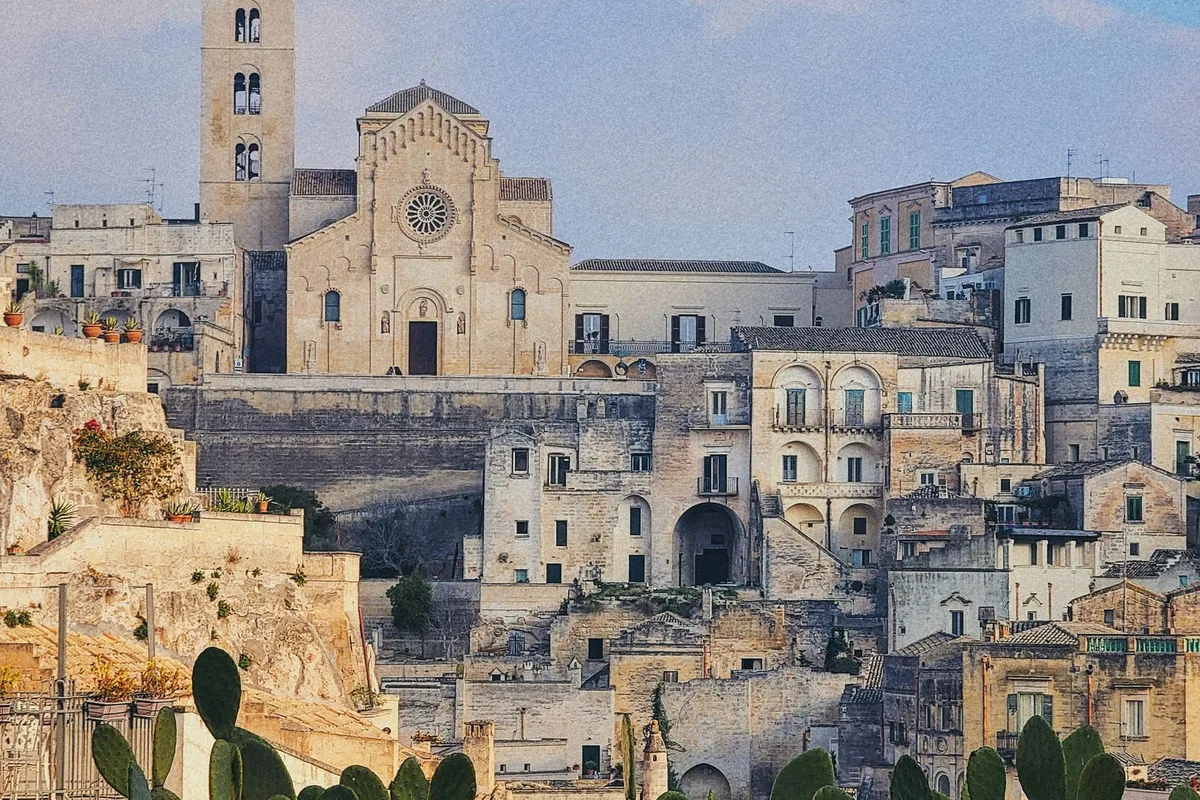
Italian runs Matera — greet first, and expect Sassi hotel and tour staff to switch to English while bakeries and bus drivers stay Italian. This is one of the world's oldest continuously lived-in cities, emptied by law in the 1950s and refilled as a UNESCO site and 2019 European Capital of Culture; ask, and locals will tell you about both chapters.
Four phrases do most of the work:
Sort your entry paperwork before you book anything non-refundable. Italy is in Schengen: US, Canadian, British, EU, Australian and New Zealand nationals enter visa-free for up to 90 days in any 180 across the whole Schengen area. Since April 2026 the Entry/Exit System records non-EU entries digitally with fingerprints and a photo at the border — there is nothing to apply for in advance. ETIAS is not operating yet: anyone selling you one today is selling a scam.
Carry a passport valid at least three months beyond departure, proof of onward travel for the airline desk, and your property's address — border officers can ask where you are staying.
Safety and health
Watch your footing before anything else
The Sassi are a staircase town: hundreds of worn stone steps, lanes polished smooth by centuries of feet, few handrails. Wear gripped shoes, use your phone torch after dark, and treat wet stone as ice. Falls, not crime, are the commonest way a Matera trip goes wrong.
Never drive into the old town on a guess
The Sassi and historic centre are a camera-watched limited-traffic zone, and fines follow the plate home months later — rental firms add an admin fee. Tell your property your plate in advance for a registered luggage drop-off, then park outside at Via Lanera, Via Saragat or Piazza della Visitazione and walk in.
Respect the summer heat on the plateau
The Murgia has no shade, no water and no shelter: cross early or at sunset, carry a litre a person, and skip the Tibetan bridge route at midday in August. Winter reverses it — the ravine wind cuts, and stone lanes ice on cold mornings.
Keep normal city care around the stations
Matera is a calm, low-crime town; the usual risk is opportunism around Piazza Matteotti and Bari Centrale on the way in. Keep the passport in the hotel safe, a photo of it on your phone, and dial 112 for anything serious.
Related destinations
If you liked Matera, try these next:




Frequently asked questions
The Bari run, the tax and the driving rules, in short.
Transfers checked against October 2026 Pugliairbus, Ferrotramviaria and FAL listings; tourist tax against Matera Welcome, the city's official tourism portal; entry rules against 2026 EU EES and ETIAS guidance.
The direct Pugliairbus coach from outside arrivals: about €6, 75 minutes, to Piazza Matteotti beside Matera Centrale. By rail — airport train to Bari Centrale (€5.30), then the FAL narrow-gauge to Matera Centrale — about €12 and 2 hours. A pre-booked private transfer is €140 to €170 per car, about an hour.
Everything lands on the flat modern town, the Piano, at Piazza Matteotti and Matera Centrale. The Sassi begin a few minutes' walk away and are pedestrian — steps and polished stone that defeat wheeled cases and GPS alike. Take a taxi to the quarter's edge, or ask your property about a porter.
Italy is in Schengen: US, Canadian, British, Australian, New Zealand and many other nationals enter visa-free for 90 days in any 180 across the whole area. Since April 2026 the Entry/Exit System records non-EU entries digitally. ETIAS is not operating — do not pay any site claiming to sell it.
€4 per person per night in four- and five-star stays, €2 in one- to three-star hotels, B&Bs, holiday homes and rentals — first three nights only, under-14s exempt. The property collects it, sometimes in cash.
April to June and September to October: warm, walkable days, cool evenings. July and August are hot — often over 35°C — and busiest. Winter is quiet and cold at night, with near-empty lanes.
No — the Sassi and historic centre are a camera-enforced limited-traffic zone (ZTL) and pedestrian area, and most cave lanes are steps no car could use. Register your plate with your property for a luggage drop-off if offered, then park outside at Via Lanera, Via Saragat or Piazza della Visitazione.
Fares change — the operators and the airport boards always win.
Matera, in your pocket
Landing soon? Get the printable PDF — ticket links, the airport transport cheat sheet, our 3 restaurant picks with maps, and the packing checklist. Everything above, formatted for your phone.
One email with your Matera PDF. Fare changes and new guides after that. No spam, unsubscribe anytime.
Sources and last verified
Transfers against October 2026 listings: Pugliairbus Bari to Matera about €6 and 1 hour 15 minutes (Wanderu, CheckMyBus), SITA Sud on the same route from about €4.50; airport train to Bari Centrale €5.30, about 17 minutes (Ferrotramviaria); FAL Bari to Matera about 1 hour 45 minutes, €4.70 to €6.60 (Omio); private transfers €140 to €170 per car (Transfeero from €151.54; GetYourGuide private transfer US$162.95); Bari Airport car rental averaging about US$33 a day (Cheapflights). Tourist tax against Matera Welcome (the city portal): €4 four- and five-star, €2 one- to three-star including B&Bs and rentals, first three nights, under-14s exempt. ZTL against Matera Welcome and the Comune di Matera. Entry against 2026 EU guidance: EES fully operational since 10 April 2026; ETIAS not operating, no applications taken. CEST ends Sunday 25 October 2026. GetYourGuide products opened and read: t261282, t448489, t273642; the hub (matera-l1060) read as Matera. Expedia returned HTTP 429 throughout, so hotel URLs are empty pending the confirmation pass. Photo credits as in the guide data. Last verified October 2026.
Affiliate disclosure: hotel names, transfers, experiences, and products linked in this guide may earn After You Land a commission at no extra cost to you. Prices and times were checked in Oct 2026 and change often — confirm before you book.